
Robin S Webber
This transcript was generated by AI and may contain errors. It is provided to assist those who may not be able to listen to the message.
I want to say thank you very much to the Hymn Choir. Appreciate it. We're going to look forward to singing that. My wife and I have become acquainted with more hymns since we've come back to the Los Angeles congregation. It's always interesting how different congregations sing different hymns. For those of you that are joining us today, we're in the middle of a series. The series is entitled, New Covenant Realities and Christian Responsibilities. I might have lost count, but I think we're into the fifth part of this series. We're going to move through the subject today of the Seventh-Day Sabbath in regards to that. We're going to bring that particular tool of grace to a close today as far as our discussion of it. In the month of March and April, when I'm with you, I want to specifically focus on the upcoming festival season. But after that, we're going to come back and we're going to finish two more tools of grace. After the festivals, we're going to be discussing the aspect of the biblical food laws that God gives us to understand His grace and to understand our response to it in our lives. We're also going to be discussing the subject of tithing, of giving to God, and why we give to God. What are our motives that move beyond just simply a matter of multiplication of 10% but the fullness and 100% of our heart of why we give to God? We're going through this series because I think we're coming to understand that these tools of grace that God gives us cuts right across the grain of our human existence. There's nothing more important than our time, our tummies, and our treasure.
Right now, you and I are discussing the aspect of our time. We're talking about surrendering our time to God. All of that time that we don't think we can surrender or give away. And that as we abide and we keep the commandment of the Seventh-Day Sabbath, we understand there's sacrifice that is involved.
We recognize, too, that the Seventh-Day Sabbath is not just a 24-hour period of which, indeed, it is. But as New Covenant Christians that are not only in the letter but by the Spirit, we are approaching that time Sunday, Monday, Tuesday, Wednesday, Thursday, and Friday. That we are preparing our spirit. We're preparing our hearts. We have the consciousness that you and I have been called by God's grace to be a part of a sacred assembly. And that God has given us, this Holy God, a holy day for a holy purpose and for a holy reason. So that's what's been surrounding our discussion. For those that have not been here and for those that need to get here, because maybe you haven't quite gotten into Sabbath services yet, maybe your mind is somewhere else. We're going to bring you to center court here for another moment. Let's discuss some of the items that we've been looking at when it comes to the Seventh-Day Sabbath. We've come to understand that a New Covenant heart will identify and understand the Seventh-Day Sabbath through some of these points. That it reminds us not only of a physical creation of that which has passed, but there is an incredible positive tension between the past, the present, and yet in the future. That what God did at Eden was that he ceased from his physical activity. But he is in no way ceased from that spiritual work. That spiritual work that encompasses Genesis 1, 26-27. Let us make man in our image and after our likeness. Well, folks, I want to bring you some news today. We're not quite there yet. We're still physical human beings. And even though the Spirit of God is in us, there's yet more to accomplish. And yet to recognize it's not only about us, but that God has a spiritual work, a massive, dynamic, all-encompassing purpose and plan for all of humanity. And it didn't end at Eden. God is not just simply first cause, but is the sustaining force in all of the universe. Number two, we came to understand that the Sabbath day, what some consider a fossil in the sands of Sinai that should be left there, is not just simply a burden, but it's a day about liberty. It's a day about freedom. It's a day about jubilee. It's a day of release of that which is spiritual in us, following the example of Jesus Christ, who did good to his fellow man on this day. We also came to understand point three, that God, in his wisdom, because that's what makes him God, he knows us better than ourselves, and he knows that we need to take time to rest. God made us. Who knows better how a human being ought to function than the one who created us? So he asked us to cease from our industrial labor. He asked us to cease and to, in a sense, remove ourselves from that world out there, and to take a time out, and to remember who and what we are, that we ought to love the Lord our God with all of our might, and all of our mind, and all of our souls, so that we can indeed love our neighbor as ourself. But if we're always, always, always on the run, how can we ever walk with God? Are any of you being stampeded in this life? Life is just on the run. You just don't think you can stop. You just don't think that you can take the time. You just don't think, you think, and you think. You're thinking too much. God said, stop. Now, how often do I watch the Los Angeles Lakers? I'm sorry, I'm addicted, having grown up in Los Angeles.
And why is it that Phil Jackson always calls time out after they're in trouble? God's the best coach in the world.
God asked you and me as New Covenant Christians to take a time out every seven days, so that we don't have to come from behind, but to remember the game plan that he put into play when he intervened in our life, and he said, I want you to be my child. I want you to be my precious. I want you to be my sacred vessel.
And so God, who's the smartest coach in the world, asked you and me to take a time out ahead of time every seven days.
That's the wonder, and that's the beauty of the God that you and I worship. We also came to understand the lesson of the manna.
Oh, is Exodus 16 just such a powerful point to remind us not only of the beauty and the wonder of this tool of grace, called the Seventh-Day Sabbath, but that it does have a cutting edge. It is the test commandment.
It is a day which allows us to understand to the very basis of our relationship with God, with the Father and with the Son, that they are sufficient.
That you and I at baptism said, Father, you are sufficient. Christ, you are all in all. You are that shepherd in which I shall not want.
And thus we accept God at His word. We obey Him. And ancient Israel said, do not go out on the Seventh-Day to collect.
I'm such a wonderful God, I'll give you double for it on Friday. You get double on Friday, but you don't go out on Saturday.
But there were those that did not take God at His word. They were those that did not think that God was sufficient.
They thus fell into the quicksand that Adam and Eve partook of and walked on in the garden.
And they sank. As you and I, as New Covenant Christians, uphold that commandment and abide in Christian responsibility to keep this day holy, and to rest from our industrial labors and trust God that He will supply our need, that is a test.
And you know what? It's good that our faith is tested, even when it isn't easy, because it is the faith that we have in God that approves us to God.
Not by what we know, not by what we have performed by our own works, but as Abraham, it says that he was approved unto God by his belief.
And when we abide in the commandments of God, we are saying, you are sufficient.
We have, by God's grace, passed the test to this point that Adam and Eve flunked from the very beginning of time.
Are you ready to go forward? I have a few more points that I'd like to bring to you this afternoon.
I'd like to take you to the fifth understanding of a New Covenant Christian and Christian responsibility.
And that is that a New Covenant heart understands God blesses us with delight on the Sabbath.
The Sabbath is a delight. I'd like you to join me, if you would, in Isaiah 58.
As we go there, I've got to share something with you. This is going to be a work of faith because I've got a brand new Bible. And have you ever gotten a brand new Bible and all the pages are stuck?
So this sermon may go twice as long as usual, which is going to test your faith.
Just teasing. We'll try to keep these pages parted. But let's notice what it says in Isaiah 58. And let's pick up the thought, if we could, in verse 13.
We're going to read the entire verse, and then we're going to go back and dissect it. If you turn away your foot from the Sabbath, from doing your pleasure on my holy day, and you do call the Sabbath a delight, the holy day of the Lord honorable and shall honor Him, not doing your own ways, or finding your own pleasure and speaking your own words, then you shall delight yourself in the Lord.
And I will cause you to ride on the high hills of the earth and feed you with the heritage of Jacob, your father. The mouth of the Lord has spoken this. It's interesting, as we go back here to the very beginning, if you turn away your foot from the Sabbath, from doing your pleasure on the Sabbath a delight. I'd like to begin by focusing on that word delight for a moment. The word delight comes from a Hebrew word. I'll not pretend that this is pronunciation, but I've got to get it out anyway. Oh, nag! Sounds like a name out of Star Trek.
At him on the deck of the Enterprise. Oh, nag! What does oh, nag convey? I'd like to share this with you for a moment. The Hebrew word oh, nag conveys luxury or luxurious. Soft. Delicate.
Words like those hardly convey the modern thought that somehow this is a bondage, or this is a burden, or this was something long ago for a primitive people wandering through the wilderness that has now been negated or abrogated or annulled. No, these words begin to breathe life into the wonderment of the Sabbath. You know, when you say the word luxurious, you normally, when you talk about a luxurious lifestyle, you think of a life of ease.
What God is conveying is that when you understand what the Sabbath is, you begin to develop more of a life of spiritual ease. We're no longer floundering back and forth. We're no longer worried about what is occurring. We can be concerned. We need to be wary, but we don't need to be worried. Because we understand even with the Sabbath that it is a compass that points back to the past, that there was a creation, points to the present, that God is creating something wonderful in us, and it points to the future when all of humanity is no longer headed towards doom and gloom, but there's a destiny.
The Sabbath, indeed, is a delight. Beyond that, when God gave the Sabbath as a commandment from Sinai, and ancient Israel was given a day off, do you think they did not think that that was a delight? When they had been in slavery for 250 years in Egypt, all that bondage, all the snapping of the whip of the taskmaster, children being taken from their parents, just the mental anguish of what slavery meant every day, every day, and all of a sudden God says, on this day, you will not physically labor. I would think that ancient Israel thought of the Sabbath as a delight, as an incredible gift, as a bonus package.
How about us as New Covenant Christians, the Israel of God today? Remember your delight. I'm going to take you back a little bit in your scrapbook. Are you with me? Do you remember your delight in coming to understanding your spiritual liberation when you were called out of the slavery of sin, when God called you in Ohio or Missouri or Florida, and you were on that hamster wheel of life that was just spinning and spinning and spinning, a lot of time, a lot of energy and a lot of motion, but you weren't going anywhere?
And then God began to work with your mind. As it says in the book of Romans, His Spirit began to lead us. And all of a sudden, there was an opening up. This picture of the Sabbath began to open up a beautiful panorama of what God was doing, that God had a saving work in your life, and that it points to a time of liberty for all of God's children. Now, God's Word says the Sabbath is a delight. But let's understand something.
The religious folk of Jesus' day had layered this day of delight with their restrictions. They had a creed of multiple work prohibitions that are nowhere found in the Scriptures. They're not found here in Isaiah 58. Why is that? What happened? There are always reasons why things happen. Let's understand that both Israel and Judah had gone into captivity. One around 721 BC, the other about 586 BC. The Scriptures clearly point out that one of the reasons why God allowed the Gentile nations to come up and take them away was because they had profaned the Sabbath day.
So there was a natural reaction when they came back. That if you're with me for a moment, I'm going to step out from behind the podium. They did not even want to get near, you know, when you've been drug off in captivity and slavery, you don't even want to get near the cliff. You don't even want to go there, do you? Because you don't want to have that fall again. So they began to layer, thinking that they were doing God a favor, thinking that they were doing one another a favor.
They began to layer and layer and layer and layer, so that they would never have to go through that again. They thought that they were doing God a favor. But they created a Sabbath that was not God delivered, but man-made. All these prohibitions, so much that there was one prohibition that if you swallowed a gnat, that it was working on the Sabbath.
Prohibitions that if you found somebody that was on the trail and that they had hurt themselves, perhaps they had injured themselves, you could at least make sure that they were, I'm looking for the word, taken care of, but you couldn't take care of them beyond a point.
And that's, of course, where Christ got in trouble with the religious folk of his day. Because they, in their goodness and in thinking that they had done God a service, had placed people into a box to where the God above could not guide them and lead them to make decisions. Decisions that could be good, decisions that could be right. And thus Jesus Christ had to come to this earth to show what it would be like if God were on earth and was walking around with two legs, how he would keep the Sabbath.
And that brought him into conflict. Those people back then did not make the Sabbath a delight. They made it a burden. The rules became an end in themselves and blockaded the relationship of goodness and jubilee and delight and activity and joy and fulfillment that the Sabbath represents in that spirit of jubilee. Now, rather than an exhaustive list of do's and don'ts, God does provide some powerful principles here that I'd like to have us all look at from Him. Powerful principles that then allow you, as a new covenant Christian, with the Spirit of God guiding you, making choices, guiding you, and convicting you of righteousness.
Principles that you can put into your life and say, God, am I honoring you? Am I keeping the commandment not only in the letter, but am I keeping it in the Spirit? Because the new covenant Christian just doesn't get by on the outside. Because God works from the inside out. So let's look at some of these powerful principles for a moment that are important. Notice here in verse 13, if you turn away your foot from the Sabbath, if you turn away from your foot from the Sabbath, if you turn, if you come back, if you repent, observing and abiding in this tool of grace, at times, friends, may I be blunt, is a matter of repentance, of turning, of changing, and surrendering our life to the will of God through the Ten Commandments.
You know, most of the world around us has no difficulty with nine of the commandment. Have you not? Am I the only one? They don't have difficulty with the other nine. But this one, they have difficulty with. Because it's the test commandment. At the same time, in the Sabbatarian community, are you with me? Don't go away. In the Sabbatarian community, sometimes we make the fourth commandment the most important. And therein, we make a mistake. All Ten Commandments are of equal importance with God. All of them. But God says here, if you turn, if you come back, let's understand something what it says here.
Notice here, in Isaiah 58, where it says, down here, that, and shall honor him, honor him, not doing your ways. What does it mean to honor God? Honor. The word there literally means weighty in Hebrew. Honoring the Sabbath is honoring God. And by honoring God, we show the weight, we show the value of God's grace in our life, selecting us and working with us, of his revelation to us, in honoring him.
Now, I'm talking to an audience here. I'm just asking you today. Let's just take this day. We can't take last week, just this day. In observance of the Sabbath, this 24-hour period from sunset to sunset, are we honoring God? Have we honored God? Have we moved our ideas and our thoughts out of the way and allowed this time to be all that God intends? Not only that he pours himself into the day and reveals to us, but that we've honored him.
We say, this is the God of the universe that is dealing with us. Out of all the millions and billions of people around the world, God has given me this beautiful tool of grace called the Seventh-day Sabbath. And thus, I give myself to him. I give him my spirit. I give him my heart. I give him my mind. I give him every physical resource of mine. I am here to honor him.
Honor is not something that you see a lot in this world around us today. It's kind of going like the way of the dinosaur. Extinct. People don't show a lot of respect to other people these days. You and I have been called to honor and to show respect to the sire of the universe. When you understand what God is doing in your life, and that he gave his Son for you and for me, that one that is called the Lord of the Sabbath, then we're not going to have to go find a list of them by itself.
We'll be making up our list. We'll be surrendering ourselves. We will be convicted of the righteousness of God in us to give honor to God. How do we show God the weight of our understanding and appreciation? Again, notice what it says here. It's to honor him, not doing your own ways. Another important principle. There are only four or five principles here in Isaiah 58.
Again, another important principle. Not doing our own ways. Now, let's think about that for a moment. All our ways are not necessarily bad of and by themselves. I have a certain way, and maybe you do too. I like to wear shoes. Is everybody wearing shoes out there today? But there was a time when God told somebody that I want you to honor me.
And I don't want you to do the thing that you normally do, Moses. When you come into my presence, I want you to take off your shoes. That's showing me honor. That's showing that you understand that you are coming into my presence. The Sabbath are like Moses' shoes. There are things that we wear in our heart, in our mind, on our lips, six days a week. But when we come into the presence of this 24-hour period, of which God has poured eternity into and made holy, we have to understand that we leave some things behind. It doesn't mean that they're bad of and by themselves.
But are they holy? See, sometimes in the world we make the mistake of thinking, everything's got to be holy. There are things that are good. There are things that are very good. Remember how the rhythm of the Genesis account, God made things. He said that they're good. He said they're very good. But it was only when He came to the Sabbath day that He made it holy.
On the sixth day, He made man. He said, that's very good. But He didn't say it was holy. On the seventh day, He blessed the Sabbath and He consecrated it. He made it holy. He poured Himself into it. So we must ask ourselves then, are you with me, friends? As we come into this time period of holiness that God has invited us into as people of covenant, how then do we honor Him?
What ways do we bring in? What ways of the world or the ways of life do we not bring in? And He guides you by His Spirit to convict you of that. It says here, further on, not finding your own pleasure. What does that mean? Not finding your own pleasure? The emphasis there, at least in the Hebrew, is seeking or going out of the way. Going out to grab something and bringing it into this holy time.
That may not be holy. Let's put it this way. Are you with me? We've got six days to do our thing. I say that as a baby boomer. That's a phrase that came out of the 60s. Doing our thing. There's a lot of people that are out there today doing their thing. It's my thing. You and I, brethren of God, have six days that God says you have all of this time to do your thing.
But when you come into this time, embed it with eternal presence. I am holy. Therefore, you be holy. Don't bring in your ways alone. Don't understand where you are coming from. It's not about us. That's a really hard concept that I've come to discern over the last 25 or 30 years with a society that is consumed with self and self-gratification.
And where has that gotten us in this nation? Of self-consumption, of bringing everything into self, whether we can afford it or not. Collectively, individually, not only on Wall Street, not only on Main Street, but on your street, on my street, in our neighborhood. Everybody having done their thing has brought us down to being a detour nation. And when you are in debt, you are in slavery. That's why the Bible says, oh, no man, anything. The reason I bring that up, folks, is it's tough not to do your own thing on the Sabbath. It's human to want to bring your own thing into the Sabbath. I'm not going to ask you what your thing is, and you're not going to ask me what my thing is. I'm going to trust the Spirit of God in you. You know what your things are that you ought to leave on the outside of holy time. And those things that you ought to be measured by as you step into time, embed it with eternity.
It goes on to say, not speaking your own words. What does that mean when it comes to honoring the Sabbath and giving the Sabbath the weight that it ought to? The Scripture itself says, out of the abundance of the heart, the mouth speaks. The Sabbath day is not a day to laboriously discuss our work activities. It's not a day to be discussing our long-range plans. It's not a time, let me use an example of being out here in the hallway and going back and forth about what you've discovered on Expedia.
It's not a day—I've already broken this in the sermon. I mentioned the Lakers. Sorry.
But it's not a day to get overly consumed with talking about what Kobe is doing or not doing, what Gazzal is doing or not doing. Now I'm getting to the guys. It's not a day of doing our thing, but honoring God. When we separate ourselves from the world and enter this holy time, we have more time to focus on those things that are eternal, those things that are spiritual. Join me if you would in Psalm 143. Psalm 143.
And let's pick up the thought in verse 5.
I remember the days of old. I meditate on all of your works. I muse on the work of your hands. I spread out my hands to you, my soul longs for you like a thirsty land. The Sabbath allows us time to meditate, to consider God's works, to muse on the works of his hands.
Friends, I think that the Seventh-Day Sabbath, this tool of grace, is one of the most exciting things that we can present to a world that cannot stop, cannot rest, doesn't know how to relax. I'm so happy that we have so much on the run, trying to keep up with everybody and everything that they can't even have the relationships that they need with God Almighty, their spouse or their children.
Can we talk? You know and I know that we are trapped today by technology. There is more coming at the human mind and thus triggering the human heart than any time in human history.
People don't stop. I travel a lot. I'm on jets. I go back and forth. People just do not stop. I'm glad the jet's not stopping either, especially when I'm in the air. But what I'm saying is they don't stop. You go to an airport. They are being bombarded with technology, with gadgets. They're constantly wondering this, wondering that, getting this phone call, getting that phone call, getting this, getting that. Whatever just happened to being like Isaac Newton under the apple tree and letting an apple fall on your head and great things came from that. Principia Mathematica, discussing gravity. But people just don't stop. There's no ability to be dormant. Even these trees that are out here, even in Southern California, during the winter are dormant. They relax from growing. They take time. They become still in the cold of the winter. Why? That those green blossoms might come out again. That those branches might fill up with leaves again. That fruit might be born on them. That shade might be given to the birds. That the roots might grow into the ground to give the earth security. Friends here in Los Angeles, are we any more or any less than trees? To recognize that we are in this world being bombarded with more than our human minds and our human hearts ought to take hand. This is a gift. If only we will use it. If only we will use it. Notice what God's blessing is at the end of Isaiah 58.
Let's pick up the thought in verse 14. Then you shall delight yourself in the Lord. And there's a blessing that comes because the whole discussion here is either about fasting and or about Sabbath in Isaiah 58. It says, And I will cause you to ride on the high hills of the earth and feed you with the heritage of Jacob, your father, the mouth of the Lord has spoken this. Commandments and the abiding in them and the keeping of them does not merit salvation. That's by God's grace alone.
But it does bring blessings here on this earth and in this time. I write to some of you at times and I'll say, Happy Sabbath. And I'll say, and I hope that you're spiritually prospering. That's where I pin God's blessings on the people I talk to.
I'm praying that God's people, when I say, you know that note that I send you updates and reminders, and I say, Happy Sabbath, Happy and profitable Sabbath. I'm not, the profitable I'm talking about is not winning at Bingo. The profitable I'm talking about is not winning the lottery.
The profitable I'm talking about is not about getting a free car from Oprah.
The prospering that I'm talking about is that you might come into relationship with Him that has been always.
And granted you the opportunity to visit eternity, in part, in microcosm, on the Holy Sabbath day.
I want to just cut quickly to the last two points because we're going to finish today.
I'd like to go to point six here. I'm not going to cover it all, but there's something I want to touch on. I feel convicted that I want to share with you.
A New Covenant reality is that the Sabbath points to things to come. It points to things to come.
I had much to discuss on this. I want to move into other subjects with the Los Angeles congregation.
I do want to share something with you that I think is fascinating.
That is, that there has always been, from the very beginning of Christianity, an understanding that there's a positive tension of the Sabbath past, present, and in the future.
You and I have already covered that as students of the Scriptures, especially when we went through Hebrews 4.
But I'd like to share this thought with you. It comes from a gentleman named Hippolytus out of the third century.
Hippolytus was writing a commentary on the book of Daniel, and he stated this, And six thousand years must needs be accomplished in order that the Sabbath may come.
For the Sabbath is a type, and there is an anti-type. The type precedes the anti-type.
And the emblem of the future kingdom of the saints, when they shall reign with Christ, when he comes from heaven, as John says, in the Apocalypse.
Now, Hippolytus was here about the third century AD.
I suggest that it was understood early on that this seventh day was an embryonic picture of God's kingdom.
That in one sense you had the days of the week, those six days that proceeded the holy time, as a type of man's world.
A type of that which is apart from God since Eden.
That man at his best goes seven feet. One foot backwards and six feet down. That basically writes the story of history.
So that there is man's week of six days, and at the end is the seventh.
That time that is pictured in Revelation 20. Join me if you would for a moment in Revelation 20.
Let's pick up the thought in verse 4.
Revelation 20. Revelation 20.
Actually, I want to pick up the verse in verse 5. Well, let's pick up verse 4. That's fine.
And I saw thrones, and they sat on them, and judgments were committed to them. And then I saw the souls of those who had been beheaded for their witness to Jesus, and the words of God who had not worshipped the beast or his image, and had not received his mark on their foreheads or on their forehands. And they lived and reigned with Christ for a thousand years.
A thousand years of peace under Jesus Christ.
Can you imagine what a thousand years of peace will be like? You know, I've lived nearly six decades.
So have a lot of you. In my lifetime, I was dipered during the Korean War.
There was a civil war in Algeria.
There was the Vietnam conflict.
Later on, we had actions in Latin America. We've had the first Gulf War. We've had the second Gulf War, which history will look at as basically one phenomena in years down the line. We've had an ongoing Cold War with the nation of North Korea for over 60 years.
War is not marginal to the human experience. It is central. Can you imagine what a thousand years of rest from war will be like?
A thousand years of peace.
A thousand years of when man is no longer by his own works, his own energy, his own ability, tries to create utopia apart from God in that secular world. But now the one that is, the I AM, the LORD, reigns on Earth. The peace that will be?
Are you... or am I the only one that has had my breath taken away the last three or four weeks of what's been occurring on this Earth? Of what has been sweeping across North Africa and into the Middle East? And to recognize that even today, while we are here, to recognize that people are being mowed down in the streets of AAA.
By a dictator.
Women are losing their children.
Men are losing their wives.
Whole families are probably being mowed down while you and I are here, squeaky, clean, tidy and neat and peaceful.
How much do we want what we have here today in this audience for every man and woman and child?
A world at peace. A world at rest under the Prince of Peace.
You see, when you and I, as New Covenant Christians, begin to prepare for the Sabbath, starting tonight after sunset, Sunday, Monday, Tuesday, Wednesday, Thursday, Friday, we come to recognize that every day of the week points to the Sabbath.
Every Sabbath points to a holy day.
Every holy day is centered on God the Father's gift to each and every one of us.
Jesus Christ and that saving work.
And every holy day points to the Kingdom of God.
The weight that you place towards the Sabbath, how we use our words on the Sabbath, what value we give back to God who has given us everything on the Sabbath, tells him how much you want that Kingdom of God to come.
And that's exciting! And that's what a New Covenant heart does. It's filled with that hope that this world will pass away like the six days of the week.
And that Christ is going to come through the clouds, the Lord of the Sabbath. And that we come to understand that it's interesting. Join me if you would in the book of Isaiah. Isaiah 66. Join there with me for a moment. Isaiah 66. For people that somehow think that the Sabbath is archaic and is a fossil to be found in the sands of Sinai, well then, I've got some news for them. They haven't opened up Isaiah 66.
And they haven't looked at verse 33 where it says, And it shall come to pass.
Now, I don't know if you went to the same school that I went to, but when it says that shall come to pass, doesn't mean that it's happened yet. It's something yet beyond, something in the future, something yet over the horizon.
And notice what it says.
For as the new heavens and the new earth, which I shall, for as new heavens and new earth, which I make shall remain before me, says the Lord, so shall your descendants and your name remain. God gives us a future.
No matter how bleak it looks at times, God has a purpose to bring about.
And it shall come to pass that from one new moon to another, and from one Sabbath to another, all flesh shall come to worship before me, says the Eternal. All flesh, the Assyrian, the Egyptian, the Chinese, the Israeli, all flesh, because when God created the Sabbath and He gave it to Adam and Eve, Adam and Eve represented all flesh. Adam and Eve were not Hebrew. They were not of Israel. They were not Jewish. Adam and Eve represented all of mankind. And thus we find from Genesis, where the Sabbath was given, to the book of Revelation, where this kingdom of peace is going to come, and this Sabbath is going to be the way that time is kept and measured in the millennium. We find that the whole book from Genesis to Revelation comes together. I want to just briefly, because I'm not going to be here for a couple of weeks and a lot's going to happen, I want to take you to the last point. Bear with me because I want to share this with you. And I think it's perhaps the most important point that I can give today. The New Covenant responsibility that you and I have is to heed God's call for assembly on this Holy Day. We have a responsibility to assemble. Let me put it blunt. There are no ifs. There are no ands. There are no buts. Now, there can be bugs, like flu. And then we have to practice the law of quarantine, of which some of your family members are doing today. Tell them, thank you. There is a call to assembly. Who? Me? You calling me? Yeah. God calls a holy people on a holy day to assembly for a holy purpose. Show me if you would, Leviticus 23. In Leviticus 23, fascinating chapter in Leviticus. Leviticus 23, because the way that this is laid out is very interesting because the first holy day that is mentioned is the weekly Sabbath.
And then you have the annual holy days. But notice what is mentioned here in front of all of this. And the Lord God spoke to Moses, saying, speak to the children of Israel and say to them, The feast of the Lord, which you shall proclaim to be holy convocations, these are my feast.
And the first one that is then given is the weekly Sabbath. Now, it's very interesting to recognize something. The Sabbath is more than just simply a day of ceasing. It is more than just simply a day of self-reflection. It is not a passive experience. It is dynamic. It is active. It requires participation for a very important reason. God did not call us and reveal the seventh-day Sabbath so that we can become couch potatoes at home and stay boxed in to that which we are familiar with. In Leviticus 23, we find that we have a divinely appointed assembly.
The word there, feast, is from the Hebrew word, feast, mo'at. That means an appointment. That means an assembly. That means a congregation to congregate. That means a summons. Have any of you ever gotten a summons before? What do you do with a summons? Is it kind of like an old posy? She loves me. She loves me not. She loves me. What do you do when you are summoned? Or do you just go, you know, just, phooey, make it a paper airplane and throw it back out the door? Is that what you do with a summons? No. A summons tells you that you are to appear and for a purpose. The word convocation that is used here is equally fascinating.
It comes from a Hebrew word of migra, which means called out or meeting. Inferring a calling out with inference of togetherness. Now, let's put this all together and make it simple. Basically, what we have from the God of the universe is a demand clause that God is sending out a call to worship before Him. God doesn't provide an option like feeling like it. Feelings will never accomplish anything. If you put feelings ahead of the commandments, you will not keep the commandments. Love is an action. The commandments define how we are to love God and how we are to love our fellow man and love our neighbor as ourself.
This was not Moses' idea. This is not Mr. Weber's idea. This is God. He's got a demand on us. Weber, I don't like that phrase. Demand. I thought you were a nice guy. Now you're getting harsh. No, I'm not getting harsh. As a new covenant Christian, I've come to surrender and give my life to God Almighty and to His Christ. I don't own myself. Do you? I'm bought and paid for by the blood of Jesus Christ. God owns me. I'm not owned by man.
God owns me. God is my maker. God is my master. And when God says to be somewhere and come to a call of assembly, I need to be there. I need to be there because He wants me to gain something. It's all going back to, friends, this understanding of the Seventh-Day Sabbath as a tool of grace that you and I worship. A holy God who has given us a holy day to a holy people for a holy purpose to test us as to whether or not He is sufficient.
Now, it's very important to all of us why do we come together? We come together, listen, to open the Word of God. God's revelation to man. That God Almighty has authority over me and His written living Word has authority over me. The question is, does it have authority over you? God says that we are not to forsake the assembling of ourselves. Come with me to Hebrews 10, verse 23. Hebrews 10, verse 23.
And I tell you, friends, and you're my brothers, you're my sisters, you're my family. You know, I've known some of you for, well, we won't go into that. How long have we known one another? And notice what it says here in Hebrews 10 and verse 23. Verse 22.
We need one another.
You know, you read the news, they should give it a new name. It should just be called the Bads rather than the news. And, you know, sometimes our, not only our knees can be shaken, but our heart can start to get shaken. When we see what's happening to our beloved nation, when we see what's happening in our communities, when we see Americans screaming and yelling at one another in state capitals and in city halls and fomenting and screaming at one another, and when we see bloodshed across North Africa, and when we see this and we see that, we need one another.
Christianity has always been a compact experience. You don't get it staying in your living room. People are the direct object of our conversion. You leave people out of the equation, you don't have Christianity. Love your neighbor as thyself, says the Eternal, says the Lord your God. Sometimes we don't value our contribution, perhaps, in church. Let me share something with you. Having been a person that's grown up in this way of life.
Sometimes I find that people come to church as to what they can get. What's Mr. Helgi going to bring today? What's Fish going to bring today? Is Weber going to do this, or is Weber going to do this? Is he going to keep me awake for an hour or not? Is this going to be same old, same old? What's the guy at the door going to do to me? Is he going to frown? Is he going to act like he wishes that I weren't there? If that's your approach, you don't have a new covenant heart. If you have that approach, you don't understand the importance of coming together in assembly.
We are here to buck one another up spiritually. The loudest sermon, the most effective sermon, is probably not given from this pulpit. Week in and week out, I am sorry. The most powerful sermon is what you are doing in the aisles, what you are doing in the hallways, what you're doing out in the parking lot, what some of you are just simply doing by your sheer presence, coming to church, and being here, presence, and the rhythm of obedience and faith towards God that you come, maybe you've had a lousy week, maybe you've had a lousy morning, but you come expecting a blessing.
Susan and I, when we pray on the Sabbath day, when we come amongst you, or Redlands, or San Diego, or we're getting back to Bakersfield soon, stop snowing, we always ask God, direct us towards the people that need us. And God, please direct towards us the people that we need. You see, brethren, Christianity is a two-way street. It's not just in the taking, it's in the giving, it's not just in the preaching, it's in the receiving.
And it says, don't forsake yourself all the more so as you see the day coming. With all of this that's going around us, we need to be in church, to be strengthened and encouraged by the promises of God, to be taught the Word of God, to absorb the Word of God, to sing praises to God. You know, Christians have been singing to God for 2,000 years. We sing together. You see, what happens is, the Scripture says that, in a sense, that we are called individually.
God does call us as a child. But then it says that He places us in a family. God is always about relationships. He's always about family. It's always about hearts sharing with other hearts. That's why we call ourselves brethren. That's why we call God a father. That's why we call Jesus older brother. We look at this that I don't think there's anything lonelier than a Christian that's isolated from other people.
Because the very thought of being a Christian and being a sacred vessel of God is always to be light and it's always to be salt. To come into contact with others. If light does not come into contact with darkness, it is not serving its purpose. If salt does not come into contact with meat, it does not serve its purpose as preservative. That is why it is so important. You know, in this day and age, I know that, again, technology, people say, I think I'll just flip on a DVD today.
Or I'll just watch this on the computer. Or I'll listen to this tape. And when I say that, may I make a comment? There is sometimes when you just do need to stay home and be dormant on the Sabbath day. I understand that. You understand that. But as a pattern, isolating ourselves from the opportunity that God is going to give us on the Sabbath day to do good like Jesus did. Perhaps not raising the dead or healing the sick like He did, but tendering and tending to a person whose soul is broken, whose spirit is weak, who just lost a member of their family, who just lost their job, who has a Sabbath issue.
A lot of us have been there before. When we stay away from the body, when we isolate ourselves from the family on this day of calling to assembly, we are diminishing the very work of God in us to help a brother, to help a sister. You can keep the Sabbath and the letter at home. And you can displace your industrial labor for 24 hours and stay home.
Technically, you can say, I kept the Sabbath, but the Sabbath is not just a technicality. It is not just 24 hours from Friday sunset to Saturday sunset. It is the great, beautiful gift of God for us to begin to understand what worthwhile eternity will be like with Him forever.
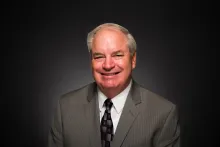
Robin Webber was born in Chicago, Illinois, in 1951, but has lived most of his life in California. He has been a part of the Church of God community since 1963. He attended Ambassador College in Pasadena from 1969-1973. He majored in theology and history.
Mr. Webber's interest remains in the study of history, socio-economics and literature. Over the years, he has offered his services to museums as a docent to share his enthusiasm and passions regarding these areas of expertise.
When time permits, he loves to go mountain biking on nearby ranch land and meet his wife as she hikes toward him.
