
Robin S Webber
This transcript was generated by AI and may contain errors. It is provided to assist those who may not be able to listen to the message.
Good afternoon, everybody. We're here today moving into the second part of a series that we're going through in the Los Angeles congregation. It's entitled, New Covenant Realities and Christian Responsibilities. Let's go back for just a second and remember where we were two weeks ago, and also to be able to invite those that were not here to bring them in so that we're all going to be moving in the same direction together.
A couple of weeks ago, we laid down some very foundational material about experiencing the New Covenant life. We anchored ourselves, first and foremost, in scriptural reality concerning God's great gift to us of eternal life. Let's, before we go any further, understand something very important. That eternal life is the gift of God. It is, by no human merit means work down here below, that we might obtain it of and by ourselves. It's a gift. The Apostle Paul tells us that Abraham, the father of the faithful, was justified by God, not by what he performed, not by his merits, by his works, but that he was approved of God by belief and by faith. We came to understand that, as New Covenant Christians, we don't obey God simply to get or to gain salvation by what we perform here below. But because God has granted that call of salvation, we yield ourselves. We yield ourselves to his sovereignty. We unconditionally surrender our lives and our plans and our list. We give ourselves to him unconditionally. We recognize his sovereignty. And because God is the king of our life, thus we yield ourselves and we obey his holy word. The last part of the message that we went through a couple of weeks ago was really exciting. Do you remember when we went through the book of Hebrews? Hebrews which exalts Christ to his rightful position. The book of Hebrews which lifts Christ above the angels, above Moses, above Joshua, speaks of the tabernacle above versus the tabernacle that is below, and lifts Christ that exalted, ascendant Christ to all that he is and how beautiful and how wonderful that is. And you could say, well, who needs anything more? But it's very interesting as we went to Hebrews 4 and verse 9 that there was this little jewel, this little nugget in there. After having lifted Christ so high, it says even so, Sabatismos apalipatos, there remains a rest for the people of God. We define that rest that is mentioned not as cataposis, which is speaking of a spiritual rest. But the word Sabatismos is only used this one time in Scripture. But we also find out what its meaning is in extra-biblical literature, that the only time that term Sabatismos is utilized is for a technical observance of the Seventh-Day Sabbath. Now, if you were not here to hear that message, I hope that you will go to our homepage, and you will go back and do some homework on that and listen.
Now we're going to move forward, and we're going to pick up where we left off, and that is discussing the sovereignty of God and the sovereignty of His revelation, His holy Word in our lives. We come as New Covenant Christians under the sovereignty of God and under the sovereignty of His Word. They are, in one sense, one and the same.
In our last message, as I just mentioned, we discussed how the book of Hebrews explains the supremacy of Christ above all that preceded His earthly arrival.
And now He's in that ascended state, Savior, and now qualified to be our High Priest. I'd like you to notice how this is described in Hebrews 8. Join me if you would there for a moment in the book of Hebrews.
And let's pick up the thought in verse 6. Hebrews 8 and verse 6.
But now, speaking of Christ, He has obtained a more excellent ministry in as much as He is also mediator of a better covenant, which was established on better promises. For if that first covenant had been faultless, then no place would have been sought for a second, because finding fault with them, He said, Behold, the days are coming, says the Lord, when I will make a new covenant with the house of Israel and with the house of Judah. Not according to the covenant that I made with their fathers in the day when I took them by the hand to lead them out of the land of Egypt, because they did not continue in my covenant.
And I disregarded them, says the Lord, for this covenant that I will make with the house of Israel, after those days, says the Lord, I will put my laws in their mind and write them on their hearts, and I will be their God, and they shall be my people. Now, let's consider what we just read. Jesus Christ is given certain functions, certain titles. It speaks of Him as being the mediator of the new covenant. It speaks of better promises. And sometimes this is just where people leave Christ as the better mediator or the better promises, and as the book of Hebrews says, there's this better resurrection, it seems better, better, better, but then it leaves out the rest of the book.
There's another aspect that I want to direct your attention to on this day concerning Jesus Christ and specific responsibilities that our Father above has allotted to Him. And I think as we do this, we're going to come to understand and appreciate how important and how exciting it is for a new covenant man, a new covenant woman, to observe this tool of grace called the Seventh-Day Sabbath. Join me, if you would, in Mark 2. It is here that Jesus offers what we call self-disclosure. He speaks of Himself and defines Himself. In Mark 2, there's a conversation and an issue occurring about the Sabbath, and we're going to come back to that.
Don't want to leave that alone, but that's another part of the message that we'll get to. But then we come up to verse 27. And He, again, let's define who the pronoun is. Speaking of Jesus Christ, He said to them, The Sabbath was made for man, and not man for the Sabbath. Profound understanding of making sure that we don't put the cart in front of the ox. Now notice verse 28. Extremely important.
Now let's put this equation together. The book of Hebrews says that He is the mediator of the new covenant.
What a wonderful and what a grand understanding that is. A title that is given to Him. A function that is His alone.
But we don't leave out the rest of the Bible. Here He gives self-disclosure and declares, Therefore, the Son of Man is also the Lord of the Sabbath. Very important to understand the word Lord out of the Greek. The word there is curidios.
Almost sounds like curiosity. Curios with a K. Allow me to define that for you. That means having power, authority, and ownership. Some of you may not recognize it in this day and age because oftentimes when we read through the book of Paul, Paul will often talk about Lord and Savior. The term that is being used there is curios.
That is probably one of the most specific words that got the early church in trouble with the Roman Empire. That was a word, Lord, or sovereign, that was reserved for Caesar. Caesar was curios. Caesar was Lord. Caesar was supreme. Caesar owned that which was the Mediterranean base, and nothing moved throughout that empire without the word and without the support of Caesar. Then comes along this other Lord, this other curios, and it sounds seditious. We sometimes lose what's happened two thousand years down the line. Why do I share this with you? Jesus says, I am Lord of the Sabbath. I own it. It is mine. I alone dictate and determine its course in the lives of men. It does not belong to any one man. It does not belong to any one denomination. It does not belong to any one ethnic group. Jesus Christ says, I am the Lord of the Sabbath. It is extremely important to understand this as we move forward. To understand that He is saying this in the sense of not only being the Son of God, but the Son of Man. You and I as Christian Sabbatarians, and I've been a Christian Sabbatarian since 19... about 61. Young boy, then. We sometimes say, well, how would God observe the Sabbath if He was a human being like me? All we have to do is look at the example of Jesus Christ, the Son of God, God in the flesh, and how He observed the Sabbath. Do you realize that Christ's actions and words regarding the Sabbath are the most recorded sections in the Bible?
You take the Gospels, and more of the Gospels deal with the subject of the Sabbath than any other issue. Why is that? Because I do believe that the Sabbath, the Seventh-Day Sabbath, is very important to God. And He wants us to understand its importance. But He wants us to understand that the proper order and what it signifies, that it's a tool of grace. I'd like to share a thought with you, and if you're taking a note, please take this one down right now. Because we're going to deal with it as we move through this message. The Sabbath is a tool of grace. It's not opposite grace. It is a tool of grace, when fully understood. Let us define as people of the Book what the Sabbath is, and not let others define it. Also, it is a tool of spiritual freedom.
There is nothing bondage-like about the Sabbath. You and I know, some years ago, people said, well, we've been delivered from bondage. Some of your own family members or friends perhaps told you that 15 to 16 or 17 years ago. I reject that! I reject that!
The Sabbath was created, and it's a gift of God, to offer new covenant Christians the ability to understand grace, and the ability to have freedom. Now, with all of that in point, let's understand where we're going in the course of this message, in this second part. It always goes back to this rhythm, to understand. A holy God gave a holy people a holy day for a holy purpose. It's about that simple. Let's understand it. Let's appreciate it. Allow me to give you point one in this message. A new covenant heart will understand the Sabbath is forever a memorial of God's plural acts of creation. A new covenant heart will forever understand that the Sabbath is a memorial of God's plural acts of creation. To appreciate this, we must go back to the beginning. Of course, that means the book of Genesis, because that's where the initial creation was. Join me if you would in Genesis 1. Let's understand what God is doing in teaching us through observance of the Sabbath day as new covenant Christians. We go back to Genesis 1. It's the story of creation, and there's one theme that runs through this, especially the first six days, as God creates and God creates and God creates. God kind of does a check-off. Like some of you guys that are in the trade at the end of the day, you want to know what we call the showing. What did you show in the course of the day? You kind of do a check-off. And you notice this as we move through Genesis 1 through the different days. Genesis 1 and verse 4, the first day, and it talks about it. And he said, it was good.
Then join me in verse 10. Second day, he says, it was good. Then you go to verse 12 again. It was good. Verse 18. Hope I'm not moving too quickly. But remember those first two or three minutes. We have to speed it up. He again says, and he saw that it was good. Now, verse 21.
And again, at the very end of that sentence, and God saw that it was good. God was creating. And he steps back. He looks at what he's doing. He says, it is good. But now we come to the sixth day. This is a part of the picture. Then God said, let us make man in our image and according to our likeness. Let them have dominion over the fish of the sea and over the birds of the air, and over the cattle and over the birds of the air, and over all the earth and every creeping thing that creeps on the earth. So God created man in his own image and in the image of God, he created him.
Some translations say, in the similitude, in the likeness thereof. And he created them. And then God blessed them and God said to them, be fruitful and multiply, and fill the earth and subdue it and have dominion over the fish of the sea and over the birds of the air, and over everything that moves on the earth. And God said, see, I've given you every herb that yields seed, which says, on the face of the earth, and every tree whose fruit yields seed to you it shall be food.
And he gives them the beast and he gives them the herb. It's for a purpose. Up to day six, God had made sun and moon and stars and water and firmaments and bugs and birds. But there was something missing. It was only a part of that creation. Then notice verse 31. Then God saw in verse 31 everything that he made, and indeed it was, I don't know if you've ever noticed this before, very good. It's like God goes from giving his creation a B to an A-. Have any of you ever been there with me in school where you finally get very good?
So the evening and the morning were the sixth day. God had done something beautiful. From the dust of this earth, he had given that dust a destiny. To be members of his family, to be immortal children, to not remain dust or just simply to go back to dust, but one day be a part of his family.
He didn't offer that relationship with bugs. He didn't offer that relationship with birds or even cattle, even monkeys or whales or poor pie that have great intelligence. He offered them a relationship. He said, I'm going to make me a man, I'm going to make me a woman, and we're going to bond, we're going to have a relationship, and I am literally going to walk and I'm going to talk with them in the garden.
And when they see me and I see them, there's going to be this uniqueness, this relationship. I'm going to create them to be like me, and they're going to worship me, they're going to understand me, they're going to understand that in me is all sufficiency, all that they could ever desire. They don't need to look anywhere else, do anything else, because I love them.
I foreordained this creation, and I will walk in their midst, and I will be their God, and they will be my people. It was like a relation like any other. Then notice verse 31. Then God saw everything that he had made, and indeed it was very good.
God stepped back from his creation, he reviews it, declares it very good, and notice, and declares, notice this in verse 1 of chapter 2, Thus the heavens and the earth and all of the host of them were finished.
Now I have a question for you, Los Angeles. Are you ready? Big question. If it is now very good, and not just good, and if he has finished all of his work, are you with me? Then do we have chapter 2? Why does not the creation end right there?
If all is finished, why not stop at six days? Why not stop while it's going well? Have you ever done that, where you've gone just a little bit too long and gone from very well back to the good? That's not what God does. Why the seventh day? Let's proceed to verse 2 here.
Now let's understand something. This set of scriptures says that he rested on the seventh day. Rested here is a very important word. You might want to write it down. It's Shabbat. He Shabbat. This means he ceased from all the work that he had done to this point. Now this is going to be germane to understanding why you and I observe the seventh day Sabbath as New Covenant Christians. That even while we have this better mediator, why then do we understand that he is the Lord of the Sabbath and why is the seventh day Sabbath so very important? It says he ceased from all the work. That is the work that he had done to this point. A question for you. Was he tired? Can somebody help me? Does God ever get pooped out? I don't mean to say that disrespectfully, but you kind of get the point because you and I at the end of the day get what? Pooped out. We sit in our easy chair. What does the book of Isaiah says? It says God does not get tired. Neither does he weary. He did not have to go to the bench and catch a breath. There's something that is powerful that is being described here that we need to understand. The power of these words is telling us that God ceased from all the labor that he had been performing until this point and now was going to perform and focus on a spiritual labor towards another end. He not only ceased, but now notice what he does here in verse 3. Verse 2 is important. If you're jotting this down, this can kind of be like a class 2 teaching and preaching. Are you with me?
We notice in verse 2 that he ceased from what he had been doing to this point. He stopped to that point the physical creation. Now he does something else. Then God blessed the seventh day and he set it apart. He sanctified it. That means he made it holy because in it he rested from all the work which God had created and made. The word blessed there comes from the Hebrew word kadash. That means he made it pure, clean, holy, sacred. He dedicated it. The question that you and I must answer is, well, how can he do that? How does God make something holy? It's because he rested or placed his presence in it. We often call God a term that we use especially out of the Old Testament for Lord. We use the word the eternal. Why do we call him the eternal? Because he comes to us from eternity.
What God does and has the ability to perform is he pours himself. He puts himself. That is his will and his purpose and his sovereignty that he can set apart, whether it's a burning bush or a day or a covenant people.
Or how the Shekinah cloud came down in the wilderness upon the tabernacle and rested upon the tabernacle. And it was holy because he was there. I use this phrase last time with you. I'll use it again. You might want to jot it down and think about it. Take it home and give it some consideration. In this 24-hour period called the Seventh-Day Sabbath, God poured eternity into it. God made a choice. He is eternal. He is an eternity. God took his presence and he rested. He imbibed himself. He put himself into this seven-day, this 24-hour period. He made it holy. The reality is that his very presence can make time holy. Let's appreciate that for some they will say, well, you know, I go to Genesis and I don't see the word sabat mentioned. That's disingenuous. That's disingenuous. While the word sabat does not appear as a noun, it does appear as a verb, in Shabbat, in that he rested. And it is defined as the seventh day. And that's very important to understand God's blessing. The element of holiness is introduced. Then what is the tie-in? Let's appreciate this. The seventh day creation. The Sabbath is a day of creation. It's just not a thought. It's not just a Jewish riddle out of the Holy Land or out of the sands of Sinai. The seventh day Sabbath, we can tell by Scripture, is not a man-made philosophy. It is a creation by none less than God. What is its purpose? It is to separate the world of man from the world that God desires for man. Very important. Remember, it says that God did what? He ceased. He stopped. Time out. From all the labor that he had done up to this point, which is the world of stick and stone. It is the world of material. It is the world that atrophies. It is the world that passes away. Now he's doing something different. The Sabbath reminds us of what the next part of creation is. The Sabbath reminds us that God is still at work, that there's a spiritual labor in completing Genesis 1, 26-27 of making man in his image. He ceased from creating the physical after the sixth day, and now he's in a spiritual work. Join me if you would in Ephesians 2 and verse 10. Ephesians 2 and verse 10. To have a new covenant framework of what God is doing. In Ephesians 2 and verse 10, it says here, For we are his workmanship, created in Christ Jesus for good works, which God prepared beforehand that we should walk in them. Wait a minute. I thought God ceased from all of his labor back in Genesis. No, he ceased from his physical creation.
The seventh day Sabbath reminds us that there is a spiritual creation that is yet in progress, and that you and I, by God's grace, have an opportunity to do that. How do I know that? John 5, 17-18. Remember Jesus' famous words?
What's in John 5? My father works, and so do I.
What kind of work? Making more bugs? Making another sun? Making another moon? Making a new kind of cow? Making a new river?
His work is to take our dust and move it towards the divine through the life, the death, the resurrection, and the exaltation of his Son, who now by his hand gives us acceptance to that throne. That is the work that is being performed, the same one that is also known as the Lord of the Sabbath.
Thus, we come to find that the Sabbath day is a holy creation. It's a memorial of creation to link man with God to remind us that the creation is not complete.
So that when you and I, as members of the United Church of God Los Angeles, come in to observe and assemble on the Seventh-Day Sabbath, you and I come to an understanding that creation is not only that which is past, and it does remind us that we are not an evolutionary accident. There is a creation, but it is only one part, that God right now is working presently, that creation, working that work in us as workmanship for him, and to recognize the tension that is between the past, the present, and the future, that it started and eaten, and yet it's going to wind up yet in the future.
Now, let's understand something. Adam and Eve that were placed in that garden after that creation of the Seventh-Day Sabbath rejected this holiness. They wanted to add to what God had plainly stated was sufficient. This is very important to understand. This word oftentimes comes up not so much in our church culture, but other cultures about the sufficiency of God's way and the sufficiency in Christ. And there is a sufficiency in God, and there is a sufficiency that comes by his grace through Christ. That is a new covenant reality. But even with that said, there are Christian responsibilities once we understand that, and we have God as our sovereign, and the sovereignty of his God's Word to tell us how to live as new covenant people. Adam and Eve wanted to add what God plainly stated was enough and adequate for salvation, the tree of life. Genesis 3.1 tells us that the man and the woman took to themselves. Their works would be sufficient rather than the curios, rather than the sovereignty of God. We even find that today.
That people want to add to God's Word. Nowhere in Scripture does it say that the Sabbath has been done away with. It has not been abrogated. It has not been abolished. It has in no way been diminished. If anything, a true reading of the Scripture tells you that it becomes fuller, greater, more fantastic and beautiful. That it is a tool of grace. Adam and Eve threw it away. As they threw it away, God went from individuals and began working with a nation. Just as Adam and Eve had been a creation or a new creation, God once again did not go with dust, but he went with the mud off the banks of the Nile. He took a people that were not a people. He took slaves.
He said, I'm going to make you a covenant people. I'm going to give you freedom. I'm going to give you something special. He called Israel. In Exodus 20, verse 8, he gave them some instructions. Join me if you would, please. Exodus 20, verse 8.
He says, Remember the Sabbath day, to keep it holy. Six days you shall labor and do all of your work, but the seventh day it's the Sabbath of the Lord your God, and in it you shall do no work, you nor your son nor your daughter nor your male servant nor your female servant nor your cattle nor your stranger, who is within your gate.
For in six days the Lord made the heavens and the earth, the sea, and all that is in them, and he rested on the seventh day. Therefore the Lord blessed the seventh day, the Sabbath day, and he hallowed it.
He said, Remember the Sabbath day, because it had been already introduced to Israel in the Sinai through the giving of the manna.
But I want to share something with you, and I'm probably just going to get through one point today, as I just noticed the watch. We're a little bit behind, but this is fine.
Beyond Sinai, it's very important to understand a very important verse. Are you with me? Remember how important it was last time when we went to Hebrews 4 and verse 9, and we discovered the beauty and the punch and the reality of Sabatismo's apalipatos, the little jewel that's in the Bible. Sometimes those jewels are just in there. There's another tremendous jewel. I'd like you to go to Genesis 26 and verse 5. In Genesis 26 and verse 5. Everybody there? Now, this is very important to understand. Let's understand the breath of Torah, the law. You have the understanding that in Exodus you have the giving of the Ten Commandments. But these people that had not been a people, a nation of slaves, they, like you and me, sometimes we need a scrapbook to see where we've come from. So that's why God inspired Moses to write down these stories of what had occurred before. And Genesis 26 and verse 5 is what I call one of the great lynchpin verses of Scripture. Now, remember Exodus 20? This is around 1400 B.C. They need a history. They need continuity that takes them back to the beginning of time, these people that had not been a people. And we come to Genesis 26 and verse 5. Because Abraham obeyed my voice, kept my charge, my commandments, my statutes, and my laws. Now, why is this so important? And why do I, as your pastor, call this a lynchpin verse? Let's appreciate that I often turn to Romans 4 verse 1, verse 2, verse 3 about Abraham. And in the sense that we recognize that he was not justified before God by what he did, but it was approved. He was approved by faith and by belief.
And that is how we come to God. We come to God by his grace, in faith, in belief, in being revealed his sovereignty, internalizing that, thus surrendering ourselves. But then, let's understand something. There is what we call the O-word. Does anybody know what the O-word is?
Obedience. Our faith is translated and made real by the way that we walk. Once we come into contact with God and his word and surrender ourselves to it, we do not add to it, as did Adam, as did Eve.
We accept its sufficiency that God is the God of our life. He is curious. He is Lord. And he is the Creator. And if anybody knows what is best for the creation, are you with me? He'd be the Creator.
And thus we find this verse, because Abraham obeyed my voice, kept my charge, my commandments, my statutes, and my laws. May I submit to you as an audience that I believe Genesis 26.5 is a linchpin verse that connects Genesis 2, Genesis 3, with Exodus 20.
Here we find an individual, Abraham, who, by all recognition of Scripture, experienced the New Covenant. He is called the Father of the Faithful. He journeyed out of his land.
When the call came, he said, yes, Curios, I will follow. I will not add. I will not detract. I will do what you say. I will follow you wherever you go, whatever you do.
Isn't that why we're going through this series right now, friends, as New Covenant Christians, to recognize that worship of God is not just set apart for one day, but every day. That God demands to be curious of our lives, whether it is about our time with the Sabbath, whether it's about our tummy with the biblical food loss, or whether it's our treasure when it comes to tithing. God is so loving and so wonderful and knows the product and the process that he's moving us through that our worship of him cuts across the very grain of our life. Our time, our treasure, our tummies. Nothing gets closer. Nothing gets dearer. Let me just take it because I want to finish this point. Actually, I have two more points I wanted to give you today, but I'm just going to finish this one point. Join me if you would in Exodus 31. Because it is in the law, and law is a beautiful word, Romans 7.14 tells us that the law is spiritual. But we find in Exodus 31.13 that the Sabbath now is not only defined as an act or a day of creation, but something else that is assigned to it. In Exodus 31.13, notice what it says.
Work shall not be done for six days, but the seventh day is the Sabbath of rest. Holy to the Lord! Whoever does any work on that day shall surely be put to death. And therefore, Israel shall keep it. In the verse 17, it is a sign between me and the children of Israel forever.
When the Lord made the heavens and the earth, He takes us always back to the beginning, to Genesis, to remind us that we are not an accident. Adam and Eve forgot that they were not an accident.
Ultimately, the nation of Israel, Judah, would forget.
The Sabbath always takes us back to remind us that we are not the accident.
We are not the ancestors of two lovesick Amoeba in some slimy pond that all of a sudden gets an act of photosynthesis going and, yeah, life.
Now, if you want to believe that about your ancestors, you go right ahead.
Or you can be a monkey's uncle, too. Or maybe the monkey was your uncle, but he ain't my uncle.
The Sabbath reminds us that we are creation. And as a creation, I worship a God that has a purpose. And every day and every Sabbath that I keep, I am reminded that humanity in the long run is not headed for disaster. Do most of the people out there know that, brethren? Do most of the people know that out there that this world is not going to end up in nuclear waste? People wake up. They're alarmed. They don't know what's going on.
They see a world in disarray, and it can get spooky even for New Covenant Christians.
When I am anchored in the Seventh-day Sabbath, I know that I've experienced God's grace. It's not my good looks or my—well, you know, that's not true. It's not my good mind that somehow said, you know what? I see what God said here. I kind of agree with God.
No, actually, God agrees with me.
Seventh-day, what's the problem? There's a lot of people out there that can count to seven, but they do not observe this tool of grace. I'll tell you why, friends, lest we forget, you being here today is by God's design. It's not by your works. It's not by your head knowledge.
It's no less, no more, than what God offered Adam and Eve, what God offered a covenant people called Israel. And God took that veil off our mind and off our hearts and said, here's a gift. And it's going to tell you, and it's going to remind you of what I've done, what I am doing, and what I'm yet going to do for all of humanity, that the entire world one day is going to come to a thousand-year rest. How many people out there know that, brethren? How many people have this wonderful and beautiful and great news, all invested and surrounding the seventh-day Sabbath? It is so beautiful. It is so wonderful. Galatians 6 and 16 will conclude. Galatians 6, 16.
There are so many terms that define who and what we are. We can say firstfruits. We can say saints. We can say new covenant Christians. Here's another term that God uses out of Galatians 6 and verse 16. Join me if you would there. Galatians 6, 16.
I thought I wanted Galatians 6, 16. Pardon me.
That's not what I wanted. I'm looking for it. Yeah, it is. And as many as walk according to this rule, peace and mercy be upon them, upon the Israel of God.
That's a term that God inspired the Apostle Paul to use for new covenant Christians. Those that would follow Jesus Christ's example of observing the Sabbath. We are called the Israel of God. Not an old covenant people. We are a new covenant folk. But that Sabbath remains in place, and it's designed to give us peace in a world devoid of peace.
And when we yield ourselves to it, things begin to happen.
I'm going to finish right there. I actually had two more points to give you today. Like I said, I don't know how many parts. Well, I hope you're finding this framework of the Sabbath encouraging and exciting.
Brethren, it's time we revive. It's time to understand that God, through His Spirit, gives new covenant Christians a desire to worship Him, to yield to Him, to recognize this sovereign tape, and to be able to share this good news with the world that is around us.
Let us rest in the hope of this tool of grace that God has given us, remembering that the Sabbath is very special and that Jesus Christ is the Lord of that Sabbath. We'll be picking up the series of Fortnite from now. Two weeks from now, we'll be back and we'll continue discussing this tool of grace called the Sabbath.
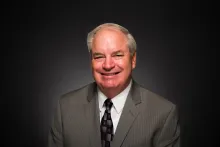
Robin Webber was born in Chicago, Illinois, in 1951, but has lived most of his life in California. He has been a part of the Church of God community since 1963. He attended Ambassador College in Pasadena from 1969-1973. He majored in theology and history.
Mr. Webber's interest remains in the study of history, socio-economics and literature. Over the years, he has offered his services to museums as a docent to share his enthusiasm and passions regarding these areas of expertise.
When time permits, he loves to go mountain biking on nearby ranch land and meet his wife as she hikes toward him.
