
Robin S Webber
This transcript was generated by AI and may contain errors. It is provided to assist those who may not be able to listen to the message.
Well, again, we certainly want to welcome everybody that's here with us today. We have been in our adult Bible class, we've been going through a series on the different sanctuaries that God has had His people worship in down through the years. The ongoing series deals with the tabernacle back in the wilderness, also Solomon's Temple, and also, in the sense, the Herodian Temple, the one that Jesus Christ Himself saw and was gone to. I have a question for you today in regards to the series that we're going through, and I hope that it will be poignant and relevant to our daily walk.
What does a small, gold-plated wooden box that was crafted over 3,500 years ago have to do with a New Covenant Christian's journey through today's world?
Where is the relevance? Why should we be concerned?
When I mention the term, the Ark of the Covenant, most students of the Bible will recognize and appreciate that term, and they will all come to that term with different amounts of knowledge. Some of us may be familiar with the term, some of us may be familiar that the ancient Israelites were instructed by God to carry that box before them as they went through the wilderness. Some of us may even know that there were three very special items that were stored in its chambers. But with all of that said, let's come back to today, why should we care about this subject? And beyond that, why should we dare to implement some of its ramifications into our daily walk today?
Significantly, the Ark of the Covenant deals with the subject of holiness. That is God's holiness and His holiness right inside of us that projects back up to Him and also out to others. What I'd like to show to you for a few moments is that the call to holiness, and that's what we're being called to, friends. The call to holiness is discovered in both Testaments of the Scripture in the words of God, both through Moses and also by the Apostle Peter. Join me, if you would, for a moment. Let's open up our Bibles. Turn with me to one of the books of the Law, the book of Leviticus.
And let's notice in Leviticus 11 and verse 45, the call that God gives a covenant people. In Leviticus 11 and in verse 45, For I am the Lord who brings you up out of the land of Egypt, just like the preamble to the First Commandment. I am the Lord who brings you up out of the land of Egypt to be your God. You shall therefore be holy, for I am holy.
Holiness is what God is. It is what emanates from God. But it's not a subject that is lost simply on the sands of time or in the Old Testament. Join me, if you would, for a moment, to a corresponding New Testament declaration that is found in 1 Peter 1. And let's notice verse 16. Now, let's build upon the foundation of that first divine utterance that we just looked at. And let's turn over to 1 Peter 1. And let's pick up the thought in verse 15 to recognize that God never changes his mind.
In 1 Peter 1 and verse 15 we find, but as he who called you is holy, you also be holy in all of your conduct. And then, let's notice verse 16. And here it is, echoing out of the past and now into the future.
Because as it is written, be holy, for I am holy. So God is holy. We're called to be holy. But again, how does that relate to us? Let's understand that we have not only been called to holy, but we've been granted a function, my God. And that is a call to be priest and or a kingdom of priest before this holy God. Again, let's understand the interchange between the Testaments. Join me if you would for a moment in Exodus 19 and let's notice verse 6. In Exodus 19 and verse 6, let's notice maybe something that your eyes have never centered upon before. Because so often we just go to Exodus 20 where the Ten Commandments are listed.
And or we think that ancient Israel was just called to be followers of Moses. But this covenant people were given a specific opportunity. Notice. And you shall be to me a kingdom of priests. You are to be a holy nation. These are the words which you shall speak to the children of Israel.
So the children of Israel were not just called to travel in the wilderness for 40 years, or to simply go out and collect manna, and or to witness all the miracles of a Moses or an Aaron. They too were given a function and a responsibility. They were being molded and groomed to be a kingdom of priests. Priests are those that handle the holy things of God. Again, let's notice the corresponding verse that you and I may be more familiar with over in Revelation 5 and verse 10.
In Revelation 5, and again, let's notice verse 10. Again, this is a prophetic declaration. This is a song that is sung in the book Revelation, one that we often speak about in the fall festivals that the church observes. And it says, Speaking of God, have made us kings and priests to our God, and we shall reign on the earth. God's plan for His people never changes. A covenant people, whether under the old covenant and or the new covenant, those that follow God have been called and given an assignment to become a kingdom of priests, of teachers. Teachers of what?
Teachers of holiness. Now, for some of our young people here, younger generation, we so often think of a priest as maybe, especially when we see some of these Bible story books, we see a man with a real long beard, and he's got kind of a funny hat on, and he's got these mantles of clothing on, and you think, well, you know, that's not really what I'm cut out to be.
That's not kind of what I want to look at at that age. That's not how I envision myself. But allow me to come back, please. That's how God envisions what we ought to be, not on the outside, but on the inside. And that is that we're to be a kingdom of priests, learning about the holy things. So we need to understand a very basic premise for the body of Christ. Are you with me? And that is simply, we are now in training in this lifetime, in the wilderness of the world that you and I go through, God is training and molding us to become a kingdom of priests.
With that thought in mind, let's understand something, and you may want to be ready to jot down a note. A priest is always mindful of three standards that God sets in motion in the Old Testament of yesterday, and our walk today as New Covenant Christians. Number one, how we approach holiness.
You just don't bump into it. Number two, our awareness of holiness. And number three, our acceptance of holiness. And to be an effective priest in training for God, we must inculcate, understand, internalize, and express all three.
So today as priest in training, let's open up our understanding as New Covenant Christians, and what we're going to do is we're going to peek into the ark. So often people just think of the ark of the covenant as being an artifact of old that is either being kept in safe storage somewhere by the Almighty God or is lost to the sands of time. But you and I, we're going to go back and we're going to peek into this ark of the covenant, and we're going to find its relevance for you and me. For a moment as we begin, let's consider that the tabernacle of old, the tabernacle, the facility of worship for God, served as a place for God to dwell in among His people.
Number one, the tabernacle served as a physical presence for God to dwell in amongst His people, and also as well to be able to commune with them. In other words, to establish a relationship.
A tabernacle of old in the wilderness, the tent as it's referred to in Scripture, was not just simply to be a resource center for humanity. It was about God's presence and it was about the opportunity for the people of God to commune with God. You can find that in Exodus 25, verse 8. You can also go to Exodus 40, verses 34 through 37. I don't mean to dwell on the tabernacle per se.
It is interesting, though, why did God have the tabernacle, and why was it located where it was in the midst of the people? The tabernacle stood in the midst of the camp of Israel as a visual reminder that the children of Israel that had been called out of Egypt and out of slavery were there to serve the one true God as they made their pilgrimage through the wilderness to the promised land. Now, why did God do that? Because the children of Israel had a propensity. That means, to bring it down to a smaller word, they had a bad habit of being affected by their neighbors, of sliding back into idolatry almost around every corner. So God, as the master teacher, understood that they needed to have this tent, and the tent, the tabernacle, where God would place His presence was in their very midst. Not out on the corner, not south of the community, but as we saw a couple of weeks ago, the tabernacle was right in their middle, right in the midst. And all that was around, and in that tabernacle, as Moses followed the instructions of God, was designed for a specific purpose. Allow me to share it with you. The tabernacle was designed to show a sinful people that which was unholy, how they could be redeemed, how they could be made good, how they could be brought back through worship, through service, through sacrifice, and through remembrance to the one true God. But now how does that relate to us speaking of the tabernacle? Likewise in the New Testament and throughout the New Covenant, we as the bride of Christ are solidified by the reality that Jesus Christ has left his heavenly throne and chosen to tabernacle amongst us. Again, let's recall, let's go back a second, what we saw a couple of weeks ago. We understand that God who owns the heavens and is everywhere chose to dwell with his people by the semblance of the cloud during the day and the pillar of fire by the night. So that which was in heaven came down in physical manifestation in the tent amongst the people. Heaven touched earth in the camp of Israel.
Well, that's exactly what we understand through the New Testament. Join me if you would in John 1. Let's go to John 1, one of the great declarations of Scripture, and let's notice what God would have us to learn about tabernacling and tents. In John 1, we have the wonderful declaration that the Holy Spirit inspired the Apostle John by saying this, in the beginning was the Word and the Word was God and the Word, excuse me, the Word was with God and the Word was God and he was in the beginning with God. And all things were made through him and without him nothing that was, there was nothing that was not made and in him was life. When we read that Scripture, we come to understand that there is indeed a first cause, that there is a Creator, that all that's around us didn't just happen.
But if we just simply left it at that, then we could understand that, you know, there are many, many religions that are out there that believe in a first cause. There are many religions out there that believe that there is a Creator or some supreme deity that set this all in motion.
The Big Bang and here we are, etc., etc. But that's not what you and I as members of the community of saints believe. Our belief has got to go to a greater step. That's found in verse 14. Let's slide down the page here. Notice, because it is verse 14 that establishes Christianity and establishes our belief. And the Word became flesh. That supreme deity, that first cause, that Creator that made everything, it became flesh and it dwelt amongst us. And we beheld as glory, the glory as the only begotten of the Father, full of grace and truth. When you look at that word dwelt, you might want to circle it if you want to. You don't have to, but to allow it to stand out. One of the great verses of Scripture, it says there that God from heaven decided to tabernacle.
Other translations will even say tent. That God decided to live in a tent with humanity, this physical flesh being the tent. That the one that had led Israel came down again and tabernacled, tented, dwelt in the midst of humanity, that he might touch them, commune with them, and vice versa. So that's kind of interesting when you think about it. And by the one that had led Israel in the past, now coming amongst mankind, it's interesting that we also have all the elements of the tabernacle. We have the high priest, we have the blood sacrifice, and through Christ we have accessibility to God. But what is truly amazing, as we just stay with the tabernacle before we get to the Ark of the Covenant, what is truly amazing, what God reveals here, is that we not only have one-on-one access with God through Christ, which is well and good and would be enough, but through Scripture we come to find something else about the church, about the ecclesia, the called-out ones. God clearly shows us, join me as we turn to the book of Ephesians, that we are a spiritual temple under the course of construction. Notice what it says here in the Revelation of the Holy Spirit through Paul that we find in the book of Ephesians 2 and verse 19.
Actually, may I say, I find it personally quite stunning in Ephesians 2 and verse 19. Now therefore you are no longer strangers and foreigners, but are fellow citizens with the saints and the members notice of the household of God.
Having been built on the foundation of the apostles and the prophets, Jesus Christ Himself being the chief cornerstone in whom the whole building, being fitted together, grows into notice a holy temple and or sanctuary in the Lord, in whom you also are being built together for a dwelling place of God in the Spirit. Now this is interesting. Can I share something for a moment? Because, you know, we talk about multitasking sometimes. That's a very popular word in this day and age. God is actually multitasking with us. Think about it for a moment.
In one sense, He calls us the bride of Christ. So we're preparing to be a bride.
In the book of Exodus and in the Revelation, it says that He is preparing us to be a what? A kingdom of priests to handle holiness. I've got a lot on my plate. But then God also says, I'm also designing and molding and shaping and bringing you into being a temple. Now, not a temple of stone or or of wood, but a living temple, lively stones, as Peter brings out in his epistle, that we are the flesh and blood temple of God with a heart inside, that He has chosen to put His presence in. Now, he says that He's doing that with the body of Christ. An even more personal note of love is found over in 1 Corinthians 6. Join me there for a moment, because it's interesting that we can go from a larger pronoun like they or them or us. And God personalizes it through Paul in 1 Corinthians 6 and verse 19. When speaking to the Corinthians, He says, or do you, do you not know that your body, oh, it's speaking directly to us. Don't you know that your body is the temple of the Holy Spirit who is in you, whom you have from God and you are not your own? The term temple there, if you want to be daring again with your Bible and circle that, the term there of temple is nails in AOS. That's speaking of the Holy of Holies. That's not just speaking of the Holy place outside of the Holy of Holies. That's not talking about the courtyard.
God is saying, I am residing in you. I'm coming right to that place where, in times of old, nobody else could even walk in other than the high priest once a year. And I have chosen you that I want to dwell in you, that you might commune with me and that you might have access.
No, that's kind of exciting when you think about it. That should kind of wake you up on Mondays, Tuesdays, Wednesdays, Thursdays, and we'll throw in Fridays. That's not something that you just do on the Sabbath. That's every day of our service as priest in training to our God. Such opportunity and privilege should humble us as we walk carefully before God. But now we're going to dare to venture towards peaking into the Ark of the Covenant. But let's remember something before we take the peak. There's three things that stand in our way. Let's shot this down as students of the scriptures, if you want to, so you'll stay with me in the message. Let's understand that an individual that was coming towards the tabernacle complex had to go through three veils. Through three veils. It's interesting that the very term veil comes from the Hebrew term perrokap, which literally means to separate. There was a reason why God had three veils before an individual was able to experience the Ark of the Covenant. Three is a number of finality.
First of all, if you've ever seen a picture there of the tabernacle complexes we did a couple of weeks ago. Number one, there was the gate of the courtyard. There was that perimeter curtain that went all around the complex that was about seven and a half feet high.
That was so that as people came out of the various communities that they were in, whether they were of Iskard, Gad, or Dan, or whoever it might be, they recognized that as they came to or towards the tabernacle complex that there was something that separated all that was around from that which they were about to entertain. And that was the holiness of God. And there was that perimeter, just as much as a perimeter as when it was when Moses had to in that sense take off his shoes, that they were beginning to approach God. God wanted them to realize that you just don't bump into me. I am holy, therefore you be holy. So number one, they had to go through the gate of the court. Then as they came up to the tabernacle itself, which was not a very large tent, frankly, it was probably maybe about 30 feet wide by maybe 40 feet long, give or take. Don't hold me to that. It was not there as big as this building itself. Then as they went into the tent, they had to go through what was called the door of the tent, another veil, another separation as they approached the Holy of Holies and what was inside. And then finally, now you can begin to look at your sheet that's in front of you, then they had to go through the veil. The veil that separated the holy place from the most holy place. And as they went through that veil, let's notice on your paper that's in front of you, they're embroidered in glory and in beauty as much as a man could do with woven cloth was the, excuse me, were the figures of the carobim. Let's take a look at that for a moment.
That was to place in the consciousness of the high priest, of that in that sense he was moving into that earthly portal of the throne of God. He was approaching holiness, three veils, three forms of separation, and also, if you want to conversely look at it, three portals of entrance towards the throne room of God. Once the high priest moved through that veil, he was now ready to encounter God. And so are we now. Amazingly, when you think about it today, you and I, every day of our life, as we pray to God, have the same opportunity as the priest of old dead to have direct communication with our God above through Jesus Christ, the high priest. This is something that ancient Israel couldn't do. This is what the Israel of God, the spiritual Israel of God, can do today. So now we're ready to move, if you will, with me. We're going to go behind the curtain. What's behind that sacred veil? What's behind that sacred veil is the most sacred part of the furniture that's in the tabernacle, and that is the Ark of the Covenant. And on the Ark of the Covenant, as you now look at it on your paper, if you'd like to follow along with me, was what was called the mercy seat. And that depicted God's earthly throne. Combined together, there was the Ark of the Covenant, and then there was the mercy seat on top. Now, if you want to jot this note down, Exodus 25 verses 10 through 20, I'll allow you to study that, because that kind of goes through all the ins and the outs of the construction of the Ark. But basically, what Exodus 20, excuse me, Exodus 25, 10 through 20, will share with us is that this was not a very, very big box. The Ark of the Covenant, for all of its prominence in spiritual history, was only about four feet long and about two feet wide.
It wasn't very big, but it was great as far as depicting the holiness of God.
And what is interesting, it was made of two things. Exodus 25, 10 through 20, will tell you basically, it was primarily composed of two items. Number one, acacia wood, acacia wood, and number two, gold that lined the box inside and out. Now, this is real simple. Aren't you glad that there aren't three or four? This might be an even longer message, twice as long. There's only two items, the acacia wood and the gold that lined the box inside and out. It is fitting that the encasement of God's testimony to his people can be understood by we of the new covenant as a poignant symbolism of Jesus Christ. And that's why I'm bringing us to the Ark of the Covenant. Let's look at it on our paper there for a moment. What do we learn about it? And what was God foreshadowing nearly 1,500 years before the Messiah would come? Exodus 25, 10 through 20, describes the Ark, tells us that primarily the foundation was made out of acacia wood.
Let me describe some of the qualities of acacia for you a moment. Acacia was a tree that was found in the Sinai wilderness, and it was known for its, number one, its incorruptibility, and also its indestructibility as a wood in the wilderness. For we that, in a sense, do live in a desert climb, or at least a Mediterranean climate. I know none of us ever want to admit that we live in a desert climate. We call it Mediterranean or Southern Californian, hoping that the real estate market will go up, right? No. Desert climate. You and I might be familiar with a piece of wood like manzanita. When we go up into the mountains, that red wood that's indestructible, that's hard, that's sturdy, that's incorruptible, that can stand the heat, that can take the wind, it holds. That's the kind of wood that the Ark of the Covenant was made out of. With those thoughts in mind, knowing that all that is in the tabernacle would foreshadow Jesus Christ, what symbol better fits the earthly ministry of Jesus Christ as the Son of Man? If you want to stay with me for a moment, you might want to jot that term down, Son of Man, and let's expand upon that for a moment. Let's think about it for a moment. Some of the scriptures that come to mind out of the Old Testament. In Isaiah 53, in verse 2, describing the Messiah, it says that He would be taken as a root out of dry ground. A root out of dry ground. The symbolism of something living that becomes wood out of that which is dry. Something that could survive the heated environment of this earth. We're also told in 1 Peter 1 and verse 19, and you can look this up later, that it says that He was sinless through this lifetime. That reminds us of the incorruptibility of Jesus Christ.
It reminds us that the acacia wood was incorruptible. It says in Matthew 27, speaking of the crucifixion, which gives us the whole scenario of what happened on that day of sacrifice, that Jesus in that sense, withstood the fire of the cross. And not only that, but the indestructibility of that acacia wood in that sense. Join me for this one. Let's go to Psalm 16. Let's open up the Bible itself and look at this one that we can get right into. Be speaking of Him who would come as the Messiah. Psalm 16 verse 10, For you will not leave my soul and sheal, or in the grave, nor will you allow your Holy One to see corruption. The body of Jesus Christ would not become corrupted. He would be resurrected just as much as that acacia wood, that in case the Ark of the Covenant was an incorruptible wood. So when we think of that, you know, God sees things as if they already are. He leads us into the future. Here's this Ark of the Covenant and He says, make it, make it out of acacia wood, because I want you to begin to understand something that I'm going to do with humanity. Well, boy, that really kind of bespeaks and of Jesus Christ. Why do we even need to touch the gold? Well, because we all like to touch gold. But before you do, let's remember something. No, I'll save that for a moment. I'll just use that phrase and I'll come back in a moment. The gold lining inside and outside of the Ark of the Covenant was speaking ahead of time that the Messiah that would come would not only be the Son of Man, but He is also what? He is the Son of God.
He is the God-Man. Join me if you would for a moment in 2 Corinthians.
And let's notice how Paul defines a portion of the ministry of the Messiah. 2 Corinthians 5, verse 19.
Speaking of Jesus, now exalted, that is, verse 19, that God was in Christ, the God-Man, the Son of God, reconciling the world to Himself, not imputing their trespasses to them, and has committed to us the word of reconciliation. What we see here, then, is to understand that the gold that lined the wood inside and out reminded us of what was coming. God was encased in this fleshly tabernacle that would glorify God not only by being present among man, tabernacling with man as we saw in John 1.14, but now, with that gold in the symbolism, now sits at the throne of God. Let's remember this. Stay with me. The Ark of the Covenant, with the mercy seat on top of it, demonstrated, actualized, the throne of God in type.
Now, we know that God rules the heavens and the earth, but with a physical people, God wanted to demonstrate that when His Shekinah presence came amongst them, He rested on the mercy seat on top of the Ark. Thus, the Ark of the Covenant itself, inside and out, inside and out, was laced with gold. The gold represents the divine. The acacia wood represents the temporal. The acacia wood represents in type Jesus as a son of man, fleshly. The gold, inside and out, for He was indeed divine, inside and out, represents that which is of God. So, we've gotten a little bit of the tabernacle. Are you with me? We've talked a little bit about the Ark of the Covenant. Now, who's ready to peek into the Ark itself? We're going to get to those three items, but we've got a difficulty here.
We've got to take a pause, because I want to ask the audience here, who's going to raise the cover of the Ark? Who wants to touch the Ark out here? Where do we know the story? Remember Uzzah? No, we can't really, in a sense, literally peek into the Ark. You know, we've all done that with boxes or gifts. You know, kind of peeked in and looked at. We can't do that, but we can peek into the Ark by going to Hebrews 9, figuratively. Join me there for a moment, if you would. Hebrews 9, and let's pick up the thought in verse 4. Speaking of going through the veil of the tabernacle, speaking of the golden censer, and notice verse 4, and the Ark of the Covenant, overlaid on all sides with gold, in which were the golden pot that had the manna, Aaron's rod that budded, and the tablets of the Covenant. So what we find that if we, in that sense, did actually peek in, we would find a jar of manna, we would see a rod that had bloomed, and we'd find the tablets of the Ten Commandments.
Now, why is that significant as we take a new covenant peek into the Ark of the Covenant, and what can we learn by this? Number one, friends, join me in a discussion of manna. Number one is manna. Manna is what God instructed Aaron to collect just a small bit, and place in a golden bowl, and place it into the Ark. Let's notice that in Exodus 16, 33. In Exodus 16, 33, right there, kind of at the beginning of the story of manna, Moses and Aaron followed an instruction. Moses said to Aaron, his brother, take a pot and put an omer of manna in it, and lay it up before the Lord to be kept for your generations. And so it was. Now, what is very interesting, if you look at this for a moment, you might want to circle this word, omer, O-M-E-R, interesting as students of the scriptures. And omer was basically what the Israelites were instructed that they could collect a day at a time. Now, that's very important in the discussion that we're going to come to in a few moments. So now, let's understand something. Why, what was this? Let's talk about this for a moment. What is manna? Manna is kind of a neat word, and some of the young people here might want to listen to this for a moment, because this is some of the good stuff. Manna, which sounds very biblical and Old Testament, is just a phrase that literally means, what is it? That's all that manna means. Manna literally means, what's that? Have you ever done that, where maybe in school or on the job or maybe at home, somebody thinks that they're going to surprise you and give you something really neat? And what do you do in your very spiritual response?
What's that? What is that? Well, that's exactly what manna means. Today, you and I would call it, what is that? What it was, was the food that God provided Israel in the wilderness for 40 years.
The scripture tells us it was small, it was white, basically rounds of coriander seed that stuck is that, excuse me, that they stuck, stuck to the earth like dew from heaven. In fact, let's notice Exodus 16 verse 4 while we're still back there. It has another name that we find in verse 4. Then the Lord said to Moses, Behold, I will reign bread from heaven for you. Now, all of us, especially when we were growing up, had heard of Wonder bread. Well, in a sense, this was indeed Wonder bread. It was called bread from heaven. Interesting. In giving this bread to ancient Israel, the bread was demonstrating on a daily basis that God alone could meet the needs of His people.
It came from heaven. It was sustenance. It was given daily. It was drawing a lesson of dependence on God alone. What is interesting is Jesus that makes the link between the, what is it, to what His ministry is about. Join me if you would in John 6. In John 6, and let's take a look at verse 32. In John 6 and verse 32, it is amazing the connection that Christ makes. Then Jesus said to them, Most assuredly I say to you, Moses did not give you the bread from heaven, but my Father gives you the true bread from heaven. So often we look at man. So often we look at that, which even maybe God is using. But it's still not God. It all goes back to Him. And that's what Jesus was saying. Wasn't Moses that saved you in the wilderness? Wasn't Moses that delivered you? It was God. For the bread of God is He who comes down from heaven and gives life to the world.
Then they said, O Lord, we'll give us the bread always. And Jesus said to them, I am the bread of life. And he who comes to me shall never hunger, and he who believes in me shall never thirst.
So it's interesting that Jesus claimed the qualities and the substance of the true bread of heaven. In fact, it's interesting that one of His followers built upon this, adds to it. Join me, if you would, in 1 Corinthians 10. In 1 Corinthians 10, Paul adds an element that maybe even ancient Israel didn't understand about the manom. Somewhat of a familiar part of Scripture to us, speaking of Moses and how they were all baptized in the cloud and the sea, speaking of actually the rock, the one that led them, which was often called the God of the Old Testament that we now know as Jesus Christ. And notice verse 3, And all ate the same spiritual food. Ancient Israel perhaps never learned the lesson. Ancient Israel maybe thought that they were just to go out and collect their Cheerios every morning and have breakfast. How would you like to eat Cheerios for 40 years?
How I like Cheerios? I'm sorry, a little self-confession here, a little personal testimony.
I love Cheerios. Sugarcoat it, too. That might be bad. Mothers, you've got to forgive me, you're Christians. But anyway, I like Cheerios. But I don't know if I like to eat Cheerios every day for 40 years. I might go from what's that to why that, just like ancient Israel did.
But Paul says it was really beyond simply the physical sustenance or the ingredients.
This was spiritual food that a covenant people might understand that life was dependent on God, and not only a physical life, but a spiritual life. And if the lesson was lost on them or never understood, we that are the spiritual Israel of God, we that are being called to be priests of holiness, we that are in that sense having God in us as the temple of God, need to understand the lesson of dependence on God, and that's why the manna was in the ark of the covenant.
Let's ask ourselves a question from what do we personally gain by recognizing Jesus Christ as the bread from heaven and or the divine manna that now exists inside of us. Let's think about this for a moment. Number one, manna was white. The white of the manna would denote the spotless purity of Jesus Christ and his example before us as we go out to collect it and internalize it.
And allow it to nourish us and allow it to grow in us. We understand when we read the story of manna back in Exodus 16 that it would be ground and that it would be baked. It reminds us that in that sense of the suffering of Jesus Christ and the trial of fire being baked in that sense by the torture and by the trial that he went through at the crucifixion on our behalf, that we could have a connection with God, be redeemed, be able to have that connection and communion with them. It's also interesting of its placement in the ark. The manna was placed in the ark that as that manna that in a type represents Jesus Christ was in the ark and in the most holy of holies. Are you ready for it with us? We come to remember that Jesus Christ does not rest below us corrupted, but that Jesus Christ is now in the heavenly of heavenlies. He is in the throne room of God. He is not corrupted. He did not evaporate. He did not get stale like manna of old. That manna, the bread from heaven, is right in the throne room of God. What's also interesting as we conclude this short point on manna is to understand this. Who told us in that model prayer that we should ask for our daily bread? It is Jesus Christ, the bread from heaven. And we are in that sense to ask for our daily bread. That's why it's interesting that when God told Moses, and whatever God usually told Moses, he told Aaron, he said, tell Aaron to collect an omer of the manna. Right? An omer is one day's worth of what? Of the manna, of the bread. Do you therefore then begin to understand the connection between the Old Testament and the New Testament when Jesus said, ask God that he might grant you your daily bread. That we as priests in training might come to be utterly dependent on him alone who is holy, that you and I might be granted his holiness in us. Interesting.
And it's a wonderful story. But we've got to understand some of the daily bread that God gives us. And here's the question I'd like you to do, and this is going to be your homework for this week. Would you recognize manna if you saw it this coming week? Because all of us at one time or another, we pray to God. We want to be dependent on God. We pray to God. God, we need help with this. God, please do this. God, do you see my need here? God, I want to be dependent upon you. God, you nourish me, please. And then in the midst of the week, we say, what is that?
What is it? Maybe we don't recognize how God is nourishing us. It's one thing for God to supply what is it, and it's another thing for the people of God to pick up on it. God has his responsibility. He's not going to be negligent.
He will supply us our daily bread. The question is, will you pick up on it? Will you recognize the answer when it is before you? And or when the answer does come, will you be like ancient Israel and tire of it and say, I want something new? Interesting. One last verse on this, and we'll go to the others too as quickly, is Revelation 2. When it comes to the interest that we have as New Covenant Christians about what those three items are in the Ark of the Covenant.
In Revelation 2 and verse 17, manna is not something that went out with Sinai. Notice Revelation 2.17 in a discussion with one of the churches here of God. It says in Revelation 2 and verse 17, it says, He who has an ear, let him hear what the Spirit says to the churches, plural, to those that God would be dealing with from the time of Jesus first coming until He returns.
To Him who overcomes, I'm going to give Him some of the hidden manna to eat. How many of you have ever seen that before? That there's a private reserve of the heavenly bread. You don't get it before you overcome. Interesting. It says to Him that overcomes, and I'm only looking at this verse hopefully humbly and with some consideration, not in concrete.
But it says, if you liked that which was before and you became dependent upon Me, and thus you were able to overcome, not because of you, but because of Me, I've got more in store for you. I've got something that you have not even tasted of yet, and you're going to treasure it. You're only able to take the daily bread now because in your human capacity, that's all that you can absorb. That's all that you can consider. That's all you can understand. But as you lean on Me, as you depend on Me, as you surrender your life to Me, I'll tell you what. I've got something in store for you. It's called hidden manna. It's going to be great, and you want to be a part of it.
Let's talk about number two. The second thing that was in there was the rod of Aaron that bloomed. The rod of Aaron that bloomed. And or let's make it shorter, Aaron's rod that bloomed. What's the story there? Why was this stick, this piece of wood, in a box of wood, lined with gold? It goes back to the rebellion of Korah. The rebellion of Korah, when 250 of the elders of Israel, representing about a couple of million people, and along with much of the tribes that they represented, had issues.
They thought they were issues with Moses and with Aaron. They were really issues with God. Join me in number 16. In number 16, and let's notice verse 3. Here is their issue. They gathered together against Moses and Aaron and said to them, You take too much upon yourself for all the congregation is holy. See, just when you don't think people are listening, they're listening out there, you know Leviticus, I am holy, therefore you be holy. But they were taking this in a wrong application.
For all the congregation is holy, every one of them, and the Lord is among them. You know, they kind of understood, you know, well the Lord is amongst us, you know, right over here in the tabernacle. Why then do you exalt yourself above the assembly of the Lord? Now this is kind of interesting, based upon where we've gotten up to this point, you know, he said, Moses, you said that we're holy. Well, are you like holier than we are? And or, you know, God is with us. There's the tabernacle, we are a covenant people, and they're basically saying, Moses, you don't know what you're doing. Well, we understand what happens after this, that God makes a statement over the issues, and God swallowed up much of that leadership.
Took them out, as we say today. And then did they accept that? No, they didn't. Notice verse 41, just when you think God is making a point and they're going to get it. Notice verse 41, on the next day, not the day that they were swallowed up, but the next day, all the congregation of the children of Israel complained against Moses and Aaron, saying, you have killed the people of the Lord.
It wasn't our problem. We were doing fine. You're the ones. You've been in one of those situations where you didn't start it, and then somebody blames you for starting. Or am I the only one? I mean, how are you going to win with this people? And then we notice what happened here, more came out. But then let's go to verse, excuse me, let's go to chapter 17, because here we have the story of Aaron's rod. God finally decided what he would do. Verse 1, and the Lord spoke to Moses, saying, Speak to the children of Israel, and get from them a rod from each father's house.
All of their leaders, according to their father's houses, twelve rods, write each man's name on his rod.
And you shall write Aaron's name on the rod of Levi. For there shall be one rod for the head of each father's house. And then you shall place them in the tabernacle of the meeting, before the testimony, where I meet with you. And it shall be that the rod of the man whom I choose will blossom.
And thus I will rid myself of the complaints of the children of Israel, which they make against you.
You know, see, this was really the original Pepsi challenge. I was going to put it right out there before them, but God is going to be the one that was going to be the taster and make the selection.
So Moses spoke to the children of Israel, and each of the leaders gave him a rod of peace for each leader, according to their father's house, twelve rods, and the rod of Aaron was among the rods. And Moses placed the rods before the Lord in the tabernacle of witness. Now it came to pass on the next day that Moses went into the tabernacle of witness, and behold the rod of Aaron and of the house of Levi had sprouted and put forth buds, had produced blossoms, and yielded ripe almonds.
And then Moses brought out all the rods from before the Lord to all the children of Israel, and they looked, and each man took his rod. And the Lord said to Moses, bring Aaron's rod back before the testimony be kept as a sign against the rebels, that you may put their complaints away from me lest they die. And thus did Moses just as the Lord had commanded him, so he did. And so the children of Israel spoke to Moses, saying, surely we die, we perish, we all perish. And the story goes on. The rod of Aaron and the miracle that occurred in the Ark of the Testimony was God's divine stamp of selection and approval of whom he would use to guide his people. It is very interesting that it's not simply left in the sands of the wilderness, though. This was a physical people. This was an old covenant.
Today, the body of Christ is a spiritual people, and we're under the new covenant. But for a moment before we touch on that, it's very interesting what occurred here. Here was a dead stick, a piece of wood out of the wilderness, a rod with a name on it, that was placed before the Ark of the Testimony. And it sprouted to life. Let's not pass by the stick without understanding that it is a foreshadow and a type of Jesus Christ. Christ who was dead and Christ who came to life.
Christ who was dead and whose earthly ministry bore fruit. Christ who was human, the Son of man, and yet nonetheless selected by none other than God the Father. It's also interesting when you notice this that it did not only sprout leaves, but it sprouted additional fruit. Jesus Christ was the first of the first fruits. He was the first to spring to life. But there was more than one leaf. Isn't that interesting? There's more than one leaf that was on the rod of Aaron.
But the only way that you and I can be in this life state, and the only way that we can bear fruit, is also, as the Scriptures say, to be grounded and to be grafted into the rod, and or as John calls it, the vine of Jesus Christ. We have no life. We have no significance before God the Father without Him. Now, let's understand something about this. As a New Covenant Christian peaks into the Ark of the Covenant, let's understand today that there is a difference in part between the Old Covenant and the New Covenant, because there is no man between God and our personal salvation. There is no man between God and our personal salvation. That does not mean that within a structure of church or an organization, and especially what God provides through Paul, that we do honor and that we do respect those that God has selected to keep the body of Christ together. But notice what I said. There is no man that stands between God and our personal salvation. It's interesting that in Deuteronomy 18 and verse 15, you can just jot that down. It says, God speaking, that I will raise up another likened unto Moses. Likened unto Moses. That would be Christ. That would be a lawgiver. That would be a deliverer. But the Bible only speaks of two Moses. Moses number one, and the spiritual Moses, Jesus Christ, which is of note. Interesting.
Not only that, but let's notice something else here. Join me if you would to Isaiah 9 and verse 6. And I'm going to be leading you to an exciting thought as we conclude on the second point. Isaiah 9 and verse 6. We understand squarely that in the Old Testament, under the Old Covenant, that God's temporal government squarely rested on the shoulders of Moses and Aaron as a prophet and as a priest. But notice what is described here in Isaiah 9 and verse 6, where the government of God, in that sense, the authority and the selection of God, rests.
It's told here about the second Moses in Isaiah 9 and verse 6. For unto us a child is born, unto us a son is given. And notice, and the government will be upon his shoulder.
Interesting to consider. Hebrews 3 and verse 1. Join me there for a moment to recognize that under the New Covenant, that's why it's better promises and why it is so exciting Let's notice who leads us today in Hebrews 3 and verse 1. Maybe scriptures that you've never entertained or looked at. Therefore, holy brethren, say God is holy, therefore were to be holy.
Partakers of the heavenly calling, not of man, but from God, consider the apostle and the high priest of our confession, Jesus Christ.
Jesus Christ is an apostle. And of course, he's also a high priest. We find that here in Hebrews 3 and verse 1. We can also find that over in Hebrews 4 and 14. When you think that under the Old Covenant, in the Old Testament, you had a Moses and you had an Aaron. You had one that was sent with authority and one that was vested in the sense of the high priest. Here, Jesus Christ as one takes on both of those responsibilities.
Where does that leave us then as we entertain what's inside of the Ark of the Covenant, as New Covenant Christians? What do we learn from this? Just like the rod of Aaron's blessing by God, a New Covenant Christian accepts God's selection of spiritual leadership in the church of its head, Jesus Christ. Just think about this for a moment. Remember how the rod was placed in the tent of testimony, or before the tent of testimony, and God made his selection as to where he was placing his authority and his blessing. Join me if you would for a moment in Matthew 3 verse 16. Matthew 3 verse 16.
The story of Jesus' baptism as it came. That baptism, let's understand, was not just a physical dunking in water. It was an acceptance towards God. In Matthew 3 and verse 16, let's notice what happens. And when he had been baptized, remember that in days of yore that the priest, as a part of his consecration ceremony, had to be washed. And Jesus Christ was in that sense, showing that as he came to qualify, and I choose my words carefully about qualifying as far as being a high priest, you notice in a sense the typology of washings. And he is baptized. And when he had been baptized, Jesus came up immediately from the water, and behold the heavens were open to him, and he saw the Spirit of God descending on him like a dove, and a lighting upon him. And suddenly a voice came from him. Now you think about this in relationship to Aaron's stick, Aaron's rod, that received the blessing of God of selection of whom God would be working through at that time, Moses and Aaron. Here in the New Testament, we have this, where it says that the dove descended, he saw the Spirit of God, and suddenly a voice came from heaven saying, This is my son, my beloved son, in whom I am well pleased.
It shows us the lesson that God selects the head of his people, whether in the Old Testament, under the Old Covenant, or the New Testament, under the New Covenant.
Note, come with me to Ephesians for a moment, speaking of that head. And there is only one head. There is only one doorway. You know, it's interesting, Jesus also calls himself the door. Notice what it says in Ephesians 1, and notice what it comment in verse 17.
This is God's selection process, and this is what he says that we must do in that typology, as the Israel of God today. That the God of our Lord Jesus Christ, the Father of glory, may give to you the Spirit of wisdom and revelation in the knowledge of him. The eyes of your understanding be enlightened, that you may know what is the hope of his calling, what are the riches of the glory of his inheritance in the saints, and what is the exceeding greatness of his power towards us who believe according to the working of his mighty power.
The his is not about a human being, but it's about God, which he worked in Christ when he raised him from the dead and seated him at his right hand in the heavenly places, far above all principality and power and might and dominion, and every name that is named, not only in this age, but also in that which is to come. Now notice, thinking of what God did with Moses and Aaron in that selection, now moving forward to today and has put all things under his feet and gave him to be head over all things to the church, which again is his body, to be the head over all things to the church, the fullness of him who fills all in all. And that's what we stated at baptism, that we would accept the one that God the Father would put into our life to be the head of our life, to guide us through this wilderness, this day, this age, our challenges, our trials, to be there with our successes and our mountaintop experiences as well, Jesus Christ. Interesting. Number three, and shortly, Ten Commandments. Even though the first set of commandments was broken, God instructed that another set be made. We find that in Deuteronomy 10. Join me in the fifth book of the law, Deuteronomy 10. We're just going to go about five minutes here. I'm not going to be able to speak to you for about three weeks, so this is it. Deuteronomy 5. Next, I say five, pardon me. Deuteronomy 10, verse 2. And I will write on the tablets the words that were on the first tablets which you broke and notice, and you shall put them in the ark. Well, what significance does that have for us as we, as New Covenant Christians, peek into the ark? What we do see and what we come to understand is we look beyond simply two tablets of stone, but we recognize the utter fulfillment of that law which was written in stone that comes through Jesus Christ. That He kept the Ten Commandments perfectly because of and by ourselves we can't. Now, what does that mean? Does that mean that there's a way with the great moral imperatives of God that we call the Ten Commandments? Not at all. And each student of the Bible can go to Matthew 5, 17 through 19, where Jesus plainly states, I did not come to do away with the law, but I came to fill it, or to fill it full. It's like, have you ever had a glass of water and you have it underneath the tap on your sink and you turn it on and you fill it to the top and you haven't pulled it? What happens? That water is still spilling over. Am I the only one? I'm watching your eyes and it makes me nervous like I'm the only person that ever does any of these things. Now you all know what Susan knows about me. But you know, the water keeps on just, you know, you don't throw out the water. It's brimming. It's overflowing. Jesus said, I'm not coming to do away with the law. I'm coming to fill it, full to where it's just flowing over. That's what God meant through Christ. He didn't come to abolish it. He didn't come to abrogate it. But He did come to bear the curse of the law so that we need not bear it ourselves that are made under the law. Galatians 4 and verse 4. Let's just take a quick look at some of Paul's thoughts on this. Actually, God's instruction, not just simply Paul's thoughts, Galatians 4. Sometimes, like Peter, we can say that, well, Paul is somewhat hard to be understood. But let's just take a look here for a moment at Paul. We'll center on Galatians 4 and verse 4.
But when the fullness of time had come, God sent forth His Son, born of a woman, born under the law, to redeem those who were under the law that He might, that we, might receive the adoption as Son. So we see in Galatians 4 that Jesus was, in that sense, born under the law. Now, it's interesting. It says He didn't do away with the law. It didn't say He abrogated the law. It didn't say that He violated the law. It just says that He was born under the law. Now, once He was born of flesh, raised later, He says, I didn't come to do away with the law. So some people think that He came to do away with the law and, or at least a part of it. But that's not what Scripture tells us. His sacrifice, as that spotless sacrifice as the Lamb of God, separates divine judgment from us. He was born to be a sacrifice for you and me. Notice Romans 10, important. Maybe sometimes you've had studies with other people over the book of Romans, but it's important to understand this specific verse, to understand why we have a connection with the Ten Commandments in the Ark of the Covenant. Here we are today in 2007. Romans 10 and verse 4, for Christ is the end of the law for righteousness to everyone who believes. That's it. What's that mean? That's the end of the law. He came, law done. I'm watching your eyes. Is that what it says? Maybe at a first read or a quick read, or maybe listening to somebody that doesn't understand what it means, you would come up with that. Let's understand when it says that Christ is the end of the law, we must understand the original language that the Bible was written in in the New Testament. It comes out of the Greek language in the New Testament. And the term there is teleos, like a telescope, P-E-L-I-O-S. And the term teleos there, when interpreted correctly, means the limit and or the full sum. It says that Jesus was the very limit, the very expanse of being able to keep that law that had been put into the Ark of the Covenant, and that He was able to fill the full sum of all that we can do on our own. That is, as it says in Romans 10, for those that do believe, those that do believe, and that Jesus is the door. I am the gate to the New Covenant, to something wonderful. Jesus didn't do away with the law. Jesus is the Ten Commandments in flesh, with a heart that allowed Him not only to understand, not only to exercise, but to express for you and me not only the letter of the law, but that Spirit of the law.
Thus, He is the Telios. He is the end of all. He is the example, far different example, a far different story than some people will tell you that the Ten Commandments are done away with.
The Ten Commandments were put into the Ark of Covenant of old to remind we that are under the New Covenant today of the wonderful promises of God that we find in Jeremiah 31, 33, in Hebrews 10, verse 16, that God would write His law in our hearts and in our minds. Now, let's think about this for a moment. That as He would write His law and His hearts and His mind, that we would experience His presence. Remember a couple weeks ago when we saw that video and we saw that pillar of cloud, and we saw that pillar of fire, and that it rested upon the tabernacle, and then at times the brightness that would occur within the Holy of Holies. God says that's happening inside of us now.
That as the Israel of God today, members of the body of Christ, what the New Testament calls the church. That we in that sense can have that Shekinah experience, the presence, the direction, the knowledge, the comfort of knowing that God is not apart from us, but is inside of us.
And that He continues His work. What is the work of God? What does it say in John 5? Jesus speaking, my Father works, and so do I. What does that work about? I am holy, therefore you be holy. What is God's work? He's establishing a spiritual temple.
What is God's work? He is training now a kingdom of priests. As we conclude, think this through as you put up your books. As New Covenant Christians, we must look beyond the three artifacts and appreciate three spiritual facts that God desires for us to take away from this message today.
Number one, to depend on Him. To depend on Him. That's why the manna was in the Ark of the Covenant. And that's why we are to pray for our daily bread. Number two, we are to accept His holy servant, Jesus Christ. Just as the people of old were to accept physical servants of that day and age, Moses and Aaron. And number three, we are to allow Him to write His law in our hearts and in our minds so that we may become a New Covenant temple in which God desires to exist to His glory. I hope now all of you understand the importance as New Covenant Christians of why I've taken you for a tour to peak into the Ark of the Covenant.
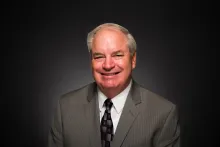
Robin Webber was born in Chicago, Illinois, in 1951, but has lived most of his life in California. He has been a part of the Church of God community since 1963. He attended Ambassador College in Pasadena from 1969-1973. He majored in theology and history.
Mr. Webber's interest remains in the study of history, socio-economics and literature. Over the years, he has offered his services to museums as a docent to share his enthusiasm and passions regarding these areas of expertise.
When time permits, he loves to go mountain biking on nearby ranch land and meet his wife as she hikes toward him.
