

Robin S Webber
This transcript was generated by AI and may contain errors. It is provided to assist those who may not be able to listen to the message.
Well, thank you very much, ladies. That was beautifully sung and beautifully played. Wonderful praise to God. Just one of my favorite pieces of music. I have about 60 songs on a track that I often play just to have when I'm studying the word or when I'm preparing a message just to have it in the back. And that is right there. I think it's number two. So thank you very, very much. Appreciate it. Well, I mentioned to you last time that I was here that we would continue with a discussion on the Ark of the Covenant.
I think you remember last time I was here, we talked about how the good intentions can get us in wrong places if we're not careful. And we discussed the story of David and Uzzah and the events that surrounded the Ark of the Covenant. I told you that I would come back and we would continue a discussion on the Ark of the Covenant, and that is my intention today. My question to all of you this afternoon is simply this. And you say, why are we studying the Ark of the Covenant? Well, because this is going to become very personal for you, and I hope that it is going to be an introduction to the season that lies ahead of us as we move towards to the New Testament Passover.
The question comes like this. What does a small gold-plated wooden box that was crafted in the wilderness over 3500 years ago have to do with a New Covenant Christian's journey through today's world? What is the relevance? Why would we even discuss the Ark of the Covenant? I hope that in the course of this message that we will be able to see the parallels and that we will be able to gain some valuable encouragement about this.
Some of us may not be familiar with that little box called the Ark of the Covenant. Understood. Some of us are new to the Word, new to Scripture. Some of us may remember that this little box was carried around by the Israelites wherever they went, wherever they were in those 40 years in the wilderness. Others of you will know that there are three very special items that are stored in its chambers. I'd like to do for just a moment the test for the moment.
Don't look at the pages yet. Oh, you did already. That's alright. So you already know the three items that were stored in there? Is that a yes or no? That's a yes. But there are three items that were stored in there. And the reason why I mention that is so often I think many, many people will remember that the Ten Commandments were stored in the Ark of the Covenant. But they don't realize that other items were stored in there as well.
And what their significance was and what it is today in our lives. And that's where we want to go. Again, why should we care about this subject of what happened so long ago? And how do we, if we do care, and if we can implement it, what do the ramifications do in our life? Simply put, here we go. Simply put, the Ark of the Covenant deals with the subject of holiness.
The Ark of the Covenant deals with the subject of holiness. And there can be nothing more profound put forth before the body of Christ in this day and age than to consider the subject of holiness. It deals with God's holiness and His holiness inside of us that projects up to Him and projects out to others. This subject of holiness is a never-ending, seamless call throughout all of the Scriptures. It's discovered in both Testaments of the book that lies in your lap.
Let us remember the Abinition of Leviticus 11 and verse 45, where it says, Be ye holy, for I am holy. It's again echoed in the New Testament through the words of the Apostle Peter in 1 Peter 1, 15 through 16, using that incredible anthem of God, Be ye holy, as I am holy. We know that. We've heard that. We don't always, perhaps, rise to that occasion, but hopefully as a Christian that is our desire. There is not only a seamless and never-ending call to holiness, but there is also a seamless invitation call to covenant peoples to become priests, or a kingdom of priests, before a holy God.
I'd like you to join me, if you would, in Exodus 19. Exodus 19 and verse 6. Some of us may not be familiar with this verse. And this was given to the children of Israel as they came up against Sinai before they received the original Ten Commandments. And notice what it says here, And you shall be to me, notice, a kingdom of priests, a holy nation.
These are the words which you shall speak to the children of Israel. Oftentimes, we quote in Revelation, which I will in a moment, about being a kingdom of priests before our God there. But this goes all the way back as God was implementing a covenant with the physical people. With Israel of old, it's always been God's desire to develop a kingdom of priests that would deal with the holy things of God and understand and appreciate His holiness.
Now, join me, if you would, in Revelation 5 and verse 10. Because again, let's remember, in the Church of God, we look at the Bible as simply being one set of inspiration. It's only man that divides it in half. In Revelation 5 and verse 10, again, speaking about the saints of God, where they're singing this new song, And have made us kings and priests to our God, and or a kingdom of priests to our God, and we shall reign on earth.
What we need to understand today, as I heard many, many years ago across the Arroyo, from others, is simply this, that we are now in training. Now! Not in the future, not in the future, not when the prophetic chorus becomes reality, but now we are in training to become priests, to become teachers. Teachers! Teachers of what? Teachers of holiness. And we cannot teach what we do not know.
We cannot instruct what we do not live. A priest isn't just simply an old bearded guy in a long flowing robe wearing a turban. Maybe you've seen pictures of Aaron, or the sons of Aaron's in books with the turban, and all of the paraphernalia that was on them. No, it's you, it's you, and it's me, it's us, priests in training, without all the outer guard, but with the inner adornment, the inner dressing that is supplied by the righteousness of God. With this symmetry now established between the Old Testament and the New Testament, the Old Covenant and the New Covenant, with this established, let's understand something.
I want to share with you three vital facts. Please jot them down. A priest is always mindful. A priest is always mindful of three standards that God set in motion. And it starts in the Old Testament, and we build upon it in the New Testament. It affected their walk through the wilderness, and it affects our walk today in this wilderness of humanity apart from God. Number one, our approach to holiness. Our awareness of holiness. And number three, our acceptance of holiness. Approach, awareness, acceptance. You might say the three A's. So today, as priests in training, let's open up our understanding on this subject revolving around the Ark of the Covenant.
The title of my presentation today is simply this, A New Covenant Peak into the Ark of the Covenant. Let's consider for a moment some of the historical context revolving around the tabernacle of old. The tabernacle that was set up in the midst of the Children of Israel, that as it were, that tent, that tabernacle that was set up. What was its significance? It has a two-fold significance. Allow me to share it with you. Number one, it was the place for God to dwell. It was God's dwelling place on earth. That is where His majesty touched earth through that Shekinah appearance, that cloud that would come down.
And He would dwell among His people. That's always been the desire of God from Eden forward up into the last chapters of Revelation. He's always wanted to dwell in the midst of His creation. And number two, it was a place for the people of God to commune with Him.
Now, why was it important that God had dwelled in their midst and that tabernacle was visible to the Children of Israel? Well, we realize that, are you with me? The Children of Israel went through some pretty rough neighborhoods, didn't they? They were bouncing against the Hittites, the Gitzites, the Wootzites, and all the Ites in between. All of these people, because God didn't send His people to the North Pole to understand holiness. He put them right in the middle of the way of the sea, right in the middle of the nations that they might be alight and shine that light of holiness to the nations.
Well, you and I know the rest of the story how that went off and on. But to understand that because of that outward exposure of being in a tough neighborhood of nations, the tabernacle stood in their midst as a visual reminder that they were to serve the One True God as they made that pilgrimage through the wilderness.
Now, while being accessible to Israel in their midst, while being accessible to Israel, He was only approachable through holiness. Are you with me? Now, that's a very important thing to think about as a New Covenant individual chosen by God. God is always accessible, just like that father that comes to the door in Luke 15 looking for, he's always accessible. But he can only be approached in that sense through as we come to understand holiness. As we move forward then, whenever Israel stopped and whenever Israel sat up camp, which was often, because every so often that pillar of the cloud would all of a sudden pick up during the day, or that pillar of fire would pick up, and you know, Aram would say to Rebecca in one of the tribes, oh, here we go again, we're on the move, let's get the tinke going, let's get the kids up, God is on the move, and so must we.
And as they picked up, settled in a new location, and they set up camp, the way that God designed it was the tabernacle was always at the center. All that was around and in the tabernacle was designed for a specific purpose, and that was to systematically display to a sinful people how they could be redeemed, how they could be made good and brought back into relationship with the Holy One, the God of Israel, through worship, through service, through sacrifice, and through remembrance.
Rememberance of what? Remembrance of holiness. Now let's take it a step further. In the New Testament and through the New Covenant, let's understand the parallels that we need to appreciate. We are spiritually centered, not by a tent, but by the reality that Christ left his heavenly throne, that heavenly tabernacle that's described by the author of the book of Hebrews, and chose to notice tabernacle with us.
Join me if you would in John 1, verse 14. John 1 and verse 14. Between John 1-1 and John 1-14, we basically understand the foundational basis of all Christianity. The rest is built upon these concepts that we notice in John 1. In John 1, we come to that famous Scripture that is mentioned, In the beginning was the Word, and the Word was with God, and the Word was God. He was in the beginning with God, and all things were made through Him, and without Him nothing was made that was made.
And Him was life, and the life was the light of men. This is a theological statement of deity, of the Godhead, of framing a sovereign force and a first cause. There are other religions that are out there that speak to a first cause, speak to a deity other than the one that we worship. This is not original. What is original is what we find in verse 14. Join me as we go down. Because this now explains Christ, explains Christianity and why we are here. And that Word, the Word that was God, with God, from the beginning created all things, notice, became flesh.
The Creator became the creation. You hear of that nowhere else. And notice, and dwelt amongst us. As we beheld His glory, the glory as of the only begotten of the Father, full of grace and truth. When you notice that Word, you might want to circle it if you want to use your Bible as a textbook. The word dwelt there is the Greek word, skenou. S-K-E-N-O-O. Skenou. Same word as tent. Same word as tabernacle. Same word as booth. He came and tabernacled. And notice what it says, He tabernacled among us, just as the tabernacle of old was among the children of Israel in the wilderness, the one that they worshiped, that which is the God of the Old Testament, came down and tabernacled in the midst of us.
Notice that we might behold that glory, just as ancient Israel beheld the glory of the tabernacle of old. Now, as we move forward in all this, it's interesting. In Him, when you notice this, in Him, that is Christ, there are three elements of tabernacle involvement that we need to understand. Join me if you would. These are very simple. Number one, that there was a high priest. Number two, that there was a blood sacrifice. And number three, because there was a high priest and because there was a blood sacrifice, there was, therefore, that accessibility to God.
But now, as we move it forward into a New Covenant experience, what's truly amazing is that God reveals we do not only simply have a one-on-one access with God through Christ, but that which we call the church, not a building, that's a misnomer, that's an edifice, but the church, the ecclesia, the called out ones, are under spiritual construction.
Spiritual construction, this new creation, it's known as the Temple of God. Join me if you would in Ephesians 2. In Ephesians 2 and verse 19.
We covered this about a half a year ago when we were going through the book of Ephesians, but for many of our new friends, I'd like to have you look into the Scriptures and understand what God is doing down there below.
Ephesians 2 and verse 19. Now therefore, you are no longer strangers and foreigners. You're no longer, in that sense, aliens.
You're no longer just simply carrying a green card, as it were. But you are now fellow citizens with the saints and members of the household of God, having been built on the foundation of the apostles and prophets, Jesus Christ Himself being the chief cornerstone in whom the whole building, not a building of brick and wood and tile up above, but a living building of flesh and blood, of sinew, of muscle and of heart. This building, being fitted together, grows into a holy temple in the Lord, in whom you also are built together, for notice that dwelling place, that skinew, that tabernacling of God in the Spirit.
Thus, we see that we no longer go to a tabernacle. We no longer rise up and move towards a temple. We are that temple that God dwells in.
1 Corinthians 6 and verse 19. Just jot that down. Paul makes it very personal when he says, I'm bringing you into remembrance that you are that temple.
The word there for temple is NAOS, N-A-O-S, four-letter word.
N-A-O-S, which literally means the Holy of Holies. Not the courtyard. Not the courtyard in front of the courtyard.
We're talking about the dwelling place of God Almighty. What's this mean to you and me?
God is setting up as chosen and granted us an invitation as individuals under the New Covenant, as Christians in the 21st century, that he wants to set up shop in our lives and dwell within us, that you and I might experience what? His righteousness and His holiness.
Now, such opportunity and privilege should humble us to walk carefully before our God.
Now, with all of that in the background, as we now venture towards, shall we say, peeking into the Ark of the Covenant, because we don't want to necessarily touch it, because remember the last sermon I gave, especially the young people, I'm sure they've all been very well-behaved young people since the last...
following all the instructions that are out there and all, and you have as recycled teenagers, looked into those details of worshipping and serving God. But let's look into it now.
And what we're going to, in a sense, do is we're going to move through three veils and pass to it and look into the Ark of the Covenant.
Now, what is very important is to remember this.
And some of you, I don't have all the powerpoints that Mr. Fish has, I guess I am the powerpoint.
But to recognize this, that there are basically three veils that you had to go through in the course of moving towards this place that was called the Holy of Holies in the Tabernacle.
The word veil comes from the Hebrew paraketh, which literally means to separate. There were three separations. And what we need to understand this is that, yes, without experiencing God's grace of invitation to inner, we are separated. You would have to pass through three veils to peek into the Ark of the Covenant.
Number one, simple if you want to jot it down, there was the gate of the court.
The gate of the court. And that was surrounding the outer perimeter, the outer curtain.
And that would be a veil in that sense that you had to come through.
Then number two, there was the door of the tent, which means entering into the Tabernacle itself.
Then last, there was the veil, the veil that we often consider, the veil within that separated the Holy Place from the Holy of Holies.
In other words, if you want to look up here for a moment, there was a large tent, and that was divided into two compartments.
There was the Holy Place, which took up most of that tent.
But then there was this section behind this veil that was called the Holy of Holies.
And only the High Priest was allowed to go back into the Holy of Holies.
I do believe that Moses had gone back once in the setup, but other than that, it was always the High Priest himself that went back.
And it was very interesting that this veil was embroidered. It was gorgeous. It was beautiful. It was beautiful. It was black, and it was nice and purple, and red.
And enshrined on that veil, embroidered, not enshrined, but coming out of that veil with colors were the two figures of the carobim, the carobim on this veil.
Now, why were the carobim up there? Because remember, the carobim had been stationed by God at Eden, hadn't he? Rejected the ways of God. Rejected the holiness of God. Rejected having God in their midst to be their God. They chose themselves to be their own little gods with a small g. The caribbean were set up. The caribbean were set up so that man might not come back and experience the holiness of God without his invitation. And to recognize that when you approach the holiness of God, you must be aware of what you are approaching. And that veil was, can you imagine, a curtain? That curtain was about four inches thick, according to Josephus. It was so thick that teams of horses, it is said, could not pull apart that veil. God does nothing for a reason. He wanted all to recognize that to experience his holiness, it comes from him. And you and I must be invited to experience it. So let's take it a little bit further, then. Here we are. We're privileged now. In a sense, I'm taking you into that holy of holies, figuratively, to enter where only Moses and the high priest have ever stepped into it. And now we notice here the Ark of the Covenant. If you want to look at your pictures that I passed out for a moment, that Ark of the Covenant, according to Exodus 25, 10-20, Exodus 25, 10-20, I'll let you look at that later yourself and read up on it, tells us that this small box, and it was rather small, was only about four feet long and just about two feet wide. That's it. Four feet by two feet. It was a very small and yet ornate box. And when we understand that it was made out of acacia wood, and it was lined with gold inside and out. It's a fitting encasement of God's testimony to His people down through the ages. And there's a reason why God does what He does, and we're going to explain it here in just a few minutes, so that we of the New Covenant can understand its symbolism made, blossomed through the life of Jesus Christ. It mentions in Exodus 25, 10-20 that the Ark of the Covenant was made out of acacia wood. What does that mean to you and me? The acacia was a tree, kind of plant-like, and it was found in the Sinai wilderness.
And the acacia wood was known for its incorruptible and its indestructible wood. It's very interesting when you begin to think about the nature, the attributes of God, and the attributes of God's plan. We might ask ourselves, what better symbol to fit Jesus' earthly ministry as the Son of Man? When we consider, and I'm just going to jot some of this down, because this can kind of be your exploration as we move up to the spring festival season.
When we remember the prophecy regarding Messiah out of Isaiah 53, verse 2, when it says that He would be likened as to a dry root out of dry ground. We remember what it says in 1 Peter 1, verse 19, that He would be sinless throughout His life.
And when you think of Matthew 27, if we look at it and we will as we come up to the spring festivals to recognize the the withstanding of the fire that He had to go through, even as He was on that cross for you and for me. And to recognize later, after He did die, that He was placed into the earth, as it says in Psalm 16, verse 10.
It says that His flesh, the decaying effect of the grave, would not be upon Him. Now, when we look at that, we begin to understand that God sees things as if they already are. There is tremendous symbolism just in the Ark of the Covenant, just with the wood. But now, what about the gold?
What would we understand as New Covenant Christians dealing with this historical artifact of old that God put in time and brings forward to you and I, to learn lessons about the holiness of God? The gold lining inside and out was speaking ahead of time that the Messiah would come not only as the Son of Man, He would not only simply be that root out of dry ground, but He would also be the Son of God. He would be the God-Man. Join me if you would in 2 Corinthians 5 and verse 19. 2 Corinthians 5. This is when we will turn to 2 Corinthians 5 and verse 19.
Let's notice that God was in Christ, reconciling the world to Himself, not imputing their trespasses to them, and has committed to us the word of reconciliation. Here we find in verse 19 that God was in Christ, the God-Man, God in the flesh, Emmanuel, God with us. And thus, when we look at this, this gold reflects and represents the... that was on this Ark of the Covenant, represents that which was to come Messiah, the God-Man, the Son of God. And this gold offered a very special glow to this earthy wood, the Acacia tree. Out of the wood, out of dry ground, it added a glow to remind us of what was coming.
God encased in a fleshly, in an earthly tabernacle that would glorify God, not only by being present among us, but sitting in that divine throne room of God now. That is why, brethren, and I just suggest this to you as your pastor, that as you do your self-reflection and self-study, as we come up to consider the immensity and the majesty of the sacrifice that we partake of by symbolism at the New Testament Passover, to consider those components, those elements of Jesus as Son of Man, which was, after all, his most pronounced self-disclosure about himself, quoting off of Ezekiel, he often referred to himself as the Son of Man, as that which had come to dwell in flesh.
So we must understand that element of God in the flesh on earth, that he was exposed to all that we are, in that sense, exposed in our humanity, in our flesh. And yet, at the same time, we have to understand him as the Son of God. What happens too often is that if we make Jesus too much the Son of God, we make him, in that sense, too remote.
And if we make Jesus too much the Son of Man, and just simply center on that, then again, if he is only of this earth, then there is no pathway up, there is no accessibility up. And thus, we don't have a bridge that covers both shores. And that's what God provided to us through the existence of Christ on earth, a bridge, a bridge of empathy, living in our flesh, being exposed to the world around him. He understands what you and I are going through every day.
And yet, at the same time, if a bridge does not lead to another shore, there is no bridge at all. And there must be that bridge. There must be that way back. There must be that hope that was shared at Eden, that one would come in Genesis 3.15, that there would be a return, there would be a way, that door would open, those carabim would move apart.
And God could, once again, dwell amongst his people, you and me. And thus, we see this. Now, with all of this stated, we drop into the Ark of the Covenant. Join me if you would in Hebrews 9 and verse 4. Hebrews 9 and verse 4. And please notice, here in Scripture tells us the elements that were in the Ark of the Covenant.
Hebrews 9 and verse 4. Speaking of that, Which had the golden censer in the Ark of the Covenant, Overlaid on all sides with gold, In which were the golden pot that had the manna, Aaron's rod that budded, And notice the tablets of the Covenant. Here we go, then. What does this mean? What do we draw upon this? A jar of manna, the blooming rod of Aaron, And the tablets of the Ten Commandments. Why was manna? Have you ever asked yourself, why manna?
Maybe you know the answer. Anybody want to come up here? I'll step aside a moment. Why was manna? Here's your chance. I'll come back, then. Why was manna? Gave you an opportunity. Why was manna placed in the Ark of the Covenant? Just remember, it is God that instructed Aaron to collect just a small bit, And place it in a golden bowl and place it in the Ark.
You can find that in Exodus 16.33. In fact, I'm probably going to send out my notes, So I hope you'll just get a feel of this. I'll be happy to send out my notes later. The funny thing about manna was simply this. You remember what happened when this bread of heaven began to come down, What did the Israelites say? They said, basically, what is it? And that's what manna means. What's that? What is that, anyway? Huh? It could have been called huh?
They'd never seen it before. They weren't sure what it was. But this was the food that God provided Israel in the wilderness for 40 years. The Scriptures basically tell us it was small, It was white rounds of coriander seed.
Mm-mm. Doesn't that sound good? That's stuck to earth like the dew from heaven. In fact, Scripture refers to it as the bread of heaven. Let's put our eyes in the Scripture for Exodus. Let's go there for a second. Would you please? In Exodus 16. In Exodus 16 in verse 4, let's notice this description here. It says, Now, in the giving of the bread, it was demonstrating on a daily basis that He alone could meet the physical, and yes, the spiritual needs of His people.
That was it. God had called them. This Exodus, this withdrawal, this drawing out of Egypt, out of the world, He brought them into a land that they knew not. He was their compass. He was their guide. And God said, I will be your provider. I will be sufficient. I am that shepherd in whom you shall not want. Very interesting as we go to 1 Corinthians 10.
Join me if you would there for a moment. In 1 Corinthians 10 in verse 3, we notice again something very interesting. As we go from the first Moses to that which is oftentimes referred as the second Moses, Jesus Christ. We notice in 1 Corinthians 10 in verse 3, And all drank the same spiritual drink, for they drank of that spiritual rock that followed them, and that rock was Christ. God supplied the drink, He supplied the food, He supplied the nourishment. And we have come to understand that He that is known as God of the Old Testament was indeed the pre-existent Jesus, the one that we today call Christ.
What do we gain by recognizing Christ as the living manna existing inside of us? Not only manna that is in that pot, that is in that diagram that is in front of you, but what do we gain by recognizing Christ as the living manna existing inside of us? He is that bread of heaven that He refers to in John 6 saying, Your forefathers of old had this bread rained down on them, but indeed I am that bread of life. What do we gain when we consider this living manna? If we go back and we consider how ancient Israel dealt with the manna of old, it was white.
Manna was white. The spotless purity of Christ and His example before us to grow upon as we behold this, the bread of heaven, and as we partake of it and symbol on that evening of the New Testament Passover. In ancient Israel, it would be ground and it would be baked, and that would represent the suffering and the trial of fire that our Savior would undergo on our behalf on this earth.
And then there was that placement that is in the ark that as the manna today, not today, but as the manna of yesterday was in that bowl and rested in the ark, the bread from heaven, the ultimate bread from heaven, the one that says, I AM the bread, resides now in that tabernacle above us.
He is alive. He's not half-baked. He's not in a pot. He is God. He stands and sits at the right hand of God. He is that living nourishment that you and I can partake of.
Number two, Aaron's rod that bloomed. Aaron's rod that bloomed. That occurred during the time many of us are familiar with the story that precedes it. We may not be familiar with the story of the blooming of the rod of Aaron. I think all of us will remember Korah, sometimes known as Mr. K, and the 250 of the elders of Israel and all the tribes came up with them in Numbers 16. And they were challenging God's sovereignty as to who He would utilize to stand between Him and His people. We find that over in Numbers 16. We're going to go over here for a second anyway. Join me if you would. Over in the books of the Law, Numbers 16, in verse 3, describes this rebellion. And here Korah and Abathar and Dothan, they were of the house of Levi. They served under Aaron, but really what they really wanted was a...do we dare say it? They wanted a bigger cut of the goodies. They wanted more. They'd come out of Egypt where the priests of Idalers Egypt were rich and wealthy. And do we dare say, had the goods? And they thought that, in a sense, that Moses and Aaron were taking too much amongst themselves. So they wanted a change in leadership. And we notice that in verse 3. Numbers 16, in verse 3. Thank you for your patience.
They gathered together against Moses and said, You take too much upon yourself, for all the congregation is holy, every one of them, and the Lord is among them. Why then do you exalt yourself above the assembly of the eternal? Remember last time, last message I gave you, just because God's name is mentioned in a sentence doesn't always mean it's correct. Do you remember that? Just because God happens to be mentioned, you have to understand and read the full sentence or listen to what's being spoken to you. And understand what God would have. And that is the story of Aaron's rod. It is here God caused Moses to bring upon the rebels the swallowing up of the earth. And I think most of us are familiar with that story. But now join me in verse 41. On the next day, all the congregation, the children of Israel, complained against Moses and Aaron saying, You've killed all the people of the Lord! What are you doing? Now, you talk about human nature. Here they are the ones that rebelled against God. Moses and Aaron are just carrying out God's instructions. And then once again, the children of Israel come, what do you think you're doing? You're mean. Who do you think you are? Then notice, now we fall to the story in verse 17. And the Lord spoke to Moses saying, Speak to the children of Israel and get from them a rod from each father's house. All of their leaders, according to their fathers, houses twelve rods. Write each man's name on his rod, and you shall write Aaron's name on the rod of Levi. For there shall be one rod for the head of each father's house. Then you shall place them in the tabernacle of meeting before the testimony where I meet with you. And it shall be that the rod of the man whom I choose will blossom. Thus I will rid myself of the complaints of the children of Israel, which they make against you. Against you! So there is going to be one person of each tribe, and they were to bring a rod, or they were to bring a staff, and they were to bring it to the place of meeting. So Moses spoke to the children, told them all this, and they all, at least once, cooperated. And Moses placed the rods before the Lord, in verse 7, in the tabernacle of witness. Now it came to pass on the next day, verse 8, that Moses went into the tabernacle of witness, and behold, the rod of Aaron of the house of Levi had sprouted and put forth buds, had produced blossoms, and yielded ripe almonds. Then Moses brought out all the rods from before the Lord to all the children of Israel, and they looked, and each man took his rod. And the Lord said to Moses, Bring Aaron's rod back before the testimony. Do be kept as a sign against the rebels, that you may put their complaints away from me, lest they die. Thus did Moses, just as the Lord had commanded, so he did. What did we learn from this blooming rod of Aaron? The lessons are significant, not only then, but now. It was his rod that blossomed. It was his rod that bore the fruit of almonds. This was not only a sign of divine selection then, that Aaron alone was to be a high priest, but for later, that like the blossoms on the dead stick, it was a type of Christ resurrection and fruit that would be born many times over. It is Christ that is the first of the first fruits. And we are to develop like fruit, and we must abide in that stick and in that vine, and we have no life. Consider this for a moment, Los Angeles. Today, as New Covenant Christians, there is no man between God and our personal salvation.
God said that he would raise the second Moses, a deliverer like an enemy, Deuteronomy 18, verse 15, but not a man, but the God-man, Jesus Christ. And it says in Isaiah, that which we've heard many a time and handles Messiah, that the government would be upon his shoulder. Join me if you would in Hebrews 3 and verse 1. Ancient Israel, the people of covenant, did not appreciate or recognize or like their high priest.
I know that is not the case here, but let's enshrine this remarkable understanding of all of us. In Hebrews 3 and verse 1, notice what it says, Therefore, holy brethren, partakers of the heavenly calling, consider the apostle. Look! Look up! The apostle! The one that has authority on my behalf.
And high priest of our confession, Jesus Christ, just as God of old named Moses and Aaron, to be his representative, thus God Almighty has designated Jesus Christ to be our apostle, our heavenly apostle, our heavenly high priest. Hebrews 4 and verse 14, bear this out, join me if you would in Hebrews 4 and verse 14. Notice what it says, Seeing that we have a great high priest who has passed through the heavens, Jesus, Son of God, let us hold our confession.
It's interesting when you think about it that God alone has chosen the Savior and it is Jesus alone that has qualified to be our high priest. Again, remembering the lesson of the Day of Atonement, that when the two goats were placed before the high priest, lots had to be chosen because man could not, of and by himself, determine who would be the one that would represent the sacrifice for God, that the people of ancient Israel might be atoned.
Thus, it is God that selects, and we must come well satisfied with that selection, just as Mr. Fisch led us in the Bible study, and we heard those magnificent words out of Peter, This is my Son, this is my Beloved, in whom I am indeed well pleased. Join me if you would in Acts 4.
Notice Acts 4, and then we'll just go to the last symbol for a few minutes. Acts 4 and verse 26. Notice the similarity here. This is John and Peter, they have been confronted once again, and this is shortly after Pentecost. They are let go from prison. And we notice in verse 24, So when they heard that they raised their voice to God with one accord, and said, Lord, you are God, this is the church praying for John and Peter, who made heaven and earth and the sea, and all that is in them, who by the mouth of your servant David have said, Why did the nations rage, and the people plot vain things?
The kings of the earth took their stand, the rulers were gathered together against the Lord and against His Christ. The rulers and the religious leaders, just parallel to what had happened 1400 years before with the rulers and the religious leaders trying to create a coup in the wilderness that they did not recognize and appreciate whom God had given them in the likelihood of Moses and of Aaron. For truly against notice your holy servant, Jesus, whom you anointed both Herod and Pontius Pilate with the Gentiles and the people of Israel were gathered together to do whatever your hand and your purpose determined before to be done.
Now look under threats, grant to your servants that with all boldness that they may speak your word by stretching out your hand to heal, and that signs and wonders may be done through the name, notice, of your holy servant, Jesus Christ. Moses and Aaron were the holy servants of God to those of the Old Covenant. Jesus is the holy servant of God chosen by God alone.
God saying, this is my beloved Son, this is my servant. Listen to him, hear him, respond to him, surrender your will to his will. Know that I have sent him not for your ill but for your good. Thus we begin to see the parallel here of what is going on. At baptism, we don't look into an ark, even for a peek, but we look into ourselves and then commit ourselves unconditionally in total surrender to the one God has placed over all things in heaven and on earth. Ephesians 1, 17-23. Please jot it down. You can Bible study it later.
It says, this is my servant. This is the one in whom I have placed all things, all dominions, both in heaven and in earth. He is mine. He is my representative. He is no less than God had. Yes, man rejected him, just as Moses and Aaron were almost rejected by Israel. And the people of this earth, both Jew and Gentile, rejected the one that I sent to be in their midst.
And yet he's mine. The courts of this world condemned him, condemned him, and put him to death.
But the high court, the Supreme Court of Heaven overruled that. Put that aside. Said no go. And resurrected the one that mankind put to death. And now at the right hand of God, the Holy Servant, who serves forever as the Lamb of God, the Servant of God, our high priest.
Number three, the third element that is in there is the Ten Commandments. We know that the first set was broken. So yes, it's the second set of Ten Commandments that is placed into the Ark of the Covenant. As a New Covenant Christian, we peek into that Ark and we see their utter fulfillment of the Law in and by Jesus Christ. He kept it perfectly because we cannot. We know that He didn't come to destroy the Law, but He came to fulfill it. His own words verify that in Matthew 7, 18 through 19. He says, I did not come to destroy the Law. But to fulfill it, not one jot, not one tittle, not one dotting of an eye, not one crossing of a tee is going to pass away until Heaven and Earth pass away. Of course, you read that and what does man do with it? They do away with God's Law. I have a question for you as we come up and to be grateful for God and Jesus Christ as we renew that Covenant. What part of God's Law don't you like? What part of God's Law is not beautiful and wonderful, whether in physical principle or spiritual in the heart? The Law is spiritual. Jot down Romans 7, verse 14. I'll let you study that one later. See, this is just the beginning of your study, not the end. Romans 7, 14, it says, the Law is spiritual.
Thus, when we look at this, we understand that Jesus came and He came so that we did not have to bear that curse of the Law. It's not a cursed Law, but He came that we did not have to bear the curse of the Law. I have normally thought as a living human being that death is a curse. Or am I the only one, especially if it comes when you're not prepared? It's not that the Law is cursed. Jesus came to lift that curse of the Law, the death penalty off of us because we are by ourselves and our human frailty, even when our desire is bent towards God. We will stumble. And yet He was the one that was perfect. Romans 10 and verse 4, join me there for a second. Romans 10 and verse 4.
Notice what it says here. Romans 10 and verse 4. For Christ is the end of the Law, for righteousness to everyone who believes. Now, some people read that verse and say, that's it. I don't have to do those old things out of Sinai anymore. That's not what it's talking about. That's not fairness. That's not an accurate treatment of the Scriptures. The word there is the end of the Law. The word there is telios, T-E-L-I-O-S. It is saying that Jesus is the limit. He is the full sum of all that we could not do on our own. He is that finishing element, volunteered to God Almighty above and given to us by the Father above to come to this earth and to live it completely. Thus, to those who believe, He is the door to the new covenant. When you think of that tabernacle of old in the wilderness, and there was the tent and there was the perimeter around it. You believe me? There is only one way in. There is only one way in to begin to move towards that holiness through the three veils. And there was a gateway and or there was a door to experience the tabernacle as much as anybody could. That is why when Jesus came, He said, I am what? I am the door.
I am that door. I am the way in to experience what God wanted each and every one of us to experience at Eden. Fellowship and communing with God, experiencing His righteousness, experiencing His holiness, having fellowship one to another, God with us. That as we look upon God and He looks upon us, there is this this canos, the word of communion in the New Testament, this word of fellowship that was broken by man, by Adam, by Eve. And thus, when we come to the New Testament Passover, where Paul speaks in Corinth of canos, of communion, that when we partake in symbolism, that bread and wine, which means the body of experience of the Christ, the blood of His sacrifice, we now once again walk into Eden. We walk between those carobim. They move aside. We go through the door of Jesus Christ. We have understood that the bread from heaven is sufficient, that there is no other shepherd. We understand that He is the chosen, holy servant of God, from which fruit blooms of righteousness. And we understand that God's ways work and work best through His holy and righteous law that is written in our hearts and in our minds. Thus, we see then, thus we have experienced a new covenant peak into the Ark of the Covenant.
What do we understand as I conclude? And I hope you don't mind if I go over a minute or two with you because I don't get to talk to you as much as I would like to. But these are the things of God. As New Covenant Christians, we must look beyond simply three artifacts and appreciate the spiritual facts, the spiritual realities that are to dwell in we, the temple of God.
These three elements, if you want to write, go ahead, here it goes, it's simple. Remind us the elements of the manna, the rod of Aaron, and the Ten Commandments. Number one, to depend on Him and Him alone.
As we come to the New Testament Passover, as we prepare to take that bread and take that wine, we are saying, Lord, God Almighty, You alone are sufficient. You have taken me out of that which is comfortable. You've taken me into a land where You alone are our compass. We love You. We need You. We know that You will supply our needs by the bread of heaven.
Number two, that we accept His Holy Servant. That we accept His Holy Servant, Jesus Christ. Not a Moses, not an Aaron. As Mr. Fish was bringing out, this isn't about a man, which all of you could have been in the study today. It was just excellent. This isn't about man, this is about God in the flesh.
And number three, we are to continue. As we partake of that bread and that wine at the New Testament Passover, because it's just you and God at that moment when you partake of it out there, you are saying you are going to continue to allow Him to write His laws in our hearts, in our minds, that we might glorify Him as that New Covenant Temple of God in which He abides and which He invites us and says, come. And as He says in Revelation, that you might partake of new manna, new manna and new bread. It's by recognizing these spiritualities that we renew our covenant with God through Christ. And that Passover which is to come, the Passover of the New Testament. I hope all of you have enjoyed the experience as New Covenant Christians of peeking into the Ark of the Covenant, if but for a moment. And now you need to go forth and live it the rest of your life.
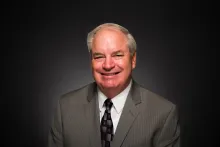
Robin Webber was born in Chicago, Illinois, in 1951, but has lived most of his life in California. He has been a part of the Church of God community since 1963. He attended Ambassador College in Pasadena from 1969-1973. He majored in theology and history.
Mr. Webber's interest remains in the study of history, socio-economics and literature. Over the years, he has offered his services to museums as a docent to share his enthusiasm and passions regarding these areas of expertise.
When time permits, he loves to go mountain biking on nearby ranch land and meet his wife as she hikes toward him.
