
Robin S Webber
This transcript was generated by AI and may contain errors. It is provided to assist those who may not be able to listen to the message.
Well, here we are. We're going to be completing our series on prophecy. And for those that aren't here today, I'm going to back up a little bit just to bring you into the story so we can all proceed together. We're going through a series entitled, Not One Stone. Just three words, but three words with a mighty big meaning. And we're basically going through Matthew 24. Matthew 24 is known as the Olivet Prophecy. It also has parallels in other Gospels, both in Mark and also in the book of Luke, with different aspects of what Christ was bringing out in that day and at that moment.
Again, let's go to Matthew 24 and verse 2 just for a moment to set the stage for the rest of our discussion today. For those that weren't here before so that they can see these words, we recognize that this was at the end of Jesus' earthly life. He really only had a few days left, and he was giving some of his most important teaching. He'd actually been in the temple. He'd actually been in confrontation with the church folk of his day, the religious authorities of that day, and had basically told them that they were wanting. Then, as he stepped out of that arena and was walking through the temple complex, his disciples began looking around and began to ooh and began to aww and said, look, look, look!
It's almost like we're in Disneyland and look how wonderful all of this is! Because again, the temple complex, which was more than just the temple, the temple complex was vast, and it was indeed awesome. But then Jesus, notice what he says in verse 2 of chapter 24, do you not see all of these things? Assuredly, and that's a very solemn Jewish phrase, assuredly I say to you, not one stone shall be left here upon another, that shall not be thrown down.
Now, we need to understand as we go through this, that this is indeed prophetic specific. Jesus was indeed talking about this complex. He was specifically talking about the temple that they could see. But the principle, actually in prophecy, is much wider. And we're going to go today from simply that which is a microcosm to a macro world of what this really means about this entire earth and its society. That when it's all said and done, all is coming down before the King of kings and the Lord of lords. And so we need to understand that and appreciate that. And to appreciate the aspect that what Jesus Christ is really trying to get across to his disciples then, as well as you and me today, is to simply ask a basic question.
What foundation are we building upon? What foundation? Is it what just simply catches our eye? Is it simply that which is physical in front of us? Is there something greater? Is there something bigger? And Jesus was basically saying that, look, you're investing and you're in all of this temple, but there is one who is greater than the temple, the rock that you indeed need to build upon. Now, as we've been going through this series on not one stone, we've been going back and forth to other books of the Bible.
That's well. That's fine. The Bible does interpret the Bible. There's no contradictions. They do complement. So we've been going through the book of Daniel. We've also been going to the book of Revelation, and we'll be continuing that today. For those of you that were not here before, we need to understand a very basic understanding of prophecy. Because as world events heat up, speed up, and as there is a spiritual force involved with that, we need to be very circumspect to recognize where and what and who this is coming from. Prophecy, as we look at Matthew 24, which kind of goes through so many verses and it looks like it's seamless, is to understand that there are three stages of prophecy here that Jesus is talking about.
Number one, there's the time of man. Number two, there is the tribulation. And number three, there is the day of the Lord. The time of man is that time period between Jesus' ascension to heaven and when he returns. Basically, the story of man apart from God in confrontation to God, not listening to God. Basically, as we would say, man doing his own thing. But then those are the first four seals as revealed in the book of Revelation. Then we come up to a period of time that becomes what we might call accelerated.
And that is the fifth seal. Matthew 24 calls that the tribulation. That is the time of Satan's wrath. The time when his time is short. And we need to understand that. And then there's another time that's spoken about, which is the day of the Lord. And we will touch on that at the end of the message today. What we understand where we were last time, let's begin to go into Matthew 24, is that we centered last time basically on verses 9 through 11. Let's just look at that for a moment. Then they will deliver you up to tribulation and kill you and will be hated by all nations for my name's sake.
And then many will be offended and will betray one another and will hate one another. And then many false prophets will rise and deceive many. Now, let's understand something. Jesus Christ, when he speaks to his disciples, is always, if I can use these words and put them together, is always brutally honest.
Brutally honest. And he's basically describing what it is going to take depending upon, or shall we say, centering on what we might call the new loyalty. The new loyalty to him is going to entail some things. There's going to be persecution. There's even going to be martyrdom in a world that, as he describes here, is lawless. And he even warns us further down that even the love of some will wax cold due to the external pressures and the cultural imprints that are upon them. We can just see that when we go through Revelation 2 and Revelation 3, when we see the history of the church in the first century AD.
All of those different churches, the seven churches, all were affected by the culture and the surroundings that they were a part of. This world can put its fingerprints on us, deep. And so Jesus was warning his disciples of that which is going to come. And then we notice something here. There are two powerful encouragements. And I'd like to center on the encouraging part before we go any further.
I love the encouragement that comes through the Scripture. The first one is an individual encouragement. And it's found here in verse 13, but he who endures to the end shall be saved. That is an encouragement. Let's understand that this would be read by the disciples, 11 of which out of the 12 would ultimately be martyred for Jesus Christ. These words would later be read by the first century church, 85 or 90 AD, under the persecution of Domitian.
And this was an encouragement. He who endures, and that word endures is not just simply one of strain or stress or like hanging onto a rope. Have you ever done that? Remember those tests that they used to give us back in eighth or ninth grade, the physical fitness test? Did you ever have to do that? You had to kind of climb a rope and hold on. I usually got about one foot off the ground. Not like Johnny White, you know, no, the term here at enduring is different than that. It's not out of fearful stress.
It's out of faith. Basically, the word endure here out of the Greek means to abide under, to abide under. But he who abides under and or is sheltered to the end shall be saved.
Now let's notice one thing in that encouraging phrase. What Jesus was telling his disciples then, the first century AD church then and we today, there is an end. There will come an end.
Very important, especially when persecution does come about to the church, because sometimes you say, just like the saints in Revelation 6 verse 9, how long, O Lord, how long? It just seems like it's never going to go away. I don't know if I can make it. I don't know if I can hang on. I don't know how long this is going to go on. The encouragement here is in one little word. There is an end. It is going to come an end, and then there is salvation. Let's remember something as you become a student of prophecy and look at prophecy the way God wants us to. Prophecy is not about physical salvation. It is about spiritual salvation. It's not about transference from problems.
It's about transformation of the individual that they can be a witness for Jesus Christ and to honor His name. That is the encouragement. Now, look at verse 14. There's another encouragement. And this gospel of the kingdom will be preached in the world as a witness to all nations, and then the end will come. This is another encouragement. Now, the first encouragement was individual, and points to the individual and says, it's going to be all right, especially if you abide under my name. The second encouragement is an encouragement that God's sovereign will come out at the end. Notice what it says, and this gospel of the kingdom will be preached in all the world as a witness to all nations, and then the end will come. That no matter what occurs or no matter what it looks like.
I think sometimes this past year when I was watching the Laker game, and the Lakers would be down by 12 to 14 points at the beginning of the fourth quarter, it did not look good. Now, we're talking about more than a basketball game, and we're talking about more than a superstar on a court to save the day. We're talking about Jesus Christ on behalf of God the Father. But what he is saying is that no matter what happens, even to you, whether it's during the time of Nero or during the time of Domitian, or through these 2,000 years, or even as the tribulation comes up, no matter if you are taken and put aside for a moment, gone to sleep, dead, God's work and God's will will occur.
Let's go to Matthew 16 just for a moment. I like going there to make sure that we understand how God looks at things.
In Matthew 16, again, notice, and I say to you, speaking to Peter, on this rock, I will build my church. It's not my church. It's not your church. It is the church of Jesus Christ. And notice, in the gates of Hades, the gates of death shall not prevail against it. There is no bulwark. There is no wall. There is no defense that Satan can put up that God's purpose will not be accomplished. This tells us, as we look at Matthew 16, 18, that the church, while sometimes we might individually think we're on the defense, that God has a purpose, He has a plan, He has promises, He has provisions, and they will come to pass, because indeed He is sovereign. With that background now, let's go to Matthew 24. We're going to go right into where we left off last time. Let's go now, speaking about that, again, this Gospel of the Kingdom will be preached in all the world as a witness to all nations. Then the end will come. Verse 15, therefore, when you see the abomination of desolation spoken of by Daniel the prophet standing in the holy place, it says, whoever reads, let him understand. Now, let's just focus on that verse for a moment. It's speaking of the abomination of desolation. Just saying that word can kind of send a chill up your backbone for a moment when you abomination and desolation, and then you put it together as a phrase.
And he goes back and says it's already been spoken about hundreds of years before by Daniel the prophet, but it is something that will be standing up in the holy place. The holy place is always about Jerusalem. It's always about the mount of God that is there, but then there's a specific admonition. Whoever reads, let him understand, leaving you and me with the thought that there would be some that would read and would not understand and or misunderstand, perhaps come to their own conclusions. We therefore then need to ask ourselves, what are we talking about when it comes to the abomination of desolations? Let's ask that question. What is this sacrilegious object that causes desecration mentioned both in Daniel and in here? Let me broaden our considerations for just a moment. May I? Rather than one specific object, it could be seen as any deliberate attempt to mock and deny the reality of God's presence. Over the years, studying a lot of material, reading a lot of different articles on prophecy, looking at what different churches or organizations say about it and or authors, oftentimes they want to become very specific. Just kind of hone down all at once. I would suggest that perhaps they've gotten a little bit ahead of God. Let's take a look at this for a moment in the context of history and see what we have. First of all, let's go back to the book of Daniel. In Daniel 9, because it's mentioned in Daniel, as Jesus himself said, when Jesus, by quoting Daniel, gives authority to Daniel, that his prophecies are accurate. In Daniel 9, verse 27, we find some of these words come to the fore. Speaking of that time, when the King of the North is going to be coming down, King of the North is given mention here in the book of Daniel, that the armies of this earth are going to be moving in that part of the world. The King of the North is going to be coming down. Verse 27, then he shall confirm a covenant with many for one week. There is going to be some form of pact or treaty that is made, but in the middle of the week he shall bring an end to sacrifice and offering. Interesting. There is the thought of sacrifice. There is the thought of offering. Things that we don't really think about in our 21st century world today, other than maybe some of the indigenous people over in New Guinea, up on a plateau 15,000 feet up in the tropical air, and maybe they're chasing a pig and then sacrificing it. That's kind of not in our western mind or our 21st century consciousness when we see sacrifice and offering, and yet it is here. And then notice the words that are used. And on the wing of an abomination shall be one who makes desolate, even until the consummation which is determined is poured out on that which is desolate. So you see these words to come together, abomination and desolation that is mentioned twice. Join me in chapter 11 verse 30 for a moment to get some background. In the 11 verse 30, speaking for ships from Cyprus shall come against them, and therefore he shall be grieved and return enraged against the Holy Covenant and do damage. And so he shall return and shall regard for those who forsake the Holy Covenant.
Verse 31, and forces shall be mustered again armies forces shall be mustered that they shall excuse me, defile the sanctuary fortress, the sanctuary, speaking of the holy place. We've already seen that in other places. Then they shall take away the daily sacrifices and place there the abomination of desolation. So this was first spoken of by Daniel around 580-570. You can place a year in there whenever these words all came together by Daniel nearly six centuries before Christ. Christ picks up this theme again of that which has not only occurred in the past, because remember, are you with me? Remember the first abomination of desolation actually occurred before Daniel prophecy, but occurred when he was a youth. And that was Nebuchadnezzar and the Chaldeans going into the holy place of Solomon's temple and taking away the treasures of the temple and taking them to Babylon. So there was already this prototype of a abomination of desolation. Stay with me as we move through history for a moment, because these words and sins and in type came true in 168 BC by Antiochus Epiphanes, the Syro-Grecian king who went down to Jerusalem. And what he did in 168 BC was he sacrificed a pig, not a good thing to do in a Jewish temple, he sacrificed a pig, de-zeus, not a good thing to have a sacrifice, de-zeus, in the holy spot on the sacred temple altar. Now, as we move forward in history, Jesus' words would first be given life when Titus, the son of Espatian, who was left to do the work that his father began with the siege of Jerusalem in 70 AD, once he made it up to the top of the temple of Mount with the massacre of Jerusalem and to follow Jerusalem, he set up an altar on the side of the burnt temple.
So you begin to see that there are a series of abominations of desolations that occur over the years from Nebuchadnezzar to Antiochus Epiphanes to Titus of the Flavian house. Then about 50 years later, there is one other great rebellion. Most students of prophecy will usually center on Jerusalem's fallen 70 AD. To do that is to make a mistake, because then about 50 years later, there was one other great rebellion called the Bar-Kofot rebellion, 134 to 135 AD. That was under the time of Hadrian. And basically, Hadrian and the Romans had had enough of the Jews. They'd had this antagonism for years and years and years, basically sent in his troops and basically took down the entire city, sent all the Jews out of the city. They could not enter on pain of death. And then he renamed Jerusalem. What was the name of Jerusalem then? Alia Capitalina.
Alia Capitalina. He said, well, what does that mean? I'll tell you. Alia was the family name of Hadrian's house. Capitalina was one of the seven hills of Rome, the Capitol line. On the Capitol line was the Temple of Jupiter. And what Hadrian commissioned was a Temple of Jupiter being built on the Temple Mount. I would suggest that that also qualifies as an abomination of desolation. What are we talking about here, then? Let's understand something because come with me now back to Matthew 24 and let's notice something that God asked us to do when it comes to prophecy. In Matthew 24, and again let's pick up the thought in verse 15, it says, when you do see this come about, whoever reads, let him understand.
Why am I going through this? What I'm trying to share with you as your pastor and as a teacher of the Word is not only to look at facts, events, and people, but to understand, to give you tools of understanding how to read the Bible, not just the personalities and the events. Whoever reads, let him understand. Join me, keep your finger there, join me if you would in Revelation 13. In Revelation 13, again, we normally think of the book of Revelation as being a book of prophecy. I think we're all there. We always think of Revelation, prophecy, and unveiling and unfolding. But it is also written in apocalyptic literature form. It is written in a form of imagery. It's written in a form that was very, very familiar to people between 200 BC, 200 AD. It was basically written very colorfully, a lot of imagery. It was basically written normally to people that were dispossessed, that needed encouragement, that would come to understand that they would be redeemed, and that there was a hopeful future. I think we find that in the book of Daniel. That's apocalyptic literature. We find that in the book of Revelation. But when we do deal with apocalyptic literature and some of these prophetic elements, we need to understand something. Revelation 13, 18. Notice what it says here. Here is wisdom. Now, this is dealing with the subject of the mark of the beast. Here is wisdom. Let him who has understanding. Again, join me in chapter 17 and verse 9 just to highlight. Here is the mind which has wisdom. And it goes on. The bottom line is simply this. Dealing with prophecy is not just simply about your eyes and cobbling it together like a jigsaw puzzle. We're dealing with the aspect of wisdom. Wisdom that is not here down below. Remember, the book of James speaks of what? A wisdom that comes from above. And the part of that wisdom is to understand that we will understand in part, but we may not know totally in full until those times come. And that's all right. You know why? God will give us enough to consider, enough to keep us holding on, enough to give us abinition because He loves us and wants us to spiritually succeed. In those moments when it does come, that consideration will go to comprehension. God will give His saints the comprehension of the facts, the figures, the personalities, and the events on the ground. That's why we need to stay close to Him. Now, as we go back to Matthew 24, let's understand something. What are we talking about then? We're talking about a very basic biblical understanding that we need to have when it comes to prophecy, and that deals with the subject of dualism. When I go on tour and deal with the subject, I normally like to use the word dual, but I use another word you might want to jot it down. Layered. Prophecy is often layered. It comes in stages. When we read the book, meaning the Bible, we must always understand that it did have definite meaning for the original audience.
It had definite meaning. When this was being spoken to the disciples around 31 A.D., this would come alive during their life or the life of their next generation, that there would be this abomination of desolation under Titus with the fall of Jerusalem. So this was very real, but this is a type, and then there are anti-types that follow along the same. So we need to understand that. But as we've gone through—stay with me a second. Are you with me? As we understand that there was Nebuchadnezzar, that there was Antiochus Epiphanes, that there was even Pompeii, which I didn't go to in 67 B.C., you have Titus, you have the Barcoque rebellion. We need to understand something. This will ultimately come to fulfillment. Join me if you would in 2 Thessalonians. Now you say, why are we going to 2 Thessalonians? Because isn't that a writing of Paul? And we normally think of Paul speaking of salvation and or Christian living. But did you realize that the Apostle Paul was also a prophet? You ever think of Paul being a prophet? I'm watching your eyes out there for a second.
Half of your eyes are saying yes. Half of your eyes are saying no. Okay, let's go to 2 Thessalonians. Paul was a prophet. God's Spirit was using him because he was trying to warn the Christians of his time of what the future held. 2 Thessalonians 2.
Therefore, I exhort, first of all, that supplications, prayers, intercessions, and giving of things be made for all men. No, that's not what I want. Excuse me. Where am I? Timothy. Pardon me! He didn't hear that. Now, don't get hard on me. I know some of you are over in Habakkuk right now. Okay, it's just teasing. Here we go. 2 Thessalonians 2. Now, brethren, concerning the coming of our Lord Jesus Christ and our gathering together to him, we ask you not to be soon shaken and mind or troubled, either by spirit or by word or by letter, as if from us as though the day of Christ had come. Let no one deceive you. Why does the Bible say that? Because there is the reality that someone is going to try to deceive the saints. By any means, for that day will not come unless the falling away comes first and the man of sin is revealed, the son of perdition. Now, notice what the son of perdition does in the future in that day. When the Bible speaks of that day, that doesn't mean yesterday. You already knew that. But it doesn't mean today either. That day is dealing with the future prophetic events that are yet out there. It speaks of this son of perdition who opposes and exalts himself above all that is called God or that is worshiped so that he sits as God in the temple of God, showing himself that he is God. Now, that's incredible when you think about that for a moment. Now, we've already talked in part some of the former abominations of desolations, whether it be an altar or whether it be a pig sacrificed to an idol. But Paul lends credence to Jesus earlier words as what the ultimate abomination of desolation is going to be.
Is that a man is going to place himself, place himself in front of God as God. Where can we learn more about this? Let's understand. Let's go to Revelation 13. Again, let's allow the Bible to interpret the Bible. Revelation 13 verse 14 speaks of these times that are ahead. And actually, I'm going to draw you back to verse 11 because Revelation 13 basically speaks of two individuals in the future. They're dominated by the spirit of Satan. There is a temporal leader that we normally refer to as the beast. It can be an individual. It can also be a system. They can be there together. There is also another leader that is described. He is also called a beast. Interesting. Now, what we've got to understand, may I share something with you? This is what God calls things. One thing that we always want to do, especially apocalyptic literature, but also just like Jesus Christ, God is brutally honest. He calls things for what they are. He calls his fate a spade. He understands that all that glitters is gold. And he sees the inner man. He sees the inner woman. He calls things for what they really are. He says there's another beast in verse 11 coming up out of the earth, and he has two horns like a lamb. Oh, everybody likes a lamb. They're cute. They're fuzzy.
You want to hold them. You want them to comfort you. You want them to take them to bed.
I'm not talking to the guys, but they're cute.
But then that's what it says. And he spoke like a dragon.
So, outwardly, there's this exterior that would attract people. But it is the inside. It is the heart that is corrupt. And he exercises all the authority of the first beast in the presence and causes the earth and those who dwell in it to worship the first beast whose deadly wound was healed. Now, notice verse 13, what this individual does, who I believe is tied into the son of perdition in Paul's writings. He performs great signs so that he even makes fire come down from heaven on the earth in the sight of men. And he deceives those who dwell on the earth by those signs which he was granted to do in the sight of the beast, telling those who dwell on the earth to make an image to the beast who was wounded by the sword and lived. And he was granted power to breathe to the image of the beast. Now, when you see that, you've got to ask yourself, friends, where does that power come from? Bible interprets the Bible. Let's just go up here to verse 4.
So they worshiped the dragon, this system, who gave authority to the beast, and they worshiped the beast, saying who is like the beast, who is able to make war with them. Now, in all of this, let's understand something. As events heat up in the future, is to recognize that we cannot just simply look at what's happening here on earth.
To recognize that the headlines are made elsewhere. The headlines are made in heaven.
They are made in the spiritual world. There is a confrontation between the God of heaven and the God with a small g of this age, and between that system and that way. And there is only going to be one outcome. We've always seen that in Matthew 24. And the end shall come, and God's purpose will be established. So that gives us a taste of what might happen there with the abomination of desolations. Join me again back in Matthew 24 now. I hope I'm not giving a scriptural whiplash here too much. Matthew 24. As we go to Matthew 24, what do we do then, as the saints? What have the saints always done? Because again, remember there is a dualism. There is a layering. This is not just a one-time activity. It increases. It increases. It hasn't come to fulfillment. We are not at the Great Tribulation yet. But if you had been with me, friends, if you had been there in 85 to 95 AD, you would have thought that you were in the Great Tribulation. You would have thought that you had been facing the beast, the boot of Rome, as fellow saints were being persecuted and taken to the slaughter in different places. You would have said, what is going to happen? All the original apostles have died, saved John. And it is said that John will not die until he sees the Lord. You know that verse. You know how that one goes. So you would have been there thinking that you are real saints in real time, praying before a real God for deliverance. What does God tell his people down through the ages always to be ready to do? Notice what it says. Then let those who are in Judea flee to the mountains. Let him who is on the housetop not go down to take anything out of his house. And let him who is in the field not go back to get his clothes. And woe to those who are pregnant and to those who are nursing babies in those days. And pray that your flight may not be in winter or on the Sabbath day. For then there will be great tribulation, such as not been since the beginning of the world until this time no nor ever shall be. And unless those days were shortened, no flesh will be saved. But for the elect's sake those days will be shortened. Therefore, if anyone says to you, look here is the Christ, or there do not believe it. For false Christ and false prophets will rise, show great signs and wonders, just like the son of perdition. And if possible, even the elect would be deceived. Now, I've read that all through. We're going to go back for a moment. We're going to dissect it because basically Jesus is giving two specific warning admonitions in this stretch of Scripture from verse 16 to verse 23. First, admonition, and I share that with you.
Don't get too settled. Don't get too settled in this world.
Be prepared to move. That should not be strange to people of the church, the saints of God, people that the Scripture calls pilgrims. People... what's a pilgrim? A pilgrim is an individual that does not put his roots down, right? A pilgrim is one who doesn't sink in to this world. You know, like this. Get right down there and curve. No. A pilgrim does not put his roots into this world. That doesn't mean that there are not enjoyable things in this world, that there are not things that we ought to partake of, as long as they're right and good. But we don't sink ourselves in. A pilgrim is only a pilgrim as long as they are on the move. A pilgrim is moving towards a destination. We talk about a pilgrim... like the Islamic people when they go to Mecca. They're going to what? They're going to the shrine. They're going to the Kaaba, the stone that's there in Mecca. They're on a destination. They have not yet arrived. That's what a pilgrim is. So this encouragement is not too far from everything else that the Bible tells us. It should not be strange that we are pilgrims, that we are not rooted into this cosmos, this world, this age. But we look forward to something that is better.
Because notice what it says. He's basically saying, keep your eyes, keep your ears, keep your heart open, because things are going to be happening. What we have to do... what this is basically telling us... you might want to jot this down as a word to keep you in the message here.
God is basically telling us to be decisive. Be decisive, because there's going to be a time when we are going to have to be decisive. The whole power of Scripture and the whole power of prophecy is basically this. There is no third option. You are either for Christ, or you are either for the other way. Now you know, and I know, and we've all been there before, we've all played, you know, straddle the fence. No, we kind of get over here. Yeah, that's good.
And then we're over here. That's good. And that doesn't work in the Bible. The power of Matthew 24, the power of the book of Revelation tells you and tells me, when it is all said and done, there are no third options. There is no triangulation between the ways of this world and the life that God the Father wants us to have through Jesus Christ. There are two systems that are in collision, and we need to understand that. It says, For then there will be a great tribulation, such as not been since the beginning of the world, until this time known, or ever shall be, which basically is an echo out of Daniel 12, 1 through 2, where, let's go there for a moment. That's encouraging. I mentioned that last week in Redlands, and somebody got encouraged. So I'm going to go back and hopefully encourage you. Daniel 12. That's what it says in Daniel 12 here. Some people have never focused on this. Hope you have. If not, repetition is the best form of emphasis. At that time, Michael shall stand up, the great Prince who stands watch over the sons of your people. And there shall be a time of trouble, such as never was, since there was a nation, even under that time. And at that time, your people shall be delivered. And everyone who is found written in the book, and many of those who sleep in the dust of the earth shall awake.
Some to everlasting life, some to shame and everlasting contempt. Now, let's understand what is being spoken about here. This is yet future. But what I want to share with you, how have you ever centered on focused on Michael?
Notice what it says. Michael shall stand up. Who is Michael? Maybe you've never heard of Michael before. Michael is one of the great archangels that is mentioned in the Bible, both in the Old Testament and in the New Testament. Did you realize that God loves his covenant people so much that he and his wisdom and sovereignty created an archangel just to watch over his covenant people? Michael's job in the Old Testament was to watch over those covenant people.
That was his job. And now he is watching over God's new covenant people. It's like God has his own secretary of defense for his purpose and for his plan. Now, sometimes when we're down here and, you know, the darts get to go and the fires start to happen and we think, I'm all alone!
Look what's going on! It's right over here. It's beginning to happen.
And do we not realize that there is a great archangel? These archangels are kind of like something else because usually when people see an angel in the Bible, they fall flat on their kisser thinking they're seeing God. They haven't even met God. It's just an angel. But what's the angel usually say? Yeah, I'm just an angel. And yet this archangel stands up. Interesting. Now, we all know that ultimately Jesus Christ is the captain of our salvation. But under Jesus Christ is delegated this protection to covenant people both in the Old Testament and the New Testament.
He stands up. That tells you and me that God is not laying down on the job.
God and his realm are at attention. God is love. God is going to succeed. His purpose is going to stand. Get a Queenlet with Michael. Right now, on behalf of God, he's working for you and me to protect and to keep the covenant people. What else do we learn out of Matthew 24? Let's go on back here a second. It says that there's going to come a time that's going to be incredible. It talks about that there's going to be this religious frenzy that's going to occur. People are going to say, oh, go out here or go out there where Christ is calm. And Jesus says here, there. And he says, don't believe it for a moment. I added for a moment. It's a paraphrase. For they're going to come.
And they are going to deceive so much so that even perhaps the elect would be deceived.
Now, when we understand what's happening here, let's talk about it for a moment. In a sense, if we didn't know that there was a God, and if we were just reading this, this could kind of be, in a sense, a little scary. It says there's a great tribulation that's going to occur, like nothing that's ever occurred before. And unless those days were shortened, no flesh would be saved. Now, let's understand. Basically, verse 22 could not have begun to even be thought of or considered until 1945. In 1945 was the advent of the atomic age, the advent of the droppings of the bombs on Hiroshima and Nagasaki, and what has happened since then with the expansion of thermonuclear weaponry. This could never have been fulfilled. It could not have been fulfilled during the Roman Empire, the Byzantine Empire, the Crusades, etc., etc. So, we recognize that we are also looking at another aspect of prophecy when it mentions the abomination of desolations, that this has not yet been fulfilled. And actually, this could not have even begun to be thought to be fulfilled until 1948, when the nation of Israel was founded on the ashes of World War II, and that the Jewish people could be back there. 1967, with the retaking of the Holy City, with having the opportunity to monitor the Holy Site, to recognize that the Gospel is being preached around the world in this day and age in a way that Jesus and his disciples could never even begin to think of. We recognize, if you want to jot this word down, we find in the scripture, we are coming to a nexus, a nexus. You say a necktie? No, I said a nexus. A nexus is where events come together. It's where there becomes a connection to recognize that, while it may not be here, we are certainly looking into the nearness of these events happening. Let's understand one thing. The word, you might want to jot this down when you deal with prophecy, Jesus never said when.
That was the wisdom of God in him. Never says when, but he always says, it is near.
It is near. So we need to understand that. Now, what's going to go on here?
Encouragement time. That's what's really neat about Matthew 24. Notice, see, I have told you beforehand. Have you ever noticed that verse in Matthew 24 and your studies of it? Jesus offers a very basic encouragement there, because a lot of things that are going to happen, you're going to say, boy, all of this is happening. There's this system that is arising. There's this religious system that's affiliating with it. These armies are moving around over in Jerusalem in the future. And what is going on? And this man seems to be the power of God. He seems to be in place of God. He even says he's God. Or somebody says that he's actually over here. Notice what Jesus says, see, I have told you before. Very important. When we look at that, we need to understand a very basic promise when it comes to biblical prophecy. Join me if you would in Amos 3 and verse 7, then we'll go back to Matthew 24. I love to give these nuggets of encouragement. I think the people of God need encouragement. Amos 3 verse 7. This is a promise.
And this is how we ought to look at prophecy. Remember what I said from the very beginning of this series? We can either look at the future through the lens of fear, or we can look into the future with the lens of faith. And that's a choice.
And God gives a promise here. And God is good on his promises. Surely, the Lord God does nothing unless he reveals his secret to his servants, the prophets. God offers a promise that God does offer what he is doing and what he is performing through godly individuals in his time and in his way. And that's why Jesus was a part of Amos 3 where he says, look, I have told you beforehand. I'm giving you, in a sense, insider information. Now, you don't want too much insider information if you're working on Wall Street. That can get you in trouble. But insider information, when it comes to what's happening in this world to the saints, is a good thing. You say, but how can I remember that? How will I recall what I read in the Olivet prophecy? Join me if you would in John 14. In John 14 and verse 26. Notice, again, a promise. The Bible is so loaded with promises, brethren, that we've got to make a decision right now, here and now, as to whether or not we're going to move into the future based on our human premises or God's promises. And that's a choice. You've got to be decisive. Notice what it says in John 14 and verse 26. These things I have spoken to you while being present with you, but the Helper, the Holy Spirit, whom the Father will sin in my name, he will teach you all things and bring to your remembrance all the things I've said to you. God gives a promise. He will give us recall. Oh, he will not put a whole computer chip of every verse in the Bible in our brain all at once, and you know we can just zip an e-doo-dah down it and pull up everything. But what we will need at a given time, he will give us. That's a promise.
That discernment and that information will be there on hand. Now, I want to go back to Matthew 24 for a moment, because Jesus clearly states how he's going to come. Don't get fooled by somebody being in a room in Jerusalem saying that I am God. People will be deceived. And we need to keep our focus on the instrumentation that God gives us.
Any of you that have ever been through pilot training and dealing with instrumentation on a pilot knows that you have to keep your eyes on the instrumentation. You know, traveling, it's really interesting. How many of you have been up there, you know, about 15 to 20,000, where the clouds are, and you say, how does the pilot know where he's going? I, what? I can't see a thing. I do that all the time. It's just all gray out there, you know, and it's just all gray.
What's the pilot doing? I ask you. He's keeping, he's trained. He's keeping his eyes on the instrumentation. He cannot believe what he is seeing, because it can be faulty. Not everything that you see is as it is. You must keep your eyes on the instrumentation. There are people sometimes that, for a moment, as they're coming in for a landing, they use their eyes rather than the instrumentation. You know what happens to those pilots? You know what happens to that plane? They run short of the runway. All of us are used to what seeing is believing.
What I'm trying to share with you today out of all of that prophecy is the instrumentation that God wants us to understand, because there's going to come a time when people are going to take their eyes off the instrumentation, and to them seeing as believing as individuals is going to be pulling down miracles that seem to be of God. And you're going to have to remember that, because Jesus says, this is how I will return, for as the lightning comes from the east and flashes to the west, so also will be the coming of the Son of Man, which is his favorite title. It comes out of the book of Ezekiel. He loved calling himself the Son of Man. That was killed by a man.
That was raised by God. And that is coming back to save man from himself.
Comes. Notice, as lightning comes from the east and flashes to the west, and so also will the coming of the Son of Man be. God is saying, it is, Christ is just saying, when I come, it's just going to be like a lightning storm. Susie and I are going to be back in Ohio in about three weeks, and for any of you who have been the Midwest, or down in Texas, and you see a lightning storm, you know what a lightning storm is like. It just, it's not like a Southern California lightning storm. They're kind of pathetic. You know, when you're in the Midwest, just crackles, right? Just the whole sky lights up. And I mean, you got some heavy duty thunder. Big time. Jesus says, I'm not going to be in some hole somewhere. I'm not even going to be in the room, in a place that has been designated holy. When I come, everybody is going to know it. That's what He's saying. And He says that the sun will be darkened, and the moon will not give its light. The stars will fall from heaven, and the powers of the heaven will be shaken. Basically, when you look at verse 29, you can go to Revelation 6. This is really defining the sixth seal, which is what the Bible calls the heavenly signs, which is really God. God is just going to shake the heavens, even before His Son comes.
It's kind of like a cosmic doorbell saying, hello!
I, your Lord, am entering time and space once and forever. I am going to interrupt humanity's history. It will never be the same. When I come, that will be it. And then the sign of the Son of Man will appear in heaven, and then all the tribes of the earth will mourn, and they will see the Son of Man coming on the clouds of heaven with power and great glory, the glory that His Father has given Him. And He will send His angels with the great sound of a trumpet, and they will gather together His elect from the four winds from one end of heaven to the other. Now, when you look at that verse, verse 31, where it talks about how God is going to gather up His people. I know there are very sincere organizations that believe in a rapture, that they believe that there's going to be a rapture and that the saints are going to be taken away for a while. But I would rather focus allowing the Bible to interpret the Bible and being loud where Scripture is loud. And I believe that this is the time that is spoken of in 1st Thessalonians. Join me there for a moment in 1st Thessalonians chapter 4.
This is the time, brethren, that we look forward to. Notice what it says here.
This is giving more color to what Jesus was speaking about in all of that prophecy. God never changes His mind what He's going to do. God is the same yesterday, today, and forever. And notice that many a commentary, not just one, but many a commentary, gives illusion in verse 16 that it is Jesus that shouts.
Gives you the feeling of how excited He is about coming back and meeting you. He shouts. Now, the word there, kareidō, out of the Greek, can be twofold. It can mean a shout or a command of war. It can also mean a summons. So it may be dualistic in the sense that Christ is coming back to make war on the beast, who is the pawn of Satan. At the same time, Christ is coming back with a loud voice to wake the dead and to bring the reward of His Father to them. Now, when you think about that, that's kind of exciting. I hope you see yourself in that, because God already does. God sees you there. God wants you there. God wants you there so much that He gave you His Son, His life, His death, His resurrection. There's something else that I want you to see. Romans 8, verse 37. We're almost done. Romans 8, verse 37.
This here is 37. Pardon me. Romans 8, verse 18.
Again, Paul looking into the future, in a sense, as a prophet. For I consider that the suffering of this present time are not worthy to be compared with the glory which shall be revealed in us.
For the earnest expectation of the creation eagerly waits, notice, for the revealing of the sons of God.
There's a groaning that is occurring, and I'm not talking about climate change. I'm not talking about global warming. I'm talking about that there is a... Paul uses a sense that the creation is groaning, and it does not even quite know why it is groaning, and has been since Eden.
But it is groaning until this time that when this event occurs, notice what it says, the creation eagerly waits for the revealing of the sons of God. When that happens, and by God's grace you and I are a part of that, that is the epidem of prophecy to that point.
How can I put that in modern-day jargon? That is the biggie. So often we want to focus on what does this item mean in prophecy, or could it possibly mean this, or this ABC, or we take this 666, of which I speak on the market of east, just go to worldnewsandprophecyonline.org, hold class on it. But we take all of these other items, but that's not the goal post.
That's not the destination. That's yardage that we have to make in prophecy. Those are things that we have to go through, but that's not the goal post. That's not the end. Make sure that when you are studying prophecy, that you are looking and focusing on the goal post and not getting stuck on the yards. Because if you get stuck on the yard, you will get into a quagmire. Because that's not where God is stuck. God looks at Romans 18 through 19. That's where His focus is. That's where He wants to get you to. How do I know that? Join me if you would. Last verse, Luke 21, verse 36.
The whole Abinition out of all of that prophecy is found in the parallel count in Luke 21, verse 36.
Notice what it says. Watch therefore, and pray always, that you may be accounted worthy to escape all of these things that will come to pass and to stand before the Son of Man. Now, there are two specific Abinitions that God gives us. Let's understand them. Number one, we are to have our eyes open. We are to be watching.
And that's okay. And God does give His servants a discernment. He gives us a roadmap to the future called the book of Revelation, the book of Daniel, the all of that prophecy. And we can watch. And we can, in a sense, consider, if not totally comprehend, until the moment those events actually happen. That's well, and that's fine. But may I suggest that the even more powerful Abinition is the second one. Watch therefore, and pray always.
Prophecy is not only about what you see, but how you internalize it with your heart.
Remember, prophecy is not just simply about information. It's not just simply about inspiration. It is about transformation. It is about salvation before God. As Peter echoed, with all of this that's going to occur, what manner of man then ought you to be? Why? Because notice what it says here. That you may be a counter worthy to escape all these things that will come to pass. And humanly, some of the challenges that we've talked about today, I like to circumvent them. I like to go around some of those things.
Just like Jesus said, Father, take this cup from me. Even so, not my will, but your will be done. And that's well, and that's fine. And God understands that we're a human being. And we can pray in that sense that God in His mercy and by His grace would intervene, and that perchance we don't have to go through some of these things. But again, that's not the goalpost.
That's not the end. The end of prophecy is not about physical deliverance and being taken somewhere. It is about being somewhere for someone giving honor and glory to the name of Jesus Christ. For His name's sake. We'll be covering that in the book of Romans study. Notice the goalpost. Notice the end zone. And to stand before the Son of Man. That is the goalpost. That is the end zone.
Everything else is a weak substitution. Now, as I conclude, I want you to think about something for a moment. May I? Kind of play with your mind a little bit. Not too much. Can you imagine what it is going to be like to stand before the Son of Man? Much of your life and much of your existence has been studying Jesus Christ, loving Jesus Christ and His Father, trying to be like Jesus Christ. After all, that's what we are supposed to be doing. But can you just imagine? Let's just kind of do some blue-skying here for a moment. Can you imagine what it is going to be like when you have the opportunity to stand before the Son of Man? You ever thought about that? You ever just kind of sunk in there and just thought about how neat that's going to be? So I don't know if I want to do that because I've seen all those pictures and those Renaissance walls with the judgment seat.
Who else would you want to stand in front of?
But the righteous judge, the same individual that was judged unrighteously while he is on earth, don't you think he understands a little something about judgment and wants to have the ABCs line up for you? Yeah, but you say, but you know what? My ABCs don't line up too well. Well, that's all right because it's not about what we're doing. It's about what he's doing through his sacrifice. And we're going to be covering that in the book of Romans this afternoon, too. Jesus is not up there defending our sin. Jesus is up there saying, Father, I know they've sinned, but I know that they believe in you and I know they believe in me.
And I know that they believe my sacrifice does cover their sin.
So what happens is that moment when we stand before God, you know what? If you have a way to balance this, it goes down the sin side. It does not look good. And then Christ puts his sacrifice on there. It goes right the other way. Can you even begin to imagine what it is going to be like when you stand before the Son of Man when you and I have the privilege and the opportunity by God's grace to be on the other side of the unapproachable light, as is mentioned in the book of Romans, and we see him as he is. Have that as the biggest picture in your mind. What you see through God's eyes and God's love is what you will obtain. We either approach the future and love and faith and confidence as we pray that we might stand before the Son of Man where we see all of these things that are happening down here before. I hope this whole series on prophecy has been, I hope it has, illuminating, informative, hopefully inspiring. I hope most of all it has been transformative for you to understand the incredible future that God wants to bring you. Until that day, let's all be there together.
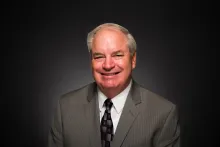
Robin Webber was born in Chicago, Illinois, in 1951, but has lived most of his life in California. He has been a part of the Church of God community since 1963. He attended Ambassador College in Pasadena from 1969-1973. He majored in theology and history.
Mr. Webber's interest remains in the study of history, socio-economics and literature. Over the years, he has offered his services to museums as a docent to share his enthusiasm and passions regarding these areas of expertise.
When time permits, he loves to go mountain biking on nearby ranch land and meet his wife as she hikes toward him.
