

Robin S Webber
This transcript was generated by AI and may contain errors. It is provided to assist those who may not be able to listen to the message.
Okay. We appreciate that vibrant song. Well, today, brethren, I'd like to talk to you about heroes. I think about today, the world that I live in and the world that you live in. It seems at times that we have less and less heroes than we did when I was growing up. Maybe when you were growing up, we can look around and see what is happening around us, and we say, well, where did all the heroes go? I need role models. I need examples. And that's what I'd like to talk to you about today, because I continue on this theme that I think more than ever, I think that the body of Christ, those that are followers of Jesus Christ and have faith in Him, and keep the commandments, need to be encouraged, need to know that we're not alone, need to know that there are examples that are set before us that we can draw upon so that you and I can face the challenges that come our way every day, whether at work, whether at home, whether at school, whether in the neighborhood. And so today I'm going to bring you a message about heroes. The title of my message is simply this. You might want to jot it down. It might be a little bit long, but we'll work on that as we go through, because I want to draw you and keep on bringing you back to this basic thought. And that is simply this. Obey God. Obey God. And leave the consequences to Him. Obey God. And leave the consequences to Him. Today I'd like to share the story with you of three individuals, heroes that are set before us in the Holy Scripture. It's interesting, their names, or at least the definition of their names. One, the definition of their name is Yah, who is gracious.
The definition of another name is who is like God. The definition of another name is Yah has been helpful. Well, you say, well, who is that? Well, in the Bible they're known as Michiel, Hananiah, and Azariah. To most of us, we know them as Meshach, Shadrach, and Abednego. Three individuals of covenant that were what we might call stand-up guys, literally. I think all of us like what we call stand-up guys. Stand-up people. And that is the one thing that comes out of the story that we're going to talk about.
And that is simply this. Three individuals that stood up for God. Would you please join me in turn over to Daniel 3? We're going to go through the story, and then we're going to draw some points out of it, and hopefully go away more full than when we came in on this Sabbath day. In Daniel 3, beginning in verse 1, I'd like to draw you into the story that occurred nearly 2,600 years ago. And it was a story that took place in the Babylonian Empire. The king was Nebuchadnezzar. He was one of the great men on earth at that time. At that time, probably the greatest man, at least in what we call in the sphere of Western civilization, as he ruled over the Chaldean Babylonian Empire. And basically, Nebuchadnezzar, being the greatest man on earth, was not used to being told no. No was a word that he was not accustomed to hearing from his subjects. So let's draw into the story here for a moment. Nebuchadnezzar, the king, made an image of gold, whose height was 60 cubits, and it's with six cubits. And it says that he set it up in the plain of Durov, in the province of Babylon. It's very interesting as we read this. The words are very graphic, and I hope that they will stick out and stand up, because there's a lot of in this story, just to draw you into it, there's a lot of stand up, set up, and bow down. So you have to understand the graphic language. He set it up in the plain of Durov, and this image was, in modern terms, almost 90 feet tall, and about nine feet wide. The same as a nine-story building. And it was, can you imagine, pure gold from the top to the bottom? And even down to our age, we think of gold as being a sign, or a synonym, for value, and or for permanence. That's why people buy gold. It's very permanent in nature. And Nebuchadnezzar was making a statement. It wasn't just simply that, well, it glitters, and you can see it as the sun shines on it on the plain of Durov. He was making a statement that, I am, and that I am permanent, and I am the one that endures, and all the nations bow down to me. And that's where Nebuchadnezzar was coming from. And he sent word in verse 2 to gather together all of the satraps, the administrators, the governors, the counselors, the treasurers, the judges, the magistrates, and all of the officials of the provinces to come to the dedication of the image which King Nebuchadnezzar had set up. I mean, this was, in a sense, by invitation only. You got your name on the card. So the satraps, the administrators, the governors, the counselors, the treasurers, the judges, the magistrates, and all of the officials. Everybody that was somebody in the kingdom was invited for the dedication of the image that King Nebuchadnezzar had set up. Now, notice what it says here at the end of verse 3, and they stood before the image that Nebuchadnezzar had set up. Now, as we move forward, let's understand something. It wasn't something that God had set up, the Creator of the earth, but something that was set up by the tyrant of an empire, of an empire that would come and go, as empires do and civilizations do, that He had set it up. It was Nebuchadnezzar's. It belonged to Him. And they were all standing. They all stood. Very important. The language is very graphic. Then a herald cried out, To you is command of the people, nations, and languages, that at the time you hear the sound of the horn, the flute, the harp, the lyre, and the sultry in symphony with all kinds of music.
In other words, when the band strikes up, you shall fall down. You shall fall down. That was a command. And worship the gold image that King Nebuchadnezzar had set up. Now, we need to understand that in what was then called Oriental society. Today, we normally think of the Orient or the East being further into Eastern Asia like China or Japan. But at that time, that would have been known as the East and or as the Orient. And back then, the Eastern kings, not so much in the West with Greece or later Rome, but in the East when a king was looked upon as being God, that the subjects came before him and had to be prostrate. They had to, in other words, hit all fours. They had to be like a marine on the beach, head down, crawling in subservience. And they were not only... notice if you'll take a look at Scripture, because it's really... that's why it's good to read through stories rather than in and out. They not only had to bow down. Are you with me? But they also had to worship.
So it was not only a state of body posture, but it was also a state of spirit and a state of mind. And whoever does not fall down in worship shall be cast immediately into the midst of a burning fiery furnace. Now, that fiery furnace was probably even the industrial kiln that had been used in the manufacture. So we're not talking about the barbecue on your back porch to be singed a little bit. This was a full-scale, probably gigantic industrial kiln that was used to manufacture and to mold the gold to make the statue. We're talking about industrial strength. And whoever does not fall down shall be cast into the midst of a burning fiery furnace. So at that time, when all the people heard the sound of the horn, the flute, and harp, and lyre in symphony with all kinds of music, notice what it says now. All the people, the nations and languages, fell down and worshipped the gold image which King Nebuchadnezzar had set up. All the people, those from Egypt, those from the Levant, those from the east of Babylon, those to the north of Babylon, everybody fell down and worshipped the gold image which Nebuchadnezzar had set up. Therefore, at that time, certain Chaldeans came forward and accused the Jews. And they spoke and said to King Nebuchadnezzar, O king, live forever. Now, if you ever want to have your way with the king, you want to get to somebody flattery a little bit? O king, live forever. You, O king, have made a decree that everyone who hears the sound of the horn, the flute, the harp, the lyre, and the sultry, and symphony, with all kinds of music, shall fall down and worship the gold image. And whoever does not fall down and worship shall be cast into the midst of a burning fiery furnace. Now, what they did, let's understand what's happening here. They caught the king and they caught him in the mousetrap.
They were telling the king, most likely in front of others, to keep him in the trap, to make it about him, to make a squeeze play to where he could not get out of it one way or the other, and to remind him that it was his own decree.
Notice what it says. There are certain Jews whom you have set over the affairs of the province of Babylon, Shadrach, Meshach, and Abednego. These men, O king, have not paid due regard to you. They do not serve your gods or worship the gold image which you have set up. Now, if you'll notice the language that's in this verse, they're making it very, very personal. They're making it all about him. They're trying to embarrass him into an action. They're trying to stir up his id or his ego. That, how dare somebody do this to me! Now, let's understand that Meshach, Shadrach, and Abednego had been recently elevated, along with Daniel, after the story that we find in Daniel 2, with the interpretation of the dream, that Daniel was raised up and these three Jewish men that had come over with him in captivity were also moved up at the same time. And what you really begin to understand was it wasn't so much about the image, it was not so much about the Nebuchadnezzar. We had individuals that were jealous out there. And it's very interesting where it always mentions again, lest we forget, that it became, unfortunately, a Jewish thing. That the Jews were pointed out and segregated and segmented. Look at these guys. Look at what they're doing. You thought they were on your side. They're not really involved with the empire. They're not really involved with the country. These certain Jews have done this. They do not serve your gods or worship the gold image which you have set up. Then Nebuchadnezzar, in rage and fury, gave the command to bring Shadrach, Meshach, and Abednego. So they brought these men before the king, and Nebuchadnezzar spoke, saying to them, Is it true, Shadrach, Meshach, and Abednego, that you do not serve my gods or worship the gold image which I have set up?
Now, if you are ready, at the time you hear the sound of the horn, the flute, the harp, the lyre, and sultry, in symphony with all kinds of music, and you fall down and worship the image which I have made good. But if you do not worship, you shall be cast immediately into the midst of a burning fiery furnace.
And then he asked a question, And who is the God who will deliver you from my hands? I want to share something with you for a moment to kind of make this visual. We recognize that there were three men, Meshach, Shadrach, and Abednego, that when everybody else, shall we call it, hit the deck, there were only three men standing.
Lance, would you please stand?
And Terry will make this.
We're in the 21st century. Would you please stand? And David Beatty, would you please stand?
Now, I want you to look at this for a moment, and please understand, I think Nebuchadnezzar's party was a whole lot bigger than the congregation that we have here today.
But just three people standing when everybody hit the deck. Keep on standing for a moment. We won't make you stand all during the entire sermon. And just for volunteering, we will not throw you into a burning fiery pet. You know, all analogies do eventually break down.
Now, these people are standing, and I recognize that each day, whether you're in Alpine or El Cajon or La Mesa or down in Chula Vista, San Ysidro or up in Temecula, many of you are doing this every day. You are standing when everybody else to one degree or another is bowing.
This message is to be given to you to remain standing and to recognize that it's worth God's while and it's worth your while, and that God is rewarder of those that love and keep His commandments. Please be seated.
Let's understand what's being said here.
Who is the God who will deliver you from a hands? And that question gives the answer as to why they stood.
You ask a Jew back in that day and age, and you ask a Jew today, or you ask a covenant person as a Christian today, of why we do what we do and why we remain standing when perhaps everybody else in our neighborhood, our family, our community, our school might not be.
To a Jew, there was one reason why they did not stand.
And it defines, he answered, who is the God?
And it comes by the giving of the commandments. For every Jew growing up, they read the writings and they understood the full force of the commandments.
I am the Lord your God, which brought you out of the land of Egypt, out of the house of bondage.
You want to know who my God is? That's who my God is. He delivers. He is.
My people were in bondage. I am the Lord your God. Not this image, not an Epicaneser, but the Creator of heaven and earth.
And the one that delivered my people of old, I am the Lord your God, which brought you out of the land of Egypt, out of the house of bondage.
You shall have no other gods before me.
Sometimes when we learn the Ten Commandments short form, we don't get the weight of what God gave us through the Decalogue.
And I would encourage all of us to learn the commandments long form, and especially you that have children and young people, teach in the commandments long form.
Therefore, because I did this for you, you shall have no other gods before you.
Oh, thank you, Lord. No, but then there comes more. There's the Second Commandment.
And you shall not make unto yourself any carved images of any likeness of anything that is in the heaven above, the earth below, or the waters underneath the earth.
Okay.
No, there's more to the command. Neither shall you bow down nor serve them. For I, the Lord your God, am a jealous God, visiting the iniquity upon the children of the fathers and the children of the third and the fourth generation of them those who hate me.
And showing mercy to those who love and keep my commandments.
This was instilled in the mind of Misha'el Hananiah and Azariah, otherwise known as Meshach, Shadrach, and Abednego.
And that's why their knees did not buckle when everybody else hit the deck.
They knew there was a God. They knew that the commandments expressed the nature of God and the attributes of God.
And it was fixed in their mind and in their heart.
And while everybody else hit the deck, they could not.
And that same God that had delivered their people 900 years before, out of Egypt, out of the house of bondage, they placed their lives into His hands, knowing that that was the best place.
That if this God that they worshiped, the God of their people, could deliver an entire people from the greatest empire of earth, that they willingly gave their lives over to that God.
Next time you ask somebody a question, you can be ready to get an answer.
Verse 16, Shadrach, Meshach, and Abednego answered and said to the king, O Nebuchadnezzar, we have no need to answer you in this matter.
If that is the case, our God, whom we serve, is able to deliver us from the burning fiery furnace, and He will deliver us from your hand, O Ken.
Our God. But, if not, if that's not His purpose today, we stand in His purpose.
Let it be known to you, O king, that we do not serve your gods, nor will we worship the gold image which you have set up. Now, you've set up that gold image, and to you, you set it up for a purpose to show how great you are in the permanence of your empire, this image of gold.
But we have this greater vision, not of gold, but of God.
And our God works not only in life, but in death.
And our life can serve His purpose, and our death can serve His purpose.
What do you do with a person like that? You can't box them in, can you?
And you notice that they said, we have no need to answer this in this manner.
Here's something very interesting. Let's get the set up here.
Because sometimes when you read the story, you get more out of it.
The call did not go out once. It actually went out twice. They had a reload, as it were. Now, they recognized this image was going up probably for months, so they probably understood what was coming.
And then they had the initial call to bow. They did not bow.
And then the king reloads. He reboots, as it were, 2.0.
Give you one more chance, one more opportunity. Maybe you didn't hear the instruments, or maybe you didn't hear the command.
And they said, we have no need to answer in this manner. I have a question for you. I wonder if Eve had done that?
Oh, serpent, I have no need to answer you in this manner.
She got into a conversation with the serpent.
She began to say, well, now that you bring it up, maybe it's not so bad. Tree of good and evil? Looks pretty good to the eye?
Looks like it might be tasty? And from what you're saying, it might make me wise.
Got into a conversation. Maybe thought that she was missing out on something.
Got afraid. Got motivated in standing over on the platform of fear, rather than the platform of faith.
And began to go back and forth.
You know, like the old proverbial daisy, she loves me, she loves me not, she loves me.
How often have we done that with our own God?
The God that brought us out of the house of bondage brought us out of Egypt.
And sometimes we can be doing the daisy, polka, he loves me, he loves me not, he loves me, he loves me not.
I want to serve him, but I don't know if I can serve him.
He wants me to serve him, but I don't know now.
He tells me he's going to give me everything, but I don't see everything right now.
We've all been there at one time or another. That's why we have to read these stories.
It's very interesting. Let me draw your attention for a moment to James 1.
Would you join me there for a second? James 1.
James 1.
And let's pick up the thought in verse 6.
But let him ask in faith with no doubting.
For he who doubts is like a wave of the sea, driven, tossed to and fro by the wind.
For let not the man suppose that he will receive anything from the Lord.
He is a double-minded man, unstable in all of his ways.
The word there, double-minded, you might want to jot this down, and I can spell it out for you, is dipsukos.
Dipsukos?
And the Greek there literally means that man or that person has two brains in their head.
Two brains. Double-minded means two brains. Let me put it this way. How often have you been in a car and wanted to share the wheel with somebody else?
Would you want to do that? There should only be one driver of a car, right?
Can you imagine sharing the wheel with somebody else? You think about that through for a moment.
Imagine having two brains on the wheel. Are you with me?
God says you can't be a two-brained Christian. You cannot be double-minded.
I'm putting you in the car. I'm the driver. I'm putting you in the seat.
But recognize that ultimately I've got my hands on the wheel.
Now, that's why Meshach, Shadrach, and Abednego could do what they do because they stood on faith.
And this is going to be the story of some of you tomorrow. We're going to have some baptisms tomorrow.
We're going to have a couple of people being baptized, and that's wonderful.
That's in part why I'm giving this message today about faith versus fear.
Because it's often been said that a coward will die a thousand deaths, but the brave only die once.
Because they're focused. They know what they're about. They know who they're serving.
We that are covenant people know the commandments of God. We know the first commandment. We know the second commandment.
We know that this is the God that brought us out of the house of bondage, out from the land of Egypt in a modern sense.
And we've given our life over to Him. That's what Meshach, Shadrach, and Abednego did in a type of Christ that would come 600 years later. That Meshach, Shadrach, and Abednego were basically saying this into your hands.
I commit our spirit. We commit our spirit. Same kind of thought, words, that Jesus Christ used.
I commit. We commit our spirit into God's hands. And not our will, but Your will be done.
You want us to live? And to witness to the King wonderful, if we die, we will obey God.
Now, here's what I want to bring to you again. Remember what I mentioned at the beginning?
And I want to share this with you, whether you're 14 years old, 11 years old, or 80 years old. Here's what I want you to take home today. Brethren, obey God. Obey God. And leave the consequences to Him.
We all want to obey God humanly, spiritually, but it's the consequences that we get a little nervous about sometimes.
And we've got to recognize that we have to let go and let God, and to recognize that His perfect will is going to be worked out.
Let's continue with the story. Then Nebuchadnezzar, verse 19, was full of fury, and the expression of his face changed toward Shadrach, Meshach, and Abednego. And he spoke and commanded that they heat the furnace seven times more than it was usually heated.
In other words, light it up, boys! And he commanded certain mighty men of Valor, who were in his army, to bind Meshach, Shadrach, and Abednego, and cast them into the burning fiery furnace. Verse 21. Then these men were bound in their coats, their trousers, their turbans, and all their other garments, and were cast into the midst of the burning fiery furnace. Two thoughts out of this scripture. They were bound, hear me, they were bound, and they were cast in.
In other words, it's like they were just picked up, and like you throw trash into a heap, they were bound. They couldn't, it was tighter than Houdini, and they were picked up, and they were thrown in. Now, that's very important to the story that we're going to complete. Therefore, because the king's command was urgent and the furnace exceedingly hot, the flame of the fire killed those men who took up Shadrach, Meshach, and Abednego. And these three men, Shadrach, Meshach, and Abednego, fell down bound into the midst of the burning fiery furnace.
There's a reason why, again, this is being repeated. Then King Nebuchadnezzar was astonished, and he rose in haste, and spoke, saying to his counselors, Didn't we, excuse me, hello, didn't we throw in three men into the fire? And they were bound in the midst of the fire? They answered, yeah, true, King. They didn't want to disagree like Meshach said, yes. Look, he answered, I see four men. They're loose, and they're walking in the midst of the fire, and they are not hurt.
And the form of the fourth is like the Son of God. You see, when you put the words together, it's very interesting. They were cast in, thrown in, boom! They were bound, and now notice what happens. They're loose, and they're up on all twos. And not only that, they're not hurt. And number four, now there's somebody else in there. There's a fourth one, and in the New King James it says, The fourth is like the Son of God. In other translations it says, as the Sons of God. Now, whether this is a theophany, that this is to pre-incarnate Christ, or whether it's an angel, we'll leave that to another time and another story, and one day we'll find out.
I think the power of this message is simply this. God intervened. God delivered, and He will deliver as He wants to. And it's incredible. Then Nebuchadnezzar went near the mouth of the burning fiery furnace, and spoke, saying, Shadrach, Meshach, and Abednego, servants of the Most High, come out, come here. And then they came out from the midst of the fire. Remember how they had been bound and thrown in, unable to do anything, and they literally walked out of the fire.
That's as amazing, in a sense, as much as later on, Jesus walking through the wall to see the disciples. This was something that was not supposed to happen, but it did. Why did it happen? Brethren of San Diego, it happened to encourage us today to recognize that we not only have a great hero in Jesus Christ, but to recognize that there have been people that have been Christ-like, down through the ages, for us to draw encouragement and strength from, and those who obey God, no matter what, and leave the consequences to Him.
That recognize that their position before God's throne trumps any condition on the ground. We'll talk about that a little bit more in a moment. Nebuchadnezzar spoke, saying, Blessed be the God of Shadrach, Meshach, and Abednego, who sent his angel and or sent his messenger and delivered the servants who trusted him. And they have frustrated the king's word.
In other words, they baffled me in what I said. And they yielded their bodies, that they should not serve nor worship any God except their own God.
They were willing to go to the wall. They were willing to go to the mat. It wasn't just talking the talk. They were willing to go into the furnace. Therefore, I make a decree that none of the nations could speak ill of their God. And at the very end of verse 30 it says, And then the king promoted Shadrach, Meshach, and Abednego. Now, what I want to share with all of you is simply this.
What lessons, then, do we draw out of this? I'm just going to take you a few minutes because of the memorial time that we had with Gracie. But I do want to make this relevant to our day and age. And let me share a few thoughts for you. You might want to jot it down.
I'm going to go very orderly and very simple so that this is not just a story, but something that we can really draw some encouragement from. And what does that word encouragement mean? It means to put in courage. And that's why God gives us these stories. All of these things happen for an example to we that are at the end of the age. Number one, let's understand this. Not everything that glitters is gold. Not everything that glitters is gold.
Let's understand that Babylon itself symbolized the tree of good and evil. Whether it be in Babylon or whether it be in Egypt of old, there was both good and evil. There was brilliance mixed with bondage. And sometimes it can get a little complicated. Unless you keep your eyes on God and you know His commandments and know that your position before His throne trumps the condition that's on the ground.
When I say this, I want to share a thought with you. Not everything. All stories have a breaking point or an ending point. Today, you are probably not going to go out and face a 90-foot image in your life. You're not going to run into a piece of gold that's 90 feet tall. But sometimes the largest images are not what's before us but what's in our mind.
We can have doubts. We can have fears. We can have discouragement. We can have things in our life that seem there's no way out. And maybe there isn't, humanly speaking. You can face that in your marriage. In this interpersonal relationship that is of covenant, that it just seems like you're up against a block wall. And you begin to go back and forth and think, da da da da da da da da da da da.
And you don't remember what God says about marriage. That God hates divorce. That's where you start from. God hates divorce. And that he told Adam and Eve not to leave but to cleave. And so therefore you take God at his word.
And you take God at his word and then you obey him. And you leave the consequences to him. And it doesn't mean all the answers are going to come at once, but you are willing to be bound into that situation. And you're willing to recognize, just like Meshach, Shadrach, and Abednego, there can be some bumps along the way. I'm sure there were some bumps when they landed in the fiery furnace.
And yet God's purpose will be glorified. That may occur to you on the job. That you're a stand-up person. You're a stand-up guy. You're a stand-up woman. To recognize that sometimes where manners go and or where words go on the workplace. And where people bow down to the culture of today. The attitudes of today, the language of today, the cynicism, the disrespect towards authority.
And everybody chimes in around the water cooler. And then you go back and recognize what it says in the book of Timothy, that you're to honor the master. You're to honor the boss, as it were, to put it in modern-day language. You are to give a good day's work for hopefully a good day's pay. And I realize that's a little challenging in this day and age. But you don't join the crowd prostrating themselves to human nature. Some of you are younger, some of you are in school. And we know what school is like for so many of our young people. It's tough. It's challenging. And everybody's doing it.
And everybody's hearing this progressive secularism and humanism that is being taught in our schools. And you learn that somehow you're an accident. You're a freak of nature, rather than an element and an instrument of design by a Creator God. And everybody wants to bow down to Mother Nature, rather than recognizing that God Almighty used Jesus Christ to create everything in heaven and earth and the seas below.
This is confronting us every day and every way, friends. And that's why I'm sharing this story with you to be stand-up Christians and to understand that. Point number two is the importance of good company. It is important who you hang around with. In the church, out of the church, at work, in the neighborhood. Meshach had Shadrach and Abednego. Abednego had the other guys. And everybody had everybody else. It is important to be around people that are going to lift you up, rather than bring you down to the lowest common denominator of human nature.
Ecclesiastes 4, 9 through 10, just jot it down. Go home and look at it this afternoon. Ecclesiastes 4, it talks about that twofold, that threefold cord that when the challenges come, that you'll have somebody to lean upon. But also, at the same time, to recognize point number three, even if we have good company, God wants to know what you're going to do. He wanted to know what Abednego is going to do, and not just Meshach and Shadrach.
He wanted to know what those three were going to do, rather than just Daniel. Jot this down, please, and go home and look at it this afternoon. Think of yourself. Ezekiel 14. Ezekiel 14. 14, 18, and 20. And it says in Ezekiel 18 through 20, that even if Daniel were there, you could not hold on to his toga. You could not hold on to his skirt. Each and every one of us, and that's the bottom line, have got to make that stand.
We do not get into God's good graces through other people. We can be emboldened and encouraged by other people. But at the end of the day, God wants to know, and I'm just going to make it very simple, He has to know where you stand. He has to know where you stand. He has to know what you're about, what I'm about. And every day, in every way, Monday, Tuesdays, Wednesdays, and Thursdays, we make a decision whether or not we're going to bow down to the God of this age in His system, or whether we're going to stand up for God in His ways.
Point number four. Train for tomorrow by beginning today. This is a very simple lesson that we have to understand. Character does not happen overnight. Character is making a lot of little decisions correctly along the way. Character is making a lot of little decisions correctly along the way. Let me ask you a question. You might want to look up here. Here's the PowerPoint I met. Well, today, I finally, I'm going to stand up. I'm not going to bow down. I got region today. Finally got it. That's not how it happens, folks.
It's making a lot of little decisions correctly along the way. Just like the Olympians. They don't cross that finish line just because they began doing the training the day before, or they got it on the day that they ran. It's doing all the little hard work behind the scenes that nobody ever sees. It's making those little decisions along the way. That's so important. I want to share something with you, and you want to teach your children this. You don't find your values in a trial.
You don't find your values in a trial. Do you think you do? You've got to be kidding. You don't find your values in a trial. You take the values into the trial with you. See, when they were confronted with that question, well, who is your God?
They knew that. They understood their value system. No other gods, and you shall not bow down. Now, how does that affect you and me? As New Covenant Christians, God's laws are to be written in our hearts and in our minds. And we have to understand that. Who is our God? And that we shall not bow down.
How do we do that? I'm going to go to one verse here that I want to share with you, and we'll conclude. Psalm 119. Psalm 119.
And let's pick up the thought here.
In verse 9. How can a young man cleanse his way by taking heed according to your word? And with my whole heart I have sought you. O, let me not wander from your commandments. Don't let me stray. Don't let me stray. Verse 11. Your word I have hidden in my heart, that I might not sin against you. Blessed are you, O Lord. Teach me your statutes. With my lips I have declared all the judgments of your mouth. Think of Meshach, Shadrach, and Abednego. They hid God's word in their heart. They didn't wait till the big day. They were in training every day.
I rejoiced in the way of your testimonies, as much as in all the riches. I meditate on your precepts and contemplate your ways. I will delight myself in your statutes, and I will not forget your word. Here's what I want to leave with you today by discussing these three heroes, Meshach, Shadrach, and Abednego. I want you to think about it this week, when it looks like you're up against a wall. Obey God.
Obey God as an individual of covenant.
And leave the consequences to Him.
That's our homework. Until next time, I see you. And until Kingdom come. Look forward to seeing you after church.
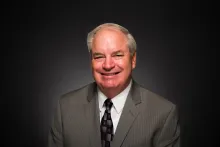
Robin Webber was born in Chicago, Illinois, in 1951, but has lived most of his life in California. He has been a part of the Church of God community since 1963. He attended Ambassador College in Pasadena from 1969-1973. He majored in theology and history.
Mr. Webber's interest remains in the study of history, socio-economics and literature. Over the years, he has offered his services to museums as a docent to share his enthusiasm and passions regarding these areas of expertise.
When time permits, he loves to go mountain biking on nearby ranch land and meet his wife as she hikes toward him.
