

Robin S Webber
This transcript was generated by AI and may contain errors. It is provided to assist those who may not be able to listen to the message.
Thank you very much. Our wireless has gone missing, so if you want to add something to your prayer list, you can do that. Say, why do we need to pray for a wireless? Because a wireless cost the church $500, so you can pray for it. It's out there somewhere. It's out there somewhere, and Mr. Froude is going to find it. He said if God can have an axe head come to the the fore and up to the top, he can find the wireless for us, and I appreciate that. Well, I've got news for you. I don't have any rattlesnake stories.
I don't have any car stories, but I do have a story for you today that I'd like to share, and this too deals with God, and it deals with his deliverance of his people. It's one that we covered the other night when we were up in Victorville at our in-home Bible study, and it seemed to be so well received, and it encouraged so many people that I thought, well, we'll bring it down the hill. Because if it plays in Victorville, it should be all right here as well. And not only that, but I want to share something with you. A couple times ago when I was here speaking, one of our granddaughters leaned over to her grandmother, being my wife, and she said, what's he talking about? Can you explain it to me? And I thought about that for a moment. I said, you know what? I need to just give a message that every individual from young to old is going to be able to take away today and to be able to apply in their life. And that's why God gives us the stories in the Bible, because they're just so well told and they're so well written. The title of my message today is simply this. I'd like you to jot it down for those that are note takers, so that you can come to the conclusion with me in a few minutes. Hence, the title of this message, it's a little long, but each of it's going to fit by the conclusion. Simply this, your vision of God, your vision of God versus the image of gold. Kind of interesting when you put those two words side by side. They almost look alike, except for one letter. God, gold. But how often do we settle for that which seemingly is gold, rather than to settle for the sure promises of God?
To bring this story to mind and to illuminate on it, I want to share the story of three gentlemen of yesteryear, and their names were Michiel, Hananiah, and Azariah. Better known to most of us as Meshach, Shadrach, and Abednego. And now that the secret's out, let's turn to Daniel 3, because that's basically going to be our text for today as we go through Daniel 3, about the story not only of three men, but of the God that they worshiped and surrendered their lives to. And I think we're going to come to see that it's not only their story, but it's the same story that God has in store for each and every one of us.
As we go to Daniel 3 in verse 1, chapter 3 follows chapter 2. You say, I already knew that, 2 verses 3, okay? But in Daniel 2, we have the whole story of the dream that King Nebuchadnezzar of Babylon had regarding the image. And at the end of that, he's praising God, and he's rewarding Daniel for having interpreted his dream. And not only that, but Michiel, Hanani, and Azariah, otherwise known as Meshach, Shadrach, and Abednego, they are also promoted in the kingdom. Wow! Fantastic! Here are people that had come from Jerusalem. They had been groomed in the court of the king and all of a sudden promoted it.
But now we come to chapter 3, and this is where I'd like to bring the congregation. Nebuchadnezzar the king made an image of gold, and that's why we have it in the title of this message. He made an image of gold whose height was 60 cubits and it's with six cubits. And it says that he set it up in the plain of Dura in the province of Babylon.
Now, it's interesting when we look at these couple of verses right here. Nebuchadnezzar, first of all, was the most powerful individual in this part of the world that you and I often study in western civilization. The Chaldean Babylonian Empire was at its height under Nebuchadnezzar. And he made this image of gold, and basically from the top of its head to the tip of its toe, this image that was actually 90 feet tall. 90 feet tall, nine stories, at nine feet wide, you couldn't miss it, was made completely of gold.
Gold is a, still is today, a valuable. It's a symbol of permanence. And he was making a statement about himself and about his kingdom, that in his mind, and the mind is the extension of the heart, that his kingdom was going to be forever, and nobody was going to take it away from him. And King Nebuchadnezzar sent word to gather together the satraps, the administrators, the governors, the counselors, the treasurers, the judges, the magistrates, and all the officials of the provinces. You might even say to throw in the dog catchers.
Everybody was to be assembled, to come to the dedication of the image which King Nebuchadnezzar had set up. So the satraps, the administrators, the governors, the counselors, the treasurers, the judges, the magistrates, and all of the officials of all of the provinces. You have to understand the extent of Babylon, then, that it went from all the way over to the Mediterranean Sea, down to Egypt, and over to the east of Babylon, all that area of Mesopotamia. It was a massive kingdom, and everybody was invited to come to the big dedication. This was going to be what we might call today a happening, and to the dedication of the image that King Nebuchadnezzar had set up.
And they stood before the image that Nebuchadnezzar had set up. A couple words as you go through this, and this is going to kind of be a study that moves us to point. No, God never wastes words here. It's very interesting. This term keeps on coming that this idol was set up. It was erect. And now you come to another phrase here at the end of verse 3, if you'll take a look at it with me, and it says, they stood before that image.
There's a set up, and there's a story that's flowing to a point that everybody was standing. And this is mentioned in the story for a very specific purpose as to what is about to occur. And then a herald cried out to you, it is commanded, O people, nations, and languages, that at the time you hear the sound of the horn, the flute, the harp, the lir, and the sultry in symphony with all kinds of music. Notice, you shall fall down and worship the gold image that King Nebuchadnezzar has set up.
This king who has made this statement by this statue, that his kingdom, that his being, is dominant, is supreme, and is to be worshiped.
Now, verse 6, and whoever does not fall down and worship shall be cast immediately into the midst of a burning fiery furnace. So at that time when all the people heard the sound of the horn, the flute, the harp, the lir in symphony with all kinds of music, all the people and the nations and the languages, they fell down and worshiped the golden image which King Nebuchadnezzar had set up. You have to understand that especially the eastern potentates, especially what was then called the Orient, we often use that term for even further use today, but that was known as the Orient at that time in history, that basically when it says they fell down, it doesn't mean that just crumpled and sat and watched, that there was, they literally fell down, prostrate. They fell down all the way down to worship. Everybody was flat on their tummy. They hit that deck like a bunch of marines on the deck or on the beach, as it were, and they were all down. So I want you to get that thought in your mind as we move into this story, what's happening. Therefore, at that time, certain Chaldeans came forward and accused the Jews. They spoke and said to King Nebuchadnezzar, O King, live forever. Now, if you ever want to get on the king's good side, just say, O King, live forever. You, O King, have made a decree that everyone who hears the sound of the horn, the flute, the harp, the lyre, and sultry, and symphony, but all kinds of music shall fall down and worship the golden image. And whoever does not fall down and worship shall be cast into the midst of a burning fiery furnace. So they're reminding him—stay with the story, please—they're reminding him in front of everybody and other advisors, King, these words, by the way, they came out of your mouth. This is your decree.
Frankly, those men were putting him on the spot. Then they said, verse 12, there are certain Jews whom you have said over the affairs of the province of Babylon, Shadrach, Meshach, and Abednego. These men, O King, have not paid regard to you. They've not given your due. They do not serve your gods or worship the gold image which you have set up. Now, understand what's happening. There's some psychology going on here. It's not only just about the idol. It's not just about the image, but they're personalizing it.
King, they're basically snubbing their nose at you. They're making it very personal at this point.
Now, I want you to think about that for a moment, what this would have been like if you had been there. I have a question.
What would you have done if everybody, everybody, was bowing down except for yourself? Sometimes it's good to have a word picture of this.
Right now, what I like to do is, Ken on the front row, hi, would you please stand up a second?
When you do this, I'm not going to throw you in a fiery furnace later. Don't worry about it. I know it feels like that in here a little bit, but okay, just stay there. And Donna, would you please stand up?
That's it. And let's understand, this is probably a much vaster audience back then on the plains of Babylon. Just three people, all the rest of you at this point are flat on the ground with nothing. I'm just saying as an example, can you imagine just being these three men that are not going about? They see the whole story as everybody was standing, then everybody's down on the ground. Only three men are standing up. Thank you, guys. Appreciate that. Sometimes it's good just to get a visual picture. Now, what happened then? Then, verse 13, Nebuchadnezzar, in rage and fury, gave the command to bring Shadrach, Meshach, and Abednego. So they brought these men before the king. It was out of control. Kings back then were not used to be told no to.
And Nebuchadnezzar spoke, saying to them, Is it true, Shadrach, Meshach, and Abednego, that you do not serve my gods or worship the gold image which I have set up?
This was personal. These were men that had been brought Jews, that had been brought at one of the earliest removals of the Jews from Jerusalem. They had been groomed for the position of being wise men in the court, along with Daniel. They had been given, in Nebuchadnezzar's mind, a lot of leeway and a lot of favor and a lot of blessings that in his mind came from him. And now they will not do this. He says, Is it true that you've done this? You're not going to worship the gold image which I've set up. But then notice what he does. It's interesting. Now, if you are ready at the time, you hear the sound and you hear all the instruments, and you fall down and worship the image which I have made good. But if you do not worship, you shall be cast immediately into the midst of a burning fiery furnace. And then there's a question. And who is the God who will deliver you from my hands? Now, I have a question to ask all of you. Have you ever noticed this before when you've gone through this story that Nebuchadnezzar actually gave them another opportunity? Another opportunity to bow down? You say, Well, God, haven't I done enough? I got through the first one.
You remember that, Lord? What would you have done? What would you have done? And then he asked a question. And who is the God who will deliver you from my hands?
You are standing with those three men. What would you have said? And why did they not bow down like everybody else? I can tell you why. I think. I can surmise 2,500 years later in their mind, whichever Jew learned.
I am the Lord, your God, which brought you out of the land of Egypt, out of the house of bondage.
And you shall have no other gods before me. And you shall not make unto yourself any carved images of any likeness of anything that is in the heaven above, the earth below, or the water underneath the earth. And neither shall you bow down nor serve them. For I, the Lord, your God, am a very jealous God. And I will visit the iniquity of the fathers upon the children to the third and the fourth generation of those who hate me. But I will indeed show mercy unto those that love and keep my commandments. In that tight spot that they were in, they had this spiritual reflex of going back to the very basics of why they were what they were of Jews at that time. That Judah, being a part of the tribes of Israel nearly a thousand years before, had been rescued by the great I Am. They had been delivered. They had been rescued. See, that's one of the mistakes people make sometimes when they only learn the 10 Commandments short form.
It's best to learn it long form because when you say, you shall have no other gods before, what's who's that talking about? But when you learn the 10 Commandments, maybe parents, I want you to think about this, teaching our children the 10 Commandments. Teach it long form because long form, it identifies the God, the God that brought Israel out of Egypt, out of that bondage. And that is always in their mind, this covenant people, that they were in bondage and that they weren't rescued and that they didn't have images of their God because how do you take that which is uncreated beyond time and try to put it into a box, try to put it into an idol, try to put it into a piece of wood. It was foreign to them. That is how they not only defined their God, are you with me? That's not only how they defined their God, but that's how they defined their existence. And that same God that brought their people out of the land of Egypt, out of the house of bondage, had a purpose for them and they were willing to die for it. You know, here the king kind of came back a second time and engaged them in conversation. But notice what they come back with. Shadrach, Meshach, and Abinnego answered and said to the king, O Nebuchadnezzar, we have no need to answer you in this matter. The case is shut. We know what we are about. If this is the case, our God whom we serve is able to deliver us from the burning fiery furnace and He will deliver us from your hand, O king. But if not, let it be known to you, O king, that we do not serve your gods, nor will we worship the gold image which you have set up.
This was a one-way conversation back to the king. This was not going to be a conversation. They did just the exact opposite of what Mother Eve did thousands of years before where she got into that conversation with a serpent in Eden.
When the serpent brought up God and what God had said, and she kept on looking at that image that was in front of her, the the tree of good and evil. Hmm. Well now, Mr. Serpent, now that you brought it up, you know, you know, look pretty good in the eyes. Looks like it might taste pretty good.
I've heard it might make one wise, make me smart.
Didn't go there. Slammed the door shut. Michelle, Hananiah, and Azariah were not willing to compromise.
No, it's interesting. God, gold, and think of two words that seem similar but are miles apart. Promise and compromise.
Compromise and promise. They're almost the same except for the COM. Let's ask yourself a question. What might have gone through Michelle, Hananiah, and Azariah's mind when this came up? Because, you know, they saw this image going up in the plain of Dura. It was not an overnight wonder. They kind of knew what was happening here, and then they were given a second opportunity. It's interesting what the life application Bible brings out, and it deals with human reasoning. This comes from the life application commentary. Some of the things that might have been going through their mind, and not only those three men, but ask yourself with that image that might be facing you today on Saturday, or is waiting for you to face on Monday, Tuesday, or Wednesday, whatever that image might be, whatever is in your way, that, well, everybody else is doing it, and I don't want to stand out. I don't want to be the only one standing up when everybody else is succumbing to what's happening. These three gentlemen could have said, well, number one, well, we'll fall down, but we won't actually worship the idol. And, or number two, we won't become idol worshipers, but we'll worship this one time and then ask God for forgiveness. Another one. The king has absolute power, and we must obey him. God will understand.
Number four. The king appointed us. We owe it to him. Number five. This is a foreign land, so God will excuse us for following the customs of that land.
Number six is my favorite. Our ancestors set up idols in the temple. This isn't half as bad.
Number seven. We're not hurting anybody. There's no crime involved, no victimless crime. Number eight. If we get ourselves killed, if we get ourselves killed and some pagans take our high positions, they won't help our people.
Go back home from exile. That could lodge in some minds. If not us, who else? This is human reasoning.
This is the same kind of thing that Mother Eve did back in the Garden of Eden, but they did not. They didn't do that. They made a very conscious decision, and this may be one of the most important elements of the message that I'm bringing to each and every one of you today that I want you to get. And this is the principle that I want to share with you. Obey God. If you're 80 years old, if you're 50 years old, if you're 18 years old, if you're eight years old, Obey God. Obey the God that brought Israel out of Egypt, out of the house of bondage.
The God that says, don't put anything between me and thee. And don't limit me by putting me into a box, putting me into a statue, putting me into an image. You obey that God. You give your life to that God, and you leave the consequences to Him. You leave the consequences to Him. Obey God and leave the consequences to Him. For we that are Christians, there is Christology that moves into these verses, because really, 600 years or 500 years before Jesus Christ, they in a sense, are following His example. They're telling Nebuchadnezzar not our will, but God's will be done.
They are telling Nebuchadnezzar, this type of the beast, this king of Babylon, that we are not going to commit our well-being into your hands for momentary convenience, but we are going to commit our spirit into God's hands for God's safekeeping.
And that's our responsibility. What God does is His responsibility.
I have a question for all of us. Where are we right now? Do we have anything out there? Do we have our own planes of Dura? Is there an image that's lurking around us that we right now? We haven't made our final decision. We're kind of lingering like the frog in the frying pan. We just kind of are on low simmer, and we haven't hopped out. We're still kind of carving our own statue with our own doubts. You know, doubts about what God is going to do or what God is about can carve a lot of images in our minds and in our hearts.
That's why I'm telling you the story today. We need to hear about people that became great because of what God was doing in them and worshiping a great God. And that's why we have to get these lessons into us, because we, like them, you and I in this world, a type of Babylon, have to learn how to navigate through this world. These gentlemen grew up and lived in the court of the beast, Nebuchadnezzar. You and I more and more live in a world that's apart from God.
And we have to know how far we can go and then when to draw a line. You know, it's very interesting. When you look at these names, it's very interesting that Michiel, Hanani, and Azariah, those are their Hebrew names. Most of us know them by Meshach, Shadrach, and Abednego.
And it is interesting that they allowed themselves to be called those names, which actually have a lot of pagan deity in them, which is interesting. But that's not where they drew the line for a reason, for a purpose, and I was not there and neither were you. Just like today, you and I, in this world today, we, you know, just look at our calendar with all the names that are on the Julian calendar, or you look at the names of the weak and how they are laced with deity of pagans. And so we go through this world just like they did. But there came a line, there came a line not in the sand but in their heart that they would go no further.
And that takes wisdom, and that takes balance, but sometimes you have to make a stand when everybody else is hitting the dirt and bowing down. Verse 19, then Nebuchadnezzar was full of fury, and the expression on his face changed towards Shadrach, Meshach, and Abednego, and he spoke and commanded that they heat the furnace seven more times hotter than it usually is.
And he commanded certain mighty men of Valor, who were in his army, to bind Shadrach, Meshach, Abednego, and cast them into the burning fiery furnace. Even then, they might have been, no, no, no, whoa, whoa, whoa, we will recant. But they didn't. They were determined, and they were resolute. How about us and what's facing us, that image of gold that's before us, that we have shaped perhaps by life circumstances and or doubts that are in our mind right now? How are we facing it? How resolute are we? I'm just asking you the question. You've got to supply the answer in yourself. But I'll tell you one thing. They did not linger. You know, it's been said that cowards die a thousand deaths. The brave only die once. And that's where Meshach, Shadrach, and Abednego were. Even though they were about to be tortured, they were not tortured souls. Kind of an interesting concept when you think about it. Verse 21, then these men were bound in their coats, their trousers, the turbans, and the other garments, and were cast in the midst of the burning fiery furnace. Now, it's very interesting when we look at verse 21 that they are bound.
They are bound. They are tied tight. This wording is very important for the rest of the story. They are tied as tight as a bunch of sardines in a can. They cannot squiggle. They cannot wiggle. They cannot move. And verse 22, therefore, because the king's command was urgent and the furnace exceedingly hot, the flame of the fire killed those men who took up Shadrach, Meshach, and Abednego. This was not just your normal kitchen stove that they were being thrown into, lest we make any mistake. This might even have been a part of a big industrial kiln that was actually used to make the image itself. And these three men, Shadrach, Meshach, and Abednego, fell down, bound into the midst of the burning fiery furnace. They were still tied up. They were bound. And it says that they fell down. So it's a very graphic. Then verse 24, Nebuchadnezzar was astonished, and he rose and hazed and spoke, saying to his counselors, Did we not cast three men bound into the middle of the fire? They answered and said to the king, True, O king!
Look, he answered, Nebuchadnezzar speaking, I see four men. And notice how the story goes. And they are loose, and they are walking in the midst of the fire. They are not hurt. And the form of the fourth is like the Son of God. Now remember, verses before, they are thrown into the fire, thrown down on the ground within the fire. They are bound. They are tied up. And now we have this graphic depiction of being loose, walking. They're not hurt. And now there's a fourth one there, and it says, is like the Son of God. The Aramaic puts it this way, like a Son of the Gods. Now there are many thoughts about this verse. There are thoughts that this could have possibly been a theophany. That is an appearance of the pre-incarnate Christ, as it were. That in that sense, a member of the Godhead himself came down. Possibility. At the same time, it could be an angel. The bottom line is that God above, the God that brought their people out of the land of Egypt, out of the house of bondage, that which they had affirmed and defined their God and defined their existence by, did deliver them. And then Nebuchadnezzar went near the mouth of the burning fiery furnace and spoke, saying, Shadrach, Meshach, and Abednego, servants of the Most High, come out and come here. Then Shadrach, Meshach, and Abednego came from the midst of the fire.
And all the governors were there, and they gathered together, and they saw that these men on whose bodies the fire had no power. The hair of their head was not singed, nor were their garments affected, and the smell of fire was not on them.
It's like it had not even occurred. And Nebuchadnezzar spoke, saying, Blessed be the God of Shadrach, Meshach, and Abednego, who sent his angel and delivered his servants, who trusted in him. And they have frustrated the king's word, that's me, I'm the king, and yielded their bodies, that they should not serve nor worship any God except their own God. Basically, what happened here were men that had said not our will, but your will be done.
Men that in that sense said, we are going to commit our souls, our lives, into God's hands. There's a type of the story of Christ that is in this story. And not only that, but they are cast into the flames to die, to suffer for what they believe and to suffer for what they are, by the kingdoms of this earth, by the ruler of this earth, as much as later on a Pontius Pilate, on behalf of the emperor, crucified Jesus Christ. And the kingdoms of this world, and the courts of this world, said, Guilty, and you will die. And this is reversed by the Supreme Court of Heaven. And God above says, No, they shall live. And they shall, that which you think is dead, shall come out of those flames alive. I think you see a typology that is occurring here, frankly, to strengthen you and me, to recognize that no matter what you are going through right now, whether you're in Simi Valley, whether you're in Baldwin Park, whether you're in Glendora, or you live right in the middle of downtown Los Angeles, to recognize that your position before God's thrown above trumps those conditions that are on the ground. Notice verse 29, Therefore I make a decree that any people, nation or language, which speaks anything amiss against the God of Shadrach, Meshach, and Abednego, shall be cut in pieces, and their houses shall be made as sheep, because there is no other God who can deliver it like this. On that day, there was a real wow factor going on here that even caught Nebuchadnezzar's attention for a moment. And I say that with a smile, because when you go to Daniel 4, you recognize that Old King Neb still had some problems about himself. And I'll let you read Daniel 4. But for the moment, a witness was given, and the king promoted Shadrach, Meshach, and Abednego in the province of Babylon. This is a tremendously inspiring story, and I just want to share some thoughts as we begin to move into conclusion here. This is a story that I am sure inspired the early Christians of the first century AD to recognize that that was their God.
And just as Meshach, Shadrach, and Abednego had, they committed their souls to that good God.
Not the image of gold, but the good God. Those that preceded us in the first century AD had to very much do, in a sense, what these gentlemen had to do. There was a procedure in ancient Rome that basically you could have what is called your own supersticio. That's Latin. You could have your own common religion, but it could not trump what is called the religio of the empire. And the religio of that empire, and it could not come into conflict with that upper religio. But what the early Christians had to do is they had to offer a sacrifice to Caesar. They had to offer a sacrifice to Caesar. And this became double difficult during the time of Domician, who proclaimed himself Lord. And he looked upon himself as a god. And this made first century Meshach, Shadrachs, and Abednego. Now, if they had just gone in there and said, well, we'll just do that, and we'll light a candle, and we'll see the incense go up and do a little sacrifice. And then we'll get our certificate. And on that certificate will be a shuragma. We'll get the seal of the empire that we're good Romans, because we've acknowledged Caesar as Lord. That's shuragma, which is Greek just for seal, is the same word that is used for the mark of the beast in Revelation 13.
They had to take a stand. You and I, in whatever is confronting us today, and I'll discuss that a little bit more in a few minutes, each and every one of us are given this story to give us courage to make a stand, just like them, just like our ancestors in the first century AD, to understand this.
One thing I want to share with all of you today as we begin to conclude is simply this. Not everything that glitters is gold. Not everything that glitters is gold, even golden images.
This story tells us the importance of good company over in Ecclesiastes. In Ecclesiastes 4, and we're going to be talking about this a little bit later in the the men's club this afternoon, but it's interesting in Ecclesiastes 4 and verse 9, two are better than one because they have a good reward for their labor. For if they fall, one will lift up his companion, but woe to him who is alone when he falls, for he has no one to help him up. And again, if two lie down together, they will keep warm. But how can one keep warm alone? And though one be overpowered by another, two can withstand him. And a three-fold cord is not quickly broken. And so, yes, we understand that each of these men, along with their good friend Daniel, encouraged one another and supported one another spiritually right in the court of the beast of Babylon. But there's another verse that I would draw you to. Join me if you would in Ezekiel 14. Ezekiel 14. We often think of Ezekiel as a book of a sense of warning and also a book that tells us to live, to live. And we notice in Ezekiel 14 verse 14, speaking about the times that come upon us, the times that come upon the land. Even if these three men, Noah, Daniel, and Job, were in it, they would deliver only themselves by their righteousness, says the eternal God.
God says, basically what he's telling us here is this. You can't simply hold on to these men's, I won't say skirt, they're not women, your mother's skirt. You can't hold on to their robes.
It's not enough of what they are doing, and it's not even enough of what Meshach, Shadrach, and Abednego did. And it's good to have good company and to have that kind of support. But ultimately, God wants to know what you and I are going to do, and not the other person. That's why the title of this message is simply this. If you'll go back, your vision of God, your vision of God, a God that rescues, a God that delivers, a God that cannot be put into the microcosm of a box, or a piece of rock, or a piece of ivory, and that you know that God has a purpose for you, as a man, and as a woman, and as a teenager, as a child growing up in this church. And that even when you don't fully understand, you kind of come fast-speed to the end of the book of Job, that there are just some things that, once we have that relationship with God, that we just have to give over to Him. And that may even be our lives. And that's kind of what Meshach, Shadrach, and Abednego said. Whatever God wants, it's going to happen. It's interesting, in the book of Acts 12, you can go there later. One of the apostles, James, is executed. He's the first apostle to die.
Within that same chapter, Peter, and I believe it's John, are part and parcel of an angelic prison break. One apostle offers up his life to God and his martyr. The other would have offered up his life, like Meshach, Shadrach, and Abednego, but God has his purposes. And God knows what he is doing. Are you and I willing, as Christians, to commit our lives and continue to commit ourselves to God and his purposes, even beyond what we can see, because those words of his commandments are written in our hearts and in our minds. This didn't happen overnight.
They didn't get religion as the image was going up. How does this occur? Psalm 119, join me for a moment there. Psalm 119, a verse to fortify us and to encourage us.
They didn't have a teleprompter when they read their little speech to Nebuchadnezzar. They didn't have three by five notes, but they had followed the Word of God. They had grown up reading the Psalms and they understood what Psalms 119 and verses 9 through 16 say. How can a young man cleanse his way by taking heed according to your Word? And with my whole heart I have sought you, O let me not wander from your commandments, for your Word I have hidden in my heart, that I might not sin against you. I've taken your Word here and I have hidden it in my heart.
We're neither Nebuchadnezzar, or the boss at work, or the individual that I'm having challenges with, or even myself as I go through my own self-examination. Your Word is inside of me.
I've hidden it there. Bless her, you, O Lord, teach me your statutes. And with my lips I have declared all the judgments of your mouth, and I've rejoiced in the way of your testimony, as much as in all riches.
What we need to understand about this story is simply this. We're not necessarily today or tomorrow going to face a 90-foot image, and maybe some of us wouldn't be ready today to do that.
Often by ourselves, and none of us are ever ready to do that, other than by God's Spirit and Him putting the words in our mouth that we need at the time. But here's a thought that I'd like to share with you, and maybe you can teach children, and the young people can hear this. Character is making a lot of little decisions.
It's making a lot of little decisions correctly along the way.
Before you deal with the tigers, you have to deal with the cats.
You make a lot of little decisions correctly along the way. You build the muscle. It's like Mount Wilson that's over here. You don't climb the mountain by shooting up an escalator. It's one step at a time, one foot at a time, building that inside of us, which will be pleasing to God. And we need to understand that.
My question is simply this. To you, as we've gone through this story, is just simply ask what image lies within your heart or within your mind that is limiting you or not allowing you to fully worship God. It may not be 90 feet tall, but it may be 90 feet tall in your mind. It might be 90 feet tall in your heart. It might be so tall that it is blocking out the voice of God from you hearing it.
And sometimes we can make God's word so complex when it is so simple when going back to the Ten Commandments. Not the Ten Suggestions, but the Ten Commandments. And starting with number one, and going to number two, and allowing that to be a safeguard, and not to overthink the situations that come our way. We don't want to do what I mentioned in that list from the life application commentary. Too often we overthink rather than just step forward and just simply say, not my will, but thy will be done. And what does your word have to say about this?
Gave a funeral message yesterday down in San Diego. I normally start off a funeral message just by quoting Psalm 46 and verse 10.
Be still and know that I am God.
Wonder if those were words that were going through the mind of Meshach, Shadrach, and Abednego.
When Nebuchadnezzar was talking and getting mad, he just simply said, Be still and know that I am God. We have a marvelous story here. I hope that will think about it, emulate it, and remember God doesn't want to know what Mishael, Hanani, and Azariah are going to do, because they've done it. Not worried about Daniel. He's not worried about those first century Christians, but it goes back to the title of the message that I gave you this afternoon, and it deals with your vision of God versus the image of gold.
Remember a very simple lesson. Not everything that glitters is gold.
Look forward to seeing all of you men at those that are going to be there, that have signed up for club. We'll see you at five o'clock.
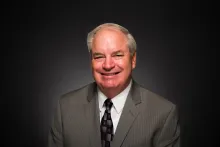
Robin Webber was born in Chicago, Illinois, in 1951, but has lived most of his life in California. He has been a part of the Church of God community since 1963. He attended Ambassador College in Pasadena from 1969-1973. He majored in theology and history.
Mr. Webber's interest remains in the study of history, socio-economics and literature. Over the years, he has offered his services to museums as a docent to share his enthusiasm and passions regarding these areas of expertise.
When time permits, he loves to go mountain biking on nearby ranch land and meet his wife as she hikes toward him.
