
C Mitchell Knapp
This sermon was given at the Branson, Missouri 2017 Feast site.
This transcript was generated by AI and may contain errors. It is provided to assist those who may not be able to listen to the message.
Good morning, everyone. It's really a great pleasure to be here. I wouldn't want to be anywhere else in the world, except possibly one of the other feast sites. I want to be at the feast. That's what's important. I just want to really thank the choir and the other musicians. That was just beautiful, and we've had this lovely music all through the feast. It really adds much appreciated.
At least some of us know how much work it is. If you've never been in the choir, it's a lot of work and a lot of time over quite a period. Speaking of time...
I've got to get the time right here.
Well, the title of this particular sermon is, What Good Am I Anyway? And that's a quote.
General's subject is, The Importance and Value of Los Viejos. The Old Ones. The little Spanish lingo thrown in there.
The Old People. Those few among us...
I mean, most of us.
Things ying and yang through life.
But we're in a situation where we're not stable and we just grow and expand. And then to say, at 19, you're downhill from the rest of your life. I don't believe that, but in some ways, maybe. But the thing is, we do grow old. At the feast, we emphasize the future, the glory of the kingdom, and our rewarding glory and the presence of God forever.
And we say that all the time. It's technically not true that the Feast of Tabernacles or Booths looks forward. The other name is the Feast of In-Gathering, and that looks forward to the glory. But the Feast of Tabernacles or Booths, God said, we weren't to forget that. We were supposed to...they lived in booths for 40 years or tents, you know, temporary dwellings. And it says, the way he put it there, verse 43 of Leviticus 23, is that I don't want you to forget that I made you to live in tents or temporary dwellings. God made Israel to dwell in tents after leaving Egypt and before leaving the Promised Land. And it's interesting, the way he said it, he said, I made them to, like they didn't want to.
Why did he say that? Did you ever think about that? Well, Paul explains this, meaning in 2 Corinthians. 2 Corinthians 5, first four verses there.
And then he says, we don't want to be naked. But then he goes, what's he talking about here? He's talking about the physical body, you know, our tent, if you will, compared to the spiritual house, which is our spiritual body. So, verse 4, He said, we're not so disgusted with the problems of human life and our bodies aging and everything that we want to just die and not have any house to live in.
We want eternal life instead of this temporary life with all of its grief and troubles and, you know, the things that we hear about. Quite a bit. As a matter of fact, I've heard more about aging and the problems of aging, you know, at this feast than I ever had before. It's been increasing the last few years. My thinking about it and everybody else's, apparently. So that's why we have that they had to dwell in tents for 40 years instead of getting moved into. It was actually more than 47 years before the last people got into their permanent houses.
And they had to. And it just pictures us. God requires He makes us dwell in physical bodies for a certain time before His kingdom. A physical life of preparation is required in advance, in other words, because we learn so much from this. So the Feast of Tabernacles, or booths, looks backwards in history behind us where we're coming from and forward to the great glory of the kingdom, where we're going. And so why do we have both of those names of this feast?
And why do we have that description? Well, it's because we need the contrast. We need to think about where we're from, where we're coming from. Absolutely nothing, without hope in the world, Paul wrote. And just a temporary life that gets harder and harder and more difficult in some ways. Physically, certainly. And certainly aging process in the bud. That's where we're coming from, not where we're going. We're going to great glory. And that's so important for us to keep in mind. If you just have one or the other, you're not going to have a balanced view, and you'll just end up not happy.
God wants us to be like Him and build and grow. So to this end of our understanding of this process that we're in, God has included a book in His Bible to focus our attention on this contrast. The book of Ecclesiastes was written by the wisest man to ever live in some kinds of wisdom and knowledge. But there's more than one kind. And you, yourself, are wiser than Solomon in a very important kind of knowledge and wisdom.
And that's the spiritual kind. That's exactly the kind of knowledge and wisdom we're here learning about. That's why we're doing all this, to learn God's view of things. So let's look at Ecclesiastes 12, verse 1. Remember how the Creator... pardon me... remember now... and that was glasses and eyes. Remember now, thy Creator in the days of thy youth, while the evil days come not. Oh no! Something negative. I need a safe space. Evil days are coming.
Nor the years draw nigh when you shall say, I have no pleasure in them. At a lady who was 94 years old, and she said, Mr. Knapp, why is God making me live so long? She was bent down, you know, and she was shrunk by six inches or more. And she just didn't like it. I just don't like it. But she had... God made her to live, caused her to have to live in her physical tent for several more years after that.
Well, there comes a time. This is not good, but it does, you know? And you wake up and you say, oh, another day. I was hoping it would be the kingdom, but, you know, there's another physical day. People have thought that. We don't want to die. We want to live. But life can be a drudgery sometimes, and Solomon's talking about this. So he's a real positive fellow here, writing for us, for the feast. And then he begins for our pleasure to describe the infirmities of old age and troubles that attend.
Thanks, Solomon. So keep reading here. He's going to describe these bad things coming upon us. While the sun or the light or the moon or the stars be not darkened, that is, remember God and your youth when they're bright and you can see them and everything's nice and so on, it seems to be referenced to the face, which is bright and shining and the strength of youth and the joy and everything of youth and energy, which gradually turns into paleness and wrinkles and is replaced.
He's getting more depressing as we go here. Ecclesiastes 12, verse 3, In the day when the keepers of the house shall tremble, the legs and the strong men shall bow themselves.
This people say it means legs, arms, back, you know, the things that should be stout and strong sometimes tremble. And the grinders shall cease because there are few. Well, I don't have as many teeth as I started out with. I don't know about anybody, but it's kind of rare if you. Excellent.
And those that look through out of the windows be darkened. It's like, you know, several times we've had the scripture like Paul, it's like we're looking through a glass darkly. Except Solomon's not talking about anything spiritual. He's saying, I can't see as well as I used to. You know, you look out, supposed to look out the windows and see, and you can't really see as well. Verse five, then, he grows even more poetic.
And when they shall be afraid of that which is high, they won't go any high places, and fears shall be in the way. Last night I was just making a U-turn, or just turned around, and there was a big boulder there on the corner. And I turned around and probably got within seven or eight feet of it, and my wife said, Whew! That was a close call. That rock was awfully close. I have better, better glasses, actually. Excuse me. But, you know, there are fears that come up. And that's his point. I don't want to go on about that.
But he was getting old, and he wrote this book when he was old. He talked about the time, you know, the time when your back goes out more often than you do. How depressing! But there's a lot of humor about this. I've heard all kinds of old jokes lately. I wonder why. They're telling me about those things. A lot of jokes about memory. It was the feast. These two couples, every time they got, they had a tradition. They'd get together on one afternoon, take a nice walk, you know. So the wives were walking in front and the husbands behind, you know. One of the couples had met, a nice newlywed couple, I think, the night before.
And he was going to tell his friend. He says, he's struggling with the name. What's that flower? It's red and has thorns. Oh, you mean roses? Yeah, roses! That's it. So he taps his wife on the shoulder. He says, Rose, honey, what's the name of that nice young couple we met? You know, I'm almost getting tired of the funny, but...
Anyway, Solomon, this is really very high-level poetry, just beautiful. But he describes in fascinating metaphors difficulties and trials of old age and physical decline that you can't stop. And some say this book is depressing. But that's the whole point. The book of Ecclesiastes is about the purpose of life, as is the feast tabernacles. And as Solomon viewed life from the purely physical, he described the thoughts of a discouraged, disappointed, and unhappy, sad old man with little, you know, quite a negative attitude, at this point anyway. He said, Ugh, vanity of any is all's of any.
Nothing is worth anything. And that's verse 2 of the book, because it goes downhill from there, you know. He really was depressed. I hope he was able to get over it, but he wrote this for us to address this problem.
Go down to the end of the book. He did have wisdom that God had given him. If he didn't have joy, he had some wisdom. And he says in verse 13 of chapter 12, Let us hear the conclusion of the whole matter. Fear God and keep his commandments, for this is the whole man. Duty of... shouldn't be there. It's just this is the whole man, mature, complete. If you want to be complete, you're going to be knocked around, and you're going to get old, and you're going to have all kinds of really interesting, enriching experiences, some of which might hurt, some could be joyful.
But God is in charge, and he is making you. It's really a helpful concept to have. It's like brick by brick. You're a wall or a house. He's building you, and you need, you know, 3000 bricks for this side of the house, and you're at about, you know, 2200 right now.
You got to have a few more faith bricks, and a few more joy bricks, and you can take that analogy too far also. But God is building us, and He's changing us into what He wants. So we have to address these things. If you want, however, the greatest benefit out of your life, obey God, keep His commandments, and you assist God in His works. As a matter of fact, you can stop God's work in your own life, but by striving to do that, God is going to build you into what He wants with you.
But you have to be obedient to the law during this process. So it was, the book is depressing in some way, because He just looked at the physical. But despite Solomon's negativity, when you look at the purpose of life, and the meaning of the feast, which is the purpose of life, there's enormous amount to be cheerful about. Even if you have difficulties and, you know, troubles, and we all do. Sometimes severe.
So contradicting Solomon, however, God says, you shall surely rejoice. There is stuff to rejoice about, to really be happy and filled with joy about. So when you think about it, Solomon was contradicting God when he wrote that. Come back to that in just a bit. There's much to rejoice about, but we have to still face this big lesson of the feast. The physical world experienced without God is disappointing at best. But the feast points to the glorious future that we have.
It's good to think about some of those things, which we've heard of through the feast here. A world of no pain, for one thing, that's good. No weakness. Oh, that's great. Any kind of hurting or loss. Some of the greatest sadness we have is not when we're physically hurting, but when we lose something, especially somebody that we love. Or sadness or tears of any kind. No aging process. Hurray.
No death in the spiritual realm at all. Nothing negative. This is so different. We can't really get that. You can't really think that through completely. We don't know that world. Just nothing negative. Everyone has a new powerful spiritual body and a new brilliant, positive, and powerful mind with a locked-tight memory. I'm going to like that. If you don't want to forget it, you don't.
You put it in there and it stays on our drive. It doesn't leak out your ear or something. Now, this kind of a glorious, powerful mind, there's a name for it in the Bible, and it's called the mind of Christ.
Sometimes we go back to other associations that have been put on these words and we think, religious stuff. Well, certainly religious, but because it has two with God. But I don't think he acts religious, air quotes, religious. God is real and he's powerful and he loves living and learning and growing, and that's why we do. So we have this mind of Christ, which is life on the level of God's thinking, which we can approach to imagine. God playing relationships, Mr. Armstrong used to use that term.
That was a brilliant insight. Having relationships and a mind on a higher plane, full of love, creativity, accomplishment, cooperation, unity, beyond what human words can describe. So I won't continue if I describe it. The Book of Ecclesiastes shows a direct relationship between the Feast of Tabernacles and the physical tent with its aging process, our body, that life, and then it contrasts it with the glory ahead. That's one of the greatest lessons of the Feast of Tabernacles. There are quite a few really big ones for the Feast, but that's one of them.
And it's important. So in keeping with the Feast, we also look at this present world at the same time as we're looking towards the future, which is the Feast of In-Gathering, one Feast, two names. The reason I chose this subject was that there are many older members, more than... it's growing to be that way, but I see that God is starting to call a lot more younger ones and some younger leaders, which we're very, very, very appreciative of.
I'm going to take liberty, I hope, without too many seconds to waste, but I just wanted to say something about the youth as well. I missed Youth Day yesterday, as far as speaking on Youth Day. And, you know, somebody asked me, because I gave a sermon at the Dills, and said, well, if you want to know what it was, well, talk to the elders, you know. I asked the older ones. So this one sweet girl from Oregon, a family friend, she said, well, so what was it like? So I had to come up with an answer.
And I told her a few things about how the world has changed, but I said, you know, the biggest difference that I know, that I can see, between being a teenager in 1961 and being a teenager now, is I asked my cousin Paula D. Paula, what's it like to be a teenager? She had just turned 13. I was 10, I think.
She says, it's great, except for the reputation. At that time, you know, teenagers had the audacity to chew gum in school, if you can believe it. It was a different world, a nicer world. And there was kind of a negative attitude. I felt it was true of the speakers in the church, which I had become one, about the teenagers. Every once in a while there would be a complaint, because I guess we were sort of earned it.
Teenagers tend to be rowdy and louder and noisier. But if we had our strength back, we'd be just as rowdy and noisy. You know, it's a matter of that. That's a big matter of aging process, too. But anyway, the difference today is that I think that the teenagers and young people, young adults that we have, you who are among us, are loved more, really cared for, and more highly valued than we were.
We had a gang of them, and we did get in their way, you know, and caused difficulties for organizing things and such. But I just noticed there's a big change there. I hope you can at least understand that. And as you grow, you'll see more about it. I just wanted to make that comment, because it's part of our dynamic, and it is important. So back to this. I chose this sermon because there are a lot of people who have told me things like, I just feel so useless. What good am I? That was the title. You know, I can't do what I used to.
And this same woman, the 94-year-old, that said, Mr. Knapp, why am I living so long? When she was 104, she was even shrunk more. And she said, Mr. Knapp, why is God making me live so long? I had a better answer that time, and I said, you know, it's because, I'm not sure of the details, but it's for your benefit, or maybe not, maybe it's for somebody else's benefit. Her daughter was there in the church, and a lot of people knew Mrs. Cole. At any rate, this causes real discouragement and maybe depression, and so it's important.
So that's why I wanted to speak about this, because there's some really encouraging things. Here in God's Word about this. As we age, we become less effective as this physical decline sets in. And some people have just come to see themselves as less and less useful to God in his work. Well, maybe you're less and less useful in doing your physical labor that you used to do, organizing things and running the whole househood efficiently and energy to go here and there and do great works and so on.
So maybe that's gone down, but there's a tendency to correlate that and to say, that's how I am all over. That's spiritual, too. It's not. People can set their value and even their worthiness to God in terms of what's happening to the physical bodies. We tend to, I think. And interpret that as God's love diminishing toward us because we're not as valuable to Him anymore, but nothing could be further from the truth. Nothing could be further from the truth. No bigger lie. Solomon was absolutely wrong. Flat-out wrong, because he was only looking at the physical. There are lies recorded in the Bible, you know. Different people told lies. Solomon is not lying.
He's saying how it is to him, because he didn't have the spiritual that we have. He was looking just, you know, not the sky above, but just at the mud beneath. And he was depressed. And that's wrong. It's just not true. For those who are called to live in the house of God, the most important things in life continue to get better and better and better. That's the way God's way is all through, despite the trials and the difficulties and the frustrations and so on of old age.
God's way improves and grows. And so I'd like to recite to you, or read to you, three great spiritual truths and then a couple of examples in an overall lesson. Spiritual truth number one. The spiritual value increases throughout life. The converted person's spiritual value to God increases through his life. God loves that person, each one of us, more as we endure, as we grow older.
It's the opposite of the physical. Spiritual value increases throughout life. Secondly, spiritual truth number two. Learning to depend on God as spiritual fruit and spiritual works. When humans do God's work, it's accomplished by God's Spirit. If it's done by your own power, it's your own work, not God's.
Number two is learning to depend on God as spiritual fruit and spiritual works. Number three, spiritual truth number three. As we age, we have greater spiritual power. God gives us power to do many things in his spiritual work, which produces increasingly greater spiritual fruit in old age. Number three is, as we age, we have greater spiritual power. So let's look at these three and have a couple of examples. Number one, spiritual value increases throughout life. God himself respects aged people. It requires that we teach our children to respect age.
Leviticus, Proverbs, comments by Christ, respect the gray head. It says, the hoary head, the white, gray hair, because there's age there, there's experience there. And Christ took them to task for not respecting their parents, taking care of them. The work of God is done more productively through his people as we grow older.
We become more and more valuable to his work, because spiritual work, remember, is between the years. It's in the mind, it's in the character, it's becoming like God. The definition of God's work, John 6, 29, defines God's work. This is his work that you believe in me. It's our faith, our growing faith, our growing relationship back and forth with God to believe him fully.
And that grows along with our obedience. Sometimes it takes the faith. You obey and God strengthens your faith. And then because of that level of faith, you have strength to step out further. We talk about stepping out on faith. It just grows together. God is in charge of the spiritual process, and we grow thereby. One of the reasons the things are better as you're older is when you can't do more active things, you have more time for spiritual things. You know, if you've got three jobs and three kids, so on. There's not a lot of time, but by God's design, you have time for prayer and meditation if you have to sit for much of the day.
And you know, you can use that for spiritual reasons. Now, there's a chapter in the Bible that has a lot to do with old people. At least it talks about old people. And that's Luke 1. Well, actually, Luke 2 here. Starting out in chapter 1, verse 7, Zacharias and Elizabeth.
Elizabeth, the cousin of Mary, he was very aged, and she was, and they were too old to have children. They missed out on that and felt bad about it. So we start out with some old people, of course, by miracle. John the Baptist was born. In chapter 2, verse 25 to 35, I'm just going to summarize this. We have the story of Simeon, a man of great age. And he was used and kept alive for the purpose of blessing Christ.
I want to know why. What was it about Simeon that God chose him and kept him around for that special work? But God used an aged man after having used an aged couple. And Joseph, the husband of Mary, was an old man as well. Then we come down to chapter 2, verse 36. He says, and there was one Anna, a prophetess. She was a great age. She was at least 84 and maybe older. She was a widow of about 84 and maybe a widow for 84 years. She departed not from the temple but served God with fasties and prayers night and day.
And she, coming in in that instant when Christ was being blessed, gave thanks likewise unto the Lord and spoke of him to all of them that looked for redemption in Jerusalem. So people listened to her because of her wisdom and her dedication, her example. As God's servants age, there are a lot of other old people in the Bible, of course. Just the point here is with these three. As God's servants age, they take greater pleasure in prayers and fastings because they see more and more the need of closeness to God and feel the benefit of it, the purpose that God created us for in the first place.
So if we live our lives with God, understanding His purpose and vision, life doesn't get boring and old and tiresome. It gets more and more interesting and worthwhile, more robust and vital throughout life because we're learning things of God. I remember, I think, when I was young, hearing some of the older people say things like that. And I didn't disbelieve them. I had enough respect taught to me that I believed them. But I didn't understand it. It seemed to me that water skiing was far more interesting than Bible study, etc. But as you grow, what you learn and understand more deeply about the truth of God invigorates you.
And it gives you joy. And you're just as happy and even more than when you used to be a little water ski or play basketball or whatever your particular interest was. But here, Anna chose to use her time to serve God. It's just an example for us, what we need to learn. Our service in old age is really precious to God. It says, you know, the death of the saints is precious in God's sight. Why? Well, it's because they've been precious for a long time as they've been developing their relationship with God.
Like all relationships, love grows. And God's love grows for us as we keep growing ourselves, as we hang in there and spend the time. So the time when many doubt their worth and value to the work of God because of physical decline should be a time of great spiritual increase in growth, which makes you increasingly productive and profitable to God in His spiritual work and which gives you more and more joy and deep-down satisfaction and happiness. It's really great! It's not all is vanity. It's all is really interesting, even though it can be painful and difficulties and so on. So we have David, Moses, Paul, Luke, Job, Elijah, Peter, and the other writers of the Bible. Many of them wrote about, apparently worried about it, this growth and aging thing. For instance, Psalm 71, verse 18, he said, David wanted to stay alive so he could do more for God to, I guess, give God a better return on his investment. That's what I think. Keep me plugging so I can keep serving. I haven't done nearly enough yet. And that's what he wants there for us to learn. We need to have this attitude.
David's motive was to serve more and to grow in this way of life. He had what I have called, and maybe you've heard of the afterburner principle, Why do you want to live longer? So that God gets more out of your life so you can serve God more. And so you don't kind of ease back on the throttle and kind of coast in there. No, that's when you put the afterburners on and you try to go faster than ever.
You try to slow down physically so you don't just fall over and go to sleep somewhere. But the idea is that you really push on the spiritual things and discipline yourself. Because we don't have that much time anymore. That's one reason. Well, Paul said this. He had that attitude, too. I press toward the mark for the prize of the high calling of God in Christ Jesus. And he also said, I'd rather depart. It would be nice to just go to sleep and wake up in the kingdom tomorrow. But for your sakes, I want to stay around. I want to do more of God's work to help people. So when you get to the point of hell week in your life, you know, the Navy SEALs, they have this intense training for weeks. And they go through the last week and they call it hell week.
They just push those guys to lack of sleep and straining muscles and they just push them to their limits and beyond. And they poke them, too. They try to make them angry and break out of, you know, just haul off and slug an officer or something and break out of their training. They're trying to disqualify the ones that don't have what it takes. And there's a real good analogy there. As things move on, as we get older, things get harder. And it's supposed to. But we're supposed to keep in mind, and we need to, that we're nearer to the kingdom. Now is not the time to lose hearts. An amazingly high percentage of those strong young men with iron wills and great power and vanity involved, a high percentage of them drop out. They just don't make it. It's just not worth it. And I thought, you know, I don't think I have anywhere near half the capacity to do that anymore that I might have had at one time, physically. And self-discipline, you know, Christ said, the Spirit is willing, but the flesh is weak. Self-discipline breaks down sometimes just for exhaustion. I'll just wait till tomorrow, you know, I'm going to bed. That kind of thing. So there's a very real diminution, a lowering of your, even of your willpower when it comes to sleepiness and just lack of energy and that type of thing. And we don't have that. We don't have what these strong young Navy SEAL trainees do in the physical area, but we do have far greater strength. If the body is sluggish and tired, it's the mind that counts. And so you rearrange the physical things that you have to do so that you get the spiritual things done, because that is what counts. Now is not the time to lose heart, just like in Hell Week for the Navy SEALs. God doesn't have pleasure in those who draw back. It's the ones who plunge forward and will not quit.
And our great example is Christ, who ran completely out of energy. He allowed himself to be killed and just die, and he was faithful to the last breath. That's what Paul said. I want to have fellowship with his suffering. And I forgot the wording Philippians 3. And basically, die like Christ died. He wasn't talking about crucifixion. He was talking about being faithful to the last breath.
And not giving up the treasure that we have. So now is not the time to lose heart, and this is one of the great lessons of the Feast of Tabernacles.
The most spiritually productive time in your life is as you go on, the end of your life, as you continue to learn and grow. We have the example of John. I kind of like his example. He was an athlete. I don't know how much of one. I don't know how much of one Peter was. But John was apparently younger than most of the other disciples, maybe about ten years, several years younger, younger cousin. And when they heard that Christ had been resurrected, they raced over to the tomb and it says, and John beat Peter there. He was a better athlete. He was younger. So he was really more valuable than Peter, obviously, to a basketball or football team, maybe. But to God, was John more valuable when he could run fast? When he, you know, late twenties, maybe thirties? Or when he was in his nineties?
Could he have written, could God have written, had he write the books, the three books of John, three letters to John and the Gospel, and all the depth he puts into that? When he was thirty or thirty-five? No. That had to be somebody who was old and seasoned. You look at what he wrote, and it's so deep and so meaningful. And the others, well, Peter and James the same way, they were not as old as John, but they had experience.
They were able to put that in and give us these powerful books of how to run our spiritual lives and how to think about things spiritually, because they were old and had learned how God thinks. Actually, that's the reason. But they couldn't have written those letters when they were young. It's far more useful to God in doing his work, writing these things for us to read, when they were very old. This is when your greatest use or value to God comes in.
It's just absolutely wonderful the plan God has. It's the same with all of us, just with them. So that's spiritual truth, number one, that our value to God is far greater when we're old. Our spiritual value increases throughout life. And number two, then, spiritual truth number two, and three are subsets of the first one. Learning to depend on God is spiritual fruit, spiritual works. This is really important to understand. I had a woman ask me in California 47 years ago, what are our works?
Well, obedience. I didn't give a very good answer when I was a trainee, so I asked the pastor, and he gave a better answer, but he still didn't give a really great answer. But we talked about works all the time. We do have to obey. But here's an example of spiritual works, learning to depend on God.
It's the spiritual relationship and the strength and the character we build. That's what our works are. So, a couple of key scriptures here. Paul discusses the challenges of getting older and dealing with sickness, which comes with age sometimes. In 2 Corinthians 12, and this is verses 7-10, "...unless I should be exalted above measure through the abundance of the revelations, he had a lot of visions. There was given to me a thorn in the flesh." And we aren't told what this.
People have guessed what it is. But he calls it, "...a messenger of Satan, to buffet me, lest I should be exalted above measure." I've talked to people. I've thought the same thing myself, who got extremely ill and then came back and lived a normal life, fairly normal, you know. God healed them. And they said, I know why this happened. It's because of my stupid rotten vanity. And I had lessons to learn in terms of greed in my business, in various other things people have said.
Sometimes, you know, it's apparent to us. Sometimes it isn't. We just keep plugging forward. And then verse 8, "...for this thing I besought the Lord three times, asking, Please heal me. And he said, My grace is sufficient for you. He had received great grace like we all have. For my strength is made perfect in weakness." That's an amazing thing. I wrestled with this for a long, long time, trying to understand it when I was young. And perhaps I'm still learning, too. But I understand it a lot better now. My strength is made perfect in weakness. Christ, again, gave us the best example of this. Most gladly, therefore... this is verse 9.
1 Corinthians 12-9. He said, what God said to him, "...My grace is sufficient for you. For my strength is made perfect in weakness." I think Paul probably had to think about that a long time, too, before he got it. So then Paul concludes, or thinks, decides, "...most gladly, therefore, I will rather glory in my infirmities, so that the power of Christ may rest upon me, so I can be more productive spiritually than do God's will in His work." Now, let's go back to the word glory.
Most gladly, therefore, will I rather draw closer to God in my infirmities, my troubles? Or will I rather seek God's presence in my life, in and through me? He's talking about really being joyous and using the fact that he had this affliction, which we don't know exactly what it was, don't know it all, really, to use that as a springboard to be closer to God and to be more effective. And I don't know how to, but I imagine you think like I do, I need to be way more effective.
I have so many needs, and this is good that we know that. Learning to depend on God is part of our spiritual fruit. It's what makes us more effective. When we go to God and say, I'm not going to be able to do this by myself, no fancy prayer is here, I just can't do this, and I need your help, and I've got to do it.
I need to do my responsibilities and whatever your challenges and troubles are. That's spiritual fruit. We have to learn that. Christ even said it myself, and I marveled at the Scripture for so long. Of myself, I can do nothing. As a man, he had a man's strength, which is very little. One man. But with God's help, we can do everything that we need to. In Zechariah 4.6, as a Greek Scripture applies in many ways, he answered and spoke to me, This is the word of the Lord unto Zerubbabel. And then he says, Not by might nor power, but my spirit saith the Lord of hosts. I'd like to translate that a little bit differently. Not by physical might or physical power, strength, and all that, but by my spirit, that's what the Lord says.
So he contradicts a lot of our thinking when we think, Oh, I've got to do this. And we begin to think, I've got to do this myself. And it's been said, God requires that we work like it depended and pray like it depended on us. No, I said that wrong. We work like it depends on us, but we pray like it depends on God because it really does depend on God. But it depends on us and our work too in response. So it's just a way of saying it. The work of God is done through the prayers of the church. Several scriptures on this.
I'm just going to refer to Philippians 1.19. I'll be able to get this done, Paul says, through your prayers. It's the prayers of the church that get the work done. Not just that one scripture, but several. Talk about that principle. It's hard to accept and believe because we think we're so strong and smart and so on. But learning to depend on God draws you closer to Him and Him to you.
You're running up against the brick wall of, I can't do this, but I've got to. It's God's law. It's God's truth. Your thinking has changed when you come to that perception. I can't do this. And you start thinking more like God. You're agreeing with God. You're taking on the mind of Christ. This is spiritual fruit. Truth number three. As we age, we have far greater spiritual power. Power increases throughout life when you're living your life with God in His courts, in His church.
God gives us power just to do many, many things in His spiritual work. And that doesn't decrease at all. Remember, fruit or spiritual works is the conversion of the mind, mind and yours. Your example, your own thinking, and those who see you. That's what the work of God is.
So what can you do in very old age, better than you could before, or at least do the same thing? Well, the most important thing, of course, is pray and study. One doesn't go without the other. You have to have the combination. Because it's a dialogue, talking to God, being talked to by God. His answer, how many times you open the Bible? And an answer jumps right out at you that you needed to know. Or you don't know what to study, so you open the Bible. No matter where you study, even if it's a genealogy somewhere or something. God, it's a living book. God is there in the Bible. It's the Word of God, it's the living Word. And He begins to teach you spiritual things, no matter where you go to. I'm not suggesting that you study genealogies. They're generally kind of thin, you know, a lot of names and so on. But the point is, it's a living book, and God teaches us whenever you study your Bible, you're being taught by God. So pray and study. Don't leave either one of them out and do that on a daily basis. That's so important. You know, if you're hungry, you probably eat. You probably eaten today a little bit. Yesterday, the day before. It's a feast, of course, we should. But, you know, you could save a lot of time, but you'd just wait till Friday, and you'd really gorge, eat a lot, not waste all that time. No, God made it this way because it's important, and we need our Bible study and our prayer every single day. And people, you know, you can do a lot of harm to your health by not eating regularly, same way spiritually. So that's the most important thing, as we, at any time. But you can give the gift of wisdom and experience. You can give the gift of wisdom and really help somebody when you're 12, if you're talking to a 9-year-old. You know, a lot of people, that happens all the time. But as you grow in the church and you're aged and gaining more experience all the time, fellowship, it'll just come out, and God will bring that out and help others. You can, the older generation gives the two, three, or four generations behind them a precious gift that can't be calculated. You can't put a price on it. You can't measure it. That's stability and maturity. Personal stability of mind and balance, in other words, wisdom. That's the principle thing. This is true in society at large, and especially in the church or else vice versa. I'm not sure, you know, the world's pretty bad in need of this.
But people worry about not being able to walk as fast down the line or not being steady on their feet.
Your presence here is worthwhile. Even if it was hard to get here.
I have now, at this point, I have a lot of friends who are older, including my mom, who's, you know, it's just so hard. It's just hard to get out of the car and get in service. It hurts, it wears you out, and about the time for the potluck, you say, oh, I don't think I can stay. I've got to go home and go to bed, have some people in, actually both churches that way, and think their presence isn't valuable. Oh, I'm just worth nothing anymore. Not at all. It's the opposite. Your presence just being there is a major spiritual service.
Enduring to the end, having the example of elderly, aged people who are still struggling on, you know, they're at church regularly, even if they don't get to stay for the potluck.
And they're friendly and everything, and that's the next point. You can encourage. It doesn't matter if you're old. I mean, it really helps if you're old. You can show good will. I've got an example in a minute about that.
God's attitude of outgoing concern, His love. This is so important for us younger people, you know, 40 and 50 and 60 years old. And I'm not kidding. By the way, I just turned 70. I'm not trying to, you know, scoot in there and say anything wrong or anything false.
But, you know, the younger ones, the middle-aged people up, I'm going to say until 70.
After 70, you can't quite claim middle-aged, but, you know, even if you have good health and so on. But it's so important to have lispiejos around, the old ones, because they're faithful, still and strong. You know, some people do get old and they get selfish and they focus on themselves only, it seems.
There's no fool like an old fool, somebody told me, an old person told me.
You know, it takes work. We're valuable to God. And I just read that how I go. If, or maybe I didn't read yet, I don't know. But, you know, they say that memory and whatever it is, the first two things to go. I can't remember right now.
I've heard a lot of memory jokes, bad memory jokes, and now's the goodest time as anyone to tell mine that I've been saving up. They're these four guys, you know, and they had gone to high school together and gone their separate ways in businesses and so on, jobs and families.
They said, well, you know, we ought to get together for old time's sake. Let's go have lunch. So they decided to do that. And they said, well, we talked about two or three restaurants and said, well, let's go to the ocean side. They have pretty waitresses. They're 40.
So they go, they have such a great time. Well, let's do this again. They're about 50. They decide, well, let's do that again. It was fun.
Well, they argued a little bit, you know, but they finally decided to go to the ocean side because the food was okay and the wine list was impressive.
So they're about 60. So I do it again. They argue more this time, but they decided on the ocean side because, you know, it's beautiful sunset right there on the water. It's just gorgeous. So they go out there and they're about 70. And they argued a little more, but they decided on the ocean side because, well, at least it's quiet and you can hear each other.
Well, they're about 80 and they decide, well, let's do it one more time, you know. And this time they really argued, you know, grumpy old men.
And they finally decided on the ocean side because they hadn't been there before.
I thought it was funny. I'm glad you did. Anyway, you're even better about encouraging when you're old. But you can't encourage. You can say, hi there, Mr. Sones and Mr. Sones. And then you get 15 minutes. Oh, it's my lumbago, you know, on my toe. And you just, you know, I'm a scientist, you know.
Now, focus away from yourself. You make yourself miserable and everybody else around you.
You have the ability to encourage more by not talking about your personal troubles or even about yourself a lot.
Anyway, and that's so this is something you can do better as you go. Same thing with setting an example of faithfulness. I just mentioned that already.
This is one of the greatest things. Just being there, just showing up. I think Woody Allen said, you know, the world is run by those who showed up.
You get involved, you show up and you're there. You're serving. You're helping others.
So serve as you have opportunity, God. And ask God to give you opportunity. God will. Certainly will.
Paul's attitude, you know, is just, he said, I can't decide. I'm betwixt the two. I'm in a straight between two.
I don't know if I'd rather die right now and wake up in the kingdom tomorrow, or else that I hang around, but I'm going to hang around because I know I can help you.
A great example. There's always more work and service to be done. There is always more to be done.
And in the kingdom, you can ask Mrs. Cole about that. She died about four days after I told her the second time when she was 104, that there was a reason it was to serve, even if we don't know the details.
So we can ask her. She'll be able to explain it real well, I'm sure.
Well, as I say, the number one thing here is running or continuing, keeping up your running conversation with God, the back and forth, maintaining that contact with God.
From that prolonged, close contact with God flows much spiritual service, even when you don't know that you're helping somebody else.
You're building, you're being pliable to God.
So we just have more and more power as we go.
I have an example of a lady by the name of Mrs. Marion Wilson, lived in Kansas City in the 70s and 80s.
And she was, mid 80s when we met her, she was in her 70s, a very pleasant lady, just a lovely person.
She had also shrunk some, and she had the most warming smile. It was more than a big smile. It wasn't so big.
It was a pleasant smile. And that and the eyes, her spiritual strength just came out. She was truly interested in people.
And I learned that that was because she prayed for individual people all the time.
She prayed like Anna did, didn't have a temple physically to go to, but she was in the part of the spiritual temple, and she prayed a lot because she had the time.
She chose to use it that way. She had knurled hands. She had RA, rheumatoid arthritis in her fingers. They wouldn't fold together. They didn't fold very much, but when they folded, they crossed over each other. The joints were all a mess.
They hurt a lot, sometimes not so bad. But when she went to eat, she had trouble holding her spoon.
She managed to eat okay, but everything was slow and hard and painful and more difficult.
She was the most joyous person, one of the most I've ever met.
So that's an introduction to Mrs. Marianne Wilson, who prayed a lot.
Well, our daughter Kate graduated from college in California. Ambassador, as a matter of fact.
Flew back to Kansas City. She was making jokes about being a eunuch for the kingdom's sake because she didn't find a husband.
So she was kind of bummed out about it, you know, but life goes on and she went looking for a work.
Half-heartedly looking for a job. Didn't really want to find one. She wanted to find a husband.
But she did. She was a hard worker.
So there's this fellow by the name of Raymond Coleman.
And he had been hunting for years. There was just nobody around. There were a lot of people, a lot of women.
And so I called him up the day after she arrived. Flew in on, I guess, either Friday or...no, probably it was Sunday morning, I guess.
And Sunday afternoon we had a spokesman's club ladies' night, and I happened to know, I just happened to, that he didn't have a date. So I called him up and said, Raymond, I've got a problem here. My stepdaughter, Kate, is in town, and she doesn't have a date.
And we don't want to just go off and leave her flat. Would you mind escorting her to the club?
He said, sure, put her on and be glad to. I said, no, John, no. I'm not going to put her on. If you want her, you've got to call her, buddy. So I'm not going to get in the middle of that. So he did. He called right back, and Kate, it's for you.
So she came over there, and so he asked her. Well, she was happy. She hadn't seen him, didn't know him. She was happy.
She didn't have to sit alone, you know. And so we went to the club, and they just hit it off.
And shortly ensued a romance, you know. He winded her and dined her. Later he talked about, way back at the time, you know, when Kate wouldn't eat, and I would spend money.
You know, I was actually been married for a few years. And so, and he took her out on his motorcycle, and he roared around Kansas City, and she fell for him.
And so they were married. And at the wedding, Mrs. Wilson came up.
And she said, well, Raymond, congratulations. I'm so happy that you found Kate.
Just congratulations. Well, thank you, Mrs. Wilson. And she started to turn away. Then she turned back. She said, But I'm not surprised. And then she walked off. So we had to catch up with her later. Well, what did you mean you weren't surprised?
And she said, well, I've been praying for you for two years. I can see you couldn't find anybody around here.
And I knew that God would bring you a pride.
That's very touching to me for several reasons. I won't go into all the reasons. But Mrs. Wilson is dead now.
You know, she was praying for us and everybody else in the Kansas City Church. And there were over 300, individually and personally.
And she did that for years. She was like a modern-day Anna.
She prayed for us. And she never knew, and we'll never know until the resurrection, what all good she did.
But the legacy of her bitter trial with painful rheumatoid arthritis, which meant she couldn't be that active.
And that meant she had a choice to use. So she used the time, like Paul said, to build her closest to God.
I will glory in my infirmities and be closer to God in His presence because of it. So she couldn't run around. So instead of watching TV and thinking about all her pain and...
Well, she watched TV sometimes. She's a balanced person. She spent hours per day praying, doing God's work.
The resurrection is going to be a busy time, except that we'll be so smart. It would be confusing, I suppose.
But there are several people. I'm going to run around. I'm going to find. I'm going to give her some huge hugs.
And Mrs. Wilton is one of them. Don't worry. I'm not going to cause a scene at the wedding supper.
I'll be rudely. I'll follow the deacons. The angels are deacons. I'll stay in order.
But I'm looking for some people that are really joyously. Give them a hug and see them again and thank them.
The legacy, the spiritual legacy, all of her prayers, all of the work that she did, all the people who were blessed, will not be known until that glorious day.
And then, postscript, the first child, which they had two children, they're moving on in life.
The first child, Rachel, it was just obvious God was blessing her all of her life.
She's married and started her own family.
Her prayers, just to our family, and how many other families there are still having effect.
What a huge spiritual legacy Mrs. Wilson has. I can't wait to see her.
Now, there's another example, very similar, basically the same, except I didn't know her personally.
Her name is Mrs. Levy. She was also a modern-day Anna.
She died about 47 years ago in San Diego.
I just know of her because the pastor of the San Diego church, Mr. Al Caroso, gave a sermon in Pasadena.
He mentioned that she had died. It was about prayer.
She prayed all the time, like Anna. Who will take Mrs. Levy's place?
Here we are. We have one lesson. She prayed a lot.
So I've stayed with me over the years. I took a little bit of it, but I've been very busy.
I always think I wish I had prayed more over the years. I'd be better off studying more.
Perhaps you think the same thing.
But others were brought in, like Mrs. Wilson.
There have always been people who served in this way who will be great in the kingdom, but were hardly noticed here.
Don't think that you're not that important. That's not true. That's a big, fat lie.
You're very important. You're called to the true church of God to live your life in His courts.
So whether you have youthful energy or great resources, you can speak effectively and run fast like John and have perfect fingers.
Or whether you have neural fingers, health problems, painful days, and have to sit around a lot.
You have power to do the work of God. God has empowered us, not by might nor by physical power, but by my spirit. That's what God says. Try to remember that. It'll come in handy.
Where was Mrs. Wilson's power? Well, it sure wasn't in her hands. She could barely hold a spoon.
It was in her relationship with God. She gave her precious time to converse with God and have this relationship grow.
Like I say, all good relationships grow in love.
And God says over and over, I have given you strength. I will give you strength. I'll do this for you. I'll do that for you.
When we serve God, we become more and more like Him. Not only do we help others, but we ourselves do the work of God in ourselves.
We are the work. We, each of us, are the work.
So, have you been praying and studying? Then you've been using your calling and doing the work of God.
And your spiritual efforts have been carefully listened to.
And God's work has been done in your mind, in the minds of His people.
Decisions have been made, adversity has been faced, trials have been overcome, things have been endured, blessings have been bestowed. All because you used your calling and took the time to pray earnestly for someone.
So we're wondering, now, where are these people? Well, they're right here. The ones that are praying in this house of God, God's Church.
I have a long list, which I won't read, of all the places. It talks about how God pays attention and listens to us.
He wants us to learn that lesson, but we have to move on from that.
The Feast teaches us about the temporariness of physical life and our weakness, and the unsatisfactory life that we have.
And it looks forward to the true satisfaction and joy and success and accomplishment of the Kingdom.
The lesson of the Feast is to be carried all year, as we think.
You remember the Old Grey Mary? The Old Grey Mary. She ain't what she used to be. She ain't what she used to be.
The Old Grey Mary. She ain't what she used to be many long years ago.
And from Missouri, so I heard I was close enough to a mule. I heard it in my household. Dad's saying it.
Well, you know, I've read a description of the Old Grey Mary. She could pull a heavy milk cart up a steep hill with ease, run lickety-split chasing steers.
There she stands now, gray around the muzzle on a weekend swayback, and about all she wants to do is eat and lay around.
She'll still come up to you and nuzzle, you know, get some attention or a treat, but a great joy in life running out of the question.
Our joy comes from God changes, converts us from getting joy, as we did when young, to producing joy in our lives when we're old in a different way.
So I have advice for you. I have it right here in my notes. Don't be discouraged!
There it is, right there in my notes here. So don't!
I was thinking the screen reading is over. A little dogmatic. Maybe I should say, try not to be discouraged.
If I had a perfect record myself, well, maybe I'd boss you around, but really try.
Try not to be discouraged by the physical loss of strength and other difficulties.
You can pray and be heard on high. You can be used by God to do His work.
And you can give the gift of stability and many other gifts that cannot be valued. There's no price on them.
You can do all kinds of things as an old person. You can set an example of faithfulness to the end.
I like to think of this, that God loves, like any good relationship, God's love grows for us.
Not just our, He commands us to love Him. But His love grows as we grow, become closer to Him.
We become precious to Him. We are precious to Him in this life. Well, with the great calling that we have and the joy that we have offered, there comes a warning.
And that is, don't slip back into Solomon's attitude of just seeing the physical.
He made wrong choices early on, fouled up his whole life. He went away from God. He still retained the wisdom, the gift. But He didn't have the same, He didn't have what you and I have. It wasn't converted, or at least not up to that point.
He only had this, you know, there's an argument about that, so let's not argue, but He really missed the vote in a lot of things in His life.
Things that you and I are holding onto, because here we are, doing what He said, keeping the feast, living our life, living the life He has given to us. Solomon believed a big fat lie. He contradicted God. It is not all vanity.
Life with God in His Church is good and rich and productive and blessed and ends in total success and glory.
So if you're old or you hope to be someday, it's like the old joke, you know, how you feel, how's it feel to be 96? You'll be 96, not so hot, but considering the alternative, not bad, you know?
So if you aren't old, but you hope to be someday, then keep the vision brightly burning.
Actually, I heard this phrase from Dr. Ward, so I'm quoting him, and using it a lot.
I heard, catch the vision, and several others, this is good, keep the vision burning brightly in front of you.
Remember where you came from, the physical, and what it means and why it's important, but remember where you're going, the vision in front of you.
It'll help you keep on track and keep your spirits up, and it'll come through and help those that you come in contact with, and just come with your being.
It'll keep you focused on the purpose of your life, of your important life, and lead you to success.
So this is one of the great lessons of the Feast, as I said, I hope you see that part of it more deeply.
Every day, look back to the physical world, where you're coming from, and look forward to where you're going, the great spiritual kingdom of God.
That's our destiny. That's where we're headed.
I'd like to close with Psalm 92, verses 12-15. The righteous shall flourish like the palm tree. He shall grow like a cedar in Lebanon. Both very long-lived trees.
Those that be planted in the house of the Lord, this is 92-13, Psalms, shall flourish in the courts of our God.
This is the church planted and not about to go away, planted deeply in the house of the Lord.
They shall flourish, all kinds of blessings and goodness and prosperity.
In other words, their life works. It doesn't necessarily mean a lot of money, prosperity in the Bible, but just flourish and grow.
And they shall bring forth fruit in old age. They shall be fat and flourishing.
It means just have all kinds of extra, wonderful, good blessings. It uses the word flourishing again.
So that, or to show the Lord is upright, our lives are an example to the world.
And most people won't even understand that until after they're resurrected.
But our lives, you're going to be looked back on as examples to the whole world.
He concludes, He is my rock and there's no unrighteousness in Him.
So it is true, yes, los viejos, the old ones, they shall still bring forth fruit.
In good age, have a great feast of tabernacles. Not to mention a nice lunch, too.
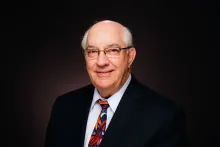
Mitchell Knapp is a graduate of Ambassador College with a BA in Theology. He has served congregations in California and several Midwestern states over the last 50 years and currently serves as the pastor of churches in Omaha, Nebraska, and Des Moines, Iowa. He and his wife, Linda, reside in Omaha, Nebraska.
