

C Mitchell Knapp
This sermon was given at the Wisconsin Dells, Wisconsin 2014 Feast site.
This transcript was generated by AI and may contain errors. It is provided to assist those who may not be able to listen to the message.
Over at the Feast of Tabernacles, we emphasize the future, the glory of the Kingdom, and our reward in glory. We've been reviewing that, and this has just been such a great feast with all the wonderful messages. It means more as you go along. But there's another part of our studies in the School of Tabernacles that we heard about that we must not be overlooked. We are told to dwell in booths, or temporary dwellings, so we won't forget that God made Israel to dwell in booths after leaving Egypt and before entering the Promised Land.
It says specifically, He made them dwell in booths. And why? And why does it say it that way? Well, Paul explains this in 2 Corinthians 5 and in verse 1, For we know that if our earthly house of this tabernacle were dissolved, we have a building of God, and house not made with hands eternal in the heavens. 2 Corinthians 5 verse 2, For in this we groan, earnestly desiring to be clothed upon with our house, which is from heaven. Well, what's he talking about? The physical bodies that we groan in, and sometimes hurt, and grow old, and so on.
And contrasting that with the spiritual body that Paul mentions in 1 Corinthians 15, the resurrection chapter. It's sown a natural body. It's raised a spiritual body. There's a natural body and a spiritual body. The only place it says that in the resurrection chapter. So continuing, 2 Corinthians 5 and verse 4, For we that are in this tabernacle do groan, being burdened. And the older you get, the more you know that's true. Not for that we would be unclothed, but clothed upon. That mortality, and here's the thing that explains it, mortality might be swallowed up with life. And that refers to the resurrection. So the feast then looks backward in history to the physical world.
Just like the Israelites had to look back and remember, they were made to live in temporary dwellings. They couldn't move into regular houses or anything permanent for 40 years. And the question would be, why? Why was that necessary? Well, it's to teach us about our situation. We need the contrast. We can't appreciate a mountain if you don't have a valley next to it, or at least a plain.
Otherwise, if everything were a mountain, it would just be a higher plateau. So we need the contrast to see the difficulties of this life compared with, and that helps us to understand the glories of the Kingdom of God. So to this end, God has included a book in the Bible that focuses our attention on this contrast, and that would be the book of Ecclesiastes. It was written by the wisest man to ever live in some kinds of knowledge. But you, sitting here today, are wiser than Solomon in a very important kind of knowledge, and that's the spiritual kind.
It's exactly the kind of knowledge and understanding and wisdom that we are here at the School of Tabernacles to learn. And I'm, of course, borrowing from Mr. Faye's comment about in his description, the School of Tabernacles, which I really like. It's true. That's why we're here. So let's notice in Ecclesiastes, and this will read in chapter 12 and verse 1. Remember now, thy Creator, in the days of thy youth, while the evil days come to... What's that? Evil days?
What's he talking about? Well, you probably know. Ecclesiastes 12.1, in the chapter, is talking about the aging process. When the years draw nigh, when you shall say, I don't have any pleasure in Him anymore. I've heard a lot of old people say this. Very elderly people say, life is hard. Things hurt. It's difficult to get out and just do the regular things. It'd be okay with me if I just went to sleep and woke up in the resurrection. I don't think perhaps you've said those things. And some of the very old people, dear friends, that I know personally have said everything. And that's what he's talking about. Verse 2, While the sun or the light or the moon or the stars be not darkened.
Well, it's talking about feeling eyesight, getting dimmer, making life harder. Verse 3, In the days when the keepers of the house shall tremble and the strong men shall bow themselves. And the grinders cease, because if you... The keepers of the house, that's upper body strength. Your arms, your hands. And there comes a time when your wife says, Honey, can you open this jar of pickles for me? And you say, Sure, honey, like you have a thousand times. And you go... No.
You know, reality slams you in the face at times. And when you get old, you lose strength. And it's a real harsh, really harsh reality. And the Psalmman discusses this because now he's old. He wrote all the glorious things, you know, and did all the glorious things. In verse 5, and so he has these interesting... this interesting description, metaphors, of aging. In verse 5, he talks about the almond tree shall flourish. And it means blossom, you know, it flurries blossoms. And you have a beautiful almond tree with this.
It's just gorgeous, wonderful, beautiful, white blossoms all over. It looks like a head of hair, but not a young head of hair. It's talking about an old head of hair. Of course, in some of our cases, you just kind of get, you know, blossoms around the side. And as I look out here, I see that I have company. You know, I've said many times, I wouldn't care if it were green, just so we'd grow back.
I would dye it white. And I have this beautiful head of hair. So, he uses these metaphors to talk about things that are really hard realities. And as a matter of fact, some say this book is depressing. But that's the point. The book of Ecclesiastes is about the purpose of life, as is the Feast of Tabernacles. As Solomon viewed life from the purely physical, he described the thoughts of a discouraged, disappointed, unhappy, sad old man.
Ugh! Vanity of vanities. You can put in the supplied words. Yuck! Argh! Vanity of vanities. Everything is vanity. Nothing's really fun or worthwhile anymore. That's what he's saying. That's in verse 2 of the whole book. And he finally concludes here in verse 13 of chapter 12. Let us hear the conclusion of the whole matter. Fear God and keep His commandments. Those two things always come back.
For this is the whole man duty. The word duty is supplied. It shouldn't be there. This is the whole mature, complete person that God was aiming at in the first place. And notice Solomon's reason. This really tells the story of the last verse of the book. For God shall bring every work into judgment, and every secret thing, whether it be good or whether it be evil.
Solomon's reason, then? Why you should obey God and keep His commandments? Well, because you can't get away with it anyway. It's a true statement. But, see, he was not thinking with a converted mind. He's writing this from only the physical perspective, and just a carnal attitude. That was his attitude when he wrote the book. Now, despite Solomon's negativity, when you look at the purpose of life and the meaning of the feast, there's a whole lot to be cheerful about.
Contradicting Solomon, God Himself says, you shall surely rejoice. And we have all those scriptures, and the whole description about the Feast of Tabernacles, which is supposed to bring us up to the level of thinking that we look forward to in the future in the Kingdom of God. So there's much to rejoice about, but we do still have to, and we emphasize that, the feast.
But we also must do the look back. Keep the Feast of Tabernacles until you remember that I made Israel to dwell in tents right after they came out of Egypt before they got to the Promised Land. And then we learn about the future, which we emphasize, which we should, but we just have to keep the other in mind. Because we do have to face one of the great lessons of the feast, and that is that the physical world, experienced without God, without contact with God, without His view, is disappointing at the very best.
And there are many people, millions and millions, who have lived in which they hadn't, because physical life can be much worse than just disappointing. So the feast points us to a future that's different than now. It's a glorious future, in God's kingdom with no pain, or no weakness. Anybody had any weakness today, or knees that don't quite work well? It's an older crowd to a great extent. Yep. There are a lot of us today who have had a little pain. No pain, no weakness of any kind, no hurting, no loss. Anybody lost anything, or felt loss this past year?
Yes, a lot of us. It's different. Going to be different than this life. No tears. Not any tears. No sadness. No aging process, or death in the spiritual realm. Nothing negative, not even thoughts. If you can imagine that, not one wrong thought, not one negative thought. Boy, that's going to be glorious. Everybody with a new powerful spiritual body, and a new brilliant, positive, and powerful mind with a loctite memory, as Mr. Graham mentioned. There were a lot of chuckles, by the way, when he mentioned that.
And I take it that there are a lot of us in the same boat. It's called the mind of Christ. Life on the level of God's thinking are a God-playing relationship, Mr. Armstrong said. Full of love. Full of creativity. Accomplishment. Cooperation. Unity.
More than all the human words can describe, but that's what we're looking forward to, and that's the promise, and it has to be. God is true. That's what he's offering to us. So, the book of Ecclesiastes shows a direct relationship between the Feast of Tabernacles and the aging process, and what we learn in this physical tent, looking forward to the Kingdom. Life without God and His purpose and vision of the Kingdom is vanity, empty and unsatisfying, and we contrast it with a life lived with a spirit and the presence of God and His family. So, in keeping the Feast, we look at the present world, and the realities of physical life, and how God wants us to cope with it, and still rejoice in the lessons of the Feast.
Now, many older members that I've talked with have said things like this. I just feel so useless. I can't do what I used to do. What good am I? And when Lady Mrs. Cole from Eau Claire told me quite a few years ago now, she leaned over and she looked at me and she said, Mr. Knapp, why is God making me live so long?
I don't think she realized she was quoting Leviticus, or using the same word anyway, that God made Israel and makes us stay in this physical tent before the Kingdom. I told her that I didn't know, but I knew that God did have a purpose for her living. As we age, we become less effective as physical decline sets in. This can be very discouraging, and people become despondent sometimes, and see themselves as less and less useful to God and His work.
And they see their value and even their worthiness of God's love diminishing. A few people have told me even that. I wonder if even God loves me. I'm so worthless. But I tell you, nothing could be farther from the truth. Nothing could be farther from the truth, further from the truth. The opposite is true. For those called to live in the house of God, the most important things in life continue to get better and better and better, despite the troubles and difficulties we have physically, the frustration and so on of old age.
Life gets better. Spiritual life gets better, and God sees to it. So today I have three encouraging and inspiring spiritual truths, by which I would like to, not surprisingly, encourage and inspire everyone who is old or who would like to become old someday. Because these are things for everybody. And we have some good illustrations, examples for these. Spiritual truth number one. Here they are. A converted person of spiritual value to God increases throughout his life. That contradicts the statements and the worries that I've heard. Number two. When humans do God's work, it's accomplished by God's Spirit.
And He helps us. And the corollary, if it's done by your own power, it's not God's work, it's your work.
Humans, people, do God's work, it's accomplished by God's Spirit. Otherwise it doesn't get done. Spiritual work doesn't get done.
Number three. God gives us power to do many things in His spiritual work, which produces increasingly greater spiritual fruit in old age.
And people know this, but they doubt it when the pain gets worse and it's harder to get around. And when life is just hard and you get the thinking, well, maybe it wouldn't be so bad to just go to sleep and wake up in the resurrection.
Life is harder all the time.
So remember, when you doubt that, God made them to live in booths and He has a purpose for making us, requiring that we live this life. And He decides how long.
You know, we don't decide that. He decides. But He requires us to live this way.
Okay.
I'll try to describe these truths quickly enough so that you get the idea. And we have some examples here.
Number one, a converted person's spiritual value to God increases through his life. One reason is when you can't do more active things, then you have more time for spiritual things. And this is by God's design.
You read a couple of places anyway. I think Isaac was in his bed.
That was right at the end. But Abraham was sitting around. As a younger man, he probably wouldn't have been sitting there in the cool of the day. Probably even still working.
But there's time for sitting around. And just more time for that.
Time for prayer. Time for meditation. Steadying. Spending time in fellowship. Discussing spiritual things with others, and especially with God. Oh, we have an example.
The example of Anna in Luke 2.
And I'll just read a couple of verses.
Verse 36.
Anna... There was one Anna, a prophetess of great age, and had lived with her husband for seven years from her virginity. And she was a widow of about 84 years.
Which departed not from the temple, but served God with fastings and prayers night and day.
And she came at that instant. That's when Christ was in the temple, and Simeon was holding him as a baby.
And...
Gave thanks likewise unto the Lord, and spoke of him to all of those who looked for the redemption in Jerusalem. So here was Anna, and we don't know anything about her. Why was she a prophetess, and how it came about, and so on. But she chose to spend her day. She was a widow. Didn't have...
You know, she just had herself. And so she chose to spend the time that she had in prayer, and often fasting. So, as God's servants age, they take greater pleasure in prayers and fasting. They seem more and more in need of closeness to God, the purpose that God created for us in the first place.
If we live our lives with God, understanding His purpose and vision, then life grows more and more interesting and worthwhile, more robust, more vital. It says, they produce fruit in their old age, and they're like a palm tree.
They stay green and vital. It's one of the Psalms.
And so, as we shrink and wither, as we age physically, we grow more robust and stronger and more powerful, and life is more interesting. We have more wisdom, more understanding.
So she chose to use her time that way.
Our service in old age is absolutely valuable to God.
And we have the examples of several who thought of this. It's not just you, if you thought that. Everybody has the same thing.
David Moses, Paul, Luke, Job, Elijah, named quite a few, that wrote about the aging process, and some expressed concern about it. David, Psalm 71, verse 18, Now also, when I am old and grayheaded, O God, forsake me not, until I have shown your strength unto this generation and your power to everyone that has come. He had a lot to do yet in serving God. He knew that he had responsibilities to others to serve God.
The time when many doubt their worth and value to the work of God because of physical decline.
And I have talked to people about this for though loath these many years when I was a tad, first went out as a trainee, talked to old Mrs. Solomon, who became a real good friend with about a 60-year age difference.
And she talked about this a lot. The time when many doubt their worth and value to the work of God and to him personally because of physical decline.
This should be, and can be, a time of great spiritual increase in growth which makes you increasingly productive and profitable God in his spiritual worth. He's finishing you up and in the process and in the process helping others.
So David had this kind of afterburner principle. I've used that term.
That is, as you get closer to the end, you turn on the afterburners and that doubles your power and you strive harder and harder.
You can't do physical things harder and harder. You have to slow up.
But in spiritual things, in your thoughts, that's when you really pour on the coal.
Paul had that too.
Philippians 3 verse 14.
That last was Psalm 71, 18. If you're taking notes. Philippians 3 verse 14. Paul said the same thing. I pressed toward the mark for the prize of the high calling of God in Christ Jesus.
So we are pressing forward. And he also said, it's high time to wake out of sleep. For now is our salvation nearer than when we believed. So it's Philippians 3 verse 14. I pressed toward the mark. Memory scripture. Romans 13, 11.
I just mentioned.
It's high time to wake out of sleep because we're getting closer and closer and closer. And so both David and Paul and others actually express this desire to pour on the coal and work harder and harder when you can't physically.
But spiritually, you really put your heart in to your relationship with God and serving others.
So the most spiritually productive time in your life is toward the end of your life. You're learning and growing about God's mind, how he thinks, his laws, how everything in the universe works together.
And it's just the most productive part of your life. You're becoming closer to God.
And there's a real joy and excitement and satisfaction. It becomes the passion of your life when you're old to help build God's family. The idea is you're supposed to know this when you're young. You're supposed to be working toward that as much as you can. I have one example. The Apostle John had said his last few sermons, they had to carry him in a chair and bring him to services so that they could sit him down and he could give the sermon.
And they say the last... This is tradition. We can't prove this. But the last sermon he gave, he was so weak and so old, all I could muster was the energy to say, love one another, which was his main theme throughout.
He taught about love.
So you go to the very last, giving everything you have, spiritually, even though you can't.
Now, here's a question, though. Was God able to use John to do his spiritual work more effectively when he was in his 90s and that he carried him around? Or when he was young and he was a good athlete and ran faster and beat Peter to the tomb? Seemed to be the youngest of the apostles.
In which situation was John more useful to God to do his spiritual work?
Well, he had to go through many years of learning wisdom. He was, you know, son of thunder. He had to change himself. He had to have God change him, which God is working on the same process with each of us. But the answer is, it was at the end when he was really effective and really valuable as a spiritual tool for God. Point number two, truth number two.
When people do God's work, it's accomplished by God's Spirit. If it's done, pardon me, it's accomplished by God's Spirit.
And if it is done just by us, by our own power, which we have to use, but if it's just that God's not there, then it's not God's work. It's yours.
So it is really God's work and God's Spirit that go together. God's Spirit does His work. Two key scriptures in the sermon here.
And that first of all is 2 Corinthians 12, verses 7-10.
Paul discusses his challenges with getting older, dealing with sickness. He mentions one infirmity they had.
He said this is 12, verses 7-10, and last of 2 Corinthians.
For 7 and last, I should be exalted above measure, or get the big head. In other words, with all the abundance of the revelations, he sent me a thorn in the flesh, the messenger of Satan, that would torture me. Lest I should be, you know, exalted above measure and full of vanity. For this thing I besought the Lord three times that I might depart from me. That it might depart. And he said, No, my grace is sufficient for thee. For my strength is made perfect in weakness.
I struggled with that for years.
How can that be exactly? I kind of got the idea, and I could officially explain it. But it soaked in years later.
He says, Most gladly therefore I'll rather glory in my infirmities that the power of Christ may be rest upon me. Therefore I take pleasure in infirmities, when I have to struggle through pain, in reproaches, necessities, and persecutions. He had a lot worse than we do.
And in distress is for Christ's sake. For when I am weak, then I am strong. See, to learn to depend on God to do what you need to do, that spiritual fruit, that spiritual growth, learning to depend on... It comes so hard. The other main scripture, that's 2 Corinthians 12.
The other one is Zechariah 4, verse 6, another memory scripture.
Not by might, nor by power.
You can't do it on your own steam, and God ensures that through getting old and weak.
He makes us live in these tents. So we learn these lessons. It's not going to be by our power, but by my spirits as the Lord of Hosts.
There's another principle that goes along with this. It's in Philippians 1, verse 19.
For I know that this will turn out to me for deliverance through your prayer and the support of the Spirit of Jesus Christ.
Paul says, Mr. Armstrong used to talk about this a lot of times, especially as he got older and weaker. And he said, it's through your prayers, brethren, that I can get this done, whatever it was.
Certainly wasn't limited to him. It's been always true.
But God does His work through us, uses us as good examples to explain things, to help people, to teach, to follow, to do whatever.
He uses us through our prayers and through the prayers of others. That's how the work is accomplished. So that's good to know when you are old and we can no longer open the pickle jar.
Don't have the strength.
Very distressing. Little things can be very distressing.
So what does prayer do to our thinking?
A lot of things. But in terms of praying for the work, whether it's God's work through you or God's work through others, through the Church in general, prayer makes us feel like we are a part of the work. Because we are.
Prayer makes us a part of the work because God responds to our prayer and answers our prayer, which He promises to, and makes whatever it is, whether it's through you or through others, the Church in general, makes it happen by the enthusiasm and the spiritual dedication we show to God, the love we show to God in praying for His work.
So prayer makes us a part of His work.
And it is not by might nor power, but by my Spirit, says the Lord of Hosts. Now, spiritual truth number three.
God gives us power to do many things in His spiritual work, which produces increasingly greater spiritual fruit in old age.
You can't argue that you get better and better as you get old if you're on the basketball court.
There was a time when I came out of retirement. I was just tempted to play in a church tournament. So I came out of retirement for basketball.
And I played two games, and by then, my knees were killing me, and I had to go through the third game, and that hurt. And I didn't walk straight for about three weeks. And so I went right back into, I've never come out of retirement.
You have to live with reality, right?
And you have undoubtedly, if you're over 30 at least, you've experienced a little bit of this.
They say at 30 in some sports, you're over the hill. Thirty? You're just getting started! So this aging process thing is there as a reality, and God knew what He was doing when He fixed it this way.
It's supposed to be hard, because it teaches so many good lessons. So, but He gives us power, if not physically, to do things in His spiritual work. And by the way, you know, when I don't know how old Elijah was, but when he needed to, he did run, take a shortcut, and he beat the horses, remember?
And you could too, if you needed to do some physical thing, many times we ask, help me to get through this, and help me just accomplish whatever. And God helps us physically, certainly.
I'm just talking about not just spiritual, physical too, but specifically the spiritual work that God has for us to do, and growing spiritually. And since it isn't physical, it's harder to grasp, harder to get our arms around it.
Well, here's a list. There are many, many, many things. The most important thing is to pray.
But here's a brief list of categories of things that God gives to us that we can do better and better as we get older.
One is the gift of wisdom and experience. The older generation here, in this room and everywhere, gives the second, third, fourth, once in a while, the fifth generation a precious gift that can't be calculated.
It's just priceless.
That is stability and maturity. And just being here, and being faithful, and coming to services, and fellowshiping, and just doing that is so important for those of us who are older. And I speak respectfully to those of us who are very old, and it is hard to come to services. And it is.
My mother is here. She's 91, almost 92.
And it's much more difficult. I remember her as, you know, packing the kids in the car, and hustling around with baby bags and stuff.
And very energetic. And now it's hard to get to church.
And be faithful in that way. And so, if it is difficult, just doing that is so important to be here, because it's destabilizing. You can look at it negatively. It's destabilizing when you don't try. And you're not here.
And that's not to put pressure on somebody who just is hurting so bad they can't. Don't mean that at all. But your presence is so important. And without you, the church, the congregation, your family, whatever group you identify or rub shoulders with, is less stable. Your presence is important, especially in the family and in the church. Secondly, you can show goodwill and encourage and show God's attitude of outgoing concern, His love.
The examples of service, there are just many, many give from the Bible. And just from now, or currently, cards of encouragement, letters, conversation.
I have a friend back home who hurts always.
And sometimes the pain is unbearable. Sometimes it just gets down to really difficult.
And you ask her how she is and how she's doing. And she will give you the bravest of summaries and say, and how is so-and-so that she's been praying for? And how have you been doing?
And if you ask her again, or, you know, trying to show respect and interest, she will answer you briefly to be polite and then go on and ask about others and talk about other things. And if you ask her the third time, she'll just be plain old rude and ignore you and talk about other things.
What a fine example!
Most of us, now there's a few really outstanding examples in this room, most of us could take a lesson and not yak about ourselves so much.
Very inspiring.
There was a, when I hear the name Dr. Myths, M-I-T-T-S, I feel better because he was such a powerful force in one of the Northern California churches. I saw him on Holy Days when I was a young trainee and he didn't say anything that wasn't encouraging. He was always encouraging to everybody around and it wasn't false. He just was filled with enthusiasm and it makes me feel better today and he would be 120 years old by now.
So he's been gone a long time and his spiritual legacy, I'm still carrying.
Number three, so you don't know how much you can encourage and strengthen. Number three, we can set an example of faithfulness like Simeon and Anna and Moses and the apostles and a lot of others I know just by being faithful to the end. To the very end, I was present to visit in the hospital a woman named Mrs. Cox and she expired a couple of days after I saw her just barely hanging on. She asked about people she was praying about in the church and she talked about the work and she said, yeah, I'm just about gone.
You know, she had terminal cancer, colon cancer, and it was just about to get her. Anna did two days later and she was faithful to the end. No wavering!
She was a woman of faith, a servant of God, and she will surely be in the first resurrection. I can't wait to see her again.
I'm sure you know people like this who served and did the spiritual work of God to the very end.
You can set an example of faithfulness and that is so important. You don't have to do great things. You can just be what you are, which comes from doing what you have done all these years. Number four, and this is just general, everybody has different circumstances. Serve as you are able.
Just many, many things. It's a category, you know, it's worth thinking about. Paul's attitude toward his own aging and tiredness, he talks about this in Philippians. He said, I would so much rather quit and just wake up in the resurrection. But for your benefit, I'm sure that, and through your prayers, I'm sure that God will keep me around so I can serve you. So that was his attitude.
I'm not worth anything. I'm going to die anyway.
If we could just get through, you know, not fear death and not worry about that, and preserving, we're going to go away.
We're physical. It's a physical booth or a temporary tent, as Paul said. So we just not worry about ourselves. We could help so much better and do so much more of God's spiritual work.
And the wonderful thing is, I can start naming names and not quit. Of course, memory is a problem, but, you know, just name and name and name. People who have set such fine and wonderful examples, and we have many of you here.
We all need to improve, but we all need to realize how much God is doing through us just by being here. And more and more as we grow older.
So back to Mrs. Cole in Eau Claire, and her daughter, Phyllis, and her husband, Jim, are here today, too.
At 94, she asked, why is God making me live so long?
When she was 104, 10 years later, I visited her, and she leaned over and looked at me in tent, and she was about to go. She was just excellent health, but her balanced excellent health just went down to nothing.
And she said, Mr. Knapp, why is God making me live so long?
10 years later, I'm sure she didn't remember that she had asked me before.
And that she was, you know, quoting Leviticus.
But this time, I had a better answer. I understood better and was more prepared. It's for the benefit of others, to a great extent. Sometimes you have to hang on and be faithful, even if it would be fine with you and with God to go and just die and wake up in the resurrection and glory.
Sometimes you have to hang on and suffer for others' benefit, and it's worth it!
Because it's doing the spiritual work of God, and that is spiritual fruit, eternal fruit that will last forever. Now, I have an example.
So the greatest thing you can do is pray. That was the first and the last point.
Because when you pray, you partake in the work of God, His spiritual work.
Now, I have an example of Mrs. Wilson in the Kansas City North congregation in the 70s and 80s, into the 90s.
A pleasant, upper 70s, lovely lady who was in pain every day and sometimes severe. She looked almost like fists.
Her fingers were gnarled with rheumatoid arthritis, and she had trouble fitting the spoon in her hand to eat.
But she was a lovely lady, and she didn't talk about that.
We never heard her talk about her unless you asked or impressed her.
She asked questions in Bible study and talked with me that stimulated my mind, things I hadn't thought of.
She was very... She was just into God's Word and into His work because she prayed like Anna.
She was a lovely, lovely woman.
When our daughter Kate in Kansas City and Raymond announced their engagement 23 years ago, I think.
Mrs. Wilson, everybody came up. Congratulations. We're so happy, and they were... Thank you very much. She came up, and she said, Congratulations. I'm so very happy for you. She would shake hands even though her fingers were gnarled up into a fist. And she said, I'm so happy. And then she turned back, and she said, But I'm not surprised.
And she said, Well, why aren't you surprised? How do you mean?
And she said, I have been praying for two years that God would bring you a life.
Now, what do you do when you realize that those prayers are not true? When you realize that those prayers had resulted. Well, for one thing, you tear up, and then you tell your father-in-law who tears up when he thinks about it. So, sorry about that.
She had been praying for two years, and at that point, in that church, was really looking bleak for her aim.
On advice from Gary, Mr. Gary Antion, Kate moved to stay with us for a while so she could, you know, figure out what she was going to do after graduation.
I won't. I don't have time to tell you the interesting story about how they met immediately. Hit it off immediately, and six months later, we're married.
And we didn't know, and I didn't know this till the other day, two weeks ago, but Raymond didn't know it until after it happened, she had been praying for him for all that time.
Now, what is the result of that? She never knew, and she'll never know how effective her prayers were.
I don't know how many things that happened with Linda and I.
Blessings occurred because of her prayers as she prayed in pain. If you know anything about RA, it's very painful at times.
We just don't know, and we won't know till the resurrection, and she won't know. Now, about two years later, Rachel was born, and now Rachel is starting her family, and she wouldn't even be here.
Without God's actions, part of his action was because of Mrs. Wilson's prayers.
So the legacy of Mrs. Wilson's, Mr. Marion Wilson's, spiritual life lives on.
Now, when I think about that, that's very, very touching, and it's just a very powerful lesson, an example for me, through her bitter trial physically, she produced spiritual fruits in every way she could. And the two main things I know is she was extremely encouraging, and she prayed for people, and also she studied.
Very, very uplifting.
Well, we'll find out all about her spiritual legacy at the wedding supper when the rewards are passed out.
Now, there are others. There was a lady about like this who died about 45 years ago in San Diego, Mrs. Levy. And the pastor who announced it stood up. I was in the congregation in Pasadena, and he talked about this. She prayed like Anna and like Mrs. Wilson.
And he said, Who will take Mrs. Levy's place?
All those prayers, all that work, in God's work, must be replaced.
Whether you have youthful energy or great resources can speak effectively.
Speak in tongues, as Paul said. Or you have gnarled fingers and bad knees and health problems and painful days, and you have to sit around a lot.
Either way, you have the power to do the work of God.
That does not diminish as you grow older.
And if you're already convinced, excellent, but if you have doubts sometimes, then I'll say it loudly.
Try to remember your work, your spiritual work, the one that God called you to, the most important part of your life.
Does not diminish. It gets bigger and bigger and more powerful as you grow older, as you stay close to God in prayer, as you are filled with His work.
Now, I'd like to close by reading Psalm 92.
Psalm 92, verse 12, Psalm 92, the righteous shall flourish like the palm tree.
It's a symbol of a man in many ways. He shall grow like the cedar in Levitin, speaking of excellence and getting better and better.
Those that be planted in the house of the Lord shall flourish in the courts of our God, referring to the throne room, shall flourish, go above and beyond in productivity, and strength in doing the work of God.
Verse 14, they shall still bring forth fruit in old age.
Wonderful Scripture.
They shall be fat and flourishing, just grow and grow and do more and more.
Why? To show that the Lord is upright. He is my rock, faithfulness to the end.
And there is nothing unrighteous in him.
Verse 14 is worth repeating, they shall still bring forth fruit in old age. And I would add more and more and more. I surely hope you won't forget that, brethren, as you get older, and if you are old, and I just say, young or old, God bless you, brethren.
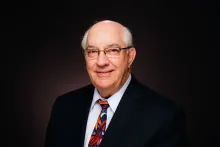
Mitchell Knapp is a graduate of Ambassador College with a BA in Theology. He has served congregations in California and several Midwestern states over the last 50 years and currently serves as the pastor of churches in Omaha, Nebraska, and Des Moines, Iowa. He and his wife, Linda, reside in Omaha, Nebraska.
