

Don Ward
This transcript was generated by AI and may contain errors. It is provided to assist those who may not be able to listen to the message.
Today is May the 27th, 2017. I've got June on my mind because once June is over, half of 2017 is gone. So five months into 2017, some 16.5% of this century is now history. I remember back as we approached the year 2000 thinking, boy, 2000. Now 16 and a half years have passed since 2000. Can you believe that 16% of the 21st century is history? The events of the 21st century have been mind-boggling to say the least. We have been shocked so many times in so many different ways. By all the world-altering events, things have just altered the way the world is.
Shocked so many times in so many different ways, we seem to be hardened to the realities of the day. The peoples of this world, indeed running to and fro, tossed about by every wind of doctrine, they try just about everything to escape all of it. All the forms of escapism that can be imagined ranging from the occult to atheism to cursing God to not believing that God even exists.
The movies of the day display weird, sci-fi, freakish-looking characters that are constantly clashing with each other, some form of animation, special effects, as they call it. They depict a foreign world that bears no resemblance to reality, and people foolishly flock to those movies. And the video games are highly reflective of those kind of images and characters. On the one hand, people say they are concerned about the direction that the whole spectrum of human events are taking. But for the most part, they remain in a state of denial and continue on a hedonistic path of satisfying the lust of the flesh, the lust of the eyes, and the pride of life.
The preacher man says it's the end of time, and the atheists curse God. But in the face of all of it, most people continue on a downward spiral into oblivion. The words of the apostle Peter should be ringing loud and clear in our ears at this critical crucial time in human history. If you would, look at 2 Peter chapter 3 and verse 1. 2 Peter chapter 3 verse 1. So many people are saying this by their actions, and I'm quite certain a lot of people in the church, as we shall see later, 50%.
In 2 Peter chapter 3 verse 1, Peter writes, This second epistle, beloved, I now write unto you, in both which I stir up your pure minds by way of remembrance, that ye be mindful of the words which were spoken before by the holy prophets, and of the commandment of us, the apostles, and our Lord and Savior.
Knowing this first, there shall come in the last days scoffers walking after their own lust. And of course, we are 2,000 years down the road. You ever take a few years since the days of Jesus Christ, some 1,900 years down the road since the last of the twelve apostles died, John, and saying, Where is the promise of his coming? For since the fathers fell asleep, all things continue as they were from the beginning of the creation. So that's one form of escapism, is to deny that things are the way that they are. And as I've said probably two or three times a month, it is so amazing that we are able here to maintain some sense of normalcy in the face of what's going on in this world.
People are filled with fear and anxiety, wondering where the next year will drop. They're trying all kinds of strategies to try to escape the realities of their lives. The events of the past two decades have changed the world forever. The incredibly insidious changes. The word insidious means more dangerous than it seems. The incredibly more dangerous than it seems changes of this decade are frightening to consider. The Western world has been on hedonistic, materialistic gratification, and we're in desperate need of spiritual and moral leadership.
And each one of us needs to ask himself or herself, have I slept through the past 16 and 1.5 years? Incredible! 16.5% almost of the 21st century is now history. And we are living in very historic times. If we were to live long enough to look back on what historians say about what's happened in the 21st century, we would be amazed because we are living in the days in which history, unparalleled kind of history, is being made.
So today I want us to examine ourselves, each and every one of us. Believe me, I've been examining myself. In every facet of our being, spiritually, physically, mentally, emotionally, and socially, are we hot or cold? Or are we lukewarm? Let's look at Revelation 3, Revelation 3, the last of the letters to the seven churches, Laodicea. In Revelation 3, verse 15, I know your works, that you are neither cold nor hot. I would that you were cold or hot. So then, because you are lukewarm and neither cold nor hot, I will spew or I will vomit you out of my mouth.
God is not look kindly upon being lukewarm. So we ask ourselves today, are we responding as we should be in view of the age in which we're living? Do we discern the signs of the times? In today's world, the response does not suit the situation. You look at Matthew 16, in Matthew 16, verse 1, Jesus asked the peoples of his day about discerning the times. As I mentioned in the GCE sermon, the irony and the paradox of our times is that as we see these events taking place, we seem to be hardened or callous to some degree with it, because we have heard the wolf cry so many times for so many years. We just basically ignore it and continue.
In Matthew 16, 1, the Pharisees also with the Sadducees came, tempting, desiring that he would show them a sign from heaven. He answered and said unto him, When it is evening, you say it will be fair weather, for the sky is red, and in the morning it will be foul weather.
Start over again. And in the morning it will be foul weather today, for the day is for the sky of red and lowering. Oh, you hypocrites! You can discern the face of the sky, but you do not discern the signs of the times. And, brethren, I hope that we do discern the signs of the times. And are we responding as we should respond? Are we preparing as we should prepare? People tend to fiddle while Rome burns. You've heard that saying. And, brethren, I hope that you can hear the sounds of the times. Toward the end of World War II, it was reported by some authors that, of course, the Germans had been defeated on the Eastern Front. They tried to march into Russia, take Russia. Russia defeated them, and then Russia came marching back to the West. And as those in Berlin, where the elite were living, could hear the sounds of the guns and the artillery blasting away some 20-25 miles away from Berlin, they were still partying and making merry, as if all things continue as from the beginning. It seems it's very difficult to get people to really realize the situation that the world is in. We have been so conditioned and desensitized by Satan's agents to the point that evil is called good and good evil. It is being done by educators, politicians, scientists, religionists, and psychologists. Look at Isaiah chapter 5. In Isaiah chapter 5, Isaiah is an amazing book, 66 chapters, and it's a book that we don't go to all that often, but there's so much about the Messiah. There's so much about the Church. In Isaiah, here we are in Isaiah 5. Now will I sing to my beloved a song of my beloved touching his vineyard. My beloved has a vineyard in a very fruitful hill. Of course, the vineyard is symbolically, figuratively, Israel, and he fenced it and gathered out the stones thereof. And planted it with the choice's vine and built a tower in the midst of it. And there he made a wine press. And he looked that it should bring forth grapes and it brought forth wild grapes. I hope I turn this thing on.
And now, inhabitants of Jerusalem and men of Judah, judge you what I say between me and the vineyard.
What could have been done more to my vineyard than I have done in it? Boy, you can recount, obviously, the history of Israel from their birth, their nativity. From the time of Abraham, Isaac, and Jacob, Jacob had 12 sons, which became the 12 tribes, which became the nation of Israel, the nation of Israel in captivity in Egypt, delivered by God out of Egypt into the Promised Land. God fed them manna in the wilderness, gave him his law, and gave them instructions as to how to live their lives. So he's saying, what else could I have done to you to help you, to show you? What else could I have done?
Would it be miracles? Well, there were a lot of miracles. Would it be bread? Well, I'd bring manna from heaven. Would it be defeating the enemies? Well, you were able to take the Promised Land.
I looked that it should bring forth grapes, brought forth wild grapes. So what else could I have done? I will take away the hedge thereof, and it shall be eaten up, and break down the wall thereof, and it shall be trodden down. And I will lay it waste, it shall not be pruned nor digged, but there shall come up briars and thorns. I will also command the clouds, and that they reign, no reign, upon it. It goes on continuing what is taking place in the land. And we come down to verse 18. Woe unto them that draw iniquity with cords of vanity, and sin as it were with a cart's rope that say, let him make speed and hasten his work, that we may see it, and let the counsel of the Holy One of Israel draw nigh and come, that we may know it. Woe unto them that call evil good and good evil, that put darkness for light, and light for darkness, that put bitter for sweet, and sweet for bitter. And so that's where we are in the land today. Now let's look at Matthew 24 and 25.
In view of the things that we have mentioned here, and the condition of the world, we want to look at the Olivet prophecy. We could title the sermon, The Olivet Prophecy Applied. Not so much to the identity of the beast, not so much the identity of dates and places and that kind of thing. That's basically what people tend to want to, because even there, they're looking for, well how long do I have before I have to be a good boy?
In Matthew chapter 23 at the end, so look at Matthew 23 and 39. We'll start there and we'll take up with 24.1. Matthew 24 and 25 make up what's called the Olivet Prophecy. Actually, there are a couple of verses into chapter 26, as we shall note. The Olivet Prophecy. So in verse 39 of chapter 23, chapter 23, For I say unto you, you shall not see me henceforth, Yea, you shall say, blessed is he that comes in the name of the Lord. And Jesus went out and departed from the temple. So all of these things that he was saying in chapter 23, see chapter 23 is a chapter of woe unto you, scribes, Pharisees, hypocrites, and all the things that they were doing. How that they had neglected the weightier matters of the law. And how that he had sent them prophets and teachers and they had killed them. These, so he was saying these things in the temple. And so it says, And Jesus went out and departed from the temple, And his disciples came to him, For to show him the buildings of the temple. And we're coming right back there. We'll look here at where the prophecy ends. Look at chapter 26. We're coming back to 24 immediately, but just to show that this prophecy consists of two chapters and two verses into chapter 26. And it came to pass when Jesus had finished all these sayings. That is what we call the Olivet Prophecy, Matthew 24 and 25. He said unto his disciples, You know that after two days is the Feast of the Passover, And the Son of Man is betrayed to be crucified. So now let's go back to Matthew 24 and verse 1, And take a closer look at the Olivet Prophecy and apply it to ourselves. Of course, Matthew 24 and 25 should be just one chapter. The signs part of it basically is contained in chapter 24, and that's what people tend to focus on. But the remedy for being prepared and being on fire, being zealous, being fervent, is contained mainly in 25, which we of course will get to.
So let's look first at the questions that led to Jesus giving the Olivet Prophecy. So we'll begin reading there in Matthew 24 and verse 1. Reading the question that led to him giving the Olivet Prophecy.
And Jesus went out and departed from the temple, and his disciples came to him to show him the buildings of the temple. And Jesus said unto them, See you, not all these things, verily I say unto you, there shall not be left here one stone upon another that shall not be thrown down. Of course, there had been so much stone cutting and carrying from quarries and building of that area that it was absolutely incredible.
And as he sat upon the Mount of Olives, so they've left the temple area, and the Mount of Olives, you go across a valley and go up on the east side of the temple mount to the Mount of Olives. That's why it's called the Olivet Prophecy, because it's given from the Mount of Olives. It's called the Olivet Prophecy because it's given from the Mount of Olives. And as he sat upon the Mount of Olives, the disciples came unto him privately, saying, Tell us, when shall these things be? And what shall be the sign of your coming, and of the end of the age, the Aod? And so, Jesus then begins to answer these questions, and he describes various signs. So we look at this, verse 4, and Jesus said unto them, Take heed that no man deceive you. Later in Matthew 24, he says, If it were possible, the deception that is coming on the earth will be so great that it would deceive the very elect. And the only way that you and I can be protected and survive that would be that we make sure that we are among the very elect. For many shall come in my name, saying, I am Christ, and shall deceive many. And you shall hear wars and rumors of war, See that you be not troubled, for all these things must come to pass, but the end is not yet. For nations shall rise against nation, kingdom against kingdom, and there shall be famines and pestilence and earthquakes and different places. These are the beginnings of sorrows. They shall deliver you up to be afflicted, shall kill you, and you shall be hated, of all nations, for my name's sake. Why will you be hated? It is because you are keeping the commandments of God and faithful to the truth of God, and you are revealing, exposing the evil system. And then shall many be offended, and shall betray one another, and shall hate one another. I would suspect this is largely because they were trying to save their own skins by their own doings, instead of trusting God. Of course, in the time that the Germans did the purge of the Jews in Germany, whereas many of the Jews cooperated with the Germans and betrayed their loved ones and their kin, and many false prophets shall rise and shall deceive many, and because iniquity shall abound, the love of many shall wax coal. And we are entering one of the most lawless periods in human history.
Evil is called good, and good called evil. We read from Isaiah.
But he that shall endure unto the end the same shall be saved. And the gospel of the kingdom shall be preached to all the world for a witness to all nations, and then shall the end come. And then one of the great events there is verse 15, which talks about the abomination of desolation standing in the holy place. Of course, historically, the churches believed that the Jews would at least be able to build an altar and begin animal sacrifice, tying in with Daniel 11 and Daniel 12.
So these events, these signs, are given. The Jews have made so much of the preparation to restore temple worship. They need an altar. They need a building. And of course, the Arabs are in control of the Temple Mount. And basically, it seems there's only two ways really you can get control, and you can enter in a third way. One, of course, would be war. Take it by force. The Israelis took the Temple Mount and one of the last wars, but then gave it over to the Arabs for control. So Jordan is a protector of the Temple Mount. The other way would be through diplomacy, through, I'll give you this if you'll give me that kind of thing. And then the other way would be through God's direct intervention in some way in it. Some way in it. As we look at these signs, Matthew 24, in other world events, how do we view that? Some, perhaps unwittingly, say, well, this sign or that sign has not been fulfilled. So there's no rush to make a commitment. All things continue as from the beginning, like we read from 2 Peter chapter 3.
Yet, the victims of terror would cry out, no, no. Their blood cries out from the ground saying, wake up! All things do not continue as from the beginning. And one of the things that may surprise us, this is worth considering, that the signs may not be fulfilled exactly the way we think they will be. We're coming back here if you want to hold your place. Look back at Matthew 21, just to give you an example of how a prophecy from the Old Testament was fulfilled by Christ. In Matthew 21 and verse 12. Matthew 21 and verse 12. And Jesus went into the temple of God, and he cast out all of them that sold and bought in the temple over through the tables of the money changers and the seats of them that sold doves. And he said unto them, It is written, My house shall be called the house of prayer, but you have made it a den of thieves. And the blind and the lame to him came to him in the temple, and they were healed. And when the chief priests and scribes saw the wonderful things that he did, and the children crying in the temple and saying, Hosanna, that is, save us, you son of David, they were displeased. And he said unto him, Hear you what you say. And Jesus said unto them, Have you not ever read out of the mouth of babes and sucklings you have out of the mouth of babes and sucklings you have perfected praise. And so here is a prophecy being fulfilled by these children saying what they were saying. He says it's fulfilling what the prophets have said. There are many places you might do a study where you just look. There's about five or six places. And it says that it may be fulfilled. You might be surprised how that certain prophecies were fulfilled by Jesus Christ. Remember the apostles asked what shall be the sign of your coming and when shall these things be? So we've looked here in the first 15 verses of some of the signs and talked about them. But what about the question when? So let's look at some of the recurring answers to the question when. When will these things be? So look at Matthew 24 and verse 36. So we're going to do sort of a dissection of 24 and 25 and then come back and put it together again. In Matthew 24, remember the question when? Remember the question when? Matthew 24 and verse 36. But of the day an hour knows no man, no not the ancients in heaven, but my Father only.
But as in the days of Noah were, so shall also the coming of the Son of man be. For as in the days that were before the flood, they were eating and drinking, marrying and giving and marriage until the day that Noah entered into the ark and knew not, and knew not until the flood came and took them away. So shall also the coming of the Son of man be. And of course, that's one of the reasons why I said it may not be exactly the way we think. Now we look further with regard to this question when? Look at verse 42. Watch therefore, for you know not what hour your Lord does come. Verse 44. Therefore, be you also ready, for in such an hour as you think not, the Son of man comes. And as I said earlier, that one of the reasons why a lot of people have so much interest in prophecy is for them to have a heads up so they can play it as close to the edge as they can, trying to keep one foot on the dock and one foot in the boat before they really commit. And some will still be in a split position when the bridegroom knocks on the door. We'll see that very clearly. We're answering once again when? So now look at Matthew 24 verse 48. Matthew 24 and verse 48.
But if that evil servant shall say in his heart, My Lord delays his coming, and he shall begin to smite his fellow servants and eat and drink with the drunken, the Lord of that servant shall come in a day when he looks not for him, and in an hour that he's not aware of. Begins to smite his fellow servant. Have we ever done that? Smite the fellow servant? The various organizations of the Church of God? You know, they would hope. Perhaps today, Ward would say something so far off we could jump on that and maybe we get a few converts. Is that what the Bible is about? Is that what God is about? Is that what the Church is about? Is that why we're here? Well, I hope not. Shall begin to smite the fellow servants and to eat and drink with the drunken, the Lord of that servant shall come in a day when he looks not for him, and in an hour that he's not aware of, and shall cut him asunder and appoint him in his portion with the hypocrites. There shall be weeping and gnashing of teeth. Now, look at Matthew 25.10. Still the question, when? Matthew 25.10. And while they went to buy, the bridegroom came, and they that were ready went in with him to the marriage, and the door was shut. Look at verse 21. Matthew 25.21. His Lord said unto him, Well done, you good and faithful servant. You have been done faithful over a few things. I will make you rule over many things. Enter you into the joy of the Lord. And then in Matthew 25 verse 37. Then shall the righteous enter him, saying, Lord, when did we see you of hunger? And when did we see you thirsty, and give you drink, and give you food? When saw you a stranger and took you in, or naked, and we clothed you? Or when did we visit you when you were sick or in prison? And the King shall answer and say unto them, Verily I say unto you, insomuch as you've done it to the least one of these, you've done it also to my brethren. And the King shall answer and say unto them, and give you drink, and give you food. Verse 41, Then shall he say unto them, on his left hand, Depart from me you cursed and everlasting fire, prepared for the devil and his angels. So we see in the when, the basic message is, be ready all the time, because you don't know for sure when. There's another recurring theme, and that is reward. So let's go back to Matthew 24, verse 47. Matthew 24, verse 47. The when is, and the answer to the when, is to be ready at all times. Now in Matthew 24, verse 47, we begin with the reward. In Matthew 24 and verse 47, Verily I say unto you that he shall make him ruler over all his goods. That is the one, the faithful servant, that when the Son of man comes, he shall find so doing. Verse 46. So as a part of this, there is the reward. Look at Matthew 25.
Matthew 25.
Verse 11. Afterward came also the other virgin, saying, Lord, Lord, open to us. But he answered and said, barely I say unto you, I know you not. What you therefore, for you know neither the day nor the hour wherein the Son of man comes.
Also in Matthew 21, verse 23. His Lord said unto him, well done, good and faithful servant, you have been faithful over a few things. I will make you ruler over many things. Enter you into the joy of the Lord. So once again, continuing with rulership. Look at verse 40.
And the king shall answer and say unto them, barely I say unto you, you insomuch as you've done it unto one of these least of these, my brethren, you've done it unto me. In verse 45. Then shall he answer them, saying, barely I say unto you, insomuch as you did it, as you did it not to one of these least ones, you did it not to me. And there shall go away, and these shall go away into everlasting punishment. But the righteous into life eternal. That, of course, is the ultimate reward. So rulership and reward is a part of what's contained in Matthew 24 and 25. Now let's look at another reoccurring theme, and that is punishment. And some of these, they overlap in some of these verses we've already read, but not in this particular context. So look at Matthew 24. Matthew 24 in verse 50. Now it's punishment. If you're not ready, what's going to happen? Or if you are engaging in certain behaviors, what is going to happen? In Matthew 24 in verse 50, The Lord of that servant shall come in a day when he looks not for him, and in an hour that he's not aware of, and shall cut him asunder and appoint him his portion with the hypocrites. There shall be weeping and gnashing of teeth. Now look at Matthew 25 verse 11. We've already read it, but in the context of punishment. Afterward came also the other version, saying, Lord, Lord, open to us. These are the five foolish who were not ready. But he answered and said, barely I said unto you, I know you not.
And so the door was shut, and they could not hit her end. Also look at Matthew 25, we just read that as part of the punishment and reward. And these shall go away into everlasting punishment, but the righteous into life eternal. So now let's discuss it and put it together. So what did we see from this when, the rulership, and the punishment? If you aren't ready, you will have to suffer the consequences. See, that's the principle message that's being conveyed. You have to be ready, and you have to be ready all the time. An evil and adulterous generation seeks for a sign. And Christ makes it clear that the principle thing is the attitude of mind and heart that will keep you ready.
So Christ does give some definite signs that would allow one to know what is going to happen just before it happens. But if you wait till the knock on the door, it's too late to make the preparations you should have made all along. So let's look at that. We've got this attitude of being ready, and we're coming back to Matthew 24-25, but now we want to look at 1 Thessalonians 5 with regard to this attitude of watchfulness and being ready. So we will now weave some other areas of the New Testament into Matthew 24-25, and Matthew 24, and 1 Thessalonians 5 and verse 4. I want to say Matthew, but 1 Thessalonians 5 and verse 4. But you, brethren, are not in darkness that that day should overtake you as a thief. You are the children of light and the children of the day. We are not of the night nor of darkness. Therefore, let us not sleep as do others, but let us watch and be sober. For they that sleep sleep in the night, and they that be drunken are drunken in the night. But let us who are of the day be sober, putting on the breast plate of faith. Remember Ephesians 5 verse 16 with regard to the whole armor of God.
Ephesians 5, 15, 16, put on the shield of faith, whereby you'll be able to quench all the fiery darts of Satan. Let us who are of the day be sober, putting on the breast plate of faith and love, and for an helmet the hope of salvation. What keeps you going day in and day out? The hope of salvation, burning brightly in your mind. You know, and you know that you know, that there is a day coming in which you shall be rewarded, and you shall wear a crown, and you shall sit on one of the thrones. It's talked about in Revelation chapter 20, and thrones were cast, and they sat upon them. And he has made us kings and priests to God and Christ, and we shall reign forever and ever. So this attitude of watching, you remember the scripture we have already read about Noah, as it were, in the days of Noah, so shall it be. If the man had known what hour the thief was coming, he would have been ready in the parable of the ten virgins. Now let's go back to Matthew 25. The parable of the ten virgins, when you really think about it, it is quite sobering. In the parable of the ten virgins, we see that the lamps are individual and specific. No one will ride in on the coattails of anybody else, similar to what it says in the book of Ezekiel. Though Daniel and Noah and all these righteous people were in it, they would but save them themselves. Matthew 25, in the parable of the ten virgins, we'll start in verse 1.
Then shall the kingdom of heaven be likened unto ten virgins, which took their lamps, and went forth to meet the bridegroom. Five of them were wise, five were foolish. They that were foolish took their lamps, and took no oil with them. But the wise took oiled in their vessels with their lamps, and while the bridegroom tarried, they all slumbered and slept. And so there have been, at times in the Church of God and its history through the centuries, periods of awakening and revival, as you might say, restoration, in which people did wake up, and they responded to the call.
But the wise took oil in their vessels with their lamps, while the bridegroom tarried, they all slumbered and slept. And at midnight there was a cry made, Behold, the bridegroom comes, go you out to meet Him. Then all those virgins arose and trimmed their lamps, and the foolish said unto the wise, Give unto us of your oil, for our lamps are going out. But the wise answered, saying, No, not so, lest there be not enough for us and you, but go you rather to them that sell and buy for yourselves. See, the Spirit of God, represented by the oil, cannot be bought and sold in the marketplace. It is bought and sold in the arena of life.
So the first parable of the 10 virgins focuses on your spiritual life and your relationship with God.
We have here, in Matthew 25, three parables. And these three parables tell us how we can be ready all of the time. So the first parable of the 10 virgins focuses on our spiritual life and relationship with God. That's where it begins, our relationship with God. And of course, we need to be reconciled to God in each member of the body of Christ. The judgment, mercy, and faith are applied in all situations with all peoples.
So how do you keep your lamp full of oil? It is so simple. But why, if it's so simple, in one way, easy, why is it that so many people have so many problems with it? Look at Luke 11. Luke 11. Luke 11. We'll see here about asking, and you ask with all of your being.
Well, I have the wrong chapter. What is the chapter? See, 10.
Hello out there.
11.9. I was in the right chapter after all. And Luke 11 and verse 9. And I say unto you, Ask, and it shall be given you. Seek, and you shall find, knock, and it shall be opened unto you. For every one that asks receives, and he that seeks finds, and to him that knocks it shall be opened.
If a son shall ask bread of any of you, and that is a father, will he give him a stone? Or if he asks a fish, will he give him a serpent? Or if he asks for an egg, will he give him a scorpion? If you then, being evil, know how to give good gifts unto your children, how much more shall your heavenly father give the Holy Spirit to them that ask him? We could ask ourselves, how many of us have asked, pleading with God this week to give us the Holy Spirit, and to give us the gifts of the Spirit that are necessary to fulfill the mission that God has for us? God has something for each one of us to do.
How much more shall he give the Holy Spirit to them that ask him? As you heard in the Sermonette, John 663 was mentioned. John 663. The beauty of John 663 is that the Word of God is equated with the Spirit of God. And I'm quoting now, the flesh profits nothing.
It is the Spirit that quickens or makes it alive. The words I speak, they are spirit and they are life. The words I speak, Jesus speaking. The words I speak, they are spirit and they are life. So when you are taking in the Word of God, it is spirit and it is life. Just reading and studying the Bible will energize. If you don't believe it, try it especially in the Psalms. Look at Psalm 119.
In Psalm 119 and verse 9.
Psalm 119 verse 9. Wherewithal shall a young man cleanse his way? By taking heed therein according to your word. Your word, with my whole heart, have I sought you. O let me not wander from your commandments. Your word have a head in mine heart that I might not sin against you. And then in Acts 5 and verse 32, God says he gives his spirit to those who obey him.
In Romans 10.17 it says, faith comes by hearing and hearing by the Word of God. You want more faith? You want more of God's Spirit? Let ask obey. Hide the Word of God in your heart.
Hear the Word preached and taught. Read it yourself. Faith comes by hearing and hearing by the Word of God. And search the Scriptures daily whether these things be true. So this part about the parable of the ten virgins, your relationship with God, and your relationship with each member of the body of Christ, walking in a reconciled position. The second parable tells us how to use the Holy Spirit in our talents and that we're expected to devote these talents and abilities to serving God and others.
And some people say, well, they're mine. I can do with them whatever I want to. I can bury them if I want to, or I can use them. Obviously, that's true. But if you're sitting here today and professing that you are a Christian, let us note 1 Corinthians 6, 1 Corinthians 6, and the last two verses. 1 Corinthians 6 and the last two verses, 19 and 20. 1 Corinthians 6 and the last two verses, 19 and 20. Sorry.
What, know you not, that your body is the temple of the Holy Spirit, which is in you, the Holy Spirit which is in you, which you have of God, and you are not your own.
For you are bought with a price, therefore glorify God in your body, and your spirit, which are God's. God through Christ made each one of us. Jesus Christ gave his life that our sins might be forgiven. And then we might be viewed as sinless, that we might receive the Spirit of God. Look at those two verses again. 1 Know you not, that your body is the temple of the Holy Spirit, which is in you, which you have of God, and you are not your own. For you are bought with a price, therefore glorify God in your body, and in your spirit, which are God's. So we go back there to that Matthew 25, this second parable of the talents, and some powerful lessons are contained therein. So we look at Matthew 25.14. Matthew 25.14.
For the kingdom of heaven is a man traveling into a far country, who called his own servants and delivered unto him his goods. And unto one he gave five talents, to another two, and to another one, to every one according to his several ability, and straightway took his journey. Every person has some give, some talent. Every person can offer up spiritual sacrifices. Every person can be a prayer warrior. There are no limitations to so many things. We think of Anna the prophetess. We think of others, who spent decades, yea, even scores of years praying.
Verse 16, Then he that received the five talents went and traded with the same, and made them other five talents. See, the message here is that whatever God has given you to do with, he's given you that to serve him and others. For you are not your own, you are bought with a price.
And likewise, he that received too. And so, you come down to the point of reward. And likewise, he that had received two has also gained other two. But he that had received one went and digged in the earth, and hid his Lord's money. See, it is God who has given you life. It is God who has given you whatever talents and abilities that you have. And you can have, you can increase them. As I said, have you asked God for the Holy Spirit this week and the talents and abilities, the understanding, the wisdom to accomplish whatever God has given you to do? And after a long time, the Lord of those servants came and reckoned with them. And so, he that had received five talents came and brought him other five, saying, Lord, you delivered unto us five. Behold, I have gained beside these five more. And the Lord said, Well done, you good and faithful servant. You have been faithful over a few things. I will make you rule over many things. Enter you into the joy of the Lord. And he also that had received the two talents came and said, Lord, you delivered unto me two talents. Behold, I have gained two. Verse 23, Lord said unto him, Well done, you good and faithful servant. You have been faithful over a few things. I will make you rule over many. Enter you into the joy of the Lord. Then he which had received the one came and said, Lord, I knew that you are a hard man, reaping where you have not sown and gathering where you have not trod. And I was afraid and went and hid your talent in the earth, and lo, you have that as yours. I didn't like to see it. And his Lord answered and said unto him, You wicked and slothful servant. You knew that I reaped where I sowed not and gathered where I have not trod. You ought, therefore, to use the money, taking it to the exchangers. And then at my coming, I should have received mine own with usury. Take therefore the talent from him and give it to him that has ten. For unto every one that has shall be given, and he shall have abundance. And from him that has not shall be taken away even that which he has. So that parable is about using what God has given you. We're expected to bear spiritual fruit. Galatians 5 22.
How do you bear fruit? Here are some of the ways. Do more than what is required. Go above and beyond the call of duty. Finish the task. Do not take the attitude of this his mind to spend. This is my life. I'll do with it whatever I want to. God has given you whatever you have, both physically and spiritually. You are his steward, and you're responsible. And you notice that the punishment for not using the talents is essentially the same as the punishment for the five foolish virgins. They do not enter in. The third parable tells us how to love our fellow man. The feeding and clothing applies both physically and spiritually. Don't let opportunities for service pass you by. You know, one place Paul writes, and this is in Romans 9, says, I could have wished myself a curse from Christ that my kinsmen, according to the flesh, might be saved. He so wanted the people that he knew to be in the kingdom, that he said, I'm willing to be a curse myself. If that will mean they can enter in, of course, that won't get you in. It's individual, it's specific, and it's from God. So we need to have our feet shod with the preparation of the Gospel of Peace. And that's a vital part of the armor of God, being willing, ready to take the Gospel to the rest of the world.
So right now, you either have the attitude that my Lord delays his coming, or you have an attitude that now is the time for me to be the most diligent that I have ever been. This is the day. This is the time. The measure of our attitude is determined by the condition of our hearts. And this attitude is not something that can suddenly be noted or put on as in the parable of the ten virgins. They can't just immediately go out and have their lamps filled with oil. Now is the time as never before to be zealous. And so we look here at the conclusion of this parable, the third parable, in Matthew 25.
We'll pick it up in verse 34. Then shall the king say unto them on his right hand, Come ye blessed of my father, inherit the kingdom prepared for you from the foundation of the world. How long has the kingdom been planned? How old is the plan of salvation before the foundation of the world? For I was a hunkered and you gave me meat, gave me food. I was thirsty, you gave me drink. I was a stranger you took me in. Naked and you clothed me. I was sick and you visited me. I was in prison and you came unto me. Then shall the righteous answer him, saying, Lord, when did we do this? When did we see you hungry and feed you? Or when did we see you thirsty and give you drink? And the answer when you did it to the least one of these, you did it to me. And the concluding remark there that we've read twice already, verse 46, and these shall go away into everlasting punishment those who turn the blind eye, but the righteous into life eternally, life eternally. So now is the time as never before to be zealous, diligent so that the spirit within you bears more and more fruit. We're living in a time that truly tries man's soul. But keep in mind the fantastic opportunity that we have through all of this, to go all the way through this in faithfulness, the chance to show God that we are still among the faithful, to show God that we are like Joseph. Joseph was the object of hate, false accusations, and much more. Yet he remained faithful and wound up as second in the land Pharaoh. In an essence, the faithfulness of Joseph saved posterity so that Israel could continue, and the promises of God could come to fruition. See, one person, how pivotal Joseph was.
We need to come to the point where the response suits the stimulus. Call evil evil and good good. Lift up your voice, cry aloud, spare not. In Proverbs 8, 13, it says that the fear of God is to hate evil. We really hate evil. And realize that man's nature as man does not change. God's law does not change. God's law is perfect.
The values that were true yesterday and yesterday are just as true today as they were then. Our sense of right and wrong as Christians in the Church of God does not hinge upon the culture of the day. It hinges upon the Word of God. So God says to us, "...hold fast that which is good. Endure to the end," remember we read from Matthew 24, "...he that endures to the end, the same shall be saved." Endure to the end when Jesus Christ, the righteous judge, shall come. He will reward you according to your works, entering you into the joy of the kingdom. And God says, fear not, little flock, for it is my good pleasure to give you the kingdom. Be you ready.
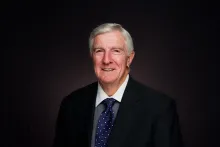
Before his retirement in 2021, Dr. Donald Ward pastored churches in Texas and Louisiana, and taught at Ambassador Bible College in Cincinnati, Ohio. He has also served as chairman of the Council of Elders of the United Church of God. He holds a BS degree; a BA in theology; a MS degree; a doctor’s degree in education from East Texas State University; and has completed 18 hours of graduate theology from SMU.
