

Don Ward
This transcript was generated by AI and may contain errors. It is provided to assist those who may not be able to listen to the message.
Greetings, everyone. It is a pleasure to be here with you and to speak to all the silver tongue orators that are here. What a sense, special greetings to all of you out there, listening by telephone and cyber land, and also special greetings to the Brethren there in Ruston, Louisiana. We miss seeing you today. As you know, a Texan has just moved into the White House, and some say that this has considerably lowered the IQ of the state. Reminds me of this new television program that we have. We can sleep. Recently, the Ms. Robot asked the lady, what does the A&M in Texas A&M represent? This is a true story. The contestant said there for a few minutes, she said, agriculture and mechanics. That is incorrect. It is agricultural and mechanical. And you are, religiously? Goodbye. You know, as if the dumbing down of America was not going rapidly enough, we had to import an alien to speed it up. But you know, recent graduate exams, the senior exams at Texas A&M, even though President Bush has left the state, has somewhat lowered the IQ. These answers to recent senior exams at A&M indicates that we might be making a comeback. Those senior exams, the students at A&M were asked, name the four seasons. They responded, salt, pepper, mustard, and vinegar.
They were asked, what guarantees may a mortgage company insist on? If you're buying a house, they will insist you're well endowed. Name a major disease associated with cigarettes. The answer is premature death.
How can you delay milk turning sour? The answer is, keep it in the cow.
How are the main parts of the body categorized? The body is consisted in the three parts, the branium, the borax, and the abdominal cavity. The branium contains the brain, the borax contains the heart and lungs, and the abdominal cavity contains the five vowels, A, E, I, O, and U.
What is the fibula? A small lie. What does aricos mean? Nearby.
Give the meaning of the term cesarean section. The cesarean section is a district in Rome.
What is a seizure? The Roman emperor. What is the terminal illness when you're sick at the airport? What is a turbine? It's something an Arab wears on its head. And what is a Hindu? It lays eggs.
Now, there's one other story that shows how the IQ is increasing. Three Texans went south of the border down to Mount of Marks, just below Grumsville for a Saturday night. They woke up the next Sunday morning. They were in jail. They didn't really remember what had happened the night before. But they found out that they were going to be electrocuted that day. So they strapped the first fellow in the chair and they said, do you have any last words? He said, I am a professor of divinity at Baylor School of Theology, and the Lord knows I'm innocent and he will deliver me. So they pulled the switch. Nothing happened, so they can pull. Well, God must not want him to die. They strapped the next guy and he said, I am a professor of law at the University of Texas. I believe in universal justice and the principle of justice will prevail. They pulled the switch and nothing happens. He must be innocent. They put the next guy in the chair. Do you have any last words? He says, I'm an electrical engineer at Texas A&M. And he says, if you boys don't connect them two wires, there's going to be no execution here today. If I love a sermon today, which is also my specific purpose statement, we have limited time, so we have to speed this up.
The Olivet prophecy, the prescription for such a time as this. The Olivet prophecy, the prescription for such a time as this. You would turn to Matthew 24 when most people think of the Olivet prophecy. They think of Matthew 24. But the Olivet prophecy actually consists of Matthew 24 and 25. Let's notice the beginning of the Olivet prophecy in Matthew 24. Actually, there should be a chapter break. Well, you could or could not between 23 and 24. In 2337, you can probably see there above, that's where Jesus had just made the statement that, O Jerusalem, O Jerusalem, in verse 38, your house is left desolate.
And then in verse 24, Jesus went out and departed from the temple. And his disciples came to him for to show him the buildings of the temple, and Jesus said unto them, See you not all these things, verily I say unto you, there shall not be left here, one stone upon another, that shall be not be thrown down. And he sat upon them out of Olives. The disciples came unto him privately, saying, Tell us, when shall these things be, and what shall be the sign of your coming and the end of the age? So, you've got when and the signs of his coming and the end of the age.
You'll notice in the first several verses, of course Christ gives several signs that an admonition to watch. And then in Matthew 25, if you'll turn now to Matthew 24 and verse 51, and we'll cover this a little more in a few minutes, and shall cut him of thunder, and appoint him as portion with a hypocrite, there shall be weeping and gnashing of teeth. Then shall the kingdom of heaven. So, you see, there's really no break here. The thought continues. The prophecy ends in chapter 26, if you'll turn there. We'll see the parameters of it. With the chapter 26 verse 1, it came to pass when Jesus had finished all these sayings, he said unto his disciples, you know that after two days is the Feast of the Passover, and the Son of Man is betrayed to be crucified.
So, it came to pass when he had finished saying Matthew chapters 24 and 25. Now, the time setting of this prophecy, as you see here, two days before he was crucified. You'll turn back now to Matthew 21. Matthew 21, you'll see a few days before the time of the passover and his crucifixion, he came into Jerusalem, and he knew that his time was near. Let's turn back to chapter 20 and verse 17. Jesus going up to Jerusalem, chapter 12, disciples a part of the way and said unto them, Behold, we go up to Jerusalem, and the Son of Man shall be betrayed unto the chief priests, the scribes, they shall condemn him to death, deliver him to the nations, or the Romans, to be crucified.
So we see here that he knows that he's going up to Jerusalem for a specific purpose. In chapter 21, he comes into Jerusalem, and that the account is given of what the world calls Palm Sunday, probably a palm Sabbath, in which he is declared to be the king. And then, for the next couple of days, he's in and out of Jerusalem, teaching in the temple, instructing them.
To me, there are two great imperatives during this period of time that somewhat sets the stage for Matthew 24. Notice Matthew 22, and if I could have written Mr. Antion's script today, it could not have been more in keeping with what I have to say because they go hand in glove. And we did not discuss anything about it. At least, I didn't with him. Maybe somebody else told him. But anyhow, in Matthew 22, 37, Jesus said unto him, responding to the question, which is the greatest commandment in the law, you shall love the Lord your God with all your heart, with all your mind, and with all your soul. This is the first and great commandment.
The second is like unto it, you shall love your neighbor as yourself. That is a great imperative, overarching. How important is it? Verse 40, on these two commandments hang all the law and the prophet. The whole ball of wax hangs on these two commandments. Then in Matthew 23 and verse 23, another very important imperative and summary scripture. Lo do you scribes and Pharisees, hypocrites, for you'd say tithes amid Anas and Cumin have omitted the way of your matters of the law, judgment, mercy, and faith.
These ought you to have done and not to leave the other undone. The theme of this conference centers on the urgency of the times in which we live. The urgency that Christ had. Here he was about to be crucified, and one he says the two great commandments, then he says the way your matters the law, and then we have the Olivette prophecy.
The theme of this conference, urgency of the times, and we want everyone to be so doing to reflect the urgency of the times. We live in the most critical crucial times in human history. All the major institutions of the world are in transition. Political systems, economic systems, military systems, in both strategic and tactical terms, religious systems, educational systems, they're all changing. The world is in a technological revolution that pales all other ages in the insignificance.
The major social structures are in transition, especially the family structure. Well over 50% of the children who are born in the U.S. are born to single mothers. Yet people go their merry way, looking for the next thrill apparently unaware of, unconcerned with the collapse of the values that serve the stabilized Western civilization for so many years.
It's immediate that I can summarize it. God, country, home, and many people with the church may believe in certain principles and values. Notice in Matthew 24, 36, somewhat of a summary statement, they ask for signs of when will Christ come.
24, 36, that if the day and hour knows no man, know not the angels of heaven, but my father only. Or as in the days as no aware so shall also the coming of the Son of man be. For as in the days that were before the flood, they were eating and drinking, marrying, giving, and marriage until the day that Noah entered into the ark.
And so we see that same kind of hedonistic society today. It says in Genesis 6, at that time the thought and intent of the heart of man was continually upon evil. Here we see in Matthew 24 back just a page or so or a few verses.
Verse 12, and because iniquity shall abound, the love of many shall wax coal. Hedonism, pleasure seeking, is now viewed as the greatest good in America. As often said in recent times, this is one of my sayings, that people today are in one of five places. McDonald's, Walmart, watching some type of entertainment, or in the hospital, and the rest are on the way.
All of this is coupled with licentious behavior that would shock the socks off our grandparents as they should rise from their graves to witness children having children, children shooting children, men living with men, women living with women, babies being sucked out of the loom by the thousands, some say millions, rapid alcohol, drug abuse, the gross commercialization of sexuality, just to name a few. In view of all of this, it would seem that the greatest sense of urgency in the church would surely be to quickly preach a warning message to the world and some think that we would literally preach down the kingdom of God, and they quote Matthew 24.14. Let's read it. And this gospel of the kingdom shall be preached in all the world for a witness unto all nations, and then shall the income. Now preaching the gospel to the world is a very high priority in the United Church of God. In fact, in August of 1999, the general, the Council of Elders, developed a statement concerning the preaching of the gospel, and I believe that one of the presentations that is going to be given here during this conference will read the entirety of that presentation. So some people have leveled the charge that the United Church of God is not preaching the gospel to the world, but when one considers the seeds that are being sown, that charge is blatantly false. It is not in keeping with the facts. You can look at this table out here. You can begin to see that that is not true. The latest run of the Good News magazine was somewhere like 363,000. We have booklets for the lower Bible study course, advertising the Reader's Digest commercials on television in major media markets, vast exposure on the Internet, radio in major media markets, concerted local evangelistic efforts, direct mail, and on and on and on. And the subscriber list is growing. To say that we're not preaching the gospel is just not true. And surely the preaching of the gospel is one of our highest priorities. But the preaching of the gospel as a warning witness did not seem to be the highest priority in the mind of Christ when he gave this prophecy. What was the highest priority? He does mention it's almost like in passing the preaching of the gospel. It's going to be preached. And it is being preached. And we are really beginning to pick up steam in that area. The greatest imperative in this whole message we'll find in Matthew 24, verse 42. Let's look there, Matthew 24, 42. Watch therefore, for you know not what hour your Lord has come. Verse 44, Therefore be you also ready, for in such an hour as you think not, the Son of Man comes. This word watch means be attempted, be alert, give heed, be blessed through indolence and apathy. Sudden destruction or calamity overtakes a person.
This word ready has to do when used up persons. It has to do with being ready for the coming of another person, being ready for the coming of Jesus Christ. So, we see the recurring answer to the question of when. Look at verse 36 again. But at that day and hour knows no man. Christ gave that recurring answer. We don't know exactly when, but he says be you watchful and be you ready. Now, another theme that is in this Olivette prophecy is that of rulership. And because of lack of time, I'm not going to read each one of them, but let's notice in Matthew 24 and verse 47, Verily I say unto you that he shall make him ruler over all his goods. That person who is watching, that person who is ready, that person who is so doing, as you see in verse 46, blessed is that servant whom is Lord when he comes shall find so doing, he will make him ruler. And then notice at the end of each one of these parables, Matthew 25, there is reward mentioned along with this rulership in Matthew 25 verse 10. And while they went to buy, the bridegroom came, and they that were ready, notice, watch, be ready, be so doing, they were ready, went in with him to the marriage, and the door was shut. The parable of the talents has to do with the rulership. Notice verse 21. This Lord said unto him, well done, you get in faithful service, you have been faithful over a few things, I will make you ruler over many things. Then the ultimate reward in the last verse of Matthew 25, notice Matthew 25 verse 46, and these shall all go away into everlasting punishment, but the righteous into life eternal. So definitely the reward is emphasized. As we see here, punishment is also emphasized. The key to understanding this prophecy is really to watch, to be ready, and to be so doing. Then there is an urgent message given. Let's start in verse 48 of chapter 24. This urgent, urgent warning. Matthew 24 verse 48. But it is that evil servant shall say his heart, my Lord delays his coming. Now they won't say it by expressing it orally. How many people out there on the street corners saying, God's not going to come back, or Christ's not going to come back for a long time? How many of us are saying Christ is not going to come anytime soon? We're not saying that. Verbally, we might be saying that by our actions. But it is that evil servant shall say in his heart, my Lord delays his coming, shall begin to smite his fellow servants and eat and drink with a truck. The Lord of that servant shall come in a day when he looks not for him. He won't be watching properly, won't be ready, and he won't be so doing. In an hour that he is not aware of. And shall cut him a sander and appoint him this portion with a hypocrites. See, this is part of the punishment aspect as well. There shall be weeping and mashing of tea.
Then, when, then, then shall the kingdom of heaven be likened unto ten vergers. When? When people begin to say, my Lord delays his coming, and they begin to smite their fellow servants.
So when people began to smite their fellow servants, began to eat and drink with a drunken, then the kingdom of heaven is likened unto three parables. These three parables hold the key for watching, being ready, and so doing.
The kingdom of heaven is likened to three parables that are applicable at all times, but especially when people begin to say in their heart, not verbally, but through their actions, Christ delays his coming. These parables identify the faithful and wise servants, and they instruct us on how to be zealous, how to avoid being lukewarm, instruct us on how to maintain an attitude of watchfulness, and to be ready, and to have the correct response and view of the iniquity that abounds. First of all, there is the parable of the ten virgins, which has to do with your spiritual life and relationship with God. You must keep your lamp full of oil. You see what Christ does in all of that prophecy, that first of all, it's descriptive. Oftentimes in our preaching, we spend a lot of time on descriptive things. We describe the conditions of the world. Christ describes the conditions that will be extant before he comes again. Then he gives the prescription on how to watch and how to be ready so that that day will not come upon you unawares. How do you keep your lamp filled with oil?
I want to notice now, if you want to mark Matthew 24 or 25, we'll be coming back fairly often. John 663, if you'll turn there to John 663. Of course, the bread of life scriptures are here, in which Christ says that you must eat and drink of him.
And then he explains what he means by eating and drinking of him in verse 63. It is the spirit that quickens, makes a life. The flesh crockets nothing. The words that I speak unto you, they are spirit and they are life. So he equates the word of God with the spirit of God. Then you have Matthew 4, 4, Man shall not live by bread alone, but by every word that proceeds out of the mouth of God. So when you inject the word of God, you are in a sense ingesting the spirit of God, the words I speak, their spirit and their life. So what we have heard from the beginning in the Church of God is just as applicable today as it ever was. You have to study. You have to pray. You have to obey. You have to be so do we and keep your inward man renewed on a daily basis.
You see, the ones who are not doing this are, to me, in essence going through the motions because you notice here in this parable, we'll read the 25 verse 1. Then shall the kingdom and heaven be like another ten virgins which took their lamps and went forth to meet the bridegroom. Five of them wise, five were foolish, five had oil, and five didn't. Then the bridegroom didn't come right away and they're all sort of groggy and sort of slumbering. But then there came this knock at the door. Then all of them rose up first, having turned their lamps, and then the five foolish says to the wise, give us some oil. And you can't give this oil. In all three of these parables, there is nothing that an organization can do. Organization can help, and the organization is supposed to feed. One of the imperatives that Christ gave the disciples before he ascended back to heaven was to feed my sheep. The ministry hopefully helped stir up that spirit that is within each one of us, but really no one can put that oil in your lamp. But you. And then the next parable has to do with the talents. Five, two, and one. The five and two double theirs. The one buried his, and even that one was taken away. God has given each one of us a measure of his spirit. He's given us certain talents, and we're expected to devote these abilities to do more than is required to go above and beyond the call of duty. And then the third one, the third parable, tells us how to love our fellow man. The feeding and clothing, I believe, applies both spiritually and physically. Let's notice here Matthew 25. When this parable comes to an accounting, Matthew 25 verse 31, When the Son of Man shall come in his glory and all the holy angels with him, Then shall he sit upon the throne of his glory, and before him shall be gathered to all nations, and he shall separate them one from another, as the shepherd divides the sheep from the goats, he shall set the sheep on his right hand, but the goats on his left. Then shall the king stand to them on his right hand, come, you blessed of my father, inherit the kingdom prepared for you from the foundation of the world. And then what Mr. Andean talked about, that service, that when you do it to the least one of these, my brethren, you have done it unto me. I believe the greatest urgency of the times is for us to learn the lessons of the three parables.
In the early 1970s, my wife received a disturbing phone call from the environment of Memphis, Tennessee. That phone call, it was reported to her that her family had been in an accident, that her nephew had been killed. Her brother was in critical condition, another nephew was in critical condition, and then another nephew was hurt but not as seriously, and her sister-in-law. At that time, she turned to me and she said, they really need a minister now. And my wife's family, they were not in the church, but they needed a minister. They just needed someone like Mr. Andean talked about to go hold their hand, to just be there and speak some comforting words or just say we're concerned or whatever. So I found out, and the good news of this story is, as far as I'm concerned, we do not know the name of this minister. But anyhow, we found out the minister in that area, who was a full-time person, elder, with the worldwide church of God, and called him. And he asked questions like, well, are they members? And on and on. But the bottom line is, he did not go. He did not go. Now, that is devastating to say the least. Now, we are talking about Christ-centered servant leadership. You see, to me, Christ-centered servant leadership is not just responding to a call like this. In fact, it's like one of the places where Christ said, when you have done everything that you should do, then that servant might be unprofitable, but you have to go above and beyond. I mean, everybody is expected, even who would not respond to such a call as that? Well, there are very few people who would not. Now, this is not an indictment of everybody. Obviously, it is not. But it illustrates a point that I believe that none of us here, or maybe I can say it another way, there is not a person in this room who has not been guilty of smiting his fellow servants. So, I believe the most urgent message in the Olivet prophecy is for us to do the first works. If you would turn to Revelation 2, the message to the Church of Ephesus, and surely this message is applicable at all times. When I read the messages to the seven churches, it seems that this one too, Ephesus, in some ways is most descriptive of us at the present time, in some ways.
Under the angel of the Church of Ephesus write these things, says he that holds the seven stars in his right hand, who walks in the midst of the seven golden candlesticks, I know your works, your labor, your patience, how you cannot bear them for evil. You have tried them, which say they are apostles, they are not, and found them liars. We can down that road, and have borne and have patience, and for the name sake of honor, I have labored, and I'm not saying it. Endured! Here we are, through all of this, for all these decades, some of you, from near on, fifty years. Here you are. Nevertheless, I am somewhat against you because you have left your first love. Now, a lot of people talk about what is the first love, and they talk about that flush of first learning the truth, but I believe that Christ gave the first love in Matthew 24, 37, 38, 39, where we read, What are the two great commandments? Love God with all your heart, mind, and soul, and second, light unto it, and let your neighbor as yourself. On this, hangs the law of the prophets. It all hangs on this. And then, where he said, Do the weightier matters of the law, judgment, mercy, and faith, in Matthew 23 and verse 23.
How do you do those things? The kind of Christ-centered servant leadership that I'm talking about goes beyond just doing a physical thing. And a lot of wonderful physical things are being done, like the announcement to bring the white shirts to the back of the room so that they can be sent on to another country. There are many wonderful good works being done, but I'm talking about the Olivet prophecy and what seems to be most urgent in Christ's mind at that particular time. How do you exercise judgment, mercy, and faith? It is the weightier matters of the law. You cannot be reconciled to God without judging yourself and repenting. Note, it says in James chapter 2 and verse 13 that mercy glories against judgment. But do you know that ultimate judgment cannot be extended until, I'm sorry, ultimate mercy cannot be extended until a person judges himself? Now, God can be long-suffering and He can pass over. And thankfully, He is long-suffering, but before a sin can be forgiven, you have to repent and ask for forgiveness. Otherwise, Christ would be the minister of sin. So you come before Him, just as the parable of the Pharisee and the publican. The Pharisee thanked God and He was so righteous. The publican judged himself and said, have mercy on me as Senator. And you know who went to his house justified. The same is true with love your neighbor as yourself. A kind of love that is sacrificial, a kind of love that in which a person is willing to lay himself before the other person and say, I'm wrong. What can we do? How can we be reconciled? How can we walk together? Leviticus 19, verse 15. A lot of people talk about Matthew 7, judge not, that you be not judged.
Of course, we know that the intent of that is that with what measure or judgment you measure out to somebody else, that will be used against you. And we have to keep in mind Galatians 6, verse 1. If anybody errs from the truth in the spirit of meekness, you go help restore such a one and therefore fulfill the royal law of Christ, as Mr. Andean read in his sermon.
In Leviticus 19, verse 15, Leviticus 19, 15, you shall do no unrighteousness and judgment. You shall not respect the person of the poor nor honor the person of the mighty, but in righteousness shall you judge your neighbor.
You shall not go up and down as the tailed bear among the people, neither shall you stand against the blood of your neighbor, I am the Eternal. You shall not hate your brother in your heart. You shall in any wise rebuke your neighbor, and the correct translation is, and not bear his sin. Because if you don't love him to that extent, then you bear his sin. And you see, not being willing to love him to that extent is acquainted with hate. You shall not hate your brother, because to refuse to exercise that kind of servant leadership is hatred. Notice 1 John 3.15. 1 John 3.15. Of course, the context of 1 John 3.15 is Cain and Abel, verse 12. In 1 John 3.15, whoso hates his brother is a murderer. And we've just seen from Leviticus 19.17, you shall not hate your brother. You shall in any wise do whatever you can do. You know, one of the things before Christ was crucified, which all of us read not all that long ago in Passover, and the great identifying mark that we talk about, if you're a really my disciple, you'll be willing to lay down your life whenever another. And if you have love for one another, then you're my disciples.
1 John 3.15. Whosoever hates his brother is a murderer, and you know that no murderer has eternal life abiding in him.
I believe the first works center on exercising judgment, mercy, and faith with God and all humankind, for we're all made in the image of God. I believe that these three parables give us great insight as to how to do that. Our lamps must be filled with oil. We must use our talents and abilities to the fullest. We have to stir up that which is within us. You know, Paul wrote to the young evangelist Timothy, and he said, stir up the gift that is within you. Stir it up. And it has to do literally with make friction. Stir it up. Get it fired up. I believe that this conference will be a great benchmark. I hope it will. A great turning point in the United Church of God. I believe the greatest urgency in the Church of God in any age is to do the first works. That is to exercise judgment, mercy, and faith with God and his neighbor. I believe this is servant leadership at the deepest level. You know, the great green-eyed monster, one of the great stumbling blocks in the history of humankind from Cain to the Twelve Apostles, you know, the Twelve Apostles on the very night that Christ was crucified or betrayed, not on the night he was crucified. The night he was betrayed, they got into dispute over who would be the greatest. That very night that he instituted the symbols, the New Covenant passed over.
Brethren, as the song goes, God is watching us. We have a precious opportunity. It will not last forever. People speak of the Philadelphian era of the Church. Some speak of the Laodicean era of the Church. The Philadelphians are supposedly filled with great love for the brethren, whereas the Laodiceans or Lukewarm view themselves as spiritually superior to others, just like the people who passed by the man in the parable of the Good Samaritan. They wouldn't touch it because the Samaritans were unclean. Many people now believe that we're in the Laodicean era of the Church. But could it just be that we're yet to see the greatest outflowing, outpouring of this Philadelphia love that we've talked about through the years, that we're yet to see that in the way that Christ really wants to see it. Truth, brotherly love, the emphasis on the first works, truly exercising judgment, mercy, and faith, truly taking the Olivet prophecy to heart, the prescription, not just focusing on the first 40 or so verses. Could this very conference be the beginning? Historically, we've emphasized getting the work done, and we still do, and it's very important. The work has been defined as preaching the Gospel to the world, and we've talked about that. And I'm surely for that. I know the council is for that. I know the Federal Conference of Elders is for that. I know the membership is for that. Any church that is neglectful in sowing the seeds will surely die on the vine. But I submit to you that you can cover the ground with seeds, that they're spilling over everywhere.
But if you omit the weightier matters of the law, you will not reap a bountiful harvest. Have we ever truly focused on our relationship with each other to the point that it was a priority? More than anything else.
Some spin their wheels trying to do the work without ever focusing on the first works. A person or a church that refuses to do the first work will never be used. In my opinion, to do the final work. Herein lies the key to the future. Christ places far greater emphasis on loving Him and each other than on, quote, doing a work outside of ourselves. I've read the, I've read the Gospel several times. I've taught Him several times. I know that it says that. The three parables of Matthew 25 graphically and pointedly instruct us on how to be ready and how to be so doing. So let's ask ourselves, is your lamp filled with oils at the point that you're willing to lay down your life with a brethren? Are you using what God, what callous God has given you in serving the brethren so that your callous are increasing? One of the most encouraging things about experience in recent times in ministry is the fact that in the rest of congregation we have seven young people giving special music. One as young as the age of 10. And by the way, a male. Are you practicing doing the first works and serving whenever you can all those who need your help? There are people who would readily give a large donation to someone in physical need but would never consider or humbling themselves to exercising judgment, mercy, and faith for more important matters. Forgiving someone doesn't cost anything in the material sense, but in the spiritual sense it requires giving themselves. It requires becoming a living sacrifice. Tomorrow the members of the GCE will determine whether or not they approve the budget, the operations plan, the strategic plan. All of this is necessary.
But I believe that doing the first works and getting our spiritual house in order and getting our hearts right with God and each other is far more important than the budget, the operation plan, strategic plan, or any of those other kind of things. I know they're necessary. The GCE can approve the budget, the operations plan, the strategic plan, but only God can approve our spiritual plan for the future. Let's notice Esther 4. Esther is sometimes hard to find. It's just before the book of Job. The story of the young Esther, probably 18, 20 years old, who had been crowned the queen of Persia, and a great turning point came in the history of the Jewish people in which the evil Haman had devised a plot to exterminate the Jews. Mordecai, Esther's uncle, heard of the plot and appealed to Esther, who now was the queen. He wanted Esther to go before the king and plead the case for the people of Judah. Esther said, I'm afraid, and he hasn't called me in 30 days, and if I go there and he doesn't accept me, then I'll be put to death. But Mordecai responded to her.
Of course, Esther did follow through, and the Jews were saved. And I'll leave you with this challenge here today.
Esther 4.12. They told from Mordecai Esther's words, and Mordecai commanded to answer Esther, Think not with yourself that you shall escape in the king's house more than all the Jews. For if you altogether hold your peace at this time, then shall their enlargement and deliverance arise to the Jews from another place, that you and your father's house shall be destroyed. And who knows whether you are come to the kingdom for such a time as this? In this conference, you're going to be given several keys for developing a plan for going on to doing greater things, to developing a spiritual plan. And I believe that we have been called to the Church of God for such a time as this.
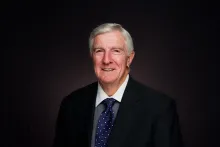
Before his retirement in 2021, Dr. Donald Ward pastored churches in Texas and Louisiana, and taught at Ambassador Bible College in Cincinnati, Ohio. He has also served as chairman of the Council of Elders of the United Church of God. He holds a BS degree; a BA in theology; a MS degree; a doctor’s degree in education from East Texas State University; and has completed 18 hours of graduate theology from SMU.
