
Rick Shabi
This sermon was given at the Wisconsin Dells, Wisconsin 2013 Feast site.
This transcript was generated by AI and may contain errors. It is provided to assist those who may not be able to listen to the message.
Brethren, here we are at the Feast of Tabernacles, the last great day, which represents a time of great joy and rejoicing. Joy and rejoicing because God will open the doors of tremendous blessings for all of mankind as mankind learns to walk with God. When you think about it, God's going to open up these tremendous blessings, these tremendous doors, such as the Door of Salvation, where men's hearts and minds will be spiritually opened.
People will have an opportunity to actually talk and walk with Jesus the Christ. You remember the story in the New Testament, where after Christ had been crucified, he was resurrected, and he met a couple of men that were walking on the road to Emmaus, and the two men were recounting the week that had just gone forward in Jerusalem. And Jesus Christ didn't happen to join them as they were walking.
And as they were walking, they didn't recognize Jesus, but as they were walking, they began to recount what had taken place. And Christ acted like as though he didn't know what had gone on. And the two men said, well, who are you? Everyone knows what's taken place this last week. And so Christ began to talk with them, ask them various questions. And then he began to open the Scriptures to their hearts and their minds. And as they were journeying, Christ stopped the journey at a certain point, but they wanted him to keep on walking with them and talking with them.
And they said, didn't our hearts burn when he talked with us about the Scriptures? Brethren, that's going to take place in the wonderful world tomorrow on a daily basis. People talking with Jesus the Christ and you as resurrected spirit beings. So there's the open door of salvation that people look forward to. There's the open door of challenge. We talk about on the day of trumpets, the Feast of Trumpets, what's going to happen at the end of the age.
The prophet Isaiah says that the earth will be so devastated it's going to totter like a drunken man. God's going to and Christ is going to level hills and move islands. All of this, of course, they get the attention of mankind. All of this, of course, they help mankind to realize that the way they're living is not proper. But also, this is to develop and to change around the topography of planet earth. Because once Christ comes and establishes the kingdom, we've got 1,000 years to make this whole planet one large breadbasket.
Because 1,000 years into the future, we've got that great resurrection of billions upon billions of people. So there'll be tremendous challenges that mankind will face. The God family will be helping mankind in those challenges. But there'll be an open door for that. There'll be the open door of opportunity. Think about how much money we spend on warfare and all the police forces and all those sorts of things. Whereas we're going to take those funds, those resources, and put them into the people. Again, think about the children's choir that was up here just the other day.
Think about those beautiful little faces. Think about the God family working with the human family to give those mothers and fathers various types of aptitude tests for the children, exploring what the children's gifts are individually. Then working with the family to help those children develop their aptitudes, develop their gifts. And of course, as time goes along, the parents will have a number of options, the children will have a number of options as to where they can go to use those gifts. Today is the sixth day of the feast. If you're like me, you probably took—at least I did for this message—I took the thousand years.
I divided it by seven. Where are we in terms of the Feast of Tabernacles, in terms of the millennium? Well, at the beginning of day number six, we are 714 years into the millennium. At the end of this day, the sixth day of the feast will be 857 years into the millennium. Certainly, this represents a time when mankind will be rejoicing, mankind will be walking through open doors, be tremendously blessed. But as Mr. Horton brought out in his message earlier, it's the sixth day of the feast.
Before too long, you and I, we're not going to be here anymore. Before too long, you and I are going to be packing our cars. We're going to be back home. We're going to be back home. Now, in the coming year, many of us will be, all of us will be having tremendous blessings that God will bestow upon us.
But also, in the coming year, we will have some trials, we will have some challenges. How are we going to respond to those trials and those challenges? What doors will God open for us as we are looking for open doors as we go through those challenges? I'm sure every pastor here has been seeing his, the people he pastors going through one trial after another, almost like the waves of the ocean just pounding on our people over and over.
And some families seem to have it more than others. I've certainly seen that in the Troy to Ann Arbor areas. So much so that I gave a sermon not long ago entitled, What Do You Do After the Worst Day in Your Life? Could be the worst day, could be the worst week, could be the worst month, could be a number of years, actually. What do you do when you face the worst possible times?
As we talked about on the Bible study that I gave on Sabbath, God gives us the answer. He gives us the principles in His Word. Every word was placed there by God the Father and Jesus Christ for our edification so we can be complete, so we can be thoroughly equipped. What do we do after the worst day of our life? What door is there? There are some of us here who are hoping to walk through an open door that gets us away from a physical difficulty. Others have an interpersonal difficulty. Some have financial difficulty. Some have all of the above. Brother, how do we recognize these doors when they open? How do we know a closed door when it's staring us in the face?
Since we're toward the end of the feast, and as I said, many of us, well, all of us will be going home not to too many days. I want to take a look at a very special chapter in the Bible that gives us interesting and dynamic principles of how God opens doors. And I'm hoping as we explore that chapter, as we take a look at how God opens doors, closes doors, that you will be better equipped as you go back home to be the people God wants us to be, each and every one of us. We are to be ambassadors for God the Father and for Jesus Christ. We are to be the salt of the earth, the light to the world. We need to be able to walk through those doors when those doors open, and we need to know what an open door looks like. And sometimes, as we're going to see, those doors that are opened are not quite what we thought they would be.
If you will, let's turn over to that very special chapter. It's Acts 16.
And you'll want to put a marker in there. We'll turn to a few other places, but primarily we'll be right here in Acts 16. Here, starting in Acts 16, we see the beginning of what is known as Paul's second missionary journey. A time frame would be late 40s, early 50s AD.
This journey would lay the groundwork for the churches in Greece.
Notice what Paul says at the end of chapter 15, though. Acts 15, verse 36.
Then after some days, Paul said to Barnabas, let us go back and visit our brethren in every city where we have preached the word of the Lord and see how they're doing. Acts 15, verse 36.
So that was their desire. Of course, there was some conflict here. And as it turns out, Paul went with Silas to go check out these cities. We now drop down to chapter 16, of Acts, verse 6. Now, when they had gone through Phrygia and the region of Galatia, they were forbidden by the Holy Spirit to preach the word in Asia. God closed the door.
He closed the door. Now, there are many people there that it could have been witnessed to. There are many people there who needed to hear the gospel. It was certainly something that the ministry wanted to do, but God didn't want them to do it. The door was not open. Just like there may be many things in our life we want to do, there may be good things we would like to do, but now is not the right time. Maybe we're not the right people to walk through those doors.
Verse 7. After they had come to Micea, they tried to go into Bithynia, but the Spirit did not permit them. So twice they tried to walk through a door, and twice they saw the door was closed.
They were forbidden. Now, where they wanted to go was an area of what we call Turkey today that would be northern Turkey. Somebody else got to open the door to somebody else to preach in northern Turkey. You know, just as it is true today, the Spirit of God is overwhelming. It is plentiful for those of us in the Church. But, you know, physically there are only so many of us. There's only so much in the way of human resources. Jesus Christ talked about His little flock. Same was true back then. Tremendous power of God, but a little flock. There was a certain minister that God wanted to be in northern Turkey, so God closed the door to Paul to go there. Paul was going to be in southern Turkey, and then, as we're going to see someplace else. Let's continue on reading here. Acts 16, verse 8. So passing by Micea, they came down to Troas, just a few miles from what we would now call Troy. And a vision appeared to Paul in the night and man of Macedonia. Macedonia is northern, north of Greece. He pleaded with him, saying, Come over to Macedonia and help us. Now, after he had seen the vision, immediately he sought to go into Macedonia, concluding the Lord had called us to preach the gospel to them. So one door closed. And here's an interesting principle. One door closes, but another door opens. Please keep that in mind.
Many times that's how God works. One door closes, another door opens.
Of course, they're going to take that to heart. They're going to go there.
Verse 11. Therefore, sailing from Troas, we ran a straight course to Samoath race, and the next day we came to Neapolis. And from there to Philippi, which is the foremost city of that part of Macedonia, a colony. And we were staying in that city for some days.
Brother, what we're going to see now from here to the end of this chapter is the foundation of the church in Philippi. As it says here in verse 12, Philippi was the foremost city in that part of Macedonia. We're talking about the Roman Empire. And Romans were pretty smart folks.
When they went into various areas, they realized they needed not only to have a strong military presence, but they needed to do something psychologically to condition the people. So in various areas, they would develop what basically was a little mini-Rome. Philippi was such a city. It was a mini-Rome. There was a garrison there. Retired Roman soldiers retired there with their retirement pay, with a grant of some land. There were special taxation privileges for the people there in Philippi. There were special voting privileges. They were able to vote just like any Roman citizen. So it was a little atmosphere that was just like Rome. It was an advertisement, if you will, of the Roman Empire. And of course, one of the things that Romans liked to do, they built things. They not only were known for their army, but they were known for their architecture. They were known for being able to take things and do tremendous works.
When various areas would be conquered by the Romans, they would make sure that the leaders of those areas were brought into Rome. And when those people were brought into Rome, they saw the Colosseum, they saw various other works, the baths and other buildings.
Buildings that today engineers still marvel at. The Colosseum, for example, you know, they had a retractable roof, some sort of canvas or some sort of cloth roof that could change as the sun was moving across the sky. Our engineers to this day don't know how they did that. And so they'd bring these peoples in, let them take a look at Rome. In one sense, it was a form of psychological warfare.
They wanted these leaders to realize, you know, you don't mess with these people.
You don't mess with these people. All these buildings, they took a long time, which means these Romans are patient. They're brilliant. They build things. And, you know, the Romans don't care if you live on a mountaintop or you live across a river, you get out of line, the army may not be there today or tomorrow or next month, but we will pay you a visit. That happened one time when Julius Caesar heard that the Germans across the Rhine were starting to, were thinking about rising up in revolt. Julius Caesar amasses his legions. He marches to the Rhine. The Germans weren't afraid. They thought they're not going to cross this river. In 10 days, Julius Caesar's army builds a bridge across the Rhine. He marches his legions and walks around a little bit, makes a statement, doesn't do anything. Just walks around. Armies go back over the Rhine, demolishes the bridge. Don't leave it before the Germans come on in. And the statement's made. So here we have a background, a setting, to where Paul is going to do a tremendous work for a church he loved, the church there in Philippi.
Let's go back now to the story. Verse 13. And on the Sabbath day we went out of the city to Riverside where prayer was customarily made, and we sat down and spoke to the women who met there.
A number of ladies. Now a certain woman named Lydia heard us. She was a seller of purple from the city of Thyatira who worshipped God. The Lord opened her heart. Notice here, God is opening a spiritual door. The Lord opened her heart to heed the things spoken by Paul. And when she and her household were baptized, she begged us, saying, if you have judged me to be faithful to the Lord, come to my house and stay. And so she persuaded us. Well, of course she persuaded them. She was probably a very good businesswoman. It's unsure from the scholar's point of view whether, when it talks about her household there in verse 15, is that her family or are those female business associates that were living in her estate? We really don't know. Either way, we see where God is opening up a door for salvation there in northern Greece, in Philippi. The spirit was leading through restraint. And understand this, and at the end of the sermon today, I'm hoping to kind of coalesce a number of principles. But understand how God is working here. The Holy Spirit stopped Paul from following through on some plans that really were, as you and I would think, good plans. But they weren't the plans God had in mind for Paul. Think about what you may be wanting to do.
Perhaps there are good plans. There's nothing wrong with those plans. But it's not what God wants you to do, maybe just yet. Maybe not ever. The point to see is God knows best. God knows best. He knows the whole situation. You see, he had Peter preaching to the people we would call the Lost Ten Tribes up in northern Turkey. So the resources there were allocated. But Paul was going to go into Greece, the area of Greece, northern Greece, Greece, to do the work there. God opened the door for Peter. God opened the door for Paul. So we see that tremendous work was started in Greece. And it started because of a closed door. So don't think, brethren, it is because the door may close on you that that is somehow a bad thing. It may be a very good thing. Where, if God's going to close the one door, where is He going to open some door in another area? We need to ask ourselves that.
Let's continue on with the story here in Acts 16. Verse 16. Now it happened as they went to prayer that a certain slave girl possessed with the spirit of divination met us, who brought her masters much profit by fortune-telling. So here we've got somebody who has a spirit, a demon.
Of course, it tells us something about people who foretell events. There are plenty of people who can foretell events. It doesn't mean it's God inspiring this. Of course, this was the case here. This was not God inspiring this young woman. The girl followed up, followed Paul and us, and cried out, saying, These men are the servants of the Most High God, who proclaim to us the way of salvation. And this she did for many days, but Paul greatly annoyed. It turned and said to the spirit, I command you in the name of Jesus Christ to come out of her. And he came out that very hour.
We see something here, brethren, as we take a look at what's happening. And that is a door of challenge. We saw a door of salvation with Lydia. Now we're seeing a door of challenge that is taking place. And Satan very much wants to hinder the work of God as a corporation, as United Church of God, and individually for you and I. He wants to hinder us. Very much so. I'm not going to turn to you, and you know it's jot down Mark 1, verses 21 through 28. Mark 1, verses 21 through 28. Jesus Christ is just beginning his ministry. And there's an individual in the synagogue who rises up and begins to give Jesus Christ a hard time. He makes it a motion. He was also inspired by a demon or demon possessed. If they would do this to Jesus Christ, they will do it to us. Make no mistake about that.
So here we see in verse 18 that Paul deals with the situation. So there are times when Satan would want to hinder us. Paul talked about that when he wrote to the church in Thessalonica. Also there in Greece. Paul said, many times I wanted to come and visit you, but I was hindered by Satan time and again. So those things happen, and God allows that to happen. Let's continue on with the story here.
The door of challenge. But when her master saw that their hope of profit was gone, verse 19, they seized Paul and Silas and dragged them into the marketplace through the authorities, and they brought them to the magistrates that these men, being Jews, exceedingly troubled our city.
The land of sanitism there. And they teach customs which are not lawful for us, being Romans to receive or to observe. Converts. Then the multitude rose up together against them, and the magistrates tore off their clothes, commanded them to be beaten with rods. When they laid many stripes on them, they threw them into prison, commanding the jailer to keep them secretly. Having received such a charge, he put them into the inner prison and fastened their feet in the stocks. Brethren, let's not overrun this discussion real quickly here. This is an open door. So many times you and I think an open door is when God opens this door, we walk through, and it's clear sailing, and everything is smooth, and everything is in order, and there's very little might challenge because God's opened the door. God wanted Paul and Silas here. He opened a door here. There was a demon that had to be dealt with. There was a beating.
There was being put in an inner prison, put in stocks and in chains, and this is an open door.
So I think sometimes you and I have to realize that opposition is not necessarily an indication of a closed door. Some people interpret opposition or difficulties as an indication of a closed door. And if they've got opposition or difficulties, they simply walk away.
You know, sometimes I wonder, we talk about these Bible characters.
I'm sure some of them have had a sense of humor. Perhaps as they're down there in that inner prison, they're chained up, you know, maybe Silas said, hey, boss, hey, Paul.
God opened a door for us, right? Yeah. We had to take care of a demon. We were beat. We were put in this inner prison. We were in chains. I can just see maybe Silas saying, well, I wonder what was behind door number two.
Brethren, scriptures make it very clear, very plain, that Christians will suffer. We will suffer for our faith. There are some doors that God has closed, perhaps to open at a later time, perhaps to open for somebody else and not for you and I. So there's the door of challenge.
But let's continue on the narrative here in Acts 16. We want to see the door of opportunity.
Acts 16, here, starting in verse 25. But at midnight, Paul and Silas are praying and singing hymns to God, and the prisoners were listening to them.
I'm sure in that prison, there were plenty of things being said all the time that we're not praising God. I'm sure there was lots of cursing, lots of discussion that we could not repeat here.
But here we see Paul and Silas, they're praying. They're singing hymns to God.
Once again, Silas, maybe if he had a sense of humor, he said, well, what shall we sing? And then maybe he starts, nobody knows the troubles I've seen.
Chances are what they were singing was something more like Amazing Grace.
And notice the prisoners were listening to them. You know, word travels quickly in an environment like that. Guards hear about the men prior to them coming into jail. They talk among themselves, prisoners overhear it. It goes through the prison population. The prisoners realize these two fellows, there's something special about them. And as they're singing and the words they're saying, as they're singing, they're being listened to. Verse 26, something there was a great earthquake, so the foundations of the prison were shaken. And immediately all the doors were opened and everyone's chains were loosed. Here, we've got it, an open door, right? No. This is not the open door God had in mind. Now, truly, it's an open door, literally. But is this why God had Paul and Silas come over here to Philippi? Well, let's keep asking ourselves what God is trying to do here.
Verse 27 and 28. And the keeper of the prison, awakening from his sleep, and seeing that prison doors opened, supposed the prisoners had fled, drew his sword, and was about to kill himself.
But Paul called with a loud voice, saying, Do yourself no harm, for we are all here.
How many prisons do you think you would open? Chains unloosed and the prisoners would just stay where they are. During the week of Trumpets, I had an opportunity to baptize my first inmate there in Toledo, Ohio. And in the jail that I went to, you know, you walk into one room, door closes behind you, there's a door closed in front of you. And every time you go through a door, it's a cascading effort where you walk into one door, a door closes behind you, a door in front of you is closed. You know, it's a totally contained environment. But I want us to understand something. God is about to call this man to salvation. As Lydia was a charter member of the Church of Philippi, so is this jailer going to be. And, brethren, what's happening in your life right now? Maybe you are staring at what you think are a lot of cul-de-sacs, a lot of closed doors. Maybe you are fighting the blues. Maybe you're fighting depression. But here we see a man who is about to do away with himself because he realizes he's in charge of this prison. And if they escape, he's the next guy in jail. He's down there in the stocks. He's in the chains.
So he's blue. He's despondent. But just before, you know, the God's going to open a tremendous door to he and his family. Things look really bleak. Maybe things look really bleak right now for you. But perhaps God is just about to open a door for you. We need to have the discernment to understand what those doors are, to recognize them when God opens them for us.
Hopefully, as we look at this chapter, as we go back home, we study this chapter on our own, and we delve into it deeply, we'll come to a better understanding of how God works through these doors. Paul cried with a loud voice, pointing at, do yourself no harm, we're all here.
Then he called for a light. The jailer calls for a light, ran in and fell down trembling before Paul and Silas. You know, the earthquake takes place. The place is shaken, probably a lot of dust and dirt in the air, hard to see. But God, being the consummate teacher that He is, this man calls for light. He doesn't know how much light He's about to get. Not just the light of shining forth, but the light of God is about to enter His life.
He called for a light, ran in, fell down trembling before Paul and Silas, verse 30. And He brought them out and said, Sir, what must I do to be saved?
Now, brethren, we need to appreciate the fact that we have a short story here. We don't have every last little detail. We've got the gist of what took place here. A door was opened. This man had probably heard about the preaching of Paul and Silas in town. He probably heard them singing. The words were doing something to him, to his thinking, just as we hear the choir up here.
The powerful words that our choir sings, that our band accompanies. There have been so many times, you know, we've been properly taught that we shouldn't be clapping for the special music. But there have been times where I've had to almost sit on my hands because the music has been so stirring, so moving. They're not up here for an hour. They're up here for a few minutes. But the words they say are so gripping. They tug at our hearts and minds. I'm sure the same thing was happening with this jailer. He was listening intently to the words that were being sung by Paul and Silas. What must I do to be saved? Verse 31. So they said, believe on the Lord Jesus Christ and you will be saved, you and your household. Then they spoke the word of the Lord to him and to all who were in his house. So understand something. The doors are opened. They're loose.
And his jailer takes Paul and Silas to his home.
That's still not the open door God was thinking about. This is why you and I have to be very careful as we're taking a look at the open door. This still isn't the fullness of the open door God's looking at. It's part of it. That's not the fullness of it.
Verse 33. He took them that same hour of the night, washed their stripes, and immediately he said he and his whole family were baptized. Now when they brought them into his house, he set food before them and rejoiced, having believed in God with all of his household. So once again, we see how God works. God works through families. Mr. Dow brought up in the opening message, God works with relationships. Most of the people who come into the church come in as a result of a relationship. Their mom or their dad or their grandmother or grandfather, an uncle, a brother, a sister. And so here we see all these wonderful things taking place for this jailer.
A door is opened. He and his family are baptized. And when God opens the door, and we walk through it properly, there is good fruit. Here we see the good fruit. Verse 35. And when it was day, the magistrates sent the officers saying, let those men go. So the keeper of the person replied to the words to Paul, saying, the magistrates have sent to let you go. Now, therefore, depart and go in peace. Depart and go in peace. Now we're starting to see the door God had in mind. And remember, Paul and Silas were away from the prison in the jailer's house. And instead of just walking away, thinking this was the open door, Paul and Silas walked back into jail. They walked back into jail. They're in jail when they say, let the guys go.
So the physical getting out of the jail, that wasn't the real story that God was wanting Paul and Silas to understand. That wasn't the real door. And again, we have to appreciate with spiritual discernment what God wants for us as we look at doors that are either opened or closed.
Verse 37. Then Paul said to them, they have beaten us openly, uncondemed Romans, and have thrown us into prison, and now do they put us out secretly? No, indeed. Let them come themselves and get us out.
Paul was standing up for his rights as a Roman citizen. But, brethren, make no mistake.
Paul was inspired by God to see a bigger principle here, a much bigger principle. Paul was concerned for the advance of the gospel, the advance of the local church in Philippi, the advance of the campaigns they would have in that region of the world.
If Paul would have just ran away, he would have been a fugitive from justice.
He would have been a hounded man. He would not have been able to conduct his ministry. But because he went and waited for God to open the door the way God wanted it open, now some things have changed, some very important things have changed. The magistrates, realizing for what they've done to Paul and Silas, they themselves can be thrown into jail. They are now rocked back on their heels. They realize, you know, we better give these guys a wide berth.
We've really hurt them, and they have got something against us, and we want to do what we can to make them feel better.
We want, you know, to make sure they aren't going to charge us with anything.
So the bottom line is, we'll just keep on reading the story here.
When the, verse 38, when the officers told these words to the magistrates, they were afraid when they heard that they were Romans. And then they came and pleaded with them. The officials came and pleaded with Paul and Silas, and brought them out and asked them to depart from the city.
They're pleading. Paul had, because of God, opening the door, and Paul and Silas, having a discernment to see what the door was, now the magistrates are right where God wants them to be.
Verse 40. So they went out of the prison. They entered the house of Lydia. When they had seen the brethren, they encouraged them, and then they departed. They finished their business the way God had intended. And when they had done God's business, that's when they left, not before.
So as we take a look at this story here in Acts 16, we see that the door was open there. When the earthquake took place, when the initial doors were being opened, there was the door of opportunity for the jailer and his family.
That was a part of the story.
Also, because the officials were concerned of what they had done to Paul, and they were back on their heels, this opened up a door for the church there in Philippi, that the officials would probably give this church a wide berth.
You know, we hurt those guys. They can come back at us. They've got a grievance against us. Let's leave these guys alone. And also, Paul not only standing up for his rights, but also for the rights of the gospel, for the rights of God's church. In that area of the world, Paul and Silas would have a much more free reign to go from city to city to proclaim the wonderful truth of God.
So, you know, what is it that you and I think is of an open door?
Is it a demon? Is it being beaten physically, thrown in jail, feet in the stocks, chained up, magistrates doing all sorts of horrible things to us? To God, that was an open door.
Opposition, at times, is not the case where it's a closed door.
I may have mentioned, brethren, at the close of this chapter, I wanted to go through some principles that I glean here regarding opening and closing of doors by God.
Let me letter these so that we get these down. Letter A.
Let's remember, as we've seen here in this chapter, that God is the doorkeeper.
God is the doorkeeper. It's not Satan. It's not you or I. It's not any force on this planet. It's God the Father. It's Jesus Christ. Let's turn to Revelation. We can move out of Philippians. We'll keep a marker here, but go to Revelation 3.
Revelation 3, verse 7 and 8.
And to the angel of the church in Philadelphia write, these things says, He who is holy, He who is true, He who has the key of David, He who opens, and no one shuts, and shuts, and no one opens.
I know your works, see what's up before you, an open door, and no one can shut it, for you have a little strength, have kept my word, and have not denied my name.
Our God is the God of the open door.
Many times, those doors, when God opens them, have plenty of challenges that we're going to have to face. Please keep that in mind. Let's look at 1 Corinthians 16.
1 Corinthians 16, verse 9.
1 Corinthians 16, verse 9. For a great and effective door has opened to me, and there are many adversaries. So, even though the door is great, the word there in the original means extensive, there is an extensive door, it's an effective door, this door will produce great results, but there's going to be opposition. Realize that.
An open door can have plenty of opposition, but God is the doorkeeper. He's the one we pray to, He's the one we look to, He's the one that's going to give us the spiritual insight to see, is this door what we need to be going through? Is it a door of opportunity? Is it a door of temptation? Let her be. One can only know a closed door by first trying it.
One can only know a closed door by first trying it.
We saw there in Acts 16, verses 6 and 7. Where twice Paul and Silas attempted to go into Asia. God said no. God forbade them to do that.
The door was closed. But they tried it anyway. They weren't trying to be rebellious toward God. They simply didn't know. They simply didn't know. There are times when we have to actually physically do things, spiritually do things, to understand, well, is this what God wants?
You know, I see no, I don't see where there's any sin involved. I don't see where he's breaking any of God's laws or principles of his law. We're going to try to do this, but maybe that's what God wants for us at this time and place. Or maybe not for us at all.
Matthew, chapter 7.
Matthew, chapter 7, verses 7 and 8. Matthew 7, verses 7 and 8.
Ask and it will be given to you. Seek and you will find. Knock and it will be opened to you.
But we've got to try. We've got to do something. We just can't be passively sitting by.
Many Christians will excuse their inaction by calling it a closed door. Well, sometimes we just get lazy. We've got to try. We've got to, as it says here, we've got to do exactly what it says in verse 7. Seek, knock. Verse 8. For everyone who asks, receives, and he who seeks finds, and to him who knocks, it will be opened. And maybe the opening of the knowledge is simply, this is not the door God wants for us at this time. So, letter B was, one can only know a closed door by first trying it. Letter C. I believe I've got six of these. Letter C.
An open door may only become evident after one has experienced some closed doors.
An open door may become evident after one has experienced some closed doors.
We saw that there in Acts 16, didn't we? The door was closed for Paul and Silas that go into northern Turkey. So, the open door became evident after that door became, another door was evident that was closed. Matthew 10. Matthew 10, starting here in verse 5. Matthew 10, verse 5. These twelve Jesus sent out and commanded them, saying, Do not go into the way of the Gentiles, do not enter the city of the Samaritans, but go rather to the law, sheep of the house of Israel. And as you go, preach, saying, The kingdom of heaven is at hand. Heal the sick, cleanse the lepers, raise the dead, cast out demons. Freely receive, freely give. So, here's the ministry that they are asked to conduct. Provide neither gold nor silver nor copper for your money, for your money belts, nor a bag for your journey, nor two tunics or sandals nor staffs, for our worker is worthy of his food. And so, here we see where God says, you know, I will provide for you. It's a matter of faith. I will provide for you. Verse 11. Now, whatever city or town you enter, inquire of who and it's worthy, and stay there till you go out. And when you go to his household, greet it. If the household is worthy, let your peace come upon it. But if it is not worthy, let your peace return to you. And whoever will not receive you to hear your words when you depart from that house or city, shake off the dust from your feet. So, in other words, some of these doors are open, some of these doors are closed. But it's, you know, you only understand when you begin trying, when you begin knocking and seeking, which ones are which. We've actually got to do something about it.
Letter D. Letter D. Our suffering may actually open a door of opportunity.
Why do we suffer? Why do some families seem to go through it over and over again? Perhaps it's because those families are close to God. Those families have what it takes to be an example.
Perhaps, on the other hand, those families need to learn certain lessons, just as we all do.
Philippians chapter 1.
Philippians chapter 1.
In Acts chapter 16, we saw the background to this book. As we're reading these words here in Philippians, we could appreciate that Lydia was hearing this. The jailer, Lydia and her household were hearing these words. The jailer and his household were hearing these words. Philippians chapter 1 verse 12. But I want you to know, brethren, that the things which happened to me have actually turned out for the furtherance of the gospel. So it has become evident to the whole palace guard and to all the rest that my chains are in Christ.
And most of the brethren in the Lord, having become confident by my chains, are much more bold to speak the word without fear.
There are times, brethren, when you and I go through trials, and it's not about us.
It's about those around us as we go through the trials. I think here in Wisconsin, as I've mentioned a few times in the past, as I've spoken to the group here, I'm reminded of a woman many years ago in the Detroit area. You know, I began attending in that particular congregation 1975, and I didn't really know this individual. And after about 15 or 16 years, she gets, you know, Kathy gets baptized. And I walked up to her one day and I said, well, you know, Kathy, I didn't realize you weren't baptized. And I'm kind of curious. We were good friends. I said, tell me what was the difference? Why now? She said, well, Mr. D, you know, I've been watching my husband. My husband's been a member of the church all these years. I have been observing him as he's been going through all the various trials of his life. I've been watching very intently how close he stayed to God, how close he stayed to the teachings of God.
And so the sufferings that the husband went through, they helped him. He built character, no doubt about that. But as she was watching him, that was the door opening up in her mind as she watched her husband. How many of our ladies here, or for that matter, our fellows here, who are here without a mate, and they can appreciate the fact that what we're saying here, that our suffering may actually open a door of opportunity for somebody else, that our suffering may not just be about us, but about others around us. Letter E.
Closed doors may only be closed temporarily. Closed doors may be closed only temporarily.
We saw how Paul was forbidden and Silas were forbidden to go to northern Turkey.
But let's take a look at Acts chapter 19 for a moment. Acts chapter 19.
Starting here in verse 8. Acts chapter 19 verse 8.
And he went into synagogue and spoke boldly for three months, reasoning and persuading concern of things of the kingdom of God. But when some were hardened and did not believe, he spoke evil of the way before the multitude, he departed from them and withdrew the disciples, reasoning daily in the school of Tyrannus. And this continued for two years so that all who dwelt in Asia heard the word of the Lord Jesus, both Jew and Greek. So here we see Paul in Ephesus, which was on the coast, the western coast of Turkey. But because of what's happening in the work here, the fame is going through all that area that we now call Turkey. A door was being opened up by the people who were being converted and things that were being said and how the word was being spread. Lastly, letter F. Letter F. Doors may be closed to one Christian but open to another. Doors may be closed to one Christian but open to another. We saw how Paul was not able, if you still have a marker there in Acts 16. Let's go there just for a moment. Acts 16.
When they had gone through Phrygia and the region of Galatia, they were forbidden by the Holy Spirit to preach the word in Asia. After they had come to Mysia, verse 7, they tried to go on Bithynia. But the Spirit did not permit them. Couldn't go into Bithynia. You'll take a look at a map in the back of your Bible. You'll see that's in the northern coast area there of Turkey. But keep in mind, okay, they can't go there. But take a look now at 1 Peter, chapter 1. Keep in mind that some of those cities we just read, 1 Peter, chapter 1, verse 1 and 2.
Peter, an apostle of Jesus Christ, 1 Peter 1 1. Peter, an apostle of Jesus Christ, of the Pilgrims of the Dispersion in Pontus, Galatia, Cappadocia, and Bithynia.
Peter was there. The door was closed to Paul, but it was open to Peter.
Sometimes you wonder, well, why is that person in our congregation getting all these opportunities and, well, you'll get your share of opportunity. Not all of us have the same opportunity.
Some doors are closed to one person, maybe open to another. The very same door that's closed to you may be open to a good friend of yours. That's for God to decide. You know, he is the one who sees the overall picture what's best for each and every one of us. Brethren, this coming year, we're going to find our share of bright spots. We're going to find our share of blessings. But we're also going to find our share of trials, tribulations, and challenges. Today, we've taken a look at some principles about how God opens doors, how God closes doors. Let's each and every one of us take it upon ourselves to make sure that we are drawing as close to God as we possibly can so that you and I can understand an open door and recognize an open door and recognize the closed door. Both can be very beneficial to us, but we've got to be close to God to be able to see which is which.
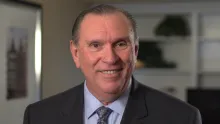
Randy D’Alessandro served as pastor for the United Church of God congregations in Chicago, Illinois, and Beloit, Wisconsin, from 2016-2021. Randy previously served in Raleigh, North Carolina (1984-1989); Cookeville, Tennessee (1989-1993); Parkersburg, West Virginia (1993-1997); Ann Arbor and Detroit, Michigan (1997-2016).
Randy first heard of the church when he was 15 years old and wanted to attend services immediately but was not allowed to by his parents. He quit the high school football and basketball teams in order to properly keep the Sabbath. From the time that Randy first learned of the Holy Days, he kept them at home until he was accepted to Ambassador College in Pasadena, California in 1970.
Randy and his wife, Mary, graduated from Ambassador College with BA degrees in Theology. Randy was ordained an elder in September 1979.
