
Joe Dobson
This transcript was generated by AI and may contain errors. It is provided to assist those who may not be able to listen to the message.
Please be seated. Now I'll have the main message presented to us again by our pastor, Randy Delos on the way.
I would like to add my comments to Steve's. I really enjoyed Alexis's sing. She can sing for me anytime she wants to.
You know, you always seem to admire those who can do things you can't do. I can't sing that well.
But I certainly enjoyed listening to her sing.
Brethren, in preparation for the sermon today, I've used the preacher's outline and sermon Bible commentary, as well as an article written by Bob Deffenbaugh. The article was entitled, A Closer Look at Open and Closed Doors.
A closer look at open and closed doors.
This is the last time I'll be with you until 2013.
As you and I take a look at 2013, we probably have a number of things on our mind. What's going to happen in the coming year? What's going to happen to this country? What's going to happen to the world? What's going to happen prophetically?
Certainly, what's going to happen in all of our lives individually in the coming 12 months? What doors is God going to open for us?
What doors might God close in our lives? How does God do that? Why does God do that? We want to take a look at that today and present some material to hopefully give you some food for thought. I want to go back to something we discussed a couple of weeks ago over here in Acts, Chapter 15.
Let's turn over there. Acts, Chapter 15. Here in Chapter 15 of Acts, you've got the story about the Ministerial Conference. You've got the elders, the apostles and the elders, making a decision about the question that had come before them. The church was very happy with the decision that was made.
That decision was then to be taken to all the churches around the world that were Christian churches and discussed. But right on the heels of that and the unity we see from that, we saw something that wasn't so much a part of unity. Acts, Chapter 15, starting here in Verse 36. Then after some days Paul said to Barnabas, Let us now go back and visit our brethren in every city where we've preached the word of the Lord and see how they're doing.
A couple of weeks ago I asked the question, how can Christians have healthy disagreements with other Christians? Let's face it, we're going to have them. How's the best way to do that? I began by discussing this situation here where you saw where Paul and Barnabas really had a sharp disagreement with one another.
Eventually, Paul took Silas, went one way. Barnabas took his relative, it could have been a cousin or maybe a nephew, John Mark, the writer of the Gospel, Mark. Barnabas took John Mark and he went a different way. But all four of these men had a tremendous love for doing the work of God. All of these men had doors being opened to them to do the work of God.
Now the question that comes before you and I is, how do we know when God is opening up a door for us? How do we know? Well, we come to chapter 16 and in chapter 16 we see a good bit of information about how God opens doors for us, how God closes doors on us, and what we need to be looking for.
Let's look at chapter 16 here, as I'm just introducing the material here for you today. Chapter 16 of Acts, verse 1. Then he came to Durbin and to Lystra, and behold a certain disciple was there named Timothy, and the son of a certain Jewish woman who believed, but his father was Greek. So the indication here is that young Timothy was a church kid. The indication is that his mom came to church, but his dad didn't.
And of course, as you know, all through the history of God's church, we've seen situations like this. Verse 2. He was well spoken of by the brethren who were at Lystra and Iconium. Paul wanted to have him go on with him, and he took him and circumcised him because the Jews were in that region, for all knew that his father was Greek.
Now, this was an accommodation that Timothy made. This is not something he had to do, but this is something he did so that the work of God could go forward. There wouldn't be a lot of discussion about his background. This was simply a physical matter, but some people viewed it as more than that. So as an accommodation, Timothy said, look, let's not delay the work of God. Let's not get ourselves into all sorts of disputes about things that really don't matter. So I'll just simply, as a young man, get circumcised, which is no small thing. But he did that. Verse 4, they went through the cities they delivered to them the decrees to keep, which were determined by the apostles and elders of Jerusalem. So verse 4 is talking about what was discussed in chapter 15. So the churches were strengthened in the faith and increased the number daily. Now, when they had gone through Phrygia and the region of Galatia, they were forbidden by the Holy Spirit to preach the word in Asia.
Now, the first half of verse 6, basically, you know, Paul and Barnabas, Silas and John Mark, they all had a strong desire to go visit the brethren. When all that was done, Paul had a tremendous desire to keep on going. He wanted to continue to reach people with the Word of God, reach people with the knowledge of the kingdom of God. Obviously a good thing. Obviously something that would be God's will. But why, at the end of verse 6, does the Holy Spirit forbid them to do the work of God? Why is God closing a door here? Verse 7, after they had come to Micea, they tried to go into Bithynia, but the Spirit did not permit them.
Once again, here you've got men here. They're not wanting to do things contrary to the will of God, or to what they would thought would be the will of God. They're not trying to do something awful or sinful, or trying to do something very fine. To go preach the Word of God. And yet, the door there was closed. How many times in your life have you found yourself wanting to do something that was good, righteous, you thought very much a part of God's will. And yet, the door is closed on you. Why would God do that? Why did God do that here? We'll examine that as we go along. Verse 8, so passing by Micea, they came to Troas, and a vision appeared to Paul in the night, a man of Macedonia. Macedonia is northern Greece. A man of Macedonia stood and pleaded with him, saying, Come over to Macedonia and help us.
After he had seen the vision, immediately we sought to go to Macedonia, concluding that the Lord had called us to preach the Gospel to them. So here we see something very important. God closed one door, but God opened another door. Closed one, opened another. There are times in our life when you and I really want to do something, and again, we feel, just like they did, that it's of God, it's good, it's right, it's all positive things, and yet we can't do it. We can't do it. And sometimes I've known where I have felt discouraged or depressed, why is God shutting me down? Why can't I do this thing that really is a good thing?
Well, here we see that God says, look, I want you to go a different direction, geographically. Yes, I want you to preach the Word. I want you to get the message out about the Gospel of the Kingdom of God. But I don't want you to go into this other area. I want you to go over to northern Greece. I want you to walk, I want you to leave what we would call today Turkey, leave southern Turkey. I want you to go across the Aegean over to northern Greece. I want you to work with the people over there. So God closed one door, but He opened another. Now, you and I, we have to be led by God's Spirit. We have to have the wisdom of God to always see those things in our life. And sometimes we've not. Sometimes we've thought God is just shutting us down and felt awful about it, and not seeing what else God has in mind for us. We're going to see that more and more clearly as we go through chapter 16 here. Now, verses 5 and 6, we see two occasions when the Spirit of God closed the door. But in verses 9 and 10, we see where God opens the door. So I think it's going to be beneficial for us to take a good look at chapter 16 here, all of it, all of chapter 16, and see and discuss this subject. And again, for those of you who would like to take notes, here's the title, here's the thesis for my sermon today. Our God is the God of the open door. Our God is the God of the open door. Let me outline this a little bit here for you. Starting here in verses 11 and going through verse 15, we see a door being opened here, the open door of salvation.
Chapter 16 of Acts, verse 11. Now, sailing from Troas, we ran a straight course to Samooth-Race, and the next day we came to Neopolis. Now, I don't know how often you do this, but if you take a look in the back of your Bible, or if you've got a computer program where you've got maps, you can take a look at a map, and this is a fair distance here, as they'll be sailing. But one of the things that I was doing as a researcher, a number of the commentators said, is that they were able to make this trip in really quick time, quicker than normal. And I think God is telling us something. When we go through the door, God wants us to go through. He will speed us along on our way. He will make things such that we can do what He wants and get to that more quickly.
Verse 12, And from there they walked to Philippi, which is the foremost city of that part of Macedonia, that part of northern Greece, a colony. And we were staying in that city for some days. Now, Philippi was a very special colony. The Roman Empire liked to advertise themselves. They liked people to think that we are Roman, even out away from the city of Rome, out in the Empire. And so, at various locations where Rome thought it would be to their advantage strategically, Rome would create a little Rome.
Philippi was such a city. The residents of Philippi had special voting privileges. The Roman, Rome would take their soldiers who were retiring from the military, give them their pension, give them some land, right there in Philippi. So, Philippi was kind of a little Rome. It was a wonderful little town. It was a calling card for the Roman Empire. And, of course, the Apostle Paul loved the people here. They were wonderful people. They were there for Paul in some of the worst times in his career. Verse 13, And on a Sabbath day we went out of the city to the riverside where prayer was customarily made, and we sat down and spoke to the women who met there.
Not a lot of guys, apparently, look like, from what we're looking at here, all women. Now, a certain woman named Lydia heard us. She was a seller of purple from the city of Thyatira who worshipped God. And notice, the Lord opened her heart. Our God is the God of the open door. And here we see the door opening for salvation. Just as it happened in your life, it's happening now in her life.
The Lord opened her heart to eat the things spoken by Paul. And when she and her household were baptized, she begged us, saying, If you have judged me to be faithful to the Lord, come to my house and stay. So she persuaded us. Now, think for a moment. In verse 6 and 7, Paul wants to go to northern Turkey. God says, You're not going to northern Turkey. You're going to go over here to northern Greece. And in God's mind, he says, There's a lady there who she's going to really eat up what you have to say.
And she is going to come into the church. Her family is going to come into the church. Here we've got this brand new church. The first convert is a Gentile. The first convert is a woman. And that was what God had in mind. So here we've got these men walking through this open door. And we've got tremendous fruit taking place here. Now, put a marker here. Let's go over to 1 Peter 1. Let's understand why God didn't want Paul and Silas to go over to northern Turkey. 1 Peter 1. And verse 1. Peter, an apostle of Jesus Christ, to the pilgrims of the dispersion in Pontus, Galatia, Cappadocia, Asia, and Bithynia. God was managing the work.
God didn't want Paul and Silas to go to northern Turkey because Peter was already there. Peter was doing a work in northern Turkey. And God says, we don't need to have duplication of effort. Besides that, Peter was going to the lost tribes, part of the lost tribes of Israel. As an apostle, that was part of his commission. Paul was the priest of the Gentiles. So Paul goes over to Greece. So God here is, there's a reason for why God here is doing what he's doing. And the point for all of us is to know that God knows best. God knows the whole situation. And we as believers must always trust God's leadership.
Always trust his leadership. Trust when he closes a door that he knows why he's closing it. And for you and I not to always feel discouraged or depressed because we feel the door has been closed. And again, I've been as guilty of that as the next person. I've wondered, well, it's because I'm a chief sinner. It's because I don't please God, I don't have enough faith.
There's all sorts of reasons we wonder why a door has been closed. And any of those things I just made mention could be the case. But none of those things have to be the case. You may be the, you know, you're really working on things, you're overcoming, you're a faithful person, you're looking to the will of God. It's just that God wants to move you in a different direction. And sometimes, quite literally, literally a different direction. Here, these men are being led in a different geographical direction.
And we're seeing now a tremendous work that's going to be taking place in Greece. A tremendous work. Let's go over to John 6.
John 6.
You know, the Word of God is living, it's beautiful. There are so many different ways we can take a look at the Word of God and have various levels of understanding. Here in chapter 6, verse 44, we have a traditional understanding, which is accurate. John 6, 44, No one can come to me unless the Father who sent me draws him, and I will raise him up at the last day. It is written in the prophets, and they shall all be taught by God. Therefore, everyone who has heard and learned from the Father comes to me.
So obviously, this would be a scripture we would use talking about the open door of salvation. But again, this would be God using us in any number of ways, opening up doors, where God would draw us to him so we would understand what door to go through next. Earlier today in Ann Arbor, I used an analogy that life is like we're in this large hallway. And in this large hallway, we've got doors on the right, doors on the left. They're all to our vision closed. But we know we can go through some of those. God wants us to go through some of those doors. But when you look at them, you can't tell which one. And so we have to have God here who draws us to him, who gives us the understanding of which doors to go through. Some doors are labeled according to God. We may not see the labeling, but God sees the labeling. Some doors will say opportunity. Others will say trial or failure or something else, something negative. But God's got to be the one who draws us to him so we understand his thinking. And then he says he will be taught by him, not just doctrine, but taught by God in every sense of how we need to be living our lives. John 10 In verse 1. Most assuredly I say to you that he who does not enter the sheepfold by the door, but climbs up some other way, the same as a thief and a robber. But he who enters by the door is the shepherd of the sheep. To him the doorkeeper opens and the sheep hear his voice. And he calls his own sheep by name and he leads them out. So here we've got a discussion about a door. We drop down to verse 7. Then Jesus said to them again, most assuredly I say to you, I am the door of the sheep. So when we're talking about going through doors, we have to realize Christ is the door. He is the way, the truth, and the light. Verse 8. All who ever come before me are thieves and robbers, but the sheep did not hear them. Verse 9. I am the door. If anyone enters by me, he will be saved and will go in and out and find pasture. If you go through Jesus Christ, if we look to what he wants, not just what we want, not just the door we think we should be able to go through, but the door he wants us to go through, yielding to his will. Verse 10. The thief does not come except to steal, to kill, and to destroy. I'm talking about Satan there. But notice, Christ says, I have come that they might have life, and they might have it more abundantly. And so it is Christ's desire for us to have the abundant life as we walk through him, the door. Not just of salvation, which is the major point I'm making now, but in every aspect of our life. Let's go back now to Acts 16. Let's continue the story here. Because we see another door opening. Just because we go through a... Just because God wants us to go through a certain door. Doesn't mean, all the time, everything is going to be clear sailing. Doesn't mean that there's not going to be difficulties. In fact, that's my next point.
We're going to take a look at the open door of challenge. There are times God wants us to go through an open door, and it is a very challenging walk through that door. Very challenging. We see this in Acts 16, verses 16-24. If you're taking notes and you're outlining, chapters 16, verses 16-24, the open door of challenge. Let's take a look at this.
Acts 16, verses 16. God has opened the door. He wants them right where they are there in Philippi. Now it happened, as they went to prayer, that a certain slave girl, possessed by the spirit of divination, met us. Who brought her master as much profit by fortune-telling. So here, they're just now... They've got the very first convert, her and her family. We've got the very beginning of the church of God in Philippi.
And the men here, Paul and Silas, they're wanting to strengthen themselves in God, in the Lord. They're wanting to go someplace and pray. But notice, Satan knows that they want to go someplace and pray. And as soon as they were going that direction, then you've got this individual who comes to them and she's demon-possessed.
Brethren, I don't think I'm the only person in this room who would kneel down to pray. And then, some of the most bizarre thoughts begin to flood your mind. Has that ever happened to anybody else in this room? Where you're wanting to pray about something really... Something very heartfelt in your life. Maybe you're going through a certain trial, or someone you love and you really want to labor in prayer.
And you get down on your knees and... Wow! Where did all those thoughts come from? Well, we see it right here. Here we've got the men of God. They want to go someplace and pray. And you've got Satan here wanting to stop that. Because Satan understands the value of prayer to God. He understands that if we are a praying people, we are a strong people. And we can sidestep Satan. Or at least, do we need to fight Satan? Now, put a marker here. Let's go over to Mark 1. Mark 1. And we see here in Mark 1 the beginning of the ministry of Jesus Christ.
Mark 1. Verse 14. Now, after John, talking about John the Baptist. After John the Baptist was put in prison. We've got a time element here. Jesus came to Galilee. So we've got the individual in location. Preaching the gospel of the kingdom of God. Here we've got what they've taught, what Christ taught. And saying the times fulfilled, the kingdom of God is at hand. Repent and believe in the gospel. Here we've got the major theme of Christ's ministry. But we drop down now to verse 21. Verse 21. And we see the Capernaum, and immediately on the Sabbath, he entered the synagogue and taught. Now, much like we saw over there in Acts 16. The men wanted to go and pray. Christ wants to go and teach in the synagogue. Verse 22. And they were astonished at his teaching. For he taught them as one having authority and not as it scribes. So Christ here, as he's teaching, he's gaining traction with the people. They're listening to him. They're intent. They realize this is not just any rabbi. This is a very special rabbi. Verse 23. Now there was a man in the synagogue with an unclean spirit, and he cried out. Now, it doesn't say so explicitly here in verse 23. But I can't help but wonder if this man was what we'd call a mole. Satan planted him in that synagogue, in that congregation. And maybe he never revealed himself until this very time. And when time was right, he stands up because he sees Christ gaining traction with the people. Christ is teaching. Christ is going to start talking about the kingdom of God. And this unclean spirit wants none of that. So here he is as an infiltrator to the synagogue. He cries out, verse 24, Let us alone, what have we to do with you, Jesus of Nazareth? Do you come to destroy us? I know who you are, the Holy One of God. Now, incidentally, I've not dealt with demons on a large scale over my life, but I've talked with a number of people who have. And that's a fairly common phrase for someone who's demon-possessed to say to somebody who's got God's Holy Spirit, I know who you are. Because that spirit and the evil spirit recognizes the spirit of God. I know who you are. I've had that said to me once. It's really unnerving. Unnerving. Verse 25, But Jesus rebuked him, saying, Be quiet and come out of him. Jesus Christ. This is not Paul, this is not Peter. This is Christ Himself. This is God in the flesh. Be quiet, come out of Him. And when the unclean spirit had convulsed Him, even though it's Jesus Christ and the spirits have to obey Christ, notice the demon doesn't go quietly.
And when the unclean spirit had convulsed Him and cried out with a loud voice, He came out.
See, Satan and the demon were thinking, you know, Christ is gaining traction with this group. People are listening to His teaching, but if we can unnerve them, if we can put on a spectacle here, then they're going to forget about whatever Christ had just said, and they're not going to be able to concentrate on what He says in the future, because I'm going to make myself such a spectacle.
That's the mind of Satan. That's the mind of this demon.
Verse 27. And they were all amazed that they questioned among themselves, saying, what is this? What new doctrine is this? For with authority commands even the unclean spirits, and they obey Him.
Now, God opened to Jesus Christ the door. Jesus Christ is walking through the door. But just because we walk through a door, God opens doesn't mean we're going to go unchallenged.
Christ was challenged. Paul and Silas were challenged. You can walk through all the doors God wants you to walk through, and you will be challenged. So the point I'm making is opposition is not necessarily the sign of a closed door.
Sometimes people think, well, there's a lot of opposition here. God must be closing a door. Well, not necessarily. Not necessarily.
Let's go back to Acts 16.
Acts 16, verse 18. Remember, this young woman is following Paul and Silas. She's crying out. She's being a real headache. Verse 18, And this she did for many days.
Now, why Paul allowed this to go on for many days, I guess we, you know, you and I can get together and discuss, debate.
Maybe Paul simply didn't, maybe he hoped he would walk away. Maybe he just really didn't want to get involved with Satan at that point in time. Maybe he wanted to do some extra prayer. Maybe some fasting in the interval. I think that might be certainly the case. I know that would be something I would want to do.
But Paul greatly annoyed, turned and said to the spirit, I command you in the name of Jesus Christ to come out of her.
And he came out that very hour. But when her master saw that the hope of their prophet was gone, they seized Paul and Silas and dragged them off into the marketplace to the authorities.
You ever been dragged off somewhere? Not a pleasant thought.
Now, remember, brethren, Paul and Silas are walking through an open door.
Satan has come after them, and now human beings are coming after them.
Verse 20, And they brought them to the magistrates that these men being Jews exceedingly trouble our city. And they teach customs which are not lawful for us being Romans to receive or observe.
Then the multitude rose up together against them, and the magistrates tore off their clothes and commanded them to be beaten with rods.
And when they had laid many stripes on them, they threw them into prison, commanding the jailer to keep them securely.
Having received such a charge, he put them into the inner prison and fastened their feet in the stocks. These guys aren't going to some cruise ship.
I'm sure, I've read different articles in the past. Your typical Roman jail had a temperature about 55 degrees. Normally it was dark. It was damp.
There weren't a lot of, you know, you didn't have color TV down there.
You didn't have somebody bringing you a latte when you would ask for it. You know, the conditions here were very, very primitive.
They were in the inner prison. Their feet were in stocks.
They had just been beaten horribly.
These people, these two men, needed medical attention. They're not getting it. They're probably having to lay down and rhyme and muck in that cell.
And these are two people who walked through an open door God gave them. So we want to understand walking through open doors.
Walking through open doors has its challenges. And just because we're being challenged doesn't mean the door has been shut.
As a matter of fact, let's turn over to Rome, put a marker there. Let's go to Romans 8.
And this is where we need, as people of God, to be so in tune with God.
Romans 8 and 14.
Romans 8, 14.
For as many as are led by the Spirit of God, these are the sons of God.
So if you and I want to know what's an open door, what's a closed door, we have to be led by God's Spirit.
But we also need something else. Let's take a look at James 1.
James 1, James being the half-brother of Jesus Christ.
Headquarters of pastor and apostle.
James 1, verse 2. My brethren, count it all joy when you fall into various trials, nor that the testing of your faith produces patience. But let patience have its perfect worth that you may be mature and complete, lacking nothing.
And then the key here for me is verse 5. If any of you lacks wisdom, let them ask God who gives to all liberally and without reproach.
So we need to be following the Spirit of God, being led by the Spirit of God, and we need to have God's wisdom to help us see what's an open door, what's a closed door.
And sometimes, as we're going to see later on in the book of Acts, chapter 16, it's not such an easy thing to see.
That's why we have to have God's Spirit guiding us and leading us. That's why we have to have the wisdom of God in our lives to show us. Opposition is not necessarily an indicator of a closed door.
With that in mind, let's go to Acts, chapter 14.
Talking about open doors, closed doors, chapter 14 is a really interesting chapter along that line. Acts, chapter 14.
Chapter 14 here, of Acts, verse 1. Now it happened in Iconium, so we feel that God has opened a door here for them, happened in Iconium, that they went together to the synagogue of the Jews and spoke to that great multitude of both the Jews and the Greeks, and they believed.
God's opening up a door here. But the unbelieving Jews stirred up the Gentiles and poisoned their minds against the brethren. So once again, we've got an open door, but we've got challenge. We've got opposition here in that open door.
Therefore, they stayed there a long time, speaking boldly in the Lord, who was bearing witness to the word of His grace, granting signs and wonders to be done by their hand. Once again, God's blessing their work. They walked through this open door.
Verse 4.
But the multitude of the city was divided, part sided with the Jews, part with the apostles. And when a violent attempt was made by both the Gentiles and Jews, with the rulers to abuse and stone them, they became aware of it and fled to Lystra, Derby, cities of Lyconia, and to the surrounding region.
Now, brethren, I told the folks over in Ann Arbor earlier today, and I would say the same thing to you. What we could be seeing here is a closed door. God had opened a door in Iconium, and now maybe He's closing it. Either way, God's opening up another door. This might be the kind of, if you were talking about rooms where you walk into one room, you're there, God is blessing you, and then a door opens to another room. Maybe not the door being closed, or maybe the door was being closed. But what we do see here is God is directing His men to go somewhere else.
They were not failures in Iconium. They were successful. There was no need for them to say, well, we're just going to stay here and die. No, God didn't want them to stay there. God wanted them to go someplace else. That was God's will for them. God was opening up another door for them.
So it's not a matter that they were failing at something. God would say, no, you've done what I wanted you to do to this point. Now I want you to go someplace else.
Verse 7, and they were there preaching the Gospel in Lystra and Derby. And in Lystra a certain man without strength in his feet was sitting, a cripple from his mother's womb who had never walked. This man heard Paul speaking. Paul observing him intently and seeing that he had faith to be healed. He said with a loud voice, stand up on your feet. And he leaped and he walked.
The blessings of walking through that open door.
Now when the people saw what Paul had done, they raised their voices saying to, in the Lycanian language, that Gods have come down to us in the likeness of men.
And Barnabas they called Zeus and Paul Hermes because he was the chief speaker. Then the priests of Zeus, whose temple was in front of their city, brought oxen and garlands to the gates, intending to sacrifice with the multitudes. I mean, these people really had an open door here, but there are some unintended consequences. God was having to be so successful that people were getting the wrong impression.
Verse 14, but when the apostles, Barnabas and Paul, heard this, they tore their clothes and ran among the multitudes crying out, saying, Man, why are you doing these things? We also are men with the same nature as you. And preach to you that you should turn from these useless things to the living God who made the heavens and the earth and the sea and all that's in them.
Paul and Barnabas didn't want to be worshipped. They came so people understand the true God so the true God can be worshipped.
So here we have them starting in Iconium. Then they go to Lystra and Derby here.
Verse 19, Then the Jews from Antioch and Iconium came.
Now remember, God had opened a door there first in Iconium. They did marvelous works, signs and wonders. Then God may have closed the door. They went to Lystra and Derby. That man was healed. And now you've got people coming from Iconium.
You've got people who really had some real issues with Paul and Barnabas. And they were going to hunt Paul and Barnabas down. Now again, here Paul and Barnabas are doing the work of God. They're walking through open doors. And you've got people here inspired by Satan to hunt them down, to make life miserable for them. It's true opposition. But they are in the process of walking through open doors.
Then the Jews from Antioch and Iconium, verse 19, came there and had him persuaded to multilute. They stoned Paul and dragged him out of the city, supposing him to be dead. And for all we know, he was dead. Or he was really close to it. These people weren't stupid. They knew of somebody who was alive and dead. But if he was dead, then God resurrected him. Or if he was close to death, God revived him.
Because that's what it says here in verse 20. However, when the disciples gathered around him, he rose up and went into the city. And the next day, he departed with Barnabas to Derby. And when he preached the gospel to that city, he made many disciples. They returned to Lystra, Iconium and Antioch, talking about a brave guy. The people who had hunted him down and virtually killed him.
Paul goes right back into the frame. He says, God's opening doors, I'm going to walk through them. I'm not going to worry about my personal sake. I'm not going to be foolish. But if God's opened the doors, I'm walking through them. And so he goes right back to where he started. And notice verse 22, Strengthening the souls of the disciples, exhorting them to continuing faith and saying, We must through many tribulations enter the kingdom of God.
I'm sure there are probably a number of people who have said that. But the Apostle Paul and Barnabas, when they said this, there was some authority behind it. Because they had been beaten. They had been stoned. They had gone through all sorts of hell on earth. This was not a matter of theory. This is what they went through. And there are times, brethren, when God gives us these trials, and we wonder, why is God doing this? It's not always because of us. The brethren saw what Paul and Barnabas were going through.
And as they witnessed what Paul and Barnabas were going through, they said, You know, I'm not any better. Christ himself was crucified. Paul and Barnabas are going through all this hell on earth. I probably will too. And so it was an example. An older brother setting the example for his younger brothers and sisters in the Lord, so to speak.
The open door of challenge. Are you being challenged right now? Maybe you're being challenged economically. God's perhaps opened a door for you. Maybe your situation you feel is deteriorating. But God is working with your situation. He's got an ultimate game plan. You know, there's an overarching plan of salvation that God has for all of us. But I also believe that God has an individual plan for all of us. He knows what's best for each and every one of us. And he's going to work out that plan for each and every one of us individually, personally.
I know prior to my coming into the ministry, on a full-time basis, I was in sales and doing pretty nicely. It had a fairly nice, healthy bank account. I've told you the story in the past. But God was looking down the road, two years down the road, said, you know, this was 1982.
In 1984, if Randy responds positively to out, I'm about to do it again. We're going to bring him into the full-time ministry. So for the better part of the next two years, God just turned off that sales spigot. And the sales weren't coming, and I had more outgo every month than income. And all those nice dollars in the bank, those were flying out of the bank account.
With the exception of my second tithe account. And, you know, Satan's re-act, you know, Randy, you've got thousands of dollars there in second tithe. And you can tap into that! They would pay a car payment! They would pay a house payment! You can just tap into that! God, do you understand? But I wouldn't do it. So that went on for a better part of a year and a half.
And finally, I got to the places I've told you in the past, where I was either going to lose my house or lose my car. And the guy, the dealer, called up to Randy, and said, We've got to come get your car. And I said, Well, the better you come get my car, the better you get my house.
So you're a businessman, I'm a businessman, I'm not going to be sitting on the foot of the car with a baseball bat. You know, you come get it, I'll give you the keys, and, you know, I'll make do somehow. He said, Well, maybe we can do something. He said, Can we restructure the loan? Can we put it on a different day of the month? I said, Well, if you put it on a different day of the month, I can probably go, you know, rob Peter, pay Paul a little better than I'm doing now, because right now everything is due the first of the month.
And so, bottom line is, God saw that, and the spigot was turned back on. And within six months, I got received a phone call from passing, saying, Well, we're thinking about using your full time in the ministry. But I was walking through the open door, just like you have done, but there was tremendous opposition. There was tremendous opposition, but we've got to hold on to what's right and what's true, and not let opposition cause us to be squeamish.
Christianity is not for sissies. Christianity is not for sissies. Socially! Timothy is a young man. I'm sure the last thing he was on his mind is, Oh, yeah, let's just go out and circumcise me. I'm sure that just wasn't something that was high on his list of to-do for a young man. It could have killed him. Or at least he could have thought that. The Apostle Paul, many of us, or a number of us in this room, have health issues. The Apostle Paul did, too. He traveled with Luke. Luke was called the beloved physician.
He wasn't called that dastardly doctor. He was called the beloved physician. Mr. Armstrong, whenever he traveled, always had a couple of nurses travel with him, bringing medication, shots, and things like that. People had this weird idea that Mr. Armstrong didn't like medicine. Well, there's a reason people thought that, but it wasn't because of Herbert Armstrong. But sometimes God allows us, like he did Paul. Paul, you're going to walk through the door.
You're going to have this thorn in the flesh, and I'm not taking it away. Herbert Armstrong, at the end of his life, is almost blind and deaf, running a $220 million a year corporation. If you just want to look at it from a physical point of view. A man can hardly see, can hardly hear. But God didn't all of a sudden give him great hearing and great vision.
He's going to walk through that door, and God was going to be there for him through all the challenges. Okay, let's go back to Acts 16 and move forward in the story here. Acts 16. This section, as I was looking at this and meditating on this, this section here really caught my eye, spiritually speaking.
Because here we have the open door of opportunity. The open door of opportunity. And this will take us through the balance of the chapter, starting in verse 25 and going through verse 40. But it's not always so clear which open door God wants for us. That's why we have to be led by a spirit. We have to have his wisdom showing us the way.
Acts 16, verse 25. But at midnight Paul and Silas are praying and singing hymns to God, and the prisoners were listening to them. So here's an open door right here. I'm sure Paul and Silas were not singing, Nobody Knows the Troubles I've Seen. In that setting they probably heard a lot of cursings toward God. Or gods, all the pagans, give me the name of a god, I'll curse him. Give me ten, twenty names, I'll curse every one of these gods. They probably were singing something more like Amazing Grace. And that caught people, says here, and the prisoners were listening.
This was something different. Verse 26. Suddenly there was a great earthquake so that the foundations of the prison were shaken, and immediately all the doors were opened and everyone's chains were loosed. A miracle of God! A door was open here. Literally all the doors were opened. Now pause here for a moment. It could be easy for any of us to think, this is the answer to my prayer. My cell is opened, the chains are off me. I want to take a look at this place in the rearview mirror. I'm gone. But if Paul had done that, he wouldn't be going through the door God wanted him to go through. That's why I say sometimes we've got to be very careful as we're taking a look at these doors.
Is it a door of opportunity or is it a door of temptation? Is it a positive door or a negative door? And that's where we have to be led by God's Spirit to have the wisdom of God helping us to take a look in discern. So you've got this miracle here. The doors were open, everyone's chains were loose, certainly an open door for something. And the keeper of the prison, awake from his sleep and seeing the prison doors open, suppose the prisoners have fled, drew his sword and was about to kill himself.
And in that kind of setting, the man who was keeping the prison realized he was in charge. The buck stopped with him.
And if all those prisoners were on the loose, literally, he would be crucified. He would be held responsible. He would be crucified. So he thought, well, if I'm going to die, I better die by my own hand. It's going to be a lot quicker than being crucified. Verse 28, Paul called out with a loud voice, saying, Do yourself no harm, for we are all here. Paul had to call out with a loud voice. Paul's cell was not right next to where this jailer was sitting. How did Paul know everyone was still there? He couldn't see everybody. Again, God was intervening here and helping Paul to see the situation.
Paul was being led by the Spirit. And think about it. You've got all these carnal criminals, hardened criminals, and in those cells, their cell doors opened too, their chains also fell off, and they didn't move. They realized, wow, something's happening here. And they think, I'm not going anywhere. I want to see what's going to take place here. Verse 29, Then he called for a light, ran in, and fell down trembling before Paul and Silas.
I think we all remember back when we were in high school. We always had to read these various stories and look at symbolism. You may have hated that. I kind of enjoyed that. I kind of enjoyed the thought process. But God knows literature. He wrote the greatest piece of literature in the world called the Bible.
And there's a lot to be said here in verse 29. The jailer called for a light. The place was dark. And God was about to shed eternal light on his mind, on his heart. He called for a light. He ran in. He wasn't hesitant. He fell down trembling. Obviously, the earthquake had a lot to do with that.
The whole situation. I'm sure there were some physical issues that the man had. What in the world? His eyes were probably like saucers. But notice verse 30. And he brought them out and said, Sir, what must I do to be saved? See, this jailer was also listening to the singing. This jailer may well have heard the story about the deemed possessed young lady. And God was opening up his heart and his mind. Verse 31. So they said, Believe in the Lord Jesus Christ and you will be saved, you and your household.
And they spoke the word of the Lord to him and to all who were in his house. So verse 31 and 32 indicates that this wasn't just a couple of sentences. That Paul and Silas were talking to this man for a lengthy period of time. They went from the jail to this jailer's house. Verse 33. He took them the same hour of the night and washed their stripes.
And immediately he and his family were, all of his family were baptized. So as this jailer is washing the wounds of Paul and Silas, Paul and Silas are discussing the things of God. This man is all ears. His family is all ears. They've heard about what took place. They're in a jailer's home. Verse 34. Now when he had brought them into his house, he set food before them, and he rejoiced having believed in God with all of his household.
So with all the things that they had gone through, the beatings, the imprisonment, and all these things, again, God works through this open door. But the men who were walking through this open door, they were paying a pretty heavy price for walking through it. But there's tremendous fruit here. Verse 35. And when it was day, the Magistrate sent for the officers, saying, Let those men go.
Now, let's understand something about verse 35. Paul and Silas had gone to the jailer's home. The jailer had taken care of Paul and Silas' physical needs. Probably all night long talked about the things of God. The jailer and his family get baptized. They're part of the charter members of the church there in Philippi. And in the morning, Paul and Silas, they don't say, Well, God opened the door for us. Bye! No, Paul and Silas says, Let's go back to jail. Would that be a decision you would make? Let's go back to jail? Are you kidding me? But see, these men were walking through the doors. God wanted them to walk through.
They went back to jail. We're going to see some interesting reasons why. And again, this is why we always pray that God's will be done, that we are led by God's Spirit, and we have the wisdom of God. Verse 36. So the keeper of the prison reported these words to Paul, saying, The Masterates have sent to let you go, therefore depart and go in peace. But Paul said to them, They have beaten us openly, Uncondemned Romans.
And as soon as Paul said that, Uncondemned Romans. It's like though they had a nerve shooting up and down their spine. These guys are Romans. And we beat them without a trial. See, these Masterates realized that because of that, they themselves could be put in jail.
Do you now put us out secretly? No, indeed. Let them come themselves and get us out. Now, this is where, brethren, we understand that the whole of the Bible is context. The whole of the Bible is context. Yes, there is the location that tells us that we need to turn the other cheek. But then we have this to balance it off. We, as Christians, have rights as Christians. We are the sons and daughters of God Himself.
But there's another reason Paul is saying this in verse 37. It's not just for himself personally. There's a larger picture here that God is helping him to see. And a larger door that God wants him to walk through. Verse 38, And the officers told these words to the Magistrates, And they were afraid when they heard that they were Romans. Then they came and pleaded with them, and brought them out, and asked them to depart the city.
So they went out of the prison, and it doesn't say they were moving at a thousand miles an hour. They got the fastest camels they could find. No. They went out of the prison, they entered into the house of Lydia, When they had seen the brethren, they encouraged them, and departed. They're not walking around here with their tail between their legs.
What do we see as we look at that last section of the 16th chapter of Acts? We see a door opening for the jailer. Where the jailer and his family are brought the truth of God, They repent and become a part of the true Church of God. But we see something else. If Paul and Silas, when they had gone over to the jailer's house, If they had left the jailer's house and just went back into society, They would be wanted men.
But the way God had inspired Paul and Silas to work the situation, Is they went back to the prison. And when they went back to the prison, Then the mistake of the magistrates, the officials, was known. And when that became known, those officials said, Is Paul, Silas, these Christians here in Philippi? Let's give them a wide berth. Let's give them a wide berth. And so a door was open for the whole of the church there in Philippi. The whole church benefited.
And not only that, but if you take a look at the whole region, As Paul, Silas, Barnabas, and all the others were going to be doing the work of God, This word spread throughout the whole region. And we better have the goods on these guys before we throw them in the clink. Now, several times in this whole story, You and I might have walked away thinking God had opened the door for us.
Paul stood there. He realized, no. God must have something else in mind. And sure enough, the jailers was converted. His family was converted. The local congregation was fortified and strengthened. And the region was opened more for the gospel being preached. Now that takes wisdom from God.
That takes God leading us to understand those things. So, by the way, we've gone through Chapter 16. I'm not done with the sermon yet. So far we've seen the open door of salvation. We've seen the open door of challenge. We've seen the open door of opportunity. But as I look at what we've just covered in Chapter 16 of Acts, I also see a number of principles, some policies, some open door policies that God has. I'd like to go over those with you here fairly briefly. Some open door policies. Letter A. God is the doorkeeper.
God is the doorkeeper. It's not you. It's not somebody. It's not your boss. It's not anybody in politics. God is the doorkeeper. Revelation Chapter 3. Revelation Chapter 3. Verse 7. And to the angel of the church in Philadelphia write, these things says, He who is holy, He who is true, He who is the He of David, He who opens, and no one shuts, and shuts, and no one opens.
Verse 8. I know you're worse. So you have said before you, An open door, and no one can shut it. For you have a little strength, have kept my word, have not denied my name. Now, brethren, we tend to look at verses 7 and 8 as the church of God, the Philadelphia era. We think about them as being a historical group of people.
But look at this from an individual point of view for a moment. Because a church is nothing more than a collection of individuals. Jesus Christ is talking to us as individuals. He's telling you and I as individuals that He opens and He shuts.
He is the doorkeeper for our life. Remember Christ saying, I am the door of the sheep? Christ says in verse 8, I know you're worse. And if we are solidly behind God, we are not perfect. We will never be perfect. But if our hearts and our minds are dedicated to the things of God, then God says, I have set before you an open door. And when I do that, no one is going to be able to shut it.
You walk through those doors. You may only have a little strength, but I will show you the doors you need to go through. I believe this section of Scripture, every section of Scripture, is not just for us as a church, but for us as individuals. So letter A, God is the doorkeeper.
Letter B, one can only know a closed door by first trying it.
We have to try the door. You know, if you take the analogy I gave earlier that life is like this hallway, and you see all the doors are closed, but you know God is opening. God wants you to walk through one of them. Well, what do you do? What do you and I do? We walk up to the door. We grab the handle. We see if we can go in. We've got to try it. We can't just look and say, well, it looks to me like it's closed. With that in mind, go back to Acts 16 again.
Let's review something. Acts 16. And verse 7. Acts 16, verse 7. And when they come to Micea, they tried to go into Bithynia. They tried. They just sit on their haunches and say, well, I just can't do it. They tried to go into Bithynia, but the Spirit would not permit them.
So one of God's open door policies is we've got to try. Let her see. An open door may become evident after experiencing the closed doors. I'm not going to go back there, but Acts 14, that's all. That chapter has it over and again. Doors close, but then other doors open. And the open door becomes evident once we get involved in the whole process. Again, we can't be on the sidelines. We've got to be active and not passive. Letter D. Our suffering may actually open a door of opportunity. We don't like suffering.
We want to be anointed. We want to be healed. But our suffering may actually open a door of opportunity. Paul and Silas suffered, but as a result of their suffering, as a result of their suffering, that jailer and his family were helped, the church in Philippi was helped, the church in the region was helped. Philippians chapter 1. Let's go over there for a moment. Philippians chapter 1. In verse 12, Philippians 1.12, Paul talking to these very people that he founded, they're in Acts 16. But I want you to know, Philippians 1.12, I want you to know, brethren, that the things which happened to me have actually turned out for the furtherance of the gospel.
For the furtherance of the gospel. Philippians 13.12, so it has become evident to the whole palace of God, and to all the rest that my chains are in Christ. He wasn't just some evil doer swearing in these pits. No, he was singing, he was praising God, he was setting an example. And it was so evident in that kind of an atmosphere of the example he was setting. He was suffering, but through his suffering, doors of opportunity were there. Letter E. Letter E. Closed doors may only be closed temporarily. Closed doors may be only closed temporarily. We saw in Acts 16.6-7, where doors were closed.
Paul and Silas could not get into northern Turkey. What they called Asia. Later on in the book, Acts 19, time has passed, the door had been closed to Asia, that portion of Asia. Take a look now at Acts 19. Verse 8. Acts 19.8, And he went into the synagogue and spoke boldly for three months, reasoning and persuading concerning the things of the kingdom of God. But when some were hardened and did not believe, he spoke evil of the way before the multitudes, he departed from them and withdrew the disciples, reasoning daily in the school of Tyranus. And this continued for two years, so that all who dwelt in Asia heard the word of the Lord Jesus, both Jews and Greeks.
So the door that had been closed in chapter 16 is opened in chapter 19. So there are times in our life when we say, well, you know, I tried, thus and such. That door was closed. Well, maybe we need to revisit that issue. Maybe there was a reason. Maybe we weren't spiritually well enough or equipped enough to go through a certain door at a certain time. It's like Israel. They wanted to go from point A, captivity in Egypt, to point B, the Promised Land. They wanted to have a nice straight line, but God says, no, I'm going to take you on a path that's not the easiest way, it's not a straight line, but it's going to be better for you, because you're not capable of handling the road you want to go down.
You're not ready for that yet. There are all these forts, fortresses, there's all these other problems, and I want to work with you as we're going... There's lessons I want to teach you as we're going along the way. There's some schooling, God says, that He wants to give people. Let's look at 1 Peter 2. We quote this all the time at Passover, because this deals with suffering and open doors.
1 Peter 2, verse 20. For what credit is it when you are beaten for your faults, you take it patiently? But when you do good and suffer, if you take that patiently, this is commendable for God. See, this whole section of Scripture deals very specifically, very explicitly with our suffering.
Now, we take it to mean we follow Christ in all things, which is true, and that's good. And that's a corollary here, but explicitly what the section of Scripture is about is what it says in verse 21. For to this you were called... What? Suffering is mentioned in verse 20. For to this you were called, because Christ also suffered for us, leaving us an example. An example explicitly in what? An example of suffering. That you should follow His steps. Who committed no sin, there was a seed found in His mouth. Who when He was reviled, did not revile in return, when He suffered, did not threaten. But He committed Himself to Him who judges righteously. Commitment through suffering. Commitment through suffering. Letter F. Doors may be closed to one Christian, but open to another. Before God, we are all God's kids. But some of God's kids have some talents. Others of God's children have other talents. There's difference of administrations. Not all of us are supposed to do the same thing, as Paul said. We're not all the foot, we're not all the hand. So a door may be open for you, or not open to you, and open to somebody else, and vice versa. You may be able to walk through something the other person can't walk through. We already took a look at that, where Paul and Silas were not able to go into Northern Turkey, but Peter was. So we shouldn't allow that to color our perspective toward our fellow brothers and sisters. We should rejoice in the various talents and the various abilities that God has given to us, and just simply rejoice in them. Okay, now very quickly, time is fleeting. You may want to study this further. And as I was thinking about this and putting my thoughts down, here are some other thoughts you may want to study. I'm just going to mention these really briefly in passing. You might make a study on the open door of instruction, or an open door of prayer, or an open door of fellowship.
One more, the open door of service. Those are all open doors God can give us. And there's things for us to study about those. I just don't have time to go through all that.
And lastly, there are negative doors to keep shut.
I've only got three things here for you. That can be a long, long list. You know, Wayne gave an excellent sermon at last week talking about how we need to give God thanks. And every day, have three things on a list, and the next day three more things, and the next day three more things, and after a few months, you get challenged. But that's an excellent idea. So at the end of the year, you've got over a thousand things you've put down on paper where you've given God thanks for. After about the 500th one, it's taxing.
I thank God that I've got a beard. Why? Because, well, it means I'm still alive. It could be anything like that. But three things here, negatives, keep the doors of negatives shut. The door of fear.
Another negative door will be the door of pessimism.
And then there's the door of defeat. We may as Christians be knocked down, but we are not defeated.
So, Brother and I, Mary and I will be leaving on Thursday for our cruise. This is the last opportunity I have to speak to you before the New Year comes. I just wanted to give you some food for thought about the coming year, open doors, how God looks at an open door, how God looks at a closed door. This coming year lets you and I be led by God's Spirit, let's have the wisdom of God, let's go through the doors that God gives us, realizing we will face opposition, we will face maybe persecution, we'll face a lot of things, but we're going the way God wants us to go, and we will be blessed for doing so. Let's keep that in mind.
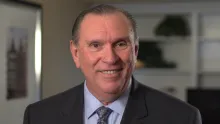
Randy D’Alessandro served as pastor for the United Church of God congregations in Chicago, Illinois, and Beloit, Wisconsin, from 2016-2021. Randy previously served in Raleigh, North Carolina (1984-1989); Cookeville, Tennessee (1989-1993); Parkersburg, West Virginia (1993-1997); Ann Arbor and Detroit, Michigan (1997-2016).
Randy first heard of the church when he was 15 years old and wanted to attend services immediately but was not allowed to by his parents. He quit the high school football and basketball teams in order to properly keep the Sabbath. From the time that Randy first learned of the Holy Days, he kept them at home until he was accepted to Ambassador College in Pasadena, California in 1970.
Randy and his wife, Mary, graduated from Ambassador College with BA degrees in Theology. Randy was ordained an elder in September 1979.
