
Robin S Webber
This transcript was generated by AI and may contain errors. It is provided to assist those who may not be able to listen to the message.
But today we're going to be talking—this is where we'll begin—we're going to be talking today about our need for a Redeemer. And what a blessing it is that God has the body of Christ every year at this time, go through this sequence of understanding the pleasure and the purpose of God. For every human being that is alive. For after all, when it's all said and done, one day everybody is going to have the opportunity to be able to understand the marvelous and wonderful truths of God.
I'd like to begin this message by sharing a story with you, and it is factual. It took place about a hundred years ago, the last time that it did take place, and it took place in Vienna, Austria. Vienna was the capital of the Austrian-Hungarian Empire, and it was the one-time seed of the Holy Roman Empire.
One of its greatest emperors, Franz Joseph I, had died. Franz Joseph had served as emperor of Austria and Hungary for nearly 68 years, and then he died in 1916, right in the midst of the Great War, World War I. His ceremonial funeral followed the prescribed traditions set by his church.
I'd like to share what happened to develop a foundation for the message that I want to bring to you today. I think you'll find it fascinating. Royal funerals always have pomp, and they have circumstance, and they are full of regalia and filled with purpose. The funeral cartage approached the doors of the abbey, and the doors of the abbey were shut.
A royal herald walked up to the door of the abbey, and he struck the doors three times. And a church official cried out from behind the door, Who is there? And the royal herald replied, Franz Joseph, emperor of Austria and king of Hungary. And the abbot called back, I don't know you. Who are you? The herald again replied, I am Franz Joseph, emperor of Austria, king of Hungary, Bohemia, Galicia, L'Odemaria, Dalmatia, Grand Duke of Transylvania, Margrave of Moravia, Duke of Styria, and Corinthia.
And the abbot called back, We don't know you. Who are you? Thereupon, with that reply, the herald bent down on a knee in front of the doors of the abbey, and said, I am Franz Joseph, a poor sinner, begging for God's mercy.
And the abbot then said, You may then enter Franz Joseph. After that, the doors were opened wide to allow the corpse of the king to proceed with the funeral. Fascinating in ceremony, isn't it? That everything that that man had done in his rich and elongated life did not merit him entrance into that door, until it was said what he was before his God.
It leads me to another thought. This historical episode leads me to share one of Jesus' parables that I think can be built upon this foundation. Join me if you would in Luke 18.
It is the story of two men, and one proclaims all that he had done and all that he was, and the other man understood what he was apart from God. Let's look at it in Luke 18 and verse 9. And Jesus spoke this parable to some who trusted in themselves that they were righteous and despised others. Jesus had met those people, and he wanted to address them.
I'm sure at times you and I also have met those people, and the Scripture addresses them today. And at one time or another, all of us have indeed been those same people that need addressing. Jesus says, and he makes it simple, he doesn't have nine men, ten men, or a whole village. It's always of note in the Bible how the contrast comes down very simplified. Two men went up to the temple to pray. One a Pharisee, and the other was a tax collector.
A Pharisee by very name meant that he was separated. He was unique. He was segmented from the rest of society, and in that sense had personally devoted himself to the things of God. The other gentleman was, notice, a tax collector. Most likely a Jew who was a tax collector. One who was assisting and aiding the enemy, the conqueror, to take the taxes of the conquered people. And the Pharisee stood, and he prayed thus with himself, God, I thank you that I am not like other men.
I'm not like them. I'm not like those people. I'm not one of them. You see, I'm different. I'm special. These other men, they're extortioners. They're unjust. They're adulterers. Or even as this tax collector, he threw the whole kitchen sink out there and told God what he thought about everybody else other than a few. And by the way, God, notice what I do.
I fast twice a week. Yeah, he was a good Pharisee. Fasting on Mondays and Thursdays, most likely. I give tithes of all that I possess. Oh yeah, he could count days, and he could deny himself, but to what purpose? And he made sure that every penny was counted, if they had pennies back then, as far as his tithe. I've done it all. This is me. Here I am.
Just like the herald knocking, here I am. Let me in to your presence.
And then verse 13.
And the tax collector, standing afar off in humility, not wanting to make a scene, in a sense feeling no worth of and by himself, would not so much as raise his eyes to heaven.
Because he knew what he was. He knew what he had done.
He knew what he was apart from God's grace.
But he beat his breast, saying, God, be merciful to me, a sinner.
Jesus comments in verse 14.
I tell you, this man went down to his house justified, rather than the other.
For everyone who exalts himself will be humbled.
And he who humbles himself will be exalted.
Remember the story about Emperor Franz Joseph.
Wanting in those final moments of his remains to come into his church, in what he considered the presence of God.
And here in the Bible, then, built upon that, are two individuals that both sincerely thought they were doing.
But my question to you is simply this.
Out of the story of Luke 18, which one do you think came into the presence of God?
Why is this important to you? Why is this important to me? Okay. One week from now, we will approach the table set with the symbolic emblems of Jesus' sacrifice.
The bread, the wine, symbols recognizing his perfect and complete sacrifice, the wine representing his shed blood for the remission of your sins, my sins, all of humanity's sins.
This represents a door. This represents a gateway.
It's a powerful door, and it's an opening of renewal of the new covenant set before us.
My question simply to all of you this afternoon, it says, how will we approach that table?
That's why I want to build upon what Mr. Brown brought us this afternoon.
Because it is that study time, that preparation time, that meditation time, that fasting time before that will allow us, in that sense, as Jesus said to that one man, to be justified coming into the presence and renewing that covenant.
How will we come forth? Will we come describing our own worth?
And what we have done proclaiming what we have done, or will we proclaim God's worth and what he has done? The reason why I'm bringing you this message, let's get right down to it, is it's very important, a threefold aspect I'd like to share with you. You might want to just jot notes. It's very simple. With that thought as we come before the table, with the emblems upon it, in that sacred renewal of the covenant, how do you view God? How do you view God?
Number two, how do you view yourself? And number three, how do you view others? These are three questions that are inextricably actually bound, because ultimately how we view God, how God desires us to view Him, how we view ourselves, tells a lot about how we view others.
Dealing with others is complicated business, isn't it? In our world and in our society, whether it be then, whether it be now, there's a complication with others, especially when they're not like us. And it is to the others that Jesus so often spoke about parables and about the gospels that we have a door that is wide open, a door that is open, a door that is merciful and understanding that once we ourselves recognize where God found us and where we discovered God and came into union with His purpose and with His pleasure, it's a starting point that God never wants us to forget.
Our need, our dire need for His intervention in our lives. And yet, some time because of the human, the humanity that is within us, we move beyond that moment and we separate ourselves from others and we can be castigating like the Pharisee. Or we can simply list out a lot of titles and a lot of facts like the good herald that thought he was doing the king a favor. Instead of coming down to rock, bottom, basement, common, denominator, understanding of our calling that God sought after us, God reached down into our lives, He sought us, we were not seeking Him, He found us in a dark spot without Him and gave us grace, gave us mercy, gave us His Son, and said, now through my Son you can have worth. Now through my Son you can have relationship. Now through my Son you can have covenant with Me. The title of my message to you this afternoon and the focus point to lodge in each and every one of our hearts is simply this. Opening wide, opening wide the door of forgiveness. Opening wide the door of forgiveness. As wide open as finally when that admission came that this man that ruled all of Eastern Europe, while he was an emperor and while he had a crown, he was like you and me and all the rest of humanity apart from God except by God's grace. The door was opened to him and he was able to have his funeral. Christ opened up the door to the publican. He did not say that the Pharisee was justified. It's very interesting if I can make a comment. Let's ask ourselves a question. Was the Pharisee a religious man? Yes, he was. He was in the temple. Was the Pharisee a sincere man? I would say that he was sincere.
So let's put that equation. He was a sincerely religious man that Jesus made a comment was not justified because he was relying on what he knew and what he had done rather than completely relying on God and forgetting where God had found his people as Bob brought out in the message that his people, 1400 years before, had been a people that were not a people, slaves on the banks of the muddy Nile that had no hope, had no future, and the I AM, the great deliverer, rescued them not by Moses' hand. Moses was an instrument, but by the mighty hand of God, those people were rescued. But you know what? If you're not careful, you forget that you were rescued. Are you a little bit like me? You can forget where the journey began. You can forget where God found you. And that's why I want to share this message with you.
As we move into this message, let's come to fully appreciate that. But we're going to be talking about opening wide the door of forgiveness, that forgiveness is more than just one more biblical word and or concept. Forgiveness is basically what we might call the language of the Bible.
With God, forgiveness is not an afterthought, but it is his first intent towards a special creation called humanity. It's the very engine of his desire towards us. Not simple in the event, but a way of life. You know, when you go back to Isaiah 46, 9, and 10, where it says, where he says, I will declare the beginning from the end and the end from the beginning, and I will do all my pleasure and my purpose shall stand. And to follow Bob's message, God says, I will do it. What was God going to do? God was going to redeem humanity. God had a purpose. That purpose was backed by a plan. That plan was backed by promises, and those promises were backed by provisions that there would be a way back to Eden. That there would be a door to where you and I could experience an intimate and an immediate relationship with God Almighty, just as Adam and Eve had been offered but had forsaken. And God's whole purpose, his whole manner of being, is to forgive. Join me, and I'm so excited about sharing this verse with you. Join me if you would in Psalm 86 and verse 5, and I want to give it to you, brethren, today here in Los Angeles, to encourage you about the Heavenly Father and His Son that we've surrendered our lives to. And that is up there looking and desiring this relationship with us. Let's look at Psalm 86 and verse 5. Actually, I'm going to start in verse 1. For those of you who took notes, pardon me, but we're going to go back to verse 1. Bow down your ear, O Lord, and hear me, for I am poor and needy.
Preserve my life, for I am holy. You are my God, Savior, servant, who trusts in you.
Be merciful to me, O Lord, for I cry to you all day long. Rejoice the soul of your servant, for you, to you, O Lord, I lift my soul. For you, Lord, notice, are good, and you are ready to forgive, and abundant in mercy to all of those who call upon you. Give ear, O Lord, to my prayer, and attend to the voice of my supplications. In the day of my trouble, I'll call upon you.
For you will answer me. I know that you have said to yourself, O God, above, I will do it.
Among the gods, there is none like you, O Lord.
With that spoken within that framework now, let's go back to verse 5.
For you, Lord, are good. Okay, what makes the Lord good?
And ready to forgive. That's what makes God so wonderful.
Let's look at it this way. This is the PowerPoint. If you want to look up here for a moment, please.
God is leaning forward. He is anxious, leaning forward, to forgive.
That's His natural stance, as it were. That's His natural way of being.
He's desirous of having this relationship with us.
He's good, and He leans forward. It's not an afterthought. I have to be quite honest. It's fun to be honest in front of 140 people.
Confession, as we talked about in the...
It has not always been my first thought to forgive.
I like to stew on things a while. Or am I the only one?
I am not always in my human framework leaning forward. God leans forward. It's His first thought.
He's looking out just as much as that father.
And the story of the prodigal son, he's at the door. The door is wide open. He's only waiting for the son to return.
He's leaning forward. I want to lean forward. You want to lean forward, don't you?
In your life, towards those that are in your life, your mate?
Your adult children? Your children?
Those that are within our faith community here?
Those that are in our neighborhood that we're close with?
That we want to deal with those others and have that same love of God and that stature and that stance of God waiting and with anticipation that when a person does come to themselves, like the herald on bended knee, and or like the publican in the temple, that you're just ready to snatch up. You're praying for that person.
You're hoping that they'll come to this stance.
And you then have an opportunity then to be a child of God and be like Him.
You know, there's no greater touchstone moment in understanding what it mentions here in Psalm 86.5 than going to Luke 23. Join me if you would there for a moment, Luke 23.
In Luke 23, you know, talk is cheap. I'm sure your parents taught you that one too. Talk is cheap.
We've often said that sometimes, you know, that we preach but we don't practice.
We've also often said that a Christian ought to be practicing what they preach.
Well, the God of Christianity practices what He taught and practiced what He shared with David so long ago in Psalm 86. If you go to Luke 23 and verse 34, it's very interesting when you go there to recognize that let's understand that Jesus Christ had been beaten and tortured all through the evening. That those that He came to to rescue, He'd come to the nation of Israel to be their Redeemer, to be Messiah. And they turned on Him and they said, crucify Him.
And He was beaten by both the Jews and even further by the Romans. Basically, to remind us that all of humanity in that sense, both Jew and Gentile, and you and I, were all a part of this.
And then to take that beam and to carry it up to Golgotha, and then to be nailed to a piece of wood, and then to be uplifted, yanked down, bruised, battered.
No reason to say anything well or good of an individual.
We come to verse 34. Then Jesus said, Father, forgive them, for they do not know what they do.
And even as He said that, they were still at their games, dividing His garments and casting lots.
Even when Jesus was being tortured by the crucifixion that the Romans had devised as a living, slow, mechanical, systemized, calculated way of degrading an individual and killing them, Jesus, even with those nails that were in His wrist or in His hand, however it was, was leaning forward, leaning forward and saying, Father, forgive them, for they know not what they do.
We worship a God, brethren, that does not ask us to do what He has not done Himself in heaven above and or through His Son below. What a tremendous benefit that we have, that we have a God, that we have a Christ that is ready to forgive. What a benefit as you and I come to that table at the New Testament Passover and partake of those emblems. Join me if you would in Psalms 103.
Let's look at some of the benefits that we have when we've come to understand that, yes, I am a sinner apart from God. And even so, God has had mercy and covered me with the blood and the sacrifice of His Son, that I might have relationship with the Almighty God Himself.
And there's benefits from that. There's benefits from understanding that. And we find them in Psalm 103. And let's pick up the thought if we could in verse 1. In Psalm 103 and verse 1, Bless the Lord, O my soul, and all that is within me. Bless His holy name. Bless the Lord, O my soul, and forget not all of His benefits, who forgives all your iniquities. Who forgives all of our iniquities?
Maybe we have a list. Maybe there's just one big boulder of sin. It's not a list, but it's a big one.
And we wonder if God can forgive that.
Yes, He can. Yes, He does.
There's nothing that we have done on this earth that the blood of Jesus Christ cannot cover and atone for.
That's a promise from God. That's out of Holy Scripture.
I know sometimes that we'll have a stain in our carpet or something that's on our, something that's on my clothes because I do eat in the car at times.
Don't drive around me, but something gets on me or something gets on our carpet.
Something gets on the couch.
And just like all the rest of you ladies, Susan goes to work.
She has a doctorate in dealing with dirt and she goes to her cupboard. She's just like a surgeon. She knows what to bring out. She brings this out, starts with the lowest level, then goes for the heavy-duty stuff. The acid. No, just teasing.
That'll cure everything. Nothing left. Clean!
But we've all been there and then you try something else.
Yes!
The stain comes back. Sometimes it just doesn't leave.
But, brethren, what I'm sharing with you is this.
What God has given we, His special creation, is something better than anything that's in your cupboard. And that the blood of Jesus Christ, the Son of Man, the Son of God, God's greatest gift to us. And Jesus' own personal gift to us, His blood. Shed for the remission of our sins. Remitting means the paying in full. Not like a mortgage where you put it down payment, but paid in full. It's remittance. It's paid in full. Not kinda, not sorda, not woulda, not shoulda.
It's cleansed. And that is why when we come to the New Covenant Passover, it is so important, brethren, to recognize that these festivals that we keep, that are found both in the Old Testament and the New Testament, are not just rituals. They're not just works. These are festivals of faith. Festivals of faith. Tools of grace for us to understand the love, the forbearance, and the desire of God for all of humanity to be a part of His kingdom in eternity.
And it starts with the New Testament Passover. The New Testament Passover, first and foremost, is a festival of faith. That God loved you and loves me so much, even where He found us, and at times even where He finds us today, even though we are not practicing sin, and yet will sin. That He remembers what His Son did for each and every one of us. What a benefit. Let's continue the thought here in Psalms 103. Who satisfies your mouth with good things so that your youth is renewed like the eagles? The Lord executes righteousness and justice for all who are oppressed. He made known His ways to Moses as acts to the children of Israel. The Lord is merciful, and He is gracious, slow to anger, abundant, and abounding in mercy. And He will not always strive with us, nor will He keep His anger forever. Notice verse 10. He has not dealt with us according to our sins, nor punished us according to our iniquities. For as the heavens are high above the earth, so great is His mercy towards those who fear Him, that as far as east is from the west. Contrast. So far He has removed our transgressions from us. And as the Father pities His children, so the Lord pities those who notice, respect Him, fear Him. For He knows our frame, and He remembers that we are dust. Just like that, that man that came forward that would not even lift his eyes up to the heavens, and beat his breast and anguish, recognizing who and what God was and what He had been, and wanting to come home and be in the presence of God.
Rather, that's the state of mind that I want to encourage each and every one of us to have as we come up to the New Testament Passover. As Christians, we need to keep a spiritual state of mind, I'll put it very simply, of being buried, of being wet, of being forgiven, and having risen again in newness of life. You know, how often have we, and I'm going back here for a second to the baptismal pool, the font, how many of you, brethren, out there have been have been baptized here? Some of you have been baptized in rivers, some of you have had a more exotic baptism, you've been baptized in the ocean, some of you have been baptized in a trough, a metal trough, and some deacons home back in the Midwest, you know, with the old cow trough that they have down in the basement. Just enough water to get you under, right?
Wherever that might have occurred, the same experience each and every one of us have gone to that same birth canal. Each and every one of us were put into water. Each and every one of us were buried underneath the water, symbolic of our death before God the Father and Jesus Christ. Each and every one of us were wet, we were in that water, and then as we stayed down, hopefully not too long because we didn't really want to die, it was supposed to be figured of, the minister brought us back up. And as you went down to portray death and as we were brought up, it was a resurrection in type to a newness of life. And how fantastic that was! How utterly marvelous that was that that minister said, all of your sins are forgiven.
You have asked God and stated to God that you have been a sinner. And not only sin, but because it's not only what you have done, it's what you are. It's the factory, apart from God, that has generated that. And you've given that to God, and you've put that under the water symbolically. And now you've come up in this newness of life, dead in Christ, risen in Christ. You have been buried. You are wet. You are risen. You are forgiven.
And now there's a newness of life. And that forgiveness, though, is not only for yourself, but to have that state of mind and hope and outgoing love and outgoing concern for others, that they might have what you have experienced. And not to be like the Pharisee.
At the temple, with castigating eyes, with eyes that look down on other human beings, but to recognize each and every man and each and every woman in their time and in their order, and in God's time and in God's way. And thus, because we recognize of who we have been, thus we guard our heart. As we guard our heart, we guard our thoughts. As we guard our thoughts, our tongue speaks of God's love. It speaks in tones of mercy. It speaks in tones of kindness.
It speaks in tones of understanding the human condition that God pulled each and every one of us out, and but by God's grace, you and I would still be in that condition. It is a mind that understands, as the herald had to say, that I am France Joseph. And apart from God, outside the doors of His kingdom, by my own making, I am, I have been, a sinner. And yet that door remains wide open. Sometimes we have to understand that even those that have walked with Christ have to come to understand that. Join me if you would in Luke 22. In Luke 22, a section of Scripture that personally I often turn to. It encourages me. It helps me to understand that God is in control and sees things that I don't even see at times. It reminds me that even those that walked with Christ in person and didn't fully grasp how wide open the door of forgiveness is that God desires for ourselves and for others.
And it brings me back at times, I'm just sharing personally, brethren, at times that it shows that at times we approach God with who we are, what we are, and what we are doing, rather than to fully understand that before God we stand as naked as a jaybird.
And that it's only by His long arm of mercy that you and I have any hope, any life, any thought of worthwhile eternity in the presence of the Father and of the Son.
This was a lesson that had to be struck home to Peter. Look in Luke 22 and verse 31. This was right at the very end. The New Testament Passover was upon them. And the Lord said, Simon, Simon, indeed Satan has asked for you that he may sift you as wheat.
He wants to just cut you down, my friend. He's asked for you. The grim reaper has asked for you, Peter. But I've prayed for you. I've prayed for you that your faith should not fail.
And when you have returned, strengthen your brethren. But Peter retorted, Lord, I'm ready to go with you. I want to go to prison. I'll be right there with you. Hey, listen. I'll go to death with you. It's interesting, in another account, you might want to jot that down, Mark 1429, Peter said, even if everybody else is made to stumble, if everybody else abandons you, I'll be the one. You and me, Jesus, we're tight. I'll be there right there at the end with you.
That's what the other account brings in. He basically castigated the others. The other 11. Basically said, they'll falter. They'll fail. They'll fold. They're not like me. I'll be with you.
Simon, Simon, indeed Satan has asked for you that he may sift you as weight, but I prayed for you that your faith should not fail. And when you have returned, strengthen your brethren.
It's interesting what is spoken in verse 34. Jesus saying, I tell you, Peter, the rooster shall not crow this day before you will deny three times that you even know me. That you even know me.
Now, Susan and I have raised, some of you know this, we've raised a whole slew of roosters over the years when we used to live in Monrovia. It's almost like a dynasty. We always called them Isaiah.
Because they cry aloud and spare not. Kind of like an Egyptian dynasty. We had six of them.
Can I tell you how quickly for the... anybody raise chickens here?
I've seen your chickens, Amy. The baits have chickens. Let me tell you, it doesn't take very long for a rooster to crow. And it's not like the cartoons where the sun pops up and they start crowing. No, they crow at moonlight. They don't wait for the sun. And they crow. And once they get to go on, they're on a roll. They're on a... and they crow. You're talking about two o'clock, three o'clock, four o'clock in the morning. And that puppy does not shut up. Okay? Unless you bought... it's a puppy? No. Anyway, we're having some fun. You have to have had roosters to understand the impact of Jesus' words. How quickly those denials were going to come. And how quickly it was that Peter was going to have to join the herald on the doors in front of the abbey and be able to recognize himself apart from having walked on water, done this for Christ, done that for Christ, done this, done this, and I'll do this, and I'll do that. And he had to come to understand that, indeed, he was a sinner. Notice what it says here then. Because in around verse 60, he starts talking about where he is in the thick of the crowd, and he keeps on denying Christ. And then verse 61, And the Lord turned and looked at Peter. And then Peter remembered the word of the Lord, how he had said to him, Before the rooster crows, you will deny me three times.
Now, I want to share something very interesting, if I may, about this. A couple thoughts.
This is written by Luke. Luke came along later.
This story of where these eyeballs lock, and hearts lock. And I'm sure you've done that with some people at times in your life where they know and you know and you know that they know and they know that you know and nothing has to be said, right? You're locking eyeballs.
And it was that aha moment that Peter understood. He didn't have the strength of and by himself to stand for Christ. And it says that he went out and he wept bitterly.
He understood what he was apart from God. What's incredible about this story. I love this story, brethren. I just love it. Jesus knew this. After all, he was the Son of God. And he says, Peter, basically, you're going to go down. But when you return, when you return, you're going to go through this trial. You're going to go through this challenge.
But when you return, believe it or not, it's difficult as it's going to be for you and as disappointing as it's going to be for me that my good friend Peter denies me. You're going to come out better for this. You're going to understand who I am. You're going to understand who you are.
And you're going to be able to reflect my values. Notice what it says here again in verse 32. But I have prayed for you. Brethren of Los Angeles, I believe that Jesus Christ continues to pray for us in heaven. He is at the right hand of God. He is the Savior on high. And indeed, he is our high priest and makes intercession and supplication for us. And he knows exactly where you are on this day. He knows exactly what's going on in your heart. What I want to encourage you about this story that sometimes is missed about our good friend Peter is that he says, oh, there goes Peter again. But the one thing about Peter that I want to share about is that, have you ever noticed when everybody else goes missing in action, Peter was always around?
Even when he stumbled? Even when he blew it? I mean, can that guy blow it? Have you and I blown it in our own lives? And what I'm encouraging us to think about is simply this.
Even when we stumble, and we will, stay close to God. Stay close to Christ. They understand our humanity. They understand our humanity. And even so, as Christ did pray for Peter, they pray for us. And they say, when you return, when you get it, when you understand that you've been rescued, just like that person in a pool, a drowning person of and by themselves in a pool cannot save themselves. That hand has got to come from somewhere else. And that's exactly what happened to us at baptism. That's what happened as the covenant process began, as we surrendered our lives to God Almighty. It's very interesting then, when you understand this, that Peter came to understand something very foundational. And it's simply this. That God did not send his son into this earth to make good men better, but to allow dying men dead to themselves because of that sin.
Not only of Adam, but what we so richly participated in ourselves to recognize that that was forgiven, that we might have life.
Why is this important for you and me? And how do we bring this all together?
What happens so often, brethren, is at this stage of the year in the Church of God culture, we move anxiously and longingly for the New Testament Passover. But it is not an event in itself. It's not the end goalpost. It's not the goalpost.
And especially when you consider the blessing of being a Christian.
There is, somewhat, while we do indeed share the same God, there's a difference in culture and accent between Judaism and Christianity. Judaism tends to look back, and there is a time to look back, is there not? Yes. The wonderment of Christianity is that it looks forward.
It's always what is yet in the future. We think about that, especially as we come up to the days of love and bread, of what occurred during the days of love and bread, and that's the resurrection of our Lord and Savior. That He was resurrected. That there was no stone too heavy. That the light did enter the darkness, and He emerged from that tomb. And yes, He was resurrected, but not only resurrected, but He did ascend. And thus, we as Christians always have a hope and optimism within us. And it's God's hope and God's optimism in you that we learn the lesson here that Peter learned as you and I approached the Passover. And that is that God was not done with Peter because of what He did that night of the New Testament Passover. But He wanted to use Him again more fully. Join me if you would in Acts 2.38. In Acts 2, verse 38, one of the great clarion scriptures.
Actually, it's beginning in verse 37. Now, when they had heard this, heard what?
When Peter said, House of Israel, Noah, surely the God has made this Jesus, whom you crucified both Lord and Christ. And when they heard this, they were cut to the heart. And said to Peter, and the rest of the apostles, Men and brethren, what shall we do?
What shall we do? This question came up. The others, those that were out there, had come face to face with what they had done. How would the instrument of God on stage, Peter, deal with these people? What would He say? Would He castigate them further? Would He verbally punish them further? Would He distance them from God? Would He browbeat them with Scripture further?
No, it is in this moment that Peter is transformed. And what he does, he does something very wonderful, brethren. Notice what he says in verse 38. Then Peter said to them, Repent, and let every one of you be baptized in the name of Jesus Christ. Notice, for the remission of sins, and you shall receive the gift of the Holy Spirit. At man's lowest ebb, God gives His creation a gift.
I'd like to share a thought with you, if I may, at its best common denominator. How can we sum up Christianity? Christianity is a gift. It's a gift. Our forgiveness is a gift.
That forgiveness is enabled by God's greatest gift of all, His Son from heaven to earth.
It's a gift of Christ to give up His life. It's interesting to associate this word with Christianity. It's a gift. And it's a gift like Peter, that each and every one of us then, in turn, throughout the year, share with other people by how we treat them, by how we talk to them, by how we listen to them, by how we address their answers, by how we do what we do and what we used to do that we don't do any longer to them because we recognize that there's a better way.
Having to come to understand that we are a sinner apart from God, and that's where God found us, and that's where we started on this spiritual trek, allows us then to understand some very vital truths. There are many things that we're not a sinner because we sinned, but we sin because we were sinners. There's a difference. There's an understanding of the miracle of God in each and every one of us. And thus then, the hope that God has given you and me as He did for Peter on that night of Passover, and a hope that when you return on the other side of all of this, Peter, and on the other side of this, Robin and Susan and Adrian and Alex and Steve and whoever you might be out there, whatever you are going through right now as we come up to this path, on the other side of this, you be my servant.
You be my instrument. You are to be the light of the world. You are to make a difference. You are to be an impact upon the darkness of how everybody else treats everybody else in this world. You're my child. You're my special creation. We that are in the body of Christ are not in that sense. This creation, called the body of Christ, is not of the dust. It's of the Spirit. Remember how I started the message today? I'm going to repeat it. Because I want you to think about it and what you're bringing before God and how you will approach God. Listen to it and then I'll add just one more verse.
Because to be very honest, I've done this before. You've done this before. And it's something, a lesson that we have to keep on learning. God is patient with us to put all of our lists down, to put all of our titles down, to put down everything that we have done and to recognize it's not about us, but it's about God's grace and what he's done for us.
There was a funeral courteshe and approached the doors of the abbey that were shut. And this herald struck it three times and a church official cried out, Who is there? The royal herald replies, Franz Joseph, Emperor of Austria, King of Hungary. The abbot calls back, I don't know you.
Who are you? The herald again replies, I'm Franz Joseph, Emperor of Austria, King of Hungary, Bohemia, Galicia, L'Odemaria, Domatia, Grand Duke of Transylvania, Margrove of Moravia, Duke of Styria and Corinthia. The abbot called back, We don't know you. Who are you? And thereupon the herald knelt and said, I am Franz Joseph, a poor sinner and begging for God's mercy. The abbot said, then said, You may enter, then Franz Joseph. And the doors were opened wide.
And the funeral continued. I'd like to add to that, brother, in that when I come up to this Passover with all of you, Susie and I will be here with you. I'm going to approach that table of Passover, not only in my mind stating that, yes, I have been a sinner, but I'm also going to be stating that I have been forgiven.
And God has granted me a state of grace. Favor, unmerited pardon of my past. Something that I could not buy into, something that I could not mortgage, something that I could not make payments on, something that I could not earn. That was the gift of God. Thus I was a sinner. I am forgiven. He is risen. And through God, I have that relationship. And I am in covenant. And God has said that in this belief, that as I partake of that bread, and as I partake of that wine, in faith and in confidence, not in man, not in myself, but as what Bob said earlier, not what man says I will do, but God says, I will do it.
And you will stumble after the Passover. You will stumble after the days of the love and bread. But each time you do, Robin, each time you do, Ward, each time you do, Dave, each time you do, Bob, when you return. I'll have a job for you. You'll be with me, and I'll be with you. Let's conclude by Revelation 3, a simple verse. Remember that knock of the herald?
There's one more knock that I would like to share with you. In Revelation 3, verse 20, at the end of the messages to all the churches that were found in Asia Minor, it's interesting what's mentioned here in Revelation 3, verse 20. Behold, see there's somebody else, behold, I stand at the door. Talk about a lot of doors today. And opening up the door of our hearts. To be gracious, to be merciful, to be forgiven, as we have been forgiven.
Behold, I stand at the door and knock. And if anyone hears my voice and opens the door, I will come into Him, and help dying with Him, and He with me. And we'll be doing that on the night of the New Testament Passover.
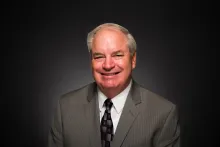
Robin Webber was born in Chicago, Illinois, in 1951, but has lived most of his life in California. He has been a part of the Church of God community since 1963. He attended Ambassador College in Pasadena from 1969-1973. He majored in theology and history.
Mr. Webber's interest remains in the study of history, socio-economics and literature. Over the years, he has offered his services to museums as a docent to share his enthusiasm and passions regarding these areas of expertise.
When time permits, he loves to go mountain biking on nearby ranch land and meet his wife as she hikes toward him.
