
Robin S Webber
This transcript was generated by AI and may contain errors. It is provided to assist those who may not be able to listen to the message.
All those songs today, aren't they just beautiful and meaningful as we move towards the spring festival seasons? I've really enjoyed singing them with you towards our God above. Franz Josef I was one of the great emperors of Austria. Franz Josef actually ruled for 68 years, about 150 years ago. He died in 1916, right in the midst of World War I. His funeral was held in Vienna, which was one of the great imperial cities of Middle Europe and had been the seat of empire of the Austrian Hungarian Empire. When he died, his ceremonial funeral followed the prescribed traditions set by his church. And I'd like to share with you what happened as his casket approached the abbey. The funeral cortege approached the doors of the abbey that were at that point barred shut. And a royal herald struck the door three times. And a church official from within cried out, who's there? The royal herald replied, Franz Josef, emperor of Austria, king of Hungary. The abbot called back and said, I don't know you. Who are you? And the herald again replied, I am Franz Josef, emperor of Austria, king of Hungary, Bohemia, Galicia, L'Oreal, Dalmatia, Grand Duke of Transylvania, Margrave of Moravia, Duke of Styria, and Corinthia.
And the abbot called back, we don't know you. Who are you? And thereupon the herald knelt and said, I'm Franz Josef, a poor sinner begging for God's mercy. The abbot then said, you may enter then, Franz Josef. And the doors swung open and the funeral proceeded.
Amazing episode, powerful lesson as to have how to have doors open.
This historical episode leads me to share one of Jesus' parables about two other men that were, in a sense, begging entrance into God's presence. We find this story over in Luke 18, the Gospel thereof. If you'll join me in Luke 18. Let's take a look for a moment of two men.
And so often the Bible comes down to, as was brought out in the first message, a contrast between two ways. Because sometimes, aren't you glad that God doesn't give us three ways or four ways or five ways? Because sometimes just two ways are difficult enough to comprehend and to tackle in our human sphere. But we find the story in Luke 18, and I'd like to share it with you in Luke 18, and we pick it up in verse 9 about two others that were seeking to have the doors of God's attention open to them. And also he, speaking of Jesus, spoke this parable to some who trusted in themselves that they were righteous and despised others. Two men went up to the temple to pray, one a Pharisee and the other a tax collector. Now the Pharisee stood and prayed thus with himself, God, I thank you that I am not like other men. It's very interesting that the very term Pharisee means separated ones, but they had lost the meaning and the power of what it meant to be separated and had morphed into something completely different than was pleasing to God. And he says, I'm so glad I'm not like other men, extortioners, unjust, adulterers, or even as this tax collector.
I have a question for you. Do you think he whispered that? Or did he want to have the man next to him know exactly what he thought of that individual?
I fast twice a week. Oh, he was a good Pharisee. Pharisees tended to fast on Mondays and on Thursdays. So he was fasting twice a week. And I give tithes of all that I possess. And the tax collector then, the other, if I can use that phrase, the other, standing afar off, would not so much as raise his eyes to heaven, but beat his breath, saying, God, be merciful to me, a sinner.
Jesus then commented, I tell you, this man went down to his house justified, rather than the other. For everyone who exalts himself will be humbled, and he who humbles himself will be exalted.
It's a powerful story. It's interesting that one man knew what sin was. And there are many, many people, maybe even people that are in the room today, that can define what sin is.
But they don't understand that apart from God, they are a sinner. Both of those men were addressing God. They were both, in a sense, dealing with the subject of sin. But in a sense, one man's offering was justified. And frankly, the doors, not of an abbey, but of heaven, were not opened to the other individual. Tomorrow evening, now to bring it home to all of us, tomorrow evening, we're going to be approaching the table that is set up here. By approaching, you'll be sitting out there. But approaching the table set up with the symbols that are emblematic of Jesus Christ's sacrifice, shed for the remission of our sins. It's a powerful evening. The door is opened up once again for each and every one of us to renew our part and our role in the new covenant that is set before us. My question to you this afternoon and the entire purpose of my message today is, how will you approach that table? We've already talked about how an emperor approached the sacraments of his church. We talked about two men of old under the old covenant and how they approached God. How will you approach our God tomorrow night as you renew that covenant? Will we be coming to describe our own worth and what we have done? Or will we be here, humbled, proclaiming God's worth and extolling what He has done?
I want to share a thought with you if I may and kind of tie it all in together. We kind of discussed this a little bit in the Bible class earlier this afternoon. How we view God and how we view ourselves and how we view others is all intricately tied in together as to whether or not the door of forgiveness will remain open for us to enter into the presence of God and experience His forgiveness, experience His love, and experience His joy in what He is doing in our lives and looking forward to what He's going to be doing in the lives of everybody else. Thus, the title of my message is simply this, Opening Wide the Door of Forgiveness. Opening Wide the Door of Forgiveness. As we move into this message, let's come to fully appreciate that forgiveness is not just one word to study and to draw out of a strong concordance or a young concordance and kind of intellectually look at it. If you just think of forgiveness as a word, I think you're going to miss the whole point of the Bible. Forgiveness is the language of the Bible. It's not just a Hebrew letter or accent. It's not just one word. It is the flowing language of the Bible from Genesis to Revelation. It is about the return, not only the return of those that are now dead, but our return again and again and again. And do I dare say again in the course of a year or in the course of a decade or in the course of the chapters and the seasons of life that it is about a return and God's forgiveness predicated upon His love and what He is. To fully understand this, join me if you would. Let's go to Psalms 86. In Psalms 86, and let's take a look at a beautiful set of scriptures that I hope will encourage you as we move into the spring festivals. In Psalms 86, we're going to find that forgiveness is not just an event in God's way of life. It is that way of life in totality. Join me in Psalms 86, and I'd like to read it to you. It says, bow down your ears. So there's an invitation. Bow down your ear, O Lord, and hear me. For I am poor and needy. Preserve my life, for I am holy. You are my God, Savior-servant, who trusts in you. It says, preserve my life, for I am holy. Perhaps a better rendering is out of the Living Bible translation. Preserve my life, for I am devoted to you.
I am what I am, but I strive to be leaning, O God, in your direction.
Be merciful to me, O Lord, in verse 3. For I cry to you all day long. Rejoice the soul of your servant. For to you, O Lord, I lift up my soul. Very similar to David's words in Psalm 51 and verse 12, where he says, restore to me the joy of your salvation. And let's face it, brethren, as we go through a year and through the seasons of life and the mountaintop experiences, the plateaued experience of life, and the deep valleys of life. It's a lot like a cliff that's exposed to the heat, and it's exposed to the wind. It's exposed to the moisture. All you have to do is go over to Torrey Pines State Park, and I'm sure many of us have taken that walk before and seen what those ravines look like and see what the cliffs look like as they are whittled away by the forces of nature. And sometimes we're no more or no less than those cliffs with what's coming our way, and we are whittled down during the year. And like David, we say, restore to me the joy of your salvation. And this is what is being spoken about here. Notice what it says. Verse 6, Give ear, O Lord, my prayer, and attend to the voice of my supplications. In the day of my trouble, I will call upon you. And there's a confidence factor here, and you will answer me.
And why, though? Why does he know that God will answer him? Even as he's going through, and even as you're going through these conditions, among the gods there is none like you, O God. Nor are there any works like your works. All nations whom you have made shall come and worship before you, O Lord, and shall glorify your name. For you are great and do wondrous things. You alone are God.
And the reason why all this occurs is in verse 5. For you, Lord, are good. What makes God good?
What makes God good? What makes him good is defined right here because he's ready to forgive and abundant in mercy. In other words, what makes God so incredible and so unlike any other deity that was worshipped in antiquity made him totally different.
Is that he was seeking and searching and longing for his special creation. And if you want to put it this way, if you want to look up here a second, this will be the power. I understand that Mr. Smith gave you PowerPoint. That is not my gift. I do the PowerPoints on stage myself.
But I hope you'll understand this, is that what God is saying in Psalms 86 and verse 5, he is always leaning forward. He's not sitting on his haunches. He's not resting backward. He's not in a backward motion. He's always like this, looking out the door.
How many of you, as parents, can remember when your kids were getting older and had the car and they were out on a Saturday night? And of course, because you had raised them, they were supposed to be on home at time, every time. But maybe they didn't come home that one time. Where were you and where was Mom? Where were we pops and where were the ladies? We were looking out the window. We were looking out the door. We were leaning forward. Probably couldn't go to sleep. Now, this was just so you'll know, this was not an every night occurrence in the Weber family. We did raise three girls, but this is life too. Sometimes maybe they broke their watch, I'm not sure. But anyway, I know that Susan couldn't sleep. She can't sleep. I can't sleep. And dads love their kids just as much as Mom does, just kind of show it in a different way. And you're there, you're at the door. The door is open. You're leaning out. You're waiting until they come home.
And yes, then you have the conversation. But you are so glad that they're home and that they're all right. Brethren, I just want to tell you as one Christian to another, that's the God I worship.
And I pray that's the God that you understand and that you worship, that as we come to God tomorrow night through Jesus Christ, that we worship a God who is leaning forward. And as He leans forward, that's how we have to be. It's not just an activity. It's just simply the way that God is. Join me if you wouldn't, Luke 23 and verse 34. In Luke 23 verse 34, it's an amazing verse. It's a gem. It's a jewel. Because what the life of Jesus tells us and what He did for us in that last day of His human life is that He was leaning forward for you and for me. Not only that our sins might be forgiven, but we might have an example how to lean forward and open wide the door's forgiveness. It's one thing for me to be able to lean forward as a concerned parent, waiting for teenagers to come home at night. It's another thing for the way that Jesus leaned forward here in Luke 23 and verse 34. Notice what it says. Here He is leaning forward, that when His life was being in that sense exhumed and that He was nailed to a piece of wood and in anguish and in pain with a systematic, calculated, inhuman manner of execution. It is here that Jesus practiced what He preached. And He was ready to forgive just as much as what it says in Psalm 86. Notice what it says here. Then Jesus said, Father, forgive them, for they do not know what they do. They didn't realize He was the answer. They didn't realize that He was the Messiah. They didn't realize that beyond that, He was God in the flesh. And kind of the emphasis behind this, if I can paraphrase a little bit, is Jesus is leaning forward even with the nails in His hands and saying, Father, forgive them, for if they really got it, if they really knew what they were doing, they wouldn't be doing this. But they're not ready right now. There's a veil.
They don't understand. There is an intimacy and there is an immediacy here of Jesus talking to His Father, speaking about you and about me before we understood who He was. Perhaps this kind of leaning forward forgiveness is best understood by going again to the Psalms. Join me if you would in Psalms 103. In Psalms 103, and let's pick up the thought in verse 1.
I just want to share with you as my family and friends in Christ here in San Diego, that between now and tomorrow evening that we give ourselves to study and thought, and just consider what a joy and what a benefit it is to experience the grace and the love and the forgiveness and the acceptance of God and to be in His presence, and that there's no door between He and me and He and you. And the book of Psalms speaks to that. Bless the Lord, O my soul, and all that is within me. Bless His holy name. Bless the Lord, O my soul, and forget not all His benefits. Who forgives all your iniquities? Who heals all your diseases? Who redeems your life from destruction? Who crowns you with love and kindness and tender mercies? Who satisfies your mouth with good things so that your youth is renewed like the eagles? It's just you kind of just lift it up like a breeze. You know, you look at that scripture sometimes and you say, who forgives all of your iniquities? All is a word that all means all. It's really hard to make that out of two syllables, isn't it? I know some people have tried to make two syllables out of one-syllable words in the course of human history or American history.
All means all. And I want to just share with you when you think about it coming to the New Testament Passover tomorrow night, that when God says all, He means everything. Because He gave His everything through His Son. And that means everything. Yeah, but you don't know, Mr. Weber, or you don't know Mr. Smith, or you don't know Mr. Miller, or you don't know Mr. Carr. I don't need to know!
Because your repentance is not between you and me. Your life is before God. And God says, if you come before Me in the aspect of knowing where I found you and what I have done for you through Jesus Christ, everything is forgiven. Yeah, but this is the biggest, dirtiest, darkest stain that I have ever had.
I only know what God says, and because I believe in God, I take Him at His word.
I know sometimes, because we live in a house that has carpet, that, behold, what I have in my hand and that carpet is like a magnet to that which is in my hand sometimes.
As many of you know, I like coffee, so half the time I have coffee in my hand, and, well, it spills. And or something else spills. Or something spills from the dog and the cat, but I won't go there. And Susan goes to work, like all of you ladies do. You know, she has the secret knowledge that men don't have, that all you ladies have that we don't have, because, you know, men will kind of do surface dirt. I don't do down-deep interior dirt. Something about a woman, she knows how to deal with that. And, you know, Susan will start out with the first level. You know, I'll always start with that, which is easiest and what might do. And, you know, that didn't work and puts it away.
Then the next level of the stuff that, you know, name brand and you work on that, that didn't work. And then you get out the asset. That takes care of everything, right? No, that'll just leave holes.
And nine times out of ten, it will come up. Have you ever noticed that sometimes that stains are kind of tricky, though? They stay under and come up later. Sometimes when something is really, really, really deep, you know, it looks good for a while. And then, like Brigadoon, it reappears. And it doesn't even take a hundred years. Sometimes it just takes 10 days or 20 days.
Brethren, what our God is telling us through His Holy Word is that whatever you have done, whatever stain is upon you and upon me, that when we go to Him in faith in what He's done for us through Jesus Christ, that Son of Man, that Son of God, the Lord Jesus Christ, the King, the Salvation, the Anointed One, and we accept that and we say we surrender our lives and we are now bent towards you. We no longer want to sin as a way of life, as the world. We don't want to practice it anymore. It's not going to be our hobby. We want to practice being like you by following the example of Jesus Christ. But even so, things are going to come into our life because we're still in this human tent. I'm here just simply to remind you what the Scripture itself says, that all sin is forgiven. And it's like it never even existed because let's take it a little bit further here. Notice what it says here in verse 10. He has not dealt with us according to our sins, nor punished us according to our iniquities. For us the heavens are above the earth. So great is His mercy towards those who fear Him, that as far as east is from the west, so far He has removed our transgressions from us. And as a father pities his children, so the Lord pities those who fear Him or revere Him, respect Him. For He knows our frame.
He knows the world that we're in. He knows the challenges that Will brought out in the first message. He realizes this matrix existence that is around us. He knows that. This is where He called us. But that's not where He wants to leave us and ultimately where He wants to invite us.
We need to understand our sins are forgiven. The reason why I bring this up is because we're going to begin moving into another section here. As Christians, it's well and it's good that we keep this spiritual state of mind of what just happened here over the last week with five new people in the body of Christ. When you were baptized, you went under the water and you got wet.
You were forgiven. Then you were raised in newness of life.
Then upon the laying of hands, you received the Spirit of God. You were accepted. That has got to be one of the most beautiful words in all the world. You were accepted. Remember our Emperor, friend, Franz Joseph I? He was not accepted at first because his herald had rolled out everything that he had been and what he had done. That didn't get him into the door. It was only when that word came out that I am a sinner that the door is open. When we understand that, when we've gone through that, then we are accepted. Some of you have been baptized for 30 or 40 or 50 years. We can never move too far away from that ultimate birth canal of baptism to keep us in spiritual alignment. What I'm suggesting to all of you from the front row to the back row is remember where God found you. Remember where God found you. But don't stay there.
Because God doesn't look at you now as practicing sin and just, oh, there's a sinner, like the Pharisee talking to the publican. Remember where God found you. There's a strength in that. But then remember what God did for you through the life, the death, and the resurrection of his Son and gave you life. And not just life that comes and goes, but that which is eternal. That is a healthy spiritual framework.
I want to share something, three points I want to give you real quickly here. Very quickly. With that, then, a Christian realizes and embraces three great realities, not only going towards the New Testament Passover, but as we now have the life of Christ living in us, not only by analogy or metaphor during the days of the 11th bread, but every day of the year. Number one, a Christian realizes our own imperfection as we strive to emulate a perfect God.
A Christian realizes his own imperfection, even as we strive to emulate a God. That is a full-time job. That's full time. I don't have to worry about David. I don't have to worry about Julian.
I don't have to be like the Pharisees. Oh, look at this jerk. That's really what he wanted to say. I just said it.
How often did even people that were, do I dare say, church people, those under the old covenant that are mentioned in Matthew and Mark and Luke and John, how often was there that disdainfulness that, look at them, what are they doing here? They're ruining the party.
And brethren, that is something that can plague church people, like you and like me.
We can look at what we have, where we have been, what we are doing.
Oh, it's not Emperor of Austria, and it's not King of Hungary, and it's not Margrave of some Eastern European country. And none of you want to be over Transylvania, did you get that name? In the beginning. But we bring in everything that we are.
And all of a sudden, you know, Eric just goes up on her lungs and, I'm so wonderful!
I have a question for you.
Do we know, maybe we can know where we can find the definition of sin in the Bible, as Good Church of God members, but do we realize that apart from God, we are sinners?
And it's not because of us, it's not about us, it's all about Him and what He has done. It's His gift, it's His miracle, it's His divine touch into our dusty lives that gives us any worth that allows the doors of heaven to open up, that our prayers and that our lives might enter.
Therefore, a Christian recognizes, number one, his own imperfection as we strive to emulate a perfect God. Number two, even so, we don't go around with a name tag saying we are a sinner. We in that metaphorical sense have a name tag around us saying, I am forgiven. We want to focus on the positive. We have been forgiven. We have been restored. It's as if the caribs of Eden that barred Adam and Eve from going back in, they have been removed and we have that opportunity to have intimate, worthwhile, lovely, fantastic, joyful fellowship.
The immediacy and the intimacy of divine fellowship in our human framework with God Almighty, that there is no separation, no caribs in between. We've gone through that door, which is Jesus Christ, and we can be one with God the Father. Number three, because we have been forgiven, we too must be forgiving. We too must be forgiving.
Brother and I just pray that more than ever that God will bless the Church of God as a whole, our San Diego congregation that I speak to today, that we can be a forgiving people, that we can have a long-range vision, and to recognize that apart from the grace of God, go you, go I, and to recognize that.
Because when we understand and remember where God found us, oh, how much more effective will we be in conveying the Gospel, whether it be in our magazines, whether it be in our television programs, whether it be whatever we do in the Internet, what we do when we are talking with one another here in church, talking about the things of God, talking about the substance of what Christ has done, encouraging one another rather than looking... Wow! Do tell! You've got to be kidding! I've got to go somewhere now, and we leave somebody behind in the dust. Because in our mind, we've all of a sudden thought, oh, there's a other, an other.
See, human nature suffers from what I call the plague of otherism, them and us. And it can even creep into churches. It certainly crept in the Bible. All I have to do is see the example of the Pharisee and the publican. You can see the example of Judaism in the first century and how they treated the Samaritans. Brethren, God has called us to be a better people. He's called us to be a more mature people. He's called us to remember what it says in that sample prayer that we are to what? That we might be forgiven. We have got to forgive others. That means we have to understand where others are coming from and open up wide the doors of forgiveness, return and renewal.
That's what a Christian church ought to be. And I believe we are growing in that. I get so excited, Suzy does too sometimes. I don't know if this is going to go on the tape, but we talk about you all down here all the time, about what a warm and what a loving and what a hosting and what a gracious church you are. So please understand, my comments today are not in rebuke. It's to stretch you further.
It's to make you go to the next step. It's to have us all galvanized together as we move into the sacred calendar year in the season. That I don't want to see one Christian in the San Diego congregation left behind and left out of doing what God has called us to do. To forgive because we have been forgiven. How does this work in the Bible? Join me if you would for a moment.
Let's go over to Luke 22. In Luke 22, one of the great stories of the Bible. We'll probably center on this then conclude. In Luke 22 in verse 31, let's understand this is taking place right before that New Testament Passover is being taken. It's kind of that final training period of Jesus with the twelve that had followed Him for three and a half years. And it's so amazing that, you know, here are men that were walking with Jesus Christ for three and a half years, but some of them still didn't get it because they were looking at the other eleven rather than themselves. You know, it's one thing to walk with Jesus Christ and it's another thing to have Jesus Christ walk inside of you.
And they would get there, but they would have to come on the day of Pentecost. But sometimes, if I can re-talk, that's a little bit some of us that have been exposed to church life. That sometimes we are walking with Christ, we are reading the scriptures, but that's not life. That's not enough. God wants to live inside of us. He wants to walk inside of us.
Remember the old Greyhound bus ad? This will really date ourselves now. Remember the old Greyhound bus ad? You know, sit back and leave the driving to us. But God is saying it, and that's basically what you're saying when you partake of that bread and when you partake of that wine tomorrow evening, is you're saying, I desire to have Christ in me. I want Him to be the driver in my life. I want Him to be the engine of my existence. I want to be an active passenger, because there's also responsibilities that are vested upon us when we do follow. Because if you've ever noticed, whenever a follower comes into the Bible, either Jesus and or the apostles gave them something to do. So there's a partnership that's involved. The part of the partnership I'm talking about you today about is that as we have been forgiven, that changes our heart, that changes the lenses of our eyes to where we look at people differently. Maybe our mate, maybe our adult children, maybe our neighbors, maybe fellow church members, maybe others that come out of a common background and have a common doctrine but have made other choices. And we give them all to God.
And we know that God has a future for each and every one of them. It may not be right where we are right now, but God has a plan. God has a purpose. God has a love. God has a forgiveness. God has a way of return. God has a way of restoring as much as that father did in Luke 15 when the child came back and he was at the door and he ran out and embraced him. He gave him the ring. He gave him the cloak. He gave him the shoes to show his worth and it was like he had never left.
When the South was being defeated during the Civil War, and it was only a matter of time, Abraham Lincoln was still alive. Some of his defense ministers and generals circled him. He said, well, Mr. President, what are you going to do now that the South is defeated and that the enemy is crushed? Mr. Lincoln thought about it for a moment and he said with that smile of his, I will treat them as if they never left.
What a different course our country might have taken after the Civil War.
Perhaps the unity and the union would kind of come together much quicker if that man had still been. Will will not know. It's the thought of history and we will see. But I'm talking to you and me today and we see this story here in Luke 22. Join me there for a moment in Luke 22 verse 31 because Jesus has this direct conversation with Peter and says, and Jesus said, Simon, Simon, or Peter, Peter, indeed Satan has asked for you that he may sift you as wheat. He just wants to cut you right down and take you for his harvest, not mine. But I have prayed for you that your father should not, that your faith should not fail. And when you have returned to me, strengthen your brethren. But Peter came back and said, Lord, I am ready to go with you, both to prison and to death. And then he said, I tell you, Peter, the rooster shall not grow this day before you will deny me three times that you even knew me. It's an interesting set of scriptures. Jesus had already moved beyond that night and saw the future and prophetically and courageously told Peter that, Peter, I got some news for you, buddy. You're going down. Yes, you are indeed. You're going down. That's been established. I know it's going to happen. But when you return, but when you return, I'm going to have a job for you. And of course, Peter comes back and says, oh, no, no, not me. I'm going to be right there with you. It's very interesting. Over in Mark 1429, you can jot that down. G in a parallel kind of says, even if everybody else is made to stumble, yet I will be there with you. I'm going to be there with you. Now I have a question for you. Was Peter sincere question? Was Peter very, very sincere when he mentioned? I do believe he was sincere. I believe he really, for the moment where he was at, really believed that he would not disappoint Christ and that he would be there for him at the end. But you know, and I know the rest of the story. Very interesting that he said, Peter, you're going to deny me three times by the time that the rooster crows three times. Now, I know many of us grow up and our education sometimes, our early education is based upon American cartoons. And you see the old rooster do the cock-a-doodle-doo. You see the sun bounce up and the rooster starts crowing. That's not how it works. How many of you have ever raised chickens? It's a foul occupation, just teasing.
But the point is this. Roosters don't wait for the sun. Roosters normally start crowing, at least mine did. Susan's my rooster. The rooster was named Isaiah because he cries aloud and spares not. We had six to seven Isaiahs in a row. A rooster starts crowing about 3.30 to 4 o'clock in the morning and does not stop. What Jesus was saying was, this is going to go quicker, sooner and quicker than you think. He that thinks he stands take heed, lest the fall comes. Now what's very interesting then is Jesus knew this. Peter protested. He says you're going to go down. Then notice what happens over here in Luke 22 where it says in verse 16, Peter said, and it was his last denial. I don't even... Man, I do not know what you're saying immediately while he was still speaking the rooster crowed. And the Lord turned and looked at Peter.
Have you ever done that where your eyeballs just catch another person's eyeballs and they are locked in? And Peter and Christ were staring at one another. In that moment, it must have seemed like eternity to Peter. And Peter remembered the word of the Lord, how he had said before the rooster crows, you will deny me three times. So Peter went out and he wept bitterly.
Hmm. Amazing story. What is interesting when you think about the power of this story is you'll recognize that something like that is not something that you would necessarily want to share with another human being. You might be embarrassed. But Peter did it to the glory of God to show that Jesus Christ had a future for him, understood his human framework, promised that there would be a return, and even with what Peter did, loved him anyway. You see, when Luke, who was Paul's companion, came to Jerusalem and was trying to document things in a more orderly fashion, as it says in the book of Luke, I would suggest, I'm not to fly on the wall, but I would suggest that Peter talk to Luke. Peter was the eyewitness of this. Remember, everybody else was scattered.
You know, brethren, I've just come to appreciate Peter more and more over the years. I know maybe you've heard me say this before, but I know sometimes we can make fun of Peter. He petered out in the water. Every pun intended. We know that he did this. We know that he'd jump off a boat. But you know the one thing about... Here's the one thing about Peter. You gotta love him. This is why God loves him. Wherever Jesus was, he wanted to be as close as possible. While everybody else was sometimes in the boat, nobody else was in the courtyard. There is something about Peter and his closeness that I really think God loves. And I would pray and hope that I could be that close. And I would hope that each and every one of us could have that spirit of closeness to Jesus Christ and want to be right on his foothills, following his way, experiencing his grace, knowing that nothing will separate us from his love, and that we can be filled with that same joy that he had. The joy that was set before him, he endured the cross. Now, why did this happen to Peter?
See, Peter had to come to a cardinal point to recognize simply this, and that is that Peter did not become a sinner because he sinned.
Oh, the devil made me do it. Freak accident. No. He sinned because he was a sinner. When I baptize people, I always ask them the question when they are repenting of their sins, have you repented of your sins?
Mm-hmm. That's always good. I've never had anyone say no at that.
Have you repented of your sins? And have you repented of what you are apart from God?
See, there's the product, and there's the factory.
So often we want to deal with the effect rather than dealing with the cause.
So often we want to deal with what's coming out the conveyor belt rather than what's being assembled on the main line inside of our hearts. See, it's not only understanding sin, but understanding human nature and how God sent his Son to break the chain of human nature that we could be freed. Now, how does this affect you and me as we wrap this up?
Peter was just in training. See, God had something really incredibly in store for Peter, and I think God has something incredibly in store for each and every one of us. Oh, it may not be in front of 3,000 or 5,000 people in Jerusalem on Pentecost, but God has something in store for every Christian to testify that the light of the world has come into their life and to make a difference. You know, when Peter got up in Jerusalem just a few days later in 31 A.D., those men, as it says in Acts 2, 37 through 38, came to a moment of awakening. When he described everything, and we will as the days go along, when he described what had occurred there, oh, you've got to be kidding. No, they're all out there. You know, 3,000 hands going like this, you know, flat heads. Boom! Oh, no! What? What have we done? And they came to understand that they had killed the very answer of Ezekiel and Isaiah and Jeremiah and Micah and Zechariah and everything that they had longed and hoped for, they crushed like a bug and crucified him. And there's this moment that happens when it says they were petrified, their hearts were gnarled, they were torn apart, and there's this moment in time between the verses of 37 to 38. And then what did Peter say? Okay, here's what you can do. You can repent, and you can be baptized, and you can receive the gift of the Holy Spirit. What I want to share with you, brethren, as I begin to conclude, is simply this. Christianity at its base core, at the common denominator, think of it this way, it is a gift.
It's a gift that is given from above, and it only begins to be unwrapped at baptism.
God does his part. We've got to do our part. Why was Peter so effective at Pentecost? And he was guided and used as an instrument to bring 3,000 people into the body of Christ that day.
I will suggest that it's not just merely what he said, but how he said it.
It's not only what he knew, but what he had come to know about himself.
He understood what he was apart from God. He knew that he was a dead man walking. And so the effectiveness of the gospel message, the light breaking into the dark in that square in Jerusalem, was that he was a dead man, one dead man, speaking to other dead men.
And God used him. And just when they thought the carpet was going to be pulled out from underneath them, God gave them a gift.
Where does that leave you and me?
Brethren, we have been gifted that we might give gifts to other people.
Understanding and remembering where God found us and what we were. And what we were.
And then we look at everybody else as a potential member of the family of God.
Love them. Pray for them. Be kind to them.
Always be ready to open that door wide of forgiveness. Oh, yes, we don't want people to trample upon you. That's not what I'm talking about. But it's an attitude. It's an approach. It's a light that came from Jesus Christ that even when he was nailed to that stake, that cross, staros. I can give you about three other words. You got it. The instrument of death. I do know that there were nails in his hands or nails through his wrist. And in that moment he said, Father, forgive them, for they know not what they do. What are you majoring in on? Your Bible studies? Your word studies? Where is your focus? Is it on some unique Hebrew word that's going to match up with a Greek word over here? Is it a time? Is it a date? Is it some nuance? Is it some Gnostic, esoteric thought that perhaps you think you only know or a select body of people know? Or is it the language of the Bible? That convicts, transforms people, and that God can use you as a lighthouse in a very dark world.
Will you think about that as you come up to the New Testament Passover tomorrow night?
Will you not only think of what God has done for you, but then as you move into the days of Unleavened Bread with Christ walking in you and in us, how you will be used like a Peter in the 21st century? I'm going to finish where I began, and then we'll conclude, because I think it's a powerful story. And I will read it, and I will sit down.
And I hope it will forever be in your mind.
Franz Joseph I, the first, died in 1916, buried in Vienna. And approached the Abbey. As that funeral courtesge approached the Abbey, the herald struck the door three times, and a church official cried out, Who's there? The royal herald replied, Franz Joseph, Emperor of Austria, King of Hungary, the abbot called back, I don't know you. Who are you? The herald again replied, I am Franz Joseph, Emperor of Austria, King of Hungary, Bohemia, Galatia, L'Odemaria, Dalmatia, Grand Duke of Transylvania, Margrave of Moravia, Duke of Styria and Corinthia. The abbot called back, we don't know you. Who are you? Thereupon the herald knelt and said, I am Franz Joseph, a poor sinner begging for God's mercy. And then the abbot then said, You may enter, then, Franz Joseph. Tomorrow night, as we come before God at the New Testament Passover, we come before God saying, yes, you found me a sinner, and now I am forgiven, and now I am accepted. I come to you in that humility, but in the boldness of Jesus Christ that you have placed in me, knowing that I have been accepted, knowing that I am in a state of grace, you knowing that I am not desiring to practice sin even though I will sin in this faulty, physical, flimsy, human tent.
And I come, farther above, to renew the most precious covenant, the most precious gift that could be granted a human being. I know I am made in your image. Not quite in that spiritual image, but I have been made in your image. And I know that you were patient with David. I know that you were patient with Peter. I know that you were patient with Paul. Thank you, Father, for your patience. Thank you for your grace. Thank you for your love. Thank you for your forgiveness. I am here to, once again, renew my unconditional surrender before you, that you may work your work, not my work, but your work in me. And therefore, I partake of the bread, I partake of the wine, and I go out to live a newness in life, because you've called me.
I am in that process of salvation. And may your kingdom come, and may I be a part of the solution.
A joyous, a meaningful New Testament Passover to each and every one of you, my family in Christ.
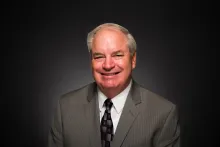
Robin Webber was born in Chicago, Illinois, in 1951, but has lived most of his life in California. He has been a part of the Church of God community since 1963. He attended Ambassador College in Pasadena from 1969-1973. He majored in theology and history.
Mr. Webber's interest remains in the study of history, socio-economics and literature. Over the years, he has offered his services to museums as a docent to share his enthusiasm and passions regarding these areas of expertise.
When time permits, he loves to go mountain biking on nearby ranch land and meet his wife as she hikes toward him.
