

Don Ward
This transcript was generated by AI and may contain errors. It is provided to assist those who may not be able to listen to the message.
Brethren, as the events develop leading up to the return of Jesus Christ, we're going to have to face some very difficult trials and tests. We're beginning to see some of that. And as we said in the announcements, whether or not it is a conspiracy, whether or not it is a hoax, it is a real event that we're having to deal with. If you read Deuteronomy 28, you'll see there blessings and cursings. And one of the cursings comes upon a nation because of disobedience. And one of those cursings is pestilence. Hebrews 10.38 states that the just shall live by faith. I believe that statement, the just shall live by faith, appears three times in the Bible. I think the first time is Habakkuk, and then in Romans, and then in Hebrews. Do we really understand what that means? The just shall live by faith. Some are trying to work up faith and look for signs in this world. Maybe there are some in the church. I got faith. I got faith. As if faith were merely a positive feeling that one has inside. And if you believe strongly enough, it will happen. And I might add that belief, of course, is a vital component, but there is more to it than just saying, I believe. Remember Hebrews 11.6? We have so often quoted it. He who would come to God must, first of all, believe that he is. That is the very first article of faith, to believe that God exists. If you don't believe that God exists, then there is no hope for anything coming to pass in the spiritual sense. And if God does exist, and if he is who he says he is, he must have some way of communicating with humankind. And that way is through his inspired word. And of course, he has sent, through the ages, prophets and men of all from the patriarchs, Abraham, Isaac, and Jacob, Moses, and many other prophets. And then Jesus Christ, the very Son of God, one who thought it not robbery to be equal with God, who made flesh and dwelt among us. So there has been ample testimony, both in physical terms and also in the written word of the existence of God. He that would come to God must, first of all, believe that he is, and he is a rewarder of those who diligently seek him. That is the first article of faith, yet very few understand what faith is all about. Faith is the springboard to all things spiritual—not all things physical, but faith is the springboard to all things spiritual. God has given us the power to overcome this world. How? Through faith. Is there a scripture that states that? Yes, 1 John 5, verse 4. If you would go there, 1 John 5 and verse 4, we see this very powerful voice verse here, 1 John 5 and verse 4. For whosoever is begotten of God overcomes the world, and this is a victory that overcomes the world, even our faith. The just shall live by faith. Faith abides forever. Look at 1 Corinthians 13, verse 13. This was our class motto when I was a senior in high school. I had the privilege of being the president of sophomore, junior, and senior years of our class. We fought hard against the class sponsor for this motto. I guess you would call our class motto was this 1 Corinthians 13, 13. Now abides. Now lives. Now abides. Faith, hope, and charity. Agape, love. Now abides. Faith, hope, charity, these three, but the greatest of these is agape, charity, love. Faith is a basis of hope. Why do I have hope? I have hope because I know and know that I know that he who is promised is faithful, God who cannot lie, he will deliver, he will fulfill his word, he will fulfill the promises.
Love is the greatest, but faith and hope are precursors. They go before. Faith through the word and spirit are the enablers. Love is the greatest, but faith is a precursor. Faith through the word and spirit are the enablers.
Love is the great motivating force, the greatest motivating force in the universe. God is love. Love is a personification of God's character.
I hope you write down every scripture. My wife is not the greatest notetaker in the world, but she writes down every scripture. And you know what she does? That she, through the week, goes back and reads every scripture in context and also whatever notes that she has. And that's the only way that really you can grow in grace and knowledge in the sense of getting something from a sermon. Of course, there are other ways to grow in grace and knowledge as well. But if you don't review it, you lose it.
So hopefully we'll be taking...we have a lot of scriptures to cover here today.
Love is the personification of God's character, and love should be the outcome or result or product of faith.
Now, we shall be explaining that, but let's say it again. Love should be the outcome or result, the product of faith.
That is to become love as God is love. What does Matthew 5.48 say? Matthew 5.48 says, become you therefore perfect even as your Father in heaven is perfect. God is perfect in love.
So today we are going to examine the origin, development, and outcome of faith.
God is love. 1 John 4.8. God is love. 1 John 4.16.
When you say something is something, that means that is its state of being. If it is personified, that is that being's state of being. God is love. That is his state of being. That is what he is.
Faith is a combination of, guess what, conviction, commitment, and courage.
Let's briefly examine each one of these. First of all, conviction. How are we convicted?
In the physical world, as a child, from the time of infancy and being a toddler, we basically learned experientially.
We learned certain commands, and we learned if we break those commands that we are going to fall.
If we jump off the table, if we pull on the chair, it may fall over on us. If we touch something hot, it's going to burn us.
There are many things that we learn experientially, and we come to, quote, have faith and know that we know that gravity is real, that hot things burn, and so on it goes.
In the spiritual realm, there are two convicting agents. If you turn quickly to John, the Gospel of John in this case, chapter 16 and verse 7.
In John 16 and verse 7, Nevertheless, I tell you the truth, it is expedient that I go away. If I go not away, the Comforter will not come unto you. And the Comforter is identified in John 14.26 as the Holy Spirit. The Comforter is the Holy Spirit.
Christ says, if I don't go away, the Holy Spirit will not come unto you. But if I depart, I will send it unto you. And when it is come, it will approve. And that word is Elancho and the Greek, E-L-E-N-C-H-O, and it means convict. It will lay a weight upon the heart and the mind. It will convict the world of sin, of righteousness, and of judgment.
And the way that this is carried out is John 6.44. When the word is preached, God may be calling a person. So we look at John 6.44 that says, No man can come to me except the Father, draw him. So the word of God has to be preached.
And so Jesus Christ commissioned the church in Matthew 28, where it says that, Go ye therefore into all the world, and disciple all nations, and teach them to observe all things whatsoever I have commanded you. And lo, I am with you, even to the end of the age. The word has to be preached. One of the reasons why God raised up the church was to preach the word to disciple all nations. Look at Romans chapter 10. Romans chapter 10. In Romans chapter 10, Paul makes this point that I just made.
Romans chapter 10, verse 14, How shall then they call upon him in whom they have not believed, and how shall they believe in him of whom they have not heard, and how shall they hear without a preacher? So one of the things that the church does is to send forth ministers preaching the word of God. And the spirit of God and the word of God lays a weight, a conviction upon a person's heart.
And how shall they preach, and yet they be sent as it is written? How beautiful are the feet of them that preach the gospel of peace, and bring glad tidings of good things. But they have not all obeyed the gospel, for Isaiah said, Lord, who has believed our report. So then faith comes by hearing, faith comes by hearing, and hearing by the word of God.
So it is the spirit of God and the word of God that convicts a person. See, this has to do with the origin of faith. This is how—what's the title? The origin, development, and outcome of faith. Here's about the origin, the origin.
Now, the origin has another component to it, and that is that if you respond to that conviction, then God will begin to encourage your faith. In the list of spiritual gifts given in 1 Corinthians 12, you will find that, in 1 Corinthians 12, 9, that faith is a gift of the Spirit. You'll also find in Galatians 5 and verse 22 that faith is a fruit of the Spirit. So if you act upon the conviction, God then begins to increase your faith, and you can do more and more. We are called to bring forth much fruit, and apart from me, Christ says, you can do nothing. My Father is the vine. I got that back. Jesus Christ says, I am the vine. The Father is the husbandman, and every vine or branch that does not bear fruit is pruned and turned into the fire. Why does he prune it so it can bear more fruit? So the origin has to do with the calling, the preaching, the conviction, and the response to it. That's how it begins. Then there is the question of whether you will be committed to it. You look at 2 Timothy 3 and verse 1. Paul admonishes us to commit the word of truth to everyone. I think I said 2 Timothy 3. It's 2. In 2 Timothy 2, you therefore, my son, be strong in the grace that is in Christ Jesus and the things that you have heard of me among many witnesses. The same, commit you to faithful men who shall be able to teach others also. Commit you to other faithful men. This word to commit here means place in sacred trust. Just like you were going to put your precious gems jewels in a safe box in safekeeping, God places his sacred trust to us. He commits it to us. And then courage. Courage to obey, to do the truth. Courage is an outcome of, to the degree that you are convicted and committed, you will act courageously. In the scripture backing there, Acts 5 and verse 32, God gives his spirit to those who obey him. Let's turn to Acts 5 and verse 29. Back just a few pages there from Romans. Acts 5 and verse 29, we shall see what we just said there, that God gives his spirit to those who obey him. In Acts 5 and verse 29, So when that conviction comes, if you respond to it, God increases your faith, and you can begin to do greater works through the word and spirit of God. Conviction, commitment. To the degree you are convicted and committed, you will act courageously. So faith is a gift of the spirit, and it is a fruit of the spirit. Once again, 1 Corinthians 12 and 9 says what? That it is a gift of the spirit. Galatians 5 and 22 says that it is a fruit of the spirit. That being the case, it is based on law, since he gives his spirit to those who obey him. Now, once again, did that lose you? See, what we're talking about is the origin, development, outcome of faith. So, the law of God can be used in a generic sense for the whole word of God.
And when you respond to that conviction and commitment and obey, God begins to give you more faith, and you bear fruit in the form of faith. Now you look at Matthew 23, 23, which just tells you plainly that faith is one of the weightier matters of the law. Therefore, faith stems from, springs from the law, the word of God. Now, what did 1 Corinthians 10 and 17 say? Faith comes by hearing and hearing by the word of God. You want more faith than you absorb yourself in the word of God. The words I speak, their spirit, their life, Jesus said. So, in Matthew 23, verse 23, 23, 23, 23, 23, 23. Woe unto you, scribes, Pharisees, hypocrites, for you pay tithe of men, anise, and coming, and have omitted the weightier matters of the law, judgment, mercy, and faith. These ought you to have done and not to leave the other undone. Faith is a weightier matter of the law. If faith is a weightier matter of the law, it springs or stems from the law. Faith comes by hearing and hearing by the word of God. So, we should see now the origin of spiritual faith.
God calls and God calls those who have heard the word through His Spirit and His word. He calls, He convicts, He commits, and it's up to you to act courageously. If you act courageously, then He gives you faith.
And as you live by faith, you bear fruit. One of the fruit mentions of the Spirit is faith. So, we can also conclude that faith is inextricably linked to what? Obedience. He gives His Spirit to those who obey Him. Did you write that down? Faith is inextricably linked to obedience. The methods of increasing faith are the same as increasing the Holy Spirit. In a sense, they conform to the laws of biology of use and disuse.
So, I've already stated you must be convicted, committed, act courageously. In addition, you must pray. The inward man is renewed daily. 2 Corinthians 4, 16. You must pray. You must study. You must obey. Fast and fellowship. Those are the main ways whereby the inward man is renewed.
Now, let's look at James 2 and learn something from there. In James 2, James has a lot to say here about faith and uses the example of Abraham. We shall use the example of Abraham more extensively later on. In James 2, 17, even so, faith, if it has not, works. In other words, if you don't respond to the conviction, we'll go ahead and say this now. I have it later in the notes. See, faith has two main dimensions. One dimension is abstract. That is, to believe.
They say that 90% of the populace in the US would say, I believe in God. I believe God exists. I don't think that's too high. But that's what some say. We have on our coinage in God we trust. We have on currency in God we trust. That was only put on the currency in 1950, I believe it was.
So faith without works, without obedience, without acting upon is dead, being alone. The abstract dimension requires action. Action upon the conviction. Yea, a man may say that you have faith and I have works or obedience. Show me your faith without your works, I will show you my faith by my works or my obedience. The simplest definition of faith is what? And Abraham was the perfect example. To believe God and do what he says. To believe God and do what he says is the simplest definition of faith, though we will also explore what it says in Hebrews 11.1.
You believe that there is one God, you do well, the devils believe in trim.
Satan is convicted in the abstract sense. He knows that God exists and is probably convicted of the depth of his being. The demons said to Christ, are you come to torment us before the time?
But they will not obey. You believe that there is one God, you do well, the devils also believe in tremble. But will you know vain man, faith without works is dead. Was not Abraham our father justified by works when he offered Isaac his son upon the altar?
Seeing you have faith wrought with his works, his obedience, he believed God, he did what he said. In Abraham's mind, as it says in Hebrews 11, he had already received Isaac in a figure as from the dead because he knew that if he sacrificed, if he had had to go through with the sacrifice of his son Isaac, that Isaac would live in resurrection. Was not Abraham our father justified by works when he had offered Isaac his son upon the altar? Seeing in heart and in mind and spirit, Abraham had gone through with this. He would have done it if God had not stayed his hand. Seeing you have faith wrought with his works, or obedience, and by works, or obedience, was faith made perfect. If you want to have faith, then you have to do what God says. If you're not doing what God says, I don't care how much you say, Well, I believe in God, you really don't have spiritual faith. The scripture was fulfilled which said, Abraham believed God, it was reckoned unto him for righteousness, and he was called the Friend of God. You see how that by works, a man is justified and not by faith only. You can have this abstract dimension of believing in God, but if you don't act on that conviction, it is of no use. Verse 26, For also as a body without the Spirit is dead, so faith without works or obedience is dead also. How sad it is that faith and belief have been stripped of their life-giving essence by the religions of this world. Believe in the Greek is the Greek word, pistio, P-I-S-T-U-O, means to adhere to, to trust, to rely on, to obey. So it has a connotation of obeying or doing. The connotation of doing or doing. No, you hear the preacher man say, just believe! But if you only believe, as we have seen from James, that is counted as being dead. And the word itself has the connotation of obeying or doing. Once again, it means to adhere to, to trust, to rely on, to obey. You cannot truly believe me without doing what I say. In other words, if I'm talking about even physical things, if I say that you can have a fuller, more abundant life by improving yourself in whatever field you may have chosen, whether it be vocational or some other endeavor, if you don't set about to do that, you can say, oh, I believe what you said, I can have a fuller, more abundant life if I do such and such, but you never do it. Then it never comes to pass. And so it is with spiritual things. You can say, I believe all you want, but if you don't do it, it doesn't come to pass. Now let's examine faith. Faith in the Greek is pistis, P-I-S-T-I-S, pistis. From pitho to ascent to evidence, authority to rely on by inward certainty to agree to assure to believe. And that's one reason why James wrote through obedience or works our faith is perfected. So once again, faith in its simplest terms means to believe God and do what he says. This introduces the fact that faith has the two broad dimensions, which we have already said, the abstract dimension to believe in something. But in order for faith to be perfected, it must be put into action, and the principle action is obedience. Charismatic evangelicals and many persons in the Church of God try to measure faith by signs. Oh, if we had more healings, that would be a sign that God is working here. There's one person who came to the campus who actually said that. In 1 Corinthians 12 and verse 31, we want to read that. 1 Corinthians 12 verse 31.
1 Corinthians 12 is what would be called the gifts chapter about spiritual gifts. Paul enumerates the spiritual gifts, gives the example of the human body. When one member suffers, we all suffer. But then he comes down to this verse 31, in which he says, all of this is important, it's true, but I want to show you a more excellent way, a way that far surpasses all of this other that we have talked about. This is 1 Corinthians 12, 31. 1 Corinthians 12, 31. 1 Corinthians 12, 31. But covet earnestly the best gifts, nothing wrong with desiring gifts. One of the things that I pray, I said, Father in heaven, please give me the gifts necessary to fulfill what you have called me to do. Please give me the necessary gifts to fulfill what you have called me to do. But covet earnestly the best gifts, and yet I show you a more excellent way. And it is a more excellent way, is downplaying it to some degree. It has a connotation of being superlative above and beyond everything else. This is the more excellent way, and that's 1 Corinthians 13. Though I speak with the tongues of men and of angels have not charity, agape, love, I become as sounding brass or a tinkling cymbal.
And though I have the gift of prophecy, oh, we want to know about prophecy and understand all mysteries and all knowledge. And though I have all faith so that I could remove mountains, see if that faith does not result in this outcome, that is, charity, I am nothing. I could have all of that. But if the outcome, if the result, is not becoming as God is, and God is love, I am nothing. And though I bestow all my goods to feed the poor, and though I give my body to be burned, and have not charity, if I'm not becoming as God is, it profits me nothing.
And then you have four, several verses here beginning with verse four that shows you what a totally, I guess you would call it totally, D11 person is like.
Signs are basically for unbelievers, not in every case, but you look at 1 Corinthians 14, just a page or so, maybe further here.
1 Corinthians 14 verse 1, see we have that inside set verse, which is the more excellent way, and that's to become love as God is love.
Then in 1 Corinthians 14, it says, follow after love, and desire spiritual gifts. Do both.
Follow after love, seek to become love as God is love, and desire spiritual gifts.
But rather that you may prophesy, that is, to be able to give answer for the hope that lies within with conviction, commitment, and courage, for he that speaks in an unknown language speaks not unto men, but unto God, for no man understands him.
Howbeit in the spirit he speaks mysteries.
See, the Corinthians made a big show out of spiritual gifts, and especially speaking in different languages.
All that was their sign of righteousness.
Oh, I can speak in a different tongue, and I have this prophecy I want to give you. I have this teaching that I want to share with you.
And they jabber it out, and nobody understands it. Verse 3, But he that prophesies speaks unto men, in other words, if you want to do it right, hear the three things that spiritual gifts should do.
Edify. You have the ability to sing, to play an instrument, to speak, to serve, to encourage so many different ways, so many different gifts.
To edify means to build up and exhort, to encourage, to convict, to challenge, go on to greater, bigger things, and comfort, and comfort. Now we look further in this chapter, verse 22. And Paul says, That's what I'm trying to do here today. Prophesying, that is, through teaching the Word of God, that we might understand it more completely and deeply. In Luke 16, verse 27. Then he said, I pray you therefore, Father, that you would send him to my Father's house.
We're talking about signs.
For I have five brethren that may testify unto them, lest they also come into this place of torment. This is the parable of the rich men and the poor men, and the rich men, beseeching that you would send a witness to the brethren, because if they heard about this place, how bad it is that I'm about to be thrown into the lake of fire and burned up, they would surely repent. What is God's answer to it? And Abraham said unto him, They have Moses and the prophets. Let them hear them.
And he said, No, Father Abraham, but if one went unto them from the dead, they will repent. And what did Christ say? And he said unto him, If they hear not Moses and the prophets, neither will they be persuaded, though one rose from the dead. After some great calamity, even on a national basis, for a few weeks, months, people become a little more zealous, maybe they go to church or do something. But pretty quick, they fall back into their own and old ruts.
Now, let's look at what and show what it's really meant by the definition given of faith in Hebrews 11 and verse 1. Let's look at that. Let's understand it. Hebrews 11 and verse 1. Now, faith is a substance. You know what the Greek word there is for substance? It's that word we heard so much about in the early 90s with regard to saying that Christ was a hypostasis of the Father, another way of being God. This word substance here, hypostasis, is... hypostasis has a wide range of meaning. It can mean substance, probably the most accepted and common use of it is ground of being. Now, faith is the substance or ground of being of things hoped for, the evidence of things not seen.
The substance of things hoped for. What is it that you hope for most in your life? What do you hope for most in your life? And what will bring it to pass? What will be the evidence of things unseen? And what will be the main factor in your life that brings it to pass? So let's go now to Romans 4, verse 17, and we see this concrete example of Abraham, and we shall apply this Hebrews 11.1 to this example here, and it is very plain when you look at it.
In Romans 4, verse 17, Who against hope believed in hope. What do you mean, against hope, believed in hope? Against the hope of this world, looking at it physically, from the hope of this world, it would not happen. Then it says, Believed in hope. What hope? The hope of God. Remember 1 Corinthians 13, 13, Now abidged these three, faith, hope, charity.
Faith is springboard to all things. That he might become the father of many nations according to that which was spoken. So shall your seed be. Abraham had been given the promise. See, there are certain prophecies in the Bible concerning the end times that do not measure up of any conspiracy theory that I know of, of any end times scenario that I know of.
And so many of these theories have to do with, at the end, a pitch to buy gold or silver. And so that's how you're going to spare yourself against the time that lies ahead. Whereas in the day of the Lord, they'll be throwing their silver and gold into the streets and calling for the rocks and the mountains to fall on them.
They'll be trying to commit suicide. Who against hope believed in hope, the hope of God. And being not weak in faith, and considering not his own body now dead. Abraham apparently was impotent. Sarah was barren. When he was about a hundred years old, neither yet the deadness of Sarah's womb.
He staggered not at the promise of God through unbelief, but was strong in faith, giving glory to God. What was the substance that they were hoping for? The Son of Promise, Isaac. Faith is a substance of things hoped for. They were hoping for this Son of Promise, that God would fulfill his promise. God, who cannot lie, will fulfill his promise. He will fulfill his word. He will fulfill the end-time scenario of end-time events. Show me one theory. With regard to the theories that are out there, I have read these theories since the late sixties, to the present day.
And I'm a prize out of everyone, obviously, but I know about them. And I began getting this one newsletter in the seventies. All the economy is about to crash by silver, this, that, and the other. And some of that's okay. And some of that is wise to do. But how far will it take you? It will not save you in the days to come. And being persuaded that what he had promised, he was able also to perform.
There's that faith element, that he did not doubt God, that God would fulfill what he had promised. And therefore it was reckoned to him for righteousness. Now it is not written for his sake alone, that it was imputed to him. It's not for Abraham's sake alone, it's for us. But for us also, to whom it shall be reckoned, if we believe on him that raised up Jesus our Lord from the dead, who was delivered for our offenses and was raised again for our justification. Through faith and the sacrifice of Christ, his death, burial, resurrection, we know that we have a Savior that he lives.
Therefore, being justified by faith, we have peace with God through our Lord Jesus Christ. And through that faith and the sacrifice of Jesus Christ and repentance, we can be reckoned as sinless before the Father and receive the gift of the Holy Spirit. By whom also we have access by faith into this grace, wherein we stand and rejoice in hope of the glory of God. A big picture burning in our minds brightly that we, too, will be glorified sons and daughters in the kingdom of God.
And not only so us, but we glory in tribulation. The word tribulation there has to do with trials, with trouble, with testing. Knowing that tribulation works patience, and patience works experience, and experience hope. God has given through his Spirit the power to overcome this world, and through his Spirit, listen to this, through his Spirit, he will create holy righteous character within us. God does not create holy righteous character in us below the level of our consciousness. We had a teacher in the past that time after time said, God does not create character by fiat, as we have the fiat money being printed today.
God does not create holy righteous character below the level of our consciousness, with us playing no role in the process. From time to time, we hear somebody say, I'm developing character by doing X, Y, or Z. We may be developing self-discipline, which is necessary, but it is God through his Spirit that creates holy righteous character. There is a process, there is a formula that we go through and submit to in order for God to create his holy righteous character, and we have just read it here.
So, once again, verse 3, and not only so, we glory in tribulation, knowing that tribulation works patience. Patience does not mean to do nothing. It means if we're out of a job, we pound the pavement, we look for a job. If we hold a grudge, or think somebody holds a grudge against us, we go to our brother. We don't just patiently endure. If we're sick, we get anointed, we go to the doctor or whatever, or both, hopefully both, and do not doubt God or become bitter.
Experience means trust in his trial, trying. That the trying of our patience works experience, and experience hope. The trial works hope. Why do I have hope? Because God, who is faithful, has promise. You have hope because you know and know that you know that God will deliver. Now we come to the result of faith in action in our lives. Verse 5. God is the one who creates holy righteous character in us as we respond to him.
Verse 5. Hope makes us not ashamed. We hope in God, we believe in God, we trust in God, because the love of God is shed abroad in our hearts by self-discipline. No, it is by the Holy Spirit which is given unto us. Now you look at 1 Timothy chapter 1 and verse 7.
So once again, the title of the sermon. The origin, the development. The development of faith has to do with going through the experience that we just read about here in Romans chapter 5 verses 3 and 4. Trials, tribulation.
Now we look in 1 Timothy chapter 1 verse 7. It's not the right verse. It is verse 5. 1 Timothy chapter 1 verse 5. Now the end, the telos, the result or outcome of the commandment is love. In other words, if you go through this process that is described there in Romans chapter 5, just as Abraham went through the process, what is the substance that you're hoping for to become as God is? God is love. If we're not coming as God is, the prophet says nothing.
We read that verse.
Now the result or the outcome of the commandment is agape, love, out of a pure heart and of a good conscience and of faith, unfeigned. See, the result or the outcome of faith is to become as God is, and the love of God is shed abroad in our hearts through the Holy Spirit. As we heard in the sermonette, what is the love of God? See, people talk about, as we heard in the sermonette, that they love you and they do this and they do that. And when it comes down to it, do they really love you? Do they really understand 1 John 5.3?
For this is the love of God, that we should keep His commandments, and His commandments are not grievous. The Spirit of God is the evidence of things not seen working in our lives. Obedience to the spiritual law results in us exemplifying holy, righteous character.
Exercising godly love is the exemplification of character in action, as it says in 1 Corinthians 13.
So, brethren, we have to actually live by faith. Do you have faith in the Word of God, or some conspiratorial theory about the end of the age? The Word of God states that there will be a temple built in Jerusalem and that the Jews will restore temple worship.
Now, that cannot happen based on some of the theories that you hear today, but the Bible says it's going to happen. Which one are you going to believe? In 2 Thessalonians 2, verse 3, Let no man deceive you by any means, for that day shall not come, that is, the day of the Lord, except there come a falling away and an apostasia of false teaching, and the man of sin be revealed, the son of perdition.
What is that false teaching? That false teaching is deceiving the whole world into believing that this one who sits in the temple is God. As it says in Revelation 13, 8, And every one whose names were not written in the Lamb's Book of Life worshiped the beast. That's a paraphrase. Verse 4, 2 Thessalonians 2, 4, Who opposes and exalts himself above, and all that is called God, or that is worshiped, so that he is God, sits in the temple of God, showing himself that he is God.
Remember, you know, that when I was with you, I told you these things. And so this one is going to be revealed. Look at verse 10. And with all deceivableness of unrighteousness in them that perish, because they believe not the love of the truth. What are you going to believe? Are you going to believe the Bible or something else? That they might be saved. And for this cause, God shall send them strong delusion. God sends them strong delusion.
For a period of time, of course, God does not send you strong delusion. He pleads with you. He sends out His word, His Spirit, trying to convict, trying to get you to commit, to obey. For this cause, God shall send them strong delusion, that they should believe the lie. The lie is that of verse 4, that this one in the temple, saying that He is God, that everyone whose names are not written in the Lamb's Book of Life will believe that lie, verse 12, that they all might be damned, who believe not the truth, but who had pleasure in unrighteousness.
Now to Daniel 11, verse 31. Daniel 11, verse 31. And Daniel 11, verse 31. An arm shall stand on his part, and they shall pollute the sanctuary of strength, and shall take away the daily sacrifice, and they shall place the abomination that makes desolate. Now there was a type of this happened with Antiochus Epiphanes, that he offered swine's blood in the holy place, on the altar in the Holy of Holies, and he desecrated the temple.
But as we shall see from Matthew 24, this is a dual prophecy, and this prophecy is yet to take place. And so now we go to... and hold your place here. We're coming back to Daniel right there. Hold your place, please. And go to Matthew 24, in verse 15. We'll see you also. This shows the beautiful unity of the Bible, how it is woven together as a beautiful tapestry, making a whole and complete picture.
In Matthew 24, in verse 15, When you therefore shall see the abomination of desolation spoken of by Daniel the prophet, Christ said it was yet to happen. Stand in the holy place. Whoso reads, let him understand. Do you understand? Do you believe what the Bible says? Then you look down from this at verse 20. But pray that you that your flight be not in the winter, neither on the Sabbath day. For then shall be great tribulation.
See, the abomination of desolation introduces the great tribulation. When they say peace and safety, then sudden destruction comes upon them. Such as was not since the beginning of the world, nor to or ever shall be, and except those days shall be shortened, there shall no flesh be saved. But for the elect's sake, those days shall be shortened. Then if any man shall say, And he low hearers Christ, or there, believe it not, for there shall arise false Christ, false prophets, and shall show great signs and wonders, as it says in 2 Thessalonians 2, in so much that if it were possible, they shall deceive the very elect.
Brethren, we want to make sure that we are of the very elect. After that abomination of desolation is placed, there is going to be a great trial. Now we go back to Daniel 11. We read 31. We're reading now 32. Daniel 11, 32.
Now we look to chapter 12. Now when they shall fall, they shall be helped with a little help. But many shall cleave to them with flatteries, make-believe, fake Christians, and some of them of understanding shall fall to try them and to purge, and to make them white even to the time of the end, because it is yet for a time appointed. Now we look to chapter 12.
Verse 8, And from the time that the daily sacrifice shall be taken away, 11, 31, referred to by Christ in Matthew 24, 15, shall be taken away in the abomination that makes desolate set up, there shall be 1,290 days. Blessed is he that waits and comes to the 1,335 days, 1335. But go your way till the end, for you shall rest and stand in your lot at the end of days. That's what the Bible says. I'm going to believe what the Bible says.
In the meantime, your faith will be tested and tried. And if you are alive at the time of the placing of the abomination, you will be severely tested and tried, as we have seen from Daniel 11, 31, and 34. Another measure of faith is the degree to which you place yourself in God's hands and internalize your will be done. We note the example of Shadrach, Meshach, and Abednego. We note the example of those men and women catalogued in Hebrews 11.
We note the example of the Apostle Paul, thrown over the wall for dead, shipwrecked, bitten by a snake, and it goes on and on, naked and cold. But God has proved his faithfulness from time immemorial. God delivered Noah, Job, Abraham, Joseph, and the whole nation of Israel. He loved you so much that he gave you his only begotten Son.
And the Son loved you so much that he gave his life. We must never try to put a time frame on God and certain physical manifestations as a measure of faith in his faithfulness. Signs of deliverance without substance are meaningless. It profits you nothing, as we read from 1 Corinthians 13.
Faith is a package. It's a total way of life. Living by faith constitutes the process by which God will create in each one of you his holy righteous character. So let's speak heart to heart. As I have stated, many want to measure faith by physical signs from healing to financial blessings. The true measure of faith is the degree to which you are becoming love as God is love. Hopefully the others are coming. The financial blessings and the healings come as well. But the bottom line is the degree to which you are becoming love as God is love. For those who have entered into the covenant of sacrifice with God, the master potter and refiner, he may say, It is not time for deliverance.
He did not heal Paul and many of the men and women of Hebrews 11. They died in faith. Through the trying of your faith, God may be teaching you lessons and developing facets of your being and your character that are essential for the job he's called you to do. Are we more righteous than God? Does God allow his children to be dangled over death's door? And all the while he's saying, I would sure like to deliver them, but they just don't have the faith. True, we must repent and seek God.
But you may have great faith and still not be delivered, as in the case of Stephen. Stephen was stoned to death because of his faith. We must never doubt God. God always has our best interest at heart, and Christ ever lives to make intercession for us.
When you lose courage and have greater affection for anything than God, you're losing faith. Remember the outcome? Become God as love is God's love. At the time of great trial, it is a time to offer praise and thanksgiving. Paul and Silas were in prison. At the midnight hour, they began to sing and pray, praising God. Guess what? The prison doors were open, and they walked out. The jailer was going to kill himself, but Paul stayed his hand.
So, brethren, here we are. We have the spiritual tools to survive. We have the spiritual tools to fight the good fight of faith to the end. So, let us fight. Let us struggle. Let us earnestly contend. Just as a good soldier continues to fight, no matter how it seems the battle is going, he fights in faith to the death. If he dies, he dies in faith to await the resurrection. Yes, the just shall live by faith.
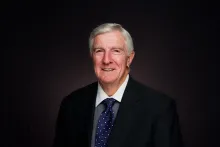
Before his retirement in 2021, Dr. Donald Ward pastored churches in Texas and Louisiana, and taught at Ambassador Bible College in Cincinnati, Ohio. He has also served as chairman of the Council of Elders of the United Church of God. He holds a BS degree; a BA in theology; a MS degree; a doctor’s degree in education from East Texas State University; and has completed 18 hours of graduate theology from SMU.
