

Don Ward
This transcript was generated by AI and may contain errors. It is provided to assist those who may not be able to listen to the message.
The title today, The Origin, Development, and Outcome of Faith, of the many sermons that I've given through the years, decades, and so on, I would say this is one in the top three or four, as far as importance, to really understand it. The two sermon topics that have been given most often, I would say, in the church are trials and faith. So once again, the title of the origin, development, and outcome of faith. We seem to understand more profoundly the way, the why of trials, than we understand what we must do to overcome trials. In some cases, trials are not overcome and some diseases are not healed. They never are, but yet at the same time we're to remain faithful through it all. It is faith that allows us to cope with and overcome trials without coming to doubt God and becoming lukewarm at best or at worst. Today we're going to examine the origin, development, and outcome of faith. I will give an overview up front and then fill in concepts and components as time permits. This is not a lazy man's sermon, a lazy-minded man, or something like that sermon. Most ministers, when beginning a sermon on faith, will dutifully turn to Hebrews 11 and verse 1. Hebrews 11 and verse 1 says, Now faith is the substance of things hoped for and the evidence of things not seen.
Most do not try to explain what this verse means. They give it as the definition. This verse is really stating the outcome of exercising faith.
As Jameson Fawcett Brown's commentary says, this is not a complete definition of faith and its nature and its completion. Hebrews 11.1 is not a faith in action kind of statement unless you understand the components and concepts of the statement. Once again, the statement says, now faith is the substance of things hoped for, the evidence of things not seen. The elements of this statement have to be put into action in order to receive the results. So let's give a profound but simple example. First of all, it says that faith is the substance of things hoped for. What is the number one thing you hope for? What is the number one substance you hope for? The Bible tells us what it should be. Seek you first the kingdom of God and his righteousness and all these things will be added unto you. The number one thing I hope for is to make it into God's kingdom. That is the substance I hope for in this life. I hope to become as God is and God is love. We're familiar with Matthew 5.48 which says that, become you therefore perfect even as your Father in heaven is perfect. And we know from 1 John 4.8 and 1 John 4.16 that God is love. So how can these hopes of being in God's kingdom, becoming as God is, become a reality in your life?
Through the evidence of things unseen. Faith is the substance of things hoped for and the evidence of things unseen. So these hopes can become a reality through the evidence of things unseen which has many components. God and the believer must be actively involved in the process. So let's note an account in the life of Abraham and Sarah that illustrates what I've just talked about.
If you would now, let's turn to Romans chapter 4 and verse 3. Remember, Abraham is called the Father of the faithful. So let's go to Romans chapter 4. What shall we say then, verse 1, what shall we say then that Abraham our Father as pertaining to the flesh as found for if Abraham were justified by works he hath whereof to glory but not before God? For what says the scripture? Abraham believed God and it was reckoned unto him for righteousness.
He believed God, but there was a component to believing God. Faith has two vital aspects. One is belief and the other is to actually do what God says to do. So we pick it up again in verse 15. Because the law works wrath for where no law is, there is no transgression. Therefore it is of faith that it might be of grace. That is, justification under the new covenant comes through faith.
To the result, the outcome of the promise might be sure to all the seed. But not to that only which is of the law, but to them which is of faith as Abraham who is the father of us all. Once again, Abraham counted to be the father of the faithful. As it is written, I have made you a father of many nations before him whom he believed even God who makes alive the dead, calls those things which be not as though they were. Remember this about Isaac. Abraham was perfectly willing to sacrifice Isaac as God had asked him to do, but he had already received in a figure Isaac from the dead because he knew that even if he were commanded and allowed to slay Isaac that he would be raised in resurrection.
So, who quickens the dead and calls those things which be not as though they were, who against hope believed in hope. Against what hope? Against the hope of this world. Against the hope of this world, there was no way that Abraham, who was now approaching 100 and Sarah passed the way of having children, to conceive a child and to have the son of promise, which they had been promised.
So, who against hope believed in hope, believed in what hope? The hope of God. And as we shall see that faith is a precursor of hope, that he might become the father of many nations. According to that which was spoken, so shall your seed be. He didn't even have a child yet, but he was to become, he had been promised to become the father of many nations. How was this going to be possible since he and Sarah were childless? Ishmael had been sent away. He was not the son of promise of Abraham and Sarah. And being not weak in faith, not weak in faith, he believed God.
He considered not his own body now dead when he was about 100 years old, neither yet the deadness of Sarah's womb. So God said, this is what you should do. He believed it. And even though against hope, he believed in hope against the hope of this world, against the natural consequences, the natural laws that might exist, they were able to come together and conceive. And being not weak in faith, they came together and they were able to conceive. He staggered not at the promise of God through unbelief. And of course, belief is one of the key components of faith, and we'll talk more about that as time goes on.
He staggered not at the promise of God through unbelief, but was strong in faith, believing God and doing what he said, giving glory to God. And being fully persuaded, he was able to perform, and therefore it was imputed to him for righteousness. Now that word imputed once again means, reckon to his account. It is not axiomatically imputed to him, or by him doing nothing, he actually performed what he was supposed to do. So here we see faith in action.
That is, Abraham believed God, he and Sarah came together, they conceived, and the substance was Isaac. Isaac was born, the evidence of things not seen, the Holy Spirit from God opening the womb of Mary, I'm not married, but of Sarah, and allowing her to conceive and for Abraham to produce the seed to impregnate her, and thus, faith in action, and through obedience, and doing what God said to do, as we'll read later in James 2, faith is perfected.
Faith is not something you just work up in your mind. There are vital steps along the way that must be done in order for faith to really be adequate in God's sight.
Now look at verse 23. Now it was not written for his sake alone that it was imputed to him, reckoned to his account, but for us also, to whom it shall be reckoned if we believe in him that raised up Jesus our Lord from the dead. Time after time in Scripture, it speaks about God the Father, raising Jesus from the dead, and raising Jesus from the dead is equated with birth. It's in Revelation 1.5, the firstborn of many brethren, who was delivered for our offenses and was raised for our justification. So it was not written for Abraham's sake alone, it was written for us. And then what comes next in chapter 5 is a little recipe, if you will, a formula for how we can receive the outcome of living by faith. Therefore, being justified by faith, we have peace with God through our Lord Jesus Christ. And of course, that process of justification will be you have to be convicted of your sins, you have to repent of your sins, exercise faith in the sacrifice of Christ, be baptized, receive the laying on of hands, by whom also we have access by faith through this grace divine favor wherein we stand, and rejoice in hope of the glory of God, the very presence of God. The glory of God has to do with His presence. Not only so, but we glory in tribulations, knowing that tribulation works patience. We'll talk about each one of these three things here.
Works patience. Patience works experience. Experience here, dokimadzo means proof, testing, and experience hope. For hope makes not a shame because the love of God is shed abroad in our hearts, how? By evidence of things unseen, by the Holy Spirit which is given unto us.
From time to time, we say that we're developing character by doing x, y, or z. It might be some people like to talk about, well, I didn't have dessert or I didn't have coffee or I didn't have anything halfway joking, halfway meaning it. We may be developing self-discipline, which is necessary, but it is God through His Spirit that creates holy, righteous character within us. So this process that we have just read here in Romans chapter 4 and chapter 5 verses 1 through 5 gives us a concrete example of faith in action. So we review each one of these steps here. Patience. Patience does not mean to do nothing. Some people might think, well, I just sit there and I'm very patient and I do nothing. We must be active. Look at Luke 21 verse 9. Luke 21 verse 9, but when you shall hear of wars and commotions, be not afraid for these things must first come to pass, but the end does not bind by. So when you hear of things that are about to come to pass, what do you do? You begin to pray. You begin to cry aloud. You begin to turn to God with your whole heart. Verse 19, in your patience possess you your souls.
It is through patience that we are saved because all the time in patience we are doing whatever we can ourselves to rectify whatever the trial is. Now we want to go to James chapter 1 where James says, let patience have its perfect work. What does that mean? So in James chapter 1, James, a servant of God and of the Lord Jesus Christ to the twelve tribes, which are scattered abroad, greeting of my brethren, counted all joy when you fall into different trials. Knowing this, that the trying of your faith works patience, but let patience have her perfect work. Letting patience have her perfect work doesn't mean that you just sit there and do nothing. If you're out of job, you pound the pavement and try to find a job. You go to the unemployment agencies, you go to various businesses, you go here, you go there. If you're sick, if you're injured, there are a number of things that you can do yourself, and others might be able to help you do. It doesn't mean that you just sit there and say, I'm impatient, and if it be the Lord's will, I guess it'll all work out right. That's not what it means. Let patience have her perfect work, but here's the spiritual import of that, that you may be perfect and entire, wanting nothing. See, during this time of patience, in which you don't know for sure whether you're going to get the job, whether you're going to be healed, but you do know what God has promised, that the just shall live by faith, and if they die in faith, they shall live again in resurrection. Just as Abraham believed God, even the things that had not yet even been, and if Isaac should be killed, he knew that he would be raised through resurrection and live again. So when you let patience have its perfect work, you know and know that you know that God always has your best interest at heart, and he will see to it that you live again, or whatever it is, but you don't always have the prayer answered. I guess most of you heard the song, thank God for unanswered prayer.
And I'm not going to go into the words, but you know, if you didn't get the girl he hoped he would get somebody else, but it turned out for the better. If you grudge, if there's a grudge, go to your brother. And whatever the trial might be, don't doubt God or become bitter. I'll mention this two or three times along the way. You remember the four great enemies of faith, anxious care. Take no anxious thought for tomorrow for sufficient is the evil of the day. Anxious care is a great enemy of faith. Fear. I'm afraid what is going to happen to me. I don't know if I can make a doubt. When is God going to hear me? When is he going to intervene? And human reasoning. All three of these first three, anxious care, fear, doubt, they are precursors of the human reasoning. Human reasoning feeds off those first three.
Then there's experience, and patient's worst experience. In other words, while the trial and difficulties going on, you are being tested. By implication, it means proof testing, approved, tried. For example, Abraham said, I know him. God said of Abraham, I know him. Abraham was a friend of God, and if God be for you, who can be against you? So, experience is a rather unfortunate kind of translation. It really means proof testing. And then the proof testing works hope. You have hope because you know that if you live by faith, as we've already noted, God will deliver you. Now we come to the result, the outcome, of faith and action in our lives. In other words, the very substance of it. If you go, let's read verse 5 once again of Romans 5, which is a summary somewhat of this. I call it a little formula. It may not work exactly this way every time, but it gives us a concrete basis to go on. Substance, evidence of things not seen. For hope makes us not ashamed because the love of God is shed abroad in our hearts by the Holy Spirit. See, the love of God, becoming as God is, is shed abroad in our hearts by the Holy Spirit. Now we look at verse Timothy chapter 1 and verse 7. Verse Timothy chapter 1 and verse 7, and we see once again the outcome.
It's verse 5. Verse Timothy 1 verse 5. Now the result or outcome, the result or outcome. The whole King James says now the end, telos, which means the result or outcome. Now the result or outcome of the commandment is love, agape, God is love. Now the end of the result of the commandment. In other words, if we live as God says to live by faith, the result will be the outcome. The love of God is shed abroad in our hearts. How? Through the Holy Spirit. But there were many things that we did along the way in concert with God to bring that about. Out of a pure heart and of a good conscience. And of faith unfeigned, from which some having swerved to turn aside, under vain jangling, desiring to be teachers of the law, understand neither what they say nor whereof they affirm. So here we see just a quick overview of what faith is in action. God deeply desires to create His holy righteous character in each one of you.
The love of God is shed abroad in our hearts, His character, His being. This is the primary substance we should hope and yearn for in this life with the ultimate outcome being eternal life in the kingdom of God. The Spirit of God is the evidence of things not seen. Obedience to the spiritual law results in us exemplifying His holy righteous character. So we just read, now the outcome, the result of the commandment, is agape, charity, love.
And I hasten to add, as we shall see, believing is a vital component, but there is more to it than just saying, I believe. You remember Hebrews 11.6 for the past 10 or 11 years I've hammered this scripture. He who would come to God must first of all believe that He is and that He is a rewarder of those who diligently seek Him. Yet very few really understand what faith is all about. They seem to reduce it to a component of the mind in the abstract. Faith is the springboard to all things spiritual. Not all things physical as some teach in the world's churches of sowing your seed money and then believing God's going to return 40, 50-fold or whatever it is. Living by faith is absolutely necessary for us being in God's kingdom. Let's look at 1 John 5 and verse 4, which makes this declaration. How do we overcome this world?
1 John 5, 4, For whosoever is begotten of God, begotten, old King James says, born, but it is canow, whosoever is begotten of God overcomes the world, and this is a victory that overcomes the world, even our faith. So if we're going to overcome the world, we have to live by faith. Now turn back a few pages to James 4 and verse 16. In James 4 we have the famous Armor of God chapter. He tells us that we are to put on the armor of God and by all means to put on the shield of faith, which will be able to quench all the fiery darts of Satan. We quench all the fiery darts of Satan by putting on the shield of faith. So let us put on the shield of faith, once again showing. Here's the victory that overcomes the world, even our faith, and by all means put on the shield of faith, which will be able to overcome all the fiery darts of Satan. So what does that mean? That we'll be able to overcome all the fiery darts of Satan. It means that no matter what the obstacle is that is put before us, that God will deliver you. If you know and know that you know and you live by faith, that no matter what the obstacle is, that God will give you deliverance. Now faith is the basis of hope. We have hope because we know through faith that he who has promised will deliver. Love is the greatest, but faith is a precursor. Faith through the word and spirit are the enablers. Now let's say that again. Faith is the basis of hope. We have hope because we know through faith that he who has promised will deliver. Love is the greatest, but faith is a precursor. Faith and hope are the precursors of becoming love. And so let's notice that in verse Corinthians 13 and verse 13. And now abides faith, hope, charity. These three, but the greatest of these is charity.
So why do I have faith? I have faith because God who has promised, God who cannot lie, has promise. Why do I have hope? Because God who is faithful has promise. So faith is a precursor of hope. Then faith and hope coupled together results in charity. These three, but the greatest of these is charity. Remember, faith, hope, and love abide forever. Once again, 1 Corinthians 13, 13. And now abides faith, hope, charity. These three, but the greatest of these is charity. Faith is a combination, and this is so important. Faith is a combination of conviction and commitment. Faith is a combination of conviction and commitment. And the third component is courage. I call it the three C's. You've heard me speak of the three C's many, many times. Conviction, commitment, and courage.
So let's look at each one of these individually. Conviction. Let's turn to the, I'll give the progression of how one comes to conviction. Let's go to John 6 and verse 44. In John 6 and verse 44, it says, no man can come to me except the Father, draw him, and I will raise him up at the last day. So it begins with the conviction of God saying, I am going to call this person. But, as we shall see, this person must have the gospel preached to them. There are two great, convicting agents. What are they? One, the Spirit of God, and two, the Word of God. So we go now to John 16 and verse 7. In John 16 and verse 7.
In John 16 and verse 7, nevertheless I tell you the truth, it is expedient for you that I go away. For if I go not away, the Comforter will not come unto you. But if I depart, I will send it unto you. And when it is come, it will reprove. And that word reprove in the Greek is elancho, or elancho, which means to convict. When it is come, it will convict the world of sin and of righteousness and of judgment. Now there's one critical component to this. The Spirit of God and the Word of God work in concert together for that conviction to take place. God is the one who calls, but God does not call one who has not come in contact with the gospel. In other words, the gospel has to be preached. The gospel has to go out.
In Romans chapter 10 verse 14. What shall we say then? Is there unrighteousness with God? I'm reading 9. Here's 10. 10-14. How then shall they call on Him in whom they have not believed? And how shall they believe in Him of whom they have not heard? And how shall they hear without a preacher? So the gospel has to be preached. That is why God and Christ raised up the church and commissioned the church to go, ye therefore and all the world, to disciple all nations and teach them to observe all things whatsoever I have commanded you. And lo, I am with you even to the end of the age. And how shall they preach except they be sent? How beautiful are the feet of them that preach the gospel of peace and that bring glad tidings of good things. But they have not all obeyed the gospel for Isaiah said, Lord, who has believed our report. Now we come to that all critical verse 17. Verse 17 is one of the great, I guess you would call it, summary verses of the Bible. Romans 10-17.
So then faith comes by hearing. So you have to hear the Word of God. Of course, it may be red or however it comes to you. So then faith comes by hearing and hearing by the Word of God.
So it is the Spirit of God, the Word of God, that convicts. Paul cries out and writing to the young Timothy in 2 Timothy 4, preach the gospel, be instant in season, out of season.
Rebute, reprove, all long suffering and doctrine. The time will come when they will not endure sound doctrine. The third, see commitment. You hold in sacred trust. Let's go to 1 Timothy 2. Now, 1 Timothy chapter 2. What are we talking about? We're talking about how one becomes the origin of faith, how one becomes convicted, and what are they going to do with it? 2 Timothy chapter 2 verse 1. You therefore, my son, be strong in the grace that is in Christ Jesus. And the things that you have heard among many witnesses, the same, commit you to faithful men. That word commit means to place in sacred trust. You hold in sacred trust the very living Word of God, the pearl of great price.
The same, you commit to faithful men who shall be able to teach others also. And then, to the degree that you are committed, and to the degree you are convicted. Of course, conviction takes place. So the order is to the degree that you're convicted, you're committed, you will act courageously. So courage is a product of conviction and commitment. There are people who do marvelous acts of courage in the physical realm. And almost every week or month or so you read of somebody giving a kidney to somebody else. To me, that takes a lot of courage. You hear of stories on the battlefield, how this person won the Medal of Honor when he saved his comrades. He may have given his own life, or maybe he was severely wounded. So if the conviction and commitment are strong enough, you will obey. Let's look at Acts 5 verse 29. The early Christians, how convicted and committed are they? Here we are. See, early Christians, this preaching that was taking place here was only weeks and days after Christ was crucified. I want Acts 5 and verse 29. This was only weeks and only days and weeks after Christ was crucified, resurrected and ascended, that here they are preaching the gospel. Here you are, some of you have been in the church over 50 years. You've heard it for over 50 years.
And it can become so easily taken for granted, and sermons become of no interest. And we go to church because that's what we do. But we must do more than just do what we do.
We must continue to dig, to strive, to do the things that God has outlined in his Word. In Acts 5, 29, we're talking about conviction and commitment. To the degree that you are convicted and committed, you will act courageously. And this, of course, translates into acting faithfully.
Ben Peter and the others, apostles, answered and said, we ought to obey God rather than men. The God of our fathers raised up Jesus, here it is again, whom you slew and hanged on a tree. Him hath God exalted with his right hand to be a prince and a savior, and for to give repentance to Israel and forgiveness of sins. And we are his witnesses of these things, and so is also the Holy Spirit, whom God has given to them that obey him. And of course, we'll be coming back to that, them that obey him.
Verse 41, and they departed from the presence of the council, rejoicing that they were counted worthy to suffer shame for his name.
One of these days, the church, and each member of the church, will suffer shame in the eyes of the world. You shall be hated of all nations for his name's sake. We can't always hide. We cannot always duck. We cannot always just be in our house in the closet. One of these days, we'll have to be on the front line.
Faith, here we come to a very critical point. Faith is a gift of the spirit, and faith is a fruit of the spirit.
You ever thought about that? Faith is a gift of the spirit, and faith is a fruit of the spirit.
Look at 1 Corinthians 12 verse 9, where it shows us that faith is a gift of the spirit. 1 Corinthians 12 and verse 9.
To another faith, what is he talking about? He's talking about the gifts of the spirit. Verse 7.
So here we see that faith is a gift of the spirit. This you have to follow and really understand it.
Now in Galatians 5, Galatians 5.22, we see the fruits of the spirit are listed here in Galatians 5 and verse 22.
But the fruit of the spirit is love, joy, peace, long suffering, gentleness, goodness, faith. So this introduces one of the most misunderstood concepts in Scripture. We go now to Ephesians, just forward a few pages to Ephesians chapter 2 and verse 8. Ephesians 2.8 says, By grace are you saved through faith, and that not of yourselves, it is the gift of God.
Notice this.
The phrase, and that not of yourself, has two possible antecedents, either salvation or faith. Most people, the religious world, assume that the phrase not of yourself refers to faith rather than to salvation.
Now, just think logically for a moment. If God gave you the faith to be saved with no effort on your part, and then you should be, quote, lost, whose fault would that be? It would be God's, because He didn't give you. He would be a respecter of persons as well.
But in the original text, the word faith is feminine. Therefore, it cannot be the antecedent of the pronoun that which is neuter. In Greek, as in English, the pronoun always agrees with antecedent in gender. Since faith is feminine, it cannot possibly be the antecedent of and that not of yourselves. The expression refers to, by grace are you saved. In other words, it is. By grace are you saved. It is the gift of God. Now, faith is a gift of God as well, but it requires action on our part. Faith without works or obedience is dead. So, let's liken this to a tennis match or tennis game. Singles. You on one side of the net, God on the other side. God serves the ball, the word, right to you.
And how you have right here the net, the racket, all you have to do is return the ball over the net.
See, when you are convicted and committed, you will act courageously. And you will do whatever God has asked you to do. When it comes to spiritual matters, if God is laid upon your heart, I am a sinner.
And I need to repent of my sins. See, that repenting of your sins, that repenting of your sins, can be reckoned to your account and music. And at the same time, it increases your faith. And God gives you more faith. And you become more faithful. And you become stronger in the faith.
So, we should notice here that none of the fruits of the Spirit can be produced apart from obedience. And once again, we've already read Acts 5.32, which says, God gives his Spirit to those who obey him. Faith stems from the law. And it is verified by Matthew 23 and verse 23. Somewhat to throw away the law, if you would turn to Matthew 23. The churches of the world throw away the law because they say you're justified by faith. Yes, you are justified by faith. But in order for you to be justified by faith, what must you do?
Being convicted, being committed, now willing to act courageously and return what God has served into your mind. Your mind, the weight within you, becomes analogous to the ball. Are you going to return it?
Or are you going to let it fall deadly to the ground?
Matthew 23, 23. Woe, and you scribes, fire these hypocrites, for you pay tithe the men and the some coming, and have omitted the weightier matters of the law, judgment, mercy, and faith. Notice, faith is a weightier matter of the law. See, you are convicted of God's truth, and if you obey it, you are exercising faith. You're exercising faith. It says, these ought not to have done, and not to have left the other undone. So if faith is a weightier matter of the law, it springs or stems from the law. And a lot of people, they would talk about faith, and they never even consider the law. See, the simplest, once again, is the simplest definition of faith. Believe God, do what he says. Did God give us a law? Sure, He gave us a law. The Ten Commandments. So we can conclude that faith is inextricably, that means it's not capable of being untangled or linking together.
Faith and obedience are inextricably linked together. The methods of increasing faith are basically the same as renewing the inward man. The inward man. I've already stated that you must be convicted, committed, and act courageously. In addition, how do you increase your faith? How do you increase the Holy Spirit within you? Faith comes by hearing, hearing by the Word of God. Okay, so one of the things, of course, is to study the Bible. By studying the Bible, faith comes by hearing, hearing by the Word of God. This increases faith according to the Scripture. Another way is to ask. Look at Luke 11 in verse 9. Luke 11 in verse 9. And I say unto you, Ask, and it shall be given you. Seek, and you shall find. Knock, and it shall be opened unto you. For every one that asks receives, and he that seeks finds. And to him that knocks, it shall be opened.
If a man or if a son shall ask bread of any of you that is a father, will he give him a stone? Or will he, if he asks for a fish, will he give him a serpent? Or if he shall ask an egg, will he give him a scorpion? If you then, being evil, know how to give good gifts unto your children, how much more shall your heavenly Father give the Holy Spirit to them that ask him?
He will give you the Holy Spirit, and it will increase your faith. Faith comes by hearing, hearing by the Word of God. And as we've already noted twice from Acts 5.32, God gives His Spirit to those who obey Him.
Another way is to fast. Remember in Matthew 4.4, how did Jesus overcome Satan in that trial?
Jesus had fasted 40 days and 49s. Turn to Matthew 4.4. We'll read and start in verse 1. Matthew 4 and verse 1.
Then Jesus was led up by the Spirit into the wilderness to be tempted, tried, tested of the devil. When He had fasted 40 days and 40 nights, He was hungry. And when the tempter came to Him, notice what the temptation was about. If you be the Son of God, command that these stones be made bread. But He answered and said, It is written, Man shall not live by bread alone, but by every word that proceeds out of the mouth of God. For every temptation that came along, Jesus Christ quoted the Scripture. He acted in faith.
And then we can draw strength and faith from one another.
So all of this shows that faith is not something that can just be worked up as a mental exercise. I got faith. I got faith. Intellectual assent to the truth is not enough.
And sadly, it has been stripped of the inextricable linkage to obedience by the religions of the world.
We could validly conclude that faith, trust, and belief are linked together. We usually develop trust and belief in someone based on personal experience. But in spiritual faith, we encounter the spiritual dimension. How do you come to believe in the existence of God? This is where we need the spiritual dimension. And we have already read this from John 16, verses 7 and 8, that when the Spirit has come, it will convict you. We went to Romans 10 and we read there, where how can they call upon Him of whom they have not heard? And we, three or four times, have mentioned Romans 10, 17. Faith comes by hearing and hearing by the Word of God. So we see that the hearer must be open to hearing and responding to the convicting power of the Spirit of God and the Word of God. And we've used the tennis game as an analogy to show how it has to be done. Time after time through the ages, God sent faithful men, prophets, examples of men and women who acted in faith to Israel. But time after time, they refused to listen. They refused to hearken unto His voice, and therefore they did not enter into His rest.
As we enter now the end of this age, we must not be overcome by unbelief.
The Word of God states that a great tribulation is going to come upon the world and try all the world. The Word of God declares that in this life you will be tried and tested. In the meantime, your faith will be tested and tried. And if you are alive at the time of the place of the abomination of desolation, you will be severely tested and trialed.
Another measure of faith is the degree to which you place yourself in God's hands and internalize your will be done. An example of this is Shadrach, Meshach, and Abednego. They built a great image. They were commanded to bow down and worship it. If you don't worship this, you'll be thrown into the fiery furnace. Shadrach, Meshach, and Abednego said, be it known unto you Nebuchadnezzar, we're not going to bow down. So they were thrown in the fiery furnace. Then later they looked into the furnace, and what did they see? These three were well. They saw one walking in there like unto the Son of Man. So many of God's people through the ages have suffered. God has proved his faithfulness from time immemorial. He delivered Noah, Job, Abraham, Joseph, the whole nation of Israel. God loved us so much that he gave us his only begotten Son. Christ loved us so much he gave his life. We must never try to put a time frame on God and certain physical manifestations as a measure of our faith and his faithfulness. Faith is a total package, a total way of life. Living by faith constitutes the process by which God will create his character in you. Faith works tribulation, trial testing, trial testing works, hope. Hope makes us not ashamed because the love of God is shed abroad in our hearts. So let's talk here for a couple of minutes as we close with what I would call heart to heart. As I've already stated, many want to measure faith by physical signs from healing to financial blessings. The true measure of faith is the degree to which you're becoming love as God is love. Not whether you're rich, not whether you're poor, not whether you have a lot of money or you don't have money. The degree to which you're becoming love as God is love. For those who have entered into the covenant of sacrifice from God, the master potter and refiner, he may say it is not time for deliverance. He did not heal Paul. Many of the men and women of Hebrews 11 were not delivered. They died in faith. Through the trying of our faith, God may be teaching you lessons and developing facets of your business. And developing facets of your being that are essential for the job he's called you to do in the world tomorrow. The trying of your faith more precious than gold. We love our children so much that we want to help them succeed in every way that we can. Are we more righteous than God? Does God allow his children to be dangled over death's door? And all the while he's saying, I sure would like to deliver them, but they just don't have faith.
Whereas Romans 8 says that the Spirit makes dronings, makes intercession according to the will of God. Sometimes we don't know what to pray, but the Spirit prays according to the will of the Father.
Yes, we must repent and seek God, but you may have great faith and still not be delivered. Stephen wasn't delivered, and many others were not delivered. But we must never doubt that God always had our best interest at heart. Christ ever lives to make intercession for us. And when you lose courage and have greater affection for anything than God, you're losing faith. Remember the four great enemies of faith, anxious care, fear doubt, and human reasoning.
Remember the commitment of baptism. You're willing to give everything, even your own life, if necessary.
So we need to be thankful for whatever we have.
Satan hates people who give thanks. If you want to put Satan to the run, start giving thanks for what you have.
So let us fight, struggle, earnestly contend, just like a good soldier continues to fight, no matter how it seems the battle is going, earnestly contend with the faith once delivered. He fights, the good soldier fights in faith to the death. If he dies, he dies to wait the resurrection. Yes, the just shall live by faith.
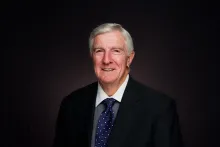
Before his retirement in 2021, Dr. Donald Ward pastored churches in Texas and Louisiana, and taught at Ambassador Bible College in Cincinnati, Ohio. He has also served as chairman of the Council of Elders of the United Church of God. He holds a BS degree; a BA in theology; a MS degree; a doctor’s degree in education from East Texas State University; and has completed 18 hours of graduate theology from SMU.
