
Gary Petty
Being a citizen of God's kingdom changes our loyalties, expectations, values and motivations.
It's hard to believe that the All Holy Days are coming up so quick. In fact, they come up so quickly. It's hard to believe they're right out there. No, there's so many other things going on.
And yet, in another way, it's like, oh, we're all starting as I am. I think you are, too. It's the anticipation of being able to go to the feast and feast of trumpets, David Tohman. In all the Holy Days' picture, when you put them all together, all we have is the entire plan of God. In fact, it's the gospel. It starts with the sacrifice of Jesus Christ and ends up with the Father coming to earth, the New Jerusalem, and which the only ones left are those who have been changed into His family.
Evil's gone. Everything's perfect. And that's when the story actually begins, when God has His family, and He's here on earth, the New Jerusalem, and the story begins. So we always look at that as we prepare for the Feast of Tabernacles. And we also talk about the physical things, and we get excited. Most of us have a lot more money.
I think all of us have more money at that time than any other time of year. I mean, we can go to restaurants we wouldn't normally go to. We do things we didn't would normally do. We travel into places we wouldn't normally go to. And it's so exciting. You know, you're in the group hundreds, maybe a couple thousand, a few cases of people there, all worshiping God. And we are there to focus on that coming return of Jesus Christ, to reestablish God's kingdom on this earth.
But there's this mistake we make sometimes. And I've talked about it before. You've heard it before from different ministers. But we have to be very careful. Sometimes we think the Millennium and the Kingdom are synonyms, and they are not. The Millennium is a thousand years. The Kingdom of God is the Kingdom of God. I mean, the Kingdom of God has always existed and always will exist. It's not like God right now is someplace hanging out, waiting for His Kingdom to be formed when Christ comes. The Kingdom exists. God sits on His throne. He controls everything. He is in charge. Now, He has allowed, and the important thing is allowed, Satan for a number of reasons.
And I thought about giving a sermon on that sometime in the future. Why would God allow this to happen? Because there are reasons why He would do this. But He's allowed Satan to have some dominion, limited dominion over humanity. I say limited because the entire Bible is about how God keeps interfering with Satan's plans. He has limited dominion over humanity for a limited time. When we talk about the Feast of Trumpets, the Day of Atonement, we realize that Satan's time is limited.
And there's a time when Christ comes back and Satan is no longer influencing humanity. So God's Kingdom exists now. And you and I live in this difficult time where we're trying to live by God's Kingdom. And at the same time, we're living in the Kingdom of Satan. I say the Kingdom of Satan.
I don't want to ever imply He has all power because He does not. And that power has been broken by Jesus Christ. But in Philippians, the Apostle Paul says, our citizenship is in heaven. And he's not talking about the future. He's talking about right now. God is the sovereign. He sits on His throne. Jesus Christ sits on His right hand as King of Kings and Lord of Lords. And we are citizens of His Kingdom. Even though we live day by day in a world that's not ruled by Him, He lets somebody else rule it for a while in part.
It's always limited. What does it mean? What is it to be a citizen? I mean, everyone here is a citizen of the United States except, I suppose, Mr. Jennings. At least by the way he talks, I would guess he's a citizen of someplace else. But you know, I've been to Australia, and I was really impressed with how happy I was treated. I mean, everybody was nice. It was a great place. Even strangers would come up and talk to me, mainly because they wanted to hear me talk like a yank, and they thought that was funny. But you know, I wasn't a citizen of Australia.
There were certain privileges I did not have by living there because I'm not a citizen. Citizenship has to do with, first of all, you're a lawful citizen of that country. In other words, you are lawfully there. I was lawfully in Australia, but I was not a lawful citizen. So I normally didn't have the total things that are given to a citizen. There are people that come to the United States, either illegally or they come to visit, and they are here, but they are not lawful.
To be a citizen, you are given privileges because you are a lawful citizen. By law, you're a citizen. And because of that, you have privileges and you have rights. In the United States, we're all given rights to a certain kind of trial. That's because we're citizens. And the United States Constitution contains certain privileges that we get. But you know, there's also obligations that come. It's interesting, in the United States Constitution, basically, well, if you go back to the Constitution, the women didn't have the right to vote yet.
So all men who weren't slaves, all freed men, had the obligation to vote. They also had the obligation to serve on jury duty, and they had the obligation that they would have to fight for the country. Those were obligations that came with their citizenship. So we're lawfully a citizen. We have privileges because we're a citizen.
We have obligations because we're a citizen. Our citizenship is now in heaven. You are lawfully a citizen of the kingdom of God. You are called by God, and you are placed into this citizenship role in which we have the right to vote. We have become members of another kingdom.
You know, it's sort of hard to think about that sign. It's an invisible kingdom. Well, not really. Everything is God's. But you know what I mean? Its rulership isn't always seen and felt the way human rulership is, or Satan's rulership. But we are citizens of that kingdom by law, the law of God. And because of that, we have rights as a citizen. You say, what's that mean? You have the right to go talk to the king anytime you want. That's a right. That's not a privilege. I mean, that's not a gift that everybody has. It's a right given to us. It's a privilege given to us that we can go talk to the king anytime we want and have the king interact with us as citizens of that kingdom. And then we actually have duties and obligations that we perform as citizens of that kingdom.
As we go into a time where we're going to be picturing the next stage of the kingdom of God, remember, it's not like it's still here. It's God still on His throne. The next stage of the kingdom of God is humanity under Satan's rule gets to the place where it almost destroys itself. Christ comes back, Satan is bound, and He takes over the rulership of the world. And now His kingdom is brought here, and it's going to be a mess. Humanity is going to be so messed up from living under Satan's rule. It's going to be an absolute mess. And Christ is going to have to sort that out, work that through, and solve those problems for a thousand years. And then the next stage starts, which is going to end up with New Jerusalem coming to earth. We won't get a vision of that. And everything we do during the feast, all the physical things we get, you know, we'll Kim and I will be in Gatlinburg. We love the place we're staying in. We stayed in there last year, just a little condominium looking out over the mountains. Absolutely beautiful view. A bear that walks through the parking lot every once in a while.
And it's just beautiful. It's quiet, and we're only 15 minutes from the feast site. We'll go to services every day. It's just a wonderful thing. We're looking forward to that so much. We found an Indian restaurant we want to go to. We went there last year. It would be great. But you know, that's not why we're there. That's just some added stuff.
We are there because we are there to commemorate and celebrate what God has done in the past through Jesus Christ and what He's going to do in the future. And when that kingdom rules over humanity again, and the temporary rule of Satan is gone. And that vision is what we're supposed to come back with. If I go to the feast and I come back only with, wow, Dolly World was great. I've missed the whole purpose. I mean, there'll be some fun things. I mean, I have some little grandkids. We'll probably... I don't think we'll go to Dolly World, but we'll probably go to Ripley's Believe It or Not, or you know, some of the other things they have. Go-karts, stuff like that. But if that's all we come back with, well, you can do that anytime.
And I really want to encourage you to think about what we're going to go through today as you think about what's going to be happening a month from now and what God wants you to bring back from the Feast of Trumpets, which we'll be having services together with the Murfreesboro Brother and the Murfreesboro and the Feast of Trumpets. We'll have David Toman here. And then we're going to go... we're going to scatter all over the world. How many of you are going outside the United States to the Feast this year? Look at that. It's a lot.
Probably a lot of you to Crete, because that's where... yeah, okay, lots of you to Crete. I would have loved to go on that trip, but I didn't even ask. I get this little memo and said, please go where there's needs, because so many ministers are going to Crete. We have feast sites with no ministers. I said, where do you want me to go? They said, Gattelmer, fine with me. So, you know, I'm happy going to Gattelmer. My wife was actually more than happy because she doesn't like traveling overseas anymore. And it's like, oh good, you're not going to drag me to Crete. So... But there's some real neat biblical things about Crete and about... you know, they'll take a trip to Athens while they're there. So, you know, from the biblical viewpoint, there's a lot of interesting things. I want to talk about what being citizens now means in changing our lives. Fundamental changes that happen in us as citizens of the kingdom of God. The first one is, being a citizen of the kingdom of God changes our loyalties.
You know, we all have different priorities of loyalties, right?
Our loyalties are always tested. Your loyalty to your job is tested because they want you to do something dishonest. And many of you face that, and you have to say no.
Our loyalties are always tested. What I want to do in this sermon, we're just going to go back and forth between Hebrews 11, the faith chapter, and a few passages in the Sermon on the Mount, sometimes called the Constitution of the government of God, the kingdom of God, Constitution of the kingdom of God. And actually, when you look at the entirety of the Sermon on the Mount, what you're looking at is the practical Christianity of how we're supposed to live. And so it is, in many ways, part of the Constitution of the kingdom of God. So let's go to Hebrews 11. We'll start there.
Different loyalties. The loyalty of whatever you are loyal to is, in your mind, the absolute substance of reality. If you're loyal to making money, money itself becomes what you're loyal to. I mean, I've known people that they don't even enjoy their money. They just want to make money. The more money they have, it's like the happier they are. They think, but they're not. They're miserable. They have to make more. Other people, they just want things. And so, you know, if you have a boat and a house and three cars and all this stuff, more than anybody else you know, and yet they're never happy, it's got to be more stuff, more stuff. That's the substance of their life. That's the core of their life.
Where are our loyalties? You and I are faced with loyalties at a lot of different levels. The loyalty to the government of the United States? Well, we should be to a certain degree, because there's always a priority of loyalties. I mean, Jesus said, pay your taxes. Paul said, pay your taxes. So we should pay our taxes. We should obey the laws of the land unless they come into disagreement with the laws of God. Being a citizen of the kingdom of God means our primary loyalty is to God and Jesus Christ. That's it. Everything else comes under that. Anything that breaks or damages our loyalty to God and Jesus Christ will bring about failure in life. Look what it says here in Hebrews 11, verse 1. Now, faith is the substance. It's what it's made of. This is an odd sentence. It's going to use faith, which is an ambiguous word. I mean, you can't grab faith. You can't hold on to faith. You can't measure faith. And then substance, which is something you could measure. Faith is the substance of things hoped for, the evidence of things not seen. We have a loyalty to something that for people who don't believe in the kingdom of God will seem absolutely stupid. How do you measure that? How do you explain that? What does it mean? Something that you can't see? Have you ever seen the throne of God? No. Then how can you have faith in His kingdom? Verse 3. By faith, we understand that the worlds were framed by the Word of God so that the things which are seen were not made of things which are visible. In other words, we actually believe that the universe did not exist at some point, and it was created by God out of something that's not visible. So this is the substance.
Skip down to verse 8. By faith, Abraham obeyed when he was called out to the place which he would receive as an inheritance, and he went out not knowing where he was going. Okay, so Abraham gets a call from God when he lives in Ur, in between the Tigris and Euphrates Rivers. And he gets a call to go someplace that's called Canaan, which is a long ways, hundreds and hundreds of miles away, which at that time was a huge journey. He didn't have a globe to look at. Where is this place? Well, he would have known you have to go west. There were roads to get there, not nice modern paved roads. How do you get there? Well, you sell everything you have, and we know he was a somewhat wealthy man. You sell everything you have, you move out of the city, and you become a nomad with tents, flocks, and servants, and you're now a nomad. You have a tribe, and you begin to move towards where you're supposed to go. This is what God called him to do. Then he says in verse 9, by faith he dwelt in the land of promise, as in a foreign country, dwelling in tents with Isaac and Jacob, that erred with him of the same promise. When Abraham got to the promised land, his son Isaac, his son Jacob, never owned any of it. Joseph, one of the sons of Jacob, ended up in Egypt, as did the entire family. The entire family never owned a piece of the promised land. They got moved out of it.
When Abraham had to bury his wife Sarah, he had to barter with a man to buy a cave to bury her in, in the land that God said was his. And nobody else thought it was his.
Only God said it was his. And he believed that his descendants would get that land. And you know, that's one of the promises when we get to the millennium, when Christ comes back. All those scattered people of Israel are gathered together, the physical descendants of Abraham on that side of the family, and they are given a land in the Middle East. And so are Arab peoples, too, who are descendants of Abraham, by the way. They get land in the Middle East. So God brings the descendants of Abraham back. He gives them the land that Abraham never owned. How could Abraham spend his whole life? How could Isaac spend his whole life? Jacob spent his whole life in the promised land, never receiving the promise. What caused him to do that? Verse 10, For he waited for the city which has foundations, whose builder and maker is God. We have to describe that city in a minute. What does he mean by that? He was waiting for a city. This is the promised land that my children's children's children get. And I get to be here as a nomad. But I'm waiting for something beyond that. You see, Abraham was a citizen of the kingdom of God. He was waiting for his country, which went way beyond the promised land that was going to be given to them physically. It's the same city we're waiting for. And that is our loyalty. Our loyalty is to the God of that city. And our loyalty is to Jesus Christ, who's going to reign as the king over that city. What's interesting, he reigns over the kingdom for a thousand years. You have the great white throne judgment. And probably you'll hear either at the end of the Feast of Tabernacles in the sermon or doing that last day, that eighth day, a sermon about how when that time comes, Christ gives the kingdom to the Father. It's like it's done. We did it. Satan's no longer there. In fact, the only beings left alive are those who are citizens of the kingdom. The lake of fire is burned up the face of the earth. It's reconstructed. That is God's goal. That's what God's working for. You know, we look at our lives and we look at what's happening now. We say, look what God is doing. And we're all consumed with that. It helps to realize every once in a while, we're just a dot. We're important. We're just a dot in the plan, though. It's like a giant, giant map of the plan that's 10 rooms long, okay? And 30 feet high, and you're a little pin stuck in there someplace. That's okay. You're on the map. That's good. But that's all we are. We're little pins in the map of what God is doing. It's a much greater thing than we can even imagine. And that's what we're supposed to get a glimpse of when we go and keep these following days. Not just the instructions given to ancient Israel, because theirs were all around what? The harvest season in the land. Good. That's part of the promise. Physical people get that land. But that is not the lesson we learn. The lesson we learn is about the great harvest, what God's going to do when He sends Christ back. That great harvest, which begins with the first stage is us, the first harvest. And then there's another harvest after that. First harvest is Him, Jesus Christ. Second harvest is the church that is first coming. And then there's all humanity, right? Who will accept Him? God wants us to see this. He's designed holy days that we observe so that we can see it. We can see what He's doing.
Now let's go to Matthew 6.
Matthew 6. So we'll go to the Sermon on the Mount.
And let's look at verse 19.
Here's what we're supposed to learn from this about our loyalties. And He's talking here about a very specific thing, but this applies to anything that we can become loyal to. Do not lay up for yourselves treasures on earth where moth and rust destroy, where thieves break in and steal. But lay up for yourselves treasures in heaven, where neither moth nor rust destroys, where thieves do not break in and steal. For where your treasure is, there your heart will be also. Now He's not saying, if you need a new car and you save money and you want to go get a nice car. There's nothing wrong with having a nice car. But we all know people who live for their cars.
You know, they can't wait to get to spend, you know, huge amounts of money on the new car, whether they can afford it or not. Or they just have so much money that, you know, they just collect cars. Now there's nothing wrong if you have that kind of money to collect cars. But that's not what life is all about. That's just a little fringe benefit. For some of us, a fringe benefit is the local ice cream shop, right? It's not life, but that's our fringe benefit. For others, it's something else. That's not wrong. But if it becomes the center of your heart, it's wrong. It doesn't matter what it is. It doesn't matter the amount. Because all this stuff doesn't last forever. The kingdom of God does. Verse 24, no one can serve two masters, for either he will hate the one and love the other, or else he will be loyal to the one and despise the other. You cannot serve God in money. He didn't say you can't have money, so you can't serve it. Now we can plug all kinds of things in there. You can't serve your God and a career that takes you away from God. It's not wrong to have a career, but a career can become something that takes you away from God. You reverse the priorities. You can reverse anything. You can take your husband, your wife, your children, and reverse that priority, and make them more important to God. And you do that, and your relationship with those people will fail. If God's first, they won't fail. So we can do it with money. We can do it with position. We can do it with career. We can do it with anything. Anything in life. As we get wrapped up in the physical.
So how we spend our time, how we spend our money, how we spend our resources, how we give to others, we have different loyalties. Our loyalties are to God, and Christ, and His work, and His people, and then there's a set of different loyalties. And you sacrifice the lower loyalties to the upper ones.
This is what life is all about. This is what citizenship is all about. The second thing is, is being a citizen of the Kingdom of God creates a new set of expectations. What do you expect out of life? What do we expect out of life? You know, you go through different stages of life. You know, what Kim and I have talked about when we got married. What we expected out of life, we weren't sure. But we didn't care that we didn't have anything. We didn't care that we, you know, we had a car that broke down every... One time we had so little money, I had to get new tires every month. Because I'd have to go to the junkyard, find the best tires I could, and put them on there. And they lasted about a month. But we were living in the projects at the time, and that's the way life was. And we weren't despair. It was like, this is the way life is. It's going to get better. We always knew we're going to work hard. We're going to make this better. And it did. We've talked about it a number of times. Why in the world did that not like put us in despair? Because we always thought it was going to get better. His work hard keep going, and someday we'll actually have tires. And we were so happy when we got tires, real tires, that had a 40,000 mile warranty. We were just so happy. Because I didn't have to go to the junkyard once a month. Our expectations, back to Hebrews 11. Because many times our expectations now are too much that God is just going to bless us physically. Yes, God blesses us physically. We've all received blessings from God. But you know, if this was just about blessings from God, then we'd have the health and wealth gospel, wouldn't we? If you just give enough money to the church and praise God loud enough, you're going to get... no, you're going to be healed of everything and you're going to be a millionaire. And there's actually people that are multi-millionaires because they preach that gospel and people give them money. It is one of the biggest scams. I don't even call it Christianity because it's not Christianity. It's just downright... it's evil. The idea you send money to this preacher and God's going to bless you with more and more money and health. You pay your tithes to God. Giving money to a person is not what this is all about.
So what are our expectations? Hebrews 11, 13. These all died in faith. He's talking about Abraham and Isaac and Jacob and Abel. And he just... there's a whole list of people where he's talking about from the Old Testament. And then he simply states, they all died in faith. They didn't receive eternal physical life. Not having received the promises, not having received the promises, but having seen them afar off, were assured of them, embraced them, and confessed that there were strangers and pilgrims on the earth. Our expectations of life is. We embrace what God tells us. We believe what God tells us. We know it's in the... it's not... some of it's now. I mean, God does give us blessings. But the real blessings, the Promised Land, is not the United States of America. It is the Kingdom of God. United States of America was doomed when it created a constitution. It happened to be the best thing human beings have ever come up with, by the way. And also they had the Bible, which they get blessings from that. And God gave us blessings.
But it's not the Kingdom of God. Eventually, it was going to deteriorate under Satan's rule and dominion, because that's what all human governments do. This one just happened to be a little better, which I'm glad, because you and I have lived in, compared to the rest of the world, absolute wealth. Or much of the world. I mean, Europe has money. I mean, but compared to much of the world, we live like kings. We just don't see it that way. I never forget being at a conference of elders one time. A conference of elders, but the GCE, General Conference of Elders. And we were in there, and there was a minister there from Africa. And he said, I finally have figured out why Americans have such a hard time living for the Kingdom of God. He said, once I came here, looked around. He said, in Africa, we would say, oh, you're already living in the millennium. He said, you're living with wealth, the average person here, that only the very rich in our country live, and they're all, you know, gangsters. He said, no wonder you have such a hard time. Physically, in some ways, you're already there. And I remember thinking, yeah, and God will probably have to take it away for us to understand. At some point, you have to take it away, or we'll never get it.
He says, there were strangers and pilgrims on the earth. If you are truly a citizen of the Kingdom of God, you will be a stranger and a pilgrim on this earth. You'll never really fit in. Oh, you have friends. You'll get along with people. You may be somewhat successful, but you will never completely fit in. And the reason you don't fit in is because this isn't the kingdom that's your priority. Your expectations are different. If you have expectations that whoever the next president is is going to save the United States, please come talk to me when you, if your candidate gets in, and then you become disappointed.
Nobody can save this mess except Christ, and he's not coming yet. And he said, well, that's so negative. No, I'm a pilgrim. I understand that much. There's a lot I don't understand, but I understand I'm a pilgrim. I'm a stranger on this earth.
I actually love the United States for all of its good, and I'm in despair for all of its evil.
I love it for all of its good, and I'm in despair because of all its evil. It's evil, but that's the way human beings are, and this isn't the kingdom of God.
He says in verse 15, or verse 14, for those who say such things declare that they seek a homeland. Now he's talking about Abraham and Isaac and Jacob that wandered through the Promised Land, their whole lives. And he says, no, they were seeking a different homeland even than that. They were seeking the kingdom of God, the city. And truly had they called to mind the country from which they had come out, they would have had opportunity to return. You get too involved in the politics of this country, and you're going to have a hard time being a Christian.
But now they desire that is a heavenly country. Therefore, God is not ashamed to be called their God, for He has prepared a city for them. On that eighth day, the last day at the Feast of Tabernacles is over, you will observe a holy day in which someone will read to you about that city coming to earth after the Great White Throne Judgment, after Satan is removed, after all human beings who just refuse to follow God actually are in the lake of fire. And the face of the earth is destroyed in fire, and God creates a whole new world and a whole new universe. And He creates this new world and this new universe, and the new Jerusalem, the city of God comes to earth. They were waiting for that city. You and I are at a different stage of salvation than they were, and we're still waiting for that city because that is what God wants us to look at. But finally, all humanity has been changed, and they're the family of God. That's what He's looking forward to. He's looking forward to meeting every single one. Every single one.
That is what we're looking forward to. That's what we're going to celebrate and commemorate. And all the fun and all the things that happen are good. But if we don't come back with this, it's hard to get through the next year. It's hard to get from the end of the Feast of Tabernacles to the Passover. Sometimes it gets to be for many people a very discouraging time. A lot of spiritual problems. And then we're brought back to ground zero, right? Without the sacrifice of Christ, we have nothing. So that's where He starts us all over again, and we go through the whole process of the Holy Days all over again.
Matthew 6. I read this, part of this last week, but I'm going to read just a couple verses because it fits in the context of what we're talking about here. He says, verse 33, but seek first the kingdom of God. Now, He doesn't say seek first the millennium. The millennium is when the kingdom of God was restored on earth. He says, seek it now. You're a part of it now. You're a citizen now. Look for it. Find it. Have God in your life now.
Once again, that doesn't mean God's reigning on the earth in terms of, let's say you have this dominion, but it's only by permission. It's only by permission. And we're called out to become these citizens. We're called out to be representatives of the King of God. Seek first the kingdom of God and His righteousness, God's righteousness. He says everything else will be taken care of. It may not be exactly what you want. And sometimes it's going to be hard. Sometimes it's going to be downright difficult, but He'll take care of it if you seek those things first. Because whatever happens, if we're seeking those things first, it'll give us a different expectation of what is happening to us. We'll have a totally different expectation because we see what God is doing. We're looking for that city where He's coming.
A third thing is being a citizen of the kingdom of God creates a whole new set of values.
Our value system is so different than what our society is. And one of the reasons why we still don't have the value system of Christ won't send us yet is because we still live by the values of our society. That's the way all people are at all ages. Whatever we are taught through our families, through our schools, through our society, through television, through the internet, we learn that and we accept those as values.
Our values must come from God. They must come from the teachings of the Bible. Back to Hebrews 11.
Hebrews 11. Let's go to verse 30.
Now, let's go to Hebrews verse 24. Let's start there. We'll go to for 30 in a minute. By faith, Moses, when he became of age, refused to be called the son of Pharaoh's daughter, choosing rather to suffer affliction with the people of God than to enjoy the passing pleasures of sin. He had a choice to be a citizen of the kingdom of God, follow wherever God took him, or to be a very important person in the family of Pharaoh, the greatest empire on the earth at the time, where he had all the wealth he could want, all the slaves he could want, all the women he could want, all the food he could want, you name it. There isn't anything he couldn't have. To have everything that most human beings think would be the absolute greatest happiness, or to follow the values of God. And he chose the values of God. Sometimes we have a hard time even separating. You know, we can look at the values of communism. We see they're wrong, right? We can look at the values of other systems. Sometimes we don't realize there are values within the capitalistic system that aren't right either. And sometimes we think they're okay, because we live in a capitalistic society and they're not. You say, well, name one, okay?
God got very upset with ancient Israel because they were lending money to people at one percent interest. And he said, you're hurting your brothers. What would he say at 28 percent interest from a bank?
I'm not saying it's wrong to take out a loan. I'm saying the system is not what God says it should be. It's that simple. It's just not. Because it takes advantage of people. Makes lots of money. Makes lots of money. But it takes advantage of people. So, you can take out a loan. You can buy stocks. But understand, it won't be quite the same when Christ re-establishes God's kingdom on this earth. I don't know what the banking system will be, but it won't be anything like the banking system will. It'll be interesting to see what He creates.
So, coming out of even the world we live in to the values of the kingdom of God is a very difficult thing. We must remember that. Moses had to do that. He says, verse 26, Esteeming the reproach of Christ greater riches than the treasures in Egypt. For he looked to the reward and by faith he forsook Egypt, not fearing the wrath of the king. For he endured as seeing him who is invisible. The substance was in the invisible God. Pharaoh's substance was in his wealth, in his country, in his building projects, in his army. He could see that. He could measure it. He could touch it. That was his substance. And Moses' substance for his values was in the invisible God and the invisible kingdom of God. We have to understand that we have to have a remarkable change in values of things that we just take naturally. Okay, back to the sermon on the Mount, Matthew 5.
Matthew 5, verse 27.
Jesus is talking about motivations here, our value system. You have heard that it said, to those of old, you shall not commit adultery. But I say to you, whoever looks at a woman to lust for her has already committed adultery in his heart. So once again, we're into the idea that the king of God isn't just about actions. It's about motivations. It's about thoughts. It's about desires. And all of us wrestle with those inner parts of our person all the time. Have we been going through the series of Bible studies on Romans every other Wednesday night? Paul is just really deep into that all through the book of Romans. He offends all the Jews in the church because he says, no, you kept the law of God all your life, but you're just as much a sinner as the Gentiles. And then he offends all the Gentiles by saying, oh, you were pagans, cut off from God. And no, you're just as bad as they are. Unless we understand that we have to accept the sacrifice of Jesus Christ, we can't receive salvation under any circumstance. And two, we have to receive God's Spirit so that we can learn to keep those laws in the Spirit, not the letter, which is a whole lot more, which is what he's saying here, than just the letter of the law. So here he's talking about that. Jesus is. He's talking about the values of the kingdom of God goes beyond just that letter of the law, much beyond it. In fact, so far beyond it, you can't do it on your own. And then he uses Jesus is really good at hyperbole. Just, I mean, it's actually hilarious, some of the things he says, but in such a serious way. He says, if your right eye causes you to sin, pluck it out and cast it from you. For it's more profitable that you, that you, that one of your members perished than for your whole body to be cast into hell. He says, okay, okay, you're looking at something you should be looking at. Just pull your eye out. Well, he doesn't mean literally, it's hyperbole. What he's saying, though, is he's making a point. This is a battle with who you are as a human being to be and live in the kingdom of God. Because it's different than what we live in. It's different than what we think is normal, even in the church sometimes. It's a different set of values, even to the point where we have to love our enemies. Man, that is a whole new set of values.
The fourth thing is it creates a different set of motivations. You and I have to get to the place where we are motivated by the values, the expectations, what God wants us to have as citizens of his kingdom. Hebrews 11. Hebrews 11, verse 30. Here is, I mean, if you believe in the scripture and you read these things, boy, these are the things that can say, all right, God's going to be with me. God's going to make it work. God's got my right hand. I'm going to, you know, nothing's going to scare me. Verse 30 says, by faith the walls of Jericho fell down after they were encircled for seven days. By faith the harlot Rahab did not perish with those who did not believe when she had received the spies with peace. And what more shall I say? For the time would fail me to tell you of Gideon and Barak and Samson and Jephthah and of David and Samuel and the prophets who through faith subdued kingdoms, worked righteousness, obtained promises, stopped the mouths of lions. I don't know about you. I started reading this. It's like, put me in a lion's den, man.
Right? Let me stand up for God. Quench the violence of fire, escape the edge of the sword, out of weakness remained strong, became valiant in battle, turned to flight the armies of the aliens, women who received their dead, raised to life again. Ah. But you know, that wasn't everybody's experience.
And even for some of the people who did that, that wasn't their everyday life all the time. I mean, Daniel did, was thrown into the lion's pit and survived because of God's intervention. But you know, he also spent his entire life from a teenager till he died as an old man in a city he didn't want to live in, in a place he didn't want to be. God never let him go home. He stayed in Babylon his whole life because that's where God put him and said, you have things to do. Others went back. He did not. He didn't have an easy life in some ways. Oh, he probably lived a pretty plush life compared to most people. But he was a pilgrim, a stranger on the earth, living in the kingdom of God. But now in the middle of verse 35, others were tortured, not accepting deliverance that they might obtain a better resurrection. Still others had trial of mockings and skirmish. Yes, of chains and imprisonment. They were stoned. They were sawn in two, were tempted, were slain with the sword. They wandered about in sheepskins and goatskins, being destitute, afflicted, and tormented. Of whom the world was not worthy. They wandered in deserts and mountains and dens and caves of the earth. Oh, yeah, that's the other side. That's the other side of being a pilgrim. That's the other side of being a stranger on the earth. That's the other side of being a citizen of the kingdom of God in the dominion of Satan.
We have to be motivated so that no matter how many of these things, good and bad, happen in our lives, we are still moving towards the city. We're still walking towards the city.
That's why no matter what happens in the world around us, we should not be in despair. We're walking towards the city. We can see it out there. It's there. We don't know what happens between here and there. We don't know how long it takes between here and there. But that's where we're headed because it's the substance. We can see it. Our faith has a substance. Nobody else can see it. They don't understand what the substance is. Their substance is who's going to win the election? What's going to happen to the economy? Right? I mean, we all are concerned about that. I mean, I wouldn't have a good economy. I'd like to live pretty nice for a while longer. What if it doesn't happen? That city's still out there.
That where God's taking it is still there.
Years ago, when my dad died, he gave me a bunch of silver coins. I liked that so much that he'd save these coins. I always liked it. There weren't very many. That I started saving silver coins for my grandkids. So for years, I've been buying silver coins so that each of them can get when I die. Here's the problem with saving silver coins.
Once a month, you can look at what silver is going for. Wow! I could sell them right now for a bunch of money. Two months later, oh man, I can't get anything for them. Oh, I can get a bunch of money. Oh, I can't get anything for them.
Well, they have coins. I don't know. I may have to buy, you know, bread and milk with them at some point. I have no idea. Probably when they're worthless, right? I'm going to use that as an example because obviously on my pay, I can't save a lot of silver coins. But you know, you buy one here and you buy one there and you start stacking them up for 30 years and you've got lots of coins.
But you know what? The value of those coins has nothing to do with my life.
Although they are sort of pretty to look at. Hey, kids, come here. You know, I show them to the kids every once in a while. I don't tell them this will be yours someday because they may not be. That's what I'm saving them for. But you understand the point. The point is they're physical things. There's nothing wrong with them. It's fun. I hope to give it to them someday. And I don't know if they'll even be excited because they'll look online and say, hey, silver's down. They're not worth anything.
The point is the city's still there no matter what.
It's still there no matter what. And it's closer all the time. Every once in a while, it seems like it's hazy. You know, like you ever see a, you can see this in the desert, where you're out in the desert and you look at something way off and it's hazy and it looks like it's floating. Like it's not even, you know, mountainous. It doesn't even look like it's on the ground. Well, sometimes that's the way the city looks like, the city of God. It's out there. I can see it. And then sometimes it seems real close. As long as you're looking and moving towards it, today's a good day. Today's a good day because God's in it. All this happens so that you and I have purpose in our lives. Good purpose, purpose even in the bad times. Because we know there's something He's doing and we're part of it.
Understand the Holy Days are there to teach us. We are part of what God is doing. Why did He call us to be part of it? Because we're the weak of the world, that's why. So that He can be glorified. So people can say, if He did it in them, He can do it in me. It's not like He's going to say, oh yeah, I know He called those people. I knew all of them and they were just the most smartest, most spiritually based. They were just the most incredible people I ever met. No, they're going to say, who? Wow. If He can do this in them, He can do it in me. And you know, when you really get that in your head, there's a real security in that. Oh yeah, I don't have trust in myself in this. God's going to do it because He has something to prove. If I just let Him do it, He's going to do it because He has something to prove. He's proving to other people, He's going to prove to humanity. Look who I did it in, in the worst of times. Think what I can do with you.
That's pretty cool. There's a certain security in that, isn't there? That God's going to help us. God's going to take care of us. God is going to motivate us. God's going to help us get those values. God's going to teach us how not to sin. He's going to help us do this. We're going to work at it. We're going to fail sometimes. It's not going to be easy, but He's going to get us there. It's our purpose. Let's go to end here in Hebrews 11 at the end of the chapter, because at the end of this chapter, we have a statement made for all of those who lived after the great people of faith in the Bible. In fact, there's a statement here that applies down through the ages, even to you and me here, even to us. Verse 39 says, and all these things and all these, all these, all these people, having obtained a good testimony through faith, did not receive the promise. What's that mean? The promise is the city. The promise is the resurrection. That actually is the better resurrection this minute mentioned here. That's in the first resurrection at the beginning of the thousand years. None of them have received the resurrection. None of them are in heaven. They are all asleep. Abraham's asleep. Sarah's asleep. Noah's asleep. Paul, Mary, Peter, James, they're all asleep. And then verse 40, God having provided something better for us. What do you mean better? Not better than their resurrection, but the last part of the verse, that they should not be made perfect apart from us. How detailed is God's plan when Christ returns and the resurrection takes place? You know who comes up in it? Abraham, Sarah, Daniel, Mary, Joseph, you together. If we can wrap our mind around that, you're part of that plan, if you want it. God will not possess you and make you do it. God will not possess you and make you do it. God simply says, I'll do everything it takes if you want me to. To have that much power and have that much control is remarkable. I won't make you, but I'll get you there. You decide.
We've been called to make it. The power of God is behind that. This is what the Holy Days are about. We all are resurrected together, and at the end, the city comes down, and all those who are part of the family of God and citizens in the kingdom go into New Jerusalem to live with God the Father and with Jesus Christ. Don't get sidetracked. Because you know what happens at the feast, too? A lot of times at the feast, something really, something negative comes along, you can ruin a day, and if you let it, it'll ruin the whole feast.
You know, it can be something as simple as your kids being in a motel, and they don't like it, it's cramped, they don't understand, and they're all fussy. And pretty soon, you're all upset, the whole family is upset, like, this is terrible, right? Or your car breaks down. I remember going to the feast one year, a truck hit my car, my van, which was really weird because it was the city's pickup truck, the pickup wrecks, and he ran into the back of my van. And when he did, the sliding door wouldn't shut. Of course, we had a big van because we had kids.
So we had to drive to the feast with the door partly open and all the lights on, which was sort of weird at night, driving along and everybody's looking at you because all the lights are on. And it's like, oh, the feast is going to be ruined, and they got to the place we just laughed all the time. We waved at people at night as they drove by, you know, because, you know, people were pointing like your door's open, it won't shut, it won't open, it won't shut.
My family, we just make jokes out of everything. It's not always survived.
But, you know, sometimes the little things get us sidetracked, or too much fun gets us sidetracked, or eating, right? We're not used to having maybe three big meals a day, and so about the fourth day through we're sick because we eat too much, or because you had a hot fudge sundae every day. Oh, some of you laugh, like I've done that before.
We can't be sidetracked. We enjoy those things in the moderation of what God is teaching us, right? Physical things teach us spiritual things. Because remember, in the end, all the Feast of Tabernacles reminds us is that we are soldiers and pilgrims on the face of the earth. But there's coming a time when Christ is coming back to reestablish God's kingdom on this earth, and to resurrect the firstfruits to do what? To bring all people to God. And eventually, at the end of that, God comes here in the city that we all are looking for.
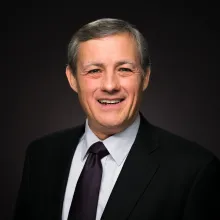
Gary Petty is a 1978 graduate of Ambassador College with a BS in mass communications. He worked for six years in radio in Pennsylvania and Texas. He was ordained a minister in 1984 and has served congregations in Longview and Houston Texas; Rockford, Illinois; Janesville and Beloit, Wisconsin; and San Antonio, Austin and Waco, Texas. He presently pastors United Church of God congregations in Nashville, Murfreesboro and Jackson, Tennessee.
Gary says he's "excited to be a part of preaching the good news of God's Kingdom over the airwaves," and "trusts the material presented will make a helpful difference in people's lives, bringing them closer to a relationship with their heavenly Father."
