

Mario Seiglie
This transcript was generated by AI and may contain errors. It is provided to assist those who may not be able to listen to the message.
What wonderful, special music! I don't know how technically all of that can be done, and all the voices coordinated that way. One day they'll have to explain that to us. Maybe Mr. Oppie can be in charge of explaining it. He's our fixer up. He's our Swiss knife. We can use him for just about everything. Well, we are now back from the feast, and we have gotten glimpses of the future world that God is speaking about. Now, when we talk about this, we talk about the future world, the world tomorrow, a lot of people think, well, where do you get that from the Bible? Or there's actually a verse in the Bible that talks about a future world. It's Hebrews 2 and verse 5. There are two different translations that give it, the New Living Translation and also the Contemporary English Version. It says, and furthermore, it is not angels who will control the future world we are talking about. So here's one of the biblical authors penning this letter to the Hebrews and saying we are talking about that future world. So it is biblical. And we have a firm vision of the future that the rest of the world does not have.
Why is that so? In large part, it's because from the second century on, what we call traditional Christianity, changed the gospel message. Instead of focusing on that coming world that Christ promised He would bring, they started focusing more on their empire and their churches. And before long, as Augustine in his famous book, The City of God, he said, The City of God is us. It's Christianity that's going to spread throughout the world. And that is the kingdom of God. That's unfortunate because that's not what the Bible says. And he perpetrated a great lie when he started focusing on that the kingdom of God was something that humans could produce. And, of course, they changed the goal to going up to heaven instead of heaven's kingdom coming to the earth. And for that, they needed another doctrine which they introduced at that time, which was the immortality of the soul. So then people think, well, after death, then a good person will go up to heaven. A bad person will go to hell. Or to purgatory, which is something they later invented, which was a way station between heaven and hell that eventually you can purge your sins to the point where you can make it up to heaven. Now, it's interesting that one Protestant commentator got it right and told the truth. The commentator G.H. Lang in 1951 wrote the commentary, the epistle to the Hebrews, and he had the audacity and the courage to speak and say things very truthfully. This is what he said. He said, by the third century, now remember, it's kind of crazy the way they set it up, but the third century doesn't mean the three hundreds. It's actually talking about the two hundreds, the years two hundred, just like we were basically all born in the 19th century, or rather in the 20th century, but it was the 1900s, right? And now we're in the year 2020, and we are in the 21st century. Well, it's not the 21st hundreds. So when he talks about the third century, he's talking about the year from 200 to 299. Yes, and so during that time, Christianity was still developing. And so it says, by the third century, the hope of the gospel, and he mentions the hope is the coming of Christ to establish his kingdom, had been too generally abandoned. That idea had been abandoned by whom? Traditional Christianity. Though they, that is the traditional Christianity, still professed the faith, they avowed, which means recognize salvation to come through Christ and his death, but had given up his return as the true hope.
And so they had given up the idea of Christ's returning. Consequently, the many, talking about the majority of those traditional Christians, who named the name of Christ, readily accepted the proposal of the world to become the official state religion. This happened under Constantine. In the fourth century. And the presence and power of God in the churches soon ceased. You see, it wasn't the power of getting people to prepare for that coming kingdom. That all stopped. He says, henceforth, it has been the minority that have confessed the hope of that coming kingdom and walked in Abraham's path as a stranger among the peoples. And always it has been among such that the spiritual glory of God has been displayed. That small minority that still believe in that coming kingdom. And don't believe that lie that the kingdom of God is Christianity here in the world. So, brethren, we are that minority. We are part of that group. And this message is a reflection about the feast and also other incidents that have happened. Especially talking about Joel Thomas passing, comforting the Thomas family, but many others who have suddenly lost loved ones. And so there are several lessons to learn here. Hopefully by the time we finish, these lessons will have been understood and incorporated. In Hebrews 11, let's learn one of these lessons. We begin and mention that Hebrews 11 is called the faith chapter. But I beg to disagree a bit with this because in Hebrews chapter 1, it says, Now faith is... and then it goes on. So actually, it's not the beginning of a thought, but it is breaking into a thought. Because what was it before? If you're talking and then you say, and now you're continuing with the thought. So actually, the faith chapter begins in Hebrews chapter 10, where it discusses faith and sets the table, prepares the foundation for Hebrews chapter 11. And so when we're talking about that future world, the coming kingdom, and this faith chapter is so important, we should at least understand that when they put those chapter breaks much later in history, that they should have gotten it before, as many commentators will recognize.
The vision of the future world and the importance of obedience to God and the love of the brethren need to be to the end of our lives. So in Hebrews chapter 10, this is where the faith chapter really takes off. It begins discussing faith, and it has many important elements before you get to chapter 11. Hebrews chapter 10, verse 19, after he's talked about how the sacrifice of Christ has superseded the sacrifices in the temple, it mentions in Hebrews chapter 10, verse 19, it says, Therefore, brethren, having boldness to enter the holiest by the blood of Jesus, by a new and living way which he consecrated for us through the veil that is his flesh, and having a high priest over the house of God, let us draw near with a true heart in full assurance of faith, that is, full confidence, having our hearts sprinkled from an evil conscience, and our bodies washed with pure water, mentioning here what the symbols of baptism are, that we can go before God with that confidence through the sacrifice of Jesus Christ, and through that faith, that what God has said is going to occur, what he has promised it will be accomplished.
Remember, faith has to do with trust, with a confidence, and what God has promised will be fulfilled. He goes on to say, let us hold fast the confession of our hope. That's another definition of faith, the confession of our hope. It's not just limited to this life. It is that hope of that future world.
Let us confess our hope without wavering, for he who promised is faithful. It's talking about God. He has promised, he has vowed it's going to be accomplished. Whether we believe it or not is not important, because it's going to be fulfilled. He goes on to say, and let us consider one another in order to stir up love and good works. Here we see an outward expression of that faith. That we are to help each other strengthen that faith. That's what we do here at Sabbath Services. That's what we do during the feast. So faith is a firm belief that God's word is true and that his plan will be fulfilled.
That vision of the future world. He goes on to say, verse 25, Not forsaking the assembling of ourselves together, as is the matter of some from the very start of the church, there were some that quit going for various reasons. They did not have fellowship together. That's one thing that I've learned recently. Instead of having four spiritual tools, we actually have a fifth one. It's not only prayer, meditation, Bible study, occasional fasting, but fellowshiping.
That is a tool to strengthen our faith as well. That's what Paul was talking about here, about not having the habit of quit attending. Some people say, well, it's just between me and Christ and my Bible. That's all I need. He says, we need to stir ourselves up and encourage one another when we are downhearted.
He says, but exhorting one another and so much the more as you see the day approaching. You see the day of Christ's return. So that's the hope. Then he goes on and he says, for if we sin willfully, after we have received the knowledge of the truth, there no longer remains a sacrifice for sins, but a certain fearful expectation of judgment and fiery indignation which will devour the adversary.
So again, our faith is conditional. It is based on us remaining faithful and not going back of what we have already learned. Because it says here that once we have received the knowledge of the truth, and the knowledge of the truth has to do with that vision of that coming kingdom, of being a part of that group preparing for that coming kingdom.
To us, that's Scripture, Matthew 6, 33, where it talks about, but seek first the kingdom of God and His righteousness, and all the other things will be added unto you. But here, this is part of our vision, and this is so important what we're trying to learn at the feast and now as we return.
There's a Scripture in Ephesians chapter 1 that goes along with this in verse 15. Keep one finger here in Hebrews 10 and 11 because we'll come back. But Ephesians chapter 1 verses 15 through 18, Paul says the following. It says, So Paul is praying that we have these eyes of understanding, of being able to see God's truths and see that coming kingdom and have it as a vision for the future. That's, of course, what enamored me to the church when I got the vision of what's coming. I wanted to be part of God's kingdom more than anything else in my life. He gave us the eyes of understanding to not just see the physical, but to see beyond that spiritual vision of what is happening. And, of course, that changed my entire life because that vision was of something wonderful in the future. But I had to be faithful. I had to do my part. It was like a race running toward that finish line of our lives where you were going to be graded and evaluated. How did you run it? Were you faithful or did you abandon it at one time? What caused us to trip, to fall, to go off on a tangent?
So this is what God has given us. Eyes of understanding the spiritual truths. That's why we are here today. Continuing on in Hebrews 10, He goes on after He warns them if they turn back from what they knew. The danger here was that since it was addressed to Jewish Christians, He's not talking to the Hebrew race as such, but to the Hebrews in the church.
Those that had the background and the legacy of being Jews that were converted to Christ and some of them were having second thoughts. The persecutions were coming. They had been ostracized from the synagogues, from their friends. It was tough to be a Jewish Christian in that first century. Paul, knowing this, writes this letter, warning them. This is your chance to obtain that inheritance with the saints of that coming kingdom.
He goes on to try to encourage them in verse 32. He says, Notice all these terms. Given eyes of understanding, of having received the knowledge of the truth, and here it's an illumination. This light bulb comes up, comes on in your mind. Now you can understand God's truth. Now the Bible makes sense. Now we have the same hope that all of these faithful people throughout the ages have, and we share a common destiny. After being illuminated, it says, you endured a great struggle with sufferings.
So there were things to sacrifice, to give up. And certainly, here, those that are faithful, many of them have had to sacrifice jobs, family ties, future income because of the Sabbath, because of feast days, whatever it is. It says, you had to endure a great struggle with sufferings, partly while you were made a spectacle, ridiculed in a way both by reproaches and tribulations, and partly while you became companions of those who were so treated.
So the world is not going to accept that vision that you share. You're going to be ostracized in your own family many times, or by those employees around you, or the society around us. He says, for you had compassion on me in my chains, and joyfully accepted the plunderings of your goods. So they basically, the Roman Empire was a police state. It wasn't a nice democratic system. It was a police state. And if they found out you were meeting illegally, or that you had another ruler in your heart, that you followed quite, they could come in and they could take your possessions.
And why did people accept this, the plundering of their homes, the ridicule and everything? It says, knowing that you have a better and an enduring possession for yourselves in heaven. So you're not looking at just what's going on here. You know what's going on up there. And you know, Christ is coming back. He's going to establish a kingdom. He's going to have His people rule under Him. Whether we become one of those or not depends on us.
But they had that vision. They were willing to sacrifice for it. As we are now in the 21st century. It goes on and says, verse 35, Therefore do not cast away your confidence. This is another term for your faith in the future, in that vision of that coming world, which has great reward.
For you have need of endurance, so that after you have done the will of God, you may receive the promise. So there are rewards. And God's not going to give them to those who give up, who turn away from Him. And so we are in a spiritual race. And we've got the world against us. We've got our own human nature that fights against us. And we have Satan.
And so it's not a fulfilled outcome. It's not already established what's going to happen. And after that, it says, For yet a little while, and he who is coming will come and will not tarry. See, he's saying, Brethren, remember that promise of His return.
Now the just shall live by faith, but if anyone draws back, my soul has no pleasure in him. So again, he's warning the Jewish Christians that this faith has to persevere. And that's part of the lesson of every year going to these feasts, having a glimpse of that coming kingdom and being part of it. That's what makes me more enthusiastic, because here in the world, what can we really expect to have a fulfilling reward? Not very much. We're going to struggle. We're going to have difficulties with people, with governments, with all kinds of situations around us.
But we have a better world that is going to remove this one from all of this society, and it's going to replace it. Do you want to be part of that? How important is that for you? Do you have the vision of that kingdom? And do you retain it? So then he ends chapter 10, saying, but we are not of those who draw back to perdition or to losing that reward, but of those who believe to the saving of the soul. Again, believe having faith in that. And so then it starts in chapter 11. Okay, what does it mean to believe in that saving of the soul?
Well, faith is a substance of things hoped for, the evidence of things not seen. The belief in that coming kingdom, that rule by Jesus Christ that he is preparing a people for. And that we all have to sacrifice to remain faithful if that vision is there. And I certainly am so thankful that I didn't receive it from my parents. I didn't receive it from friends. In a sense, I did have someone there in high school that showed me about the church.
But when that light bulb went off, went on, in my mind, that vision of the kingdom was the greatest, most exciting thing. And oh, I wanted to go to that feast of tabernacles back in 1970. And, well, no, 1971. I'm supposed to. They were going to Jekyll Island. I was still in high school. And I couldn't get permission from my parents. And the minister said, don't do it. It's going to be so tough on you with your family.
Here you're leaving for over a week. And you had to drive all that way from across entire North Carolina state. And so I said, okay, I won't go. But you know, I'm still missing that one feast of tabernacles. And I would have loved to have been it. And so why? Because of the vision. I want to hear about God's kingdom. That's what gave me hope.
And so you have examples that are given in Hebrews 11 of people that had that vision, that had that faith that was bulletproof, that was just like Kevlar. Just that faith was going to remain no matter what. One of the great examples we have was Abraham. Notice in verse 8, it says, It says, And guess what? It wasn't during his lifetime.
As it mentions, if he was looking at a physical city, he could have gone back. He lived in the famous city Ur of the Chaldeans. And that has been dug up. And it was a fantastic, very sophisticated city. But that's not where his heart was. And so he had a city that God promised that one day would be established.
Now, why does it say a city and not a kingdom? It's because you can't live in a kingdom. You live in a city, in a place. For instance, we all live in California, but that doesn't mean that California is our home. No, we have our homes in different cities. Mine is Anaheim. That's a city. That's where I'm living. Well, Abraham understood. There wasn't any city on that earth that was the one that God promised him. But there was going to be one that would be established, that would come from heaven with Jesus Christ establishing, and eventually it would become the New Jerusalem.
And he had that vision. And throughout his entire life, he never lost it, no matter how many sacrifices he had to make. We also have the example. Well, going on in verse 24. It says about Moses. By faith, Moses, when he became of age, refused to be called the son of Pharaoh's daughter, choosing rather to suffer affliction with the people of God than to enjoy the passing pleasures of sin, esteeming the reproach of Christ's greater riches than the treasures in Egypt.
For he looked for the reward. Yeah, there's nothing wrong with wanting to be part of God's kingdom, to rule under Jesus Christ as a king and a priest. But it's not to become a dictator. It's not to exploit people like they do today. It's to serve under Christ and to have the wonderful opportunity to be mentored by Jesus Christ himself for a thousand years.
How do I have a boss like him? How much would you pay to have a boss like him for a thousand years? Boy, I'd tell you, I'd give up everything. But you see, that's because we have to have eyes of understanding, understanding these spiritual things. I mentioned before in verse 13, these all died in faith, not having received their promises, but having seen them afar off, were assured of them, embraced them, and confessed that they were strangers and pilgrims on the earth.
For those who say such things declare plainly that they seek a homeland. And truly, if they had called to mind that country from which they had come out, they would have had opportunity to return. But now they desire a better, that is a heavenly, and it doesn't say heavenly, country that's added, heavenly. Because it's talking about that kingdom that is coming. Therefore, God is not ashamed to be called their God, for he has prepared a city for them. But it's not up in heaven.
He's prepared with his Son to establish it here on earth. And so, of course, that is a vision that we all need. Let's go to some action steps real quickly, what we can learn to apply in our own lives. The first is what Stephen Covey mentions in his book, Habit of Highly Effective People.
And it is, begin with the end in mind. He says, To begin with, the end in mind means to start with a clear destination. It means to know where you are going, so that you better understand where you are now, and so that the steps you take are always in the right direction. So, okay, we begin with the end, being in God's kingdom. And then we work backwards to today. Well, how am I preparing for that coming kingdom?
What kind of decisions am I making? Are we shaping the circumstances to that end result? That's so important. Our behavior and our actions are very important if we have the end result. And that is something that we should apply every day of our lives.
We might have a tough time where we live in our family. But you know, many times those around us don't have that vision. They're not preparing for a kingdom. We are. And we have that end in mind. It doesn't matter how difficult life is, if we are preparing and doing our best to adapt to the circumstances so that they lead us to that end result, you're a winner before God. It doesn't matter what other people will say.
The second, this vision will cause mixed feelings about the present time. In a way, we would like to rest from the pulls of the flesh, of combating the present society that tries to pull us down and enslave us. But at the same time, we want to continue living, especially for all those that depend on us and our faith.
Paul had this dilemma. Let's go quickly to 2 Corinthians 5. This is something I want to share with you before ending. 2 Corinthians 5, verse 1. This is an area that many times has been misunderstood. But what he's talking about is that mixed feeling. He says, verse 1, We know that if our earthly house, this tent, which is this physical body, is destroyed by death, we have a building from God, a house not made with hands, eternal in the heavens. God is preparing that spiritual body for us. So when we die, our spirit goes up. And it is kept by God until that future resurrection.
And he has a spiritual body. He's going to put that person's spirit in. He says, For in this we groan, earnestly desiring to be clothed with our habitation, which is from heaven. We want to have that glorious spirit body. If indeed, having been clothed, we shall not be found naked. Wouldn't it be wonderful if Christ comes during our lifetime, and we don't have to go through death and the pain of death, but just be instantly transformed into that future, glorious heavenly body?
For we who are in this tent groan, again, this is a physical temporal existence, being burdened, not because we want to be unclothed. Nobody looks forward to death, but further clothed. That change, that mortality, may be swallowed up by life. If Christ returns and we're still alive, you're going to be changed without becoming, in that sense, dead and having to go through all of those pangs and then be resurrected in the future. He says, now he who has prepared us for this very thing is God, who also has given us the Spirit as a guarantee, the Holy Spirit, which is the down payment.
He says, you will one day receive that spiritual body if you are faithful to the end. G.E. Ladd gets it right in his book, The Gospel of the Kingdom. He says about Paul in 2 Corinthians 5 that Paul looks forward to a day when we shall receive, quote, a building from God, a house not made with hands.
In other words, not a temporary tent like the one we have today. This hope will be fulfilled at the coming of Christ, not saying at death, nor having an immortal soul. He says, you will be transformed at the coming of Christ when the saints will put on resurrected bodies. In our present mortal bodies, we sigh with anxiety, verse 4, and long for a different body. Death is a repelling experience for it suggests departure from the body, nakedness.
What Paul longs for is not to be unclothed. He wasn't looking forward to dying, but to be clothed upon, in other words, to put on the resurrected body. That which is mortal may be swallowed up by life. So when Paul calls this death the sting that is the painful moment when a person is dying, this is due to having sinned and will ultimately have that sting be removed at the resurrection.
The new body will make it all worthwhile. All the pain and suffering will have been forgotten.
We learn when we have such a loss in this life. If we've lost a loved one, there's a hole that is created in our heart. But we also learn we have better compassion for those who have gone through the same thing, who have holes in their hearts. We learn also to persevere in the faith, despite such losses, to be worthy of the memory of those who did persevere in the faith. And we look forward to seeing the loved ones again in a much better situation. All the grief will disappear. God will wipe the tears from every person's eyes. He will explain why it had to be the case. And Jesus Christ will too. We might not understand why, but there will be a day when God will explain it to us. So most of us will go through life with holes in our hearts. We just lost a dear family member, Cottie's youngest brother, who was a deacon in the Santiago Church, one of the best friends that I ever had. I have a hole in my heart. I'm looking forward to getting that hole filled when Jesus Christ comes back and when we get to see Him again, just like Joel Thomas as well. Those holes in our hearts are part of the seat of our emotions. And they will only be filled when we see our loved ones again. So this is our vision of the future world we long for. This is the vision that we glimpsed during the feast. This is the vision of our faith, our vision of that future world. So let's end in Romans chapter 8. Romans chapter 8.
In verse 37 through 39, Paul certainly had those eyes of understanding, and he said, Yet in all these things we are more than conquerors through Him who loved us. For I am persuaded that neither death, the threat of death, having to face death, is what he's talking about, nor life, anything involved in life, nor angels, nor principalities, nor powers, nor things present, nor things to come, nor height, nor depth, nor any other created thing, shall be able to separate us from the love of God, which is in Christ Jesus our Lord. Yes, brethren, that is the vision that we must maintain alive in our lives and keep that faith ever burning within us.
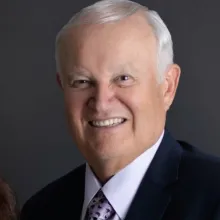
Mr. Seiglie was born in Havana, Cuba, and came to the United States when he was a child. He found out about the Church when he was 17 from a Church member in high school. He went to Ambassador College in Big Sandy, Texas, and in Pasadena, California, graduating with degrees in theology and Spanish. He serves as the pastor of the Garden Grove, CA UCG congregation and serves in the Spanish speaking areas of South America. He also writes for the Beyond Today magazine and currently serves on the UCG Council of Elders. He and his wife, Caty, have four grown daughters, and grandchildren.
