

Mario Seiglie
This transcript was generated by AI and may contain errors. It is provided to assist those who may not be able to listen to the message.
As we begin the message, first of all, I'm so glad God designed the Bible to have 66 books. And so we have a very large book, the books of the Bible, in which we can take a theme like the Feast of Tabernacles, and there's so much material that you can always look at it through a different angle. And it always will look new, it will always look fresh. So I'm glad we don't have this tiny little Bible that we couldn't really get too much out of. So God, in His wisdom, gave us a very large work in order to draw from the messages, like today on the Feast of Trumpets. Of course, although we look at it from different angles, it is always the same truths. But you're able to bring out these hidden beauties in the Bible. It reminds me of a quote from Alexander Hislop in his book, The Two Babylons, which has lost a certain amount of credibility. But the point is that he wrote this back in the 1860s, and when archaeology was still in its diaper age. And so he wrote that book mentioning that there is a Babylon described in the Old Testament, but there is also a Babylon described in the New Testament. And he wrote this book connecting the two Babylons. And that certainly is true, because it tells us in Revelation 17 about that modern Babylon that would be there when Christ came back. That this false Christianity would grow, and that it would have a type of an empire where the kings would come before it and bow down. And so his main thrust was correct. The problem was that basically taking ancient history, looking, he read basically all of this mythology and ancient history to attribute it to the old Nimrod. And in that he made mistakes, because not everything had to do with Nimrod. But let's not throw the baby out with the bathwater, because he did have many historical truths that are brought out. And I was struck by the introduction of this book, the two Babylons, where he compares the Bible to man's work, the literature that man has composed. And I think he said it best. I've never heard it said better than what he said. He said, there is this great difference between the works of men and the works of God. That the same investigation which displays the defects and imperfections of the one, the works of men, brings out also the beauties of the other, the works of God. If the most finely polished needle, which the art of man has created, be subjected to a microscope, many inequalities, much roughness, and clumsiness will be seen. Of course, then they still had pretty primitive microscopes, but with the needles of those days, if you magnified it, you found that the iron filings would still be pretty rough. He compares it to what God has created. He says, but if the microscope is brought to bear on the flowers of the field, no such result appears. Instead, their beauty, diminishing new beauties, are still and more delicately seen that have escaped the naked eye. I have here one of the flowers that we have, kind of the lilies of the field. If you take one of these petals and you look under a microscope, you're not going to see the roughness of the metal that has been polished by man. You look inside and you see different colors, the hidden beauties.
If you look at one of these beautiful sunflowers, inside are the seeds.
They have what they call the Fibonacci spiral, which this mathematician developed this formula mathematical formula that is the same that is used for the spirals of the seeds inside the sunflower.
Scientists have discovered that it is the optimum amount that you can put the seeds inside of a sunflower by using the Fibonacci formula. That's just another fingerprint that God left for us to believe in His creation. And so Hislop goes on and says, the same principle appears also in comparing the Word of God and the most finished production of men. There are spots and blemishes in the most admired literary productions of human genius. But the more the scriptures are searched, the more minutely they are studied, the more their perfection appears.
New beauties are brought into light every day, and the discoveries of science conspire to illustrate the wonderful harmony of all the parts and the divine beauty that clothes the whole Word of God.
And so as we are keeping the Feast of Trumpets, we are going to see more hidden beauties in God's Word, just like that beautiful flower that you never cease to be amazed as you go in and you peer deeper in a microscope, more beauties that the naked eye doesn't see. And lately I've been struck by the beauties of a book in the Bible that we've been having an ongoing Bible study, which is the book of Hebrews. And one of the themes of the book of Hebrews is preparing for the coming of Jesus Christ and the rest that He will bring upon this earth.
That rest that is mentioned time and time again in the book of Hebrews is the coming kingdom of God. And in this book, which most probably was written by the apostle Paul, was written toward the Jewish Christians who, after the persecutions, after decades of waiting for Christ to come, and it didn't happen, and some were turning back to Judaism. And so this book of Hebrews was written to warn them of what they can lose if they turn back. And it's the same message today because that rest has not come yet.
And it is conditional. It is something that we can lose entering into that rest, just like those in Paul's day were warned about in this book.
Some believe in the book of Hebrews. When it talks about the rest, they spiritualize it. They think that, no, this is actually the rest that we have in Jesus today, and that that seventh day is now symbolic of Christ being every day in us.
But that is not the case. And some important Bible commentaries bring out this point. You cannot spiritualize the rest that is mentioned in the book of Hebrews. Expositor's Bible commentary, again, it's worth quoting, says this. Buchanan, who is a Bible scholar, who wrote the book, the commentary on Hebrews, in the Anchor Bible series, quite a scholarly commentary, says, has a long note on the rest in Hebrews, for in which he surveys a number of opinions and rejects all spiritualizing interpretations. So this scholar says you can't spiritualize this rest that is mentioned in the book of Hebrews. He thinks many scholars read their own ideas into this rest, and thinks it is impossible for the word to be used in a non-national, non-material sense. In other words, to make it just into this spiritual idea, and not that it means a non-national idea. That it means territory. That it means something that is going to be established upon this earth. That is material. That is physical. And then in this Anchor Bible series, Buchanan actually says this.
The physical Sabbath keeping on the part of the new covenant believer, as affirmed by the Sabbath rest, epitomizes or highlights the cessation from works in commemoration of God's rest at creation, and manifests faith in the salvation provided by Christ. So he's saying, look, this rest is a symbol for that Sabbath rest. And then he says Hebrews 4, 3 through 11 affirms of the physical Sabbath rest is the weekly outward manifestation of the inner experience of spiritual rest. So he's saying that people that keep the Sabbath this way, it is manifesting the inner experience of the spiritual rest. That when we keep the Sabbath, it's physically and spiritual. So the rest that Christ will bring is not something spiritualized in our hearts.
Like some say that all the days are now like the Sabbath, or that the seventh day of creation is a rest that is still going on today. If you would have told that to Adam and Eve, they would have had a hard time because after that seventh day, what came? The first day of the week, and they had to go and do things. So it doesn't extend outward, but this is another excuse people have for not keeping the Sabbath. Have you ever heard somebody say that before in the past? Well, no, we're spiritualizing the Sabbath day. Unfortunately, it has happened. No, this coming rest, which is mentioned in the book of Hebrews, is something real, physical. It is a kingdom that is coming down on this earth. So on this feast of trumpets, let's see how this great theme in this book of Hebrews comes to light and focuses on the coming rest. And it also warns us not to be careless or disobedient, lest we fail to enter that future rest. Yes, this is part of the message of the Feast of Trumpets. Let's go to Hebrews chapter 1, and we're just going to cover the points where the Hebrews is connected to the coming of Christ and through it the Feast of Trumpets. Hebrews chapter 1.
It starts, God, who at various times and in various ways spoke in time past to the fathers by the prophets, as we have in the Old Testament—that's what was written at that time through the prophets—has in these last days spoken to us by his Son, whom he has appointed heir of all things, through whom also he made the world. So Jesus is the heir of all things. That is talking about the created universe. What he says here about he made the world, the created universe. And Jesus Christ is coming down to this earth after receiving that inheritance. When he gets the sign, God says it is time for you to receive this inheritance, this coming kingdom.
That's what it's talking about in the book of Hebrews.
And not only is Christ coming down to share, to have this inheritance, but also to share it with those that have committed themselves. They are going to be heirs under Jesus Christ of this coming world. This is the message of Hebrews, because God is offering that to us. But we can disqualify ourselves. It is not a given. Just because we're baptized into the church doesn't mean that we're going to persevere to the end, as it was brought out by Mr. Garnet in the morning about we have to overcome. We have to be victorious. This is a spiritual battle, first of all, with ourselves and then the world as well. But we must not be defeated. That term, mícal, in the Spanish, it has a better word than overcoming. Mr. Garnet mentioned that in English you can be overcome by fears or overcome by grief. Spanish, it is in that way. It says, he who is victorious. That's the Spanish word, el que vense. That's from overcome, be victorious. So in Spanish, it's just one word and that is you have to be victorious.
He who is that's where the word invincible that you have to overcome. And that's a personal challenge to all of us. Nobody can be victorious in our own struggle. We have to do it. We have to, as it says, work out our salvation with fear and trembling. No one else can do it.
And so here in Hebrews, we are introduced to this concept that Jesus Christ has received the kingdom.
But it's still not there to establish here. Yes, he has already, of course, qualified. He's already met all the qualifications. But he has not come down to receive that inheritance. And it's not only for him. He wants to share it with all of his brethren. And so that Feast of Trumpets, which tells us about Christ coming down, it's not just about him. It's about the way he wants to share it with all of those that have that same hope that are overcoming and also being victorious as it has been brought out. Notice in Hebrews chapter 2 and verse 5, Hebrews chapter 2 and verse 5, he says, for he has not put the world to come, of which we speak in subjection to angels.
So here's another key term for the coming kingdom, the world to come. Actually, that's where Mr. Armstrong coined the term, the world tomorrow. That's the world to come. And it says that he has not put the world to come, of which we speak in subjection to angels. But actually, Jesus Christ is coming. And he says that mankind, those that are converted, they will inherit with Christ and under Christ that coming world. So the author here in the Hebrews is encouraging them. But look, we have this great promise. Do you want to inherit this coming kingdom that Jesus Christ is going to bring? Because he's going to share it. He's not going to run the whole show by himself. He's preparing a people. Notice in verse 10, it says, for it was fitting for him, for whom are all things, and by whom are all things, in bringing many sons, the term here children, because it includes men and women, to glory, to make the captain of their salvation perfect through suffering. So let's talk about God the Father. And again, with the coming of Christ, begins the process of glorifying human beings. And as you get older and sicker, you really look forward to having a glorified body. Our body is wonderful as long as it's young and virile and strong, but as it deteriorates, you start looking forward to that coming body, the glorification process. So God has given every person an opportunity to live this life, and then you get a second one, which can be eternal, or you can be in the second resurrection, and you come back for a physical one, to see if you are going to be obedient and dedicated to Him at that time.
And then, if you don't, then there's a third one, which is what Mr. Garner mentioned about the resurrection of condemnation. So that one, yes, you still get a second life, but it's quite brief. You get to be thrown in the lake of fire, and you get to suffer the second death. Nyx, nothing. Nada, you end up this way. And so this is the hope that we have, that we can be part of that first resurrection and have a glorified body. Let's continue now in chapter four.
In verse one, here comes the hope of this future rest, because He's encouraging the brethren, keep your eyes on the goal. Look, if you go back to Judaism, if you go back to the temple, and to these rituals, He says you're not going to be part of that future rest. He says in verse one, therefore since a promise remains of entering His rest, let us fear lest any of you seem to have come short of it. And so there are multiple warnings that, look, be careful, don't get complacent, don't lose your hope, don't get your eye off the goal, because it's very easy to do so.
This is the lottery ticket for the universe. You only get one offer. You only get one ticket.
If you lose it, if you blow it, you don't get a second ticket to get the universe. This is not Las Vegas, right? This is a bunch of little money that you can flip around for a while. No, we're talking about sharing the universe with Jesus Christ under His guidance. And then in chapter, in verse 8, it says, for if Joshua had given them rest, then he would not afterward have spoken of another day. So the promised land was not the final goal. Yes, they were going to rest in Canaan. Once they occupied it, it was going to become the kingdom of Israel. But this was not the ultimate goal. There is a coming kingdom much better than that of Canaan. There is one that is better than the one they received under Joshua. And it's the same goal then as we have today. It's the same thing that they had to look forward to. We have to look forward to.
Notice in Hebrews chapter 9, the coming of Christ and the establishment of this great rest.
It says in Hebrews 9 verse 27, it says, and as it is appointed for men to die once, but after this the judgment, so of course if you die, you have to be resurrected to be judged.
You have to have a resurrection, but it's just which one of those three?
But after this, the judgment, so Christ was offered once to bear the sins of many. To those who eagerly wait for Him, He will appear a second time apart from sin for salvation. He's coming to appear a second time, but He's not coming down to sacrifice Himself again. He's not coming down into Jerusalem on a donkey. No, He's coming from heavens with a powerful white horse an angelic being that God designs to transport. He's coming down this time to govern, not to die, as it says, not apart from sin. He's not going to deal with sin anymore. He has dealt with that part with the first coming. He dealt with man's sin. Now He's going to deal with His coming Kingdom, and if people want to be part of it or not.
So Christ's coming is a time of judgment. Actually, the term means evaluation.
People are going to be evaluated. Have you been part of God's people? You have an evaluation? Yes, okay. Your name is in the book of life, as Mr. Garnett mentioned. You've been evaluated, and guess what? You're going to be part of that first resurrection. Now some are going to be evaluated as, well, you didn't do too much with this life. Okay, second resurrection. With the Africans and the Chinese and cannibals, they didn't know any better, but they have to learn the truth. They can't die in their sins in that way, and so they will have an opportunity to learn of God's truth. And like I mentioned, the third one is the one where people are evaluated and they are condemned. These are the incorrigibly wicked. There's no way to change them. They are dead set on going against God's ways.
And so let's go to Hebrews chapter 11 and verse 6. This is called the faith chapter, but it has to also do with the promise of Christ coming. Hebrews 11 verse 6 says, but without faith it is impossible to please Him. For he who comes to God must believe that he is, and that he is a rewarder of those who diligently seek Him.
Now this term, faith, many times is used as an idea. It sounds good. It's spiritual. But actually it is dealing with trusting in God and doing your part. In verse 1 of Hebrews 11, it says, now faith is the substance of things hoped for, the evidence of things not seen. See, something that is substance is something material, physical.
Evidence is also that way. So it's talking about you can show what kind of faith you have by your works, by your actions. And then the whole chapter is talking about how these people showed their faith through their actions. How Noah showed his faith because he spent a hundred years building an ark, trusting that God's word was true. A lot of people that after 20 years forget it. He hasn't come back. I'm exhausted and given up. No. Noah carried everything faithfully out, you know, to the last knot on that last beam that he had to tie up. And so again, it says that we must believe that he is a rewarder of those who diligently seek him.
That we're going to show it not with our words so much as with our actions.
And I appreciate even the way, the attitude of people willing to sacrifice, to come here, you know, sacrifice, to give their offerings. See, this is the way we show God. It's not just a matter of feeling good. It's something that is manifested. And of course, just like the widows might, a person might just give a minimum. But there are widows that with that dollar, they could have had a meal. And they didn't. And they sacrificed. And they gave it to God.
And they skipped a meal over that. And we're hungry. I'll tell you, that's a lot more than somebody else could have given a lot more. They're going to eat well tonight. So it's all relative to each person and their willingness to give.
The point is that part of this faith is believing that what we're doing is going to one day be rewarded when Jesus Christ returns. Maybe in this life we're not going to see every type of reward because we're looking to that coming kingdom. Notice as it goes on in Hebrews 11 verse 9, talking about Abraham. It says, by faith he dwelt in the land of promise as in a foreign country, dwelling in tents with Isaac and Jacob, the heirs with him of the same promise. For he waited for the city which has foundations whose builder and maker is God. God promised him a kingdom. He promised him the plot of land. And he never inherited. Neither did his son. Neither did his grandson. But they did not lose that trust in God because they knew there was going to be a coming time when they would inherit it. And they lived and they died with that faith, just like so many faithful brethren throughout the centuries. They've lived and died, but with that faith that this is going to happen. This was not done in vain. Continuing on in verse 13, it says, these all died in faith, not having received the promises, but having seen them afar off, were assured of them, embraced them, and confessed that they were strangers and pilgrims on the earth. For those who say such things declare plainly that they seek a homeland. And truly, if they had called to mind that country from which they had come out, they would have had opportunity to return. But now they desire a better that is a heavenly country. Therefore God is not ashamed to be called their God, for he has prepared a city for them. Now that city that they're looking forward to is that new Jerusalem that's going to be established. And in a preliminary way, that new Jerusalem is going to come when Jesus Christ returns, because he's going to have a new Jerusalem during that thousand year period. Now that isn't the final Jerusalem when God the Father brings the new Jerusalem and all its splendor, but there is going to be a new Jerusalem when the saints inherit the kingdom that Jesus Christ is going to bring.
And this is what Abraham and all these faithful people, they're looking to that coming kingdom of God and that coming city that is going to govern the kingdom of God. Notice in verse 39, it says, and all these having obtained a good testimony through faith, they were obedient, they were faithful to the end, they did what God asked them to do. We all have things that God asks us to do in every one of our lives. We have God's commands, we have his guidance and what he asks us to do. He says they did not receive the promise. God having provided something better for us that they should not be made perfect apart from us. So they're not going to be perfected until everybody is perfected at Christ's coming. All those that die in Christ and are alive in Christ are going to receive that inheritance. And all of these that died, Abraham, Moses, and others, they're still waiting and they have not received the promises yet because God wants all his spiritual children to receive it at the same time, at his son's coming. So you see how consistent the Bible is throughout all of this time. Now comes another warning in Hebrews chapter 12 in verse 25.
Because how many turn away from the faith? How many become cold?
They lose sight of that vision. That's why the first thing that Christ asks us to do in prayer after hallowing God's name, addressing God, is pray, thy kingdom come. That brings to light the first goal that we have, the goal of his kingdom and why we need it so badly, and how it is worth all the sacrifices to be able to be part of that coming kingdom.
And you know God doesn't look at race or color or economic status or genders. No, it's available for every person. Everybody has the same potential to receive the inheritance with Jesus Christ. He's coming to bring it, and he's offering it. He's so excited. He loves to put people's names in the book of life, the Lamb's book of life. He loves it, but Mr. Garner touched on Revelation 3.5. It says, your name can be blotted out of the book, too. See, it's not permanent. If you turn back, if you turn your back on God, and you turn back on his ways, and you just continue that, your name can be erased.
So it's not indelible ink, because biblical ink did not have the gum substance to it, and there was nothing that would stick to it. So it was basically more like water and charcoal, and it's a mixture. It looks great, but there's no adhesive to it. And so you just took some water with a rag, and you could wipe out in those papyrus, you could wipe out the whole name of things and write another part, just like they call polypsip, which is where these ancient documents, they can actually see where the trace marks are, and can see what was written before that, because some of that indentation still remain.
Okay, so let's continue in chapter 12, verse 25. It says, see that you do not refuse him who speaks, for if they did not escape, who refused him, who spoke on earth, those that were there when Mount Sinai erupted, and God was there, it says, much more shall we not escape if we turn away from him who speaks from heaven, whose voice then shook the earth, but now he is promising yet once more I shake not only the earth but also heaven. It's talking about when Satan is going to try in his rebellion to overthrow God, and the heavens are going to be shaken, and Satan is going to be cast down again with his demons.
So it's not just activity on earth, it's going to be activity in heaven as well. And he says, now this yet once more indicates the removal of those things that are being shaken, as of things that are made that the things which cannot be shaken may remain. And God's going to shake this earth. We know there's going to be eventually an earthquake that is going to topple the buildings of this earth.
He mentions it there in Revelation. It's going to be a, yeah, past the tent in the Richter scale. If you can imagine, I mean, tent is kind of like the maximum. There's going to be something like that that the Bible says is going to happen. That's going to shake. And he says, therefore, since we are receiving a kingdom which cannot be shaken, an unshakable kingdom. See, that's the Christ's kingdom. It's not going to be shaken. There are going to be any earthquakes when he comes back.
No hurricanes like the ones that are threatening Jamaica and Cuba at this time and Haiti. Since we have this unshakable kingdom, let us have grace by which we may serve God acceptably with reverence and fear. For God is a consuming fire. And we don't want to get on the wrong side of God. Now, he's loving, he's patient, but he also sometimes has to correct us. Sometimes he has to shake our lives, to get our attention, to wake us up, to bring us back to the path of righteousness.
And so we see through this book of Hebrews how many times the subject of Christ's coming is brought out and this coming rest. I want to focus on this latter point. Let's go to Hebrews chapter 4 again, because now I want to cover it fully. Hebrews chapter 4, I intentionally left out some of these verses so we could cover it in its context.
In Hebrews chapter 4 verse 1, it says, therefore, since a promise remains of entering his rest, let us fear lest any of you seem to have come short of it. For indeed the gospel was preached to us as well as to them. The good news, they could enter that promised land if they were faithful.
But the word which they heard did not profit them, not being mixed with faith in those who heard it. See, people heard things, but they didn't obey it. The Bible is a book about action. It's not just about intellectual ideas. It's putting them to practice. That's when it starts working.
That's why I always thank God how he intervened in my life as a young man. I was a young Catholic and I was an altar boy. I went to Mass every Sunday, but basically because my mother had scared me to death that I was going to fry in hell if I didn't go on Sunday to Mass. So I went and I was an altar boy. So I poured the wine, and this priest, he liked to have a lot of wine poured into that little chalice. But basically I was going through the motions. Okay, this was just one hour. I mean, the sermons were like five or ten minutes, and it's all repeated. They go through this whole cycle. And so I never got anything out of it. I'm thinking, well, an hour and then I won't have to fry in hell. Maybe so. But that was, you know, fire insurance that I was buying for myself.
I thought. But then I met this young friend, high school friend. We like to play chess together at his house, and he had just been baptized into the church. And so we started talking about certain things. And before I knew it, I got interested in studying the Bible. And I asked him for booklets, and God opened my mind at that time. And it was a miracle that took place. And I'm so thankful that I learned that it wasn't just head knowledge. So I said, okay, I see the Sabbath is here. You have to keep... I'm working as a orderly in my dad's clinic there at the hospital. I'm working on Saturdays. So I went and I told him, can't work on the Sabbath anymore, on Saturdays. And so they rearranged it. Then I learned about tithing. Well, I was making a little bit of money, so I started tithing. And, oh, the feasts are coming up. And so to me, it wasn't a matter of whether I should or not. This is what the Bible tells me.
And this is my faith. It's based on action, not words. And so, you know, it took off.
The more I applied, the better my life got. Oh, I got a lot of persecutions. I got some supposedly friends that found out I wasn't eating pork anymore. And they got some pig out of this formaldehyde. And they cut pieces. They took my sandwiches and my lunchbox and put formaldehyde pig skin. And so I was trying to chew it. It was pretty rubbery, you know. It smelled pretty bad, but I thought, these were my friends. And you know what? Never had any problems with them anymore. Because if they're willing to do that, they're not even willing to listen to me. I wasn't doing it for God. I wasn't doing it for them. I wasn't doing it for my mother, my father, anyone else. Why? Because faith has to have evidence. It can't just be talk. And so everybody that develops and grows and sticks in the church, they are doers and not just hearers of the Word. The hearers eventually peel off. And of course, I am here for the grace of God. Not anything to be proud. I'm just so thankful for God's mercy and for his help. But, you know, I wanted to do my part, and he won't do our part for us. So it mentions here that in Hebrews 4, there is a rest for the people of God that is coming. He goes on to say in verse 3, it says, for we who have believed do enter that rest as he has said, so I swore in my wrath, they shall not enter my rest. The disobedient ones never made it. They weren't obedient. Although the works were finished from the foundations of the world, that was already, God set up this cycle of seven days. But they did not have the faith to keep the Sabbath in faith, in obedience, and of course much less to enter into that future rest. He says, for he has spoken in a certain place of the seventh day in this way. And God rested on the seventh day from all his works. And again, in this place, they shall not enter my rest. Now that was a psalm that is being mentioned there, Psalm 95. And that was at the time of David, way after they had entered the Promised Land. So if there is a rest in the future, it can't be that land of Canaan. It has to be a future kingdom. And so it says here, verse 6, Since therefore it remains that some must enter it, and those to whom it was first preached did not enter because of disobedience. Again, he designated a certain day saying in David, today, after such a long time, as it has been said, today, if you will hear his voice, do not harden your heart. For if Joshua had given them rest, then he would not afterward have spoken of another day.
And verse 9, as it is in the Greek, it says, therefore there remains a Sabbath keeping for the people of God. Because the Sabbath is a symbol of the faith in that coming kingdom.
You see, he's using this play on the rest, on the Sabbath, with this coming great Sabbath day, which is the coming millennium. That coming kingdom of God is what the Sabbath points to.
And just like you have seven days of the week, and you have the seventh Sabbath, which is a day of rest, so man has had the six thousand years of doing his thing, and then comes the thousand years where Christ is going to establish his kingdom. And then we will have peace, then we will have joy, then we will have love and justice and righteousness. That's what is coming. So then it says in verse 10, for he who has entered his rest, talking about the Sabbath day, has himself also seized from his works as God did from his. And so it's again, play on words, the Sabbath rest with this millennial rest. And how you enter into your Sabbath rest, that points that you have faith in that coming millennial rest. If you don't have the Sabbath rest, then this symbol, this type, is not going to be carried out in this way. And so this coming millennial rest, when Christ returns, he's telling the Jewish Christians here that they have an opportunity to enter it, just like the rest of the church members as well. So let's go then to focus on what this rest is all about. I've got five aspects of this rest.
Number one, rest from this present evil world. Christ is coming to change this present evil world. Now that's mentioned in Galatians chapter 1 verses 3 and 4. It calls it this present evil world. Now we live in it. We ride motorcycles. We have houses. We enjoy life. Not everything is evil, but it is a world that is not dedicated to God's ways and his manner of life.
It tells us in 2nd Thessalonians chapter 1, 2nd Thessalonians chapter 1, what we're going to rest from.
2nd Thessalonians chapter 1 starting in verse 3. It says, we are bound to thank God always for you, brethren, as it is fitting, because your faith grows exceedingly and the love of every one of you all abounds toward each other, so that we ourselves boast of you among the churches of God. Notice the term church of God in the Bible. That's the true name. For your patience and faith and all your persecutions and tribulations that you endure, which is manifest evidence of the righteous judgment of God, that you may be counted worthy of the kingdom of God for which you also suffer, since it is a righteous thing with God to repay with tribulation those who trouble you, and to give you who are troubled rest with us when the Lord Jesus is revealed from heaven with his mighty angels. So, see, the first thing he's going to do is he's going to free us from this world that is always battling with your mind. It's trying to get you to go its way, follow its manner of life, just go with the flow, and it is destroying the spiritual character, because God's way of life is not compatible. So the first rest is from this present evil world.
If mankind continues on its present road, destruction is ahead.
We've got more nuclear bombs and proliferation. Now you've got this artificial intelligence, this race. There are 53 nations that are rushing to try to develop the first artificial intelligence, which is compatible with man's intelligence, and they are just rushing headlong into this future world. The internet itself is growing and multiplying to such a way that machines can actually tap into that and have more intelligence than a human being. And we are headed to a world where the machines eventually, they're going to lose control, and they can become sentient.
They can begin to have their own interests above human interests. And so eventually, this is one of the great threats that we have. Well, we're going to rest from this present evil world. Christ is not going to allow this to end up being this terminator with the sky net and everything else that's going on or the matrix with these intelligent machines, but we are headed there blissfully ignorant of the dangers. We are going to secondly rest from Satan's influences and the world because Satan wants to destroy us. He is our greatest enemy. He wants us to disqualify. He does not want us to inherit that coming kingdom. He does not want us to share with Jesus Christ. And he knows he can't get Jesus Christ knocked out of this, but he can knock us out. So he is intent on this. Notice in 1 Peter chapter 5 verses 8 through 9. 1 Peter chapter 5 verse 8, it says, Be sober, be vigilant, because your adversary, the devil, walks about like a roaring lion, seeking whom he may devour. Resist him steadfast in the faith, knowing that the same sufferings are experienced by your brotherhood in the world. Satan is powerful. I just read today, looking at the paper, that the Vatican is complaining that they don't have enough priests to do exorcisms because it says Satanism has just multiplied. They don't have enough priests to go around because people are dabbling into black magic and Satanism, and so they don't have enough to deal with that. And it just shows how much this black magic and Satanism is multiplying. And we're going to rest from Satan's influence because he's going to be locked up. He's not going to be able to do anything during that thousand year period. And again, he's the amplifier. When people have fits and tempers, Satan tries to connect with that and multiply it. Not just a minor tantrum. He wants people to just go out of their minds if possible, because he's there like a roaring lion. The third way we can rest is to rest from our struggles with our own human nature.
As you get older, you realize this human nature you can't ever completely control. It's a struggle daily to keep your mind focused on the right things. Notice what it tells us in Jeremiah 17, verse 9 and 10. Jeremiah 17, verses 9 and 10. It says, the heart is deceitful above all things, and desperately wicked. Who can know it? And God answers, I, the Lord, search the heart. I test the mind even to give every man according to his ways, according to the fruit of his doing. So God knows what's going on in our own human nature, and how deceitful it is, and how difficult it is to control. No man or woman has ever been able to completely control their human nature. There's vanity, there's self-centeredness, there's temperament that gets in the way. And so men and women have different temptations, but everything has is a struggle. And guess what? One day we're not going to have to deal with this human nature anymore. It's going to be removed from us. We're not going to have to struggle. We're not going to have to yield to it at all. Notice in 1 John chapter 3. When is that going to happen? In 1 John chapter 3 verse 1, it says, Behold, what manner of love the Father has bestowed on us that we should be called children of God. Therefore the world does not know us because it did not know Him. Beloved, now we are children of God, and it has not yet been revealed what we shall be. But we know that when He is revealed, talk about Christ and the coming resurrection, it says we shall be like Him. Jesus Christ now is resurrected. He doesn't have human nature. For we shall see Him as He is. We're going to be the same family. We're going to always be under Him and God the Father. But we're going to have the same nature, the divine nature. We're not going to have to struggle against sin ever again. And so we're going to rest from that as well. Fourthly, we're going to rest from sicknesses, aches, and pains, and different diseases.
Because our bodies are deteriorating, 2 Corinthians 4, 16 tells us that our outward self is continually deteriorating. We can spiritually continue to be strong, but our bodies are not as strong as they were before. And so we long for that new body. Paul mentioned 2 Corinthians 12, 7 through 9, that he had this thorn in the flesh and that he prayed to God three times to remove it. He had these fleshly afflictions, and it was frustrating for him, debilitating. And he asked God, but God said, look, I've given you so much understanding and wisdom that if you didn't have something like this to weaken a bit of yourself and help you be humble, you could be lost. You could become vain. And so you need this little thorn in the flesh.
God knows what we need, but it's going to be so nice to rest from sicknesses, from aches and pains and diseases. When Christ comes during those thousand years, we're not going to have this system with its bugs, its viruses, its diseases. It's going to be a whole different system, just like the animals are going to be different. They're going to be vegetarian. We're going to have lions. The whole thing is going to change. You're not going to have these big canine teeth because they're going to be eating straw like a cow. And so the whole biology is going to be changed. And finally, the fifth, we're going to rest from the curses that are upon this earth.
They're going to be lifted. We're no longer going to have the thorns and thistles and poisonous animals. God is going to lift the curses that we live in. Now we live in a pretty nice area here, but how would you like to live in the middle of the Brazilian jungle? To survive there, it's a life-and-death struggle every day that you don't die from some poisonous spider or snake or contaminated water or some panther that comes at night. Those are horrible things, but that's part of the curse that we are in today. Notice in Isaiah 11. Isaiah 11 and verse 6, it tells us about this change. Don't we look forward to a change like this in Isaiah chapter 11.
Verse 6, it says, The wolf also shall dwell with the lamb, The leopard shall lie down with a young goat. Nowadays you can't do that. They eat goats. The calf and the young lion and the fatling together and a little child shall eat them. The cow and the bear shall graze. Their young one shall lie down together, and the lion shall eat straw like the ox. The nursing child shall play by the cobra's hole, and the weaned child shall put his hand in the viper's den. There's not going to be any deadly animals. None of them are going to have that nature of attacking and having fangs and sticking their venomous fangs into people. They're not going to have that. It says, They shall not hurt nor destroy in all my holy mountain, For the earth shall be full of the knowledge of the Lord as the waters cover the sea. And we're going to learn about God's way. Everybody's going to participate in that. And so let's go to Hebrews chapter 13 as we wind down here. Hebrews 13 verse 12. Last verse that we're going to quote in this book of Hebrews, which has to do with the coming of the kingdom of God, of Jesus Christ, as this day of trumpets symbolizes. Hebrews 13 verse 12.
It says, Therefore, Jesus also, that he might sanctify the people with his own blood, suffered outside the gate. Therefore let us go forth to him outside the gate, bearing his reproach, the sufferings of this way of life. For here we have no continuing city, but we seek the one to come. Therefore, by him, let us continually offer the sacrifice of praise to God, that is, the fruit of our lips, giving thanks to his name. So that's what God wants of. He doesn't want sacrifices now of animals. He wants us to praise him, not only with our words, but also with our actions. And so to finish, we should remember that there is this inspiring feast of trumpets that is mentioned in the book of Hebrews. There is a warning, just like for them, now it's for us about entering this promised rest. And let's always be praying, thy kingdom come, because that's the real hope of this society today. It needs it desperately. And I'd like to finish with Revelation 22 verse 20. Revelation 22 verse 20. This is the last part of the Bible, and it says, He who testifies to these things says, Surely I am coming quickly. Amen. Which means, let it be so. And then John says, Even so come, Lord Jesus. The contemporary English version says, the one who has spoken these things says, I am coming soon. So Lord Jesus, please come soon.
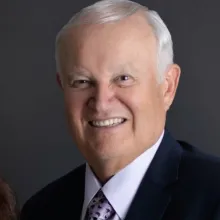
Mr. Seiglie was born in Havana, Cuba, and came to the United States when he was a child. He found out about the Church when he was 17 from a Church member in high school. He went to Ambassador College in Big Sandy, Texas, and in Pasadena, California, graduating with degrees in theology and Spanish. He serves as the pastor of the Garden Grove, CA UCG congregation and serves in the Spanish speaking areas of South America. He also writes for the Beyond Today magazine and currently serves on the UCG Council of Elders. He and his wife, Caty, have four grown daughters, and grandchildren.
