
Robin S Webber
This transcript was generated by AI and may contain errors. It is provided to assist those who may not be able to listen to the message.
Well, I'd like to build upon the fine foundation that Joe mentioned, and one of the words that struck me as I was listening to him this afternoon was the aspect of God's mercy. And I'd like to build upon that and to frame that with what's coming up next weekend. And that is next weekend is going to be a Father's Day.
And I'd like to address that today, but in a different sense, and not talking about you or talking about me as fathers and just simply leaving it there. But I want to share the title with you right up front so that you'll know exactly what we'll be talking about over the minutes to come. The title of my message is simply this, Our Father, which art in heaven. I'm using the Old King James English because not that that is the translation as it were.
We don't speak that way anymore, but that's the translation that I grew up with at an early age. And I think it just has a, in this sense, has a beauty and extols of the majesty of our Father in heaven. Our Father, which art in heaven. If you just want to go the low common denominator route, you can just say, Our Father in heaven, hallowed be thy name. Hallowed be your name. There I go, speaking Elizabethan tongue again. But today I'd like to, with that thought, build upon the foundation that has been laid for us over the last couple of weeks and then bring two of these thoughts together.
One of the topics that was discussed is by Keith, who spoke about the love of God. And I also want to couple that then with what Mr. Ted Budge brought to us, and that is about legacy and what we leave. What we are is what we leave. And to recognize it's not really about us.
It's not what myself or Susie upstairs are going to leave of and by themselves for our family, but it's what God is going to leave. What God is going to leave in us and through us and extend into other hearts and other minds that hopefully people will remember that one day that we were a covenant people. That we submitted and surrendered and lived for God and not just merely for ourselves. And how precious his ways were, ways that we don't even begin to deserve. And yet our loving Father in his mercy bequeathed to each and every one of us.
Let's talk a moment about fathers for a moment, then we'll build upon that. So please stay with me here as we begin to talk. Our Father, which art in heaven. And yet there's a lot of fathers that are down here and have been a lot of fathers down through human history. And fathers are an integral key part of drawing families together. It's very interesting, almost 3,700 years ago, when the children of Jacob appeared before the viceroy of Egypt. And during that time of famine, you've got to remember all, I mean all the sons of Jacob. And what a cast of characters!
You know, families are rich, they are diverse. And they can be exciting when you're in the goldfish bowl of a family. And this was a family. And I think that when you look at the Bible, it gives some of us hope sometimes, when you have kind of the rustle or tussle of what's ever going on in our family, that you look back, you think, well okay, there's Cain and Abel. There was Esau and Jacob. And then you have the boys of Jacob. But when they appeared before the viceroy of Egypt, the first introductory thought that they had was simply this.
We have a father. First thing that came out of their mouth that is recorded. That was special, in spite of all of their differences. And like I just said, families can be incredibly unique. And yet when you think about it, that it is the father and yes, the mother that binds the family together. That blood, as the old saying goes, is thicker than water. All of us that are listening to me this afternoon, we also, we, we have, or have had a father. It's kind of poignant that, as I give this message this afternoon, that Father's Day coming up will be the first time that Father's Day, man-made holiday, but it's a good one, the first time that my father will not be in our presence.
I think most of you know that my father died about a half year ago, on September 3rd, and he just kept on going and going and going and lived just a one month shy of 98. But we all have a father. Let's talk about that for a moment. And as I discuss this, some of it will perhaps draw smiles, laughter, maybe a kind of a pit in our stomach, a tweak, something emotional when it comes to dealing with our fathers.
Because while all fathers are fathers, we, in that sense, owe our life to them. They started all of that, as it were. They recognize that when we use the term father, that it can mean many things to different people and different handles based upon our life's experiences. When we think of our fathers, when we think of pop, when we think of dad, we recognize that some were there.
Some were there. They were there for us in all those big moments of life, and sometimes all the little moments of life. But also on the other side, conversely, some of them were not there. There are some that we called father or fathered us that, well, we never knew. Never knew because they abandoned us, and or perhaps they were deceased, and we never knew them.
Some were there in our lives, but some of them were emotionally distant. After all, they were products of their their own time and their own age and their own upbringing, and how their parents raised them and what those parents gave them or didn't give them. Sometimes with the dads, and I am one, thanks to Susie, three times over, we have wonderful, wonderful girls, Laura, Julie, and Amy, and many of you remember them and know them. But like too many dads, whether we're at work at Wilshire or we're working in downtown LA, or we're working down in the southern part of LA in the industrial area, wherever we might be, fathers do tend to be busy. A man's job and a man's work does tend to overwhelm him, take his time, and sometimes take his best time and his best energy, and sometimes he's not there for his wife, or not there for his children.
So we're busy. Men, if you've noticed, ladies, are also at times human beings a few words, at least not as many as our ladies, and God made it that way.
But we tend to be closeted, we tend to be closed up with our emotions sometimes, and few words come out. And sometimes as fathers, we just frankly have not always passed out as many dad hugs as we ought to have, because we're too busy, or we didn't perhaps perceive the need.
Maybe it was just cultural, maybe it was just our own personality, but sometimes our children missed our touch, missed that intimacy, and missed that need, and were shaped by it.
When you look at this, we think about it, about the impact of our fathers on us, and to recognize that sometimes we spend the last 60 years of our life getting over the first 20. And or if we are in the process of getting over it, we recognize that sometimes we take our parents and we contextualize it, and we come to understand that so often our own parents were just young people, almost just out of childhood raising children on their own. And they didn't have a manual. They didn't have a manual. They, you know, just every day they were eking out a living or even as a man and woman getting to know one another, much less a small one. And to recognize, I always think of that man, I heard the story once, that there was a man that was an expert.
You know what an expert is, don't you? X stands for unknown quantity, and spurt is a small grip under pressure. But a man wrote a book about how to raise children. He called it seven points on raising children. And then he had seven children, and there were no more points, because experience took over, life took over, and he had to learn lessons not only about his children, but to learn about himself. One thing I'll mention about children, grandchildren, as well as Susie and I have attended many, many funerals over the years and are part of the ministry.
And to recognize, it's always interesting when children get up to give eulogies concerning their parents or their grandparents. And it's interesting that when we think about that, how resilient children are to their parents, and how as time goes on, they tend to contextualize and put all of their experiences into a context, especially when they become parents and recognize the challenge of being a dad or the challenge of being a mom. It's always interesting to me, it's a joy to be able to hear the children talk about dad or talk about mom.
Those little hidden moments that you never knew that they were taking snapshots in their mind of, but they were, and to be able to share that about the generation that goes before them.
To a degree, then, all of us are father-made or mother-made. Let's talk about some of the sayings that are out there just to kind of bring us all in together. When we have families, we often say, well, no, they are just the spitting image, the spitting image of their dad. Like father, like son. We hear the phrase that an acorn doesn't fall far from the oak tree. Or we hear so often, and I think this is more about men and boys rather than daughters, that they're a chip off the old block. It's really neat sometimes if you go into an area that you're not familiar with, but perhaps have been familiar with your parents, that somebody will recognize something about you. And they'll say, well, aren't you so-and-so, son?
There's something about—I've seen you before, because we are our father's children.
I remember years ago when I stepped off the plane after I'd gone to Europe after my high school graduation, and I came home and I'd been away from my dad, and my parents were at the airport to meet me. And maybe it was just that distance for a while, being over there in the summer, then coming home, and I walked off the plane, and I couldn't believe it. I saw this guy down below, and I said, you know, he looks just like me. Actually, I look just like him.
That's my dad, because the older that we get, the more that we look like our parents.
Let's go a step further. Dads are human.
And all humans are complex.
There's a quote out of Hamlet by Shakespeare that I'd like to mention. It's a conversation between Hamlet and Horatio. Hamlet's companion of Horatio has come to the castle. He's come to see Hamlet, and says, hey, I'd love to see the king. How is the king doing?
And Hamlet came back, and Hamlet just simply said that he's in my mind's eye. He's in my mind's eye.
Horatio did not recognize that the king had died, and Hamlet had to inform him that he had died.
And then Hamlet said this about his dad, about his father. And think about this for a moment as you think about your father before we talk about our heavenly father. It said, he was a man.
Take him for all in all. I shall not look upon him. I shall not look upon his like again.
I will not look upon his like again. Even though we are all fathers in that sense, we are all unique. We are all individual. We're not really in a cookie cutter after all.
And I'd like to build upon this for a second before I give you the rest of the story here, because what I want to talk about today in this message of our Father, which art in heaven, is to recognize that we all have a father. We all have different mothers, but we all have a father.
And this is where the legacy point comes in that I'd like to share with you, something that I'll probably carry with me the rest of my life.
Our God above has given me two incredible ladies in my life, two women of God, totally different personalities, but that God has used them to shape and to mold me, to give me some supplies along the journey to the kingdom.
All of you know Susie, who is God's greatest tool in working with me.
I could not be the man, I could not be the Christian, I could not be the Father to our girls, or even walk that bridge better towards our heavenly Father without my wife.
She told me not to talk about her today, but I am.
I hope I have dinner tonight. I'm not here pounding through the floor.
And that's one incredible woman that God has given me. The other one is my mother, Thomasina. Tommy, many of you knew her. I'd like to share a thought with you, though, because this is the legacy that I have. And this is the first book in, and I'll share the second book in at the end of this, okay?
Because it's something that holds my life together.
Some of you have heard this story, but I'll just share this for a moment. My mother lost her mother when she was about three or four years old and died of cancer.
And then her father, Thomas, died a few years later during the Depression.
And I think my mother was about six or seven years old.
She became an orphan at about six or seven years of age, along with a few sisters.
And they were moved from family to family, and their life became uncertain and unsettled, even though all the different family members were kind of passing them around for about a year. And then finally, my maternal grandmother, Lavonne, that is nicknamed Derry, Derry, took in my mother and along with the girls, because she didn't want to see them pass from house to house. She realized that they need to be stabilized. Derry herself had cancer as well. But my mother at a very early age was sat down by my great-grandmother, Derry, and she was told simply this. And it's very short, and it's very simple, but it's very profound.
And she told my mother that, Tommy, you may not have a physical father. And Daddy, or Papa, I believe they call him Papa, is no longer living. But you will always have a father above you.
You will not be alone, because you're saying you have a Heavenly Father.
My mother sat me down when I was about seven or eight. Guess what?
My mother sat down even though I had a physical father, and all of you know Jack.
With that, my mother shared that story with me. And she said, Robin, no matter what happens, you will always have a Heavenly Father. You will not be alone. That was the lodestone that was the guiding force. That was the GPS of my mother's life. Was she perfect? No, absolutely not. Susan and I know that. Many of you that were dear acquaintances know that she was a God-driven woman, but not perfect. None of us are. And it's with that thought that I'd like to share with you today that we have a Father, and we have a Heavenly Father. And it's a it's a Father that we are not only linked by blood, because blood is thicker than water, but what we have in common with our Heavenly Father, that Father which art in heaven, is not of the blood. And it is of the blood, which we'll find out, but it's more than blood. It is of the Spirit. It is of a miracle. It is unique, and it is our legacy by His grace and by His mercy, to be able to be His children. Not because we're merely made in His image—we'll get to that in a moment and give you some thoughts on that—but because of Him starting the process, of inviting us and calling us into His family. And then as He comes into our life through baptism and through our surrender, begins His Spirit flowing through us, and we begin to move with that all our life—our words, our thoughts, our motivation. And just like Jesus, our Heavenly Father, we begin to become the spitting image of that which is above, because we're Heavenly Father. So let's talk about that. Let's talk about our Father, which already happened. Now, I've got to worry about something okay. This is called a warning.
I'm going to deal with a little theology for a moment. I'm going to be dealing with a few Greek words, but don't get scared, because we're going to bring you down to a common denominator that we can all understand for a moment. Because we need to kind of know what our Father is like. I know if I talk about Jack Weber, I can tell you about Jack Weber. Jack Weber was born on October 24, 1921, and he died on September 3, 2019. Mary Thomasino was in World War II, like many of our parents that are in the Baby Boomer generation. He was in World War II for three and a half years. Did the island run up towards Japan, came back, had a start life, 12 million other GIs, and worked three jobs a day just to make ends meet when they were first starting out. Was married over 60 years, had two sons, and was a friend to many, many, many of you. I could tell you more about my father, but most of you know my dad, and you realize that he was an open book. And I like my father in many, many ways, especially externally. I take after the Weber side externally. I probably think a little bit more like my mother on the inside.
But that was my dad, and I can describe him. I know what he was about. I know what I was like him, and I know what I'm not like him. I'm not a good joke teller like my father was. At least he thought they were good jokes for those of you that had to take it from him. But what is our Heavenly Father like? Let me share a little bit about this for a moment and start out with what we call some fancy Greek words. They're called the omnis. They're called the omnis, and then we're going to bring it down to the plain English. And everything I'm going to mention is going to build towards the end as we deal with the little theology and the omnis, the Greek words, because it's all underlined. These words are underlined, and God is love, but it allows that love of God to be magnified and to come into our lives, especially during this lonely time that Joe was talking about, where we, you know, you think of the 60s. This is not too far behind, Joe. You miss the 60s, but when you've had the the COVID virus, and then you've had the economy, and then we've had the tumult that has occurred in our streets and in our houses, and as we're all looking at ourselves from the last month to recognize that we need the stabilization. We need a dad. We need a heavenly Father. We need to understand that He's going to bring us through this no matter where we are, or no matter what we're going through in our personal lives. So allow me to share this for a moment. Let's start with just number one, and exactly what God is. Here's the word I like to share with you. He is omnipotent. There's the first omni. He is omnipotent. You hear the word potentate in that. He is sovereign. He is ruler. He is all in all. The word omnipotent, when you think about that, how do we define that by Scripture for a moment? Well, just in Genesis 1.1, He's right up front. He's in control of everything that we know about in human history, in human society, and creation. He who is uncreated. That's why He is omnipotent. The first four great words of Scripture in the beginning God. Before the creation, before the mountains, before the sea, before the rivers, before the vast forest, before life, before dark, before animal, great and small, before humanity. There was God in the beginning God. We know in Isaiah 57 and verse 15, you might want to just jot these down if you go over there, it says that He inhabits eternity.
You can't put Him into a box as much as we continually do in our human nature. We try to squeeze God. We try to anthropomorphize Him, which is a fancy Greek word of making God into our image. God into our image, rather than recognize that the process in the Bible is that God makes us into His image twofold, and we'll talk about that. He inhabits eternity. He's all in all. He can't be boxed in. He's able to bring to pass whatever He chooses. In Job 42 and verse 2, I'm just going to turn over to Job 42 and verse 2. You want to join me right in the middle of your Bible, just in front of Psalms. This is something that Job had to find out about his life and what was going on in Job 42. In verse 2, let's just take one verse. Just one verse.
It says this, I know that you can do everything, and that no purpose of yours can be with help from you. What God chooses to do, other than by His own personal restraint, the limitation that He might choose, He chooses to put on Himself. But everything else is possible with God.
In Isaiah 46, 9 through 10, it says, I declare the end from the beginning, and the beginning from the end. Then He puts an exclamation point. That says, I will do it. I say, whoa! But we can be glad that we're going to talk about God's heart, because He can do whatever He wants to do. But with all of that power, He's able to do for our good, as we'll be looking at verses later on. Let's go to another omni, and that's called He's omnipresent. Omni-present.
That means He's ever-present. I just put it this way. Everywhere He's omnipresent, ever-present. He doesn't go to sleep. We know what the Scripture says. He doesn't sleep, neither does He slumber. He's always present. God's omnipresent speaks to the fact that He is present in all places at all times. You know, sometimes we think, I wonder if anybody's watching.
I wonder who's around the corner. Is anybody behind the door? Pumpkin the cat.
Is anybody behind the door? I don't know. I hope nobody saw that. You know, friends, God sees everything. God knows everything, as we're going to find out next. And you know what? Being everywhere, and being all-powerful, and seeing everything, He still loves us. He loves us in spite of ourselves. Because He's our Father. Here's another one. He's omniscient. We're almost done with the theology in the Greek words. He's omniscient. That means He's all-knowing. God knows everything, just like I just brought out. His knowledge is complete. He is like Google on steroids. I'm glad His name is God and not Google. You know, we think of Google today, and every night push a button. There's more that comes at you than the Library of Congress, or the great libraries in antiquity, like Alexandria or Pergamum. It just keeps on going. Well, that's how God is.
He is all-knowing, and His knowledge is complete. I just want to have you join me again in Job 36. This is something that Job had to come to understand. In Job 36—let's pick up the thought if we could in verse 4. Job 36 and verse 4. For truly, my words are not false. One who is perfect in knowledge is with you. God is perfect in knowledge. Then just turn to the page over to chapter 37, verse 16, where it says, Do you know how the clouds are balanced? Those wondrous works of Him who is noticed perfect and or complete in knowledge. Let's go to one more Greek word, and then we're going to move off the Greek. God is immutable. Immutable. Now, I can be muted. Maybe you're ready for me to be muted. I'm not sure. But God is immutable. He cannot be switched off. What He purposes cannot be switched off. By nature, God is absolutely unchanging.
You know, if you go to the Midwest, they say, well, if you don't like the weather, just stick around. It's going to change. You can deal with people that you're—one moment, they're happy and they're laughing, and then you see them a couple hours later, and it's like darts looking at you.
We as human beings, all of us, we change. But God is unchanging.
Malachi 3, verse 6 says, I am the Lord and I change not. I don't change.
And when we think what God's promises are in the Scripture, but God has promised us, He's not had a bad day. God doesn't have bad days. God is God.
I'm here to remind you today, dear friends, that we have a Father which art in heaven. We do. That's just me. That's just Susie.
All of us. And He's more than capable of taking care of us.
With all of those omnis now in place, let's think of Psalm 46 and verse 10. We can be almost overwhelmed with the omnis. Done. But they do depict God. Let's think of Psalm 46 and verse 10. You might want to jot it down. It's one of my favorites. It was Susan, my mother-in-law, Susie's mom, Shirley, her favorite verse. It says, stand still and know that I am God. Stand still. And I want us to maybe stand still a little bit more here for the next few minutes.
But as we stand still, let's get our scriptural shovel and we're going to dig a little bit deeper than perhaps we've ever thought about our Father which art in heaven.
Let's understand that Christ came to make God the Father real.
God might make the Father real. Years ago, amazingly, it's almost 25 years ago, that I was a docent at the Huntington Library.
And they had the Washington exhibition, the George Washington exhibition.
And they had the Abraham Lincoln exhibition, which was overwhelming at that time in Pasadena. People were lined up.
And then they wanted to do the Washington exhibition. They didn't know if they were going to quite get the same crowd. So what they wanted to do is, Lincoln was just kind of the common man, and Washington was of that Virginia aristocracy of another time with the Hellenistic bust. You always think of him having a picture of a Greek god or a Greek hero. And they didn't know if the man that was cast in marble could relate to the people.
They wanted to have this exhibition to kind of dust him off and kind of get down into the layers of what really was the man below the myths of the Reverend Leaves, the one that told us about the cherry tree and not lying.
The man who was, you know, the father of our country isn't worth it.
And so they had that exhibition.
They made Washington real.
Warts and all, including those false teeth, which were not wood, they were actually walrus tusk.
With iron cast. You can really imagine how painful that was.
That's why he's not smiling on your one-dollar bill.
Because he had that in his mouth and much less he didn't like the artist and the artist didn't like him. That's not a good way to get a drawing taken of you.
Well, that's what the purpose is of why Jesus came to this earth.
To make our heavenly Father real and to label Him forever with that thought of being our dad, of being our Father.
That the one that is called Emmanuel Jesus, God with us, came as God wearing human flesh to understand what God was about.
That God might touch humanity and that humanity might touch God. How do I know that?
How do I know that? How was it that He came to reveal God? You know, sometimes we can, perhaps a little bit in our church of God mentality, think, well, He came to show us the Godhead, how many, this or that, etc., etc.
Do the Greek words. Do the math, etc., etc.
If we limit that Jesus simply came to describe to we the creation, an academic God, we are of all people most miserable. Jesus came in human flesh to peel the onion of eternity down to where we could get God. And know that we have a Father. Know Him all in all, for we will never, ever see His like or anything like Him, to quote Shakespeare, and to peel Him down. How can we know that? That revelation, that revelation is not academic. It is not intellectual.
Yes, we have doctrine. Yes, we have beliefs.
But so often we can get caught up over the intellectual arguments, and not understand the great truth of God's love for us, and the intimacy that our Father above desires for you and for me to experience with Him.
Because we're stuck in the Greek, stuck in the manuals, rather than stuck in the heart of the love and the mercy and the grace of God our Father.
Jesus is the perfect representative of what revealed Him. John 14 in verse 9 just jotted down and says, If you have seen Me, you have seen the Father. If you've seen Me, you have seen the Father. Let's talk about that for a moment. And I want to build upon something that maybe you've heard before, but I'm going to build it up a little bit more. And that is that to recognize that while all the names of God are important in many ways, the name Abba, Father, is one of the most significant names of God in understanding how He relates with us. The word Abba is Aramaic, which was the lingua franca of that area through Syria and Palestine in that day.
And it's an Aramaic word that means Father. It was a common term expressing the affection and the confidence and the trust between a father and a child. Abba signifies the close and intimate relationship of Father with His child, with His child, and the childlike trust that a young child exhibits back to their parent. It's this way. It's such a tight link.
It's incredible to be able to understand what Abba means, to move from the step of distancing ourself from Him who is all in all and moving into the embrace, the divine embrace, even though we are still in this flesh, and to recognize that it says when God inhabits eternity, eternity at the end of the day, eternity at the end of the day, and I've said this before, I used to as a younger pastor and the younger minister try to measure eternity by analogies and thoughts and anti-measurements because you can't measure eternity and take you down that path.
God inhabits relationships. That's why He made man in His image. That's what He's going for. There'll be Abba, Father. With all that said, consider this for a moment, how Christ used this term in His relationship with the Father. Abba in the Scripture is always followed by the word Father. I'd like you to kind of think that one too. Abba is always followed by the word Father.
Jesus made this so bold in His statements three times. Or actually, the Scriptures mentioned it three times. Christ mentioned it. He wanted to get something across. It was what we might call a double whammy. A double whammy. Father, Father. Daddy and Father in two different languages. Abba, Aramaic, Father, which was originally in Greek. Abba, Father.
I mean, that's pretty important, isn't it, when you think about it?
Of what God is rendering to us and wants us to experience with Him.
He mentions it three times. Excuse me, the Scriptures mentioned it three times. I'm just going to jot these down for sake of time. I'm going to let you do the homework and the heart work and all of this. He mentions it in Mark 14 and verse 36. Jesus addresses God above as Abba, Father. And you betcha, as they say in Norwegian. Why? He's in the Garden of Gethsemane. He's at a moment of which He recognizes what is about to occur, of why He was sent to this earth, of what He was going to go through. He needed to have that bond. He needed to have that intimacy.
And so in that Garden, as He has sweat and blood, He says, Abba, Father, dear one, you that have always been there for me and nurture me in that anthropomorphic sense, in your arms, I need your embrace more than ever. There's another note of Abba, and that is in Romans 8 and verse 15. And it's mentioned there about the Spirit's work, God's Spirit and Christ's Spirit, the Holy Spirit, and their work when it comes to the work of adoption that allows us to be God's children and heirs with Christ. There's a work of the Spirit, this bond. Remember, the children of Jacob were united by blood, and blood is thicker than water.
But we are united to Abba, Father, not by just merely blood, which we'll talk about in a moment, but by the Spirit. And God sees things that say they already are. He sees us as His children.
And then also, it's mentioned in Galatians 4 and verse 6, again against the concept of adoption, or being born from above into the family of God. And it's used there as well in Romans 8 and verse 15.
As I said before, you bring all these terms together, and they say something very powerful.
In John 5 and verse 30, I'm just going to turn it over there. If you'd like to join me, please go ahead. John 5 and verse 30. In John 5, the Gospel thereof, 30. Let's take a look here. It says this, I can have myself do nothing. As I hear I judge, and my judgment is righteous, because I do not seek my own will, but the will of the Father who sent me.
Here is Jesus, fully God and fully human. But here He is speaking in that, leaning on that side of being encapsulated in flesh, the Son of man. And He is saying, I am utterly dependent on the Father. Do I dare say subservient, even though I shared eternity and do with Him?
Now I'm in this flesh, and I can do nothing but that we are linked together, and that God is working with me.
Now, let's consider for a moment a deeper truth. I want you to hear me through on this first second, a deeper truth, and the power and the joy of our calling. It's interesting that many people claim that all people are the children of God, all God's children, all human beings. But just because we say that isn't so. The Bible reveals quite a different truth. We are all His creations. We are all His creations, absolutely. And all are under His ultimate sovereignty, and all will be judged by Him. But the right to be a child of God and call Him—are you with me? The great joy of this, to be able to call Him Abba Father is something that only those that are born from above have. Say, well, how do you know that, Robin? Join me if you would in John 1.
In John 1—and let's pick up the thought if we could in verse 12—but as many as received Him, to them He gave the right to become the children of God, to those who believe in His name.
And a name is not just the signature, but everything that encompasses what Jesus Christ did as Emmanuel. But notice what it says. It's conditional. To be a child of God, not only of dust, not only of blood, but of the Spirit that is given once we accept Jesus as Lord and Savior. That is when we become a child of God. Interesting. And to consider all this, and to recognize that as we do then, we do become that child of God. And in all of this, this states, again, let's think about this for a moment. You that are listening to me today and are receiving this message that is in the Spirit is to recognize that we're not here because we joined a church, where we joined a way of life that we kind of like. It's kind of comfortable. It's a miracle.
It is a miracle. Jesus Himself said in John 6 and verse 44, No man can come unto me unless first the Father, the Father, Abba, the Father, who wants to be an Abba to us, draws Him, and to experience that love and to surrender to it.
The reason why I said earlier that, yes, as Christians, as disciples of Christ, as members of the body of Christ, of being the elect, of being the ecclesial, it is of the blood. You know, we say blood is thicker than water, and I'm saying that we're also the Spirit. Well, blood is what ties us in with God the Father and allows us to call Him Abba and allows His countenance to shine upon us because we have accepted His Son. You know, on that last night of Jesus' life, Jesus said, Father, thank You that You have given these to me who believe that You sent me. You sent me.
This isn't something I made up. I wasn't eating mushrooms up in the Galilee. You sent me.
I am Your vessel. I am here to reveal You. I'm here to reveal You by what I say, by the miracles I perform, by the way I walk, by the way I interact with people, by what I share, by the way that I go after people that are lonely and need You through me.
Thank You that You have brought along these people that believe that You sent me and believe that Your love which is inherent in You, God doesn't give out love. God is love. I love what Keith brought out a couple weeks ago. God is love. As much as He is life-inherent, He is love-inherent. That is exactly what God is. And in John 3, verse 16, it says, For God so loved the world that He gave as only begotten Son, that whosoever believeth in Him shall not perish, but have life. One of the great verses of Scripture of showing the Father and the Son, not separate, but working together, the Son working with the Father and the Father working with the Son, as they always have, and their desire to have a family with you and with me. And through that blood that Jesus shed, that you and I can have the incredible privilege of calling God our Father. That's incredible. And when we think about it and we experience that, think of all the blessings that we have. We not only experience a new birth, we are in that sense adopted. When you think of the Roman style of adoption, we are adopted into God's family. We are redeemed from the curse of sin. We are made heirs of God. In this new relationship, God now deals with us differently. We are His children.
Let's just stand still for a moment and allow us to sink in. Let's zoom into this.
We're not a part of an intellectual factory.
This is not about the brain. The brain is going to go to the grave.
We've been called of the Spirit, to be of the Spirit, to be connected with God Almighty.
And He is Almighty, and He is all-knowing, and He is all-powerful, and He is all-present.
And yeah, He does not change His mind, and He sees you already in His kingdom.
And He loves us so much that He gave us His Son. I remember years ago, and I've given messages over the years about the difference between Abraham and Isaac, and then God and Jesus Christ, that Abraham and Isaac were kind of a run-up to what God did not put upon Abraham what He would put upon himself as He allowed His Son to die on Golgotha.
I've never had to sacrifice one of my children. I do remember early on that Susan's upstairs, and she'll remember this, but you know, we were having an acting out of a sacrifice.
Don't hold this against me, okay? But somehow, I think it might have been on this story, and some of you that know Amy, that's our third-born. I always tease her. It took three to get it right, just teasing. But that, and Laura and Julie were watching, and we were in our living room in La Nrovia, and Susan will know what happens. And I picked up Amy, and Amy must have been maybe five years old, and in my arm, like I'm taking the lamb, or I'm taking an Isaac. I forget what the story was. And all of a sudden, Amy's looking, and I, you know, I wasn't trying to do that. Trust me.
Don't call the police. I'm trying to be a good parent of Susie. But little Amy's lip just began quivering. Didn't mean it to go that far. It wasn't that way, but I'm holding her, and Amy's lip is beginning to quiver. It was very, very sad, and the girls were watching, and Susan being the mother, and you know, it was, well, what can I say? Who's doctor?
I've never had to do that.
But our Father, which art in heaven, had to allow his son to die, that in his death, that we might have life.
Stand still and think about that for a moment.
God is love.
Take him for a God, all in all. That is what he is. And he did that while we were enemies, as it says in Romans, while we were apart. Join me if you're in Romans 5 for just a second. I wasn't going to turn over there, but I'm going to, and then I'm going to wrap up with some thoughts here. Romans 5.
Romans 5.
No, sometimes people say, well, how do I know that God loves me? How do I know that God loves me? That's a very sincere question, because sometimes of what we are going through in our lives, I've dealt with that with people that are coming to God through wanting to be baptized. I'm talking to people sometimes that have been in this way of life for 20, 30, or 40 years, and what's going on is incredible. They say, well, how do I, you know, they put the pressures that are on them, and some of the pressures that you are experiencing right now is like COVID and unemployment and the challenges that we're having in America right now. Young personal challenges are like, well, where's God? Where's the Father?
Where's all this stuff that Weber's talking about about Abba and God and love? This is love.
I'm looking forward to all the wrong places. Romans 5. But God demonstrates—out of the Greek word, demonstrates—it's like he puts across the universe a tapestry of color and of understanding. But God lays out His own love towards us that in that while we were still sinners, Christ died for us much more than having now been justified by His blood. We shall be saved from wrath through Him. For if we were enemies, we were reconciled to God through the death of His Son.
Much more having been reconciled, we shall be saved by His life.
That's how I know that God loves me.
That's why when I'm in that cavern of doubt, at times I go back to when I first heard from my mom when I was seven or eight, you will always have a Heavenly Father. I know both with Susie and me, we've had the great blessing of having the parents that went before us.
Thinking of what my mother shared with me, thinking of Susan with her relationship with God that she gleaned from her parents.
We talk about the spit image, and we talk about an acorn not falling apart from the oak tree, for those of you that remember Russ Leimbach, who has a great love for God.
I often call Susan Little Russ. Little Russ.
Because of what that generation and their legacy for the love of God and their confidence that God is always going to be there for them, and try to understand them more and explore them more.
And to recognize, rather, that in our human capacity, we are only scratching the surface of who and what God is, and His love that comes through the Spirit comes through accepting Him, accepting that sacrifice, the one that was made in the image of God, and the one that then is the doorway to the new covenant.
Brethren, some of us are still standing in the courtyard of the temple, God's temple.
When Jesus is that door and He says, Come on in, the weather's fine.
God doesn't want us to be distanced from Him. He wants us to come into that veil, through the veil of Jesus' flesh and experience His presence, to have that holy-a-polly experience, and to recognize that He invites us as our heavenly Father with boldness to be at home with Him, and He with us.
I may not always be with you. I will come and I will go. Hopefully not too soon, but I will come and I will go. But if there's any message that I've ever shared with you, I hope this will be the message of Abba and Father, to recognize that we have only begun on this journey, that God wants to reveal so much more to us if we'll allow Him to.
The greatest thing that Jesus came to this earth to reveal is this.
Stay with me a moment. I want to share this, and I'm going to share the book and the legacy.
Jesus came to this earth to reveal something very, very special about our Father.
He came to reveal that we worship and have given our life to a God who seeks after us.
He is the God who seeks. How do I know that? Jesus came to reveal the Father, not only by what He said, but by what He did.
Not only by what He said, but by what He did.
Luke 15 is the great trilogy of stories that leads to a conclusion that our Father above is open and waits for us and seeks for our return, no matter what we have done, no matter what we have done. God gets that. Christ gets that. He's been a human being.
That He waits for us at the porch.
That yes, we have to come to ourselves. Yes, yes, yes.
But God will never, ever, ever, ever give up on us. Ever! That's what makes Him God.
He realizes we're in this human flesh. He realizes that we get stuck on our own right ways that crash over a hillside, that go kabunk. And yet, when we come back to Him and experience His grace, experience that it's not our righteousness like Job, but the righteousness of God, the robes of righteousness that are imputed to us because of what Christ did on His victory on Valkotha.
He says, come home, son. Come home, daughter.
I've missed you calling me up. I've missed you saying, Abba, Father, I'm glad you're back.
Jesus, by His action, shows us that, remember, He's the image, He's the spitting image of God, that when He went after that young man, remember the man that said I was blind, but now I can see, and that was cast out by His parents, by His neighbors, and by His church community. And Jesus went and sought after Him, and everybody else had abandoned Him. Maybe today you're feeling abandoned by a mate, by a parent, by a boss, by somebody that's in your congregation that you were brose with, and others seem to be a chasm. But our Father in heaven will never abandon us, neither will His Christ. That Christ went through the streets and the alleys, and after they had cast Him out of the house of the Lord, the Lord of the house, Jesus found Him alone, and redeemed Him, and said, I'm here for you. You are not alone. That's a great story, and that's our story today, brethren. As we look at Abba, our Father, and we don't just simply worship Him on one day of the week, the Sabbath, we worship God the Father and Jesus Christ every day. This is but an acquainted time of worship in that seven-day week.
We don't have to wait to have intimacy with God from Friday night to Saturday night. It just gets highlighted, and thank God it does. We don't have to wait. We have Father's Day once a year, and Susan and I look forward to being with the girls. We have the blessing that they're all here in Southern California from Ventura over to Rancho Cucamonga, and we'll enjoy that. And Father's Day comes around once a year. But as children of God, those that have been born from above, those that are linked with God not only through the blood of Christ but through the Spirit of God, every day is Father's Day. And you'll never know when you need it most. And He said that He would never leave us nor forsake us, as it says in Hebrews. Allow me to share the end of the legacy story with you, and we'll conclude, and thank you for your patience. I mentioned about my mother, from a very early age. She shared the legacy that Dery, my great-grandmother, my maternal great-grandmother, had shared with her back in the very early 1930s.
There's a book into that that fills in my life. And I share the story with you, thinking of what Shakespeare, the words that he put into Hamlet's mouth, that, no, my father died, but I see him in my mind's eye. The end of the legacy that my mom left with me was, and many of you know this, she's been dead now for eight years. But it's just like yesterday that I will always remember this in my eye. Most of you realize that my mother had Alzheimer's for a couple of years and went rapidly, and thank God for that. And I would take her back to her facility, take her back to her facility, and put her in just about two miles. I would take her out every day for a drive, and we'd drive around the Riverside countryside and listen to some good old music that she'd be familiar with, and we'd have some cookies and a Coke and just drive. My mother once asked me, my mother once asked me, said, you know, I should know this, but who are you?
And she had this, if any of you knew my mother, she had this great smile, a large smile.
I was driving, I looked over and said, well, you know, I'm your, well, I'm your banker, I'm a chauffeur, I'm your lawyer, I'm also your pastor, but most importantly, I'm your son. She had a big smile and said, oh, I knew that, but she didn't.
She knew that as her son and only surviving son, that I was a big presence in her life, but she forgot who I was and forgot who Susie was, even though she would always come over the house and most gracious, most gracious, as her, my great-grandmother taught her.
She didn't know a human being alive by name. She did understand presence, and those of you that are around Alzheimer's understand that, understand a presence and a familiar face. But the story I share with you is that I would drop her off at the facility. I would drop her off at the facility, and I had to kind of move her from the car that I would open up the car door, and then I would have to get her to the door at the facility to drop her off. She was in a six-person facility, very, very, very, very nice, but those 20 or 24 feet were like almost like a no-man zone. It was a tough 24 feet because she thought that she was going back home to take care of dairy. See, when you have Alzheimer's, you often think about that you're a teenager, and you go back in time, and she would often accuse me in that sense that I betrayed her, that I had lied to her, that I had tricked her. And I would always, I'd actually always be around the corner, if we went to the facility, we'd always stop, and I would commit her to God before I left her. While we stopped, I opened up the door, and she was in the car waiting. I had to go real quick to get her in the door because it could become somewhat of a struggle, unfortunately, to get her in the door.
And I looked back, and I started to walk towards my mother, and there was my mother, just like a little child. And her head was just up. She was alone. She was desperate because 20 seconds can seem like a lifetime when you have Alzheimer's. She was all sense of time, and my mother was in that car, and she was looking up, and I could hear her say, Heavenly Father.
And she was talking to her Heavenly Father one more time.
And that was quite incredible because of the story that she told me when she was seven or eight, the story that her grandmother told her when she was seven or eight. And to recognize that God, in His mercy, God, in His mercy, had granted my mother a miracle that even though she forgot her own flesh and blood, she never forgot her Heavenly Father.
I see it, as Shakespeare would say in my mind's eye, and I've kind of tucked it away in my heart, and I hope that you'll tuck that away in your heart, just as much as Jesus, the Son of God, when everything humanly was taken away from Him, and it was scary on Golgotha, and he was about to die.
Those final words that he said, into your hands, speaking with His Heavenly Father, into your hands I commit my spirit. Dear Brethren and Friends, on this week before Father's Day, allow us every day to commit our spirit, to commit our being, into someone greater than all of us, of all those omnis that I talked about.
But what he wants us to come down to is just simply, you know, Abba, Father.
If you think about that, underline that with the pencil of love, and send your Heavenly Father and my Heavenly Father, our Heavenly Father, a love note this evening, and say thank you.
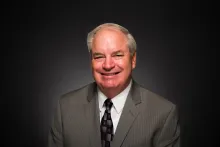
Robin Webber was born in Chicago, Illinois, in 1951, but has lived most of his life in California. He has been a part of the Church of God community since 1963. He attended Ambassador College in Pasadena from 1969-1973. He majored in theology and history.
Mr. Webber's interest remains in the study of history, socio-economics and literature. Over the years, he has offered his services to museums as a docent to share his enthusiasm and passions regarding these areas of expertise.
When time permits, he loves to go mountain biking on nearby ranch land and meet his wife as she hikes toward him.
