

Don Ward
The Day of Atonement is a sacred reminder of God’s profound love and mercy, revealing the heart of His plan to reconcile humanity to Himself through Jesus Christ. This message explores how the ancient rituals of Leviticus 16 foreshadowed the perfect and eternal work of our High Priest, who entered the true heavenly sanctuary with His own blood to cover our sins once for all. Through the book of Hebrews, we see that Christ’s sacrifice not only brings forgiveness but also transforms our hearts and gives us access to the very throne of grace. This holy day points forward to a time when all people will be freed from sin and deception, and every knee will bow before the Lord in gratitude and worship.
Roc Corbett - Our High Priest and His Atoning Sacrifice - YouTube
https://www.youtube.com/watch?v=8wkZzZ1rg9U
Transcript:
(00:01) Brethren, here we are observing this day of atonement together here in Tacoma. It's really a special day to prepare a message. Those of you who have, you know, there's so much good, excellent, needed material for this day. And I wanted to make sure that it's something that is edifying to you and encouraging and comforting.
(00:29) And my prayer has been that uh the things we'll read today from the words of God will help us all to understand and appreciate this day even more. The day of atonement is about the love of God and of Jesus Christ, our Lord and Savior, our merciful high priest.
(00:53) It's about one of the most important and essential aspects of God's purpose, his desire, and his plan to give us the gift of eternal life that he promised before life before time began. It's about the atoning sacrifice of Jesus Christ and God's acceptance of his offering in the heavenly sanctuary, the holiest of all. The day of atonement is about faith.
(01:22) It's about our faithful high priest and our faith in his atoning sacrifice. It's about receiving and believing the gifts and the sacrifice of our high priest and holding fast to our confession. I'm just taking phrases from the scripture that describe this day. It's about the blessing of being able to come boldly to the throne of grace and pray to God our father directly.
(01:52) The day of atonement is about learning and believing that is a personal part of everyone's life of all of our lives now and for those who will live after us in the kingdom when Jesus Christ returns and those will rise in the second resurrection. This day means something very, very important to every single person.
(02:21) It's about God's grace being extended to those who will live during the thousand-year reign of Christ and for the rest of the dead who will rise in that second resurrection. For literally every knee shall bow before the Lord. And this day pictures the opening of that relationship. These are blessings that are made possible through the awesome work of salvation that Jesus Christ, our great high priest, accomplished and that is shown in the meaning of this day.
(02:49) We come here today, all of us, needing the gifts and the sacrifice of Jesus Christ that he offered once for all when he entered that most holy place, the heavenly sanctuary where God's throne is, where God is on his throne. and we come to hear about Christ's victory over his enemy and our enemy.
(03:15) It's my hope and prayer, brethren, that this message will be edifying and inspiring and also motivating. It's not just something to hear, it's something to live by, something to do, something to follow, something to appreciate, to be very motivated by what we learn today. Many of you have been attending, learning and living this way, keeping this day for many years.
(03:39) But among us, there are those who are new, those who are being called now out of this world. There are those young ones who would be learning as they grow. And no single sermon can fully expound the many inspired and inspiring layers of spiritual truth that are contained in the scriptures about this day. There's enough to last a lifetime of learning and growing in the grace and the knowledge of our Lord and Savior Jesus Christ.
(04:08) So today, let's lead up to and then focus on one main point and a few spiritual principles that help us to comprehend more completely the meaning and purpose for this annual holy day. The title of the message then is this. Jesus Christ, our high priest and his atoning sacrifice. Want to set the stage.
(04:35) I really appreciate that we heard some of this in the opening message. It saves me some time now as I can just remind you of what we read in Leviticus 23 where it describes this holy day as being a day of afflicting our souls of fasting. God's command that this be a day of fasting is for the purpose of humbling ourselves before him in a repentant and obedient frame of mind because it's the day when our sins are atoned for and covered.
(05:06) We come with that repented attitude of Christ, will you cover my sins and take my request for repentance and forgiveness before our father. It's a very special day. And in fasting and coming together, we worship in a holy convocation. We humbly acknowledge together as a congregation, as a family, our need for our sins to be forgiven, for our relationship with God to be restored to its fullness, and the awesome way that Jesus Christ makes these things possible.
(05:44) The day of atonement is mentioned in the book of Acts, and it's evident there that the Apostle Paul and Luke who was with him believed in and kept this day. They mentioned it as a fast. The fast had passed and they uh from that we understand that the New Testament church understood and kept this day. In the Old Testament, the day of atonement is described most fully in the 16th chapter of Leviticus with various elements and timing of how the day was to be kept. I just want to briefly run through some of those. You will remember them as I read them. You
(06:27) can look in that chapter on a personal study and list these things out if you see. And I want to show you those shadow of what was to be. These are called copies of the things in the heavens. But they meant something and those are explained to us in the New Testament.
(06:46) And I want to just briefly remind us so that when we begin to see the spiritual meaning, we will understand how it connects. In the tabernacle, there was a holy place inside the veil where the Lord would appear in a cloud of incense above the mercy seat. Once a year and only once a year and only for one person was a was the high priest was able to put on those holy garments and come into that holy place with a very special offering.
(07:15) On that day of atonement, he was to take two goats and present them before the Lord. It was to cast lots and determine which of them would be sacrificed in representation of the Lord for the sins of the people. And the other goat was to be left alive called in Hebrew an aazel goat meaning the goat of departure.
(07:44) Before sacrificing the selected goat, he was to sacrifice a bull for a sin offering for himself and his household and sprinkle the blood on the mercy seat. It was to kill the goat of the sin offering for the people and to bring its blood into the holy place and sprinkle it on the mercy seat.
(08:03) This was the sacrificial offering from which the day of atonement gets its name. When we think of the day of atonement, we're thinking of those highlevel things that happen that enhance our relationship with God and make it possible. And this will be the central focus of the meaning of the message today. The high priest and his atoning sacrifice. And then when the high priest had made an end of atoning was to bring the live goat and all of the iniquities of the children of Israel and all their transgressions and all their sins were to be put on the head of that goat and
(08:35) it was to be led away alive by the hand of a suitable mana released in the wilderness. The bodies of a bull of the bull and the goat that had been offered as sin offerings were to be carried outside the camp and burned. They were not to be eaten. These are all some of the details that are listed there in Leviticus 16.
(08:58) And all of these, every single detail was to be done that day that were shadows of good things to come. There's something so important that everything that was done then would reveal revealed to us about God's calling for our lives, bringing us to salvation. And those things that are revealed are clearly shown in scripture mostly in the book of Hebrews where we find the substance the spiritual meaning of what had been symbolically observed.
(09:37) I'm going to read for you mostly from the book of Hebrews today and I'll start with a phrase in Hebrews chapter 8 and verse 5. There it says the priests who were in the who served in the tabernacle that they served the copy and shadow of the heavenly things. At the same time, I'm just going to go from some of these phrases and just to show the points that we need to see today.
(09:57) So, this book of Hebrews compares and contrasts the symbolic temporary things of the first covenant with the substance of the real and it does it in a very special way. It mentions what was the copy and then it shows the substance over and over again all the way through.
(10:17) And if we see this that we learn more and more what this day means. The book of Hebrew focuses on and reveals more of the spiritual meaning of the day of atonement than any other book of scripture. There are other references in some books, but this book focuses on the sacrifice of Christ. And of course it applies for the Passover sacrifice and for this what the day of atonement.
(10:43) We can explain some of that later. In Hebrews 9 23- 24 says, "Therefore it was necessary that the copies of the things of the heavens should be purified with these, but the heavenly things themselves with better sacrifices than these. For Christ has not entered the holy places made with hands. You see it begins to compare.
(11:09) The one was the holy place in the tabernacle made with hands. Christ did not go there. He did not go there. He went those were it says just copies of the Jew. He went into heaven itself now to appear in the presence of God for us. This is something he's doing has done for us. It's such a very important and special blessing.
(11:39) In Hebrews 10 and verse one, it says, "For the law having a shadow of the good things to come and not the very image of those things can never with these same sacrifices which they offer continually year by year, make those who approach perfect." You see what the intent of this atoning sacrifice is? to help us to be made perfect. That's that's what this is about.
(12:06) What Jesus Christ is doing. This is the purpose of that spiritual sacrifice of Jesus Christ. And he's doing that today in our lives to make us perfect, make us complete, make us holy before God. And that comes only through his atoning sacrifice. God made sure that the spiritual truth regarding the substance of the things that were foreshadowed in the observance of that day of atonement in the Old Testament time would be revealed in his word, preserved for us to know and believe and follow. This is how we know what it means because we read it in his
(12:49) words for us. So today, I'd like to just notice some of the clear teachings about the Day of Atonement that God inspired to be written in this book of Hebrews. We just take a quick scan today and all of these could be something that we would be able to look at more carefully in our private study and look up all of the connecting things, other verses that would apply.
(13:13) But in each example that we're going to cover today, there could be some enlightening personal Bible study that could follow up. And I encourage us for that. I'm going to scan chapter by chapter so we don't have as much turning to do. If you want to open to the book of Hebrews, we'll begin in Hebrews chapter 1.
(13:36) Noting that all of these things connect to the day of atonement. In Hebrews 1, beginning in verse one, look how the book begins. It grabs our attention, takes us to the very highest level. God, what a great way to open the book. God who at various times and in different ways spoke in times past to the prophets to the fathers by the prophets has in these last days spoken to us by his son whom he has appointed heir of all things through whom also he made the world who be the brightness of his glory and the expressed image of his
(14:20) person and holding all things by the word of his power. Notice what it says next. When he had by himself purged our sins, he sat down at the right hand of the majesty on high. The purging of our sins happened when he came into that holiest of all with his blood as a sacrifice to cover our sins. He purged our sins and sat down then at the right hand of the majesty on high.
(14:57) He is now sitting there at the throne of God. And there's a connection in this to the day of atonement. And verse 13 gives us a time mark. If you see verse 13, it says, "But to which of the angels has he ever said, "Sit at my right hand till," time marker, "till I make your enemies your foottool." And so we know and we believe and we worship Christ as he sits now at the right hand of God till the time comes.
(15:35) And this begins to help us understand why is this day of atonement put after the feast of trumpets. We begin to see these things that re come to pass come to to light in the scriptures. This can help our understanding and the timing. This is quoted from Psalm 110 verse one and it's referenced in 1 Corinthians 15 about the resurrections about the time when Christ comes with the sounding of that trumpet when he will sit at the right hand until the enemy is made his foottool.
(16:10) This point is further explained in the next chapter and this is part of what we understand is the meaning of this day as well. in Hebrews 2:14. And because it's dealt with early in the book, we'll deal with it early in this message. In Hebrews 2:14 and 15, it says, "In as much then as the children have partaken of flesh and blood, he himself likewise shared in the same, that through death he might destroy him who had the power of death, that is the devil.
(16:48) " and release those who through fear of death were all their lifetimes subject to bondage. These spiritual results of the sacrifice of Jesus Christ follow the pattern of the observance of the day of atonement in Leviticus 16. That first goat was killed, thus sealing the fate of the second goat. In Leviticus 16, when the high priest had made an end of atoning in the holy place, the high priest laid all the sins of the people on the head of the livegoat, and it was led into the wilderness by the hand of a suitable man. Those sins were not covered by the
(17:34) atoning sacrifice which had already been finished. In Hebrews 9 and verse 22 it says without shedding of blood there is no remission. And so all those sins laid on that second goat had no remission. When Jesus died, we advance into the spiritual elements. Now when Jesus died, the fate of the devil was sealed.
(18:11) See that in Hebrews 2 that by death that through death he might destroy him who had the power of death that is the devil. Christ entered the most holy place with his own blood and covered our sins. He took our sins upon him and with his shed blood entered that most holy place, sprinkled his blood on the mercy seat of the throne of heaven and covered our sins.
(18:46) Christ is now sitting at the right hand of God, that most holy place till the enemy has made his foottool. From this we understand as scripture shows that Satan will be banished bearing on his head the guilt of all. Think of it this way. Christ's sacrifice covered our sins. All the sins of all the people were laid on the head of that goat and that goat was covered with all the sins.
(19:18) It was not something that was forgiven. Sin was laid on him and was taken away alive into the wilderness. You can read in Revelation 20 and let's turn there. These are important parts of the understanding of this day. Revelation 20 verses 1-3.
(19:48) And then I saw an angel coming down from heaven having the key of the bottomless pit and a great chain in his hand. And he laid hold of that dragon, that serpent of old, who was the devil and Satan, and bound him for a thousand years. And he cast him into the bottomless pit and shut him up and set a seal on him so that he should deceive the nations no more till the thousand years were finished.
(20:08) And at the end, verse 13 shows he'll be released again for a little while and then banished forever, never to be influencing any of God's family after that. So we see these things unfolding in scripture. The meanings that were in copy of the shadowy things in the the shadows of the things in heaven becoming explained in in the in the writings of the scriptures that we see and humanity will be released from the bondage of fear and death.
(20:47) Not just us now but all the people who have ever lived. All the people who will yet be born in that reign of Jesus Christ. All humanity will be released from the bondage of fear and death and be able to come in a repentant attitude individually and as nations before Jesus Christ and repent and have their relationship with our father restored through the atoning sacrifice of Jesus Christ.
(21:18) In Hebrews 2 verse1 17 it says therefore in all things he had to be made like his brethren that he might be a merciful and faithful high priest in things pertaining to God to make propitiation for the sins of the people. This is the focus then that we begin to come back to that other goat. Now we understand the fate there but let's look at what is being done for us and for all humanity.
(21:47) He's the propitiation for the sins of the people. This is speaking of the sacrifice made on the day of atonement. We read in these words in the in the book of Hebrews. You understand this connection if we understand what was the shadow. In verse 10 shows us that it was for everyone. Chapter 2 verse 10.
(22:09) For it was fitting for him, for whom are all things, and by whom are all things, in bringing many sons to glory, to make the author of their salvation perfect or complete through sufferings. He completed the mission that was given to him to open this way of salvation for all. And do you see in that verse 10 that our father in heaven is also part of this? It was fitting for him, our father, for whom are all things and by whom are all things and bringing many sons to glory to make the author of their salvation, Jesus Christ, his son, complete through the sufferings that he
(22:46) went through. In the book of Romans, I'll just read this so you can and jot it down and and look it up yourself in a little while. In Romans 3 23- 26, this shows why we need this day, why you need this day, and why I need this day. For all have sinned. Romans 3:23. All have sinned and fall short of the glory of God, being justified freely by his grace through the redemption that is in Christ whom God set forth as a propitiation.
(23:26) God is involved with in this day. He sent his son for this purpose to be a propitiation for us. In my New King James study Bible, the reference in the margin goes all the way back in reference is Leviticus 16 and verse 15. And and and it's there in the scriptures. It's tied together.
(23:51) This word propitiation is the Greek way of the word for uh mercy seat that we read in Leviticus. And in in the Greek it's propitiation. And it means the same thing. The mercy seat by whom God set forth as a propitiation by his blood through faith to demonstrate his righteousness because in his forbearance God had passed over the sins that were previously committed. What a great blessing that is for us.
(24:25) He was doing that to demonstrate at the present time his righteousness that he might be just and the justifier of the one who has faith in Jesus. This is truly a day about faith. Do we believe this? And do we receive that propitiation, that redemption, that remission of our sins? In 1 John 2, there's other verses through the scriptures as I mentioned that connect so very well and directly with this.
(24:59) In 1 John 2 and verse two says, "And he himself is the propitiation for our sins and not for ours only, but also for the whole world. This day is a day for the whole world as we heard in the first message. the whole world to be blessed by what God and Jesus Christ accomplished on this day. And in 1 John 4 and verse 10, it says, "In this is love.
(25:30) " This is why I say this is a day about God's love. In this is love. Not that we loved God, but that he loved us and sent his son to be the propitiation for our sins. is all tied to this important day of atonement and what God is showing us it accomplishes in his plan to bring us to salvation.
(26:00) So, continuing in chapter 4 of Hebrews, I'm going to go back now. Most I think of the rest of my verses are just in this one book and we'll just go chapter by chapter. In Hebrews 4 in verse 14 and 15, it says, "Seeing then that we have a great high priest who has passed through the heavens." That phrase passed through the heavens is symbolic of that's the substance really of what was symbolic in the Old Testament time.
(26:34) The priest passed through that first holy uh holy place into the most holy place. And this is like in this that's the shadow and this the the reality is that Christ passed through the heavens to the throne of God himself. Jesus the son of God. Let us hold fast our confession. He wants us to believe and to hold fast to these things. For we do not have a high priest who cannot sympathize with our weaknesses, but was on all points tempted as we are and yet without sin.
(27:13) And what a great thing that we have a high priest who understands our weaknesses. He understands what it was like to be tempted. He understands what it was like to resist that temptation and live a sinless life. We can look to him for the help we need. In chapter 5 verse 1-3 speaking of Christ it says for and again looking back at the references of the old re really if you study study this book and just put two things two columns old testament new testament and just line them up and you can see what is being referred to here he's showing us the spiritual meaning of those symbol symbolic things in Hebrews 5:1. For
(28:04) every high priest taken from among men is appointed in men and things pertaining to God. He was to represent them to them those things pertaining to God. And that's exactly what Jesus Christ did that he may offer both gifts and sacrifices for sins. He can have compassion on those who are ignorant and going astray since he himself is also beset by weak weaknesses.
(28:30) Every priest, every high priest of old was being described here, a human being beset by weaknesses and having his own sins. And every minister today and every person in the church is also beset by weaknesses and also has our own sins. It says of this because because of this he has required as for the people so also for himself to offer for sins.
(29:01) You know I read those things and I take it to heart and I say if I'm going to bring a sermon about forgiveness of sins I better I better do my part and come in humble prayer to God and ask for him to forgive me before I stand before his people and say you need God to forgive you. We all do, brethren. We all need this and God offers it to us.
(29:28) This is what was described in this mere shadow of the greater high priests. But still, God provided a way for those high priests to serve. He made it possible for them to serve his people even though they had their own weaknesses. In Hebrews 6 verse 19-20, there's a direct reference here to the things that relate to the day of atonement.
(29:59) It says, "This hope we have as an anchor of the soul, both sure and steadfast, and which enters the presence behind the veil." Day of atonement, it's being referred to. We enter the presence behind the veil where the forerunner has entered for us. Even Jesus having become high priest forever according to the order of MelkiseDC. Here we see some of the very positive effects on our own lives that come to us through the atoning sacrifice of Jesus Christ.
(30:30) He as the forerunner entered that presence behind the veil. And we also now every day of the year individually may enter that presence behind the veil as he opened that way for us. And we'll see additional mention of this in the later chapters of book of Hebrews as we go. In Hebrews chapter 7, God inspired more details comparing and contrasting the Levitical priesthood with the priesthood of Jesus Christ in verse 26 and 27 help make the connection to this day of atonement.
(31:13) Look what it says in Hebrews 7 26. For such a high priest was fitting for us, who is holy, harmless, undefiled, separate from sinners, and has become higher than the heavens, who does not need daily as those high priests to offer up sacrifices first for his own sins and then for the peoples. For this he did, this Christ did once for all when he offered up himself.
(31:52) His atoning sacrifice was one time for all time for all people because of the spiritual perfection of his sacrifice and of himself and of the purpose of God. once for all in Hebrews chapter 8 first three verses we read this now this is the main point of the things we are saying and I just really love it when I'm reading the Bible and I find a phrase like this this is the main point so let's make it the main point for the sermon today this is the main point of the things we are saying we have such a high priest who was seated at the right hand of the
(32:40) throne of the majesty in the heavens. He was seated there after he brought that atoning sacrifice before God. A minister of the sanctuary and of the true tabernacle which the Lord erected and not man. For every high priest is appointed to offer both gifts and sacrifices.
(33:10) Therefore, it is necessary that this one also have something to offer. And what he offered is that atoning sacrifice which is the focus of this day as well, the high priest and his sacrifice and the effect it has in our lives. In Hebrews 9, the whole chapter speaks and makes more clear about the focus that is really about this day of atonement.
(33:42) It chapter 9 verse 1-3 says then indeed even the first covenant it's not just the tabernacle it's also the covenant that was administered from that tabernacle. Even the first covenant had ordinance of divine service and the earthly sanctuary. For a tabernacle was prepared, the first part in which was the lampstand, the table, the showbread, which is called the sanctuary.
(34:08) And behind the second veil, the part of the tabernacle which is called the holiest of all. And again, this is where our focus is on this day. the sacrifice made there and taken into that holiest of all. Appreciated in the first message we heard some of the uh references from verses 6- 15. You might remember that scanned them again.
(34:39) But you see some of the notes there that into the second part, the high priest went alone once a year and Christ went alone into that holiest of all to take his atoning sacrifice for us. And notice in verse 8, the Holy Spirit indicating this that the way into the holiest of all was not yet made manifest while the first tabernacle was still standing.
(35:11) It was symbolic for the present time in which both gifts and sacrifices are offered which cannot make him who who performed the sacrifice to the service perfect in regard to the conscience. Again it's the the the concept is that this sacrifice helps us to become made perfect even in our conscience even in the most inner part of our being.
(35:39) It was concerned only with physical things. It says in verse 11, "But Christ came as high priest of the good things to come, with a greater and more perfect tabernacle, not made with hands, that is not of this creation, not with the blood of goats and of calves, but with his own blood." Here's the description of his sacrifice. what he did with his own blood.
(36:09) He entered the most holy place once for all, having obtained eternal redemption. That's the purpose for this. Why do we need atoning sacrifices for us? The one, why do we all need that? For redemption, that we may be granted eternal life. that we may have an open and trusting relationship with God in our personal lives now and forever. We have such a wonderful thing when we understand the sacrifice of Jesus Christ.
(36:52) Verse 14 speaks about the effect of sacrifices before and verse 14 says, "How much more shall the blood of Christ who through the eternal spirit offered himself without spot to God purge your conscience from dead works to serve the living God." What a great thing.
(37:24) You know an example in the scripture is the apostle Paul who before he was called when his name was Saul and he was persecuting the church and he he caused people to who believed he caused Christians to be put to death. And yet when his conscience was cleared what did he say? And he's talking to the elders in Ephesus and he said, "I am innocent of the blood of all men, cleansed to the point where he could feel and be innocent." And brethren, that's for us, too.
(38:03) It cleanses our conscience so the things that we did that we regret could be so completely forgiven. And Christ's atoning sacrifice cleanses our conscience and makes us holy before our father. In Hebrews 10 verse 1-4 says, "For the law having a shadow of the good things to come and not the very image of the things could never with these same sacrifices which they offer continually year by year make those who approach perfect.
(38:42) For then they would have they would have not for then would they not have ceased to be offered. For the worshippers once purged would have no need would have no more con consciousness of sin. Excuse my reading here. I think my blood sugar is dropping and I'm getting a little bit to the point where I understand that I'm fasting.
(39:09) But in those sacrifices, there was a reminder of sins. Every year they they were reminded they could strive to do better. They could go on with the next year, but they would still need it again and again and again. It says in verse four, "For it is not possible that the blood of bulls and goats could take away sins.
(39:39) " But it is possible and it is true and it is real that Jesus Christ takes away our sins. Verse 13 or verse 10 through13. By that will, by God's will, we have been sanctified through the offering of the body of Jesus Christ once for all. And every priest stands ministering daily and offering repeatedly the same sacrifices which could which could never take away sins.
(40:15) But this man Jesus Christ after he had offered one sacrifice for sins forever sat down at the right hand of God. from that time waiting till his enemies are made his foottool. And again we see that time marker waiting until he returns to this earth and his enemy is banished. It's waiting for that time. And that's why we see this day in the fall of the year.
(40:45) What then shall we do? What then brethren shall we do? Hebrews 10. And again, this was referenced in the first message as well. But I want to read it for us because it shows us what we should do knowing these things. It's not just that we know and that we hear and we heard it before and oh yeah, it sounds familiar.
(41:13) No, brother, what shall we do? How shall this change us? Hebrews 10:1 19 Therefore, brethren, having boldness to enter the holiest by the blood of Jesus, we have that blessing and privilege now that was not open to the people of Israel of old only to one individual one time a year having boldness to enter the holiest by the blood of Jesus by a new and living way which he consecrated created for us through the veil that is his flesh.
(41:53) And having a high priest over the house of God, let us draw near with a true heart in full assurance of faith. Having our hearts sprinkled from an evil conscience and our bodies washed with pure water. This is the effect of the atoning sacrifice. And it engages us to do these things to be able to enter boldly into the presence of God to bow our knees before him and pray knowing that we're speaking to our father in heaven and Christ at his right hand. Let us hold fast the confession of our hope without wavering. For the for he
(42:43) who promised is faithful, and let us consider one another to stir in order to stir up love and good works, not forsaking the assembling of ourselves together. It's a He's calling a family. He's calling a church together, one body to be able to become his family, his sons and his daughters. And for that to happen, each one of us needs to have to receive, to believe, and to have in our lives the awareness of the fullness of that atoning sacrifice.
(43:27) There's one more important connection to the day of atonement. And this might be easy to slip by, but if you notice, it makes a big difference for us. in Hebrews 13 verse 10 through13. I want to read this and ask you to keep in mind all the things we've just read in the scripture about this day about what was done, who did it, where it was done, the effect of it.
(44:03) Read then this verse 10. We have an altar from which those who serve the tabernacle have no right to eat. The sacrifice of the day of atonement, the bull that was brought in for the high priest for his own sins and those of his family, the sacrifice of that first goat that was brought.
(44:34) Those the bodies of those animals were to be taken outside the camp and burned. No one was to eat them. Think of this. We have an altar from which those who serve the tabernacle have no right to eat. At our altar, we come to eat. Jesus Christ said, "He is the bread of life. And the new covenant symbols that bread out of his body that was broken is wine. The wine that is the blood that was shed.
(45:12) The altar where we worship now is different than the altar in the tabernacle. Christ. It says in verse 11, for the bodies of those beasts whose blood is brought into the sanctuary by the high priest for sin are burned outside the camp. Therefore Jesus also that he might sanctify the people with his own blood suffered outside the gate.
(45:40) We don't look back and try to go into the tabernacle of old or serve the temple. Those things have been made obsolete. That one sacrifice of Christ at a different altar is now opening up to us the heavenly things of salvation. We go to him. We eat of his flesh. We drink of his blood, of that sacrifice that is the atoning sacrifice for us.
(46:16) We're not physically doing that today, but we are spiritually, brethren, doing that today, eating at that altar. No one was permitted before, but we are now permitted to drink to eat and to drink of that old of that sacrifice. Brethren, the day of atonement is richly endowed by God with spiritual meaning that leads us to salvation.
(46:55) It's a day we all need, filled with God's love for us and revealing to us the sacrificial work of Jesus Christ and of our father in heaven. What does God want us to understand and believe about the meaning of the day of atonement? He wants us to know and believe that he loved us and sent his son to be the propitiation for our sins. He wants us to know that the atoning sacrifice that Jesus Christ brought into the holiest of all in heaven itself has been accepted by our father and is in full effect to completely cover our sins to bring us to salvation.
(47:41) And he wants us to know that the enemy will be banished. He wants us to know that all who live in the thousand-year reign of Christ and all who will be raised in the second resurrection will also be able to have their sins covered by Christ's atoning sacrifice. How do we know these things? Because he inspired them to be written in the scriptures.
(48:08) This is what we believe. How will we spend the rest of this day of atonement? Let it be in drawing near to God. plan some time and take some time to come before his throne of grace and let him know how much you appreciate and value the things that happened when Christ entered the holiest of all to present that sacrifice for each one of us for all of humanity and for each one of us individually as well.
(48:54) What a great day it is to have a day of atonement.
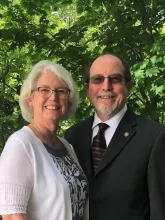
Having retired in August, 2024, I still serve as an elder in the congregation. My wife and I are blessed to serve in many meaningful ways.
