
Steve Shafer
This transcript was generated by AI and may contain errors. It is provided to assist those who may not be able to listen to the message.
Thank you all very much for coming a little bit early. Good to see all of you here. It's been a couple weeks since we've been here, but nice to be back here in Bellevue. We'll be here next week as well, so we're looking forward to that. If you bow your heads, I'll go ahead and open in prayer. Father and great God in heaven and Jesus Christ at your right hand, we do come before you. Just so thankful for the Sabbath, for this time that you set apart, for us to be able to look into your Word, be inspired by it, Father, and to learn things that you have for us. We just thank you for this time and for everyone who's here, for the blessings that you've given us, Father, in so many ways. So we do thank you for this now, and we ask for your guidance and direction, your blessing on this Bible study. And we thank you for it and give you praise and glory in Jesus Christ, holy and righteous name. Amen.
Okay, in the previous Bible study back, I think it was November 22nd here, it was quite a while ago, we went over the originally inspired order and ranges of the Old Testament, which were arranged in three overall divisions, called the writings. We have the writings up here. I just put that section up there to look at and review just momentarily for this Bible study.
Because the writings, which was the third overall division, was divided as well. So divided into the political books, as you see up there, of Psalm, Proverbs, and Job. And I'm going to talk to you a little bit today why they were called the political books and what that means. And then there was the five scrolls, the megaloth, the Song of Solomon, Ruth, Lamentations, Ecclesiastes, and Esther. And then what was known as the prophetic, historic books of Daniel, Ezra, and EMI, and Chronicles.
Of course, Ezra and EMI were combined in one book originally, and 1 and 10 Chronicles were combined in one book. So in the originally inspired order as well, it ends with 2 Chronicles.
But again, the main poetical books here are Psalms, Proverbs, and Job, which are almost entirely written in Hebrew poetry.
Also, the Song of Solomon, Ecclesiastes, was almost exclusively written. Those were written in Hebrew poetry as well.
But they were subdivided into the five scrolls for a reason, which I may get into. Why? Because there are actually three sets of five books in the Old Testament. There's the five books of Moses, there's the five scrolls, and then there's the five books of Psalms. Psalms is actually divided into five books, as most of your Bibles will show. And there's a correlation between those three sets of five books as well. I might be able to touch on that in a later Bible study.
But Hebrew poetry is also found in just about every book of the Old Testament, which is why it is important to understand. So today, in this Bible study, I want to give you an overview of Hebrew poetry. If you want a title, that would be it, an overview of Hebrew poetry, so we can understand how it is constructed, how to recognize it, and how it almost always relates to prophecy. In fact, I would say it always relates to prophecy.
First, I want to talk about what Hebrew poetry does not do. It's different than when we think of poetry. When we think of poetry, we think of sounds that rhyme, like Jack and Jill went up the hill or whatever. But Hebrew poetry does not work like that. Hebrew poetry does not rhyme.
Poetry that rhymes began back in 300 BC, from the little bit of research I did on that, with a man by the name of Dionysius. He was a leader of the Greek city of Syracuse.
He lived just prior to the time of Alexander the Great. Dionysius lived around 380-390 BC in that time frame. He was probably the first critic of Hebrew poetry, because the Greeks loved sounds that rhyme. That's what they loved. They loved sounds that rhyme. But again, instead of rhyming sounds, Hebrew poetry involves substance and repetition, rather than sounds that rhyme.
So what doesn't Hebrew poetry do? It doesn't rhyme. Instead, it looks at repetition and substance, as we'll see. That's an interesting concept, because I want to just mention this as this question. Why did God inspire Hebrew poetry to be written in a way that did not involve sounds that rhyme? There's a reason for that. And I'll go to the next slide here if this works. There it is, Matthew 28, verses 19-20. It gives us the answer. Now, quote it there. It's up on the screen. Go therefore, Christ said, and make disciples of all the nations, baptizing them in the name of the Father and the Son of the Holy Spirit, teaching them, teaching all nations, to observe all things that I have commanded you, and, lo, I am with you always, even to the end of the age. Of course, part of that would be involved the Old Testament as well.
So one of the main reasons God did not inspire Hebrew poetry to be written with sounds that rhyme is because God's message, the gospel message and the teachings of Christ, had to go to all nations, which would mean it would go to people that spoke different languages. They wouldn't all be speaking Hebrew. So if he had sounds that rhyme in Hebrew, they wouldn't rhyme in other languages. It wouldn't make sense. Because the people that received the gospel message would have a variety, a large variety of different languages. And sounds that rhymed in Hebrew wouldn't rhyme in other languages.
Now, how does Hebrew poetry work?
Hebrew poetry is really the highest form of poetry because it uses repetition of ideals to emphasize something and to appeal to the human mind, to whom you're reasoning. Hebrew poetry is designed to stimulate our thinking, and it reasons with the human mind.
I want to notice some verses here in that regard. As we look at these verses, we'll note that they also use forms of Hebrew poetry. We'll go to the next slide here. And this is Isaiah 1, verse 18, which says, now, this idea of reasoning with the human mind is emphasized here in Isaiah 1, 18. It was also used as Hebrew poetry, as we'll see. It says, come now and let us reason together, says the Lord. Though your sins are like scarlet, they shall be white as snow.
Though they are like crimson, they shall be as wool. Again, this is stated in using a form of Hebrew poetry, which is called, which we'll get to in a little bit here, anti-thetic parallelism, where one thought is emphasized or reinforced by a contrasting thought.
Scarlet is contrasted to white as snow, and crimson is contrasted to wool.
So this verse then illustrates what Hebrew poetry does. It reasons with the human mind to emphasize and reinforce God's way using poetic language. So God inspired Hebrew poetry to utilize substance and repetition and emphasis of God's ideals, to appeal to our thinking and to our reasoning.
Let me now show you the four main forms of Hebrew poetry. And there are more. You go and do it online, and a lot of you will. Some will give you three main forms, some will give four, some will give five, some will give maybe some other minor ones. But I just want to show you the four, what I consider the four main forms of Hebrew poetry. But all forms of Hebrew poetry involve what is called parallelism, which is an expression of one idea in two or more different ways. Let's go to the next slide, which explains parallelism. Again, all forms of poetry use parallelism, which is an expression of one or more ideas in two or more different ways, as it says. For example, as in Psalm 119.105. That's an example of parallelism and Hebrew poetry as well. Your word is a lamp to my feet and a light to my path. This is a simple parallel where a lamp to my feet parallels a light from my path. It's basically the same idea using different words. One idea expressed in two different ways. Also, the words lamp and light and the words feet and path pill each other. Basically, they have the same meaning. Lamp and light and feet and path. So this is a simple example, then, of how parallelism works in Hebrew poetry. Now, then, let's look at the four main forms of Hebrew poetry, all of which use parallelism. The first one we'll look at here is synonymous parallelism, which is the first main form of Hebrew poetry. This is where the same thought, or similar thought, is expressed and repeated in similar words. The thought is being repeated but with different words in order to emphasize that particular thought. Again, there are many, many examples of this throughout the poetic books, especially in Psalms and Proverbs, which the following slides will illustrate a few of those examples. We'll go to the next slide and see a couple of examples of synonymous parallelism. Psalm 15.1 is an example. Lord, who may abide in your tabernacle? Who may dwell in your holy hill? I've put in bold, in your tabernacle and in your holy hill, because in your tabernacle and in your holy hill, are similar or parallel thoughts expressed in different words with basically the same or synonymous meaning to emphasize that sauce. This is called synonymous parallelism because those two thoughts are synonymous in their meaning overall. Go to the next slide. Two more examples of synonymous parallelism. Job 38, verse 16. Have you entered the springs of the sea, or have you walked in search of the depths? Of course, we know the oceans have springs at the very depths of the oceans. There are springs down there they've discovered now. So those are basically synonymously related thoughts which parallel one another. The springs of the sea and the depths. The depths of the springs of the sea basically talking about the depths of the ocean and just expressed in different terms, different words. But they're parallel, and they're synonymous in their meaning. Also, notice that the words entered and walked parallel one another and have a synonymous meaning.
As well. Now, in the next example, Job 38, verse 31, it's talking about the constellations, but it says, Can you bind the cluster of Pleiades? Constellation. A group of stars there, they're in the sky. Or, loose the belt of Orion? Of course, Pleiades and Orion are synonymous in that they are both constellations, and they are both expressing the same overall thought. Can you, Job, can you rearrange the universe, or can you create the universe as you see it?
So that's synonymous parallelism.
Those enter three of many, many examples of that synonymous parallelism and how it's used in Hebrew poetry. Now, the second main form of Hebrew poetry that I'm going to talk about here is called Antithetic Parallelism, which I'll go to in the next slide. This is where one thought is emphasized or reinforced by a contrasting thought, such as we already saw there in Isaiah 1.18, which we already had. Where Isaiah 1.18, again, I just mentioned it again, said, "'Come now and let us reason together,' said the Lord. "'Though your sins are like scarlet, they shall be white as snow. "'Though they are like crimson, they shall be as wool.'" So those two thoughts are basically, one thought is emphasized or reinforced by a contrasting thought.
"'Though your sins are like scarlet, they shall be white as snow. "'Though they are like crimson, they shall be as wool.'" And then those two contrasting thoughts, the complete two contrasting thoughts, also are synonymous in that they are basically saying the same thing. The one thought, "'Though your sins are like scarlet, they shall be white as wool.'" That's kind of saying the same thing, as though they are like crimson, they shall be as wool.
"'Though your sins are like scarlet, they shall be white as snow. "'Though they are like crimson, they shall be as wool.'" Those all together are kind of synonymous in their meaning, being the same thing. Continuing here in the slide, it's in addition to Isaiah 1.18, we have Psalm 1, verse 6. "'For the Lord knows the way of the righteous, but in contrast to that," this is anti-thetic parallelism with a contrasting thought being emphasized. "'For the Lord knows the way of the righteous, but the way of the ungodly shall perish.'" Again, contrasting the way of the righteous with the way of the ungodly. Then also, Proverbs 10, verse 1, the Proverbs of Solomon.
"'A wise son makes a glad father, but in contrast to that, a foolish son is the grief of his mother.'" Again, Proverbs 10 has many verses that use anti-thetic parallelism, contrasting one thought with another thought. Now, Proverbs is one of the political books, and nearly every verse throughout the book of Proverbs uses some form of Hebrew poetry to emphasize and reinforce God's principles that are given there in the book of Proverbs. It's very interesting to also realize that remember, with Hebrew poetry, the emphasis is not lost, regardless of what language it is translated into.
See, Hebrew poetry works in just about every language, which is the beauty of Hebrew poetry. You can still get the emphasis there that God wants us to have. Now, the third overall form of Hebrew poetry is called synthetic parallelism. This is where a thought is emphasized by continuing that thought from line to line to build a cumulative effect, such as Job 3, verses 11 and 12. Job 3, verses 11 and 12 says, Why did I not die at birth? Again, this is building a thought from line to line. Why did I not die at birth? Why did I not perish when I came from the womb?
Why did the knees receive me? Or why the breasts that I should nurse? Here, the thought is repeated and built upon to create a cumulative effect with different wording. Let's go to the next slide to give some more examples of that. Slide 10, two more examples, Psalm 1, verse 1.
Blessed is the man who walks not in the console of the ungodly, nor stands in the path of sinners, nor sits in the seat of the scornful. So again, this is kind of the same thought expressed in different words to emphasize the way of the righteous, kind of building on the thought using different words. Another example is Proverbs 23, verse 29. Who has woe? Who has sorrow? Who has contentions? Who has complaints? Who has wounds without cause? Who has readiness of eyes? So right there, there are six parallel questions that are asked there in that one verse. But verse 29, you just look at verse 29 alone, it kind of leaves you up in the air.
But verse 30 gives the answer. Verse 30 says, those who linger long at wine, those who go in search of mixed wine. So verses 29 and 30 together exemplify a form of climatic parallelism. You're building on a thought, and then you also then come to the answer in a climatic way with another verse. That then leads us up to the fourth and final form of Hebrew poetry, which I just mentioned there, climatic parallelism. That's the fourth form, where a second line completes the thought of the first line. Let's go to that. Climatic parallelism. The second line completes the thought of the first line, as we just saw there, taking verses 29 and 30 together in the previous example.
The thought is then completed by... it leaves up in the beginning and then completed by a second line, where it builds to a climax. So for example, Proverbs 31 verse 2, What my son, and what the son of my womb, and what the son of my vows? Proverbs 31 too kind of leaves us in the air. It doesn't give the answer to what?
The climatic answer, which exemplifies climatic parallelism, is given in verse 3. Do not give your strength to women, nor your ways, to that which destroys kings. And also, Proverbs 31 verses 2 to 3 thus exemplifies what is called climatic parallelism, as did Proverbs 23 verses 29 and 30. Let's go to the next slide. There's another example of climatic parallelism. Proverbs 31.4 is the first part of this. It is not for kings, O Lamburo. The thought is incomplete. It is not for kings to do what? Well, I'm at the end of the verse. It is not for kings to drink wine, nor for princes intoxicating drink. So verse 4 uses climatic parallelism, but it doesn't end there.
It continues to the next verse. Why shouldn't leaders drink intoxicating drink? Proverbs 31 verse 5 answers that. Lest they drink and forget the law and pervert the justice of all the afflicted. So the climax parallelism culminates in verse 5 of Proverbs 31.
So that then introduces us to the four main forms of Hebrew poetry. Combinations of those forms, as we saw briefly, are also used. Sometimes something will have combinations of those various forms. I want to now look at what's called how poetic parallelism works, and how it was used in the singing of the Psalms. Remember, the Psalms are nothing more than just songs were put to music. We don't have the music, but we have the words. It's all using Hebrew poetry. But how does Hebrew poetry work when it came to actually singing the Psalms?
See, God used Hebrew poetic language in order to inspire the writing of those Psalms, and they were sung and used in the surfaces of the tabernacle and later in the temple. In fact, 1 Chronicles 25.7 tells us that King David, who was a skillful musician himself, as we know, it says, the King David appointed 288 skillful musicians in the songs of the eternal for the service at the tabernacle, later at the temple after it was built. He had 280 skillful musicians for the songs of the eternal. And those are the songs, of course, in the book of Psalms. And they used what is called, as the next slide will now show, they used, in singing those songs, what was called an antiphonal method of singing.
This is where two singers, or two groups of singers, share the recital of the song, or the singing of the song. One party sings one line, to which the other party responds by singing the next line. And again, this method is illustrated in the Psalms. Now, when you look at the book of Psalms, you'll notice something a little unusual. All the Psalms have spaces, which separate certain scriptures, or groups of scriptures, within that particular song. This is on purpose, and it illustrates how the songs are to be sung using this antiphonal method of singing. We can illustrate that with just one psalm.
You can go through any of the psalms that way, but let's just illustrate with looking at Psalm 1, the first psalm. I'm going to display that on the screen here. But also, you might want to turn to Psalm 1 in your Bible so you can clearly see how this works. Psalm 1, antiphonal method of singing. So, for example, you've got Psalm 1, verses 1 to 3. After Psalms 1, verses 1 to 3, you have a space.
You have a space between verses 3 and 4. So the first group of singers then would sing verses 1 to 3. They would sing, Then we have a space between verses 3 and 4. So the first group of singers would sing verses 1 through 3. And the next group of singers would sing verses 4 and 5. This is the next verse shows. Which is, again, using antiphthatic parallelism, a form of Hebrew poetry, contrasting the way of the righteous with the way of the ungodly.
But then after those one group of singers verses 1 to 3, the next group would then respond by singing, But the ungodly are not so. They are like sheaf, which the wind drives away. Therefore the ungodly shall not stand in the judgment, nor sinners in the congregation of the righteous. So you've got one group singing the way of the righteous, the next group of singers would then respond by singing, Here's the way of the ungodly.
And contrasting that. Again, followed by a space, to which possibly both groups of singers would then respond by singing verses 6 together, For the Lord knows the way of the righteous, but the way of the ungodly shall perish. Now, if you had a group of singers doing it that way, and singing that psalm in that way, it would be a very effective way of singing that particular psalm. Now, although we don't know for sure exactly how they were sung, this is how most imagined how they would have been sung, because of the way they were spaced, because the spacing would kind of indicate how they might be sung in this particular way, using two singers, or two groups of singers, to emphasize those contrasting thoughts of what that Hebrew poetry is emphasizing.
So the book of Psalms is Hebrew poetry set to music. Unfortunately, the music is lost, but the poetic language is still there. Okay, I'm going to go ahead and blank out the slides right now, and I want to get to something else here, and the time we have remaining, because this then, I think, brings us to what I consider to be the most important and maybe the most fascinating aspect of Hebrew poetry.
And it's why psalms and Proverbs and Job and the Song of Psalm and Ecclesiastes, I believe is why they're written almost exclusively using Hebrew poetry. The reasons with the human mind emphasizes a particular thought, but what else is Hebrew poetry associated with and how is it used that pertains to all of us today in a very personal way? And it also applies to the times that we're now living in today as well, even though it was written thousands of years ago.
To me, the most fascinating aspect of Hebrew poetry is that when it was written, poetry and the poetic language of the Bible was always associated with prophecy. My son was said to have written using poetic language, Hebrew poetry, for example. It not only pertained to the present, it also always pertained to the future, which then means what?
You know, most people, they think of the...like Psalms and Proverbs. In fact, I've even seen some Bibles where they have just the New Testament, they have just certain books of the Old Testament, like maybe Psalms, Proverbs, something like that, or Ecclesiastes. But it really means that books like Psalms, Proverbs, Job, Song of Psalm, and Ecclesiastes, which are almost exclusively written using Hebrew poetry, it means they are not just nice sayings to maybe read before you go to bed at night.
And a lot of people think of them that way. It means that all those books are prophetic. They deal with the future and have prophetic implications. Also, anything else in the Old Testament that's written using a form or forms of Hebrew poetry would also be considered to be prophetic in nature. In fact, Scripture even tells us this. I already mentioned that King David appointed 288 skilled musicians who were skillful in the songs of the Lord, as it says. Who were skillful in performing and singing the Psalms at the tabernacle and at the temple.
Again, we're just going to look at Scripture. Now you can open your Bibles for the next few verses. I'm going to put this on the screen, but I'm just going to look at them. Let's note specifically what it says in regards to these songs of the Lord. Rather than display it, we'll turn to your Bible. Let's turn first to 1 Chronicles 25. 1 Chronicles 25 says, More for David and captains of the army separated for the service and that's talking about the service of the tabernacle or the service of the temple.
That's what that's talking about. Some of the sons of Asaph. Okay, let's stop right there for a second. The other thing is about Asaph. If you go a bit into Psalms, Asaph actually wrote 12 of the Psalms. He wrote Psalm 50 and he wrote Psalms 73 through Psalm 83. So he wrote 12 of the Psalms. He was one of David's chief musicians, and he wrote 12 of what we have in the book of Psalms. But notice what it says here in the rest of verse 25.
Some of the sons of Asaph, of Haman. Haman also wrote one Psalm as well. And then there's other names here. But it said, what does it say in the latter part of that verse is, Who should prophesy with harps, stringed instruments, and cymbals? And the number of the skilled men performing their service was, and it gives their names, and so on.
But they were singing and performing Psalms for the service of the tabernacle. But it says also that they were prophesying. That David separated for the service of the temple those who should prophesy. Also verse 2, of the sons of Asaph, and it gives them their names there, and the latter part of verse 2, Who prophesied according to the order of the king. How did they prophesy? By singing and performing the Psalms, which were all prophetic in nature, since they were all written using various forms of Hebrew poetry.
Verse 3 of 1 Chronicles 25. It mentions more than here. And the latter part of verse 3, it says, Who prophesied with a harp to give thanks and to praise the Eternal.
Again, it speaks here of the sons of Haman, and Haman also wrote a psalm. And who was Haman? Verse 5 tells us who Haman was. He was the king seer in the Word of God. He was the king seer, first part of verse 5. So in this case Haman was a seer or a prophet in that he was skilled in reciting and singing the Psalms, all of which were prophetic in nature because they were written in Hebrew poetic language.
Haman, I got on my notes, he also wrote one of the psalms, he wrote Psalm 88. Verse 5, and all these were the sons of Haman, the king seer, the king's prophet in the Word of God, to exalt his horn. That's interesting, to exalt his horn. And you look that up and get some commentary on it. That is, his horn that he played as the psalms were being sung, as a skilled musician, increased the power and influence of that particular psalm that they were performing and singing.
That's kind of what that means, according to most commentaries. The music, of course, that they were doing as they performed this, were singing these things, and then all their skilled use of musical instruments, and that just added to the inspiration of the psalms, made them very inspiring, because music does inspire you when it's used properly, as it was in the reciting and singing of the psalms. And it talks about Haman had 14 sons and three daughters.
Verse 6, all these were under the direction of their father for the music in the house of eternal, performed music in the tabernacle, later in the temple, with cymbals, strange instruments, and harps for the service of the house of God, and it gives their names again. So the number of them, with their brethren who were instructed in the songs of the eternal, who were there especially to serve in the tabernacle and sing these psalms using poetic language, and probably using an antiphonal method of singing, which is very, very effective, he had a lot of skilled musicians doing that.
All who were skillful were 288. That's a pretty large number of people who were skillful in inspiring the singing of the psalms. Now, where is Hebrew poetry first found in the Bible? And did it pertain to prophecy? Was it prophetic in nature? Who first used Hebrew poetry? The Scriptures were quite familiar. Let's go back to Genesis 3. You can't get too much earlier in Genesis 3. In verses 14 and 15, this is God Himself using poetic language to give a prophecy. Like I said, when poetry is used, it's usually pertaining to prophecy as well. It's prophetic in nature. Genesis 3, verses 14. So Lord God said to the serpent, to Satan, Because you have done this, you are cursed more than all cattle, and more than every beast of the field.
On your belly you shall go, and you shall eat dust all the days of your life. And I will put enmity between you and the woman, between your seed and her seed. I will bruise your head, and you shall bruise his heel. So here is the very first prophecy in the Bible, given by God Himself to the serpent, to Satan.
And God prophesies here using Hebrew poetry, a form of Hebrew poetry. More than all the cattle, and more than every beast of the field. That's a form of synonymous parallelism. All the cattle, more than every beast of the field. Also, on your belly you shall go, and you shall eat dust. Those are basically also expressing the same thought in different wording. Again, using synonymous parallelism. Also, verse 15, he shall bruise your, he shall bruise Satan's head, and you, Satan, shall bruise Christ's heel, Christ's followers. Again, that's stated in somewhat poetic type of language.
Now, it's very interesting also that shortly after that, Lamech, of the line of Cain, copied God, and also prophesied using poetic language, using Hebrew poetry. Let's go to Genesis 4, verse 23. Then Lamech said to his wise, Ada and Zilla hear my voice. Wise of Lamech listen to my speech. For I have killed a man for wounding me, even a young man for hurting me.
So again, this is a form of synonymous parallelism. Ada and Zilla are synonymous with wives of Lamech. Just emphasizing that using two parallel, two synonymous thoughts. And also, hear my voice is synonymous to listen to my speech. Hear my voice, listen to my speech. Synonymous parallelism, especially the same thought using a little bit of different wording.
A man is synonymous with a young man. For wounding me is synonymous with for hurting me. So Lamech was stating his own prophecy here, in a sense. Verse 24, if Cain should be a man sevenfold, then Lamech seventy-sevenfold. So then here is a prophecy. Lamech was a... Excuse me, let's go to a little bit later on in the book of Genesis.
Chapter 49 in Genesis. I'm not going to go through 49, but just touch on it. Genesis 49, verse 1. It says, Jacob calls his sons and said, Gather together, and I may... that I may tell you what shall befall you in the last days. So here then is a prophecy regarding the future of Jacob's twelve sons and what their future would hold, as it says, for all of Jacob's sons in the last days. And that future then is given in verses 2 through verse 27 here, Genesis 49. It was all given... if you go through it now, I'm not going to go through there, but if you go through and look at it closely, it's all given in poetic language, using various forms and combinations of Hebrew poetry.
But it's all prophetic. Because what I'm trying to show you here is that Hebrew poetry was always used in a prophetic way, to pertain to the future and to what was going to happen to the future. After God, through Moses, delivered Israel out of Egypt, Moses, the children of Israel, then sang a song of the Lord, it says. It was a triumphant song about their great delivery out of Egypt and through the Red Sea. It also was an is prophetic of God's people today. It's recorded in Exodus 15.
If you turn to Exodus 15, the song of Moses is often called the Song of Moses, and it was sung using Hebrew poetry. Exodus 15, verse 1, Then Moses and the children of Israel sang this song to the Lord, and they spoke, saying, I will sing to the Lord, for He is triumph gloriously. They're singing, they're singing, they're singing, they're using this kind of poetic language. I will sing to the Lord, for He is triumph gloriously, the horse and its rider He has thrown into the sea. And then this entire poetic song here that they sang pertains, is also a prophecy pertaining to all of us today, beginning about verse 15.
It becomes very prophetic for our time today. And just pick up in verse 15, the chiefs of Eden will be dismayed. Now, we could say today, and you want to generalize that, the leaders who are against the people of God today and who have power and position, they're going to end up being dismayed. And the mighty man of anybody who's against God's people, like Moab was, somebody's going to take hold of them eventually. And the inhabitants of Canaan will melt away. All the inhabitants of those people who are against God's people, Canaan was against the people of God, it was against Israel.
So that could be symbolic of all the enemies of God's people today, who will try to prevent them from entering the kingdom of God. They're going to end up being dismayed eventually. Verse 16, If fear and dread will fall on them, by the greatness of your arm, they will become still as stone, the enemies of God's people, as it could pertain to the time of the end. Because it's kind of talking here. Now, this prophecy kind of takes a turn here. It's no longer talking about Israel's deliverance out of Egypt. It's now talking about the deliverance of God's people in the time of the end.
For your people, the people of God, shall pass over, O eternal, till the people pass over, whom you have purchased. And of course, let's talk about the people who have been purchased by the very blood of Jesus Christ, God's people today. And you will bring them in and plant them in the mountain of your inheritance, in the place, O Lord, which you have made for your own dwelling, the sanctuary, O Lord, which your hands have established.
In other words, we're talking here about the kingdom of God, not talking about Tabernacle or Temple, it was made by human hands. And the Lord shall reign forever and ever. So again, all this is a prophecy regarding our future given in poetic language. So one of the most fascinating aspects of Hebrew poetry is that Hebrew poetry was always associated with prophecy, it always was important. And you just go through and you actually think of Proverbs, example, and Ecclesiastes, or just take the book of Proverbs.
They're just Proverbs, wise sayings. They're all written in various forms of Hebrew poetry. So a lot of synonymous parallelism, a lot of antithetic parallelism in the Proverbs. But you think those are just not just nice sayings. Those Proverbs are prophetic in that if you apply that particular principle in your life, you are going to reap what that Proverb says you will reap. And if you don't apply it, you will reap what that Proverb says you're going to reap the other way, the consequence of it.
So they are prophetic in that those Proverbs pertain to every person today, whether or not they apply that in their life. So it's prophetic how things are going to turn out in their life, depending on whether or not we apply those various Proverbs. So I think, again, that's a very fascinating aspect of Hebrew poetry. It always pertains and associated with prophecy. And since the book of Psalms, or I should say the five books of Psalms, since Psalms is actually written in five different books, were all written using various forms of Hebrew poetry, they all are prophetic in nature.
And I want to get into that because it's very interesting when you look at each of the Psalms individually and try to see, okay, what is the theme of Psalm 1? Is there a theme to Psalm Book 2? Because you can go to your Bible. Most of them have a divided tell you where Book 1 ends and where Book 2 starts. Like Psalm 41.1, it says Book 2, I think it is. But if you look at those Book 2 and you look all through it, is there a theme to that that's kind of emphasized throughout that book of Psalms?
What about Book 3? When you look at that and really look at it closely, you'll see that each book has a specific theme. It not only has a specific theme, it has a prophetic time setting for that particular theme in that particular book. And also, they all pertain to the future as well. So that makes Psalms a very fascinating book to look at in that particular way. I'm going to try to get to a little bit of that here in one of the next two Bible studies so we can kind of see that a little bit and how that works.
And to make Psalms a little more relevant and very important to our lives and to the future. We'll see you in the two remaining Bible studies. So right now we'll end there for now. It's almost 12.30. Thank you all for being here. We'll have about 30 minutes break before we begin services at 1 o'clock.
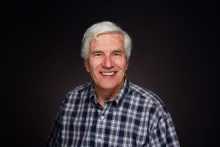
Steve Shafer was born and raised in Seattle. He graduated from Queen Anne High School in 1959 and later graduated from Ambassador College, Big Sandy, Texas in 1967, receiving a degree in Theology. He has been an ordained Elder of the Church of God for 34 years and has pastored congregations in Michigan and Washington State. He and his wife Evelyn have been married for over 48 years and have three children and ten grandchildren.
