
Steve Shafer
This sermon was given at the Bend, Oregon 2012 Feast site.
This transcript was generated by AI and may contain errors. It is provided to assist those who may not be able to listen to the message.
Well, thank you all for coming very much. We appreciate having you here. Today, in this Bible study, I just want to take a kind of an in-depth look at the book of Psalms, and just to give an overview, because we don't have time to go through everything in depth.
But many people consider the Psalms to be merely a collection of saints to look to and read for inspiration and encouragement during times of trials and difficulties. And certainly, the Psalms do serve that purpose. A lot of us do turn there for those types of situations when we have a need. But woe and within the Psalms are also many, many deep lessons for all of us.
In addition to that, the Psalms touch on the entire history of mankind. We really understand them, especially in relation to the people of God, the people that God has called and chosen and worked with even for the past 6,000 years. And the Psalms, indeed, are prophetic in nature.
They're prophetic of Jesus Christ. As we know, there are many Psalms that are prophetic of Christ, His first coming as well as His second coming. And they are prophetic of situations the people of God will find themselves in as history unfolds and as God's plan of salvation is carried out.
They pertain to each and every one of us personally as well as to prophecies concerning Jesus Christ.
And much of the Psalms are prophetic, actually, of the times just ahead of us that we're heading into now as we look to the return of Jesus Christ and God's Kingdom. So my purpose today is to simply give you an overview of the book of Psalms and to show you that they do have deep prophetic meaning for the people of God, especially at this time. So my title for this Bible study is a prophetic overview of the Psalms, an overview. And this is kind of a Reader's Digest condensed version because I originally gave this Bible study a number of years ago and went through this and I actually took 11 Bible studies to go through this particular one I'm giving today. So this is very much condensed.
But I want to begin with a statement that Christ made after His resurrection, and I'll just turn there and read it. You can turn if you want to, but it's in Luke 24. This is when He appeared during the 40 days. He appeared to His disciples after He was resurrected. Luke 24 verse 44 says and He... verse 44. Verse 44, He said to them, These are the words which spoke to you, while I was still with you, that all things must be fulfilled, which was written in the law of Moses and in the prophets and the psalms concerning me. And He opened the understanding that they might comprehend the scriptures. But now here Christ is not only referring to the book of Psalms when He says Psalms here. He is really referring to the third overall division of the Old Testament as it was really arranged at the time the Old Testament was canonized during the time of Israel and Nehemiah. It was arranged into three overall divisions which are called the law, the prophets, and the writings.
And the writings were sometimes referred to as the Psalms as Christ did here. That was because the Psalms was the first book of that third division and because Psalms is the longest book in the Bible and of course it contains many prophecies of Jesus Christ as Christ Himself here indicates. But the main point here I want to make is that Christ Himself confirms that Psalms is indeed prophetic in nature. That it contains all things which must be fulfilled.
Many of those things which must be fulfilled concern Christ and God's plan of salvation through Jesus Christ. But first before I go into it, I also want to just take a quick look. I think it helps you understand how the Psalms were written and how they were put together and compiled by having a little bit of understanding of Hebrew poetry because indeed the Psalms are poetic. They're a poetic book. Psalms is not only the first book of the third division of the Old Testament as was originally arranged, but is also the first book of the poetic books. There were three books in that first subdivision of the third overall division that were called the poetic books and those three poetic books are Psalms, Proverbs, and Job. Psalms then is written in poetic language using several forms actually of Hebrew poetry. In studying Psalms then it's important to have a basic understanding of Hebrew poetry. Hebrew poetry is not like what we think of in poetry. When we think of poetry, we think of Psalms' rhyme at the end of a verse, but that's not the way Hebrew poetry works. Hebrew poetry does not rhyme. Instead, Hebrew poetry involves substance and repetition and emphasis. Substance, repetition, and emphasis. Now, why did God inspire Hebrew poetry to be written in that way? Well, for two reasons. Number one, substance, repetition, and emphasis is far more important than words that rhyme. And number two, here's the interesting thing.
God knew that Hebrew was not always going to be the language of all nations.
And with Hebrew poetry, the poetic language is not lost when translated. You can still see the effects of the Hebrew poetry in English or any other language it happens to be translated into.
The substance, the repetition, and the emphasis are still there in any and all languages.
I just want to quickly go over this to you. I don't think you'd worry about trying to write this down.
You can probably do some research and find it out for yourself. But there are basically four forms of Hebrew poetry. One is called synonymous parallelism, but that's where the same thought is expressed in different words. Expressing the same thought, but in different words. There's many times that occurs in the book of Psalms. The second type of Hebrew poetry is called antithetic parallelism, where one thought is emphasized or reinforced by a contrasting thought. And we'll see that as well. Third, there's a third form called synthetic parallelism, where the same thought is continued from line to line. And then the fourth one is called climatic parallelism, where the second line completes the thought of the first line.
So the use of Hebrew poetry was very effective in singing the Psalms. For example, as we know, the Psalms were originally set to music, even though the music has been lost.
But when you look at Hebrew poetry, they could have been sung this way. One group of singers would sing one line of a psalm, then another group of singers would sing the next line of the psalm. And I'll just give an example. You can turn there if you want to. We'll get there a bit later. But Psalms 1, verse 6, for example, which is the last verse there in Psalms 1. One group was saying, the Lord knows the way of the righteous. And the second group could sing, but the way of the ungodly shall perish. And they could sing back and forth to one another. You know, using the Hebrew poetry the Psalms were written in, it can be a very, very effective way of getting that message across. In this case, this particular verse there, you have one thought being emphasized by a contrasting second thought, which is an example of antithetic parallelism, Psalm 1, verse 6.
Now, one additional point regarding Hebrew poetry. Hebrew poetry was originally associated with prophecy. If you saw something in poetic language, it was considered prophetic in nature. That's because it emphasized things that will directly impact everyone's future, both individually and collectively. And it does it in a way that emphasizes the importance of those points that are being made. Now, how did Hebrew poetry originally become associated with prophecy? I won't go through there and try to go through it and explain it in detail, but basically, it's because in Genesis 3.15, in the Garden of Eden, God inspired His triumph over the serpent using Hebrew poetry, Genesis 3.15. And with that background, then let's take a prophetic overview of the Psalms. Psalms is divided actually into five books. It's not just one book. It's five separate books that comprise the entire composition of the 150 Psalms. And nearly all scholars recognize that. They're arranged to divide in five books. And if you have a New King James version, that is denoted at the beginning. I could be over Psalm 1. It'll say, book 1, Psalm 1 through Psalm 41 is book 1. And then it also has that above all the other books, books 1, 2, 3, 4, and 5, and so on. They're all noted in the New King James, at least most New King James versions.
But there's also internal evidence that these Psalms are divided into five divisions of five books. And I'm going to want to illustrate that so you can see that that's the case even without the designation is given in the New King James. The end of each of those five books is marked by what is called a doxology. A doxology is a special expression of praise to God.
And books 1 through 4 also end with an amen. And the entire final chapter, book 5, is a doxology, or special praise to God, as we'll see. But let's look at these for ourselves, just to see how that those are curves, how this doxology occurs at the end of each of these books. Book 1 ends in Psalm 41, 41 verse 13. So if you turn to Psalm 41.13, you'll see how it ends with what is called a doxology, or a special expression of praise to God. Psalms 41.13 says, Blessed be the Lord God of Israel from everlasting to everlasting, amen and amen. So it is with a double amen and a special expression of praise to God. Book 2 ends with Psalm 72.
So if you turn to Psalm 72, that's the last chapter, last part of book 2. Book 3 begins in Psalm 73.1. But book 2 ends with Psalm 72. Let's look at Psalm 72 and how it ends. Verses 18 and 19.
It says, Blessed be the Lord God, the God of Israel, who only does wondrous things. Again, this is a special praise to God. And blessed be His glorious name forever, and let the whole earth be filled with His glory, again, amen and amen. So again, in like book 1, it ends with a double amen as well as a special praise to God. Then book 2 concludes by adding this in verse 20, The prayers of David, the son of Jesse, are ended. The vast majority of Psalms 1 through Psalm 72 are Psalms of David, not all of them, and the vast majority of them are. This was then probably also then added to separate the Psalms of David from the Psalms of Asaph and others which follow this.
There are a few more Psalms in the other three books that are also Psalms of David, but for the most part, the Psalms of David primarily end with book 2, and actually the end with Psalm 70. I believe it is because Psalm 71 is anonymous. Psalm 72 says there's a song of Solomon. There's a total of 73 Psalms that are attributed to David. Many of them are anonymous, but the majority of David's Psalms are in book 1 and book 2. For the next boxology to end book 3 is then found in Psalm 89. Turn to Psalm 89. Psalm 89, verse 52 is the final verse then in book 3, which says, Blessed be the Lord forevermore. Again, amen and amen. So that book 3 also ends with a double amen and a special praise to God. And finally, book 4 ends with Psalm 106.
Psalm 106, verse 48. Blessed be the Lord God of Israel from everlasting to everlasting, and let all the people say, amen. Praise the Lord.
Which ends with book 4 then. When the five books end with, then I should just say, all the five books total end with an entire chapter devoted to a special doxology or a special expression of praise to God. Book 5 ends with a whole chapter of a doxology, if you will.
And you can see the last one is Psalm 150. It ends with book 5 and ends with all five books of the Psalms. And again, that whole chapter is a special doxology, special praise to God, as you can see there. Praise the Eternal. Praise God in His sanctuary. Praise Him in His mighty firmament or in His mighty expanse. And then verse 6, let everything that has breath praise the Lord praise the Eternal. The final expression, praise the Lord there in Hebrew is hallelujah.
So the Psalms enter divided into five books, which you can see from the New King James version, or if you understand that special expression of praise at the end of each book, you can see where one book ends and the next one begins. So the key question I want to raise here in the Bible study here this afternoon is, with this division of Psalms into five distinct books, was that inspired by God? It got inspired that way. And if it did, is there a purpose for that? Is there a reason behind it? Is there something we can learn prophetically since it is a book that deals with prophecy? Since the Psalms are prophetic in nature, to what extent, if any, then does this arrangement of the Psalms tie into prophecy? For example, are these five books, could they possibly be arranged in a prophetic order? Do they cover different prophetic time periods and place settings?
See, all this makes the study of the Psalms a very fascinating study, indeed, when you understand some of these basic things, you can study into it and really gain a tremendous amount of insight from it. Now, again, it would take a number of Bible studies to go through and substantiate all this in detail, which I did in one series of Bible studies, which took 11 Bible studies. But for this Bible study, I just want to give an overview. And I want to really look at book one and then give a very brief overview of books two, three, four, and five. Because books two through five actually prophetically pertain just to the future, just ahead of us. But as we'll see now, book one pertains to the world we live in right now. It's for us today.
So let's go to book one of Psalms, which is Psalm 1, verse 1. And I'll ask, what is the overall theme? If there's a special theme to book one, what is that overall theme? And what is the time setting and play setting of book one, prophetically speaking? How can we determine that, if that is the case? Well, we can determine that from the context. And we can begin to reach to see, really begin to really see what the theme of book one is, actually, from the very first Psalm, from Psalm 1. Let's read this Psalm 1 for ourselves. And you tell me what you think the theme of book one is. This is Psalm 1. Psalm 1, verse 1. Blessed is the man who walks not in the console of the ungodly, nor stands in the path of sinners, nor sits in the seat of the scornful. I'll just pause for a minute. What type of Hebrew poetry is that? Well, in this particular verse, the anonymous parallelism is used where the same thought is being expressed in different words, as you can really see there in verse 1. Blessed is the man who walks not in the console of the ungodly, nor stands in the path of sinners, nor sits in the seat of the scornful. But his delight is in the law of the Eternal, and in his law he meditates day and night. He shall be like a tree planted by the rivers of water that brings forth his fruit in due season, whose leaf also shall not wither, and whatever he does shall prosper. So, this is obviously talking about righteous individuals who are striving to follow God and talks about them separating themselves from the way of the ungodly. Now, actually, when you look at Psalm 1 as a whole, verses 1 through 3 are then contrasted to verses 4 and 5, using the form of Hebrew poetry called antithetic parallelism, where one thought is emphasized by a contrasting thought. In this case, verses 4 and 5 is contrasted to verses 1 through 3, which goes on to say in verse 4, But the ungodly are not so.
They are like shafts in which the wind drives away. Therefore, the ungodly shall not stand in the judgment, nor sinners in the congregation of the righteous. So, at the very beginning of book 1 of Psalms, the righteous are contrasted to the unrighteous. And that contrast, then, is summarized in verse 6. For the Lord knows the way of the righteous, but the way of the ungodly shall perish. Again, an example of antithetic parallelism.
So, right off the starting block, we have the way of the righteous contrasted to the way of the ungodly. Could that then tie into the theme of book 1? What about the time setting?
Later part of verse 6, But the way of the ungodly shall perish. It hasn't perished yet, but it shall. It shall in the future, indicating this is a time when the way of the ungodly hasn't perished yet.
It's going to, but it hasn't perished yet. A time when the ungodly are still getting their way.
What about the next chapter? Does chapter 2 continue the same theme?
Chapter 2, verse 1, Why do the nations rage? And the people plot a vain thing.
The kings of the earth set themselves, and the rulers take counsel together against the Lord, and against His anointed, saying, Let us break their bonds in pieces, and cast away their cords from us. If you want to look at things historically, what time period is talking about?
It's talking about a time when the nations are raging against God, and they're plotting a vain thing. It's talking about a time when the kings of the earth set themselves up in positions of power, and take counsel together against God, and against God's people, in the ways of God's people.
So if you look at that, and you think about it, it sounds kind of like the times we're living in, doesn't it? But the nations will not rage against God, and against each other indefinitely, because God will give the nations of this world to His Son when His Son returns, as prophesied in verses 7 and 8, here of Psalm 2. In chapter 2, then, concludes by saying, Blessed are all who put their trust in the Lord, in Him. Blessed are all those who put their trust in Him, and put their trust in Jesus Christ, the Son of God. So it's talking about when you're living in a world of the young God, you've got to put your trust in Jesus Christ, and in God.
If you're going to get through that period of time. Let's look at Psalm 3, verse 1.
Lord, how they have increased who trouble me, many are they who rise up against me.
So again, this is speaking of a time when those who trouble the people of God, and when those who rise up against the people of God, seem to be increasing. They seem to be on the increase. And when those types of individuals have little or no belief or faith in God, but they're on the increase, they're prospering. Psalm 3, verse 2, Many are they who say of me, there is no help for Him and God. Have people say that? People are trying to follow God today?
Does anybody say, well, people who follow God, they're foolish. It says just using religion as a crutch. What must the attitude of the righteous be in a time like that? Verse 3 of Psalm 3, but you, O Lord, you're a shield to me. You're not a crutch. You're a shield. You're my protection, my glory and the one who lifts up my head.
Verse 6, I will not be afraid of 10,000 of people. I will not be afraid of 10,000 of people who have set themselves against me all around. Arise, O Lord, save me, O my God.
This is obviously a time when the ungodly have increased and when they have the upper hand, even as they do today. It's a time when the righteous are far outnumbered by the unrighteous, a time when the righteous, in a time of distress, have to cry out to God for His help.
4, verse 1, Hear me when I call, O God, of my righteousness. You have believed me in my distress. Have mercy on me and hear my prayer. How long, O you sons of man, will you turn my glory to shame? How long will you love worthlessness and seek falsehood? So again, the time sitting here, this is talking about a time when the majority of the people of the world are seeking after things that are worthless and have no real value. When they pursue false values and when they seek falsehood, if you will, it says here, God then answers the righteous with this assurance. Psalm 4, verse 3, But know that the Lord has set apart for Himself those who are godly. He sees, He sets Him apart.
The Lord will hear when I call to Him. So God will set apart those who are ungodly, those who are living godly lives in an ungodly world. Thus, those who trust in God have to do the following. Psalm 4, verse 4. Be angry, but sin not. Meditate within your heart on your bed and be still. Offer the sacrifices of the righteousness and put your trust in the Eternal. Don't get over-worried about it. Don't get angry. Don't get too upset. Put your trust in God and have peace of mind. Verse 8. I will both lie down in peace and sleep. For you alone, O Lord, make me dwell in safety. I know you can protect me during this time. You're going to be with me. Chapter 5 continues to contest the way of the righteous with the way of the ungodly. Let's go to chapter 6, verse 2. Just again, go through and see the theme here of book 1. Have mercy on me, O Lord, for I am weak. O Lord, heal me, for my bones are troubled. So this then appears to be a time when there are a lot of health problems, even with the righteous. A time when many of the righteous are crying out to God for healing, even as many are today. Verse 3 of Psalm 6. My soul is also greatly troubled, but you, O Lord, how long? How long before you're going to return to deliver us?
Verse 4. Be toon, O Lord, deliver me, or save me for your mercies' sake. Verse 6. For I am weary with my groaning. All night I make my bed swim. I drench my couch with my tears. My eyes waste away because of grief. It grows old because of my enemies. The overall theme of book 1 of Psalms is becoming obvious when you analyze it and think about it. It's addressing the trials and the struggles of the righteous who have to live in an ungodly world. The entire theme of book 1 has to do with that. It contains what all of us go through even now today as trying to live a righteous life following God in God's ways. So book 1 contrasts the way of the righteous with the way of the ungodly. In every chapter of book 1 portrays some aspect of that theme, of that struggle that righteous people have. Now, let me ask this. Have you ever asked this question as you struggle with all your trials and as you at times see the ungodly prospering? Have you ever asked this question? Psalm 10 verse 1. Why do you stand to fall off, O God? Don't you see what's going on? Don't you see how the ungodly are on the increase and how they're prospering? Why are you so far off? Why don't you intervene? Why do you hide in times of trouble? Verse 5, it is the ways of the wicked and the ungodly. They're always prospering, it seems, and your judgments are far above. Out of his sight, he doesn't even know you exist.
As for all his enemies, he sneers at them. Verse 7, his mouth is full of cursing and deceit and oppression, talking to the ungodly. Under his tongue is trouble and iniquity.
He sits in the lurking places of the villages and the secret places. He murders the innocent.
His eyes are secretly fixed on the helpless. Verse 11, he has said in his heart, God has forgotten. He eyes his face. He doesn't know what's going on. He's not around. He's not going to help you. He will never see. He doesn't see what's going on. He doesn't care.
Doesn't this not sound like a lot like the world we live in today?
Why is God seemingly standing afar off right now?
Why are the ways of the ungodly prospering, in many cases, at least seemingly so?
Does God hear our desire? And what is God now doing in the case of the righteous, who are living and struggling in an ungodly world? What's he doing? That tells us right here.
Psalm 10, verse 17, O Lord, you have heard the desire of the humble. You will prepare their heart.
That's what he's doing. He's preparing our hearts.
You will cause your ear to hear. God is not preparing our hearts. He's using our trials and our struggles to mold and shape us into his spiritual image and likeness, so we can become like him. Psalm 11, verse 2, For look, the wicked bend their bow, they make ready their arrow on the string, that they may shoot secretly at the upright in heart.
Verse 3. Notice verse 3 of Psalm 11.
If the foundations are destroyed, what can the righteous do? Psalm 11, verse 4, Right now, this is Satan's world. He is the prince of the power of the air, and he's the God of this world. And as the prince of the power of the air and the God of this world, Satan is doing everything he can to destroy the foundations of the righteous.
And if their foundation is destroyed, what can the righteous do?
They have to stand firm and trust in God. Based on what?
Psalm 11, verse 4, based on this.
The eternal, he is in his holy temple. He is there. He hasn't gone away.
The Lord's throne is in heaven. His eyes do behold. They see what's going on.
It's just not time yet. It's time for our hearts to be prepared, not our time to change the world.
His eyes behold, his eyes will test the sons of men. The Lord tests the righteous, but the wicked and the one who loves violence his soul hates.
Upon the wicked, he will rain coals. Fire and brimstone and burning wind should be the portion of their cup. For the Lord is righteous. He loves righteousness. Verse 7, his countenance beholds the upright.
He knows the trials and struggles of the upright living in an ungodly world.
Let's go forward to Psalm 15. Psalm 15, verse 1, Lord, who may abide in your tabernacle? Who may dwell on your holy hill?
He who walks uprightly, even in an ungodly world, who doesn't let the world pull him in to go their way, who stands firm in God's ways. He who walks uprightly and works for righteousness and speaks the truth in his heart and never lets go of it, even though the entire world is going the other way in the opposite direction. See, every chapter of book 1 contrasts the struggles of the righteous with the way of the ungodly. But none so dramatically as Psalm 22. Psalm 22, verse 1, My God, my God, why have you forsaken me? Why are you so far from helping me? See, no one struggled, no one was more righteous than Jesus Christ, and no one struggled in an ungodly world against sinners and against sin than Jesus Christ did. God seemingly had me to step aside. My God, my God, why have you forsaken me? Why are you so far from helping me and from the words of my groaning? Oh, my God, I cry in the daytime, but you don't hear. And the night season, I'm not silent. Verse 7, All those who see me ridicule me. They shout out the lip, they shake the head, saying, He trusted in God, but let him rescue you now. Let him deliver him, since he delights in him. Anybody ever say that to you? Verse 14, I am poured out like water, all my bones are out of joint, my heart is like wax, it melts within me. My strength is dried up like a pot-shirt and my tongue clings to my jaws. You have brought me to the dust of death. Dogs have surrounded me, the congregation of the wicked has enclosed me. They pierce my hands and my feet, I count all my bones, they look and stare at me, they divide my garments, and that's where my clothing they cast lots. But you, O Lord, do not be far from me, own my strength hastened to help me. See, no chapter more dramatically contrasts the struggles of the righteous living in an ungodly world than the struggles of Jesus Christ, as it does prophetically here in Psalm 22, which, of course, all struggles led to suffering his crucifixion and death.
But of all of us who follow Christ and who like Christ prevail in our trials and continue to trust in God and hang in there through our struggles can then sing, along with Jesus Christ, we can sing Psalm 23.
The Lord is my shepherd I shall not want. He makes me to lie down in green pastures. He leaves me beside the still waters. He restores my soul.
He leaves me in the paths of righteousness for his name's sake. And though I walk through the valley of the shadow of death, I will fear no evil. Even though I live in an ungodly world, and there's evil all around me, I'm not going to fear any evil. Because you are with me, and your rod and your staff, they comfort me. And you prepare a table before me in the presence of my enemies. You know in my head with oil my cup runs over. Surely goodness and mercy shall follow me all the days of my life. And I will dwell in the house of the Lord forever when it's all said and done. Now, you can read the rest of Book One for yourself, but it does have a prophetic theme and a prophetic time setting.
The theme of Book One is the struggles of the righteous living in an ungodly world.
And the place setting, of course, is the world we now live in, where Satan is the god of this world.
And that time setting essentially pertains to the past 6,000 years, because the righteous have been struggling in an ungodly world ever since Satan deceived Eve in the Garden of Eden for the past 6,000 years. But Book One ends with this assurance. Let's go to chapter 41, final chapter in Book One. It ends with a very positive assurance. Psalm 41, beginning in verse 10. But you, O Lord, be merciful to me and raise me up, that I may repay them. But this I know, that you are well pleased with me, because my enemy does not triumph over me. As for me, you uphold me in my integrity, and sent me before your face forever. Blessed be the Lord God of Israel from everlasting to everlasting. Amen and amen. God will uphold the upright, and set them before him forever. As it says, amen and amen. Okay, now quickly then, what about Books 2, 3, and 4 and 5? What about Book 2, which is Psalm 42 through Psalm 72? Book 2 deals more with the present. Let's just look at a few verses to see if we can relate to this, and look at a more current history as a people of God, because it kind of pertains to us in the times we've been living in here. Psalm 42 verses 1 and 2, it starts out this way, As the deer pants for the water brooks, so pants my soul for you, O God. Boy, I sure am looking forward to the time when God is going to come and intervene. As my Martin says, when shall I see the face of God? When is God going to intervene? When is He going to be here to save us? When is God going to intervene for His people?
Verse 3, My tears have been my food day and night, while they continually say to me, Where is your God? Where is He? Verse 4, When I remember these things, I pour out my soul within me, for I used to go to something here. How does this relate to our past history, or more recent history? When I remember these things, I pour out my soul within me, for I used to go with a multitude. I went with them to the house of God, with a voice of joy and praise, with a multitude that kept the pilgrim feast, that kept the feast of tabernacles.
Remember when thousands of us used to keep the feast of tabernacles with joy and praise?
Does this verse not apply to what has happened to God's people in more recent years?
Psalm 46. Let's go up to Psalm 46, verse 1.
God is our refuge and strength. He's a very present help and trouble.
So this, then, is a time of trouble, when God's present will be manifested for His people.
Psalm 46, verse 10.
Again, if you look at this and you think about it, it appears to be a time leading up to Christ's return, when God will first directly intervene to protect His people at a time of great trouble. Chapter 50, verse 5.
Psalm 61, verse 3.
It appears like it's a time when people of God are going to have to be under the shadow of God's protection, under the shadow of His wings.
Chapter 64, verse 2.
Psalm 69, verses 1 and 2.
Revelation 12, verses 13-16. Revelation 12, verse 13. Revelation 12, verse 14.
Revelation 13, verse 14.
See, there's a connection there. See, Ephesians, verse 17.
Or the rest of her offspring will keep the commandments of God and have the testimony of Jesus Christ.
What will that be like, for the people of God who have to live through that?
The answer is in book 3. Book 3 deals with that period of time.
Book 3 is Psalm 73 through Psalm 89.
It's a positive study. That's a positive story, I should say, and not a negative one. As indicated by the first three verses of book 3, Psalm 73, verses 1-3, "...truly God is good to Israel, to such as are pure in heart. But as for me..." Is in the case of peoplehood, we're going to have to be tested and purified. "...but as for me, my feet had almost stumbled, my steps had nearly slipped. For I was envious of the boastful when I saw the prosperity of the wicked." Maybe you should have a little bit of that prosperity. Maybe somebody had thought at that time. Drop me down to verse 22 of Psalm 73. I was so foolish.
I was foolish and ignorant. I was like a beast before you. Nevertheless, I am legitimately with you. You hold me by my right hand. You will guide me with your counsel, and afterward receive me to your glory. You are going to help me to learn what I need to learn. You are going to refine me. After I learn what I need to learn, and I can come to spiritual maturity. This is what God's people will learn from living into the time of Great Tribulation.
Psalm 84, verse 1. How lovely is your tabernacle, O Lord of hosts! Oh, I love being a part of your church. I don't ever want to miss a service. How lovely is your tabernacle, O Lord of hosts! My soul longs, just even faints, for the coming of the Eternal. My heart and my flesh cry out for the living God. Verse 10. For a day on your court is better than a thousand. I would rather be just a doorkeeper in the house. I'm not going to try to be the big shot anymore.
I would rather just be a doorkeeper in the house of my God, than dwell on a tenths of wickedness. These are all lessons that those who live in the Tribulation are going to have to learn. Psalm 84. Oh, I covered that verse. Yeah, I covered that, verse 84. So, this Tribulation is going to bring people to spiritual maturity. So, the theme of Book 3 is what the rest of our offspring will learn during the Great Tribulation, how they're going to be refined and brought to spiritual maturity and learn what they need to learn.
So, they can be a part of God's eternal tabernacle and dwelling with God forever. Book 4, then, is Psalm 90 through Psalm 106. What comes next? What comes toward the end of the Tribulation period, or about two and a half years into Tribulation? What comes about that time, just before Christ returns? The time is going to come when God will have to directly intervene in affairs of mankind, or He's going to directly intervene during the Day of the Lord and bring judgment upon the wicked, so the Kingdom of God can be established on the earth for a thousand years.
Does Book 4 of Psalms reflect that theme? Go to Psalm 90. Psalm 90, verse 3. For you turn man to destruction and say, Return, O children of men! For six thousand years, God has turned man over to destruction to go his own way, ignore God's ways, allowing him to be influenced by Satan and Satan's ways. At the same time, saying, return to me, return to God, O you children of men. Verse 4. Notice the thousand-year theme here. For a thousand years and your sight are like yesterday when it is past. Like a watch in the night. So here then, for the first time in Psalms, we are introduced to the concept of a thousand years.
Is that concept tied in to God reigning on the earth to establish the Kingdom of God? Psalm 93, verse 1. The Lord reigns, he is clothed with majesty. He has gird himself with strength. Surely the world is established so it cannot be moved. Psalm 95, verse 3. The Lord is the great God, the great King above all gods. Verse 6. O come, let us worship and bow down. Let us kneel before the Lord our Maker, for he is our God, and we are the people of his pasture, the sheep of his hand.
Today, if you will hear his voice, do not harden your heart as in the day of rebellion.
Psalm 96, verse 10. Say among the nations, the Lord reigns. The world is firmly established. It shall not be moved. He shall judge the peoples righteously. Verse 13. For he is coming, for he is coming to judge the earth, he shall judge the world with righteousness and the peoples with his truth. So, the theme of book 4 is the return of Christ to reign on the earth for a thousand years, so the Kingdom of God can be established.
Let's go to Psalm 97 quickly, though. Psalm 97, verses 1 through 6. The Lord reigns. Let the earth rejoice. Let the molds of the isles be glad. But there's clouds and darkness surround him. Righteous is the justice of the foundation of his throne. A fire goes before him and burns up his enemies round about.
His light needs light the world. The earth sees and trembles. The mountains melt like wax at the presence of the Lord, at the presence of the Lord of the whole earth. The heavens declare his righteousness and the people see his glory. Now, the theme then being the re-establish of God's Kingdom on the earth when Christ returns, what about verses 2 through 5? Why will clouds and darkness surround him? Why will a fire go before him? Why will the earth tremble? And why will the mountains melt like wax at the presence of the Lord of the whole earth?
See, what must come immediately before Christ can return to reign on the earth for 1000 years? Well, first, we'll have to come the day of the Lord when God will bring judgment on the wicked. The day of the Lord is the day of God's wrath. And that is also a theme of Book 4. Let's go back again to Psalm 90. Again, here at the beginning of Book 4. Psalm 90, verses 7 and 8. For we have been consumed by your anger, God's anger. And by your wrath we are terrified.
This is the time of God's wrath. This is the time of the day of the Lord. You have set our iniquities before you in our secret sins in the light of your continents. Verse 11. Who knows the power of your anger? For as a fear of you, so is your wrath. So teach us to number our days now so we can gain a heart of wisdom. Return, O Lord. How long? How much longer now that you see your wrath?
How much longer before you're actually going to return? And have compassion on your servants. Satisfy us early with your mercy. God will have mercy and compassion on those who do number their days and gain a heart of wisdom at that time during the time of the day of the Lord. And God will then protect them from his wrath. Those who repent during the tribulation will be protected from God's wrath from the day of the Lord. Psalm 91 shows that. Psalm 91, verse 1. He who dwells in the secret place of the Most High shall abide under the shadow of the Almighty. Those who repent during the day of the Lord, they're going to be protected from God's wrath.
I will say to the Lord, He is my refuge and my fortress, and my God and Him I'm going to trust from now on. Surely He shall deliver you from the snare of the fowler and from the perilous pestilence. He shall cover you with His feathers, and under His wings you shall take refuge. His truth shall be your shield and your buckler. You shall not be afraid, then, of the terror by night, nor of the arrow that flies by day, nor the pestilence that walks in darkness or destruction that lays waste at noon day. A thousand may fall at your side, and ten thousand at your right hand, but shall not come near you, those who then trusted God at that particular time.
Only with your eyes shall you see and look and see the reward of the wicked. The wicked will receive their just reward during the day of the Lord when God pours out His wrath on the wicked, but those who repent have disassurance. Psalm 91, beginning in verse 9, Because you have made the Lord, who is my refuge, even the Most High your dwelling place, no evil shall befall you at that time. Nor shall any plague come near your dwelling, when God pours out those plagues.
For he shall give his angels charge over you to keep you in all your ways, in their hands they shall bear you up, lest you dash your foot against a stone.
That thing gives you an idea of the main themes of Book 4, protection during the time of God's wrath, and the establishment of the kingdom of God on the earth for a thousand years with Christ reigning, and with God's throne being established on the earth. Finally, then we have Book 5, Psalm 107 through Psalm 150. At the beginning of the millennium, will everything be hunky-dory? My kind is to give a very interesting split sermon, too, on Tuesday. All the problems will be resolved overnight. Will everyone be thankful that Christ is reigning? Book 5 begins with that admonition that everybody should be thankful that Christ is reigning. Let's look at how Book 5 begins in Psalm 107, 1st 8 verses. Psalm 107, verse 1, is the beginning of Book 5. O, give thanks to the Lord, for He is good. His mercy endures forever. Let the redeemed the Lord say so, whom He has redeemed from the hand of the enemy, and gathered out of the lands from the east and from the west, from the north and from the south. They wandered in the wilderness in the desolate way. They found no city to dwell in. They were hungry and thirsty, their soul fainted in them. But then they cried out to the Eternal in their trouble, and He delivered them out of their distress. And He led them forth by the right way, that they might go to a city for a dwelling place. O, the men would give thanks to the Lord for His goodness, and for His wonderful works that He does for the children of men. Let's go on in Psalm 107, verse 13. Then they cried out to the Lord in their trouble, and He saved them out of their distress. He brought them out of the darkness of the shadow of death, and broke their chains in pieces.
O, the men would give thanks to the Lord for His goodness, and for His wonderful works for the children of men. Verse 19. Then they cried out to the Lord in their trouble, and He saved them from their distress. He sent His word and healed them and delivered them from their destructions. So, at Christ's return, God will deliver mankind from destruction, which is the first theme of book 5. But Christ is also going to have enemies who will not be thankful for His return.
Because it will mean they'll have to give up their positions of power. They'll have to yield to the rulership of Jesus Christ, and have to give up their power and their sovereignty. And as Mr. Imus pointed out, Satan's going to be gone. But human nature will take time to change. Psalm 110, verse 1. The Lord said to my Lord, sit at my right hand, till I make your enemies your footstool. Christ will be there, but there will still be enemies. The Lord shall send the rod of your strength out of Zion.
Notice the latter part of verse 2, when Christ is going to start ruling on the earth. Rule in the midst of your enemies. To begin with, Christ will have to rule in the midst of His enemies. That's the second theme of book 5. Well, some of Christ's enemies have to be executed. Psalm 110, verse 5. The Lord is at your right hand. He shall execute kings in the day of His wrath. He shall judge among the nations. He shall fill the places with dead bodies.
He shall execute the heads of many countries who are going to resist Christ's rule. They don't want to give up their power. The million reign of Christ, I should say, is going to usher in 1000 years of peace. What's it going to take to bring peace on the earth for 1000 years? I can give a whole Bible study on this, but I just want to summarize it.
The ancient Hebrew language was a word-picture language. Each of the 22 letters in the Hebrew language in ancient Hebrew pictured something. They formed a picture of something. So each word had a word-picture meaning. And the three Hebrew words that make up the word for peace, which is shalom, they form a picture. And the word-picture meaning of shalom tells you the only way the world could ever have peace. The ancient Hebrew word-picture meaning of shalom is destroy the authority that causes chaos.
All of those who cause chaos are going to have to be destroyed and taken out of the way. It's the only way you're ever going to have peace. Those who bring war and chaos will have to be destroyed before world peace can be ushered in. When Christ returns, the wicked will be destroyed. Psalm 119, verse 119. You put away all the wicked of the earth like dross. Therefore, I love your testimonies. Psalm 129, verse 4. The Lord is righteous.
He has cut in pieces the cords of the wicked. Psalm 145, verse 20. Just giving you a very brief summary of what's covered here in book 5. Psalm 145, verse 20. The Lord preserves all who love him, but all the wicked he will destroy. Psalm 147, verse 2. The Lord builds up Jerusalem. He gathers together the outcasts of Israel. He heals the broken heart and binds up their wounds. Verse 6. The Lord lifts up the humble, but he casts the wicked down to the ground.
So, one of the themes of book 5 is the destruction of the wicked. But once Christ has destroyed the wicked and cast him down to the ground, the earth is then going to be full of praise. Psalm 147, verse 12. There's not going towards the end of book 5. And you see more and more praise as you get further and further into the millennium.
Into the rule of Christ with peace being restored to the earth. Psalm 147. Oh, verse 147. Excuse me. 147, verse 12. Praise the Lord, all Jerusalem. Praise your God, O Zion. And the further into the millennium you get, the greater the praise for God. Psalm 148, verse 1. Praise, eternal. Praise the Lord from the heavens. Praise him from the heights.
Praise him in all his angels. Praise him all his hosts. Praise him sun, moon, and stars of light. Praise him, you heavens of heavens. And you waters above the heavens.
Let them praise the name of the Lord for his key command, and they were created. The more you give them a million, the more praises you're going to have for God, because the more you're going to have us, the wicked destroyed and peace on the earth finally established. Verse 7. Praise the Lord from the earth, you great sea creatures, and all the depths. Fire, hail, and snow, and clouds, stormy wind fulfilling his word. Mountains in all hills, fruitful trees and cedars, beasts in all cattle, creeping things in flying fowl. Kings of the earth and all peoples, princes and judges of the earth, both young men and maidens, old men and children, let them praise the name of the Lord. For his name alone by that time will be exalted, and his glory is above the earth in heaven. He's exalted the horn of his people. He has exalted the strength and the dominion of his people. The praise of all his saints and the children of Israel, a people near to him, praise the eternal.
That continues through Psalm 149, which begins and ends with praise the eternal. Then, both book five and the entire five books of Psalms ends with Psalm 150, a special doxology, a special praise to God, which we'll have once we get into the millennium, and God's kingdom has been established. And, faith on earth has finally been established as well. Praise eternal. Praise God in his sanctuary. Praise him in his mighty expanse, as should be. Praise him for his mighty acts. Praise him according to his excellent greatness. Praise him with the sound of the trumpet. Praise him with the lute and the harp. Praise him with the in timbre on the dance. Praise him with stringed instruments and flutes. Praise him with loud cymbals. Praise him with clashing cymbals. Well, everyone that has breath, breath, praise eternal. Praise the eternal. Or, hallelujah, as it is in Hebrew. So, thus ends in our prophetic overview of the Psalms, which ushers in the millennium, which we are now celebrating with continued praises to God even here today and this week. But, hopefully this will inspire you to study even deeper in the five books of the Psalms, because they are a remarkable collection of Psalms with deep meaning and significance for the people of God, especially right now as we all struggle and is trying to see God's righteous and ungodly world. But very soon, along with the rest of the world, we'll only sing praises to God for his great plan of salvation that he is going to usher in for the entire world.
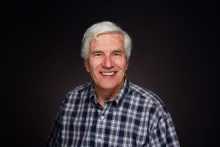
Steve Shafer was born and raised in Seattle. He graduated from Queen Anne High School in 1959 and later graduated from Ambassador College, Big Sandy, Texas in 1967, receiving a degree in Theology. He has been an ordained Elder of the Church of God for 34 years and has pastored congregations in Michigan and Washington State. He and his wife Evelyn have been married for over 48 years and have three children and ten grandchildren.
