


Robin S Webber
This transcript was generated by AI and may contain errors. It is provided to assist those who may not be able to listen to the message.
Well, good afternoon, everyone! So good to see all of you, and it's a great pleasure for my wife and myself to be here with all of you on a very special occasion, which is the 20th anniversary of the United Church of God. Our God has been good. Our God has been patient. Our God has been merciful. And indeed, He's good. I understand that just a moment ago that Mr. Eddington mentioned that we have over 650 connections around the world. And so wherever you are, or if you're going to be listening to this later on today, we want to welcome you here. It's very, very special. I bring warm greetings, and it is warm. I looked at the temperature today. It's 95, where I live, in Southern California. But I would be remiss if I did not bring greetings from Bakersfield, Los Angeles, Revlins, and San Diego, and all of those 20 million people in between. And I thought maybe for a moment I would do what Mr. McCready did, because our granddaughter goes to the same congregation as their grandchildren, and would like to certainly say hello to our granddaughter, Megan Gomia, who will be watching this later on today. For sake of time, I want to get right into the message, because I have a message that I hope will be very meaningful to each and every one of us. And so I'd like to begin it right away. I'd like to begin by sharing a story with you. It is a story, and I'll maybe at the end of this tell you why it's good that it is a story, lest I scare some of you away. But there was a young man who was seeking baptism, wanted to be baptized. And so he went to an old minister, and he said, Sir, will you guide me into baptism? He said, Absolutely, Sonny, you come along with me. And so they went down to the Riverside, and they got into the water, and they waited out to where it was deep enough to where the gentleman might be able to be immersed. And the old man looked at the young man. He said, Buddy, are you ready to go down? And he said, Absolutely, Sir, I am ready. And so the old minister, all of a sudden, just with the blink of an eye, took the young man, grabbed him, and reached down and put him underneath the water, and kept him there.
Now, for those of you that are going to be baptized this week, don't let me scare you away from baptism, okay? And kept him there, and kept him there. Pretty soon bubbles were coming up. This is not a good sign. All of a sudden, he yanked the young man up. And the young man said, What was that all about? The old minister looked at the young man and said, That's your first lesson?
He said, When you want to draw near to God and to experience God as much as you want to breathe, then you come back. It's only then that I can guide you. Only then can you come back, and I'll tell you what. I'll give you your second lesson. Which leads us into this story of what I want to share with you today, and that is the importance of desiring God's Word in our life. Back last December, the Council of Elders met.
We were in retreat here in the winter, and we began praying to God, seeking God, fasting as we came into that meeting, as far as how could we gain the sense of where God wants the United Church of God to be strategically positioned as we move to the future. We went around the table, and we talked to one another and shared our experience. It really just came down to this very simple phrase. That is that all of us, ministry and members alike, but especially the ministry, as is the charge in 1 Timothy 5, 17, that we are to labor in the Word.
But what I want to share with you this afternoon is that before we labor in the Word, whether we be minister or member, because all of us, no matter who we are, we're Christians. We're disciples of Jesus Christ. We've been called of the Father. And first and foremost, we are people of the book. It's not enough to have the book on a shelf. It's not enough to have the book in your hand.
Ultimately, our Father above wants us to have the book in our heart and His laws and His love written in our hearts. And so it is of no avail to labor in the Word, to take that Scripture out of the Bible and put a spotlight on it, unless we understand how precious God's Word is. And that is more precious than the air that we breathe.
We have to understand why we need it. We need to make it a priority to spend time in the Word. And frankly, if I can use a phrase, we need to park our hearts there and allow God to perform His work in each and every one of us, whatever He's choosing to do with us. But again, before you labor in the Word, you have to understand how precious it is.
Like that young man that came up out of the water, let's take a breath for a few moments and let's consider God's message to us regarding the desire that He wants us to have, each and every one, and the needfulness towards His Word by turning over to Psalm 42. Join me if you would. Let's open up the Word of God today as a congregation and people around the world and understand what God would have us to learn on this Holy Day.
In Psalm 42, and let's pick up the thought if we could in verse 1, As the deer pants for the water brooks, So pants my soul for you, O God, My soul thirst for God, For the living God, When shall I come and appear before God? Now, to understand the book of Psalms, you have to understand where it was written, where it came from, and to recognize that we're dealing with the geography and the wherewith all of the Middle East.
And to recognize that at times the Middle East can be like California right now, in which we're in our fourth year of drought, and how precious water is. And to recognize that you know you can go without a lot of things in life, but you cannot go without water.
And there comes a point where you just crave, you desire, you know that you need water. And so it says here, as the deer pants for the water brooks. So my soul pants after you. A deer can have everything. It can have the shade of a tree above it. It can have soft grass below it to lie down on. But if it doesn't have water, it doesn't have anything. When it says that my soul pants for water, just like the deer, let me give you some definitions of pant for a moment.
A couple of definitions of pant. And allow me to, can we talk? May I ask you a question? The definitions that I'm about to give you do, do they match where your heart is today? Is your heart parked along this scripture and doing time right in this spot?
Some of the definitions of pant from a Webster's dictionary means to long eagerly, to yearn, to throb, to itch. And as we say down here in Kentucky, the hanker. Which one of those definitions of this one word match where you are today?
As I say that, if none of those match today, I am not here to indict you. I'm not here to shame you. I'm just a simple Christian talking to myself and the world that I exist in and where I'm at in my life and my wife and her life. And where we see that we need to go as we look at Psalm 42 and verse 1 and say, God is directly speaking to us about this today. He is speaking to his church about this today. He is speaking to the people of the book today that we need to have this fervency towards God's Word. That's why today my message is entitled for all of us to me as well, Panting for God's Word. How important is this concept? Our spiritual life, our spiritual well-being, our ability to glorify God in word and thought and deed, and to be those witnesses that he has called us to be all surround this topic depending upon how much you pant for the Word of God. But before going any further, let's talk about the world that you and I live in today, this global village. And more and more, it's becoming a smaller, smaller world. And let's talk about it for a moment. Our world and the increasingly prevalent culture is demanding on our personal world. It's kind of a unique situation that even as the world is expanding with the technology, and here we are, we have all of these connections that are seeing all of you and hearing all of me at this moment, even as it is expanding, our personal lives are being demanded upon in a way which humanity has never experienced. For those of you that have a smartphone on you, is to recognize that on that smartphone today, there is more knowledge, there is more information than in all of the scrolls and all of the manuscripts that were in the libraries of Pergamum and Alexandria probably times five. And it's right in your pocket today. All of those facts, all of that information is at hand for each and every one of us. It's quite incredible. What do we do with all of those facts? What do we do with all that information? Are we handling the information or is it controlling us? Likewise, to recognize that in the course of a day or in the course of a week, because of the miracle of technology, to recognize that there are probably more people that are knocking at the door of your heart or opening the window of your mind than your grandparent ever had within a year. Just within a day, as they lived down in the farm in Kentucky, or they lived up in the cornfields of Ohio, or they were making a living in Cincinnati, to recognize the volume that is coming into our lives and demanding our attention. You know, sometimes when I travel back here to Cincinnati, it's always kind of fun to go through an airport and to see how people are communicating today. Always nice to see families together working their smartphones at a table.
And to recognize sometimes looking down, here's a man, here's a woman, and you recognize they're not talking, they're texting one another. That's called a romantic text. And sometimes you go through an airport and you think that you're in the middle of a worship service. There's a religious experience going on because I'm looking down as I pass by and everybody's doing this. They're doing the sign of the cross, you know, just like this. We laugh, but we know. There's something happening in the world around us that is changing our society and creating things about us. I'd like to share a story out of a tremendous book. It's a book called Learn to Breathe by Jim Mindling. And I'd like to quote a story from page 1881. Are you with me? We're going to go through a brief story, so stay with me. I think it might be a little personal here for all of us, including me. Jim's story here, if I can find it. Pardon me, I had it. Yeah, here it is. Good. Jim Mindling. Several years ago, I was at an intense meeting that required no interruption. As we were getting started, the leader asked us all to turn off our mobile phones. We all complied except for one. A sharp business executive in her 40s. She began to gently protest that she needed the phone on, but would keep it on vibrate. An interesting power struggle ensued. As we all watched with growing interest, the leader insisted that she turn it off. She said, you got to be kidding me. You got to be kidding me, she pleaded. Her eyes nervous and searching. I have always had it on. Please, just let me put it on vibrate. The passion and the panic in her voice was startling. You would have thought he had asked her to zone her firstborn. Mind you, this wasn't a teenage drama queen. She was an accomplished seasoned professional, but everybody has their weak spot. Jim says in his book, his is ice cream. For her, it was her mobile phone. She was completely flustered at the thought of being unconnected. Mindling goes on to say she's not alone. Smartphones have become the umbilical cord connecting us to society. Most people can't imagine life without a mobile phone.
And so we see what's happening in our world and in our society today, friends. And what I'm sharing with you is, please understand, we do not want to be anti-technology. The technology that is availed to us today is an instrument. And we can either use it as an incredible tool, even in connecting with our brethren around today in this world to hear this message, in Mr. Cubic, to preach the gospel, to communicate, to share things with people that we can't get to that are isolated in the different continents, and or it can also be a weapon. It is not the instrument, it is how we use it and how it is affecting us. Even so, even so, we must understand the bottom line here. You and I have been called to a 24-7 world. And if you get nothing out of this message, nothing out of this message is to recognize that a 24-7 world is not a bad term. It just depends upon what 24-7 world that we are connected to, whether it is the ways of this world, the technology of this world, or the Word of God, because what God wants is He wants you and me to be in a 24-7 world. I'd like to share something from you. It'll sound like Scripture, but it's not Scripture. Have you ever heard of Revelation 3, 19 and a half? So I'm not inserting into the Bible, but allow me to share this and I hope you will hear me out. To the elect of God and Christ in the 21st century, these things say He who is holy. I know your works. You say you know me and love my name and love my ways, even as the world around you increasingly denies me. Nevertheless, I have this one matter against you. You say you love me, but you avoid drinking in my words of life, as if you have life within yourself and you have no further need of intimacy with me. Even so, open up your eyes, and even so, more so, open up your hearts to my words, and I will be your God, and you will be my people, and richness of days will be yours now, and in ages to come. That is God's desire. That's why you and I have been created to worship Him and to glorify Him in our thought, our word, our deeds. And we can only do that by being in a 24 7 existence with Him. God's design is that we are with Him always. That our, in a sense, our spiritual mobile phones are always in sync with Him. That we never put them on airplane mode. We never turn them off, but that we are constantly drinking in and are connected with Him as much as many, many people today are connected with the technology that is around us. Why is this so important and where is the challenge? Join me, if you would, in the Gospel of John, John 17, verse 14. John 17 and verse 14.
You might say, well, if all of this is around us, why doesn't God and why doesn't the Christ just take us out of this world? But we remember Jesus' last words on that night in which He was betrayed in John 17, verse 14, when He says, But now I am come to you, and these things I speak to you, I'm going to see the light here, pardon me, but now, excuse me, but now I come to you, and these things I speak to you in the world that they may have joy fulfilled in themselves. I have given them your word, and the world has hated them, because they are not of the world, just as I am not of the world. I do not pray that you should take them out of the world, but that you should keep them from the evil one. They are not of the world, just as I am not of the world. Sanctify them, set them apart by your truth, your word is truth. So God is not going to, like Star Trek, beam us up and take us out of this existence. He's given us His revelation, He's given us His Spirit, He's given us the embodiment of all that He is in Christ Jesus, and He tells us to drink in of that word and to feed ourselves of it. Let's talk about that for a moment, because Jesus Christ, the living Head of the Church, is our example, and He is the model that God our Father has given us. Let's consider for a moment what He was like. And remember that in that moment of temptation in the wilderness, as it's called, as the deceiver came amongst Him and tried to triumph over Him, what did Jesus keep on saying? He said, it is written. It is written. It is written. But how do you know what is written if we never open up the Word of God and drink in that message? When you think about Jesus of Nazareth, it's to recognize that His first language was Scripture. It was the Bible. It's what He taught people. It's how He conversed with people. If you want to do a quick scan through the Scriptures, if you go to the book of Matthew, not right now, or this message will go three hours and it might stress your faith in Mr. Kubik's too, he has to speak after me, it's to recognize you go to the book of Matthew, the first times that He is recorded, He is quoting Scripture. If you go to the book of Luke, the first three times He is recorded, He is quoting Scripture. The fourth time He is reading Scripture. Then the fifth time He is sitting down, the sixth time it's mentioned, He goes back to quoting Scripture. It was His first language. It was beginning and it was His human end. On the cross, on the stake, His last words He was quoting from the Psalms, into your hands, I commit my Spirit. In other words, Christ never faced a challenge and never shared an opportunity without bringing up the point of Scripture.
But He made time for it. I have a question for you. Have you ever heard of SOC?
I'm not seeing anybody nod. SOC. Let me help you. SOC stands for the speed of Christ.
Have you ever thought that in His world and in the Galilee that He traveled, that Jesus never went over four to five miles per hour?
What a world! What a world of what He was able to take in. Now, please, I don't want you to go down this freeway this afternoon at four miles per hour. We may have issues, as we say in Southern California. I'm using it as an example for us to slow down and to prioritize how important it is to drink in of the Word of God. What can you do when you travel four miles per hour? Join me if you would in Matthew 6, verse 25. It's not that He couldn't travel quicker. He was the Word. He was the one that created the speed of light. He was the one that made the speed of light 186,000 miles per second. But while He was on this earth, He took life in, in the framework of God's Word. And what an incredible take-in He took when we look at Matthew 6. Therefore, verse 25, I say, do you do not worry about your life, what you will eat, or what you will drink, nor about your body, what you will put on. Is not life more than food in the body and more than clothing? And because of the way that He traveled and what He focused on, He was able to say, look at the birds, for they neither sow nor reap, nor gather in their barns, and yet your heavenly Father feeds them, and you not of more value than they. Which of you, by worrying? Have you ever noticed people worrying when people are not connecting them on the instruments and the technology that nobody loves me? Nobody's emailing me? Nobody knows I exist.
They don't like me on Facebook. Oh, Lord, what have you brought me to? Don't worry. Consider the lilies of the field, for they neither toil nor spin. And yet I say to you that even Solomon in all of his glory was not arrayed like one of these. Now if God so closed the grass of the field, which today is and tomorrow is thrown into the oven, will He not much more clothe you of little faith? Therefore don't worry, saying, What shall we eat? What shall we drink? Or what shall we wear? For after all these things the Gentiles seek, for your heavenly Father knows what you need and that you need all of these things. My encouragement to you today, brethren, is simply as a Christian and as a person of the book, is to find the time. Make the time.
Make your world slow down. I'm speaking to myself. Make your world slow down. And if you can't make your world slow down, sometimes you just have to step off of it for a while and get your life straight before God and get into the Word. How important is getting into the Word? John 15. Let's go there for a moment. John 15. They didn't have smartphones in the world of old, but they had smart farmers. And Jesus used an analogy here. Let's notice what it says in John 15. There were vineyards throughout the Galilee and throughout Judea. And so Jesus, the master teacher, used a specific analogy that everybody would understand. He said in John 15, I am the true vine and my Father is the vine dresser. Jesus took upon himself what God had spoken of Israel as in days of yore as being the vine. And here he says, and my Father is the vine dresser. He's the farmer. Every branch in me that does not bear fruit he takes away and every branch that bears fruit he notice prunes that it may bear more fruit. You are already clean because of the Word which I have spoken to you. The Word, the message. The message. Abide in me. Remain in me is another way of saying this. Connect with me. In that sense, be in that 24-7 world and I in you. As the branch cannot bear fruit of itself unless it abides in the vine, neither can you unless you abide in me. I am the vine and you are the branches and he who abides in me remains in me stays in me connects with me and I in him bears much fruit for without me you can do nothing and if anyone does not abide in me he is cast out as a branch and is withered and they gather them and throw them into the fire and they are burned. You see there's two kind of things that happen in a vineyard. I live in, Susie and I live in, grape country in California and when there's a vineyard or there's a grape and you watch it there's two kind of branches come out some have some have leaves and they look shiny and they look green and they look pretty but they're not what it's about. Sometimes there can be people of the book or not in the book there can be people that call themselves Christians and they're shiny and they're green and they're kind of pretty to look at and they as well as others can think they're going to get along but God is not in the shiny green leaf business.
He's in the fruit business and he wants us to develop much fruit. Notice what it says here further on down the line. It says, if anyone does not abide to me he's cast out. Verse 7, if you abide in me and my words abide in you you will ask what you desire and it will be done for you. What is very important in all of this and you can go back and study because anytime you go to church anytime you hear a message it's not the end it's just the beginning isn't it of your own personal study. The word remain or continued or abide whatever you want to call it you might want to jot this down is mentioned eight times in these eight verses. Eight verses eight times. God wants a 24-7 connection with each and every one of us as much as this world is now connected with the technology. Why? Because God does not only want his beloved Son Christ to be your number one on the list he wants him to be the center of everything on your list. Number two, number three, number four, number five. He wants us to imbibe of that living word, that written word, that spoken word because we need it to exist as much as the deer pants after the water and so my soul pants after you. Join me if you would in John 8. What does this bring? Because the last abide says that we need to abide in the word. In John 8, let's take a look here, please. In John 8, notice what it says. Actually, let's pick up the thought in verse 31. Then Jesus said to the Jews who believed him, if you abide in my word, you are my disciples indeed, and you shall know the truth, and the truth shall make you free. Now, there's a few things that we need to look at in all of this and to understand what is going on. It says that if you abide in the word, it will set us free. It'll set us free from sin. It will set us free from fear. It will set us free from self, and it will give us liberty to serve God and to serve our fellow man.
It's only then that we can be Christ's disciples. That is, if you continue in my word.
Dear friends, those around the world listen to this message. Fellow ministers, servants of God.
In the church, we have been charged to refocus on laboring in the word, to wrestle with that word as much as Jacob wrestled. As much as Jacob wrestled with the messenger of God. Jacob, who for all of his life recognized that there was a blessing that God wanted to bestow upon him, but he wanted to do it his own way. Whether it was grabbing an ankle, whether it was grabbing a pot of soap, whether it was grabbing a birthright, whether it was fleecing his own father to get the birthright, Jacob knew inherently, inherently, that God had a blessing. But he wanted to do it his own way. We have Christians today that know that God has a blessing for them, but we want to do it our way. We do not recognize at times, dear friends, that there is no substitute for setting aside time and having the words of life in front of us and drinking in of those words of life as if our life depended upon it. Because it does. It's interesting. It says, you are my disciples if you do this. It's interesting that William Barkley, the Scottish commentator, brought about a few very interesting comments about this. I'd like to just share them with you, in paraphrasing them, for a moment. It speaks here in John 8 and verse 31. He says to the Jews who believed, and if you abide in my word, you are my disciples. When we believe in him, when does that begin? When does it happen that we begin to believe in him? Discipleship begins with belief. It begins the moment a man accepts the word of God, pertaining to his inexhaustible love, the detrimental nature of sin, and the meaning of this physical life now towards eternity with him. Such trust, such belief, hear me now, please, I don't want to lose anybody, such belief in him, such trust towards him, means that ultimately you will make no decision without first considering the word of God.
You stay connected in the 24-7 world that God is calling us to. Number two, such discipleship is never-ending. The word disciple itself, which I believe is pronounced Bethitees, I may be off on that. It means the learner. A disciple means the learner. It has a progressive sense to it. It means it is never-ending, never-ending. And thus, if we're not reading the word of God, if our minds are shut off, if our hearts are shut off, then what happens? When we do not read the word of God, discipleship ends. Number three, the disciple that pants after God's word is one that does not handle God's word simply to gain mental stimulation or intellectual satisfaction, but is seeking to serve and honor God by seeking to do his will. Brethren, allow me to speak plainly. There is too often a time in our culture past in which we have titillated our brains and filled them with facts without allowing God to mold and to shape and to circumcise our hearts. Those that are made without human hands, the word of Christ, that living word, that spoken word, that existing word, let's understand something. The brain will never transform the heart, but the heart can transform our thoughts, how we approach God, how we approach our neighbor, how we approach one another. More than ever, our witness to the world and our witness to one another within this faith community is utterly dependent upon how we navigate our hearts, one with one another. If I've noticed in the past, our brains have not done too well with this. We need to be a people of the heart, and we can only have God's heart as we are connected with him, stay with him in the 24-7 world that he is calling us to, and not to go on airplane mode, to go on vibrate, or to turn it off, but to constantly stay connected with God through the preciousness of his word. Allow me to begin to conclude, and that is simply this, is to recognize that what we love and what we value, we will find time to do. A couple questions that I want to ask you, because any effective preaching is about meddling, isn't it, with other people's hearts.
But I meddle with my own. If all of this be so, then why do we that are in the 21st century allow the urgent to crowd out that which is important. You say, I don't have the time. Mr. Weber, you don't understand what life is like. Oh yeah, I do, because we all have 24 hours in a day. Let me be frank with each and every one of us, we don't have the time not to get into the word deeper. For all of those that are hearing my voice today, and all I am doing is quoting scripture and the importance of God's word and the 24-7 world that he wants us to be connected with, I hope that my brief time up in front of all of you and what you're hearing is going to impact you and change you. You know, as a minister, I deal with a lot of sick people. A lot of you are ministers. You deal with a lot of sick people, all of us as human beings. We have family members, older, younger, and in between. We deal with sick people. Have you ever known... am I the only one? Or have you ever noticed that it's only when the doctor diagnoses you with the disease that you start eating right? What's that about?
What is that telling us about human nature? That it's only when, oh no, you're immortal! That we begin eating the carrots and the broccoli and the non-GMO stuff.
God doesn't want us to get that far, brethren. He wants us to understand that he's given us the greatest revelation that has ever existed. It's about the greatest love story ever told, and you are a part of it along with millions and billions of people that are yet to exist, that are all being called to be with God the Father and Jesus Christ in eternity. What a precious privilege we have. You say, but Mr. Weber, I don't know. I've been there. I want to share a thought with you. It's very simple. It comes out of Matthew 7-7. I'm glad it's 7-7 because I remember it. And it's ASK. It's ask. Ask, seek, and knock.
Maybe you've grown up in the church and maybe you've never had a hankering. You've never had a panting for reading God's Word. Maybe you were there 20 or 30 or 40 years ago.
Maybe you say, but that was different then, and this is now. No, this is now, and that was then. And it's not where we've been. It's where we're headed towards the kingdom of God. You ask God. You ask God to give you a love and a desire and a passion and a feeling and a hankering and an itch to understand the ageless, eternal truths of God. See, I don't know if I can do that. I've been away from the Word for so long. Let's remember this word, this precious word that's in front of us, is a book of return. God asked people to return to Him whether it's ancient Israel of yesterday or the Israel of God today. Return, return, return. I am always at the door. I'm like that father, and maybe you've wandered away from me. Maybe you've created your own 27-world.
Come back. I'm at the door. All you have to do is ask.
I sent my son that they might have life and have it more abundantly.
This book is life. It's about the Spirit of God, which is life. It has light. It has life. It has love. It has what God wants to do with each and every one of us for eternity. You dismiss it at your own risk. The greatest gift that God has brought down to us down through the ages, other than His Spirit and His Son, is this book. Hold it in your hand. Put it in your heart. Live with it. Don't put it out of your life and say, thank you, God. Thank you that I can be a disciple. Thank you that I can drink in of your Word. And allow me to be like that deer, that deer that pants after life itself. And thank you, Father above, for giving me this, the gift of your Word. Remember ministers. Remember members. Before we can labor in the Word. Before we can wrestle with the Word. Before we can share the Word with others in our church or in the world around us. We must first pant after it, itch after it, yearn for it, eagerly desire. Open up and allow God to speak to us in ways that are incredible, and then be able to respond.
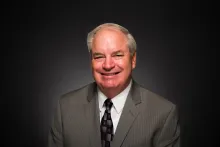
Robin Webber was born in Chicago, Illinois, in 1951, but has lived most of his life in California. He has been a part of the Church of God community since 1963. He attended Ambassador College in Pasadena from 1969-1973. He majored in theology and history.
Mr. Webber's interest remains in the study of history, socio-economics and literature. Over the years, he has offered his services to museums as a docent to share his enthusiasm and passions regarding these areas of expertise.
When time permits, he loves to go mountain biking on nearby ranch land and meet his wife as she hikes toward him.
