

Robin S Webber
This transcript was generated by AI and may contain errors. It is provided to assist those who may not be able to listen to the message.
That was beautiful music. I hope this microphone is working today, because I dropped it about 30 minutes ago. Okay, fine, good. Okay, great. Well, in preparation for the open house that's coming up, because I'm not going to be here for a couple of weeks, but don't worry, I'll be in church. I'll be up there doing open houses up in Redlands. But with the thought of open house coming up in a couple of weeks, I wanted to discuss a word that pops up all over the Bible.
We're going to talk about a term today that actually appears in Scripture 270 times, both in the Old Testament and in the New Testament. And by its very definition, once we understand it, it has truly life-altering dynamics to it for each and every one of us.
Oftentimes, when we use this term, we use it, may I say, reverently. When we think about it and attach it to other people, we think of these people with a certain amount of awe and wonderment, admiration. Many of these individuals that bore this definition or title were right there at the very beginning of the church.
We look at them as being, in a sense, the pillars and the foundation of the church. And yet, what they were and what we are called to be are one and the same. To drop all the suspense, then allow me to share the word with you. Simply, that's not the word, disciple. And that's what I'd like to talk about today with you. Join me, if you would, in Matthew 28.
Matthew 28, the first Gospel out of the four, there is a stunning declaration that is offered at the end of this book. Sometimes people call it the Great Commission. Others call it simply the Commission. But let's allow the words to speak for themselves. In Matthew 28, and let's pick up the thought in verse 18, and Jesus came and spoke to them, saying, all authority has been given to me in heaven and on earth.
Now notice verse 19. Go therefore and make disciples of all the nations, baptizing them in the name of the Father and of the Son and of the Holy Spirit, and teaching them to observe all things that I have commanded you, and lo, I am with you always, even to the end of the age. Very interesting. This is some of the last instruction that Jesus is giving his followers then.
And right in the middle of all this instruction is the discussion of baptizing people and making them to be disciples. Interesting. We need to take note of that. Beyond that, we need to ask ourselves a question. Was he only speaking to the 12 at that time, and or is this an ongoing commission? That's a very important item to consider. It is an item that is out there today in the greater Church of God as to what is the responsibility of the church?
What is the responsibility of the ministry? What does it mean to preach the Gospel? Who is involved in that? To make disciples. These are all the questions that I hope that we can talk about today. In doing so, what I would like to do today is to share five qualities, five qualities of being a disciple. Five qualities of being a disciple. And I'll give the end away now, and that is simply this, how God uses people like you and like me to bring this about. To recognize it is not just simply the role of the 12, and they do have a very unique role in the history of the church.
There will always be those pivotal gentlemen that were right there at the beginning that saw the life, the death, and the resurrection, and had the privilege of being the first to preach the Gospel. And we recognize that God speaks of them in their roles even in the world tomorrow because of the impact they made. But the job is not done. There is more yet to be done. There's more yet to be written. And that's what I'd like to talk about today, giving you these five qualities.
The first quality that I'd like to share with you is a disciple. And may I say this, one disciple speaking to another. The first quality is simply one word, willingness.
For those of you that are looking for a lengthy statement from me, that's it. The first quality is willingness. What kind of willingness? Willingness to learn and to serve. And may I say this is indeed the key ingredient of discipleship. One of the major purposes for Jesus Christ coming to this earth, and there are many purposes that he had. And it's not my purpose right now to share all of those purposes, but one was to establish the ecclesia.
Now that's a fancy Greek word that simply means the chosen, the called out ones, which has all sorts of ramifications as far as being concentrated and to be holy and to be set apart before God. We've often heard that we say that well Christ came to establish the church, because that's the English word for ecclesia. But the church has never been simply a building. It's not an it's not an edifice. It is the living timber of hearts and minds and souls that are willing to go, willing to do, whatever God the Father and Jesus Christ direct on this earth. And Jesus long ago knew that there would be men and women that would carry the message embodied in his ministry and share that and share the kingdom of God to individuals to not only share what is coming, but to live it right now. To live it right now. Again, Christianity is not just simply about recipes. It is about practice. It is not just simply about precept. It is about in the doing. These students, this ecclesia that God would call are called disciples. What's that mean? When you take all the Greek and distill it down and boil it down, it just simply means learners and or students. And as you bring it further, because you notice the word disciple and see the Greek and the word discipline, you see the aspect of a structure of an endeavor to do that which God wants us to do. Jesus himself gives a definition of discipleship. Maybe you've never noticed before. I'd like to point it out to you. Please join me if you would in John 8. It's always good to go right to the definitions that Jesus offers. Saves us the work. That way we can get it right. Join me if you would in John 8 and verse 30.
As he spoke these words, speaking of Christ, many believed in him. Then Jesus said to those Jews who believed him, if you abide in my word, you are my disciples. There's that word. Did you know? We just bumped right into it. You then are my disciples indeed. And you shall know the truth and the truth shall make you free. Now, we're basically able to read that in about two or three breaths, but may I share something with you? There's all sorts of gems just within this these few verses. Let's take it apart. We'll notice that a disciple by definition is a believer, is one who abides, one who has knowledge, and one that has been set free. Let's go back and see how this comes about. And he spoke these words, and many believed in him. To be a disciple, you have to believe. You have to believe the living word who is Christ. You have to believe in the written word, which is in the Bible, which is God's revelation to mankind. These individuals that would come along, and this is early on in the ministry of Jesus, had to believe what he was saying, even when they had not yet seen it come to pass. Come to the fore. That takes belief. Not only that, but these people as they confronted these situations would believe be believers that believe that Jesus lived a perfect life, died a death of ignominy, and was three raised in glory, and was resurrected, and is now at the right hand of God. Belief, real, living faith is essential to discipleship. We also notice here that it says that if you abide in my word, now when we think of the word abide today in our common English jargon, it's a somewhat of a sweet word, somewhat of a passive word. We say, won't you come in on poetry? Come and abide with me.
But abide when you go to the Greek is a word of strength. It is a word of vigor that you are rock-solid cemented into the living word, which is Jesus Christ, and the written word, and you stay in the word, and the word is planted in your heart. Thus your life does not stem from that from the outside in, but that which is on the inside of you, which God has planted there as a seed, and then is manifested to the world. So a disciple abides in the word. And then notice what it says and you shall know the truth. Jesus is the master teacher. What we read here today is not understood by everybody. You shall know the truth. In other words, God is going to open it up to our minds and our hearts. I know all of us have gone through what I might call the exercise of futility, where you say, hey, come over here, Charles. Come over here, Sam. Come over here, Jane. Look, have you ever noticed? Has your pastor ever gone to this scripture? Did your grandmother ever read this to you? Have you ever seen this? But you just got to see this. You're just so excited. You know, you just can't wait for them to see it. I know we've had these discussions with our wives, our husbands, our parents, our adult children. We've even at some times gone to our pastors. I remember my mother. I grew up in a church, which I won't mention, mainline Protestant denomination.
All I remember as a young boy of about 10 and 11 is sitting outside the pastor's locked door, as my mother was pointing out everything that she was learning at that time from the radio. I mean, those meetings went sometimes an hour and a half. I just remember sitting in that chair, because my mother was so excited about what she had learned, and she wanted to share it with what we entitled the Reverend Michke. The Rev didn't get it, unfortunately.
Oh, I remember that share with fond memories. That's a miracle. We underestimate that. It's a miracle, the opening of our minds and hearts. And then with all of this, when we believe, when we abide, when we receive that knowledge, notice the beauty, the byproduct. It says, you shall know the truth, and the truth shall make you free. Free from what? Free from sin, free from self, free from death, freedom to serve the Father and the Son as disciples.
That's the definition of discipleshood. It's right in your Bible. Now, those that were willing and picked up Jesus on his offer, the world around were amazed. They said, you can't do that. That's no way to start a church. That's no way to start an organization. They were somewhat shocked. But I want to share something with you. Join me over in Matthew 10, in Matthew 10, in verse 2, because here are the resumes of the apostles, disciples.
And when he had called his twelve disciples, verse 1 to him, he gave them power of the unclean spirits to cast them out and heal all kinds of sicknesses and all kinds of disease. Now, the names of the twelve apostles are these. First, Simon, who's called Peter, and Andrew, his brother, James, the son of Zebedee, and John, his brother. Philip and Bartholomew, Thomas and Matthew, the tax collector, James, the son of Alphaeus, and Labias, whose surname was Thaddeus, Simon the Canaanite, and Judas Iscariot, who also betrayed him. Then Jesus sent out and commanded them and sent them on their way. That's it! That was the whole story! With these gentlemen, all we are given are the names.
That's it. All of us that have been in business at one time or another in corporations, some of you right now, are reading resumes that are two or three or four or five pages long of people trying to get a job. That was it. Why is that? Why are we only given the names? Why are we not given their resume? Because the disciple, friends, is not called to tell their story. They are called to share the story of the gospel of Jesus Christ and the kingdom of God. Anything, all things before that are nothing. God wants us to fill us up with His story, what He's doing, what He's about, what He's yet to do. It makes a difference in our life.
That's why their story was so very short. But again, these men without a resume and without a human story, as it were, why these twelve? Join me, if you would, in John 6. In John 6, fascinating, we find a kind of a real squeeze moment in the ministry of Jesus Christ.
In John 6, verse 60, therefore, there's that word again, many of His disciples, when they heard this, said, this is a hard saying. Who can understand? Of course, it was, because, as we know, John 6 is the discussion of the bread from heaven, and you must eat of me, and you must drink of me, and they're basically, what are we a part of? This sounds like some kind of, where are we? San Francisco? This sounded really out there to a lot of people. And then, notice, join me, if you would, as we move down scripture, verse 66. From that time, many of His disciples went back and walked with Him no more. They weren't willing. They didn't, at that point, get the whole picture, and what they saw, they couldn't comprehend, and so they closed the door and went back home. Then Jesus said to the twelve, do you also want to go away? But Simon Peter answered Him, Lord, to whom shall we go? You have the words of eternal life. Also, we have come to believe and know that You are the Christ, the Son of the living God.
Willingness. To follow Jesus Christ, even when you don't understand everything, or know exactly where everything is leading yet. This willingness is the key to discipleship.
It opens up the doors to everything else. You can have the greatest IQ. You can have the best personality in the world. You can do this. You can do that. You can have all of the human good genes that were ever dropped in one bucket of humanity, residing in you.
But it is the door of willingness that we walk through that makes everything else available. That's why it's such a fantastic quality.
As they were willing, and as they did follow the Master, these same individuals without the resume, the guys with just the names, would basically turn the world upside down. Again, it wasn't thirst about them, it was about God. Join me if you would in John 6 and verse 44. Very pivotal point of our understanding, especially even as we are moving towards an open house. We recognize that in a sense we can't grow a church of and by ourselves. That's very common parlance in the church world today about growing a church. We can't grow a church simply by what we are doing down here below. We do recognize, we don't have time to go to all the scriptures, that Jesus said to his disciples, you're going to be fishermen of men. So we do have a responsibility to spread the net as fishermen, together collectively as the ecclesia. To spread that net and not settle for anything less, other than to spread it as much as we are given cause and ability to do.
But then we recognize that at the end of the day it's God that puts the fish in there. There's this co-workership, this partnership that goes on. No one can come to me unless the Father who sends me draw him, and I will raise him up the last day. It's interesting, Jesus is the Word, he's the Savior, he's the high priest, he's the King of Glory, he is our advocate. I mean, there are so many titles of what Jesus Christ is and all the roles and the responsibilities that God just gladly offers him. But there is one role that the Father in his sovereign manner keeps to himself, and that is to choose the children of the family in the time and in the way that pleases him. That's very important to understand.
And as they came, these disciples, as they were willing, they had to keep on remaining willing, because sometimes we don't always understand what God is doing. Join me if you would in John 1, verse 35. In John 1, verse 35, very interesting. Again, the next day John stood with two of his disciples and, looking at Jesus as he walked, he said, Behold the Lamb of God. The two disciples heard him speak, and they followed Jesus. And then Jesus turned and, seeing them, followed, said to them, What do you seek? Basically, it is, what do you want? What do you want? Why are you following me? Why do you seem apparently willing? Everybody comes towards God, comes towards Christ for different reasons, different angles. We carry different scars and different baggage from the past. And normally we start at the level, even of willingness, of not fully comprehending that we're here to do what God wants, but we have our wants of God. And then sometimes we don't understand his answers, even as we place them before them. You know, there's that interesting story that's found over in, I think it's in John 8, if I'm not mistaken, over, no, in Matthew 8. I'm not going to go to it right now, but a chap named Maxwell wrote a really interesting book. It's called All You Can Be. He's a religious writer, and he's got a really neat chapter in there. It's called Solve My Problems But Save My Pigs. You say what? Solve my problems but save my pigs. And it's the story of Jesus' encounter with that little village where, you know, they had the half-crazy naked guy out in the graveyard. You would remember him if you saw him. The half-crazy naked guy, he was in the graveyard outside of town, and nobody was able to go down that road. You probably wouldn't want to go down that road because everybody knew in town he's up there just waiting. And he'd probably come out, oh, you know, and boy, nobody was going to go up that way. Forget it. The man had problems. The man had demons. That town had a problem. Jesus came along, and he solved the problem.
And as we know the story, there were that legion of demons, and he sent them into the pigs. And the pigs, little piggies, they ran down the hill and right into the water, and they all drowned.
A lot of dead bacon under the water. Now, the people had issues. They had problems! We can't get out of Dodge because that road leads right by the end. That's the half crazy guy up there. He'll run out and say all sorts of crazy things and roll his eyeballs at us, and who knows what else?
And anyway, look at him. So they didn't go that way. They had a problem. Christ came and had a solution. But you know what? Humanly, somebody lost a lot of bacon there, didn't they? Lost a lot of livestock in the moment. And that's how God deals with all of his disciples at times. You know, we come and we want something out of God, but we don't want to necessarily have his answers the way he's going to do it.
We want him to solve our problems but save our pigs. I've been there. You've been there. We've all done that. The disciples were willing to look beyond that and recognize that God had their best intentions at heart. Point number two, after willingness, disciples are expected to participate. Disciples are expected to participate.
There's nothing inactive about being a disciple. You know, the Chinese have an expression, I see and I forget. I hear and I remember. But I do and I understand. It is in the doing that we understand it's in the lab session of life that we get it. And Christianity is not just a bunch of theories and a bunch of recipes.
It's got to be put in the oven. And I want to show and share with you a story in Luke 9. Join me if you would there as to Jesus' style as a teacher with his disciples. One that hopefully we can emulate, whether as an organization, whether as a congregation, or whether you're given a responsibility within the congregation.
There are no bystanders in Christianity in Luke 9. Then he called his 12 what? Disciples. Together and gave them power and authority over all the demons to cure diseases. And he sent them to preach the kingdom of God, to heal the sick. And he said to them, take nothing for the journey, neither staves nor bag nor bread nor money, and do not have two tunics apiece. Oh man, this guy's kind of a micromanager.
Getting into the suitcase. And whatever house you enter, stay there. And from there depart. And whoever will not receive you when you go out of that city, shake off the very dust from your feet as a testimony against them. Now rather than micromanaging, this is it. That's the role of a disciple. This did not last too long. When God calls us, he knows that we can't do it by ourselves and what the tasks are that he gives us to do.
But his Spirit in us, God has the greatest confidence of what we can do on his behalf. We notice, if we go back for a moment, which is very important, in verse 3, actually in verse 2, he sent them to preach the Kingdom of God and to heal the sick.
Bottom line, disciples need to be given opportunity. Opportunity. They need to have the opportunity to get off the bench and to share what they have learned, to share what they are. And if God has confidence in his disciples and as a pastor, I also need to have confidence in those disciples. A good teacher is going to give some instruction like he does in verse 3.
He's even going to say, you know, there are going to be some tough times down there. He lets them know that there's going to be a few bumps along the road, and if so, this is what you do about it. And also, then in verse 10, and the apostles or disciples, when they had returned, told them all that they had done.
To be a disciple is not just not out on your own. There is accountability to Jesus Christ and to the Father. God is not calling a bunch of lone rangers as he empowers, as he grants tremendous opportunity. Preach the gospel, cast out demons, heal the sick. By the way, here's how you pack your suitcase. And by the way, if they don't like you, here's what you do.
Christ knew how to motivate the students that he had chosen. Can we be any less? That's why I'm excited about having an open house. You know, I have an open house, and I have for 13 years in the United Church of God, because people in the Good News magazine, they can read our articles.
They can page them one by one. They can open up the Bible themselves, but I like them to see the living pages. I like them to see all of you up close and personal, because each and every one of you have a story. Each and every one of you, then, are allowed, if I can use it for the sake of a lesser word, you're in the game. You're in the work. As people come, and whether it's three weeks from now or every week, it's not the pastor's job to say, oh, there's a new individual.
Let's see if I can climb over all the people and go to meet them. A congregation that is growing and that is active and is dynamic is where all of our eyes and all of our hearts and all of our arms and all of our hands are out there to meet, to reach, and to teach people. A congregation ought be pastor-fed, but it must be spirit-led in each and every one of us. When everybody is doing their job, when everybody is doing their part, please understand there is a role for a pastor, and I guard that responsibly, jealously, even.
But there is also a role for the entire congregation not to look over the shoulder. I think sometimes in the Church of God community, we've looked too much over our shoulder, wondering if the pastor is going to do it, wondering if somebody else is going to do it, wondering if the deacon is going to do it, and there are things that the pastor and the deacons do. Please understand. But to recognize as a committee of one that we have been called to be up close and personal and to make contact with whomever comes into the Church.
It's not my job. It's your job. Now, I love my job, too, because normally when I go to a congregation, I try to meet everybody on a given day. He said, we didn't meet me today. Well, Church isn't over yet. Okay, so anyway. But when I'm sent out on these seminars, I like to meet people, want to meet people. But if I don't, we need to be meeting everybody. So that if somebody doesn't meet the pastor, they still go away saying, this is a church filled with the love of God. I'm a statistic out there, but I count in here. That's not just the role of Weber or Mr.
Smith or Mr. Cole or Mr. Miller or Mr. Gardiner or Mr. Clark or Mr. Whoever or Mrs. So-and-so. That is the role of every young person that's on this row in front of me, every middle-aged person, everybody. That's your role. You are a disciple. You are on the job. In Texas, A and M, over there in the Holy Land called Texas, at least the Texans think it is. You know what the greatest miracle ever performed on earth was? God worked a miracle on Texans. He made them think they were in the Promised Land. Have you ever not found a Texan that loves Texas?
No? Anybody from Texas, if I've offended you, you are to forgive me. Okay.
What would the world be without Texans? I mean, it would be just dull, boring, and humble. No, just teasing. Okay. See, he's leaving me. No, he knows it. Okay. He's my neighbor.
We all have a role. In Texas, A and M, what they do, they have what they call the 12th man. You know what the 12th man is? The 12th man is every game that they have, they bring somebody down from the stands, and that person is on the sidelines. He's not in the game, per se, but he is, and he runs up and down the sidelines with the team. It's called the 12th man. In other words, an individual is taken out of the crowd to represent the crowd. They're pretty noisy in Texas, and football is Texas, but you have a 12th man going up and down with the team wherever they are. They're in the game. That is exactly what God wants, Christ wants, of His disciples. He wants us to be involved, not looking over our shoulders, but recognizing that God's Holy Spirit resides in us, His teachings are inside of us, we have His confidence behind us, we have a story to tell. Point number three. All disciples must at all times be ready to teach what they have been taught. That means the disciples cannot simply be willing, they must be available. Willingness is great, but willingness only gets you into the door of discipleship. You must be available at all times, and that's most important. You say, who? Me? I say, yes, you. You know, we can go through the story of the New Testament, and we recognize that there were tremendous people there. There's the Peters, there's the Peter, there's the John, there's the Paul. Who could match Paul? But God brings all of us into this story for His glory and for His purpose, and each and every one of us have something to contribute. Acts 4 and verse 13. Join me there for a moment. Acts 4 and verse 13.
Now, when they saw the boldness of Peter and John and perceived that they were uneducated and untrained men, basically what good can come out of the Galilee, they marveled. And notice what it says. They realized that they had been with Jesus. They'd been with their Master, the ultimate trainer, the ultimate educator.
Their degree came not by what they knew, but who they knew and remembered what they had been taught and abided in that living Word later on the written Word.
When you think of the different stories that are in the Bible, and I want to share this with you, because sometimes we say, well, I can't do this, or I can't do this, or I can't do that, or I can't do this. You're like Jack Benny with the violin.
That's what it sounds like to God. We have been called. The miracle has occurred. And God says, I want you to do something with what I've given you.
Now, some of you would never be comfortable where I am right now, but that's not your gift.
Some of you might not be comfortable being a song leader, or being an organizer, or being a this, or being a that. But we've got to learn to grow to being comfortable in the skin that God has given us and use the gifts that He has. You know, when you think of some of the individuals in the Bible, disciples, you think of what they've done. Sometimes the little people, and sometimes what I call the queen little people. You know, over, join me in Acts 9 for a moment. Interesting story. You know, here's this man, and he was alluded to by Chris, the man that persecuted the church and really made life really, really tough for people. And it's interesting that in Acts 9 and verse 10, now there was a certain disciple at Damascus. Oh, there's that word again, disciple, named Ananias. And to him the Lord sent a vision, Ananias. He said, here I am. So he said, arise and go to the street called straight and inquire at the house of Judas for one called Saul of Tarsus, for behold, he is praying and on and on and on and on. And then it says that coming in, put your hands on him, that he might receive a sight. And he did that. He said, me? Paul? Me? How do we get this two together? You know what he's done? This disciple came forward, followed instructions. You never hear about Ananias again. But in that moment, God used him. What about the story of Barnabas? What about the story of once Saul becomes Paul and goes to Jerusalem, the ministers, they don't want to have anything to do with them. But there was a man, a Levi from the country of Cyprus. His name was Barnabas. And Barnabas was the go-to guy who was brave enough to bring people and put them together with people.
He did the right thing at the right time for the right reason because he was a disciple, Jesus Christ. What about the example of Dorkas, otherwise known as Tabitha? If you had a name like Dorkas, you'd want another name too.
And her name was Tabitha. And her discipleship and her gifts were for all the widows. And you know the story? They just, you know, Tabitha dies and they go to pieces. They're crying. They're sad. This lovely lady. She's resurrected by Peter.
That was her gift. What about the story of Aquila and Priscilla?
They were not speakers, but they were little people in the church that made things happen. So much so that there was this gentleman named Apollos, this Hellenistic Jew from Alexandria, who came and was a dynamic and an eloquent speaker. But you know what? He hadn't heard the latest thing, that it wasn't just simply the baptism of John, that you had to have the baptism of the Spirit. So it says that Aquila and Priscilla, on their own, they didn't get a missive from somebody else, took Apollos aside. And it says that they showed him a better way.
Discipleship must be worn with humility. It doesn't say that right in the middle of the congregation they got up and said, say what? Haven't you heard? Discipleship also demands humility and wisdom. You say, well, you know those people, but maybe I don't have that ability. You know, it's really interesting that how much of you know anything about Andrew? You say who? Andrew. He was a disciple of Jesus Christ. Are we all in agreement? That's when you're supposed to nod. Okay, I think we all know Andrew was a disciple. What can you say about? Was he an apostle to the circumcision? Was he an apostle to the uncircumcision? Did he call fire down from heaven? What can we say about how God used his gifts and how he was not only willing but available? Andrew's gift, which I think is the gift of many of you that are in this room, is that he knew how to connect people with Jesus Christ. Is there any higher privilege that you or I might have? You go into the Gospel story and you'll find that Andrew was the first to come to Christ. And then he connected another individual with Jesus Christ. He went and got somebody that was over here and brought him into contact with Jesus Christ. Oh, by the way, you know that person's name. It was Peter. Andrew was a connector disciple. Not only that, but there's another story about Andrew. As you can share your gift, remember when the disciples were up on that hill and there were 5,000 people around and they're basically going, Jesus, do you know what you're doing? Do you see this group around us? 5,000 people? There's not enough. There's not enough bread in that town down there to feed this crowd. You know the rest of the story, don't you? You know about the little boy? We all know. We all know about the little boy that shared his brown bag lunch with the crowd as it went through Christ and the miracle happened. Question. Who was the individual that connected the little boy that was available with the Christ that was willing to show his glory? Oh, I know who it is. It's just a guy. His name was Andrew. That's the only two comments that you have about this disciple is that he had the greatest privilege and the greatest joy of connecting people with the Christ. We never knew that Christ was a speaker. We do not know if he was a writer. We don't know how many great miracles he was able to accomplish. But this we know that he had the joy of connecting people with Jesus Christ.
Think of what your function is within the body. Your ability to be that 12th person, not for Texas A&M, but for God in this role of discipleship. Don't say, Oh, I wish I could be. No, say, here I am. And it's probably what you're best at. So often we look at what somebody else has rather than overlooking just what we are and recognizing as we give that to God that he will use our native abilities to his spiritual ends. But we can't only simply be willing. We must be available. Let me ask you a question about that little boy disciple, the guy with the little boy with the bread and the fishies. Wonder if he had not come forward. Now, he had so very, very little, didn't he? Yes, he did. He had his little brown bag lunch, but he offered what he had. And the rest is history. Even with whatever little we have, if we do not offer God our little, he cannot take our little or take our nothing and make it much. If we don't put it before God on the table and say, God, here I am. I can't do what Mr. Smith does. I can't organize a kitchen, maybe like Jackie or Tina, the two witnesses back there, and Marlene and everybody else. Don't take that personally. I haven't ordained you to know. I'm saying is that or I'm not an organizer. I'm not an out front person. I'm not a song leader. I'd be really scared to give an opening prayer. I can't greet because, you know, when I see somebody coming towards me, I freeze. And we talk about all the things that we aren't rather than what God has given us. Disciples are not only willing, but they are available. Now, I've got two more points, but I think I've spoken my peace.
And I think the important thing to realize is simply this. This is the kind of congregation that I think God wants us to be in San Diego and around the world. He's not looking over our shoulder, but looking up and recognizing that the Father above through Jesus Christ has called us to be willing and to be available and to give God the gifts that we have to serve and to please Him.
You know, I look at all of you and I see all of you. I recognize that this congregation would not be the same if one of you were missing. Each of you are a very important part of the mosaic that God has designed to be a spearhead for His way of life in San Diego.
I can't imagine this congregation. I could use names. I could imagine this congregation without one of you. And some of you are saying, well, He isn't thinking, I know each and every one of you by name. And if I know you by name, I know that God above knows you by name because He knows your name so much and He knows your life ahead so much that He gave the Son before that time because He wants you so very much to be a disciple for Him. To have the belief to use the knowledge that He gives us properly, to abide when we don't think we can go on abiding in this world, when we wish so much that the kingdom had already come, that we ache and we pain and we cry out, how long, O Lord, how long, but God in His wisdom knows that. And I think it's because there are still some that are down here below that God has a purpose for. That's why we're having an open house. I don't know how many people are going to come to the open house. Might be five, might be 15. Wouldn't it be fun if it was 150? Those are problems I'd love to have. So would you. But as they come, recognize that we are a family. In humility, our story is nothing. You know, over the years when sometimes people say, Robin, why do you get so excited when you speak? It's not because I get excited, but because I have an exciting story to tell. When you can tell people why they were born, when you can tell people that this is not the only day of salvation, when you can tell people, as Chris did today, why does God allow people? I've asked, we'll just tape you over. You come up and give that on the dot. You know that, why does God allow suffering? These are the great questions of life. These are not strangers to any one of us. It's not the size of the voice. It's the size of the heart, the size of the truth that will allow us to be willing servants, to be disciples, to live, to love what we have been taught. I'm looking forward to being back with Susie three weeks from now. Let's keep on praying about it. Let's be active and interactive disciples. We are a family. That's what it's all about.
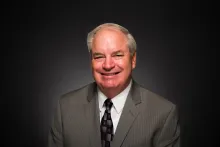
Robin Webber was born in Chicago, Illinois, in 1951, but has lived most of his life in California. He has been a part of the Church of God community since 1963. He attended Ambassador College in Pasadena from 1969-1973. He majored in theology and history.
Mr. Webber's interest remains in the study of history, socio-economics and literature. Over the years, he has offered his services to museums as a docent to share his enthusiasm and passions regarding these areas of expertise.
When time permits, he loves to go mountain biking on nearby ranch land and meet his wife as she hikes toward him.
