

Robin S Webber
This transcript was generated by AI and may contain errors. It is provided to assist those who may not be able to listen to the message.
I'm going to give you a parable today. Not too often that I speak in parables, although some of you may think so. Jesus Christ constantly spoke in parables, and he spoke in parables, he said, so that hearing they wouldn't understand, seeing they wouldn't comprehend. But that's not the reason I'm going to speak in parables today. Jesus, when he spoke in parables, used analogies, used examples that people were familiar with to teach them lessons. He would use farming examples, things that people were very familiar with, and those that God wasn't working with didn't understand, those that God was working with did understand. So I expect today that all of you will understand the parable.
As an example, Jesus Christ spoke about the prodigal son, spoke about mustard seed, the pearl of great price, the sore of the seed, of tares, the hidden treasure, the good shepherd, the good Samaritan, the lost sheep, and we could go on and on the various parables that he gave. The reason why I mention some of these is so that you will know that it's not wrong to speak in parables. If Christ did it, we're in good company, and certainly he did. This parable that I'm going to give you today is about a person, could be a soldier, who's on a very long and a very difficult journey. He's asked to deliver a message. He's asked to travel a road that few people travel on. He's got to protect himself from wild animals. He's got to protect himself from the elements, from all kinds of critters who are around him. And I want you to notice that this story has its foundation in the Scriptures, so that, lest you think that my parable is unscriptural, that it is based upon the Scriptures. Let's go over to Matthew chapter 7 in verse 13 to begin with.
Matthew the seventh chapter, and we will begin here in verse 13.
We read, enter by the narrow gate, for wide is the gate, and broad is the way that leads to destruction. And there are many who go by it, or go in by it, but narrow is the gate, and difficult is the way which leads to life, and there are few that find it. Well, we find that today if I were to use the analogy that Christ gave here, that broad is the way that leads to destruction, there are many who go in or find that way, but narrow is the gate. If I could use the illustration, this would be like interstate 24 over here, broad four-lane highway, or even better, interstate 75 going to Atlanta, six lanes headed down that direction, three going south, three going north, broad highway, and it's easy to get onto. You get over here, you get on interstate 24, and you head towards 75, and you see all these big signs, Atlanta this way, you know, right two lanes, so you know exactly where to go. So we're talking about in the parable the analogy of a six-lane highway broad is the way it's headed down a flat country or downhill.
It's easy to find because all the traffic is going in that way, everybody's heading that direction, that seems a direction to go in because everybody's going that way. All these people couldn't have gotten on the wrong highway, could they? So they're all headed in that direction. All the signs, all the information tell you go this way. However, there's a problem, as it says here, this highway leads to destruction. Now you could call that Atlanta, but we'll use a different analogy. We'll say as you're going down the highway that there's a bridge out, and nobody knows about it yet, and as you're roaring down the highway 70, 75, 80 miles an hour, and I go down through there all the time, and 80 is a normal speed that, you know, the people are traveling.
You come around this curve, and the bridge is out, you can't really see it, and the first thing you know, people are disappearing. You put your brakes on and over the edge, you go into utter destruction. So, sure death awaits anyone who goes in that direction. That's what is facing them.
Now, as verse 14 says, though, there is another road, another highway. Now, this one is a very narrow highway. It's a difficult way, but it leads to life. There's not a bridge there where you're going to go off the end and end up. Now, this other road, there's hardly anybody traveling this road. It's a very narrow road, small entryway. Well, you could go down the major highway and pass this road, never even notice that it's there. There's a very small sign, and this small sign says narrow road, and so you have to really look for it. It's not well marked, so the vast majority of people are not going to go that way. It's very narrow. It gets down to one lane. Have you ever been on a one-lane highway before where you have to pull off and you allow the other person to pass? Well, that's exactly the way this is. One narrow lane compared to a six-lane highway. Actually, the road gets so narrow, you've got to park your car and get out and walk. And instead of going downhill, it's going uphill, and it's a lot more difficult than the other road. Now, there are dangerous animals out there also in 1 Peter 5 and verse 8. There are three scriptures that form the basis of this parable. We've read one of them. Now, 1 Peter 5.8 gives us the second.
We're told here to be sober.
Be vigilant, because your adversary the devil walks around like a roaring lion, seeking whom he may devour. So, we find that there are dangerous animals out there on this path. One of them is a lion. So, as you're walking along, you have to be sober.
If you were drunk and you're walking along, you wouldn't even know that there was a lion anywhere around. So, you've got to be sober. You've got to be alert, because a lion could catch you if you were drowsy, if you were sleeping, if you were lackadaisical.
We know that man-eating lions are constantly on the prowl to destroy a traveler. There are other also pitfalls that you've got to be aware of. Potholes, trees, just all kinds of things out there that you've got to be aware of. Now, as this messenger is traveling along, he realizes that he's going to need some type of special clothing and weapons to protect him, because what if a wild animal were to spring on him? What if a lion appeared? And so, you find that he's given special garb to wear.
Ephesians 6, verse 13, is the third scripture. Ephesians 6, verse 13.
We read here, Therefore, take up the whole armor of God that you may be able to withstand in the evil day. When the lion shows up, anything evil is going to happen. You will be able to stand, and having done all, to stand.
Now, verse 14, Stand therefore, having girded your waist with truth.
Now, I want you to notice we're told to stand and fight against the predator. You can't run, as you will see, all of the clothing that you put on, everything that you have that you're carrying, protects the front. There's nothing on the back. The moment you turn around and run, you're a dead duck. And so, you've got to stand and fight. So, we're told here in verse 14, we have a summary of the armor. Stand, having girded your waist with truth, having put on the breastplate of righteousness, having shodged your feet with the preparation of the gospel of peace, above all, taking the shield of faith, with which you will be able to quench all the fiery darts of the wicked one, and take the helmet of salvation and the sword of the Spirit, which is the word of God. Then we're told, praying always. So, again, every piece of this outfit is very important.
There are seven elements to the armor that's mentioned, especially if you count prayer.
Now, with all of that as a background, all this is just the background to the parable, so that you understand that the parable is based upon the Scripture. One day, you get a telegram. It's an exciting message. And it's from the President, and he sends you a message saying, we need you. We want you, and we have a special assignment for you. And not everybody's being chosen for this assignment. Only a small handful of people are going to be given this challenging opportunity. And it's very important. So, one day, you show up at the President's office, and he's there. He explains to you what your assignment is all about. He gives you some more details. He gives you a map that shows you the general direction you're going to be traveling in. He gives you a book that describes what you need to be doing. Everything you need to do, sort of a Boy Scout type of manual to help you as you're going along the way, so that you can succeed in what you're doing. And he puts you on the trail and says, good luck. Now, I want you to take this special message. It's almost like a message to Garcia, that you are to take this message, and you are to carry the message to the person that he appoints you to see. So, you're all excited, and they dress you up. They give you your weapon. They give you your outfit. You're all clothed, and you're ready to go.
And you find the winding path that you're going to take. It's all uphill.
And by mid-morning, you start out with a great deal of excitement with a high hand. You're enthusiastic. You're going to carry out this order. You've been hand-chosen, and so you're going to carry this out. But by mid-morning, you're hot and thirsty.
And you've been conserving your water, because you don't have too much water, so you got to watch your water as you go along. And when you left, you found out it was going to be in the mid-90s. So, the temperature is in the 90s. It's hot. You're thirsty, and it's really humid.
It's just like Tennessee and Alabama and Georgia. It's really humid where you are. So, you begin to go out and go on, and you realize this isn't going to be an easy journey. You thought when you were first asked to go on it, it started to be a picnic. You'd have a little hike, take the message. Everything would be okay, be alert, and look out for the animals. But it's more difficult than you realize when you first got started. So, as you start, you're very much aware of the lion, because you've been warned that there's a lion out there, and that you need to keep on alert for him. So, as you're traveling along initially, every one of your senses is alert. And your ears are like radar. Your eyes are like radar. Your eyes are like laser beams. Every muscle in your body is tense. You're looking around, and you are on guard. If any lion shows up, you'll take care of it. Your ears are straining to detect any type of sound that might come along. As an example, if you really tuned in to sounds, I mentioned this the other day in the sermon I gave. If you're out deer hunting, a squirrel running around sounds like a tank going through the woods. I mean, it's just a noise after a while that you can hear a leaf drop and fall on the ground. And so, this is the way you are. Your eyes are wide open. They're darting in every direction you're looking. Sometimes the hair on the back of your head stands up because you're anticipating something. But suddenly, you hear the snap of a twig. Something's out there. You can't see it, but you know where the sound came from. It's in the bush to your right. So, you stare over there and you look.
And you begin to make out this silhouette. And sure enough, it looks like a lion. You can make out the shoulder. And it looks like he's there. He's ready to jump. You get your shield up. You've got your sword. You've got everything on. And he charges, but you're ready. As he charges, you yell at him. I mean, you're not going to let him surprise you. Your shield is up, and as he comes at you, you knock him aside. Your sword takes a swipe at him.
Sword takes a swipe at him. And you've taken away the element of surprise.
So, the little kitty cat runs off into the woods again. And you're real happy. You've met your first challenge. You've defeated the lion. However, one hot, muggy, humid 90-day after another goes and blends into another. Seems like the path gets a little steeper. The trail well, the trail is almost gone by now. As you keep plodding along, it's rocky. You have to climb over boulders, obstacles, pitfalls, traps, there's holes. You didn't think it was going to be this bad. You keep thinking if it were not so humid. If it were not this humid, I'd be able to really make some progress. Because this breastplate that I have on is so hot, so itchy. Occasionally, you get a branch and you're trying to scratch underneath this breastplate.
And the thing weighs so much, and you're hot, and you're perspiring. So you decide it might be much better if I just lay this aside. I don't really need this. I got my shield and my sword. I'll just put this over here. And after you take it off, this is so much better. You can feel the air around your ribs. The perspiration begins to dry. You just feel cool. Again, it makes it easier to walk. You're not restricted in any way. You have much more freedom of movement. So now you're really able to make some progress as you walk along and go up this trail.
You hadn't realized all the obstacles, though, you were going to be faced with. Several trees across the road, so you either have to climb under them or over them. And your 10-pound shield gets pretty heavy. You slide it under the tree, and you climb over this fallen tree. And it would be a lot easier if you didn't have to haul this 10-pound shield around. So slowing your progress down, you still have a sword. You're not worried. So you prop the shield up against a tree, and you keep going. Toward evening, you get a little relief. As you're walking along, there's a pool of water beside the road. And this pool of water looks so inviting. It's shady. It feels cool. You reach down, and you grab some water, and you drink as much water as you can. But boy, by this time, you're just dog-tired. I mean, you're just worn out. The trip is taking you longer than you expected it would. You didn't realize that you'd be going on for so long. You thought this would be a trip that would be over real quick like. You were told it would be a difficult journey, but you didn't believe it was going to be this hard. So you lay your helmet aside. You bend over, and you get another drink of water. You can't drink water if your helmet on. You bend over, and your head falls in the pool. So you bend over. You drink. It's so cool, so refreshing. You relax a little bit. You think, boy, I've been walking so much. My feet are sore. I've got blisters on the bottom of my feet. They're tired. Wouldn't it really be nice if I just took my shoes off and put my feet in the water and just wiggle them around a little bit? And wouldn't this feel delicious? So you do. You take your right shoe off. You put your foot in the water, and you all... I didn't know it could feel so good. So you take your left shoe off, and you stretch your feet out in the water. In fact, you even get up and sort of walk around in the forest, and you crunch the dirt under your toes, and it feels so good. You come back, and you wash it off in the water. And you lie down. You think, boy, I'll keep my feet in this pool. I'll just lie down. But you're lying there. This belt... I mean, whoever lies down with a belt, you know, it's crimping you, and it's making you feel bad. So you loosen the belt up, and you lay it over to the side. So you wonder, as you're lying there, wonder where my sword is. Yeah, I know I had it here just a few minutes ago, but you're not too worried because you know it's there pretty handy. You'll go back and get it, but as you're lying there, guess what? You get sleepier and sleepier. And you look around, and you see a beautiful spruce tree and the limbs hanging down. And many of you have seen a spruce tree just like this. And underneath, it's cool. It's refreshing. So you go under. You wipe away the leaves and the branches, and it's just the cool dirt. You're so sleepy. You haven't seen a wild animal in days. There's no sign of wild animal around. You don't think you have to really worry. You're not concerned.
You begin to slumber. I mean, sleep. You go to sleep at this point. You never heard the lion. He never saw him. And he knew he was around. But he'd been circling for a long time and been watching, been waiting for days, waiting for just the right time to attack. He remembered the whack with the sword. He remembered the butting in the nose with the shield. He remembered all of that.
So he creeps a little closer, and he's all hunched down. He's quiet as a mouse, and he looks, and he's undetected. He gets within leaping distance, and all at once he leaps and he pounces right on top of you and seizes you in his mouth. And you scream as you feel the powerful jaws begin to crush your chest. And quickly, your life drains from your body. Your death will not be reported in any newspaper. It may be days, maybe weeks, could be years before the true story of your death is known.
Actually, no one may ever know.
Well, Mr. Holiday, are you really going to just let the guy die?
I mean, does anybody here in the congregation want to hear a different ending to the story?
Well, we don't want to just leave him dead. As I mentioned, he was traveling on a path that was not the Broadway, but it was a way that occasionally a few travelers would be on. On the day that most of your armor had been discarded, you passed a traveler, or he passed you, and he began to think about your situation. He began to worry about you. He was fearful.
He was concerned for this man who was putting off his armor. He realized that you were without protection, that it could be very dangerous. So, he goes back.
He backtracks and he begins to look for you. He's no trouble finding you. All he has to do is follow the armor path, and he finds one piece after another after another. Finally, he finds you sleeping under a tree like a little baby. All worn out, very tired, very content, unaware that there's a lion lurking in the bushes. Even this traveler with all his armor, all of his senses about him, has difficulty detecting the lion. Even when you're on guard, you're not always aware of when the predator is around. You might remember a few weeks ago when I gave the sermon and quoted from the book, Death in the Silent Places by Capstick, that he mentioned the story of Colonel Patterson being on top of this platform and how he had staked out a donkey or some other type of animal. He was waiting for the lion to attack that animal. Instead, he became the one who was being hunted. How he talked about, even with all of your senses, he knew the lion was out there. He could occasionally hear even the padding on the bottom of its feet as it was circling the platform that he was on. He realized that he was in danger, but he couldn't place where the lion was. He made this statement, when you don't hear the lion anymore or you don't see the lion anymore, that's when he has begun to hunt. That's when he's on the prowl. Like Patterson, this traveler detected the lion circling the sleeping man or sleeping person.
Using his armor, especially his shield and sword, he was able to scare the lion off.
While all of this is going on, the man, obviously sleeping, wakes up and he sees this ferocious lion about to attack him. Here's this man protecting him. Believe me, he now is wide awake because he realizes he came just that close to dying. He also realizes the importance of his armor, of his clothing, of the implements. The two of them backtracked down the trail, picking everything up that he discarded, and they travel the road together.
Now, is there anything else that we can learn from this parable?
Well, I think there is. I think there are other lessons that we might be able to learn.
Rather than we all know that there's a time when God called us into his church, when God is the king of the universe, the Father, decided that he was going to handpick you.
As we find that no one can come unto the Son unless the Father draws him, God himself has to call you, has to draw you. And when God calls us, he calls us for a purpose. He wants us to be in his kingdom, but he's also given us a job to do while we're on this earth. And that job is to take the message of the kingdom of God to this world. We have a responsibility in one way or the other of doing the work of God. Whether we're doing it directly or we do it indirectly, we all, collectively, through our tithes, our offerings, our prayers, our involvement, are involved in preaching the gospel. The very fact that you and I live an unusual way of life, as it was put in England, we set out an example of what a true Christian is supposed to be like. Public evangelism is something else that we can be involved in. We support the church, and we realize that collectively that we're able to preach the gospel through the printed word, the spoken word. Now, God gives us a map to direct our lives by. That map is His word, the Bible, the Scriptures. The Bible or the Scriptures are a light into our feet, a light into our path. They direct us in the way that we are to go. The Bible guides us.
Just as this individual in the parable was given a guidebook to show him how to survive, you and I are given the Scriptures to show us how to survive, show us how to have a happy marriage, how to rear our children, how to live our lives, how to work. Every aspect of our lives are there.
There are sacrifices that we have to make as we move along through life. We have obstacles, we have trials, we have tests that we have to face. And we have to realize that society, the people around us, are going the way of least resistance, aren't they? As the Bible says, broad is the way that leads to destruction.
Destruction would be the lake of fire, and the broad is the way that is going that way. You and I have to paddle uphill, upstream. But God gives us the power, He gives us the strength, He gives us everything that we need to be able to make it. In 2 Peter 1, verse 3, we read this about what God does for us.
As His divine power has given to us all things that pertain to life and godliness, through the knowledge of Him who called us by glory and virtue. So God is the way that we are. We are the way that we are. God has given us everything that we need for this life, to live this life, and to live and to have eternal life.
By which He's given to us exceeding in great and precious promises that through these you may be partakers of the divine nature, having escaped the corruption or the depravity that is in the world through lust. So you and I, brethren, have what we need. God provides everything we need.
And so God is the one who helps us. Now, you and I occasionally need help and encouragement from fellow travelers. A fellow traveler would be somebody sitting next to you in the audience today. Everybody except Bradley here. He's sitting next to himself. But those who are here with us, we're all in the same boat, are we not? We're all traveling in the same direction. We're all headed for the kingdom of God. We're all on the narrow way, and we're striving for God's kingdom. So we need help from time to time. There are times that we let down.
There's time that all of us will let down, and we need somebody to come along and pick us up. We need somebody to come along and say, no, don't drop your shield. Don't lay your sword aside. You know, you need that helmet. Keep those shoes on. Tighten that belt up. And we need encouragement from one another. We need somebody to come along and say, get back on the track.
So that has to be somebody who knows us well enough to be able to tell us to do that. What that means is that you can't be out here as an independent Christian. You can't just be out here all by yourself. Because when you do, who's going to help you when you fall? When you're having trouble? Who's going to come along and strengthen you or encourage you when you're down or you're discouraged? In Ecclesiastes, turn back here to the book of Ecclesiastes chapter 4 and verse 9. Notice, Ecclesiastes chapter 4 and verse 9, a biblical principle that is given.
Two are better than one because they have a good reward for their labor.
For if they fall, one will lift up his companion.
Over the years, I've been very thankful for my wife, for others in the church, that when I've been down, she comes along and encourages me, strengthens me, and hopefully I do the same for her.
And when we're around one another, we can help each other. But if you're off, you're isolated, you're never around someone, then if you get down or you begin to go astray, there's not going to be somebody there saying, no, that's not the way to do things. This is the way, walk you in it, and to help us. But notice, it says, if they fall, one will lift up his companion. But woe to him who is alone when he falls, for he has no one to help him up. Again, if two lie down together, they will keep warm. But how can one be warm alone? Though one may be overpowered by another, two can withstand him. And a three-fold cord is not quickly broken. So even three, you get a cord and you wind three strands together. It's a lot stronger than one by itself. And so, brethren, the same is true of all of us. We draw strength from one another.
We encourage one another. We build one another up. God has given us everything that we need to protect us against Satan. How does the armor protect us? Have you ever asked yourself, how does the armor of God protect me? Well, in James 4, verses 7 and 8, let's go over to James 4, 7 and 8, we read, Submit to God, resist the devil, and he will flee from you. Draw near to God, and he will draw near to you. Cleanse your hands, you sinners, and purify your hearts, you double-minded. So you and I, if we draw close to God, he's going to be close to us. That's the one we need to be the closest to. And if we resist the devil, then he's going to flee.
If you've got all the armor up, and every time the lion pokes his nose out, you shake your sword at him, and you hold your shield up, then eventually he's going to flee. Well, let's go over to Ephesians 6 and verse 12 again, and let's take a look at the armor that God has given to us.
Let's ask ourselves the question, how does this armor protect us? Especially in the spiritual realm. Let's begin in verse 10. Ephesians chapter 6 and verse 10.
Finally, my brethren, be strong in the Lord and the power of his might. So where does our power come from? Through his Spirit. Put on the whole armor of God that you may be able to stand against the wiles of the devil, or the schemings of Satan the devil.
For we do not wrestle against flesh and blood, but against principalities, against powers, against the rulers of the darkness of this age, against spiritual hosts of wickedness and heavenly places. So brethren, we're in a life and death struggle. We need to realize the moment that we were called by God and put on the narrow way and told, go this way, that spiritually speaking we are in a life and death struggle. It's either we're going to make it, being God's kingdom, or we've had it. So you and I need to be able to stand, as verse 13 says, therefore take up the whole armor of God that you may be able to withstand and in the evil day having done all to stand. So we've got to be able to withstand and be able to stand up to any challenge that comes along.
Okay, let's take a look here at the armor that we are to put on. Stand therefore, having girded your waist with truth and having put on the breastplate of righteousness. Well, let's start first of all with the belt of truth. What is truth? Well, John 1717 says, thy word is truth. So what it's talking about is that you and I have to gird ourselves with the truth. What is true? What is right with the word of God? We can't compromise with it. We have to be willing to admit that we don't know everything. So what this is implying is a teachable attitude, a right approach. So when God looks down at us, He asks, how teachable are we?
Are we still able to be taught by God? After a while, we can become to the place where we think, well, I know it all. I know everything. I understand all the doctrines. And so I don't have to study as much as I used to. Well, I find just the opposite taking place. You've got to study more. Because, yes, you may know the fundamental doctrines and the basic truths of God. But how to apply those in the greater depth of understanding that God desires of us?
You can send a child to school, and he can go through the first four, five grades of school, and he can think, hey, I understand math. I know everything there is about math. I can add, I can subtract, I can multiply, divide. Because, you know, there's a whole depth of understanding that child doesn't know anything about. He's never gone into calculus or, you know, some of the higher math sciences. So you and I have to be able to do so. So how does the truth protect us? The belt of truth? Well, we have a lot of people who lead the church over what I would call weird ideas. We've had people leave over bananas. We had one gentleman who believed that the only thing you should eat is bananas. I mean, he had become a fanatic on food, and I had talked to him on many occasions, and he got down to where it was bananas. That was it. I told him, you need as many bananas as you want to, but you can't tell other people that that's all they can eat. Well, he couldn't keep quiet, so we had to have a parting of the way. But people leave, and they come up with all kinds of weird ideas, not willing to change when proven wrong. If you, brethren, if we have a love of the truth, we love God's Word, then when we're shown that we're wrong, guess why? We want to change. We don't want to stay the same way. We want to be a different person. Not willing. Sometimes people are not willing to subject their ideas, their philosophies, to the scrutiny of the Church or to the ministry. They've got an idea, and they're going to hold on to it. It's their baby, and they're going to give birth to it, and so they hold on to it. Now, the second part of this verse says, the breastplate of righteousness. So you have the breastplate of righteousness.
Well, righteousness is simply doing what is right. Right? Righteousness is doing what is right. Now, who decides what's right? Well, this is where the rub comes in. God is the one who determines what's right. And so, in society today, everybody thinks that he's an authority. He decides what's right or what's good. And so, it's easy, if we're not careful, to begin to compromise with what is right or what is good. When I say compromise, when things begin to get hard economically, what would be the first tendency that a person might have? Well, I can pay all my bills this month if I don't set aside my second tie, or if I don't send my ties into the work.
God can get by one month. I need to be able to pay all of my bills. So, the first thing you find that begins to happen is we begin to compromise. What about smoking?
I think I mentioned here the other day, church area that I used to pastor, where I had just moved to that church area, and the associate pastor asked me if he had to go out and conduct a Bible study where all these people were smoking. I asked him, what was he talking about? He said, well, they sit there and they blow smoke in your face. I said, who sits there and blows smoke in your face? Well, the members do. Well, we had a little discussion with them on that, but it's easy to begin to let down. Smoking, I've heard members over the year say, well, that's no big deal. That's not a big problem. So therefore, they don't look on that as something that's a big deal. They keep on smoking. People get involved in sexual affairs and all kinds of things. People leave the church because they become spiritually weak, and they don't stay close to God. When we are talking about righteousness, we're not talking about my righteousness or your righteousness. We're talking about God's righteousness. God says our righteousness is as filthy rags in his sight. So we're not talking about human righteousness. Our human standards go to one extreme to the other.
So how does the breastplate of righteousness protect us?
Well, it gives us the right standard. It shows us the right way to go, the right path to walk. Why does right? See, human beings don't know what's right from wrong. And it's true if it's just your opinion versus my opinion, your opinion is as good as my opinion. But this is not my opinion.
This is God's authoritative direction, commandments, where he tells us what to do.
And so we find, brethren, that we have to do what God says. You find that this protects us from going in the wrong direction if we simply follow the instructions.
We realize that our righteousness must exceed the righteousness of the Pharisees and the Sadducees, that we don't go about establishing our own laws, our own ideas about how to do things, keep the Sabbath, or obey God. So it does protect us by giving us the right direction to walk in.
Now verse 15 tells us, And having shod your feet with the preparation of the gospel of peace.
So you and I are to shod our feet. We're to put on shoes that are the gospel, here, says of peace.
Now those who live by God's word should have peace among themselves.
We should be able to get along with one another. And if we have a problem, the Bible very clearly says, if you and your brother can't get along, go to your brother. Talk to your brother. Talk to your brother. And you don't harbor problems.
We find the Bible talks quite a bit about those who are peacemakers.
But I think having the feet shod with the gospel of peace also describes where our heart is. Mr. Armstrong used to say that if you keep your heart in the work, you don't have to worry about leaving. That those who are involved in the work and have their heart in the work are those who remain faithful. Well, brethren, if we keep our heart in work and we want to share this message, the parable that I gave to you, the man kept plodding on. He had a message to deliver. We have a message to deliver. We have a work to do. And until we die and draw our last breath, or until Jesus Christ comes back, we have a work to do that God has given us to do, to preach the gospel to the world. So we have to be ready to take the message to the world. We have to also be ready to give an answer for the hope that lies within us. If we're asked so that we can reach people, we have to do our part.
So how does the gospel of peace protect us? You know, having our feet shod with this. Well, it keeps our heart and our mind in the right place. It keeps you focused in the right place. It helps us to focus and become centered on Christ, on the gospel message, and we never forget it.
If you can remember how excited you were when you first heard the truth, and you understood it, and how you wanted to share it with people, and you learned very quickly, you couldn't just go blab it to anybody because they didn't share your enthusiasm, that there's a way to be able to take that message. Well, you and I want to share it, and so we have an opportunity every year for actually tens of millions of booklets, articles, good news magazines to go out to the general public for them to be able to hear the word of God being preached. So this keeps us focused, brethren, on the job and the responsibility that God has given us.
Now verse 16 says, above all, these are all great, but above all, taking the shield of faith with which you will be able to quench all the fiery darts of the wicked one.
Well, I could just say here, remember the Roman turtle.
I gave a sermon about the Roman turtle where we went through the fiery darts of Satan the devil.
But let me just emphasize again that Satan throws darts at us, and they're fiery darts, and he's trying to get through our defenses, and he puts doubts in our minds. He puts criticism, wrong feelings against other people in our minds. These are the type of darts that he throws at us.
I've found over the years that it's difficult for a person, in some cases, to believe that Jesus Christ truly is in charge of the church, that he leads us, that he guides us, that he still works through human beings. The problem with that is the same problem the Israelites had with Moses and Aaron. Guess what? They knew Moses, and they knew Aaron. You know, who's Moses, and who's Aaron?
They knew what their weaknesses were, what their faults were, so therefore it was difficult for them to say, well, God can work through Moses or work through Aaron. The same thing is true for all of us today. For brethren, faith is one of the greatest gifts that God gives to us.
If there's anything that you and I pray for on a daily basis, or should pray for, it is faith. We need to ask God to give us faith, because that faith is like a shield in front of us, and guides us in everything that we do. How does faith protect us?
Well, number one, it helps us to endure. It helps us to be able to endure to the end, to look to the future. We have faith in what God says he's going to do. We have faith in the plan of God, the plan of salvation, the resurrection coming. Everything that God has promised to us, so we trust God. Without faith, the Bible says you cannot please God. So you and I have to have faith. We have to have that faith to guide us and direct us to be able to please God.
So brethren, we have to have that shield of faith. And then we read in verse 17, the helmet of salvation. Now the helmet protects the head, and it's the head that we have most of our problems. It's not your knee, your ankle, your elbow. It's in the mind, right? That we have our struggles. So the helmet protects the mind, the head, and salvation is something that we have to come and agree upon. God is converting our minds.
He's converting our attitudes. He's converting our approach. And the one thing that really motivates us, or should motivate us, is the salvation that God has promised to us. That God has promised to give us eternal life in His kingdom. And so we strive for that. How does that protect us? Well, if you wake up every morning and say, I'm a child of the kingdom, and I'm bound for the promised land, and God's going to give me eternal life, and I'm awaiting the resurrection, and there's nothing that's going to stand between me and that, and I'm going to be in the kingdom, and you keep that there.
It motivates you. You see, when people forget about why they're alive, what they're doing, their purpose, then it becomes very easy to become demoralized and to become discouraged from what to give up and what to quit. We realize we'll be a part of the literal family of God in the future, the kingdom of God, who will live for eternity and have spirit bodies.
So that protects you. There's another layer of protection. You might look on these pieces of the armor that God gives to us as layers, like layers of an onion, and go around the onion. And God adds layer after layer after layer of protection to us. And when you have all of this, it just insulates us against the world, against Satan the devil.
Now, in verse 17 also, we find the sword of the Spirit, which is the word of God. So the sword, which is the only offensive weapon that we have, everything else is defensive. Everything else is to stop the attacks, to stop the darts, protect you. But the sword you pull out and you say, okay, come here, let's fight. You've got something to fight with. So what are you going to fight back with? Well, it's the word of God. So how do we fight with the word of God?
Well, we fill our minds with the word of God. And again, you'll find all of these tend to overlap one another. The word of God we put in our minds. You see, if you have a weakness in a certain area, it could be gluttony, it could be alcohol, whatever. You study the Scriptures, read everything in the Bible dealing with the subject of gluttony, what God says about it.
And when you sit down and you decide, well, I'm going to eat this fifth piece of pie and this half gallon of ice cream, remember the Scriptures dealing with gluttony. And don't go that far. So it helps to protect us because we are constantly reminded of what we ought to be able to do, our outlook, what our character is. Again, it fills our minds with the thoughts, the attitudes, and the direction that God gives us.
It shows us how to thank, reason, respond, and do what is right, how to serve.
So all of these help us. Now, verse 18, as I said, even though this isn't an element of armor, we're told, praying always with all prayer and supplication.
So as you're traveling along, we need to supplicate God constantly. The word supplicate means to pray constantly. You're supplicating God for a specific thing over and over.
How does prayer help us? Well, it helps us to be alert.
We're alert because we're aware of the needs of the church. We're aware of the needs of people locally. We're aware of other members and their needs. We're concerned for them. We're praying for them. Prayer gets our mind off of ourselves so that we can focus on other people.
It helps us when possible. So we need to pray.
So, brethren, God has given us all of this armor as we travel along.
Let's notice in Romans chapter 13. See, in the parable I gave to you, the individual was willing to discard pieces of the armor because he did not see the need for it.
He thought, well, my sword and my shield are enough to protect me. And he didn't realize that any time that you discard any piece of the armor, you are exposing yourself to the enemy.
Now, in Romans 13 and verse 11, we read this and do this, knowing that now it is high time to awake out of sleep. For our salvation is nearer than when we first believed. And that certainly is true of us today. Does it matter if you believe 50 years ago, 40, 30, 20, or last week, that our salvation is nearer? The night is far spent, today is at hand. Therefore, let us cast off the works of darkness and let us put on the armor of light.
We need to make sure that we have this armor on and let us walk properly, as in the day, not in revelry and drunkenness, nor in lewdness and lust, not in strife and envy, but put on the Lord Jesus Christ. So you see, the main thing we put on is Christ. We have Him living in us and make no provision for the flesh to fulfill its lust. So, as this scripture says, the time is for us to wake up. Why do I say that? Because the Bible is very clear in Revelation chapter 3, that there is going to be, at the end time, a lackadaisical spirit and attitude in the church. It's called Laodicean. Now, Laodicean spirit is one where people become self-satisfied. With their spiritual condition, they think they're okay. They don't realize they're blind and naked.
They think that they're dressed spiritually, they're strong, and they're okay when they're not. So we're told to wake up, put on the armor, and not sleep. And in 1 Thessalonians chapter 5 and verse 4, let's read this. 1 Thessalonians chapter 5 beginning in verse 4.
We're told, But you, brethren, are not in darkness, so that this day should overtake you as a thief.
For you are all sons of the light and sons of the day. We are not of the night nor darkness. Therefore, let us not sleep as others do, but let us watch and be sober.
For those who sleep sleep at night, and those who get drunk are drunk at night. But let us who are of the day be sober.
This is not talking about that it's wrong to sleep at night when you go to sleep. This is talking, we have a spiritual analogy here, that people are asleep.
Spiritually, you and I are to be awake, and we are to put on the breastplate of faith and of love, and the helmet, the hope of salvation that we have. For God did not appoint us to wrath, but to obtain salvation through our Lord Jesus Christ, who died for us, that whether we are awake or asleep, we should live together with Him. Therefore, comfort each other. So you and I are to encourage one another, and edify or build one another up, just as you also are doing.
So rather than we must encourage, edify, comfort one another.
So remember this, when you lay aside any part of the armor, you weaken your defense.
This is one of the lessons we want to learn from the parable.
You may not see the lion. That's another lesson we learn.
Right now, again, we don't see too much of the lion attacking the church.
There's not any major catastrophe going on right now, as we've suffered sometimes in the past, but that doesn't mean that he's not around. It doesn't mean that he's not conniving, scheming, thinking, planning, plotting. He's there. He's waiting for a weakness, and he will pick us off one at a time, or he'll pick us off collectively, if he can.
We need to make sure that we help one another. And if you see a brother stumbling or getting weak, that you're there to help that person to lift them up.
So, brethren, let's make sure, first of all, that we have the full armor of God on, and that we keep it on.
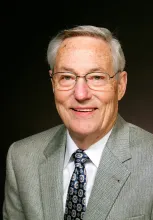
At the time of his retirement in 2016, Roy Holladay was serving the Operation Manager for Ministerial and Member Services of the United Church of God. Mr. and Mrs. Holladay have served in Pittsburgh, Akron, Toledo, Wheeling, Charleston, Uniontown, San Antonio, Austin, Corpus Christi, Uvalde, the Rio Grand Valley, Richmond, Norfolk, Arlington, Hinsdale, Chicago North, St. Petersburg, New Port Richey, Fort Myers, Miami, West Palm Beach, Big Sandy, Texarkana, Chattanooga and Rome congregations.
Roy Holladay was instrumental in the founding of the United Church of God, serving on the transitional board and later on the Council of Elders for nine years (acting as chairman for four-plus years). Mr. Holladay was the United Church of God president for three years (May 2002-July 2005). Over the years he was an instructor at Ambassador Bible College and was a festival coordinator for nine years.
