
Steve Shafer
This transcript was generated by AI and may contain errors. It is provided to assist those who may not be able to listen to the message.
I want to thank Mr. Rose and Anna and Combine Choir for that very beautiful piece of special music. Special music always makes Holy Days very special and is very much appreciated, a very beautiful piece and a very meaningful piece for this time of the year as well.
Well, today, of course, this being the first day of 11 Bread, I want to reveal the meaning of this day beginning from a little different perspective than we already have, kind of going on a little bit of a journey here today. But from two perspectives, I want to give the meaning of this day from two perspectives. One, from the perspective of how everything began, as recorded in the book of Genesis, God's Word. And two, from the perspective of an epic poem, an epic poem from the, and from the perspective of the author of that epic poem, who has quite a story. After giving these two perspectives, we will then deliver, I mean, should I say, we'll delve deeper into the meaning of the first day of 11 Bread. My title from my sermon here this afternoon is Paradise Lost and Paradise Found. Where should we go? Where should we begin this journey? What verse in the Bible goes back farther in time than any other verse in the Bible? Let's go to John 1.1. It's actually in the New Testament. John 1, verse 1. Let's begin there, where it says this, In the beginning was the Word, and the Word was with God, and the Word was God. Of course, the Word being Jesus Christ, verse 14, who said, became flesh and gold among us, and the God whom the Word was with being God the Father. Going on verse 2, He was the beginning with God, with God the Father. All things were made through Him, through Jesus Christ, and without Him nothing was made that was made. In Him was life, and the life was the light of men, and the light shines in the darkness, and the darkness did not comprehend it. So this is talking spiritually, of course. It's talking about spiritual darkness, about spiritual light versus spiritual darkness.
Where does spiritual darkness originate? Let's go to Ezekiel 28. Ezekiel 28. Let's begin in verse 11.
Moreover, the word of the Lord came to me, saying, Son of man, take up a lamentation for the king of Tyre, because he's not talking about the physical king of Tyre, he's talking about a spiritual entity. And Satan, this is the Lord God. You were the seal of perfection, full of wisdom, and perfect in beauty. This obviously was not talking about a physical king, it's talking about a spiritual being. You were in Eden. Go right back to the Garden of Eden. You were in Eden, the Garden of God, and every precious stone was your covering, the sardius, topaz, and diamond, barrel, onyx, jasper, sapphire, turquoise, enamel with gold. And the workmanship of your temples and pice was prepared for you on the day you were created. But he was in the Garden of God. We'll be going there in a moment, because that is where it all began, back in the Garden of God, as far as the history of mankind is concerned. But you were the seal of perfection. Verse 14 tells us who this is. You are the anointed caribou covers. I establish you. You are on the holy mountain of God. You walk back and forth in the midst of fiery stones. You are perfect in your ways from the day you were created, till iniquity was found in you. Or we could say, until spiritual darkness was found in you. Verse 16, by the abundance of your trading you became filled with violence within, and you sinned. Therefore I cast you as a feying thing out of the mountain of God. I destroyed you, O covering carib, from the midst of the fiery stones. How did this anointed carib, who covers, he was up there in the mountain of God, he was, we could say, he was in paradise. How did this anointed carib lose paradise? Well, Luke 10, 18, Christ told 70 of his disciples that he saw Satan fall like lightning from heaven. How and why did Satan, anointed carib, fall from heaven? Let's go to Isaiah 14.
Isaiah 14, verse 12. How are you falling from heaven, O Lucifer? That's the Latin translation. In Hebrew, it's halel. How are you falling from heaven, O halel? Sun of the morning, how are you cut down to the ground? You who weakened the nations.
The next two verses tell us why and how halel was cut down to the ground. Verse 13, For you have said in your heart, I will ascend into heaven. I will exalt my throne above the stars of God. I will also sit on the mount of the congregation on the farther sides of the north. I will ascend above the heights of the clouds. I will be like the Most High. What was God's response to that? Verse 15. You shall be brought down to Sheol, to the lowest depths of the pits. And those who see you will gaze at you and consider you the same. Is this the man who made the earth tremble, who shook kingdoms, who made the world as a wilderness and destroyed its cities, who did not open the house of its prisoners?
Is this the man who took mankind captive through his deception, took them captive and imprisoned them by deceiving all mankind? When and where did Satan take mankind captive?
See, how did it all begin in the actual history of mankind? How was mankind brought into sin, and how can you get out of sin as these days portray? Let's go back to Genesis 3 at the very beginning.
Go back to the Garden of Eden. That's where the Bible starts. It starts in the Garden of Eden. I won't go through chapter 2. Let's pick it up in chapter 3, verse 1. Genesis 3, verse 1. We have Satan portrayed as a serpent. Now the serpent was more cunning than any beast of the field which the Lord God had made. And he said to the woman, Has God indeed said, You shall not eat of every tree of the garden? And the woman said to the serpent, We may eat of the fruit of the trees of the garden, but of the fruit of the tree which is in the midst of the garden, God has said, You shall not eat of it or touch it, lest you die. But then the serpent said to the woman, You shall not die.
For God knows the day that you eat of it, your eyes are going to be opened, and you will be like God, knowing good and evil. What it really means is deciding for yourselves what is good and evil. Shouldn't you have that progged? Decide for yourselves. So when the woman saw that it was a tree good for food, and that it was pleasant to the eyes, and a tree desirable to make one wise, she took of its root and ate, and she also gave to her husband with her, and he ate.
As a result of this, was paradise lost at this particular time? By that I mean, were Adam and Eve then barred from the garden of Eden? Jesus 3, verse 22, Therefore the Lord God sent him out of the garden of Eden, to till the ground from which he was taken. So he drove out the man, and he placed caribou at the east of the garden of Eden, and a flaming sword was turned every way to guard the way to the tree of life.
So paradise was lost, not only for Adam and Eve, but for mankind in general, now that they no longer had access to the garden of Eden and the tree of life. And the way to that tree of life was now guarded.
Only certain people could be let in. They had to have a special calling.
That is how it all began in the actual history of mankind, from the perspective of the word of God. Before moving on to the perspective of an epic poem, let me first ask this. What about verse 22, where God said, Lest he take also the tree of life and live forever? If Adam and Eve had eaten of the fruit of the tree of life, would they have then lived forever? Could they have then lived forever in the flesh as physical human beings? Now the answer is no, it would not have lived forever.
And the other question is, why is this garden, why is it named Eden? Where did that name come from? Who named it? We'll get to that in Paradise Found.
But how did it all begin from the perspective of an epic poem?
The poem I'm referring to is Paradise Lost by John Milton.
As Final Revision has it, it was consisted of 12 books. It originally had 10, it was then revised to be consisted of 12 books. It's the longest poem ever written. It consists of 10,540 verses.
Here's a book, Paradise Lost. This entire book is the poem. It's not about the poem, it is the poem. 10,540 verses, and this here takes up about 350 pages to write all that poem in a book.
Longest poem ever written. It took John Milton five years to write it. Five years.
The poem revolves around what we just read in Genesis 3, but it also comes to other aspects of God's Word and prophecies, and the Book of Revelation as well, covers more of God's Word as well. But it revolves around Adam and Eve and the serpent, and the eating of the forbidden fruit in the Garden of Eden, which then led to Paradise Lost. But it also encompasses ultimate salvation as well in this poem. But first, I want to take a look, not too many probably have done research on it, but very interesting to look at the life of John Milton. Why?
Because before John Milton wrote Paradise Lost, he experienced Paradise Lost.
He was born in London, England on December 9, 1608. Not long after Jamestown was founded in America, and about 12 years before the Pilgrims came up, short from the Mayflower in Plymouth, Massachusetts. That's when he was born. But in 1642, at the age of 33, Milton married a lady by the name of Mary Powell, who lived in one month later.
We don't have a history of that. Why the reason is unknown. But Mary Powell returned to her family three years later, in 1645, and she returned to Milton. In July of 1646, and they got married at that time, stayed together. Three years later. In July of 1646, her daughter Anne was born. In 1648, her second daughter, Mary, was born. In 1651, their only son John was born.
But in 1652, tragedy struck.
And he began losing his eyesight. And his tragedy struck. His life in paradise was lost. He began losing his eyesight. Within a few months after that, he was totally blind. Totally blind. That was the first tragedy that happened in 1652. Shortly after that, his year old son, his only son, his year old son John, tragically died. Then shortly after that, his wife went into labor, giving birth to their third daughter, Deborah. But tragedy struck again, as his wife Mary died while giving birth.
1652 was a tragic year for John Milton. He went totally blind for life. He lost his only son. And he lost his wife, Mary. But more tragedy and misfortune was yet to come. In 1656, Milton married his second wife, Catherine Woodstock, who died two years later. Then in early 1658, he had to go into hiding due to political turmoil during the reign of King Charles II. And he was eventually found, and he actually put him in prison for no wrongdoing. He was in prison for several months, but he was finally released. It was about that time in 1658 that John Milton began writing Paradise Lost.
He finally finished it five years later in 1663. In 1663, he also married his third wife, Elizabeth Minshaw, M-I-N-S-H-U-L-L, who helped care for him the rest of his life, because he was blind. So she helped care for him. She helped write Paradise Lost for him. And she was with him to care for him until he died on November 9, 1674, at the age of 66. But in 1658, when John Milton began writing Paradise Lost with the help of his wife, he was totally blind by that time, had lost his only son, had lost two wives, and had been wrongfully imprisoned for several months. So as he began writing Paradise Lost, John Milton's Paradise had been lost, which caused him to turn to God's Word, and how Paradise had been lost and how Paradise could then be found.
I would like to read just a few verses from Paradise Lost. Obviously, 10,540 verses, very few I'm going to read. But this is from Book 9. The version I have here is 12 books. This is from Book 9, verses 410 through 415 of Book 9. And this is in reference to the serpent.
To intercept thy way, or send thee back, despoiled of innocence, of faith, of bliss. For now, as its break of dawn, the fiend, mere serpent in appearance forth was come. And on his quest, where likeliest might find, the only two of mankind, but in them, the whole intended race is purposed prey.
The next few verses I want to read are from Book 9, verses 454, 455, 470 to 473, 480 to 482, 489, 491 to 493, just to make sure I get that right, no where we're going from. But these verses here, don't think I'll have to read them, that's not that much, actually. But this is in reference to Eve.
She most, and in her sums all delight, or in her look sums all delight. Such pleasure took the serpent to behold. But of pleasure not for him ordained. Then soon, fierce hate, he recollects, and all his thoughts of mischief thus excites. Occasion which now smiles, behold alone, the woman opportune to all attempts, her husband, for I view far round, not nigh. She fair, divinely fair, fit love for God, and beauty not approached by stronger hate, he stronger under show of love, well fain'd, the way which to her ruin now I tend.
Now, why am I reading this? Because just in these very few verses, John Milton, in a poetic and dramatic way, shows how paradise was lost in the garden of Eden. And he shows how subtle Satan is in striving to lead all mankind to stray. The whole intended race is purposed prey. And Milton here shows how Satan will strive to take advantage of any and all opportunities. Occasion which now smiles, behold alone, her husband, for I view far round, not nigh. He also shows one of Satan's methods, hiding hate by showing a pretense of love. Hate stronger under show of love, well fain'd.
And the next verse Milton then shows Satan's purpose for showing love well fain'd. The way which to her ruin now I tend. Now I tend.
One final quote. Milton also understood that mankind has free moral agency and that we are all responsible for our own actions. Here's what he wrote in book three, verses 96, 97, and 99, in referring to Adam. He and his faithless progeny, whose fault? Whose but his own? Sufficient to have stood, though free to fall.
So with that, let's move on to Paradise Found.
When it comes to Paradise Found, where should we begin?
Let's begin in the Garden of Eden. Let's begin in just as three, verse 22.
Genesis 3, going over to verse 22. Then the Lord said, Behold, a man has become like one of us to know good and evil.
And now let's depart his hand and take also the tree of life and eat and live forever. As I asked previously, if Adam and Eve had eaten through the tree of life, would they have then lived forever? No, they would not have then lived forever. Why not?
And what then does this verse mean?
The answer lies in why God named this garden Eden. I said, where did that name come from? What does Eden mean? Who gave this garden that name?
The Old Testament was originally written in ancient Hebrew, which was an idiogrammatic language where each of the 22 letters of the Hebrew alphabet were drawn to picture something, where pictures could then be used to describe the meaning of those words in ancient Hebrew. Eden is spelled with three Hebrew letters, A-N, A-Y-I-N, the sixteenth letter of the Hebrew alphabet, Dailot, D-A-L-E-T, the fourth letter of the Hebrew alphabet, and Noon, N-O-O-N, the fourteenth of the Hebrew alphabet, A-N, Dailot, Noon, Aiden, or Eden. A-N in ancient Hebrew was drawn to picture an eye.
Dailot was drawn to picture a door or a doorway. Noon was drawn to symbolize life. So A-N, Dailot, Noon, eye, doorway, life. What then was the ancient Hebrew word picture meaning of the word Eden? In ancient Hebrew, the word picture meaning of Eden was to see the doorway to life, to see the door to life.
What happened when Abeneath sinned by partaking the tree of the knowledge of good and evil?
When they sinned by deciding for themselves what was good and what was evil, by deciding for themselves what was right and what was wrong. They were then barred from the garden of Eden. It says to guard the way to the tree of life. Genesis 3 verse 24.
The door to eternal life was then closed, Eden to see the door to life. That door was closed when they sinned. For Adam and Eve and mankind at that point there in Paradise had been lost. Mankind would now have to see or find another door to life, because that door had been closed. They were going to have to find another door to life in order for Paradise to be found. What door to life would that be?
And how can one find that door to life?
Let's go to John chapter 10. John 10. Let's begin in verse 1.
John 10 verse 1. Words of Jesus Christ. If you ever read the letter of the Bible. Most assuredly I say to you, he does not enter the sheepfold by the door but climbs up some other way, the same as a thief and a robber. But he who enters by the door is the shepherd of the sheep. To him the doorkeeper opens and the sheep hear his voice and he calls his own sheep by name and leads them out. And when he brings out his own sheep, he goes before them and the sheep follow him for they know his voice. And yet they will by no means follow a stranger, but will flee from him, for they do not know the voice of a stranger. Jesus used this illustration, but they did not understand the things which he spoke to them. And Christ was talking to the Pharisees. John 9 verse 40. Why didn't they understand the things which he spoke to them? He didn't understand because they were blinded by their own vanity and their own self-righteousness. And because they had not been called to be his own sheep.
But how can one find the true door to life?
Only by him through a special calling and by having our minds open to who the true shepherd is. And by having our minds open to see the true door to life. Who is the true door to life? John 10 verse 7. Then Jesus said to them, Most assuredly I say to you, I am the door of the sheep. All who ever came before me are thieves and robbers, but the sheep did not hear them. Verse 9. I am the door. The door.
You know, from this I believe Christ not only understood ancient Hebrew. I know he understood it, but he was also the one who gave the Garden of Eden its name.
Christ the one who named it Eden, who named it to see the door to life, knowing that he was the only true door to life. I am the door. Verse 9. If anyone enters by me, he will be saved. And we'll go in and out and find pasture. You'll find paradise. So paradise lost can become paradise found.
So that then is how paradise was lost and how paradise can then be found, only through Jesus Christ and a special calling. But how does all this tie into the meaning of the days of Unleavened Bread? See, what can we learn from all this? Well, we know the leaven typifies sin, so unleavened bread typifies putting sin out of our lives. And how do we put sin out of our lives? Eating unleavened bread for seven days can typify putting Christ into our lives. As Paul wrote, as recorded in Colossians, I should say Colossians 1, 27, he said, Christ in you, the hope of glory. And as Paul also wrote, as recorded in Philippians 2, 5, let this mind be in you, which was also in Christ Jesus. See, the more the mind of Christ we have in our lives, the more we'll be putting sin out of our lives. What lessons from paradise lost and paradise found can we then learn that tie into the meaning of the days of unleavened bread? There are undoubtedly many things we can learn, but I'll learn down to two major things, and one of those major points won't include two minor points. But let's look at two major points, two major lessons we can learn.
Number one, a, Satan, his originator of sin, wants to entice all of us. This ties into what we've read in Genesis 3, and it ties into the meaning of days of the age. Is Satan in a position to try to do that? Yes, he is. What is he called in 2 Corinthians 4? In 2 Corinthians 4, Satan is referred to as being the god of this age, New King James, or the god of this world, Old King James, or as John Milton put it, even though the whole intended race is his purpose prey.
Who right now is Satan primarily going after? Who does Satan primarily hate stronger under show of love well-fained than anyone else right now at this particular time? I think we all know the answer. See, Satan's primary purpose prey, and his primary hate today is directed toward the people of God. He wants to get to the people of God if he can. He wants to destroy them.
At the Passover, he once again had all of our sins placed under the blood of Christ, and we then also renewed our commitment to strive to put sin out of our lives by putting Christ into our lives as portrayed by the days of our bread. We also realize that Satan, as the god of this world, wants to undo all of that if he can. He wants to entice us away from God to go back into the ways of the world. We therefore have a continual struggle on our hands, don't we?
As we will read in a moment, when we get to the second major lesson we can learn from Paradise Lost and Paradise Found. But the first lesson is this. Satan is a god of this world, and he's the originator of sin, wants to entice all of us. He wants to entice us back into the way of sin, into the ways of the world, and into the way of hate.
Even into the kind of hate, I should say, that is stronger under show of love, well-fained.
And his primary target at this time is the people of God, who he wants to destroy by trying to divide them against one another in any way he can.
Now, what is the second major lesson we can learn from Paradise Lost and Paradise Found? That lesson, or in this case, lessons, can be found by asking this question. How can we be assured that Satan's attempt to entice us will fail? How can we make sure Satan is going to fail in trying to entice us back into the ways of the world, the ways of sin? Well, there are two main ways we can be assured that Satan's attempt to entice us away from God is going to fail. The first one is found in Ephesians 6. Let's turn to Ephesians 6.
Ephesians 6 begins in verse 10.
When the apostle Paul writes, Finally, my brethren, be strong in the Lord, and be strong in the power of his might, and put on the whole armor of God. Why? That you may be able to stand against the wilds of the devil who wants to entice you to go back into the ways of the world in the way of sin.
Why must we put on the whole armor of God? Verse 12. Because we do not wrestle against flesh and blood, but against principalities, against powers, against the rulers of the darkness of this age, against spiritual hosts of wickedness in the heavenly places. This is a verse I had in mind a few moments ago when I mentioned that we have a continual struggle on our hands. I mean, verse 12 meant that we have a struggle. We wrestle every day against Satan's attempts to try to entice us back into the ways of the world, in the ways of sin, and try to control our minds and our thinking. So how are we able to stand in that evil day? Verse 13 is the only way we can stand. Therefore, take up the whole armor of God, who may be able to withstand in that evil day, and having done all to stand. What does having done all include? Verse 14, stand therefore, having girded your waste with truth. Having girded your waste with truth. There's a lot of ideas out there floating around. A lot of different ideas about this and that and other things. So make sure you know and you hold on to the truth. You better know God's Word. Study God's Word and know God's true doctrines so long when can entice you some other direction. Don't let anyone entice you away from that. Gird your waste with truth. And then going on to verse 14, having put on the breastplate of righteousness. What is righteousness? All your commandments are righteous. Psalm 119, 172.
As these days of unleavened great betray, we must all strive to live by God's commandments, by striving to put sin out of our lives. So always know what God's commandments are and always be aware of how people are trying to entice you away from those commandments. Put on the breastplate of righteousness. Verse 15, and having shied your feet with the preparation of the gospel of peace. Give a whole sermon on that. So we have to strive to be peacemakers, to make peace. Even try to make peace with those who are against us and with our enemies, or seem to be. Try to make peace with everyone with your family members who may not be making it against you to understand. Always strive to make peace within your family, within your marriage, within all your relationships, in any way you can. Do your part to be a peacemaker.
Because Satan is going to be in there trying to make war.
Verse 16, above all, taking the shield of faith with which you will be able to quench all the fiery darts of the wicked one. Wow. So important today. We have to learn to live by faith, not by sight. A lot of things happen in the world. Why didn't God do this? Why didn't he solve this problem? Why didn't he solve this problem, my face? Why didn't he do this? We have to know God knows everything that's going on. And he's sovereign over all things, and he has a plan and purpose, and he's going to work that plan and purpose out, regardless of what happens, what we see around us.
So continually live by faith, not by sight. And don't ever allow the wicked one to place doubts in your mind, because that's what Satan loves to do. I mean, that's what he tried to do with Christ, didn't he, Matthew 4? Are you really the Son of God? Well, if you are, then do this. Why don't you chip off this building and do that? Christ didn't fall for it. He said, get away from me, Satan. Go behind me. Don't ever allow people to place doubts in your mind. Know what you believe, know why you believe it, and stick with it. Don't ever let it go.
Verse 17, And take the helmet of salvation, the sword of the Spirit, which is the word of God, praying always with all prayer and supplication in the Spirit, being washful to the sin, with all perseverance and supplication, for all the saints. So be kindly praying for one another. We're all facing a war, a life and death struggle.
But the first main way to thwart Satan's attempt to entice us away from God is put on the whole armor of God. It was the second way we can be assured of thwarting Satan's attempts to entice us away from God. The second main way to thwart Satan's attempt to entice us away from God is love God with all your heart and love your neighbor as yourself. Put on the whole armor of God and love God with all your heart and mind and love your neighbor as yourself. There's no stronger force in the universe than love. Love toward God and love toward one another. Matthew 22. Matthew 22, beginning verse 35. Then one of them, a lawyer asked him a question, testing him and saying, teacher, which is the great commandment in the law? And Jesus said to him, verse 37, you shall love the Lord your God with all your heart, with all your soul, with all your mind. This is the first and great commandment. And the second is like it, you shall love your neighbor as yourself. On these two commandments hang all the law and the prophets. Now, why is this so important? It's so important because love never fails. 1 Corinthians 13, verse 8. Now, what does love do to ensure it will never fail? Love suffers long, does not envy, does not seek its own, is not provoked, thinks no evil, does not rejoice in iniquity, rejoices in the truth. It bears all things, believes all things, that is, believes all things that are true, and hopes all things and endures all things. 1 Corinthians 13, verses 4 through 7. That's what love does, or should do, to ensure it will never fail. And if we do these things, we will never fail. We will never fail to thwart Satan's attempt to entice us away from God, to back the ways of the world and the ways of sin. Let me put it this way. The love of God is Satan's worst enemy.
How can we be assured that Satan's attempt to entice us away from God will fail? Put on the whole armor of God and put on the love of God. So when it comes to Paradise Lost and Paradise Found, let's look at one more thing before closing. Let's look at the word Paradise in the Bible. What are we going to find when we do that? Interesting, we will find that we will end where we began in the Garden of Eden. The English word Paradise appears three times in the New Testament.
First one is in Luke 23. Let's turn to Luke 23. It's found in Luke 23 43, but let's begin in Luke 23, verse 32.
There are also two others. Criminals led with Christ to be put to death, and when they had come to the place called Calvary, there they crucified him, and the criminals won on the right hand and the other on the left.
Dropping down to verse 39.
Then were the criminals who were hanged, blasting him, saying, if you are the Christ, save yourself and us.
But the other, answering, rebuked him, saying, do you not even fear God, seeing you are under the same condemnation? And indeed, we just lay. We deserve what we got. This one who's crucified with Christ, this one thief tells the other thief, we were just, we indeed were justly crucified, for we received the due reward for our deeds. But this man, referring to Christ, has done nothing wrong.
Then he said to Jesus, Lord, remember me when you come into your kingdom. And Jesus said to him, verse 43, as surely I see to you today, you will be with me in Paradise. That's the first place Paradise appears.
Not that he would be in Paradise with Christ at that time, but with that kind of an attitude, with that kind of faith that he was displaying toward Christ. Christ was saying that he would eventually be in Paradise or in God's kingdom at the time of a future resurrection. The second place the word Paradise is found is in 2 Corinthians 12 verse 4. 2 Corinthians 12 verse 4. Let's begin in verse 1. 2 Corinthians 12 verse 1, where Paul writes, It is doubtless not profitable for me to boast. I will come to visions and revelations of the Lord. And he's referring to himself here in verse 2. He said, I know a man in Christ who, 14 years ago, whether in the body or I do not know, or without the body. I saw this vision was so real, I don't know whether I was really there or whether it was just a vision in my mind. God knows. But such a one was caught up to the third heaven, referring to himself in this vision. And I know such a man, whether in the body or out of the body, I do not know, God knows. But he was caught up into paradise, and heard inexpressible words, which is not lawful for man to utter. Paul here is referring to himself, and here he equates paradise as the third heaven, verse 2, as to be where God's throne is. Now, the third and final place the word paradise appears in the New Testament is in Revelation 2 verse 7. So let's turn there. Revelation 2 will begin in verse 1. Revelation 2, beginning in verse 1. To the age of the church of Ephesus write, these things as he who holds the seven stars in his right hand, who walks in the midst of the seven golden lampstands, I know your works, and your labor, and your patience, and I know that you cannot bear those who are evil. And you have tested those who say they are apostles that are not, and have found them liars. And you have persevered, and you have had patience through many trials, and you have labored for my namesake, and have not become weary. You didn't give up. You didn't let down, even though you're tired of battling Satan every day. What will be the reward of those who persevere and have patience, and have labored for Christ's namesake, and have not become weary? Will they find paradise?
For them will paradise lost become paradise found? Revelation 2, verse 7, He who has an ear, let him hear what the Spirit says to the churches. To him who overcomes, I will give to eat from the tree of life which is in the midst of the paradise of God. It's in the midst of the Garden of Eden, but here that Garden of Eden is called paradise. So we've now come full circle back to the Garden of Eden, to the tree of life, and to the paradise of God. Now the Greek word paradise in all these verses is paradisosos, p-p-a-r-a-d-e-i-s-o-s, however that's pronounced, paradisos. It's number 3857 in Strongest Encordance which defines paradisos as being a park, and Eden of future happiness, and as being paradise. And here in Revelation 2, 7, it's called the Paradise of God. So what kind of a setting does God live in? What's that future paradise going to be like for all of us when we find it? What kind of a setting does God live in? He lives in a huge park-like setting with trees and shrubs and gardens and roads and a river which is called a pure river of water of life proceeding from the throne of God and the Lamb. Revelation 22, 1, which we'll get to in just a moment. As we get in, think about the concluding, then, the Bible begins in Paradise and ends in Paradise. It begins in the Garden of Eden with the Tree of Life and Paradise being lost. And it ends in the Garden of Eden with the Tree of Life, plural, and with Paradise being found. But first, let me just note what is recorded in Hebrews 11 in the faith chapter, as it is often called. I'm just going to quote it. Hebrews 11 13 refers to all the true people of God who died in faith, not yet having received the promises. Hebrews 11 16 then says this, but now they desire a better, that is, a heavenly country. Therefore God is not ashamed to be called their God, for he has prepared a city for them. Of course, that city is called New Jerusalem. Let's go to Revelation 21. Revelation 21, beginning in verse 2, Then I, John, saw the holy city, New Jerusalem, coming down out of heaven from God, prepared as a bride adorned for her husband. And I heard a loud voice from heaven, saying, Behold, the tabernacle of God is with men, and he will be brought with them, and they shall be his people, and God himself will be with them, and be their God. This now begins to describe a portion of paradise found. Is this city a high mountain, with God thrown undoubtedly at the top of that mountain? Revelation 21, verse 10, And he carried me away in the spirit to a great and high mountain. It's like a high mountain. It does have a wall and gates. Verse 12, And also it had a great high wall with twelve gates.
What were the twelve gates made of? And what was a street or the main thoroughfare made of? Verse 21, The twelve gates were twelve pearls. Each individual gate was one pearl, and the street of the city was pure gold like transparent glass. So this main thoroughfare is not paved with gold, like some people say. It's not paved with gold. It is pure gold, like transparent glass, like no kind of gold we've ever seen. It's transparent.
So pure is transparent. Can't even imagine that kind of quality. We don't have that kind of quality gold today. So it's not like any gold we have on Earth today. And if there are twelve gates or twelve entrances into the city, there must be streets leading from these entrances and entrance into the center part of the city, which is treasure like a high mountain.
I want to quote a couple things from you. Richard Duncan is a retired United Elder living in the Pacific Northwest. Here is how he described this in his detailed Bible study on the book of Revelation, a detailed series of Bible studies on the book of Revelation. And I want to read how he described Revelation 21, verse 21. This is Richard Duncan's commentary on Revelation 21, 21. If there are streets in the city, then there is a layout.
There is organization. There is structure. There is planning. There is purpose. The streets would lead somewhere, and there must be something equivalent to buildings or offices. There must be things like city squares, city parks, meeting places, workplaces, recreation facilities. God is balanced. There will be beautiful function and purpose to this city. I'm just going to add this.
Remember, this city is a huge city, the base of which is 1,500 miles by 1,500 miles, or 2,250,000 square miles. That can make for a lot of streets and offices and parks and facilities. Let's now conclude our conclusion by looking at a couple of final passages that describe Paradise found. Then we'll read a quote from Richard Duncan as well. Revelation 22, verse 1, He showed me a pure river of water, of life, clear as crystal, proceeding from the throne of God and of the Lamb, which will undoubtedly then be at the top of this mountain of God, at the peak of the New Jerusalem.
And this pure river of water will be flowing down the mountain from the door of God's temple and will apparently water the entire earth, as it says in Ezekiel 47, verses 1-12. And it's going to bring healing. Think of that. It's going to bring healing.
Revelation 22, verse 2, In the middle of a street and on either side of the river was the tree of life, which bore twelve fruits, each tree yielding its fruit every month, and the leaves of the tree were for the healing of the nations. Once again, I would like to quote from Richard Duncan's commentary on this verse from his Bible study series.
This is Richard Duncan's commentary on Revelation 22, verse 2. This isn't entirely clear in English. The Greek has a sense of trees being in a space between the street. Apparently, there's a medium in the middle of the street, somewhat like some of our freeways, with lanes on one side and lanes on the other side, with a median in the middle. The tree of life is in that particular median, and there will be another median between the street and the river of life.
Also, the tree of life would be there. On the other side of the river, there was another median area, and these really are park-like settings that are being described here in this account. In Revelation 22, too, the tree of life bears 12 fruits, each tree yielding its fruit every month. So there are going to be months there. All who are saved through the help of the Biodic Christ receive spiritual sustenance and healing, and they will be healed of all past wounds and emotional scars, all of which were due to sin.
That's Richard Duncan's commentary on that particular verse. Of course, when Satan came along, all of that became resulted in paradise lost. Let's conclude with Revelation 22, verses 12 through 14, where Christ said, Behold, I am coming quickly, and my reward is with me to give to everyone according to his work. I am the Alpha and the Omega, the beginning and the end, the first and the last. Blessed are those who do his commandments, that they may have a right to the tree of life in the Garden of Eden, and may enter into the gates, into the city, the New Jerusalem, that they may have the right to paradise, and may enter New Jerusalem.
So that is the story of paradise lost and paradise found, and how it all relates to the meaning. The Days of Unleavened Brand.
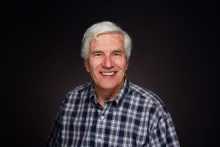
Steve Shafer was born and raised in Seattle. He graduated from Queen Anne High School in 1959 and later graduated from Ambassador College, Big Sandy, Texas in 1967, receiving a degree in Theology. He has been an ordained Elder of the Church of God for 34 years and has pastored congregations in Michigan and Washington State. He and his wife Evelyn have been married for over 48 years and have three children and ten grandchildren.
