

Steve Shafer
This transcript was generated by AI and may contain errors. It is provided to assist those who may not be able to listen to the message.
As we all realize, today is unique among all of God's feasts and holy days. It's unique in that God commands us, as we all realize, to afflict our souls on this day by going without any food or water for 24 hours. This is the day on which we are commanded by God to fast, which makes this holy day unique. It's a unique feast day, and it's a spiritual feast day, not a physical feast day.
It also has very unique meaning. It is one of the most meaningful of all of God's annual holy days. It's stacked full of meaning. It's impossible to cover the entire meeting in one sermon, but you have to cover different aspects of it. John already covered a good aspect of it. In fact, he took part half of my sermon already, but that's okay. It doesn't hurt to repeat things. I want to look at the meaning of this day also from a little different perspective. Today, as we look at the meaning behind the Day of Atonement, we will discover its meaning from two perspectives that I want to look at.
One, from the perspective of biblical history, and two, from the perspective of the ancient Hebrew language, which I just saw a little bit at the Women's Weekend in the corner earlier this year. But the title, a lot of titles we've come up with this sermon this afternoon, but to tie in with some of the things I want to bring out as far as some meaning that words have in the ancient Hebrew language, my title is, A Picture is Worth a Thousand Words. A picture is worth a thousand words. Now, this actually should be a classroom presentation. I should have a chalkboard, and if I was artistic, I could draw it up there, and then you could see the picture, but I'm just going to have to explain it to you as we go through.
But I want us to begin with a very vital lesson for all of us for the Day of Atonement that's actually given in the Proverbs. Let's begin by turning to Proverbs 16. Look at a very, very vital lesson that we'll see illustrated by history here in a moment, but a vital lesson for the Day of Atonement. It's given to us in Proverbs 16, verse 18, especially verses 18 and 19. Proverbs 16, verse 18 says this, Pride goes before destruction and a haughty spirit before a fall. And then verse 19 says, Better to be of a humble spirit with the lowly than divide the spoiled with the proud.
Now, most people in the world, they'd rather divide the spoiled with the proud, but God says it's much better to be with the lowly. Those who have a humble spirit. Now, this Day of Atonement, as we're fasting, we are all humbling ourselves before God. And as we do that, we should never forget this vital lesson here in Proverbs 16, 18. Pride goes before destruction and a haughty spirit before a fall. Now, let's look at some biblical history covered in the sermonette, but I want to reiterate it and go over it again. Because it ties in specifically. It illustrates this particular proverb. This was one of the great archangels.
God created three great archangels. Michael, Gabriel, and although his name is Lucifer, as it was written in Scripture here in the sermonette, his actual name was Halel. Halel. H-E-Y-L-E-L. All three of those archangels had the name of God and incorporated into their name. E-L-L was the name of God. It was Michael, Gabriel, and Halel. Take a look at the fall of Halel. Now, people didn't even know his name. His name only appears in one place in Scripture where the Greek equivalent name Lucifer is used instead. And of course, that's in Isaiah 14. Let's turn there again. I know we covered it in the sermonette, but turn there again to Isaiah 14.
Go on and take another look at it. Tying it in with what we just read in Proverbs 16. Isaiah 14, 12. This is the only Scripture where this third archangel's name actually appears in Scripture. If you look up in Hebrew, it's Halel. How are you falling from heaven, O Lucifer or Halel, as it is? Halel means light-bringer. Lucifer, son of the morning, or Halel, light-bringer. How are you cut down to the ground? You weakened the nations.
How are you falling from heaven? Why did Halel or Lucifer fall from heaven? Remember Proverbs 16, 18? A haughty spirit goes before a fall. He says here he fell.
Did Halel develop a haughty spirit? Verse 13, You have said in your heart, I will ascend into heaven. I will exalt my throne above the stars of God. I will sit on the mount of the congregation on the farther sides of the north. I will ascend above the heights of the clouds, and I will be like the Most High. Or, as you could have been thinking, I will be the Most High, as it was brought out in the sermonette. That could well be the case as well. You can't get a haughty spirit than that, can you? Even to say, I will be like the Most High.
What was God's judgment because of that haughty spirit that Halel developed? Verse 15, You shall be brought down to Sheol, the lowest depths of the pit. A haughty spirit goes before a fall. Halel illustrated that, as brought out here in Isaiah 14. Proverbs 16 and 18 also said, Pride goes before destruction. Did pride destroy this beautiful archangel, Halel? Again, we'll go again to what was covered in the sermonette, let's go to Ezekiel 28. Look at that again. Ezekiel 28. Actually, let's go back to verse 1. I wasn't going to cover this, but let's look at verse 1, because verse 1 is talking about a prince of Tyre, talking about a man. But it talks about his destruction and his fall. And it tells us why at the very beginning of Acts 28. Ezekiel 28 verse 1, The Word of the Lord came to me again, saying, Son of man, say to the prince of Tyre, he's not talking to a human being, a human prince, a human leader. Thus says the Lord God, because your heart is lifted up, and you say, I am a God. I sit in the seat of God's, in the midst of the seas, and yet it says, you're not a God, you're a man. Let's talk about a human leader who thought he was above everybody else, who developed a haughty spirit, who developed tremendous pride.
You're a man, you're not a God, though you set your heart as the heart of a God.
Then we drop down to verse 11, Then the word of the Lord came to me again, saying, Son of man, take up a lamentation for the king of Tyre. And now as we read this, we realize this is not talking about a human being, this is talking about a spiritual power that was behind the attitude this human leader, this human prince developed. The source behind it. Take up a lamentation for the king of Tyre, and say to him, Thus says the Lord God, You are the seal of perfection, full of wisdom and perfect in beauty. You are an Eden, the gardener God. Every precious stone was your covering, the sardius, topaz, diamond, barrel, onyx, jasper, sapphire, turquoise, and emerald with gold. The workmanship of your temples and pipes was prepared for you on the day you were created as a created being.
Who was he? He says, You are the anointed carob who covers. The one who was named Halel, who was supposed to be a light bringer. You are the anointed carob who covers, I establish you. You are on the holy mountain of God. You walk back and forth in the midst of the fiery stones. You were perfect in your ways from the day you were created until a nickely was found in you. What nickely was found in Halel? Verse 17, just as a Prince of Tyre, back in verse 2, Your heart was lifted up. Started deep down in his heart. Your heart was lifted up because of your beauty. You corrupted your wisdom for the sake of your splendor. His heart became lifted up with pride, with an attitude of superiority and self-aggrandizement. Instead of giving the glory to God, he tried to take glory upon himself. And as we read in Proverbs 18, Proverbs 16, verse 18, Did pride destroy this great archangel, Halel, this great carob who covers? Verse 16, By the abundance of your treading you became filled with violence within, and you sinned. Therefore I cast you as a profane thing out of the mountain of God, and I destroyed you, O covering carob, from the midst of the fiery stones. I destroyed you, O covering carob. Pride goes before destruction. A very vital lesson for the Day of Atonement, as illustrated by this once great archangel, Halel. And that, of course, is that pride goes before destruction and the hottest period before a fall. Now Ezekiel 28 is looking back historically. The time it was written. Looking back the time before the creation of Adam and Eve. But it also looks forward to Satan's end time demise, which says this in Ezekiel 28, verse 29. 28 and 19, excuse me, Ezekiel 28, verse 19. 29 And all who among you, the peoples, are astonished at you, you have become a horror, and you shall be no more. One way to understand that would be you have become a horror, but you should not be a horror anymore. It's going to be taken away here. You're going to have a tremendous fall. God's going to take you out, and you will not be a horror to people anymore. One way to understand that. But Ezekiel 28, verse 13, God said of Hallel, you were in Eden, the Garden of God. It's looking back to the time of the Garden of Eden. So let's not go back to that time in history, to the time when Hallel, after his fall, was in Eden, the Garden of God. It says here in verse 13, Ezekiel 28. Let's go back to the Garden of Eden. Something very interesting about the Garden of Eden, that probably most of you don't realize or don't know, because we don't read the Bible in ancient Hebrew. If you can even read Hebrew, you don't read it in ancient Hebrew. As we go back to the Garden of Eden, we might ask, what does all this have to do with the meaning of the Day of Atonement? Especially going back to the Garden of Eden. Well, it has everything to do with it. See, the Day of Atonement has a lot to do with judgment. With the judgment of God. With God's judgment. And as we saw in the case of Hallel, God's judgment will be against those who have a haughty spirit and who walk in pride.
They're not going to receive a favorable judgment from God. Going back to Genesis 2, begin in verse 10. It says, Now a river went out of Eden to water the garden, and from there it parted and became four riverheads. Dropping down to verse 15. Then the Lord God took the man and put him in the garden of Eden to attend and keep it. And the Lord God commanded the man, saying, Every tree of the garden you can freely eat. But of the tree of the knowledge of good and evil, you shall not eat of it. For in the day they eat of it, you shall surely die. So here we read about God's judgment for disobedience. God's judgment for disobedience here was going to be death. Thus the garden of Eden does have to do with God's judgment, as does the Day of Atonement.
Why did God call this garden Eden? Why did he call it Eden? Where'd that name come from? What does that mean? Why was it called the Garden of Eden? Well, besides the tree of the knowledge of good and evil, what additional tree was also in this garden, in the Garden of Eden? Going back to Genesis 2, verse 8, The Lord God planted a garden eastward in Eden, and there he put the man whom he had formed. And out of the ground the Lord God made every tree grow, that is pleasant to the sight and good for food. The tree of life was also in the midst of the garden, as well as the tree of the knowledge of good and evil. The tree of life was there. The tree of life, the tree which could potentially lead to eternal life, which was what God intended after man would be made into his spiritual image and likeness.
And the tree of life symbolized a way to eternal life, depending on God's judgment, because only God can grant the gift of eternal life. And give us the real tree of life. Only God can open the door to eternal life. That's where you get to the meaning of the word Eden. Eden in Hebrew is spelled with three letters. There are no consonants, excuse me, there are no vowels in the Hebrew language, only consonants. Twenty-two letters in the Hebrew alphabet, all consonants. And if you wanted to write it in English without any vowels, Eden would be like EDN, but he's a vowel, but... It was spelled with three letters. Eden is spelled with the three Hebrew letters. I'm going to give them two, I'll spell them, but I'm going to give you the three letters that Eden is spelled with. Now, if I write this on a board, I would need to write it from right to left to do it correctly, because Hebrew was written from right to left rather than left to right, but you can write it down from left to right so you don't get mixed up. But the spell with the letters, the first letter was letter A-N, A-Y-I-N. The second letter was Dalit, D-A-L-E-T. The third letter was noon, N-O-O-N. A-N, Dalit, noon. Now, in ancient Hebrew, each of those letters was drawn to picture something. It was drawn to be a picture of something. Thus, each word, then, you could look at the picture of those letters and put them together, and they would form a word picture meaning. What the three letters, Hebrew letters, are spelled Eden. What are they picture? And what is the word picture meaning? It doesn't have anything to do with God's judgment. It doesn't have anything to do with eternal life and the tree of life. A-N, the first letter in Eden, was drawn to picture the human eye. It was a picture of a human eye. Guess what letter it became in our English language? It became the letter O, even as an O. If all of our letters O could picture a human eye, couldn't it? A-N was drawn very much like an O, a little bit elongated, because your eye is kind of elongated. It was drawn to be a picture of a human eye. It thus symbolized seeing, or to see. So you begin, Eden has to do with, the meaning of Eden has to do with seeing something. To see something. To see what? Dalit, the second letter in Eden, was drawn to picture a door or doorway. It became our letter D. Now, of course, back then, back in the time of Moses, what were doorways? They were curtains. Take a capital D, turn it, rotate it 90 degrees, and thus, Dalit was like a rod like this, with a drape down like this. That's the way it was drawn in ancient Hebrew. Picture the doorway, picture like a rod with a drape on it, a door or a doorway. Just take our letter D and you just rotate it. You're going to need to elongate it a little bit, be the same way as the letter Dalit. So it's symbolized, Dalit symbolized a door or a doorway. So now you have to see a door or a doorway. All of a sudden, the word Eden starts to have some meaning. It has something to do with seeing a door or a doorway. What about noon? That was the third letter in Eden, the Hebrew letter noon, N-O-O-N.
It was actually drawn to portray a fish darting through water. It became our letter N. Now you take a capital N, and grab a hold of the top up here and this here, and you just kind of go like this. You go, psh, psh, psh. That's the way it was drawn in ancient Hebrew. It portrayed a fish darting through water, became our letter N. It symbolized life. Fish darting through water is very lively. It came to symbolize life. What then would the word picture meaning of be of Eden in ancient Hebrew? A-N and I to see Dalit, a door or a doorway. Noon, a fish darting through water or life.
A-N, Dalit, noon. To see the door to life. If you could see those letters in ancient Hebrew, and you understood what they pictured, the meaning would become clear. Eden had to do with seeing the door to life, but it goes beyond that.
Remember, the tree of life was the midst of the Garden of Eden. If only they had eyes to see that doorway, but they lost sight of it, didn't they?
Now, let me ask this. Who was the door to life? Who was the door to eternal life? Incorporated within the Hebrew word Eden is another Hebrew word. The last two letters, Dalit, noon, also spell a Hebrew word. They spell the Hebrew word Dan. What does Dan mean? Dan is a Hebrew word for judge.
Dalit, noon, spell the Hebrew word Dan, which in Hebrew means judge. Thus, Eden in ancient Hebrew could also mean to see the judge. And the meaning of judge would be the door to life. A judge is the door to life. Christ as the judge is the door to life. And Eden means to see the door to life or to see the judge.
Who was the door to life?
What does that have to do with judgment? To whom has God committed all judgment? I'm going to read it in John 5, verses 21 and 22, and I'll just quote it. The Son gives life to whom he will, For the Father judges no one, but has committed all judgment to the Son. Do you remember the ancient Hebrew word picture meaning of judge is the door to life. Christ is our final judge because all judgment is committed to Him.
Does that then make Christ the door to life? You bet it does. And what did Christ Himself tell us? He said in John 10, verses 7 and 9, He said, Most assuredly I say to you, I am the door. I am the door of the sheep. I am the door. If anyone enters by Me, he will be saved. He will be given the gift of eternal life. Christ makes you say, I am the door to eternal life. I am the judge. I am the door to life. And of course, Christ was the one who was back there in Eden as well, who created Adam and Eve. Because all things were created through Christ. So Christ as our judge is the door to eternal life. Even as pictured by the ancient Hebrew word, what then the Hebrew word Eden were and was the tree of life. But what happened 6,000 years ago in the Garden of Eden? Did Adam and Eve lose sight of the door to life? Can you remember the ancient Hebrew word picture? Many of Eden is to see the door to life or to see the judge. Did Adam and Eve lose sight of that by looking to another judge? And by looking to a different judgment? Genesis 3, verse 1. Now the serpent was more cunning than any beast of the field which the Lord God had made. And he said to the woman, Has God indeed said, You shall not eat of every tree of the garden?
Who is this? Speaking here, who is this? This beast called the serpent. Remember what God said of Halel in Ezekiel 28, 13? You were in Eden, the Garden of God?
Here in verse 1 of chapter 3, what question is the serpent really putting into the mind of Eve here? Well, he's saying, Do you really trust God's judgment?
Do you really trust God as your judge? How you shouldn't trust God? You will not surely die, verse 4. Don't trust what God says. Don't trust His judgment. Trust me. Let me be your judge. Trust my judgment. That is what Satan was telling Eve here.
Anemone then lost Eden. Eden became Paradise Lost, as John Milton put it in his epic poem. They lost sight of the door to life by turning to Satan, as he was called in Revelation 12, verse 9, where he read that serpent of old called the Devil and Satan, who deceives the whole world, beginning with Eve back in the Garden of Eden.
Now, if Christ is the door to life, what is Satan? Satan is a Hebrew word, too. What is the picture? What does it mean? Who is Satan? Satan means adversary, but what is the word picture meaning of Satan in ancient Hebrew? Satan is spelled also with three Hebrew letters. First letter is sheen, S-H-E-N. Now, it actually became our letter W. It was drawn very similar to a W, not a rounded W, that would work, too, but a pointed W. That's the letter sheen was drawn in ancient Hebrew, but it had an S sound.
What would a W picture? What do you think that could picture? Because a W also is very... picturesome thing as well. Either the sharp ones or the rounded ones. The rounded W. The letter sheen in ancient Hebrew was drawn to picture teeth. A W could picture teeth, couldn't it? The sharp ones could be your bicuspans, and the rounded ones could be your molars. But a W kind of would picture teeth, if you use your imagination a little bit. The letter sheen was drawn to picture teeth. The second letter in Satan is the letter Tet, which is drawn as a symbol of a snake. It actually was drawn in ancient Hebrew as a circle with an X inside. It didn't make it into our English alphabet. You might think, well, it became a letter S. No, it didn't actually become the letter S, although that's a good picture of a snake. But it was drawn with a circle with an X in it. It was drawn to picture a snake. The third letter in Satan is the letter Nun, which we've already talked about, pictured life. Sheen Tet Nun, Satan. Sheen pictured teeth that devour, devouring teeth.
Tet pictured a snake. And Nun pictures life. Put that together and you think, what would that picture, what would the word picture meaning be? You've got a snake and you've got devouring teeth and you've got life. The word picture meaning of Satan is the snake that devours life. He devours life. That's the word picture meaning of Satan.
Because we know Satan is the God of this world and he's the prince of the power of the air. Does he influence people today in a way that devours their lives?
Does fornication, adultery, all forms of sexual immorality, and all the diseases that are caused from that, like AIDS and other diseases, do those devour life?
What about drugs? Illegal drugs? Prescription drugs? Non-procription drugs? People get hooked on those. Does that tend to devour their life? What about strife, division, hatred, murder? Taking matters into our own hands instead of trusting God to work things out? Does that devour life? What about spreading lies and falsehoods? Does that devour life? Satan, the prince of the power of the air, and the snake that devours life.
Who then do you want to be your judge? Christ is the door to life? Or Satan is the snake that devours life? Adam and Eve in the Garden of Eden made the wrong choice. They followed the wrong judge and they trusted in the wrong judgments, even as the people of the world do today.
Which is why mankind needs the Day of Atonement. Let's take a look at that word, atonement. Word is a Hebrew word for atonement. First appear in the Bible. What is the first place you read that word in Hebrew in the Bible? First appears back in Genesis 6. Back before the flood.
And it tells us there in Genesis 6 what happened as a result of mankind looking to Satan as their judge. And what happened as a result of mankind trusting in Satan's judgments. Genesis 6, verse 5. Then the Lord saw the wickedness of man was great in the earth, and that every intent of the thoughts of his heart was only evil continually. And the Lord was sorry that he had made man on the earth, and he was grieved in his heart. And he said, I will destroy man whom I have created from the face of the earth, both man and beast, creeping thing and birds, for I am sorry that I have made them. Verse 8. But Noah found grace in the eyes of the Lord. Why did Noah find grace in the eyes of the Lord? Because Noah looked to God as his judge, and Noah looked to God's judgments. What is the ancient Hebrew word picture meaning of the Hebrew word translated grace here in verse 8? I'm not going to go through and try to point everything out. I'm just going to give you the meaning. Dr. Frank Seekins has a book I'm at that has ancient Hebrew language. He studied that and gives the word picture meaning and shows all the symbols in there and how they are pictured and how they have what the word picture meanings are, various words. The Hebrew word for grace is, I'm not sure how to pronounce it, it's spelled C-H-E-N. I think the C-H is kind of like a K sound, almost like a con. It's spelled with two letters, letter Sh-K-H-E-T is the first letter. The second letter is also noon, we're familiar with that one. And the first letter, Sh, or C-H-E-T, that first letter was drawn to picture a fence. And it symbolized protection, like you're fenced in, you're protected. And of course, as we've already seen, noon symbolized or pictured a fish darting through water, symbolized life. So then the two letters that spell the word grace in ancient Hebrew, pictured to fence or to protect the life. To fence in or to protect the life. That's what grace means, that's a picture in ancient Hebrew. To fence in or protect the life. Noah found grace in the eyes of God because he trusted in God's judgment. Thus his life was fenced in and protected by God and God gave him an ark. So his life could be spared and saved. We are under God's grace. When we are under God's grace, our lives are then fenced in and protected by God. That's what grace means. To be protected by God. That is why it says this of God's people in Psalm 91 verse 7, which I'll just quote. A thousand may fall at your side and ten thousand at your right hand, but it shall not come near you.
It will not come near those who are under God's grace, who are protected and fenced in by God.
Because that's what grace means, pictured in ancient Hebrew, of being fenced in and protected. Preserved. It means to protect and preserve your life.
Now Noah's life was fenced in and protected by God because he looked to God as his judge, because he trusted in God's judgments. When we now come then to the first place in the Bible where the Hebrew word kippur, or atonement, is found. It's found in Genesis 6 verse 14. Make yourself an ark of gopher wood, so you can be fenced in and protected from this flood. This is going to engulf the whole earth because you found grace in the eyes of God. Make yourself an ark of gopher wood and make rooms in the ark and cover it inside and outside with pitch. The Hebrew word translated cover is kippur, as in yom kippur, or day of atonement. Again, without going into detail, the Hebrew word pitcher means of kippur. It's a little different form of that word. It's a verb form, which means to atone. The word pitcher means of the Hebrew word to atone, meaning to cover the mouth of the man. Cover the mouth of the man. It's just translated cover here. So kippur means to cover. It comes from a verb, to atone, which means to cover the mouth of the man. That's a word pitcher, meaning in ancient Hebrew, of the verb to cover.
It means covering the mouth. Why? I mean, stop and think about that. Why cover the mouth? It's our sins that must be covered. We must have atonement or a covering for our sins, and they must be covered by the blood of Christ. But where does sin originate? Let's go to Mark 7. Mark 7, verse 14.
When he had called all the multitudes to himself, he said to them, Hear me, everyone, and understand. Then Christ told his disciples this, beginning in verse 15, There is nothing that enters a man from outside which can defile him, but the things which come out of him. Those are things that defile a man. Dropping down to verse 21. For from within and out of the heart of man, proceed evil thoughts, adulteries, fornications, murderers, thefts, covenants, wickedness, deceit, lewdness, an evil eye, blasphemy, pride, foolishness. All these evil things come from within and defile a man.
Sin originates inside, doesn't it? Within our hearts, in our minds, in our thoughts, how the heart of man, proceed evil thoughts, etc.
What specific part of our anatomy is symbolic of what comes out of a man? Our mouth, our tongue.
Did James confirm what Christ is here? Mark 7. Let's go to James 3.
James 3. And we can begin in verse 1. My brethren, let not many of you become teachers, knowing that we shall receive a stricter judgment. For we all stumble on many things. If anyone does not stumble in word, from what he says and what comes out of his mouth, he is a perfect man, able to also bridle the whole body. We put bits in horses' mouths, and they may have asked, and they turn the whole body. Look also at ships, although they are so large and driven by a fierce wind, they are turned by a very small rudder, wherever the pilot desires. Even so, the tongue is a very little member, but it can boast of great things. It can boast of a lot of pride, and boast of a haughty spirit. And it can also set on fire the course of nature. See how great a forest fire kindles. And the tongue is a fire, a world of iniquity. The tongue itself is set among our members, and it defiles the whole body, and sets on fire the course of nature, and it is set on fire by hell. For every kind of beast, bird and reptile, and creature of the sea is tamed, and has been tamed by mankind, but no man can tame the tongue, is an unruly evil, full of deadly poison, like that of a poisonous snake. Like a snake that devours life. And then he goes on, With it we bless our God and Father, and with it we curse men, who have been made in this militude of God. Out of the same mouth, proceed blessing and cursing, my brethren, these things ought not to be so.
Kippur, or atonement, to atone, cover the mouth of the man. A lot of sin comes out of the words we say and what we express. More often than not is our words that defile us, and that need to be covered and removed and atoned for. To atone, cover the mouth of the man, as it pictures in ancient Hebrew, very meaningful. What happened on the Day of Atonement in ancient Israel? Paul describes what happened in Hebrews 9, verses 1-7. I'm not going to go there and read it. I'll just kind of reiterate it to save time. But once a year on the Day of Atonement, the high priest went into the Holy of Holies behind the second veil, where the Ark of the Covenant contained the Ten Commandments was located. And that lid, the lid of the Ark of the Covenant, which was made and overlaid with solid gold, in fact, the caribbean on it was actually solid gold. Everything was also overlaid with solid gold in that Holy of Holies. But the lid was actually solid gold. But that lid of the Ark of the Covenant was called the Mercy Seat. And on the Day of Atonement, the high priest would enter the Holy of Holies. It's the only time he could enter there. Once a year on the Day of Atonement, with the blood of a sin offering to tone for, or to cover, the sins of the people. As Paul words it, to cover the people's sins committed in ignorance. Hebrews 9, verse 7. And the blood was offered over the Mercy Seat, which represented God's throne of mercy, as we in the history of the Old Testament, I think, opening hymn we had. Why were the people's sins committed in ignorance? Because it had been expelled from the Garden of Eden for following the wrong judge, and for following the wrong judgments. Because of that, they were blinded. And they could no longer see the door to life.
Two Hebrew word pictures come into play here, which can help us to more deeply appreciate the meaning of the Day of Atonement. The Mercy Seat was in the Holy of Holies, in the Tabernacle, in the wilderness. You could say the Mercy Seat was in the heart of the Tabernacle. And the Hebrew word picture meaning of Tabernacle is this. Interesting, very interesting word picture meaning, Tabernacle pictured in ancient Hebrew, the heart of God revealed. The heart of God revealed. And the Holy of Holies and the Mercy Seat was, they were in the heart of the Tabernacle. What does the Holy of Holies and the Mercy Seat reveal about the heart of God? What does it reveal? What does the Day of Atonement reveal about the heart of God? What is in God's heart? What is God's greatest passion? What does God want to extend to mankind more than anything else?
Now, a picture is worth a thousand words, if I could draw it for you. In Hebrew, the word for mercy consists of three letters, and the last of those two letters is a word. The word for passion or hot. The last two letters in the Hebrew word for mercy spelled the Hebrew word for passion or hot. In the first letter, Rach, you can portray what is chief, as if it was a picture of a head of a man, it could picture what is head or what is chief, and what is first and foremost. So, a good Hebrew word picture meaning of mercy is, it could be the chief passion, the chief passion.
It tells us that God's greatest passion is to extend mercy. That's His greatest passion. More than anything else, God wants to extend mercy. Mercy and forgiveness toward mankind for sins committed in ignorance because of Satan's deception. The tabernacle reveals the heart of God, especially on the Day of Atonement when the high priest went into the heart of the tabernacle to God's mercy seat to atone for and cover the sins of the people. So God's greatest passion, so God's mercy, could then be extended to the entire nation of Israel on that Day of Atonement. See, the word tabernacle pictures and reveals the heart of God, and the word mercy pictures and reveals God's greatest passion to extend mercy. And that is the heart of God, to extend mercy. Again, if you could draw that and see it in ancient Hebrew, a picture is worth a thousand words. Now, today, carry that step further. Today, we are the temple or tabernacle of God. Aren't we? We are the holy of holies where God dwells, in essence. God's Spirit is in us, Christ is in us. Should our heart not then also reflect the heart of God? Should not mercy and forgiveness also be our greatest passion that we want to extend to others? Should not our hearts also reveal the heart of God?
What must we do to receive God's mercy and forgiveness so our sins can be covered? We all know the answer. We must repent. We have to repent, don't we? I want to bring on one more word picture meaning to you today. What is the ancient Hebrew word picture meaning of repent?
It's very interesting what it pictures. The word picture meaning of repent is destroy the house. Destroy the house. In other words, destroy your past life. Destroy where you used to live, what you used to do. Destroy that past house you used to live in. Destroy your past way of life. Don't hang on to it. Destroy it. Again, a picture is worth a thousand words.
And that is what God does when we repent. He destroys and wipes out our past sins so they no longer exist. He destroys the house we once lived in, in essence. They're gone. Destroy to remove us.
Read that for ourselves in one of my favorite Psalms, Psalm 103. Psalm 103, beginning in verse 1. Bless the Lord, O my soul, and all that is within me, bless His holy name. Bless the Lord, O my soul, and forget not all His benefits, who forgives all your iniquities, because mercy is His greatest passion, who heals all your diseases, who redeems your life from destruction, who crowns you with loving kindness and tender mercies, who satisfies your mouth with good things, so that your youth is renewed like the eagles.
Probably down to verse 8. The Lord is merciful and gracious. He's full of grace because that's His greatest passion, to extend mercy. He's slow to anger, abounding in mercy, again, because that is His greatest passion. He will not always strive with us, nor will He keep His anger forever. He has not dealt with us according to our sins, nor punished us according to our iniquities.
For as the heavens are high above the earth, so great is His mercy toward those who fear Him, in respect to His word, and look to God to be their judge, and look to God's judgments. As far as the East is from the West, so far has He removed our transgressions from us. And that is the bottom-line meaning of the Day of Atonement, for all of us, and for all of the world.
Once Satan, the snake that devours life, is removed, so he can deceive the nations no more, as it tells us in Revelation 20, the first three verses. In conclusion, then, a vital lesson from fasting on the Day of Atonement is given to us in Proverbs 16, verses 18 and 19. Pride goes before destruction, and a haughty spirit before a fall. And fasting is a means by which we humble ourselves, so pride will not destroy us or cause us to fall, as it did in the case of Hallel, who went from being a light-bringer to being the snake that devours life.
Now, Christ will return as portrayed by the Day of Trumpets before God's kingdom can be established on the earth to reveal the heart of God to all of mankind, as portrayed by the Feast of Tabernacles. As brought out in the sermon, we first have to observe the Day of Atonement, because before God's kingdom can be established, the snake that devours life must be removed. Then the sins of mankind can be atoned for and removed and covered under the blood of Christ before God's mercy seat.
And then the entire earth become the tabernacle or dwelling place of God. So God's heart can be revealed to the entire world as the word tabernacle pictures. And where God's greatest passion, where God's mercy, will be extended to all of mankind, to all those who repent by destroying their former houses, by destroying their past lives, so their sins can be covered and removed as far as the east is from the west.
So then remember these Hebrew word pictures as we close here this afternoon. Eden, to see the door to life, or to see the judge, Christ being the judge, and the door to life must judge me. The judge pictures the door to life, and pictures Christ as the door to life. Satan, the snake that devours life. Grace, to fence in or protect life. A tone, cover the mouth of the man.
Repent, destroy the house. Tabernacle, the heart of God revealed. Mercy, God's greatest passion. When this day of atonement is fulfilled, the snake that devours life is going to be removed or devoured and destroyed himself. And as we now go to the Feast of Tabernacles to have the heart of God revealed to us, remember that mercy pictures God's greatest passion. And remember, a picture is worth a thousand birds.
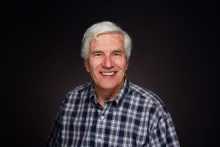
Steve Shafer was born and raised in Seattle. He graduated from Queen Anne High School in 1959 and later graduated from Ambassador College, Big Sandy, Texas in 1967, receiving a degree in Theology. He has been an ordained Elder of the Church of God for 34 years and has pastored congregations in Michigan and Washington State. He and his wife Evelyn have been married for over 48 years and have three children and ten grandchildren.
