
Greg Thomas
This transcript was generated by AI and may contain errors. It is provided to assist those who may not be able to listen to the message.
A Well, good afternoon to everyone. There are a lot of interesting parallels that exist between the beginning of the Old Testament Church and the New Testament Church. Let's begin today by turning back to Acts 7 and verse 38. Stephen is defending himself before the Sanhedrin. He talks about Moses, and he said, this is he who was in the congregation in the wilderness with the angel who spoke to him on Mount Sinai. And then it says, with our fathers, the ones who received the living oracles to give to us.
I want you to notice that it uses the terminology, the congregation in the wilderness. The word there for congregation is the same word translated church throughout the New Testament. It's ecclesia, meaning called out ones. That you and I are the ones that God has handpicked.
We realize that it's God who draws us. He's the one who calls us. He opens our minds. He's the one who works with us, grants repentance. And so, consequently, we find that the Old Testament church was a nation as well as a congregation or a church. Let's back up to that time. If you go back to the book of Exodus, and let's begin back here in chapter 19 in the book of Exodus, you might remember the story of what God did for Israel.
God, because of the blessings of Abraham, what Abraham had done, chose his people. He had promised Abraham that he would give what we would call today the Promised Land, the land of Palestine, to the Israelites. They had been in captivity for several years, over 400 years, as the Bible indicates. It came the time for God to deliver them out of captivity. God did that by a series of miracles, and we observed that earlier in this year during the days of Unleavened Bread.
There were ten signs that God brought on Egypt. God destroyed Egypt, destroyed their economy, destroyed their military, basically reduced them down to fourth or fifth-rate countries. He delivered his people, and he brought them out. We find that they traveled, and right around the time of Pentecost, they came to Mount Sinai.
If you'll notice here, beginning in verse 16, it came to pass on the third day in the morning that there were thunders and lightnings, a thick cloud on the mountain, and the sound of the trumpet was very loud so that all of the people who were in the camp trembled. Moses brought the people out of the camp to meet the Lord, and they stood at the foot of the mountain.
Mount Sinai was completely in smoke. Apparently, the top of the mountain may have been volcanic or just the very presence of God, but it says here it was in smoke because the Lord descended upon it in fire. So God came down in fire with brilliance, but he was surrounded by a cloud by smoke so that the Israelites would not really see his glory.
They could tell there was a power there. Going on here in verse 18, it, smoke ascended like the smoke of a furnace and the whole mountain, and when the blast of the trumpet sounded loud and long and longer, Moses spoke, and God answered him by a voice. We discover that God spoke to these people. If you'll come on over to verse 18 of this chapter, all the people witness the thundering, the lightning, the flashes, the sound of the trumpet, and the mountain smoking, and when the people saw it, they trembled and stood afar off.
The very power of God was manifested to them. This mountain looked like it was on fire, smoke, the voice of God speaking, and they said to Moses, you speak to us and we will hear, but let not God speak with us lest we die. So they were afraid of God, even though they heard his voice. So there wasn't any of them there who could not say that they didn't know that there was a God, that he came down in power and glory.
This wasn't something that any human being could do. It was something that God himself did. Back here in the book of Deuteronomy chapter 5, we have a reiteration of the Ten Commandments when the second generation came into the Promised Land. Remember the older generation? Those who were over 20 died.
Moses is rehearsing with the people. In verse 23, he saw it was when you heard the voice from the midst of the darkness, Deuteronomy 5.23, while the mountain was burning with fire that you came near to me and the heads of your tribes and your elders, and said, Surely the Lord our God has shown us His glory, His greatness, and we have heard His voice. From the midst of the fire, and we have seen this day that God speaks with man, and yet He still lives. Verse 26, it says, For who is there of all flesh who have heard the voice of the living God speak, from the midst of the fire, as we have and lived?
So they asked Moses to go out and speak to God because they were afraid.
There was a healthy fear here. They knew that God was all-powerful. They could see His power being manifested. Notice what God says here in verse 28. Then the Lord heard the voice of the words when you spoke to me, and the Lord said to me, I have heard the voice of the words of this people, which they have spoken to you. They are right in all that they have spoken.
But notice God's lament here. God, in looking at the people, said, Oh, that they had such a heart in them that they would fear Me and always keep all of My commandments, that it might be well with them and with their children forever.
They feared God in a certain extent. They were afraid of God. They saw His power and His glory.
But God wanted them to fear Him in the sense of obeying Him, that their fear would move them to obey. But He said the problem was they did not have the heart. They did not have the nature to be able to do so. Now, let's say there's a good likelihood that when God established the covenant with ancient Israel, appeared to them on Mount Sinai, that it was the day of Pentecost.
There's some debate about that, but it appears that that's a logical conclusion.
God established His covenant. You can jot down Exodus 24. When God gave the Ten Commandments in chapter 20 of the book of Exodus, chapter 21, 22, and 23, contained the statutes and judgments.
Then God established a covenant with them in chapter 24.
What lessons can we learn from how God dealt with ancient Israel and establishing the Old Testament covenant with the house of Israel? You see, they were His people. There was no other nation that God was working with. God chose them, just as God has chosen us. Well, first of all, you find that God chose them not because of their own goodness, not because of any righteousness on their part, but because of His promise to Abraham. God made a promise to Abraham, and He was going to fulfill that promise by bringing them into the Promised Land. When God brought them out of Egypt, He did so by power. There was power, there were signs and wonders. God destroyed Egypt. Actually, you can go through and you'll find that the fear and dread of God and of Israel came on the nations. When they started to go into the Promised Land, the nations that they confronted, many of them trembled and feared because of Israel, because they heard what God had done to the other nations and to Egypt.
And so, God's fear not only was magnified to the Israelites, but also to the Gentiles at that time.
Now, God demonstrated very vividly that He was God. These were His people. That they were chosen by what He did, by a series of miracles culminating here. And yet, we know for 40 years, God continued to perform miracles. He gave them manna every day. He provided quail for them.
He made water out of rock. Their clothes did not wear out. He brought them into the Promised Land, and He fulfilled the promise that He'd made to Abraham. Now, with that in mind, let's go back to the book of Acts, Acts 2. Let's take a look at the New Testament Church and how it began.
Acts 2, beginning in verse 1, this specifically tells us when the day of Pentecost had fully come.
They were all with one accord in one place. So, I want you to notice the unity they had. There were 120 of them in the upper room. They were in complete accord with one another.
Suddenly, it says, there came a sound from heaven as of a rushy, mighty wind, filled the whole house where they were sitting. Then there appeared to them divided tongues as of fire, and one sat upon each of them. They were all filled with the Holy Spirit, and began to speak with other tongues, in other words, in other languages, as the Spirit gave them utterance.
So, the New Testament Church began on the day of Pentecost.
Now, in 1 Corinthians 12, hold your place here, but in 1 Corinthians 12, 13, we read this. I am in 2 Corinthians, and it doesn't read the same.
For by one Spirit you were baptized into one body, whether Jew or Greek.
So, it is the receiving of the Holy Spirit that makes you a member of the body of Christ, or of the Church. The fact that in Acts 2, God filled them with the Holy Spirit, this is when God started the New Testament Church. It started on the day of Pentecost at that time.
I want you to notice it started with power, with signs and wonders. Now, picking up the story in verse 5, it says, Now there were dwelling in Jerusalem devout men from every nation under heaven.
Recognize this, Pentecost was one of the major festivals that the Jews and the Israelites from all over the world would come to. So, there were thousands of people there, could have been hundreds of thousands, who were assembled together in Jerusalem. It says, When this sound occurred, the multitude came together and were confused, because everyone heard them speaking in his own language. And they were all amazed and marveled, saying to one another, Look, are not all these who speak Galileans? And how is it that we hear each in our own language? You'll notice the margin in our own dialect, not only just their own language, but some of them heard southern, others heard northern, some may have heard western, whatever it might have been. But they all heard them in their own dialect, in which they were born. There were Parthians, Medes, Eilehemites, dwelling in Mesopotamia, Judea, Cappadocia, Pontius, Asia, Phrygia, Pamphylia, Egypt, parts of Libya, Cyrene visitors from Rome, both Jews and Proselytes. Cretans and Arabs, we hear them speaking in our own tongue the wonderful works of God. So not only was the miracle in that God poured out his Spirit upon them, gave them the ability to speak in tongues, but the miracle was with the hearing, likewise. Because they all heard the apostles speaking in their own language. And so there was a cross miracle here.
As you know, Peter gets up, they said, well these men are drunk, that's why all this is going on. Peter gets up, preaches a very powerful sermon, and we find that there were 3,000 people added to the church on that day. Now, in verse 40, with many other words he testified and exhorted them, saying, be glad, or excuse me, saying, be safe from this perverse generation.
In verse 41, those who gladly received the word were baptized. And that day about 3,000 souls were added to them. And they continued steadfastly in the apostles' doctrines and fellowship in the breaking of bread and in prayer. And fear came upon every soul. And many wonders and signs were done through the apostles. And then you find that this was a pattern that continued in the, especially the early days and years of the New Testament church.
Chapter 3 is the fascinating story of the lame man who for 40 years had been lame, sat at the gate called Beautiful. Peter came along, he was a beggar, he was looking for money. Verse 6, Peter said, Silver and Gold I do not have, but what I do have I give you in the name of Jesus Christ of Nazareth. He said, Rise up and walk. And the man was healed.
Now, there was no way of gaining singing this miracle. I mean, they all knew that this man was lame. They'd seen him for years, decades, lying out at the gate called Beautiful. And the religious leaders of that day became aware of the apostles and what was going on because of the miracle that took place. And they were hauled in before them. In chapter 4, you find Peter and John were arrested at that time. And they told them not to preach any longer in his name. And yet, you find that they did. You see, here was a notable miracle. And the religious leaders said, you know, we cannot deny this miracle took place.
It happened. We can't deny it. But we don't want them to prosper. You see, they looked upon the apostles as competitors. They became jealous of them. We find that there were thousands of people by this time, around 5,000 who were converted. There were only a few thousand, maybe eight or ten thousand people who were of the sect of the Pharisees. So here was a group that all at once, almost overnight, boom! There they are. It's a church. And God is backing them with power and with glory. In chapter 5, there was another miracle that took place here. If you remember, Ananias and Sapphira lied. They sold a property, came in and said, here, we're giving you all the money. And they lied. And both of them fell down dead before the apostles' feet. And this was noised abroad. And in verse 11, so great fear came upon the church and upon all who heard these things. And then in verse 12, and through the hands of the apostles, many signs and wonders were done among the people, and they were all with one accord in Solomon's porch. And the people esteemed them highly, we find. So they continue to preach. Finally, the religious leaders plan to kill them. If they won't stop preaching, we'll put an end to this. We'll just kill them. We'll get rid of them. Well, Gamaliel counseled them that if this thing is of God, you'll be fighting against God. If it's not, it'll repeat her out. In chapter 6, there were seven deacons chosen. Among those deacons were Stephen and Philip. Stephen, in chapter 7, we discover was a man of faith. Well, actually, verse 8 of chapter 6, Stephen, full of faith and power, did great wonders and signs among the people. Verse 10, they were not able to resist his wisdom. Chapter 7, he condemns the Sanhedrin. He gives an overall history of what had occurred with ancient Israel.
Verse 38 is where we read about the congregation in the wilderness.
And he called them stiff-necked, uncircumcised in heart. They stoned him, and yet he had performed many signs of wonder. God was with him, and yet God allowed him to die and to be martyred. Philip, we remember, performed signs and wonders.
But I want you to notice chapter 8.
Chapter 8 here, verse 1, now Saul was consenting to the death, or his death, at that time a great persecution arose against the church that was at Jerusalem. They were all scattered throughout the region of Judea and Samaria, except the apostles. The apostles stayed in Jerusalem, but many of the other people were scattered. And wherever they went, they went preaching Jesus Christ. Verse 4, therefore those who were scattered went everywhere preaching the Word.
Philip went down to Samaria. They were converted. You might remember here the Simon, the magician or the sorcerer, wanted that power that he saw that Philip had and offered him money for it. He also went and preached through the Ethiopian eunuch. We could go through the rest of the book of Acts, and you'll find there were many occasions when God backed up his apostles with signs and wonders and miracles. That's how the New Testament church started.
I want you to stop and think about the parallel between the Old Testament and the New Testament. In both cases, there was a fulfillment of the promise to Abraham. Number one was a physical promise that he would bring the physical descendants into the Promised Land. The second promise was one of grace, that through Christ, the descendant of Abraham, that salvation would be offered. So God began to fulfill that promise here, as we see in the book of Acts, starting on the day of Pentecost. The Israelites were chosen to be an example. They were to be a light to the world.
When people would come and ask, why don't you have the same problems we do? Why don't your children die prematurely? Why are you healthy? Why are you healed when you're sick?
Why don't you have a standing army? All of these things, they would be able to tell them and preach the truth. The only problem was they never did do that, and they compromised, and they started following the gods of the nations around them. Consequently, you find that they began to have problems. Now, in the early New Testament church, they were chosen likewise by God to go to the world to preach the gospel. Just as ancient Israel was to be a light, so you find we have been called, we have been chosen, the early New Testament church certainly was, to go to the world. The apostles, the twelve apostles, and we know James was killed, but the rest of them went out. As far as we know, they covered the known world at that time.
They covered into Africa, North Africa, up into Europe, over to India. They covered a huge area, preaching the gospel. Literally, there were tens and hundreds of thousands of people. God raised up Paul and Barnabas likewise, and God backed them. Now, you might remember the church began on the day of Pentecost. There were thousands of people who were there. When they went back home, they went back and they spread the word. When the church was persecuted, even though that was something you wouldn't think was logical, they were scattered, and they went and preached the word. There are any number of parallels that we could draw from all of this, but both the Old Testament and the New Testament church began with power. God backed it with authority. He backed His servants with authority. Moses was backed with authority, and so were the apostles when the church first began. Now, God used them to raise up a work and to do a work. Now, brethren, you and I today are the direct lineage of that early New Testament church. The early New Testament, or first century church, sometimes is called the primitive church. You and I keep the same customs they kept. We keep the same doctrines they observed. We obey, and you follow the customs that Jesus Christ implanted within His church. We live here at the end time. We have an opportunity at the end time to take the gospel to the world. Now, we don't see spectacular miracles taking place, but we need to realize that just as God, through His power, opened doors, performed signs and wonders, so God is doing so today. If there's one lesson that the early New Testament church learned and the Old Testament church had to learn, that is, you have to rely upon God to accomplish whatever God has given you to do. The same thing is true of us today. God has laid upon us the mantle of responsibility of going to this world with the gospel. Now, how are we going to do that? Not under our own power, under our own esteem. We don't have the strength of power.
The early New Testament church started. Do you think that Peter getting up and preaching on the day of Pentecost, that he would have had as much of an impact on the people if God had not performed some type of miracle and signs and wonders? God absolutely put his stamp of approval on that group by the miracles and signs and wonders, just as he did with ancient Israel. God is backing us today with the same power. You and I will be observing the day of Pentecost here shortly. The day of Pentecost is a day that pictures the pouring out of the Holy Spirit, God giving that spirit to the first fruits, and that God is going to work through his first fruits. Israel did not have the heart to do what God wanted them to do. God corrected that problem through the giving of the Holy Spirit. You and I have our natures changed, our hearts are changed, and we are to obey God with all of our heart. So, brethren, we're in just a few days here on the 12th. We're going to be keeping the day of Pentecost. I certainly hope that all of us begin to think about, concentrate on, and realize what a privilege it is for us to be called today to be a part of that lineage of the Church, to be a part of those who have the responsibility of going to the world, recognizing that we don't have the power to do it, but it's got to be done through the power, might, and authority of God, and that God will do that. So, let's look forward to the day of Pentecost and to the meaning of that day and the fact that we understand that and be able to meet together and thank God for the understanding that He has given us.
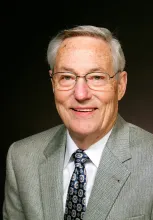
At the time of his retirement in 2016, Roy Holladay was serving the Operation Manager for Ministerial and Member Services of the United Church of God. Mr. and Mrs. Holladay have served in Pittsburgh, Akron, Toledo, Wheeling, Charleston, Uniontown, San Antonio, Austin, Corpus Christi, Uvalde, the Rio Grand Valley, Richmond, Norfolk, Arlington, Hinsdale, Chicago North, St. Petersburg, New Port Richey, Fort Myers, Miami, West Palm Beach, Big Sandy, Texarkana, Chattanooga and Rome congregations.
Roy Holladay was instrumental in the founding of the United Church of God, serving on the transitional board and later on the Council of Elders for nine years (acting as chairman for four-plus years). Mr. Holladay was the United Church of God president for three years (May 2002-July 2005). Over the years he was an instructor at Ambassador Bible College and was a festival coordinator for nine years.
