

The Passover
Richly Demonstrates God's Love and Mercy!
Given on
Given in
Downloads
Downloads
To download a file, right-click (or long press) a link above and choose Save As.
In a world going mad, we are assured of God's love and mercy.
Transcript
This transcript was generated by AI and may contain errors. It is provided to assist those who may not be able to listen to the message.
Brethren, today I want to talk about our approaching the spring holy days. Pass over into spring holy days. I'm hoping that we're going to have a nice look at that subject and the beauty of what God has for us when we're talking about the holy days. But I want to have a little bit of context for that discussion, a little bit of a contrast for that discussion. Some of this I've made mention in some of the Bible studies we've had midweek, but I thought I would just put it all together here because I think it's very important to understand the context of our society, to understand what's going on around us. I'm not going to turn there, but in Micah chapter 3, and Micah wrote around 700 BC, benchmark there, 700 BC, Micah wrote a prophecy that says, the night will close around you, cutting off all your visions. Darkness will cover you. That's Micah chapter 3 verses 6 and 7, New Living Translation. Is that happening right now? Is darkness all around us? Is darkness covering us as a society? Still in Micah chapter 3 verse 5, again I'm not going to turn it out. I'll just read a portion. God says that the people, the leaders of the nation, the political leaders, the religious leaders are twisting justice, are twisting the ways of God. And in Micah chapter 3 verse 5 says, these leaders are leading my people astray. Leading my people astray. In Micah chapter 3 and verse 4, it says that they have made their deeds evil.
Made their deeds evil. Now, I've read to you on a number of occasions, John chapter 10 and verse 10. I'll read just the first portion of that here, John 10. 10. The thief does not come except to steal, to kill, and to destroy. That's exactly what Satan is wanting to do, and has been doing, for 6,000 years. But there is a crescendo taking place in our society today. A very disturbing crescendo. The world seems to be going mad afresh every day. And, of course, at this time of the year, Satan is especially outraged at the redemptive value of the death and resurrection of Jesus Christ. Satan is outraged with every step in God's beautiful plan of salvation for all of mankind. Satan wants mankind to think that by himself he can solve his own problems. But God, in His mercy, has revealed to us in His Word that's not possible. Again, I'll quote these for you. I'm not going to turn to these. Proverbs 14 and verse 12. Proverbs 14, 12. There is a way that seems right to a man, but its end is the way of death. And so, man today is doing all the, especially in this country, all the social engineering in hopes that things will get better. And all man is doing is making things worse. 2 Timothy 3, 7. Again, I'll read this for you. 2 Timothy 3, 7. Always learning and never able to come to the knowledge of the truth. Now, in a few minutes, we're going to spotlight God's plan of salvation. But I want to give you a few things out of the current news that show Satan's plan of destruction. And again, doing this to show a contrast. Doing this to show a context.
Item number one. And this is, this can be Googled. You can see this on your own when I give you, read the information here. You'll be able to know what to use to Google this. Conversation. During a debate in Congress over the Equality Act. The Equality Act is a measure that deals with anti-discrimination laws concerning the LGBTQ movement. Sexual orientation, sexual education in our schools and so forth. Two different legislators were discussing this. One, a representative Greg Stube, a Republican from Florida, upset some Democrats when he confirmed that God makes boys and girls unique.
And I quote, this is what Representative Stube said. Quote, when men or women claim to be able to choose their own sexual identity, they're making a statement that God did not know what he was doing when he created them.
The gender confusion that exists in our culture today is a clear rejection of God's good design. He goes on to say, whatever a nation's laws no longer reflect the standards of God that that nation is in rebellion against him and will inevitably bear the consequences. We are seeing the consequences of rejecting God here in our society today.
And when you listen to that clip, I will give you a little bit of what he said. When you listen to the clip, here's a man who's quoted the Bible on several occasions in this discussion in Congress, did a really good job with it. And then a prominent Democrat, Representative Jerry Nadler of New York, said this. And I quote, what any religious tradition describes as God's will is no concern of this Congress.
You know, after this took place, as I was making mention last week in Chicago, I don't listen to a whole lot of conservative talk radio, mostly because it gets me mad. Yeah, I don't want to be mad. I don't want to go get my musket and start a movement. But I want to be mad. I don't want to be mad. I don't want to get my musket and start a movement.
But I was, you know, Mary and I were listening to some of this as we were going about doing our various things. And it was interesting to hear the number of Bible reading Americans who got on these conservative talk, this particular talk radio program. And we're talking about how America is lost its way. How America can't be blessed by God when we're doing this. I mean, caller after caller. And these, I don't think any of these people were in the church, but they see the handwriting on the wall.
Item number two. You all remember what took place on January the 6th with the attack on the White House, or the Capitol building, I should say. Three days before, on January the 3rd, the new Congress was meeting for the very first time. And they had a gentleman, a representative, Emmanuel Cleaver, a Democrat from Missouri, who's also a minister. He gave an opening prayer for this new Congress. Now, I'm quoting to you from our Beyond Today magazine, the current issue, an article written by Darris McNeely. Let me read this quote would be, as is traditional, the newly elected Congress was convened on January 3rd and opened with a prayer.
The prayer was delivered by representative Emmanuel Cleaver, a Democrat of Missouri, an ordained minister. He asked, may the Lord lift up the light of his continents upon us and give us peace, peace in our families, peace across this land. And dare I ask, O Lord, peace even in this chamber. So far, so good. But he then concluded with, we ask, may the Lord lift up the light of his chamber. So far, so good. But he then concluded with, we ask it in the name of the monotheistic God, Brahma, and God known by many names, by many different faiths.
Amen and a woman. His woman comment garnered some attention and rightly deserved ridicule. The term amen means truly or so be it and has nothing to do with male or female, as if it needed balancing out. Note again, though, what came before the discussion of the Brahma. The Brahma he called upon as the chief Hindu creator deity. And further reference to God known by many names includes any other gods from any other belief system among mankind.
This congruent guilear's men invoked the name of the pagan deity and invoked any other pagan god or goddess one chooses to believe in. This was a desecrating sacrilege against the god of Abraham, the god of the Bible, invoked by the founding fathers. The god of Abraham, the god of the Bible, is the god intended in the national motto and god we trust. He's the same god meant in the College of Allegiance declaring the United States one nation under God.
Scripture warns us that God will not be mocked, that all will reap consequences for what we do and say. God's will is of no concern to this congress. This congress is praying, or at least as one gentleman is praying, to various pagan deities. Item number three. Coca-Cola raised some eyebrows recently for promoting an online training seminar that urged employees to try to be less white in order to combat racial discrimination. Slides from the training seminar shared online this week featured tips on how to tone down whiteness. The tips to be less white include to be less arrogant, be less certain, be less defensive, be more humble, and break with white solidarity. Another slide tells viewers that in order to confront racism they must understand what it means to be white, challenging what it means to be racist.
Now, this came from Fox Business February 22nd, an article entitled Coca-Cola staff told an online training seminar to be less white. You know, brethren, how would it work in a society if we told black people to be less black? How would it work in our society if we told Hispanic people to be less Hispanic?
Or if we told Asian people to be less Asian? Wouldn't that not be racial discrimination? Absolutely. So why isn't it racial discrimination when we tell people to be less white? Again, it's all the social engineering. Last item, item number four, this comes from the New York Post July 1st, 2016. This has got some age to it. Five years. An elite Manhattan school is teaching white students as young as six that they're born racist and should feel guilty benefiting from benefiting from white privilege while heaping praise and cupcakes on their black peers.
Administrators at the Bank Street School for Children on the Upper West Side claim it's a novel approach to fighting discrimination and that several other private New York schools are doing it. The K-8 school of 430 children is separating whites in classes where they're made to feel awful about their whiteness and all the kids of color in other rooms where they're taught to feel proud about their race and rewarded with treats and other privileges.
The program these parents say deliberately instills in white children a strong sense of guilt about their race. Some kids come home in tears saying, I'm a bad person.
You know, racism in any way, shape, or form is wrong. Racism is evil. I don't care what color it's against or what color perpetrates it. It's wrong. It's evil. But what we see here is people saying, well, let's knock the white folks down and make others feel better. Does that work? Is that any good? Will these white kids grow up feeling a sense of that everybody's equal before God? Of course not. So, brethren, the world is going mad. This nation is going mad. At the hands of Satan the devil. That's why it's so important for us to rejoice at this time of the year. I think you can appreciate why I spent the time I spent more time than normal to introduce the subject. To understand the context, the content of what's happening in our society, the content of what's happening in our society around us, and to fully appreciate what God has for us. What God has for us. Again, I quoted John 10.10 if he comes not for except to steal, to kill, and destroy. But notice the last part. John 10.10. I have come that they might have life and they might have it more abundantly. That's what we want. We don't want to tell any child black, Hispanic, Asian, white how less they are. We don't want to do that. That's not proper. That's not good. We want to let everybody know that they have a tremendous future to look forward to in the family of God. We want to take a look not at Satan's society and how they're trying to do all these things with social engineering. But take a look at what God has. What God has in mind. What God has instilled. I've got in my notes here Jeremiah 29.11. I'll just reread just that one verse we heard it discussed in the sermon today. Jeremiah 29.11. For I know the thoughts I think toward you, says the Lord, thoughts of peace and not of evil, to give you a future and to give you a hope. That's what God wants. Not what society is trying to engineer. God wants through God's way of doing things. Through God's laws of love. Thoughts of peace. Thoughts of a brilliant and a bright future and bright hope. With that in mind, let's take a look at a couple of other scriptures I want to kick off here before I give you the point today. I know I'm spending more time than normal, but let's go to Hebrews chapter 12. Hebrews chapter 12. And we do want to turn there.
Hebrews chapter 12 verses 1 through 3. Hebrews 12 verse 1. Therefore, as we know, as we are good students of the Bible, when you see that word, therefore, you take a look at what precedes it immediately. And that's the faith chapter. Therefore, we also, since we are surrounded by so great a cloud of witnesses, again, those people, men and women, we see in chapter 11, the faith chapter, let us lay aside every weight and the sin which so easily ensnares us. And let us run with endurance the race that is set before us. Verse 1 is a verse that deals with an unleavened bread theme. Let us de-leaven ourselves. Let's get rid of the sin. Let's bring in God's righteousness. Not man's, not man's social engineering, but the way God views things. Verse 2 and verse 3. As verse 1 talked about an unleavened bread theme, verses 2 and 3 talk about a Passover theme. Looking unto Jesus, the author and finisher of our faith, who for the joy that was set before him endured the cross, despising the shame, and has sat down at the right hand of the throne of God. Notice this. Jesus Christ, for the joy that was set before him, His fighting Satan 24-7, 365, His fighting Satan when the final 24 hours of his life, when he went through six different trials, when he went through all the mental anguish, and then was physically tortured, all of that's not joyous. What's joyous is understanding what He's doing for all of us, helping us to be a part of the family of God, realizing our sins could be forgiven, realizing we could be in that tremendous family. That's the joy. That's what was in His heart and mind. Verse 3, For consider Him, Jesus Christ, who endured such hostility from sinners against Himself, lest you become weary and discouraged in your souls. Brethren, we're living in a time where it could be so easy. You know, as I've talked about some of the news items, like the ones we covered today, you know, after services, probably some of you will come up to me and say, you know, Mr. Nelsandro, we're told in the Bible to watch, and I'm trying to watch, but it's so hard to watch the news with what was going on in this world, what's going on in this society. It's so hard. It's so, it just weighs on me to see what's happening. It's so wrong. It's so evil. And as the Scriptures say, people are calling evil good and good evil. It just weighs on us. But here we see, lest we become weary and discouraged, look to Jesus Christ. Look to our Passover. Look what He endured. And we have not endured anything like He endured, but He kept His mind on the positive. He kept His mind on God's goal. And that's exactly what we need to be doing. 1 Corinthians 11. 1 Corinthians 11.
You know, we'll be going through this chapter on Passover evening. But there's something here that we want to take note of. And again, I've discussed this with you on a number of occasions, but it's good to keep you in remembrance, as the Apostle Paul said. Paul told Timothy, it's good to keep the brethren in remembrance of these things. 1 Corinthians 11, verses 27 and 28. 1 Corinthians 11, verses 27 and 28. Therefore, whoever eats this bread or drinks this cup of the Lord in an unworthy manner will be guilty of the body and blood of the Lord. Now, in one sense, all of us are unworthy. We're sinners. We're horrible sinners. I don't care how good you think you are or I think I am. We are horrible sinners. So, in that one sense, we're unworthy. But by the same token, that also means we're worthy to take the Passover. The Passover was designed for people like you and I who are sinners.
Verse 28. But let a man examine himself. We are to examine ourselves not to be depressed and discouraged, but we are to examine ourselves so we fully appreciate our need, our deep need for forgiveness, for mercy, for God's grace. And once we understand that, and then it says, and so let him eat. Not walk away from the Passover, but once we understand our tremendous need for God's mercy and grace, so let him eat of that bread and drink of that cup.
And so that's what we're doing partially today, taking a good look at what God has for us, the beauty of his plan. And my point took me a long time to get to this. I budgeted more time than normal. The point, the theme for the sermon today, is this. The Passover richly demonstrates God's love and mercy. The Passover richly demonstrates God's love and mercy.
With social engineering, you see where one human being wants to put other human beings down, wants to hurt other human beings in hopes it helps other human beings. How is that good? That's well, that's of Satan. That's not of God. The Passover richly demonstrates God's love and mercy. Let's examine the things today, and I've only got two points under this theme, but let's examine the things that give us hope, encouragement, and peace of mind this Passover season. And God so wants you as his children. Jesus Christ, our elder brother, so wants us to be full of hope and encouragement and having peace of mind. Let's take a look at Romans chapter 15.
Romans chapter 15.
Romans chapter 15 and verse 4. For whatever things were written before were written for our learning, that we through the patience and comfort of the Scriptures might have hope. God's Word, not the edicts of man, not the directives of man, not the laws of man, the Scriptures give us comfort, the Scriptures give us hope.
So the two points I have. Point number one. Jesus Christ's sacrifice paid the penalty in full for your sins. Jesus Christ's sacrifice paid the penalty in full for your sins, for my sins, for all of our sins. That gives us hope. That gives us encouragement. That gives us peace of mind. We realize we're on the right path. We're heading for eternal life. We're heading for the kingdom of God. We're going to live forever. I look forward to not having to worry about this body. You know, recently I had operations on both of my eyes, and then the left eye needed a little extra help, so they did a laser surgery on the left eye, and today I'm wearing my brand new glasses. And yet, both of these lenses have scratches in them from the factory. I need to take these things back and get them to work on it. So again, try as mankind would like. They just don't get it right all the time. After paying thousands of dollars, at least my insurance company did, but God's way works. God's way gives us hope and encouragement. And of course, Jesus Christ, our elder brother, talking about gift-giving, as we may mention in the sermon today, there's no greater gift in the world than what Jesus Christ, our brother, did for us. No greater gift in the world than what Jesus Christ did for us. Let's take a look at John chapter 1.
You know, I don't know how many of you who've got brothers or older brothers. My brother was eight years older than I. He's been dead a long time. He died back in 1980 at the age of 36. But I remember as I was growing up, you know, I wasn't a very handy guy, but my brother was. My brother was much like my dad. My dad was a mechanic. My brother was very gifted along those same lines. And remember, he used to, you know, go to our garage and make various things for me out of wood. Remember this one rifle he made for me shot the pieces of ender tube made like big rubber bands. And I was kind of the plague of the neighborhood there for a while with that gun. But, you know, he was able to do that. And, you know, as an older brother, you know, he was looking out for me and trying to help me in various ways. And that's what older brothers do. Jesus Christ looking out for us. John chapter 1, verse 1.
is greater than all of our lives put together.
As we ask for his help, he gave us the opportunity to become children. And now we are the children of God.
And now we have our names written in that Lamb's Book of Life. Verse 29. The next day John saw Jesus coming toward him and said, Behold the Lamb of God who takes away the sin of the world. The Lamb of God who takes away the sin of the world. Such a beautiful thing for us to understand who Jesus Christ is. What his mission was. Jesus Christ was on a mission sent from God to give us life. So our sins would be forgiven. We would receive God's Holy Spirit. We would live as he lives in us. A new way of life. Mark chapter 1. We've covered this on a number of occasions. But again, this sermon here is not about new truth. It's about beholding the beautiful truth God has given us and fully appreciating it. Mark chapter 1, verses 14 and 15. A good summary of what Jesus Christ came to do. Mark chapter 1, verses 14 and 15.
Verse 14. Now, after John was put in prison, Jesus came to Galilee, preaching the gospel of the kingdom of God. The good news of the kingdom of God. And saying, the times will fill. The kingdom of God is at hand. Repent. Change. Turn around. Don't go the world's way. Don't try any of their social engineering or political engineering. No, you need to repent. You need to go God's way. And believe in. Have faith in the gospel. Now, this word, gospel, is Strong's number 2098. 2098. The low anita Greek-English lexicon of the New Testament defines the word gospel. Gospel can be defined, according to low anita, as the good news. But it also has these other definitions. News that makes one happy. That's the gospel. Or information that causes one joy.
Or words that bring smiles. And lastly, according to low anita, a message that causes the heart to be sweet. Those are all powerful things. Those are all beautiful things. News that makes one happy. Information that causes one joy. Words that bring smiles. A message that causes the heart to be sweet. Now, we see what Christ's mission is. To be the Lamb of God. To give us life. To give us hope. He came preaching that beautiful message. On the other hand, who are we? Let's take a look at Psalm 40. We know who we are, but it's good to, again, as we're examining ourselves, to touch base with us. Psalm 40 in verse 12. The next two scriptures, as I read these, it's easy to see why we can be overcome. By sorrow, by despair, by discouragement, by hopelessness. God doesn't want us to stay there. He wants us to see where we're at. Psalm 40 in verse 12. For innumerable evils have surrounded me. My iniquity is the only thing that I can do. Psalm 40 in verse 12. For innumerable evils have surrounded me. My iniquities have overtaken me. So I'm not able to look up. They are more than the hairs of my head. Therefore, my heart fails me. I think that pretty much summarizes what many people think about as they are preparing for the Passover. As we're examining ourselves, Psalm 40 verse 12 pretty much sums it right up, doesn't it? My iniquities have overtaken me. We think about what Paul said in Romans chapter 7. The things I don't want to do, those are the things I'm doing. Things I want to do, I'm not doing those things. And here's a man who was an apostle of God. In the ministry of God, he was a baptized member for more than 20 years. At that point, he said those things.
Romans chapter 6. The baptismal covenant chapter. This is the fine print. Before I baptized somebody, I asked them to read this chapter over several times. Very last verse of Romans chapter 6 verse 23. For the wages of sin is death, but God doesn't want us to die. Christ said he came to bring us life abundantly. The wages of sin is death, but the gift of God is eternal life and Christ Jesus our Lord.
So we can take a look at this Passover season, the days of unleavened bread, and show the rich mercy, the love and the mercy that God is showing us, demonstrating to us. Colossians chapter 2 and verse 13.
These scriptures to me are so encouraging. Colossians chapter 2 and verse 13.
Colossians 2.13. And you being dead in your trespasses, being dead in your trespasses, and the uncircumcision of your flesh, he has made a life together with him, having forgiven you all trespasses. And you are truly repentant. Total forgiveness. Alive as Christ is alive. Total forgiveness. No matter what you've done, how bad, how often. If you are truly repentant.
If you are truly repentant, God is there to forgive you.
We've got Hebrews chapter 4. Let's just turn there. Hebrews chapter 4 verses 14 through 16.
No. You know, Jesus Christ, one of the scriptures we'll read from the book of Luke on Passover evening is how Jesus Christ looked forward to the Passover with those men, with great anticipation. Those men weren't even converted yet. Just moments before they were talking about who would be the greatest. They had their issues, but Jesus Christ loved them, realized what He was doing for them, for the joy that was set before Him. And now notice what we have going on for us. Hebrews chapter 4 verse 14. Hebrews 4, 14. Seeing that we have a great high priest who has passed through the heavens, Jesus the Son of God, let us hold fast our confession. Let's not walk away from the truth. Let's not say and tell us we're too unworthy to attend church. For we do not have a high priest who cannot sympathize with our weaknesses, but was at all points tempted as we are, yet without sin. Let us therefore come boldly to the throne of grace.
Boldly to the throne of grace, that we may obtain mercy. But why do we need mercy? Because we're sinners. Because we've fallen short of God's glory. But it says we should come boldly to that throne. Not hesitantly, come boldly. Yes, we need to have a repentant frame of mind. We need to have an unleavened frame of mind. God doesn't just forgive people who just ask for it without changing. But once God sees where we're coming from, that we truly are sorry. We've got godly sorrow. And we're trying to make, you know, follow God as best as we can. With His help. Then we can boldly come to that throne of grace to obtain mercy. And then to find grace to help. God knows how weak we are. He knows we need help. Which brings us over to Daniel chapter 10, book of Daniel.
Scripture that has always meant a great deal to me. Probably to you as well. Daniel chapter 10 and verse 12.
Then He said to me, Do not fear, Daniel, for from the first day that you sent your heart to understand, and to humble yourself before your God, your words were heard, and I have come because of your words. Brethren, again, no matter what you've done, how often you've done it, how bad it's been, if you have this humble frame of mind, this repentant frame of mind, at that moment, as it says here in verse 12, from that first day you set your heart to understand. You set your heart to repent. You set your heart to come close to God. You saw what you were. You saw your desperate need, but you saw the provision God had for you. When you humbled yourself like that, your words are heard. Your prayers are heard.
I know many times people fight guilt. I was going through some old sermon notes in preparation for this year of sermons. I came across something I gave years and years ago. I think you understand what an acronym is. An acronym is when you take a word and you take the various letters from the word, and each letter stands for something. And I saw this acronym, the word ACT, A-C-T. Each of those letters, A and C and T, stand for something. Talking about guilt. Letter A. If you want to get rid of our guilt, letter A, admit your sin. Admit your sin. Don't run from it. Admit it. If you want to get rid of the guilt, admit it. Let's go to Psalm 32.
We need to act. Psalm 32. Psalm of David. Psalm 32 and verse 5. I acknowledge my sin to you, and my iniquity I have not hidden. I said I will confess my transgressions to the Lord, and you forgave the iniquity of my sin. Boy, that's a great verse, isn't it? I acknowledge my sin to you and my iniquity I have not hidden. I will confess my transgressions to the Lord, and you forgave me the iniquity of my sin. He acted on this. Letter A for the word act. Admit your sin. Letter C stands for change. Let's go back to that Romans chapter 6 again. Romans chapter 6.
Verse 1. Romans 6 verse 1. What shall we say then, shall we continue in sin, breaking God's commandments, that grace may abound? Certainly not! We are not to continue to break God's commandments. How shall we who have died to sin live any longer in it? We are to have died to sin. Verse 12. Therefore, do not let sin reign in your mortal body, that you should obey it in its lusts. So letter C, we're talking about change. We're not going the way of Satan. We're not going the way of the world. We are repenting. We're not allowing sin to reign in our bodies. We drop down to verse 17 and 18. But God be thanked that though you were slaves of sin, yet you obeyed from the heart. You obeyed from the heart that form of doctrine to which you were delivered. And this is what God is looking for. He's looking at our hearts. Your heart, my heart. You obeyed from the heart that form of doctrine to which you were delivered. And having been set free from sin, you became slaves of righteousness. You were set free from sin. Please think about that. If you are the kind of person who just holds guilt, you have been set free from sin. You are living God's way of life. You're not perfect. You're still... we're all still very weak. None of us are perfect. I've done a number of funerals in my life. I've never yet stood over a casket with somebody laying there and died perfect in the faith.
Okay, letter T. We've gone through A in Midrassim. Letter C changed. Letter T, throw away the guilt. Throw away the guilt. Romans chapter 8 and verse 1.
Romans chapter 8 and verse 1. There is therefore no condemnation to those who are in Christ Jesus, who do not walk according to the flesh, but according to the Spirit. God tells us you are not condemned because you have repented from the heart, because you are obeying from the heart, and you have no condemnation holding over your head. None. Jesus Christ's sacrifice paid the penalty in full for your sins as you have repented of those sins.
Point number two. Last point for today. Point number two. Christians have a new lease on life.
You know, the theme today, the Passover richly demonstrates God's love and mercy, and part of that love and mercy is knowing that we have a new lease on life. Let's go to the book of Titus.
Titus chapter three. Titus chapter three, starting here in verse four. Titus 3, 4.
But when the kindness and the love of God our Savior toward man appeared. Boy, isn't that a beautiful verse? The kindness and the love of God our Savior toward man appeared. Not by works of righteousness which we have done. Echoing back to our sermonette today. Not by works of righteousness by which we have done, but according to His mercy, He saved us. According to God's mercy, He saved us through the washing of regeneration and renewing of the Holy Spirit, whom He poured out on us abundantly through Jesus Christ our Savior, and abundance of God's Holy Spirit. God only gives the Spirit to those who obey Him, right? That was Acts chapter five and verse 32.
Verse seven. And having been justified by His grace, we should become heirs according to the hope of eternal life.
God's grace leads us to eternal life. You know, some of the greatest heroes of the Bible are people who had a very checkered past. And some of those great heroes, when you take a look at the lineage of Jesus Christ, you see some of those women. You see Gentile women. You see women who had not much character at one part of their life, but then they changed and had tremendous character and became a part of the lineage of Jesus Christ. Why are those lineages of Christ in the Bible? You've got Jews, you've got Gentiles, you've got men, you've got women, you've got a little bit of everything, right? Just showing that how inclusive our great God is. God loves all mankind. And the genealogy of Jesus Christ shows that.
Galatians chapter two. Galatians chapter two.
Galatians chapter two and verse 20.
Galatians 2, 20. I have been crucified with Christ, it is no longer I who live, but Christ lives in me. Christ lives in me. You know, you might just jot down Romans chapter eight and verse nine. Where it talks about the Spirit of Christ. The Holy Spirit can be called the Holy Spirit of God, or it can be called the Holy Spirit of Christ. The Spirit of Christ lives in him, he says. And the life which I now live in the flesh, I live by faith in the Son of God who loved me and gave himself for me. To give us a new lease on life. You know, not long ago we had a baptism in the Chicago church.
A young man, I don't know, maybe it is early 20s or so. But you know, when you're baptized, and think about the day you were baptized. And lest I forget it, I wrote it in my one of my earlier Bibles, November the 15th, 1972. I don't think I ever would have forgotten it, but it's in one of my Bibles. I remember mostly who was there that day. I remember who baptized me. Dr. Albert. I remember, I think there were six people there with me and being baptized in the pool there at Ambassador Hall in Pasadena, California. But I remember, you know, you're baptized. There's one ceremony, you're baptized for the permission of your sins, for the forgiveness of your sins. After that, there's another ceremony, the laying out of hands, where the minister lays his hands on you and asks for God to give you his Holy Spirit. Then there's another ceremony that we don't see, but that takes place. After we're baptized, our sins are forgiven us. After our hands are laid on us and we receive God's Holy Spirit, then in heaven, your name was written in the Lamb's Book of Life. It's there to this day. Your name in the Lamb's Book of Life. What exactly is the Book of Life? Well, if I had to try to describe it, it's kind of like our spiritual birth certificate. Our spiritual birth certificate. It's an authoritative legal record attesting to the fact that those people whose names are written there are people who have accepted Jesus Christ as their personal Savior. Their sins have been forgiven. They've received God's Holy Spirit. They're children of God. And they're simply awaiting the resurrection. That's a record of that. Take a look at Daniel 12.
Daniel 12, verse 3, verses.
Daniel 12, verse 1. Daniel 12, verse 1.
Daniel 12, verse 2.
Daniel 12, verse 3.
So, this is what you have to look forward to because your name is in that Book of Life. Revelation, chapter 21. Almost the very last chapter. Not the last chapter, but almost next to the last chapter in the Book of Revelation. Talks about this Book of Life. Revelation, chapter 21. verse 27, last verse of that chapter.
Who's going to be in God's kingdom? Verse 27 shows. But there shall by no means enter it anything that defiles or causes an abomination or lie, but only those who are written in the Lamb's Book of Life. Got to be a true Christian in all that that means. If you're not a Christian, if you never had God's Holy Spirit, you're not going to be in that Book of Life. And I may mention your name is already in that book. How do I say? Why do I say that? Let's take a look at Philippians, chapter 4.
Philippians, chapter 4.
Apostle Paul talking to a church he loved very, very much. I doubt there was a group of people. Paul loved it anymore than the people there in Philippi.
Paul was very loving toward all the people he came in contact with, the pastor. But this group was special to him. Philippians, chapter 4, verse 3. And I urge you also, true companion, keep these women who labored with me in the gospel with Clement also, and the rest of my fellow workers, whose names are in the Book of Life. Whose names are in. They're in. They're converted. And upon conversion, your name was put in that Book of Life, and it's still there if you are a Christian who is following God. So, brethren, the Passover richly demonstrates God's love and his mercy. We've seen how Christ's sacrifice paid the penalty in full for our sins, point number one, and point number two. As a result of that, we have a new lease on life. Final Scripture. Let's go to the Book of Malachi.
Malachi chapter 3.
Talking about God's vision for us. Malachi chapter 3, verses 16 and 17.
Malachi 3, 16. Then those who feared the Lord spoke to one another, and the Lord listened and heard them. So a book of remembrance was written before him. A book of remembrance. We know it as the Book of Life. A book of remembrance was written before him for those who fear the Lord and who meditate on his name. And that's you. They shall be minds, says the Lord of hosts, on the day I make them my jewels, and I will spare them as a man spares his own son who serves him. So it's very clear how God views you. Brethren, let's make sure that we view ourselves along the same line. This Passover season, let's appreciate God's love, God's mercy, God's grace, and appreciate our path to his kingdom.
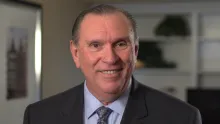
Randy D’Alessandro served as pastor for the United Church of God congregations in Chicago, Illinois, and Beloit, Wisconsin, from 2016-2021. Randy previously served in Raleigh, North Carolina (1984-1989); Cookeville, Tennessee (1989-1993); Parkersburg, West Virginia (1993-1997); Ann Arbor and Detroit, Michigan (1997-2016).
Randy first heard of the church when he was 15 years old and wanted to attend services immediately but was not allowed to by his parents. He quit the high school football and basketball teams in order to properly keep the Sabbath. From the time that Randy first learned of the Holy Days, he kept them at home until he was accepted to Ambassador College in Pasadena, California in 1970.
Randy and his wife, Mary, graduated from Ambassador College with BA degrees in Theology. Randy was ordained an elder in September 1979.
playlist
Related Sermons
