

Greg Thomas
This transcript was generated by AI and may contain errors. It is provided to assist those who may not be able to listen to the message.
Ladies and gentlemen, we're really happy. The United Church of God is very happy to be able to present these seminars. We're very happy to be able to give you literature, such as we have on a display table over here, free of charge. Certainly, if you do not have some of the literature that you see on that table, feel very free to pick one of those, or more than one piece of literature, up and take it with you and go home today. That's what it's there for. Today, in our first presentation, we saw the beauty of the Kingdom of God, a kingdom that's going to come to this planet as Jesus Christ returns at a second coming. The various problems we face today, those are going to be an afterthought when the Kingdom of God is established by Jesus Christ. So many beautiful prophecies that Brian McGuire went through. You and I could look forward to a world that is so totally different than the world we're living in today. A world that is so bright, a future that is so bright enough. That kind of future will go on and on for all of eternity. But who's going to be in that kingdom? Are you going to be in that kingdom? Am I going to be in that kingdom? How do you prepare for being in that kingdom? What does it take on your part? What does it take on my part to be a part of that kingdom? It is not my intent today to be confrontational. But it is my intent today to tell you what the Bible has to say about this. And the Bible itself will in some ways confront us with realities that we may not want to face. And that is true for everybody in the room today. There are a number of questions that we need to introspectively think about, ask ourselves, ask where we stand with our great God. Because we want to be in that world that Brian McGuire was talking about. We want to be a part of that kingdom of God. So how do we enter that kingdom of God? Let's begin by jumping right into the story. Let's begin by looking at a scripture here that tells us. We'll look at an immediate solution here. 1 Corinthians 15, known as the resurrection chapter. 1 Corinthians 15. And we look at verse 50. 1 Corinthians 15, verse 50. 2 Corinthians 15. And we look at verse 50. And we look at verse 50.
When the Bible here is talking about, we shall not all sleep, we shall all be changed. It's talking about a time of a resurrection. Verse 52, in a moment, in a twinkly of an eye at the last trumpet, for the trumpet will sound, and a deadly raise incorruptible, and we shall be changed. For this corruptible must put on incorruption, and this mortal must put on immortality. So here we see at the beginning of an answer how you and I are going to be in the kingdom of God. Flesh and blood can inherit it. You and I must be totally transformed from where we are right now in the flesh to spirit. And all of that is a process that starts with something called repentance. Repentance is not just something for a new believer who wants to be a part of the church. Repentance is for all believers at all times, for all of their lives. Whether we are brand new to the faith, whether we've been in the faith a long time, all of us have to be people totally committed to repentance.
Brian quoted Mark 1, verses 14 and 15. I'm not going to go there, but I would like you to turn over to Acts 2. Here in Acts 2 we see the beginning of the New Testament church. We see something very powerful happening to the New Testament church. This was the day of Pentecost. Devout believers from all over the Mediterranean had gathered in Jerusalem for one of God's high days, one of God's holy days. Let's start here in Acts 2, verse 1. When the day of Pentecost had fully come, they were all with one accord in one place. Now Acts 2, verse 2. And suddenly there came a sound from heaven, as of a rushing, mighty wind, and it filled the whole house where they were sitting. Then there appeared to them divided tongues as a fire, and one sat upon each of them, and they were all filled with the Holy Spirit, and began to speak with other tongues, as the Spirit gave them utterance. Now notice verse 5. And there were dwelling in Jerusalem, Jews, devout men from every nation under heaven. These were believers. These were people who believed in the God of Israel. But there was also something missing in their life, and this chapter shows how they were going to receive that. Peter gives an inspiring sermon about the need we have for repentance, the need we have to be a part of the body of Christ. We drop down here in chapter 2 to verse 37. After they heard this amazing sermon, notice what it said, verse 37. Now when they heard this, they were cut to the heart. These are people who were devout people. They were cut to the heart, and they said to Peter and to the rest of the apostles, Men and brethren, what shall we do? And today, in this seminar, we're taking a look at what we must do to enter the kingdom of God. In one sense, it's an interesting thing, as a church pastor over the years, I've baptized so many, and we see a certain thing that takes place in the family of God, that's been taking place from this point for the last 2,000 years, and it happens today. When people come to the point that they see themselves, like these people did here in verse 37, they too are cut to the heart. I'm counseling a couple people right now for baptism, and in both cases, and in all cases, people will come to me and say, Mr. De La Sandro, what must I do? What must I do? That's a question that was asked 2,000 years ago, it's being asked today, which shows that we are a part of this great family of God, and the Holy Spirit working the same way in all of us, all through the centuries.
What was the response about what we shall do? Verse 37, verse 38. Then Peter said, repent. Something is needed for us to do, and he said, repent. And let every one of you be baptized in the name of Jesus Christ for their mission of sins, and you shall receive the gift of the Holy Spirit. Now, in 3 or 4 months, we're going to have another one of these seminars. Once again, it will be free of charge. We hope that you come. In an ad seminar, we're going to talk more about the idea of being baptized. We're going to talk more about the idea of what kind of faith is needed for salvation. But today, in this segment, we're going to take a look at what exactly is repentance? What does God want us to do? Let's go over to Matthew, chapter 3. We see a fellow by the name of John the Baptist. John the Baptist came preparing the way for Jesus Christ's first coming. And as he prepared the way for Christ's first coming, and there's a lot of parallelism here, we are in a process, the church today is in a process, of proclaiming the good news of the wonderful world tomorrow, the good news of the kingdom of God. And again, as was brought out this morning, we've got a beautiful booklet here. And if you've not got this booklet, you want to stop over here at this information table and get a copy of this. A number of the scriptures that Brian quoted earlier will go through the detail here, various chapters in this book, the good news of the kingdom of God, the promise of a coming kingdom, the gospel of Jesus Christ's salvation in the kingdom, and how you can enter the kingdom right here, right in this book.
Make it a point to stop by and pick one of those up right here in this information table. But today's church has the same commission that John the Baptist did. Let's take a look at this in Matthew 3, verse 2. And in those days John the Baptist came preaching in the wilderness of Judea and saying, Repent, for the kingdom of heaven is at hand. Repent. This is something God inspired him to preach, a message of repentance. We drop down to verse 5. Then Jerusalem, all Judea and all the region around the Jordan, went out to him, and were baptized by him into Jordan, confessing their sins.
But when he saw many of the Pharisees and Sadducees coming to him, to his baptism, he said to them, Brute of vipers, who warned you to flee from the wrath to come.
Those of you who have been reading The Good News magazine for years, and most of us in this room have, those who are new to our seminars, you have been reading The Good News magazine for some period of time, as I've spoken to you.
You know that we have been discussing, over the years, in the pages of The Good News magazine, prophecies that show what's going to be happening at the end of this age.
Prophecies that show that there are going to be some tremendous things happening that's going to cause a great deal of harm to the people of this world.
The wrath of God will be taking place upon the sinning people of this world.
So again, we see a parallel issue here.
But notice verse 8.
John in the Baptist says, Therefore bear fruits worthy of repentance.
Bear fruit worthy of repentance.
Ladies and gentlemen, fruit has size.
It has shape. It has color. It has flavor.
It is real. It is tangible. It's not to be mistaken.
God wants to see us bearing fruit of repentance, or else we will be in that fire. That's not some place you or I want to be.
So the question is for everybody in this room, not just new believers, but for all believers at all times. The question is, are we repentant people?
What would be the evidence that we are repentant people?
To use a computer analogy.
Are you ready spiritually, emotionally, and mentally to reboot?
To reboot with an entirely new operating system?
We've heard of software packages. You know, we just recently got all the news about Facebook. But are you ready to reboot with a new, not a software package, but a hardware package?
If you will, if you are ready for that, what exactly does that mean? How do we do that in truth? How do we do that realistically? Let's take a look at 2 Corinthians 13. You know, the church in Corinth was a very troubled church. Very troubled church. Paul had his hands full with this group of people. Notice what he says to them here in 2 Corinthians 13 and verse 5. 2 Corinthians 13 and verse 5.
It says, Examine yourselves as to whether you are in the faith. Test yourselves. Do you not know yourselves that Jesus Christ is in you? Unless indeed you are disqualified.
The Apostle Paul is writing to some people who have been believers for years. And yet he was one of them to examine themselves as to their level of commitment, their level of repentance.
Human beings like to think of ourselves, all of us. Human nature wants to think of itself as good. We're basically decent folks. We're good people.
We're mostly okay with God. We are on the same page with God. Most people like to think of themselves that way.
I remember years ago in another state, this was many years ago in another state, a person came to me who wanted to be baptized, and I wanted to see how well this person had done this. How well had this person examined himself? How well did they know themselves? And I said, well, how do you view yourself spiritually?
Oh, Mr. Del Sandra! I'm right there. I'm doing all the things I need to do. Things are really good, and so on and so forth.
And I was thinking, well, how about some of these scriptures like there in Isaiah, where it says, you know, our thoughts, our righteousness is like dirty rags and things of that nature? See, this person didn't really see themself. They wanted to join a church was the bottom line.
We don't join a church. God the Father and Jesus Christ place us in the church.
There are some things we need to do. Certainly, we need to examine ourselves. We need to repent. But again, we need to have a proper kind of repentance.
The Prophet Jeremiah said, The heart is deceitful above all things and desperately wicked. Who can know it?
So, you see, too many times in the world, people will tell themselves that, Well, I'm okay. You're okay. I'm okay. Spiritually speaking, where the Bible says we all have heart disease.
We've all got spiritual heart disease. We all have issues. And God wants us to make sure that we understand that. How can we repent? And what is repentance, by the way? How can we repent? How can we change if we don't know where we are to begin with?
Today, all of us got in a car, and we came here. Some had more difficulty getting here than others. We've got construction on 23, some construction on Route 14, which our numbers are a little down because of that. We've had construction, but when you jumped in your car or got in your car, you had to know how to get here. You had to have a point of reference. The same thing is true for us spiritually. We have to have a point of reference. So how does God view us? Let's turn to the book of Romans.
Romans 3.
Now, again, I'm not trying to be confrontational here, but my job as a minister is to be true to the Word of God and make sure that you have the whole counsel of God. And the whole counsel of God there at times, as we heard this morning, earlier today, I should say, Mr. McGuire giving all those lovely and beautiful scriptures about the Kingdom of God, the Millennium, the thousand-year rule of Christ and beyond, and how beautiful that's going to be.
There are times for that, but there are also times when the Bible says, well, take heed, lest you fall. There are times when the Bible says we need to examine ourselves. We need to know where we are. We have a frame of reference. Here in Romans 3, starting in verse 10, As it is written, there is none righteous, no, not one. There is none who understands. There is none who seeks after God. Ladies and gentlemen, that's all of us in this room. None of us are exempted from being a human being and having human nature.
They have all turned aside. They have all become unprofitable. There is none who does good, no, not one. Their throat is an open tomb. With their tongue they have practiced deceit. The poison of the asps is under their lips, whose mouth is full of cursing and bitterness. Their feet are swift to shed blood. Destruction and misery are in their ways. The way of peace they have not known. And there is no fear of God before their eyes. This is God telling us as human beings where we stand apart from God.
The very last verse, verse 23, For all have sinned and fallen short of the glory of God. And once again, that's true for every one of us in this room. We take a look at chapter 6 of Romans, and verse 23. Romans 6, 23. For the wages of sin is death. I think we've pretty much established that all of us in this room have fallen short of the glory of God. All of us in this room are sinners. All of us in this room, because we have fallen short of God's glory and are sinners, we have a death sentence on us.
That's true for everybody in this room. But what is also true for everybody in this room is the rest of verse 23. The wages of sin is death, but the gift of God is eternal life in Christ Jesus our Lord. It is through the beautiful grace of God that you and I can have eternal life. It is through the beautiful grace of God, the multifaceted grace of God, that you and I can be in the kingdom of God, to live for all eternity, to be changed at the time of the resurrection, to no longer be corruptible and physical. I look forward to that day. I look forward to a time when my body is not the body I've got now.
I look forward to the time when I wake up and I don't have to check everything to make sure everything is working. Every time I take my annual physical with a doctor, I kind of hold my breath. What's going to be new on the checklist now is a great concern. I've got cataracts growing in both eyes. I've got my left ear is basically deaf. I've got arthritis in my feet and my hands and my right knee. And they call me lucky. But with the grace of God, you and I are going to be in that resurrection. And you know, we've come here today. You made it a point to be here in a very special meeting today to understand the mystery of God so that you can be repentant, so your sins can be forgiven you, so you can be a part of this beautiful kingdom that Brian was talking about earlier today.
God knows what you and I are. He knows far better than what we know ourselves. And He offers each and every one of us complete forgiveness, a totally clean slate. Brian was quoting so much from Isaiah. What does it say there in Isaiah 1? Come now, let us reason together. Though your sins be like scarlet, they shall be as white as snow. In my old study Bible, that portion of Scripture is yellowed because my hand goes there so often. The oils of my hand.
There are certain portions of the Scripture. You know, someone has like a little coffee stain or something. You know, I don't always necessarily know where things are by chapter and verse, but you know, I go to the coffee stain and I go through chapters the other direction. You know how that goes. There are certain sections that talk about God's love, God's grace, that really speak to us and speak in a very powerful way.
God wants us to be a part of His family as His children, with all the rights and, yes, responsibilities, as the children of God. Look at Sinkin, the children of God. Not an angel, but a child of God that is immortal, that will live for all time, whose heart and mind have been totally and thoroughly converted, where we're total love.
Now, we will not be more powerful than God or Jesus Christ. They always have preeminence, but we'll be a part of that family. We'll be sons of God. We'll be younger brothers and sisters of Jesus Christ. So, let's again take a look at this very important issue that helps us move forward spiritually, this issue of repentance. Let's go back to Acts 3.
I know we covered this earlier today. Brian covered it very nicely. But let's go back to Acts 3. By the way, we do have a number of booklets on the table over here to my right. One of them is called the Road to Eternal Life. The Road to Eternal Life. Again, I strongly recommend if you don't have this booklet to stop by and pick up a copy of that. Table of Contents. Repentance, your first step. Repentance, your first step. Water baptism and a laying out of hands. Why does the Bible say we should be baptized? What way should we be baptized? What is this thing called laying out of hands?
A chapter here on the forgiveness of sin. A chapter that's very important about staying the course. Studies have been conducted on many levels over the decades about people who come to a decision to want to be a believer. They attend some of these large meetings, they make a decision. So many times it's based upon emotion. They're really sorry for what they've done. They make a decision based on emotion.
And they join a church. They write out a pledge, they join a church. But over and over, studies have shown that by and large those people don't stay the course. Because their decision is based so much upon emotion. As opposed to rational thought and the spirit of God working with our hearts and minds where we count a cost for being a Christian.
That book that talks about that. There's another book that I want to also refer you to. It's called Transform Your Life, The Process of Conversion. This is a booklet that all of us as believers should read and to be familiar with. So many times when I'm talking to people who want to be baptized, I ask them to get a copy of this and read this book.
It talks about how we'll receive God's Holy Spirit, what repentance is, and all the things we're discussing with you today. So many very beautiful things. It's in this booklet that's over there on that table. But here in Acts 3, verse 19, where it says, Repent therefore and be converted, that your sins may be blotted out, so the times of refreshing may come from the presence of the Lord. The word repent here in the original Greek, and I'm not going to give you Greek words, but just to let you know what it means.
The word here in the Greek means to change one's mind, to change the way we think, to change our orientation as to how we think. To be converted, as it says in this, is repent and be converted. To be converted, the Greek here means to turn. We need to make a change of direction in our lives. We need to make a course correction. It means turning from something and turning to something else.
We turn from something, but we're also turning to something. We want to turn from Satan, from society, from the world, from our human nature, to the way of God, to the things of God. That's what it means to be converted. It means we get rid of our old way of life, of sin, and selfishness, and thinking only of ourselves, and looking at life from God's perspective, looking at life from God's eyes. Seeing things the way God sees things. So, repentance, number one, means to change. To change. Now, it means more than that, because people in the world who are unbelievers, who don't even believe in God the Father or Jesus Christ, people in the world can change.
They can stop smoking. They can go on a diet and lose weight. People can change. So, change must be deeper than just that. It has to be something else. Something about the change has to be there.
1 John chapter 3. I'm not going to turn there in the Bible I've got here on my selector. I want to read you a couple of different versions. Repentance means repenting of our individual sins. You know, we're going to change. Well, let's further define change. We're going to repent of our individual sins, but more than that. More than that. Repentance means we are going to repent not of the individual sins alone, but we repent of who we are and what we are. We're sinners. That's who and what we are. We've got to repent of that. It's not just a matter of looking at past misdeeds. It's a matter we have to look at the whole individual. And this is always true for believers at all times. We don't just come to this idea, become a part of the church, and then do whatever we want to do. No, as a believer, we have to think about repentance all the time. 1 John chapter 3 and verse 4 tells us what sin is. If we're going to repent of it, we need to know what it is. If we're going to turn our back on it, we're going to go a different direction. We need to know what it is. 1 John chapter 3, verse 4, in the King James, the authorized version says this, Whoever commits sin transgresses also the law, for sin is the transgression of the law. What law? That book goes to show that the transgression of the law is a transgression of God's Ten Commandments. That same verse, 1 John 3, 4, in a New Living Translation says this, Everyone who sins is breaking God's law, for all sin is contrary to the law of God.
But you know, Jesus Christ came to magnify. Some people think Jesus Christ came to do away with His Father's law. That's a whole different... there's an interesting story there as to who gave the law in the Old Testament to begin with. But that's for another seminar sometime in the future. Jesus Christ did not come to do away with His Father's law. Jesus Christ actually came to magnify the law of God. On the Sermon on the Mount, Jesus Christ said, you know, if you have the wrong kinds of relations with a woman, that's sin. Or if you murder somebody, that's sin.
But He also said, now, if you have wrong thoughts toward other people, that you're not murdering them, but you hating them, that's also sin. So Jesus Christ took the letter of the law of God and made it even more binding. So repentance is not only a matter of turning from what we've done, but what we are. What we saw there in Romans chapter 3. One man put it this way, looking at it from a point of view of, let's say, like a factory. He said, the problem was not only that the product that comes forth is bad, but the factory that made it is bad. Our product is sinful, and we ourselves are sinful, and we need to understand that. Romans chapter 8. Let's go back to Romans. Romans chapter 8.
And verse 7. Because the carnal mind is enmity against God, for it is not subject to the law of God, nor indeed can be.
The carnal mind hates the things of God. That's why we need to make a change. The Bible confronts us with this spiritual truth. We're all not just good folks. We are regular human beings, but as a regular human being, we have spiritual issues. And God, in His love for us, understands that. And God provides a remedy for that.
God the Father provided Jesus the Christ to come, to save you and I, to wipe away our sins, to allow us to have His Holy Spirit, so we can live just like Jesus Christ lived. But again, there is a lot of difficulty with this in terms of the struggles we have, the war you and I have in the flesh.
Notice what Paul said one chapter earlier here, Romans 7, verse 21. Romans 7, 21. Here's Paul. Paul here at this point, he has been a Christian now for over 20 years. I think it's over at this point over 25 years. This man has not only been a Christian, but he's been a minister in the church. Notice what he says about the struggles he has. Romans 7, 21. I find in a law that evil is present with me, the one who wills to do good. I want to do the best, but there's this law. For I delight in the law of God according to the inward man, but I see another law in my members warring against the law of my mind, and bringing me into the captivity to the law of sin, which is in my members. O wretched man that I am, who will deliver me from this body of death? Paul wanted to go the way of God, but human nature wants him to take a U-turn and go back to Satan, much like the children of Israel as they left Egypt. As they left Egypt, Pharaoh wanted them back. When you and I leave Satan in the ways of Satan, Satan wants us back. He wants to pull us, reel us back in.
Verse 24, O wretched man that I am, who will deliver me from this body of death? Verse 25, I thank God through Jesus Christ our Lord, through his sacrifice, through his grace, so that with the mind I serve the law of God, and with the flesh the law of sin.
So we do have an opportunity, a beautiful opportunity, because of the sacrifice of Christ, to be victorious over all that is plaguing us. 1 John chapter 1. Those little books there toward the end of the New Testament. 1 John chapter 1. John wrote these all together. The Gospel of John, the Book of Revelation, these three little epistles, all in the very late 90s A.D. He was the last of the original apostles who were still alive. He had a great perspective, looking on Christianity after all these years.
Jesus Christ dying in the early 30s A.D. This is 60 years later. 1 John chapter 1 verse 8.
The Bible asks us to recognize whether we see ourselves as sinners.
The Bible would ask us do we see ourselves as people who need the great grace of God.
The Bible would also ask us another important question. We find this over here in 2 Corinthians chapter 7.
Because here we see another point about repentance. Repentance is not only change.
Repentance is not only understanding that we do sinful things and that we as people have a sinful nature.
We need to stop doing certain things and we need to make sure that God transforms our hearts and minds. But also repentance deals with something else. We see this over in 2 Corinthians chapter 7.
Let me get there. 2 Corinthians chapter 7 and verse 10.
2 Corinthians 7 and 10. For Godly sorrow produces repentance leading to salvation.
That's what we want. This is the kind of sorrow we want that has good fruit. But notice, it's not to be regretted, but the sorrow of the world produces death.
The sorrow of the world produces death.
So the question we have to ask ourselves is what do we have? Do we have the golden type of repentance that will bring us into this wonderful kingdom of God?
Or have we somehow latched on to a fool's gold?
And we don't have the genuine article. We've got something that kind of is very close, but it will not get us where God wants us to go.
Do we have a real repentance or not?
Is our repentance just a temporary remorse? Is our repentance just a matter of emotional sorrow?
And that's it.
Now, in one sense, there's nothing wrong with emotional sorrow. We need to have that, but we need to have that plus a rational understanding of things.
The Spirit of God working in our hearts and minds understands it's not just a matter of emotionalism.
Emotionalism is a physical thing. If we're going to be transformed, we have to be transformed spiritually.
Not emotionally. I mean, we can be converted, and our emotions can be converted, but to be totally, thoroughly, spiritually converted. We need the whole package.
Now, we talked earlier about what repentance is.
Changing one's mind, what conversion is, the desire to change direction.
Let's take a look at Matthew 22.
Jesus Christ has asked the question that basically is the beginning point for where we started our seminar today.
Matthew 22.
Starting here in verse 37.
Let's start back in verse 36.
Here we're talking about something that's more than emotionalism.
We're talking about if we really want to live the way God would have us to live, we've got to have this tremendous desire to live.
This powerful thing called love. And love with all our heart, with all our soul, with all our mind.
This is the first and the great commandment. The second is like, you shall love your neighbor as yourself.
So if we want to be in the kingdom of God, here's what Christ said. Here's what we need to be doing. It takes total dedication, total commitment to God's way of life.
Ladies and gentlemen, each and every one of us can only ask the question in our own hearts and minds, where we stand with that.
Where do we stand with that? On a regular basis. As we get up in the morning, as we go through our normal day, as we conclude our day, we go to bed at night. You know, our life is only so much time.
Where do we stand with these very basic thoughts?
As believers, do we come into the church wanting to just aggressively yield to God at every possible point? Do we take this Bible and look into this Bible every day and say to ourselves, how is my study of this today going to change my life?
That's what repentance is all about.
To kind of change where we become conformed to what God would have us be.
2 Corinthians 5 2 Corinthians 5 Notice something else about repentance. It's a change.
We've seen that. We've seen where we have to come to understand where it's not only things that we are doing, but what we are that needs to change.
We see a need for here a new orientation.
2 Corinthians 5, 17 Jesus Christ set us the example in all things.
Jesus Christ realized that we as Christians need to be baptized. I'm not going to go back there, but remember back in Acts 2, all these devout Jews would gather from all the nations under heaven, the Bible says, they were devout people. They worshipped the true God of Israel. And yet they realized there was something lacking in their lives. And they heard Peter and the apostles expounding the truth of God, the way of God. And they said, we want to be there.
We want to grasp what you're talking about. We want our lives to be in conformity with God. They were devout people.
So they said to Peter and to the rest of the apostles, what should we do? Two things. They needed to repent, and they needed to be baptized.
Why are we baptized? What does baptism represent?
I just so happened to be in Toledo on Wednesday, and on Wednesday I was visiting a person in prison. I visited a number of people in prison over the years. This particular young man, I feel, is a really interesting individual. He's the real deal. All that literature on that table, I'm betting he's read every bit of it.
He's asking me questions about the Bible, and I'm giving him various answers. He says, oh yeah, how about this example over here? I'm thinking, well, I didn't even think of that. Then he says, how about this one over here? I mean, this man, and he was a young man, probably in his twenties. You see, he spent a good bit of his life already in prison behind bars. But he knows his Bible.
And it's interesting to go and talk with him. It's not interesting being in a prison. Believe it or not, when you go there, you've got to present your credentials and make sure you're on the visiting list and all these things. And I did all that.
I visited him last month. I visited him this last week. But this time, there was a difference. They couldn't find my okay to get in. So here I am, trying to break into prison. I thought, this is crazy! I mean, I'm doing everything I can to get in to see this guy in a lock-up. But I'm glad they finally saw where I was okay to let me in.
But he wants to be baptized. You know something? I have worked with a number of prisoners before. I'd be kind of leery. I'm not leery with this individual. I'm going to contact the chaplain there and find out what steps can be taken for me to counsel him and have an opportunity to properly baptize him.
I said, now, I don't know where we're going to do it. They're in Toledo. I don't know where we're going to take it down to Lake Erie or someplace or down to the Wharfs or somewhere. I don't know where we're going to do this. They're right there in a place. And we baptized in all sorts of interesting places.
I said, I baptized my own mother. I said, I baptized her in a horse trough. He said, a horse trough? So you didn't love your mama very much, did you? I said, well, that's what we do in that area. We had this long six-foot horse trough that was so deep, and we baptized an awful lot of people over at Bob Wilma's South. And we really enjoyed that. What is this whole symbolism? We're told we need to repent and be baptized. And why am I relating it to this verse?
This verse says we're a new creation. As Christians, as believers, we need to be baptized, which means we go into... And the symbolism is very important. We go into a watery grave, which represents the death of the old person. We come up out of that water, just as though we're being resurrected from the dead, we come up out of that water to be a new creation, with a new orientation, where repentance is very much a part of our hearts and minds and our lives.
You've heard the old saying, God is my copilot. Well, if God's our copilot, we're in trouble. God doesn't take second share to anybody. There's a corollary to that statement. You know, God is my copilot. The corollary to that statement is, if God is your copilot, you need to change seats. You need to go back there somewhere in the other sections, because God is the pilot. He's the copilot. He flies that plane. We have got to understand that. Luke, Chapter 14. I'm going to begin to wind down my comments, so we do want to end roughly on time.
You've been a good audience today. As we're turning to Luke 14, I do want to remind you that we've got refreshments on both sides of the room. They had some prosciutto here, I think, just a few little ones here and there, but we're bringing in a whole bunch of chocolate chip cookies. So if you're standing near those tables, be careful. The crowd will rush the tables when those chocolate chip cookies come in. We'll have plenty of coffee and ice drinks for you as well, so you can look forward to that. But here in Luke, Chapter 14, we've been talking today about a total commitment, a total surrender to God.
That's what repentance includes. Repentance involves complete, total, unconditional surrender to God. Notice that here in Luke, Chapter 14, Verse 26. In my Bible, it's a red letter, the words of Jesus. Luke 14, 26. If anyone comes to me and does not hate his father and mother, wife and children, brothers and sisters, yes, and his own life also, he cannot be my disciple.
I remember the first time when I was a kid, God began working in my heart and mind when I was a youngster. I remember reading this, I just didn't understand this. God and Jesus Christ talk all throughout the Scriptures from Genesis to Revelation about how we should love one another. You know, turning to the other cheek, and here it says, you've got to hate people. It didn't seem to make any sense. Until I came to understand that the way the Greek was written, this is what they call an idiom.
It doesn't mean we are to literally hate our family, but the idiom shows a priority. We are to love everybody less in comparison to God, who we love as number one. God is always our number one priority. Everything comes after that. That's all that verse is talking about. We are to be people of love. We've got the love chapter, 1 Corinthians 13.
But this shows a priority. We drop down to verse 33. So likewise, whoever of you does not forsake all that he has, can't be my disciple. So once again, we are looking at this whole idea of total, complete, unconditional surrender to God. While we are in here in Luke, go to Luke chapter 18.
This is kind of similar to the situation we saw there in Matthew 22. We're doing it a little differently, but I want to emphasize this as well. Luke chapter 18 verse 18. Luke 18, 18. Now a certain ruler asked him, saying, Good Teacher, what shall I do to inherit eternal life? Another way of looking at this same question is, Good Teacher, what shall I do to be in the kingdom of God? Which is the essence of what we're trying to discuss here with you today. What shall I do to inherit eternal life to be in the kingdom of God?
Jesus answers that question. We don't have to worry about mysteries and do we understand. Because Jesus Christ here, as I say in Texas, this is where the tire meets the road. Jesus said to him, Why do you call me good? No one's good but one. That's God. Then he tells them what it takes to be in that kingdom. Verse 20. You know the commandments. Do not commit adultery. Do not murder.
Do not steal. Do not bear false witness. Honor your father and your mother. What are those? Those are five of the ten commandments. Those are five commandments dealing with our love toward man. If we're going to be repentant, there's something we do. We use the grace of God. We don't do this of him by ourselves. It's not a pull yourself up by your own bootstraps theology we're talking about here today. God has got to grant us repentance.
God has got to give us the power and the strength. But just like in a few minutes, an hour or so, you're going to get back in your car and travel back home. Your car is very powerful. But you still have got to turn on the ignition. You still have to put it in gear. You still have to put your foot on an accelerator.
As powerful as that car is, it does nothing until you make decisions and you do things to progress forward. The same thing is true with our Christian life. God will be there to help us every step of the way, but there are certain things we must do.
Here we see we have to keep the commandments of God. Verse 21, He said, All these things I have kept from my youth. So when Jesus heard these things, He said, You still lack one thing. Sell all that you have and distribute to the poor, and you will have treasure in heaven.
Come and follow Me. But when He heard this, He became very sorrowful, for He was very rich. He was very rich. Why did Jesus Christ switch from talking about commandments dealing with loving man to this whole idea of getting rid of your wealth? Verse 22, and it was true for this individual, this man's wealth was his God.
So Jesus Christ in essence is telling this young man, Look, you need to keep all of the law of God. You need to love God. You need to love man. If you want to be in the kingdom of God, you want to inherit the kingdom, inherit eternal life. You've got to... there's a way of life you've got to commit yourself to.
And He didn't want to do it, because He didn't see God wasn't leading Him at that point. Now, hopefully some point, and that's a discussion for another time, He will come, you know, He'll be resurrected, God will work on that at that time, and He'll see His need. One final scripture for today. Let's turn over to Isaiah 55.
Isaiah 55. Here we are at another one of our United Church of God, Good News Magazine, Kingdom of God Bible Seminars. We've got people who have come from a distance to be here today, who hopefully are enjoying what they are hearing and being educated as to what you were hearing. But now what? Now what? Isaiah 55. Seek the Lord while He may be found. Call upon Him while He is near. Let the wicked forsake His way in the unrighteous man of His thoughts.
Let Him return to the Lord, and He will have mercy on Him, and to our God, for He will abundantly pardon. Now, ladies and gentlemen, these two verses are for everybody in this room. This is not for new believers. It's for all believers at all times. We always want to be, as it says there, seeking the Lord when He can be found. We all want to be calling upon Him while He is near. We all want to be forsaking our wicked way through repentance. And so today I'm issuing a call as a minister of God saying, you know, there are things that we need to do to change, to repent.
Repentance is one of the greatest and most important steps you and I can make in this life. If we were to be a part of God's kingdom, if we were to be having our lives truly transformed, it begins with this first step. Repentance is key.
Brian McGuire talked about the return of Jesus Christ. I've not talked much about that in my segment here. But when Jesus Christ comes, the Bible says He's going to be Lord of Lords and King of Kings. Who are the other Lords? Who are the other Kings? What does it take to be a King? What does it take to be a Lord? What does it take? It begins with repentance. It begins with repentance. Bible talks about asking and seeking and knocking, and we will find. And so there's an issue that every one of us in this room needs to take care of. We all need to be asking, we all need to be seeking, we all need to be knocking, we all need to be finding, and we need to be doing. Thankfully, we're not going to be doing it alone. As I've said so many times, and I certainly want to make mention of this, we have got God's grace, we've got God's help, we've got God's Holy Spirit. We've got our brothers and sisters as believers who are there to help us in the difficult times. It has been the pleasure of United Church of God to hold this seminar. We are hoping that you will attend future seminars. We do have literature here at this table that you can feel free to take home with you. We do have congregations, one in Saline, one in Bloomfield Hills. I pastor both of those congregations. We've got members here from both of those congregations. If you would like, I'd be more than happy to visit you in your home for any personal council that you might like. So that is entirely up to you. On this table as well as the literature, I've got some information as to where we meet on our weekly meetings on Saturdays in Saline and Bloomfield Hills. A little bit about what to expect when you come to services and so forth. Please feel free to get that. We'll conclude with a closing prayer, so if you'd all rise again.
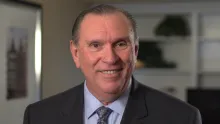
Randy D’Alessandro served as pastor for the United Church of God congregations in Chicago, Illinois, and Beloit, Wisconsin, from 2016-2021. Randy previously served in Raleigh, North Carolina (1984-1989); Cookeville, Tennessee (1989-1993); Parkersburg, West Virginia (1993-1997); Ann Arbor and Detroit, Michigan (1997-2016).
Randy first heard of the church when he was 15 years old and wanted to attend services immediately but was not allowed to by his parents. He quit the high school football and basketball teams in order to properly keep the Sabbath. From the time that Randy first learned of the Holy Days, he kept them at home until he was accepted to Ambassador College in Pasadena, California in 1970.
Randy and his wife, Mary, graduated from Ambassador College with BA degrees in Theology. Randy was ordained an elder in September 1979.
