

Don Ward
This transcript was generated by AI and may contain errors. It is provided to assist those who may not be able to listen to the message.
The title of the day, Pentecost and the New Creation. Of course, there are so many elements to the Feast of Pentecost. You could never cover all of them. You could never say all there is to say about God. You could never say all there is to say about the Holy Spirit. You could never say all there is to say about Christ. Then we could go on and on. I want to focus on this New Creation today to a large degree.
Of all the works of God and all the works of the Holy Spirit, which one is most important to you? I'm not asking of all the qualities and characteristics of God, which is most important. I'm talking about the works. We could say that the most important quality characteristic of God is love. God is love, and Jesus Christ also is love. That's a part of their essential being. God is love. Christ is love. But of all the works that God has or will perform, which one is most important to you? What is going on in your life, in your mind, in your heart at this time? We used to play games with the grandchildren. I remember one night holding one of the granddaughters in my arms and walking across the campus there in Pasadena, where you would seldom see the moon, but this night you could see the big bright moon. It was a half moon. We'd say, well, who made the moon? Who made the sun? Who made the stars? And then, of course, the answer was God did. That night I was walking across there and looked up. I said, oh, look at that beautiful half moon. And she said, who broke it?
I don't think the lesson was totally lost, though.
So the principal work of God and Christ is creation, both physical and spiritual. That is my conclusion. The principal work of God and Christ is creating. They are creating.
And God, through Christ, created spirit beings millions of years ago, and after that, He created the earth. And we read in Job 38, verses 6 and 7. If you want to turn there, I'll read it. In Job 38, we're familiar with this. By deduction, we know that the angelic realm was created before human beings. And we also know that the angelic realm was created before the physical earth. This is Job 38, verse 6. Whereupon are the foundations thereof fastened? God, beginning to question Job, who had said, Oh, let God speak to me. I'm tired of listening to these so-called friends of mine. Or who laid the cornerstone thereof? When the morning stars sang together, and all the sons of God shouted for joy. See, the angels are sons of God by creation, and all of us could say that we are sons of God by creation. But there's much more to why God has created us as we read in that letter. Those who are born of blood, that's the physical birth, but those who are born of the spirit, that's the spiritual birth. There's a great difference between created spirit beings and begotten and born spirit beings. I want us now to look at Hebrews chapter 1. Hebrews chapter 1. And here we'll see that the angelic realm, the purpose of it being created, and they were not begotten and then born, they were created to whatever state they were created in. So it's Hebrews 1 and verse 4, being made so much better than the angel, speaking of Christ, as he hath by inheritance obtained a more excellent name than they. You think about inheritance. Inheritance has to do generally with being an heir to a parent that has left you something. That's not always the case, because people can will things to other family members or friends and so on. But generally speaking, in the familiar sense, in the family sense, an inheritance has to do with being a part of the family. So we read here in verse 5, For which of the angels said he at any time, You art my son, this day have I begotten you?
When? He never did. The angels were not begotten. They were not born of the spirit. They were created as spirit beings. And again I will be to him a father, and he shall be to me a son. And again, when he brings the first begotten into the world, he says, And let the angels of God worship him, so that showing that the superiority of the son, who was begotten by the father, far superior to the angels, and of the angels, he said, who makes his angel spirits and his ministers a flaming fire. Then you look at verse 13 and you see, The purpose of angels created as spirit beings, but to which of the angels said he at any time, Sit you on my right hand, until I make your enemies your footstool? Well, he never did. Are they not ministering spirits sent to the heirs of salvation? So the angelic realm created to help God and Christ bring sons and daughters to glory in the family of God. Angels or ministering servants sent to the heirs of salvation, and once again, to be an heir, implicitly implies that the heir is an offspring of their parents, and as I've qualified it as well, but here in the context, it has to do with the begotten son of God, and we are begotten sons and daughters of God. So the angels played no part in being created. The logos, the word spoke, and it was done. The angels were not aware that they were being created. Look at Psalm 104, verse 30. The Holy Spirit is under the direction of God and Christ. The Holy Spirit is not out freelancing on its own. Like in Genesis 1, it says that He sent forth His Spirit. So here in Psalm 104, in verse 30, let's read, You send forth your Spirit. God sends it forth. They are created. And you renew us the face of the earth. And of course, the face of the earth is renewed there in Genesis 1 from the chaos and confusion that had resulted from the rebellion of Satan. So the angelic realm was created to whatever state of being. They were created perfect, as it says in Ezekiel 28, even speaking of Lucifer. You were perfect in the day that you were created. And then they were given free choice to have God's holy righteous character created in them. Did that go right over your head? To have God's holy righteous character created in them, they were given free choice. And as we know, Lucifer, his tale drew a third part of the angels and they became demons, as it talks about in Revelation 12. God and the Word created humans because they are love. God and the Word, the One who became Christ, they are love and they wanted to share their being in a family relationship.
Adam was not aware of being created. God through Christ created Adam from the dust of the ground. God then took a rib from Adam and created Eve. They played no part in being created in the physical sense. But both Adam and Eve had a choice as to whether or not they would obey in a similar fashion. We did not come into this world by choice. We're born to whomever. You did not choose your parents. You were born wherever. You did not choose where you would be born. I was born on a cold, windy night at the end of a dusty road in a little shotgun house. And you maybe know where you were born. You were born wherever and you were born whenever. You had no choice in it. But at some point in life, we will be given a chance to choose life or death. God is not a respecter of persons, and everyone will have this opportunity. In 31 A.D., through Christ, the Holy Spirit was sent to dwell in man, not just with man. In the day of Pentecost, pictures of firstfruits being called out. The firstfruits of the spiritual creation, because on that day, God made the Holy Spirit available to humankind. Not to everyone, but to those whom He was calling. Look at Acts 2. We'll read 38. It was read in the sermon as well. We'll talk probably more about 2.38 later. But I just want to read into verse 39. Verse 39 is the main verse I'm getting at right now. In Acts 2, verse 38, See, there was a condition. That was a shortcut to Peter. In addition to repenting, repentance is inextricably linked to obedience and to have sins forgiven. Sins of the past, it required the death of Jesus Christ, O faith and sacrifice of Christ, and being baptized and laying on of hands. So there are conditions to receiving the gift.
I remember one time in a council discussion, I don't even know how this verse came up, but I said, to those who are afar off, that means the Gentiles, where others believed, no, that was those who lived out 500 miles from here. But let's see about that in just a minute. For the promise is unto you and to your children, and to all that are afar off, even as many as the Lord our God shall call. Of course, we know that God is not trying to save the world now, but he's calling out men and women from all nations, kindreds, races, tongues, to be a part of the first fruits. Now look at Ephesians chapter 2, and we'll see about this afar off, people. In Ephesians chapter 2, we begin in verse 11. Of course, Ephesus was one of the great sin centers of the ancient world. Ephesus and Corinth together really made quite the team. I guess it's sort of like Las Vegas and Reno or something like that. Wherefore, remember that you being in time past Gentiles in the flesh, see, in the spirit we are all one, you being in time past Gentiles in the flesh who are called uncircumcision by that which is called the circumcision, the Jews, in the flesh, made by hands.
And of course, we could quote here Romans chapter 2 where Paul says that circumcision is not of the flesh but of the heart and of the spirit. That in times past you were without Christ being aliens from the commonwealth of Israel, strangers from the covenants of promise, having no hope without God in the world. But now in Christ Jesus, you who sometimes were far off to your children and those far off whom he would call were far off or made nigh by the blood of Christ. For he is our peace. We heard about that in the special music. He is our peace. Who has made us both one, that is Jew and Gentile, and has broken down the middle wall of partition between us. Having abolished in his flesh the enmity, even the law of commandments contained in ordinances, for to make in himself of twain one new man, so making peace. And that he might reconcile both unto God in one body by the stake, having slain the enmity thereby, and came and preached peace to you, which were afar off. And to them that were nigh, that were the Jews, for through him we both have access by one Spirit unto the Father.
So God through Christ sent the Holy Spirit to dwell in man on the day of Pentecost 31 A.D., not just to dwell with man, but in man. Let's pursue that just a moment scripturally in John 15. John 15 will see here the source of the Holy Spirit, where the Holy Spirit proceeds from. In classical Trinitarianism, they have a paradigm, a model, in which they say that God the Father is eternally generating the Son. Of course, we know that's not true because as the Father has life in himself, so has he given to the Son to have life in himself. That's John 15.26. In classical Trinitarianism, it says that the Father is eternally generating the Son and that the Father and the Son are eternally generating the Holy Spirit. That argument over that was why the Greek Orthodox, also Russian Orthodox Church, which is a copy of the Greek Orthodox Church, split from the Western Church, the Catholic Church, in John 15.26.
Now, you've turned back a page to John 14.26, and you'll see something else about this. John 14.26, Now you look at Acts 2.29, once again, quoting from Peter's sermon on the day of Pentecost when the Holy Spirit was sent to the New Testament church, Acts 2.29.
Man and brethren, let me freely speak unto you of the patriarch David, that he is both dead and buried, his sepulchre is with us, and to this day, therefore being a prophet, and knowing that God had sworn with an oath to him that out of the fruit of his loins, according to the flesh, he would raise up Christ who sat on his throne. He, seeing this before, spoke of the resurrection of Christ, that his soul, his life, and his essence, was not left in Hades, in the grave, neither his flesh did see corruption. This Jesus had God raised up wherein you are all witnesses, therefore being by the right hand of God, this is the key verse I'm getting to, therefore being by the right hand of God, exalted and having received of the Father the promise of the Holy Spirit, he has shed forth this which you now see and hear. So we see that the Holy Spirit can be sent in the name of the Son, and the Son can shed forth the Holy Spirit.
So on that day, God began calling out, as we've noted, calling out the firstfruits and creating his holy righteous character in those who would surrender, submit, and serve him.
We are created physical, of course, subject to sin and death, and after being called, we're given the opportunity to participate in the spiritual creation. Do not let that pass you by. We're given the opportunity to participate in the spiritual creation. In fact, it is absolutely essential that we do participate. It's not just only believe. The spiritual creation of sons and daughters occurs through a process that requires our active participation. So even though the Holy Spirit is a gift, we must be active participants in the process of salvation, becoming a spirit, begotten and spirit-born son or daughter. God and Christ do not force us. It's the old, you can lead a horse to water, but you can't make him drink. God and Christ through their spirit, and there is one spirit, and word convicts our hearts and minds and urges us to surrender to him. When the Holy Spirit has come, we might as well read that, John 16.7, it will convict you of sin.
John 16 verse 7, Jesus speaking on that night he was betrayed and the mock trial took place. He said it was necessary that he go away because if he didn't go away, the Holy Spirit would not come unto you. This is John 16.7, Nevertheless, I tell you the truth, it is expedient for you that I go away for if I go not away, the Comforter, which is the Holy Spirit, John 14.26, will not come unto you. But if I depart, I will send him unto you. So we have pursued that, that Christ has a role in sending the Holy Spirit, that which he received, the promise from the Father, he has now shed on us.
So the Spirit of God and the Word of God convicts our minds and hearts and urges us to surrender. Now, why God opens the minds of certain people and blinds other people, I don't know for sure. In Romans 11, I believe it is, it talks about the wisdom and the knowledge of God. He knows what he's doing and he calls us apparently at the time that is best for us. But it says that he does it so that he might have mercy on all.
Now, let's note the words of Paul in 2 Corinthians 5. So I'm talking about active participation in this process of becoming as God is. And in 2 Corinthians 5 and verse 17, Therefore if any man be in Christ, he is a new creation. He is a new creation. All things are passed away, behold, all things are become new. And all things are of God who hath reconciled us to himself by Jesus Christ and hath given us the ministry of reconciliation. To know that God was in Christ reconciling the world unto himself, not imputing their trespasses unto them, and has committed unto us the word of reconciliation.
So we need to be aware of the creation that is going on within us, and we must earnestly desire that spiritual creation take place in us. So we could ask ourselves, is my mind wholly set with God to be a participant in becoming a new creation? At times, I believe, we take this spiritual creation for granted, even forgetting about it and thinking that we will become a new creation by what some call fiat, just magically through an osmotic process. You know, there's a synovial sac of fluid that surrounds a joint, especially like the knee, and through a process of osmosis, this synovial fluid seeps through this sac that surrounds the kneecap and lubricates the knee joint. You're not aware that it's happening. It just is. That's a part of the way you were created.
And sometimes we may think or behave or forget whatever word we want to use, that we're supposed to be a new creation, and that we need to be aware of becoming a new creation. We're not assembly-line Christians, where you just go through various stations, and automatically you come out a spirit being. You must actively participate in it. I believe that's what Paul was getting at. Let's go to 2 Timothy 3 and verse 5. The first four verses thereof, 2 Timothy 3, describe the current situation of the world, that in the latter time some shall depart from the faith in describing all the various aberrant behaviors that you read about, see in your paper, or see on television. We come to verse 5 here in 2 Timothy chapter 3. Having a form of godliness, but denying the power thereof, from such turn away. So are we denying the power thereof? Are you denying the power of God? Am I denying the power of God? Are you consciously aware of God and Christ in our lives?
We collectively make up the church. We're called the body of Christ. By one spirit, we're all baptized into one body. God's spirit dwells in each one of us. Let's read that verse, 1 Corinthians 3.16. God's spirit dwells in us. Collectively, we make up the body of Christ. Why is it called the body of Christ? Because He's dwelling in us through His spirit. And God the Father is dwelling as well. We both will make our abode in Him. That's John 14.23. 1 Corinthians 3.16. Know ye not that ye are the temple of God, and that the Spirit of God dwells in you. How important is it that we be good stewards of the Holy Spirit? As you heard in the sermonette, If any man defile the temple of God, him shall God destroy, for the temple of God is holy, which temple you are. What makes it holy? The Spirit of God dwelling in you. And we are bought with a price we're not our own. And God does not dwell in buildings made by hands. Look at Hebrews 8. So what am I getting at? I'm getting at the fact that the temple of God is a spiritual creation, and we need to be active participants in it.
Hebrews 8.1. Now the things which we have spoken, this is the song. Remember, comparing and contrasting elements of the Old Covenant with elements of the New Covenant and superiority of the New Covenant. We have such a high priest who has set on the right hand of the throne of the magickity in the heavens a minister of the sanctuary, and of the true tabernacle, that spiritual temple, know not that your body is the temple of the Holy Spirit, which the Lord pitched and not man.
Now I say unto you, Peter, that you are Petros, a little rock, but upon this rock, big rock, Petra, will I build my church, and the gates of hell shall not prevail against it. So we are a spiritual creation, and God wants us to be directed by the new mind, to be spiritually minded. The new mind is revealed to us through the Spirit and Word of God. It is a new mind. It is not the old man made over. This flesh will never be perfected. And Paul makes this clear. There will always be the struggle. There will always be the war between the old man and the new man.
Let's look at this briefly in Romans 7 and get the essence of the admonition that Paul gives here with regard to this in Romans 7, verse 18. This great struggle. Now what am I talking about? I'm talking about the new creation is not just the old man made over. People get discouraged because they continue to have the same problem. See, the flesh continues to try to get up out of the watery grave, raise its ugly head, and you're supposed to keep the flesh under the water, crucifying the flesh.
Romans 7, 18. For I know that in me that is in my flesh, well, is no good thing. For to wield is present with me, but how to perform that which is good, I find not. For the good that I would do, I do not, but the evil which I would not, that I do. Now this is an apostle who was taught by Jesus Christ. That's what we have said for years, taught by Jesus Christ three years in the Arabian wilderness, who's writing this. And so if he's having that problem, I would suspect you are too. I would suspect I am too. You know, Paul writes in one place of sinners, I am chief.
Verse 20, Now if I do that which I would not, it is no more I that do it, but sin that dwells in me. Now a lot of people use that verse to try to excuse sin. It's like, oh well, what's the use? There is a law of sin abiding within me, and I can't do anything about it. Well, there is the flesh, as we'll read in just a moment. The carnal mind is imminent towards the law of God, not subject to it.
Neither indeed can be, but, and that's the big but, you can crucify the flesh. I find then a law that when I would do good, evil is present with me, for I delight in the law of God after the inward man. And this inward man is the one that must, the new mind, must rule over that mind of the flesh, but see another law in my members warring against the law of my mind, and bringing me into captivity to the law of sin which is in my members.
O wretched man that I am, who shall deliver me from the body of this death. So that fleshly man is going to always be there, but it can be ruled over. And that's one of the reasons why Jesus Christ came and lived in the flesh, as we shall see. I covered this in some degree in the last sermon. I thank God through Jesus Christ our Lord, so with the mind I might serve the law of God, this new mind, but with the flesh, the law of sin. That didn't mean that he was disobeying, but that that law of the flesh was there, and it had to be ruled over.
As you look in verse 13, we'll read it now and get to it again. For if we live after the flesh, we shall die, but if we through the Spirit do mortify, put to death, the deeds of the body we shall live. So the spiritual mind, the new mind, has to rule over the mind of the flesh. There's therefore, Romans 8.1, there's therefore now no condemnation, no judgment to them which are in Christ Jesus, who walk not after the flesh. So he makes it clear he's not saying that you can walk after the flesh. He's making it clear that you can rule over the flesh, and if you don't rule over the flesh, then you shall die.
Who walked not after the flesh, but after the Spirit. For the law of the Spirit of life in Christ Jesus has made me free from the law of sin and death. For what the law could not do in that it was weak through the flesh, See, the old man, apart from the spiritual mind, did not rule over the flesh. But God sending his own Son in the likeness of sinful flesh, and for sin, condemned sin in the flesh.
How did he condemn sin in the flesh? He showed that it was possible to live in the flesh and not sin.
That the righteousness of the law might be fulfilled in us who walk not after the flesh, but after the Spirit. So you have to obey. You have to be an active participant. You have to obey. Yes, it is a gift. But if you refuse to obey, then you just continue to walk after the flesh. Then you would, as Paul talks about in Galatians 2, make Christ the minister of sin, which he is not.
Verse 5, For they that are after the flesh do mind the things of the flesh, but they that are after the Spirit, the things of the Spirit. For to be carnally minded is death, but to be spiritually minded is life and peace, because a carnal mind is enmity against God, for it is not subject to the law of God, neither indeed can be. See, that's the carnal mind, but it can be. You have a new mind. You have a new knowing within. You have a new conscience. You have power. You can overcome. So then they that are in the flesh cannot please God. But you're not in the flesh, but in the Spirit. If so be that the Spirit of God dwell in you. And you look at that verse 13 again.
It is very clear when you really look at it. The new mind is a spiritual creation. Now that was also in the special music, but let's look at it in Ephesians 4, verses 23 and 24. It will say it very clearly. We have just talked about the spiritual mind, the new mind. Now let's see what Paul adds to it here in Ephesians 4 and verse 23. Ephesians 4 and verse 23.
We can read 22, that you put off concerning the former conduct, the old man, that's the fleshly mind, which is corrupt according to the deceitful lust, and be renewed in the spirit of your mind, and that you put on the new man, which after God is created in righteousness, created in righteousness and true holiness. Then it talks about things to put away. The new mind must become the center focus in our relationship with God and Christ and our neighbor. The new mind can rule over the old mind. Now notice what David prayed in Psalm 51, verse 10. The backdrop of Psalm 51 we're all familiar with in that David's repentance psalm after his grievous sins with Bathsheba and Uriah the Hittite. In Psalm 51, verse 9, Cast me not away from your presence and take not your Holy Spirit from me. So we must do everything in our power to follow God, to obey Him, and to set our mind on things that are above, to set our mind on heavenly things and not things of the flesh. We're going to talk more about how to do this, but let's see this admonition here in Colossians 3 that I've just noted. Colossians 3, verse 1.
If you then be risen with Christ, in other words, you have been called, you've been convicted, you've repented, you've exercised faith in Christ, you've been baptized, you have received the Holy Spirit. If you be risen with Christ, seek those things which are above where Christ sits on the right hand of God, set your affection on things above, not on things on the earth, for you are dead and your life is hid with Christ in God. See, that old man is symbolically put to death, but to keep him under the water, you must continue in your surrender, submission, and service to God.
You know, if we find ourselves fearful, discouraged, unhappy, if those things are present in our lives, perhaps we don't really understand the process of becoming a new creation. Satan would have us believe that there are shortcuts. I don't believe there are shortcuts. We're going to trace here somewhat the process, and like everything else, you can never say everything there is to say about anything, I guess. But we must understand, to some degree, the process of becoming a new creation.
To not understand it, I think, would lend itself to being fearful, discouraged, unhappy with your life.
So let's understand this as much as we can. We're to live by faith. The just shall live by faith. We're to become as God is. It's made clear in 1 Corinthians 13. So let's explore the outcome of living by faith. Let's start with Hebrews 11.1, the biblical definition of faith that we often quote. Of course, there is to me the shortest definition, most direct definition of faith, is to believe God and do what He says. To believe God, do what He says, as James talks about in James 2 in the case of Abraham, going to sacrifice Isaac. He believed God and did what He said. But in this example that we're going to talk about, we're going to start with Hebrews 11.1. Now, faith is the substance that things hope for. What's the main thing you hope for in your life? Well, you hope for eternal life, to become as God is, to have holy righteous character created within you.
Now, in the case of Abraham and Sarah, as we'll see in just a moment, when God made the promise to them, what was the substance they were hoping for? Well, they were hoping for the birth of the Son of Promise, Isaac. We'll see that in just a moment.
Faith is the substance that things hope for, the evidence that things not seen. What would that be? Let's go to Romans 4, verse 17. We'll see this example here of Abraham and Sarah and the birth of Isaac and then the application to us. And becoming a spiritual creation.
In Romans 4, verse 17, this talks about in Hebrews 11 or 12, where Abraham received Isaac as a figure from the dead. In other words, Abraham, in his mind, Isaac was as good as dead, but also in his mind, he was as good as alive in resurrection, received him as a figure from the dead. But this mainly centers on the birth of Isaac, who against hope believed in hope. So what does that mean? Against hope believed in hope. If you were looking at things physically from the hope of this world, it would be impossible for a woman who was past the age of childbearing, and a man who evidently was getting there as well, or there, who against hope that is just as the flesh believed in hope.
What hope? The hope in God that he might become the father of many nations according to that which was spoken, and so shall your seed be. That's hearkening back to the promise in Genesis 12.3, that through your seed all the families of the earth would be blessed. And of course, we know from Galatians 3 that that seed is Christ. And so you have the patriarchal age in which the promises to Abraham are passed down to Abraham, Isaac, Jacob.
So it's necessary here that they have a child. So verse 19, in being not weak in faith, he considered not his own body now dead when he was about 100 years old, neither yet the deadness of Sarah's womb. See, physically it was not possible. But against hope, believed in hope, he staggered not at the promise of God through unbelief, but was strong in faith, giving glory to God.
And being fully persuaded that what he was promised, he was able also to perform. And therefore, it was imputed, that is, it was reckoned, it was placed on his account in a positive sense. There was reckoned to him for righteousness. Now it was not written for his sake alone that it was imputed to him, but for us also to whom it shall be imputed if we believe on him that raised up Jesus our Lord from the dead.
Who raised Jesus our Lord from the dead? Well, Romans 8-11 tells you. Who was delivered for our offenses and was raised again for our justification, therefore being justified by faith, we have peace with God through our Lord Jesus Christ, by whom also we have access by faith into this grace wherein we stand, and rejoice in the hope of the glory of God.
And now, verses 3, 4, and 5 covers this process that virtually everybody goes through, and certainly you go through it in this process of becoming a new creation and having God's holy, righteous character created within you. There are no shortcuts. So you look at verse 3. And not only so, but we glory in tribulations also, knowing that tribulation works patience. And patience, experience. Now that word experience in the Old King James is the Greek word as dokime.
It means proof-testing. So we have the trial coming upon us, and oftentimes the four enemies of faith flood in. Anxious care, fear doubt, human reasoning. Will God hear? Will God answer? Will God deliver? But if we are faithful, we know He will deliver.
And patience works proof-testing. Now hold your place right there, and let's look at James 1. Once again, the general epistles are the epistles about going on to perfection. When you have reached this point, and we're about to read here, it says, James 1, verse 2, My brethren, count it all joy when you fall into different trials. Parasmos, trials, tribulation. Knowing that the trying of your faith works patience. The trying of your faith works patience.
You see, if you know and you know that you know, if you have faith, you know that God is going to deliver you. But let patience have her perfect work. See, Abraham and Sarah tried to work it out, first of all, physically, and the result was the birth of Ishmael, and that didn't work out very well. But let patience have her perfect work that you may be perfect and entire, wanting nothing. How is that so?
Because if you have that patience and your heart, your mind is trained perfectly on God and Christ, knowing that they will deliver, you pass the test. You can have peace. It says, count it all joy when you fall into different trials. Now we're back in Romans 5. Back in Romans 5, 4 again, and patience, experience, and experience prove testing, and hope makes us not ashamed. Hope makes us not ashamed. See the trial, the test. There may be doubters, there may be scoffers.
We'll say this, that, and the other with regard to your test, your trial. Remember what Job went through in his test, his trial, what is all the things that his friend said to him? Hope makes us not ashamed because the love of God is shed abroad in our hearts by the Holy Spirit, which is given unto us. See, if we remain faithful and go through the trial, then the love of God is shed abroad in our hearts by the Holy Spirit.
Now we look at 1 Corinthians 13.
1 Corinthians 13. See, one of the great outcomes that God wants us to become is to become love as he is love. And a part of that process has to do with going through trials, troubles, tribulations. But if patience has its perfect work, we will behold entire wanting nothing, and we can rejoice in trials. I must confess that at times I am not there.
In 1 Corinthians 13.1, though I speak with the tongues of men and of angels, have not charity, if I am not becoming as God is, I become as a sounding brass and a tinkling cymbal. And though I have the gift of prophecy, understand all mysteries and all knowledge, and though I have all faith so that I could remove mountains and have not charity, if I am not becoming as God is, if all this that I am going through is not resulting in this outcome, it is of no use. I am nothing. And though I bestow all my goods to feed the poor, and though I give my body to be burned, and have not charity, if I am not becoming as God is, because God is love, it profits nothing. And then it goes on to describe the various elements of love. Not everything, but many of the elements of what spiritual love really is. Now look at 1 Timothy chapter 1 verse 5. We're talking about the outcome. Before we go there, I want 1313. 1 Corinthians 1313. Because here the most important outcome is described. So if you go through that process in Romans chapter 5, now look at 13, and now abides faith, hope, charity, love. These three, but the greatest of these is charity. And that's what God wants us to become. A new creation in Christ Jesus. Now look at 1 Timothy, and you can see here even the purpose of obedience and the commandments have to do with this very end result that we're talking about here. 1 Timothy 1.5.
Now the end. Now that word is translated end, and the whole King James is, the Greek word is telos. T-E-L-O-S, and it means result outcome. Now the outcome of the commandment is charity. In other words, if we go through the process, we're going to be talking about charity. The commandment is charity. In other words, if we go through the process and let patience have her perfect work, being whole, entire, wanting nothing, the result of the commandment is charity out of a pure heart and of a good conscience and of faith unfamed. See, we are active participants in the process.
Here we quote Henry David Thoreau, Most men live lives of quiet desperation. Why? Because of the inner conflict, they never measure up in their own minds. If you're thinking that your flesh is going to be perfected, think again. It's not. But you can rule over the flesh, as hopefully we have just demonstrated from the Word of God. I believe our greatest burdens result from trying to justify, defend perfect, perfect, exalt self. And when we come to realize that none of these can be done by self alone, God will help us perform all of these so we can completely focus upon Him and His righteousness, realizing that all of our righteousness, and this is in the Bible, is as filthy rags. So God in Christ beckons us to come to them for rest, for peace, and comfort. Let's look at Matthew 11.28. A few scriptures here of reassurance of what God has promised us. Once again, all of those who will live godly in Christ Jesus shall suffer persecution. Every man's work is going to be tried of what it is made of, whether it's made out of woodhaste double or a precious stone or gold. In Matthew 11.28, Come unto me, all you that labor and are heavy laden, and I will give you rest. Take my yoke upon you and learn of me, for I am meek and lowly in heart, and you shall find rest unto your souls, to your inner being. That inner conflict can be removed, for my yoke is easy and my burden is light.
Look at 1 Peter 5. 1 Peter 5.
These are just a couple of the principal scriptures that come to mind with regard to finding that peace, that peace of God that surpasses all understanding, yielding to the Holy Spirit of God that is within us. 1 Peter 5. Likewise, you younger, submit yourselves unto the elder. Yes, all of you, be subject one to another and be clothed with humility, for God resists the proud and gives grace to the humble. Hummer yourselves therefore in the mighty hand of God, that he may exalt you in due time, casting all your care on him, for he cares for you. Come to me, all you that labor and are heavy laden. If we sin, we can repent. We can go before God. We can ask for forgiveness and mercy. He is faithful and just to forgive us all unrighteousness. We can talk with God 24-7. In fact, this constant prayer and praying without ceasing is a vital part of the armor of God. I know my mother, who was not in the church, and occasionally we would talk religion. I've said it many times, that she said if she could find a Baptist church, observe the Sabbath, the Saturday Sabbath, she could go there.
She said, Son, I go with a prayer on my lips all the time. I look at Ephesians 6, verse 17. In Ephesians 6, verse 17, Take the helmet of salvation and the sword of the Spirit, which is the word of God. The helmet of salvation is defined in 1 Thessalonians 5.8 as hope.
1 Thessalonians 5.8 says, the helmet of salvation, which is hope.
I have hope because I have faith. Faith and hope produces the love of God. The love of God is shed abroad in our hearts through the Holy Spirit. Take the helmet of salvation and the sword of the Spirit, which is the word of God. Praying always with all prayer and supplication in the Spirit, and watching thereunto with all perseverance and supplication for all saints.
Prayer is so vital. You can basically carry on a conversation with God just about all the time.
It is said that we spend, I think it's about 70% of our idle time talking to ourselves.
God exhorts us to get our focus completely off ourselves, and allow God's Spirit to work within us. And God will exalt us after self is surrendered.
Let's go back now to 1 Peter 5. We left off reading there. In 1 Peter 5, we left off with, Cast all your care on him, for he cares for you. Now, 1 Peter 5.8.
Be sober, be vigilant, because your adversary the devil, as a roaring lion, walks about, seeking whom he may devour. Whom resist steadfast in the faith, knowing that the same afflictions are accomplished in your brethren that are in the world.
But the God of all grace, divine favor, who has called you unto his eternal glory by Christ Jesus, after that you have suffered a while, make you perfect. So we talked about the process of the love of God being shed abroad in your hearts through the Holy Spirit. After that you have suffered a while, make you perfect, establish you, strengthen, settle you, to him be glory and dominion forever. So God justifies us. He defends us. Go to God actively, diligently, in every area of life that you're struggling with. Ask him to create a new mind, a new heart, a new spirit within, as David did in Psalm 51. Talk to God about the areas you need to grow in. Ask him to create it. You have not, because you ask a not, you ask a miss that you might consume it on your own lust. Ask God to give you the gifts necessary to fulfill the mission in life that he has so generously assigned to you. And never forget that God is your defender and deliverer. Romans 8, 31 says, If God be for you, who can be against you?
The power that God sent us, 1987 years ago, must not be denied. Stir it up. Live by faith. And he will create his holy righteous character in you, as we read from Romans 5, 5, The love of God is shed abroad in our hearts through the Holy Spirit.
Believe, trust, obey, pray, renew the inward man daily. God will give you that new mind, and that new mind will rule over the flesh. You will not be fearful, dreading, dreading life, discouraged, unhappy. But rather, you will be filled with love, joy, and peace, which are the three essential ingredients of the kingdom of God. So trust God. Live by faith. You can become love as God is loved. It wouldn't be in the Bible if you couldn't. You can be filled with joy. You can attain to the peace of God. That surpasses all understanding. So, brethren, as we observe this Pentecost 2018, I hope that we will heed the admonitions that we have heard here today and will hear this afternoon. The church, you and I, the firstfruits that God is calling out, that the resurrection will be made immortal and reign with God in Christ as kings and priests forever and ever. So let us heed the exhortation of the Apostle Paul, who, under the inspiration of the Holy Spirit, writes, looking unto Jesus, the Author and Finisher of our faith, whoever lives to make intercession for us, let us therefore come boldly before the throne of grace, that we may obtain mercy and grace to help in time of need. Let us beseech God day and night to give us His mind, the spiritual mind.
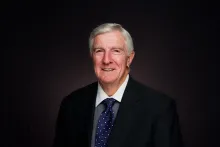
Before his retirement in 2021, Dr. Donald Ward pastored churches in Texas and Louisiana, and taught at Ambassador Bible College in Cincinnati, Ohio. He has also served as chairman of the Council of Elders of the United Church of God. He holds a BS degree; a BA in theology; a MS degree; a doctor’s degree in education from East Texas State University; and has completed 18 hours of graduate theology from SMU.
