
Greg Thomas
This transcript was generated by AI and may contain errors. It is provided to assist those who may not be able to listen to the message.
Well, thanks again, Mr. Waterhouse. Mr. Graham, thank you, Mr. Graham, for special music. I've heard him do that beautiful written piece over the years, and I think today was as good as I've ever heard that performed. It was very inspiring. Thanks so much, Mr. Graham, for doing that for us today to celebrate this festival of Pentecost, and certainly very, very appropriate.
Well, welcome again to the Day of Pentecost.
1990 years ago, which is another pretty round number, a miracle occurred that changed the world forever.
Because of this miracle, a small group of followers of Jesus were inspired and motivated to proclaim a message that has influenced much of the earth to this very day.
Now, they may not have done it in a way that we would prefer. They may not have observed the world today, the doctrines that we believe are part of authentic Christianity, but nonetheless, the preaching of who and what Jesus Christ was. From this small group of individuals has influenced much of our world today, to one degree or another.
Through that event, on the Day of Pentecost in 31 AD, they were forever changed, and it resulted in them changing the world. Let's read about this. We've already heard this scripture read a couple of times from Mr. Lee last week, and also yesterday, Acts chapter 2, verses 1 through 4. And just to mix it up a little bit, I'm going to read it from the New Century version, just to give it a little bit of a different flavor. Again, Acts chapter 2, verse 1. And here's what it says. Here's what Luke was inspired to write. When the Day of Pentecost came, and they were all together in one place, suddenly a noise like a strong, blowing wind came from heaven and filled the whole house where they were sitting. They saw something like flames of fire that were separated and stood over each person there. They were all filled with the Holy Spirit, and they began to speak in different languages by the power the Holy Spirit was giving them. So this transformation that we see going on here in the lives of these individuals was made possible because the power of the Holy Spirit was changing them. I want you to notice that the Holy Spirit is power.
This Spirit immediately began to transform these individuals in remarkable ways. The former cowards who had abandoned Jesus Christ on the night of his arrest.
We're now courageous and would now become bold. The weak of the world became strong in Christ. A group of uneducated fishermen were able to speak in new languages that they had never been taught.
God intended for this gift of the Holy Spirit to be a tool that eventually would lead to their complete transformation.
The Day of Pentecost in 31 A.D. is considered the birth or the establishment of the New Testament Church.
We continue to observe it today because of what it powerfully reminds us of. And part of that is God's promise.
It's important for us to acknowledge and realize that this event on Pentecost in 31 A.D. was just a partial fulfillment.
It was just a foretaste of what God promises he will do for the entire world. So it's not just for our benefit that he gave the Holy Spirit.
Part of his plan includes after the return of Jesus Christ that his Holy Spirit is offered to everyone.
And Peter mentions that. Drop down to verse 14 here in Acts chapter 2, and we'll see where Peter mentions that himself.
So this is another very important thing we need to understand about this day.
Verse 14, He's going to quote Joel chapter 2 and verse 28.
That's ultimately what God wants to do. That's ultimately his plan.
So that is what the day of Pentecost is all about and why it continues to be observed by the New Covenant Church of God today.
What I'd like to do in this sermon is I would like to reinforce the purpose and the power of the Holy Spirit and the fact that God has given it as a tool, that power to transform our lives.
Today, just like he transformed or he began the process of transforming the lives of those disciples in Acts chapter 2.
Yes, after they received God's Holy Spirit, they were still carnal. They still struggled with particular issues and controversies and their own human weaknesses, but a process had begun.
And that's what I'd like to talk about today.
Turn with me, if you would, to 2 Corinthians chapter 5 and verse 17. Again, 2 Corinthians chapter 5 and verse 17.
Scripture that I'm sure we're all familiar with, but as many times as I've read it, it never becomes old to me.
2 Corinthians chapter 5 and verse 17.
Therefore, if anyone is in Christ, if anyone has that Spirit that was given to them as a gift by God, that same Spirit that's shared by the Father and the Son, if anyone is in Christ, he is a new creation.
Old things have passed away, and behold, all things have become new.
When the Holy Spirit entered the disciples on the day of Pentecost in 3180, they became a new creation.
Something was added to their lives beyond their mere physical bodies and their carnal minds. They received the seed of God, a spiritual essence, as a gift.
Because of their faithfulness, because of the promises of God, because of what Jesus said would happen if they would remain faithful.
And that same Spirit that the Father and the Son share, remember Jesus said on the eve of his death in John chapter 14 and verse 23, he said, The Father and I will make our home in you. That home is possessing the same Spirit that the Father and the Son share together.
They now had a new purpose in life. They had a new eternal future. They had new opportunities. Even in this physical life, their lives would begin to change.
Brethren, do we also believe this about ourselves? Or have we taken this gift, this precious and wonderful gift that God gave us, and have we put it on the shelf next to the clapper that someone bought us once?
Lights on, lights off. Have we taken that beautiful, wonderful gift and put it in the closet next to the chia pit that someone bought us once as a gift, gave it to us as a gift that we didn't really want it, and we smiled and we put it on the shelf and there it sits, gathering dust? Or have we taken this precious power, this wonderful gift that God gives us, and have we used it for the continual process of transformation in our lives?
Let's go to Malachi 3, verse 6. I think we need to understand why we need the Holy Spirit, why God offers us that power. And the reason he does is that there's a vast gulf, a gap, between who and what God is, which is spiritual, and who and what we are, which is carnal, fleshly, selfish, manipulated by our own emotions and passions and personal weaknesses. There is a huge gulf between the perfection of God and where we need to be, what we need to be growing towards, and what we are as human beings. Malachi 3, verse 6. He says, For I am the Lord, I do not change. Therefore you are not consumed, O sons of Jacob. Now, in context, what he means here, what God is saying, is that he's faithful to his covenant. And part of his covenant is, is whenever a rebellious people stray upon repentance, he'll welcome them back, and he'll love them. So that's what he means in context here when he says, Therefore you are not consumed, O sons of Jacob, even though Israel, even though Judah was straying away from God, had strayed. God says, I'll welcome you back because that's part of my covenant. I love you. You see, brethren, God is Spirit, and he's perfect. He's unchanging in his being. He's perfection. His purposes, his promises. God can never get better. He can never get worse. He is the fulfillment of character and the solid rock of righteousness. And we need to realize that there's this huge gulf that exists between God, who is spiritual, and all of us who are physical and struggling with our own limitations and our own weaknesses because we are physical.
We need to realize that if we are to become perfect, as God is perfect, Jesus mentioned that in Matthew 5 and verse 48, that a transformation has to take place. We're incapable of doing that ourselves. All the happy thoughts, all the obedience in the world, all trying to pull ourselves up by our bootstraps, is not going to transform our lives and get us closer to the standard that God wants us to have and wants us to enjoy. God says in Isaiah 55 and verse 8, My thoughts are not your thoughts. My ways, God says, are not your ways. Again, it's because He is the perfection of character, perfect, and we are always struggling with our own flesh, with our own carnal thoughts, with our own desires, with what we want. So the vast difference between God and us, as carnal human beings, is why He gives us His Holy Spirit. It's powerful. It is the power of the Holy Spirit. So He gives us that so that we can begin to grow, begin that process, and make those changes in our lives, and it takes a lifetime, however long we live physically, to begin to acquire and desire a full measure of that Holy Spirit. Remember, we started out in Acts chapter 2, and it said that they were all filled with the Holy Spirit, not just a little bit of the Holy Spirit, some of the Holy Spirit, Holy Spirit Mondays, Wednesdays, and Fridays. They were filled with the Holy Spirit. Let's go to Romans chapter 12 and verse 2. Paul writes here, he says, And do not be conformed to this world, but be transformed by the renewing of your mind, that you may prove what is that good and acceptable and perfect will of God.
Now, it's a very interesting word here that in English is written, the new King James, the original King James, is transformed. It comes from an actual Greek word that is metamorpho, from which we get the English word metamorphosis. The original Greek, the Greeks were smart people.
The Greeks were keen in science, and they understood the process of metamorphosis. So Paul just doesn't use this word because he was tired of using another one. He doesn't use this word because he ran out of other synonyms to use. He uses this word because he has a distinct purpose behind it.
One definition for the English transliteration of this word, this Greek word, is this. A profound change in form from one stage to the next in the life history of an organism, as from the caterpillar to the pupa to the pupa to the adult butterfly.
So again, Paul doesn't use this word by accident. The Greeks were very smart. They were scientific. They studied nature. They were keen observers of what goes on in nature.
So I want to ask a question, brethren. Are we being conformed, or are we in a process of a metamorphosis transformed in our lives?
You know, the same Greek word is used in Matthew 17 for what we call a transfiguration of Jesus Christ. You may remember that event in Matthew 17. Peter, James, and John are suddenly taken to a tall mountain. And Jesus shines like the brightness of the sun. His clothes shine.
He begins a discussion with Elijah and Moses. They obviously, the disciples, get the connection with the kingdom of God because they say, should we build some tabernacles?
And the Greek word used for that event is metamorphosis.
Instead of transfiguration, which is the way it's translated in English, it says Jesus experienced a metamorphosis. So that's another time that word is used in the New Testament. I'm going to read verse two here from the New Century version. Do not change yourselves to be like people of this world, but be changed within by a new way of thinking. Then you will be able to decide what God wants for you when you will know what is good and pleasing to him and what is perfect.
So Paul pulls out this powerful word from the Greek language metamorphosis and says that our minds should be renewed and that we should be in the process of a metamorphosis. What Paul is talking about here, brethren, is a radical change. It's not simply tinkering with our lives. It's not tweaking what we are. It's not having an upgrade to being a good person. What he's talking about here is a transformation. It's something that's a new creature, a new creature that eventually doesn't even resemble the way we started out as when we were first called as human beings.
I believe we can learn a lot from this word that Paul uses, and I think we can learn a lot from nature. God's creation is there for us to learn from. And we're going to take a look, or I'm going to talk a while, about the way a humble caterpillar is transformed into a butterfly, how that metamorphosis takes place, and some analogies and some things that we can hopefully learn from it. Last week, my wife, BJ, and I visited the Butterfly Wonderland in Scottsdale, Arizona. It was actually one of the highlights of my trip. It claims to be the largest butterfly conservatory in the country. That's what their literature says. It boasts one of the largest butterfly species in the world.
They claim to have 70 different species of butterfly. Butterfly Wonderland is a lush tropical paradise alive with thousands of friendly butterflies from all over the world. First, you have to watch a movie. They take you in and they sit you down and you watch a movie.
Then they open the door. And as soon as you open the door, there are hundreds of butterflies, different species flying everywhere. Now, none of them were attracted to me for some reason. But one landed on my wife's hat. Maybe one might have landed on her shoulder. So I saw a gentleman there do this, and the butterfly landed on his hand.
There were just so many butterflies everywhere because some of them don't live many days. I didn't realize that there's actually a cottage industry in selling butterfly chrysalis or cocoons, whatever you want to call it. And what they do at this conservatory is they're constantly to replenish their stock. They have to constantly order these butterfly chrysalis or cocoons. And then they bring them in and they use super glue to glue them on a beam. And then in a day or two, they hatch and become the butterflies used at the conservatory.
So let's talk about the life cycle of the creature that eventually becomes a butterfly. The story usually begins with a very hungry caterpillar hashing from an egg. Of course, we're physical. We're the result of an egg in our mother's womb. And when we were baptized, God gave us the seed of His Holy Spirit in our lives. The caterpillar, what is more scientifically termed a larva, stuffs itself with leaves. It eats and eats and eats, growing plumper and longer through a series of molts in which it sheds its skin. It's constantly changing. It gets so large it literally has to shed its old skin and become new again.
It's part of the process. And then it eats more. It eats and eats and eats. It has to shed that skin because he outgrows it. It's becoming new all the time. The caterpillar is very vulnerable. It doesn't have any defensive weapons. It tries to hide under leaves because it's so vulnerable. It tries to blend in with the leaves on a tree. But the truth is, is that it is very vulnerable. It can have problems with birds, with mantis, with other insects. And it can have continual problems with predators. 1 Peter 5. If you'll turn there with me, 1 Peter 5.
So this caterpillar is very vulnerable, but it keeps feeding itself on what is necessary for the metamorphosis to occur. It eats and eats and eats while it's very vulnerable. First, let's talk about that vulnerability. 1 Peter 5.8-9, relating to our calling. Peter wrote, Be sober, be vigilant, because your adversary, the devil, walks around as a roaring lion, seeking whom he may devour, resist him, steadfast in the faith, knowing that the same sufferings are experienced by your brotherhood in the world.
God's people are vulnerable. God's people get physical diseases. God's people get mental disorders. God's people struggle, some of them with finances, some of them with personal relationships. So we, too, are very vulnerable. And just like the humble caterpillar is weak in a world with many predators that include birds and insects and reptiles and mantises, we, too, have to be careful not to be devoured by spiritual predators, religious frauds, cultural fads, or the influence of the negative attitudes of the human being.
We have to be careful about the attitudes of many others, because all of those things can lead us astray. When we attended this conservatory, they said less than 1% of the caterpillars who are hatched ever survive to the point where they can enter the chrysalis and begin that transformation into a butterfly. And again, once the simple caterpillar is hatched, it eats and eats and eats. It has one simple goal. It has one reason for existence in that area of its life, in that point of time in its life, and that is to eat enough to prepare for the metamorphosis.
How about us, brethren? Are we feeding from the Word of God continually, daily, in one way or another? John 6, verse 54. Let's see what Jesus reminded his followers. John 6, verse 54.
Think of what the Passover represents with the bread and the wine. Think of our need to feed daily from the Word of God, to have that relationship with God through prayer.
John 6, verse 54. Jesus said, This is the bread which came down from heaven, not as your fathers ate the manna, that was just physical bread. He says, but they're all dead, didn't save them, just temporarily kept them alive. He who eats this bread will live forever. So, brethren, are we feeding daily on Jesus Christ, the bread of life?
That's exactly what the previous spring holy days reminded us of, that lead to this day.
Our need to accept the Passover, our Lord Jesus Christ, and the symbols of our Savior. Eating that unleavened bread, which represents Jesus Christ, the bread of life, and we ate unleavened bread for seven days.
Jesus said in Matthew chapter 4 and verse 4, Man shall not live by bread alone, but by every word that proceeds from the mouth of God.
So, are we feeding daily from the Word of God? Are we eating, eating, eating like that caterpillar?
Whose sole goal in its existence is to prepare for the metamorphosis?
Eat as much as he can before that time comes? Are we feeding with God through prayer?
Or with fellowship with our brethren? Are we communicating with one another and feeding off of each other? Spiritual truths and relationships and friendship?
Are we doing what we should be doing? Or are we feeding off of media news feeds? Interesting term, news feeds.
Are we hungering and thirsting for righteousness as Jesus encourages us in Matthew chapter 5 and verse 6?
Or are we feeding off of social media?
Conspiracy theories, someone's personal agenda, or the opinions of political hacks? What are we feeding off of every day?
Are we developing spiritual fruits?
Or are we becoming religious nuts?
What's happening in our lives? What are we focusing on?
Looking at what we feed on, what are we preparing for?
Again, the process where Paul got this Greek term, used in Romans chapter 12 and verse 2, is known as metamorphosis from nature.
At this point, the caterpillar after it has eaten and eaten and eaten goes into a unique state that we can liken to death. It transforms itself into a chrysalis, or sometimes called a cocoon.
It becomes inanimate and lifeless. Let's see what happens biologically. First, the caterpillar digests itself, releasing enzymes to dissolve all of its tissues. You see, this is a complete makeover. Every bit of the caterpillar's DNA will be changed.
As a matter of fact, if you were to cut open a cocoon or a chrysalis, at just the right time, caterpillar soup would pour out of the entire cavity because it digests itself. Aren't you glad I didn't say this five minutes before we start eating? But the contents of the pupa is not entirely a soupy mess. There are certain highly organized groups of cells known as imaginal cells that survive the digestive process. Virtually every cell in the caterpillar is repurposed. How about us, brethren? Are we in the process of repurposing our lives? Or do we still have one foot in the world and one foot in compromise and then another foot in the Church of God? Are we in the process of repurposing our lives, or are we still conforming to the world with its judgmentalism and all the negativity that surrounds this world? Romans chapter 12 and verse 1.
Let's turn with me if you would there. We were in Romans 12 earlier. Let's go back to verse 1 now. Romans chapter 12 and verse 1.
Paul writes the verse just before what you read a little bit ago. The verse just before what you read a little bit ago.
I beseech you therefore, brethren, by the mercies of God, that you present your bodies a living sacrifice, holy, acceptable to God, which is your reasonable service. I'm going to read this from the New Century version. So, brothers and sisters, since God has shown us great mercy, I beg you to offer your lives as a living sacrifice. Your offering must be only for God and pleasing him, which is the spiritual way for you to worship.
So, brethren, a living sacrifice means that we live only as God wants us to live, not as we want to live, but as he wants us to live. Are we doing that, or are we allowing our society and culture to tell us what we should be doing to conform with it? Are we conforming, or are we transforming within our lives?
As the caterpillar digests itself to become something new, are we denying ourselves to follow our Savior? Are we denying our passions, what we want? Are we breaking those negative habits? Paul said in 1 Corinthians chapter 15 and verse 31, he said, I die daily.
Paul knew that this way of life is the process of a transformation. That means that we have to deny ourselves of certain things in order for that process to continue. We have to look to God, and we have to have our goal as being more like God every day and less like a carnal, selfish human being every day. That's what God wants us to do. Mark chapter 8 and verse 34. Mark chapter 8 and verse 34. Again, some words from Jesus.
Are we continuing to grow? Can we look back in our lives and look at seminal events since we were baptized and say, you know, that was a period of growth. That was a time when I shed my skin.
And my life spiritually went to a whole new level. That maybe it was a painful experience.
Maybe it was a message that we heard. Maybe it was a feast that we attended that was so inspiring we had a breakthrough in our lives. And we shed our skin just like that caterpillar as it's eating and eating and eating and eating. And we took our Christian walk to another level. Are we experiencing those things in our lives? Mark chapter 8 and verse 34. When he had called the people to himself with his disciples also, he said to them, whoever desires to come after me, let him deny himself. That's dying daily.
Take up his cross. In other words, deal with whatever personal burden you have. And we all have our own cross. It may be a physical handicap we're dealing with. It might be some limitation in our education. It might be we grew up in a highly dysfunctional family. Again, depending on who we are, it's going to be different. But we all have our own cross, the bear. And take up his cross and follow me for whoever desires to save his life, whoever desires to conform to the world, whoever desires to cut corners, whoever desires to be happy whoever desires to be half in and half out will lose it.
But whoever loses his life for my sake, and the Gospels will save it.
I want you to notice that Jesus states that we must deny ourselves to be transformed for that process of transformation to take place and certainly to follow him. That means that what we want, what we think, what we do, becomes secondary to what he wants, he thinks, and he does.
That's denial. That's hard. Are we willing to do that? Just as the caterpillar enters a state of complete inactivity, and it is inanimate, and it's literally becoming something new, has no consciousness, has no awareness of the world, is that soup is being transformed into a new brand new creature that is so dissimilar to what it was before. Just as the caterpillar enters a state of complete inactivity, at death the human body returns to earth, and it becomes dust again in time.
But the unconscious spirit in man that Paul speaks about in 1 Corinthians chapter 2 and verse 11, that spirit in man doesn't die. It's not immortal, doesn't have consciousness of its own, but it returns to God for storage, and it retains our personality, our uniqueness, our individuality, our attained knowledge, our life experiences. All of that is recorded in that spirit in man, and it goes back to God, who holds on to it dearly and will give it life again with a new body at the return of Jesus Christ in the first resurrection. Let's go to Ecclesiastes chapter 12 and verse 6. So this spirit in man that we have that encapsulates who and what we are and our uniqueness is preserved for God to use again when the time of our ultimate metamorphosis occurs receiving a new spiritual body at the resurrection. Ecclesiastes chapter 12 and verse 6, here's what it says. Ecclesiastes chapter 12 verse 6.
It says, Remember your Creator, before the silver cord is loose, the golden bowl is broken, or the pitcher shattered at the fountain, or the golden wheel at the well. Then the dust will return to the earth as it was, our physical bodies when we die, and we end up that state in animation. Returns the earth as it was, and the spirit will return to God who gave it. Again, that spirit, what Paul refers to as this spirit in man, that encapsulates everything about us that's unique in personality and all of the acquired knowledge and the things that we've learned through our life experiences, returns to God for storage. And then once again, he gives that back to us with a brand new body. Within the chrysalis of this creature, what was formerly known as the caterpillar, the old body parts of the caterpillar are undergoing a remarkable transformation. A transformation become beautiful parts that make up a butterfly that will emerge. So what starts out as a weak, vulnerable caterpillar that merely crawls, emerges as an entirely new creature enhanced in beauty with the ability to fly. In no way resembling that vulnerable, hairy in some cases, multi-segmented, many-legged little caterpillar that it was previously.
It's interesting that monarch butterflies can travel between 50 to 100 miles a day. They migrate from here to Mexico. It can take up to two months to complete their migration journey.
The farthest ranging monarch butterfly, recorded, traveled 265 miles in one day from something that was previously this slinking little multi-legged creature that probably couldn't have traveled a hundred yards in one day if it ran. So this metamorphosis has taken place. Let's go to first Corinthians chapter 15 and verse 51. Paul is going to remind us here what this metamorphosis will be like. And why is it possible?
It's possible because God gave us an incredible power. The same power that He shares, that Jesus Christ shares, He gave to us. And that's what began that process in our lives of change and growth and transformation and ultimately a metamorphosis. And it's a mystery.
It's as much of a mystery as trying to explain to someone how this slinky little caterpillar could eat, eat, eat, eat, become a cocoon or chrysalis and emerge out of there from soup.
Emerge out of there as a whole clearly defined new creation, a new creature.
Paul says, Behold, I tell you a mystery. We shall not all sleep, but we shall all be changed. Wow, will we be changed. Something we can look forward to. In the moment, in the twinkling of an eye at the last trumpet, for the trumpet will sound and the dead will be raised incorruptible and we shall be changed. For this corruptible, this physical tent we have that's subject to decay and age, and I'm reminded of that virtually every morning when I look into the mirror and weep, subject to decay, it must put on incorruption. In other words, it must become imperishable, something totally opposite of what it is today. And this mortal man must put on immortality, eternal life. So when this corruptible has put on incorruption and this mortal has put on immortality, then shall be brought to pass the saying that has written death is swallowed up in victory. Paul looked forward to a time when we will leave our chrysalis, known as death, as the process of death, and be resurrected into an entirely new form of existence, a new creature, a new creation at the first resurrection upon the literal return of Jesus Christ. This brings us to an appreciation of why God gives us his Holy Spirit and why we celebrate this feast day. John chapter 6 and verse 58. Have you ever considered what gives us life?
What it is that God is going to use to resurrect us from the dead? Have you ever considered that? We could say, well, Jesus is going to do it. Well, yeah, technically that's true, but there's more.
Jesus is going to use a certain power to do that. And guess what that power is?
John chapter 6 and verse 58. Jesus is in a general discussion here, and this actually ties in with what we were reading earlier. Some people didn't like the symbolism of eating Jesus Christ, of him being the living bread. It says, This is the bread which came down from heaven, not as your fathers ate the manna and are dead. He who eats this bread will live forever, referring to himself. Of course, these things he said in his synagogues, as he taught in Capernaum. Therefore, many of his disciples, when they heard this, said, This is a hard saying. Who can understand it? When Jesus knew in himself what his disciples complained about this, he said to them, Does this offend you? What then have you should see the son of man ascend to where he was before? If this offends you, what if I just left the earth right now and ascended up to the third heaven where I came from before I was born into the flesh with the Father? Verse 63, It is the Spirit who gives life. The flesh prophets nothing.
The words that I speak to you are spirit, and they are life.
This is why the Feast of Pentecost is so important to the New Covenant Church of God. The gift of God's Holy Spirit given to the church on that day of Pentecost in 31 A.D.
teaches us that God gives spiritual life, just like the Creator equipped the caterpillar to be transformed into a butterfly or moth. That same Creator began a process in you the day that you were baptized and once the Holy Spirit to transform us from carnal and physical into a new spiritual creature. And this process all began the day that we were baptized and received at that gift.
We're still in that process. Are we like that hungry caterpillar? Feeding, eating, eating, eating spiritual nourishment to prepare for this resurrection? Because it's the Spirit who gives life.
Romans chapter 8 and verse 9. If you'll turn there with me, Romans chapter 8 and verse 9. Paul is going to agree with Jesus Christ, which certainly shouldn't shock us, shouldn't seem unusual.
Paul is also going to say that the Spirit is life.
Romans chapter 8 and verse 9.
Paul says to the church, more specifically the congregation at Rome, the capital of the Roman Empire, where it must have been really difficult to keep the faith. But you were not in the flesh, but in the Spirit, if indeed the Spirit of God dwells in you.
So that's a statement that he makes to this congregation. Now, if anyone does not have the Spirit of Christ, he is none of his. In other words, he has no connection to Jesus Christ if that person doesn't have the Holy Spirit. Verse 10. And if Christ is in you, the body is dead because of sin, but the Spirit is life because of righteousness. Not because of our righteousness, but because the righteousness of God dwells in us through the power of God's Holy Spirit. Verse 11. But if the Spirit of him who raised Jesus from the dead dwells in you, he who raised Christ from the dead will also give life to your mortal bodies through his spirit that dwells in you. So yeah, we could certainly say generically that God resurrects us from the dead. Jesus Christ resurrects us from the dead. That wouldn't be wrong.
But more specifically, they use the power, the tool of the Holy Spirit to give us life. That's what Jesus said. That's what Paul is saying.
The brethren, the kind of transformation that we need is impossible to do ourselves. The physical carnal mind is not able to understand spiritual things. What we need to have is a transformation. We need to use the gift of God's Holy Spirit to its fullest. Again, remember the first scripture we read today, Acts 2 and verse 4, they were all filled with the Holy Spirit. And that's why we need to eat and eat and eat and feed on the Word of God through Bible study, through prayer, through occasional fasting, to fellowship with one another. These are all ways that we feed on the Word of God to prepare ourselves for that great transformation that God has planned for each and every one of us. Let's go to 1 Thessalonians 5 and verse 16. This is a scripture that's just power-packed with seven things in these short verses that will help us to be filled with the Holy Spirit. This will only take a few minutes, but there are seven things in these verses. 1 Thessalonians chapter 5 verses 16 through 25 that can help us and aid us in becoming filled with the Holy Spirit. 1 Thessalonians, first I'll read the scriptures and then we'll zero in on what these seven things are. 1 Thessalonians chapter 5 and verse 16. Rejoice always. That's tough. It's more natural for us to be crabby always.
Discontent always. Complaining always.
Verse 17. Pray without ceasing. How he doesn't mean enter a monastery and prays 16 times a day. That's not what he's saying at all. We'll explain that in a minute. In everything, give thanks. Are we thankful for what we have? Whatever little thing we have, are we thankful for our blessings? Or are we always comparing ourselves to someone? This person has a bigger home. This person has a newer car. This person has a more handsome husband. I don't have those things. Are we always making comparisons or are we thankful for whatever state? Where in Paul said, I've learned to be content no matter what state I'm in. Whether he was rich or poor or hungry or well-fed, he learned to be content whatever life brought him. For this is the will of God and Jesus Christ for you do not quench the Spirit. Don't stop eating. Do not despise prophecies. Don't have parts of the Bible that you don't like or you don't like to read, you don't want to read because they're disturbing. It's still part of the Word of God. There's a reason things are in the Bible. Test all things and hold fast to what is good. Obtain from every form of evil. Now may the God of peace himself sanctify you completely, and may your whole spirit, soul, and body be preserved, blameless, at the coming of our Lord Jesus Christ. He who calls you is faithful, who also will do it. Brethren, pray for us. Verse 25.
So quickly, here are the seven things in these verses that can help us to be filled with the Holy Spirit. Number one is develop a meaningful relationship with God. Aside from formal prayer time, communicate with him throughout the day in your mind. Have a prayerful attitude. You're going through something stressful during the day. Father, please help me with this. You get you feeling anxiety standing in line somewhere.
You're ready to go into the doctor's office? Father, please help me to calm down and realize that my life is in your capable hands, no matter what the doctor says, no matter what the diagnosis is. I'm totally in your hands. Thank you, Father, for hearing this brief prayer. That's what Paul meant by praying without ceasing. Far more important than the formal times of prayer. All right, I'm going to set my watch and I'm going to prayer for 30 minutes or whatever.
Is to go throughout your day on your Christian walk, having this communication with God, something remarkable happened. Thank you, Lord. Thank you, Father, for this incredible blessing. Just a rebate check that I got in the mail that I wasn't expecting. The raise that I got. Whatever it is, thank you, Holy Father, for your goodness and your love for me.
And have that mindset and that prayerful attitude throughout your entire day. You know what you're doing? You are feeding. Like that hungry caterpillar, you are feeding with your connection along with God. The second thing, humbly give thanks for everything. One of the dark sides of human nature, and I see it in myself a lot. I'm ashamed of it. And I know we're all the same because we're all human, is to begin to take things for granted. You get something at first, you're excited. It's a blessing. It's a gift. Thank you, Lord. And then pretty soon we just begin to take it for granted. And we don't value the blessings and the things that God gives us long enough. Just be humble. Let's give thanks for everything that we have. Even the difficult trials, if our attitude is right, we can learn eternal truths from going through a difficult trial. So we never have to experience that again. And that someday, as a coach, as a mentor in the kingdom of God, we can say to someone struggling with the same issue, let me help. Been there, done that. So let me help you with what you're going through. The third is radiate joy in your life. That's part of a transformation. Humanity tends to be negative. The wisest behavioral scientists say that 80 percent, 80 percent of everything that enters our heads through self-talk is negative.
Are we willing to challenge ourselves, challenge our thinking, challenge what our brains are saying to us? And radiating, learning to radiate joy, positivity, appreciation, thankfulness, gratitude in our lives and every experience and everything we go through. Number three is radiate joy in your life. Number four is listen to the counsel of the Spirit and be led by it.
Don't put out the Spirit's fire. That's the way the translation God's word for today translates. Verse 19, instead of do not quench the Spirit, that translation says, don't put out the Spirit's fire. It's a Greek word that you would use in a fireplace. Don't let that spark die. Don't let what's burning in there go out.
Paul told Timothy to renew that Spirit within him that he received through the laying on of Paul's hands. That's so important. Number five, study the Word of God. Even those things that are unsettling. That's verse 20. The whole book. This is an incredible library of so many writings of people over thousands who existed over thousands of years. And there may be some things that are tedious to read and so so and so begat so and so who begat so and so who begat so and so. Right? There may be things that are kind of hard to read, rapes, maybe things going on in the Bible that are uncomfortable for us to read, but it's all there for a purpose, for a reason.
So don't despise the Word of God in any way, including prophecies.
Number six is put new information to the test and judge it by the fruits of God's Holy Spirit. That's verse 21. Test all things. Hold fast. What is good? Don't hold fast because so and so political pundit said it. Don't hold fast because CNN or Fox News or anyone else had someone, some supposed experts say it. Hold fast because it is spiritual. It is truth. Those are the things that we should cling to tenaciously, not opinions, agendas, ideas, and all the things that this world is flooded with.
So put new information to the test and judge it by the fruits of the Holy Spirit.
And number seven, abstain from things the Spirit tells you to avoid, or that makes you guilty. That's verse 22. It says, abstain from every form of evil.
How many times does the power of God's Spirit talk to us throughout the day and we just blow it off? We don't listen to it. It's trying to warn us. Warning, warning, warning! And we just go plotting forward and we say it anyway. We do it anyway. We think it anyway. And our minds take it to another level. It's just just not good for us. It's not where we need to be. The Holy Spirit can be an incredibly good conscience. It can be like little Jiminy Cricket sitting on your shoulder for Pinocchio. That was his conscience, right? Well, Pinoc! I don't think you should be doing this or that because we need to listen to God's Spirit trying to tell us things inside of our heads.
We would all be far better off and live happier lives if we learned. To listen to what God's Spirit is trying to tell us. Ephesians chapter 1 and verse 11.
A very beautiful and powerful scripture. Because no matter how you feel about your metamorphosis, this process that you've been going through, if you feel like you're a caterpillar that hasn't been very hungry lately, you feel like you haven't been doing the things that you need to do, here's the encouraging news. God has not given up on you. God has big plans for your life and for your future. Ephesians chapter 1 verse 11. In him, also we have obtained an inheritance. What is that inheritance? A new body. The promise of eternal life. Being changed from mortal to immortal. Obtained an inheritance. Being predestined according to the purpose of him who works all things according to the counsel of his will. You were not called by accident. You're not a mistake. You're not a mistake. You're not a mistake. Your calling was part of God's will. And that's very important. Verse 12. That we who first trusted in Christ should be to the praise of his glory. In him you also trusted, after you heard the word of truth, the gospel of your salvation, in whom, having believed, you were sealed with the Holy Spirit of promise, who is the guarantee of our inheritance until the redemption of the purchased possession to the praise of his glory. So if we haven't been doing what we should be doing, let's get on the stick. Let's get our lives in order. Let's realize that God has given us a Holy Spirit of promise. He's not giving up on us. Even if we're not doing the things we need to be doing, he has given us, he has sealed us with that Holy Spirit of promise.
He will always do his part, but he's waiting for us to do our part for that metamorphosis to occur. Are we willing to do that? The Holy Spirit is our seal of approval.
It's our guarantee. It's God's promise of our inheritance in the family of God. That's also why we observe this day of Pentecost every year. Let's rejoice in the fact that he has given his Holy Spirit to his church and to us. He's given us a guarantee. He has sealed us with the Holy Spirit of promise, and that knowledge alone should encourage and inspire us to do more with our lives, spiritually speaking, to be more and be like that hungry caterpillar who has one goal, one purpose in its little existence, that is to eat and eat and eat for that metamorphosis to occur. That's exactly what we should be doing spiritually. Let's appreciate the gift of God's Holy Spirit more than ever before. And on this day, together, let's celebrate the Festival of Pentecost.
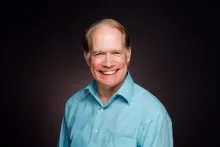
Greg Thomas is the former Pastor of the Cleveland, Ohio congregation. He retired as pastor in January 2025 and still attends there. Ordained in 1981, he has served in the ministry for 44-years. As a certified leadership consultant, Greg is the founder and president of weLEAD, Inc. Chartered in 2001, weLEAD is a 501(3)(c) non-profit organization and a major respected resource for free leadership development information reaching a worldwide audience. Greg also founded Leadership Excellence, Ltd in 2009 offering leadership training and coaching. He has an undergraduate degree from Ambassador College, and a master’s degree in leadership from Bellevue University. Greg has served on various Boards during his career. He is the author of two leadership development books, and is a certified life coach, and business coach.
Greg and his wife, B.J., live in Litchfield, Ohio. They first met in church as teenagers and were married in 1974. They enjoy spending time with family— especially their eight grandchildren.
