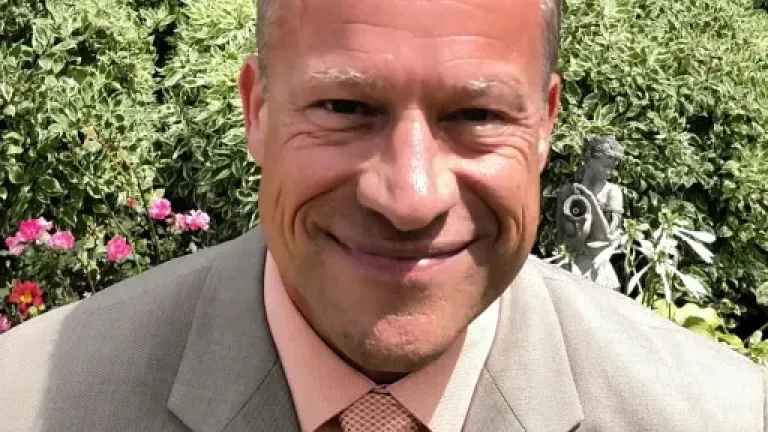

Rick Shabi
This transcript was generated by AI and may contain errors. It is provided to assist those who may not be able to listen to the message.
Well, I was sitting at my office down in Orlando one day, and my office on my desk is right up against the window, and I happened to see some fluttering that was going on or outside. So I stopped and looked and saw something that I, you know, hadn't really seen, you know, for a while. And there was a couple of butterflies that were fluttering around out there. And in the backyard there, we have kind of a, not a vegetable garden, but more of a flowering plant type garden that we kind of inherited when we moved in there.
And it was just really nice to see the butterflies just flying from place to place, and they were kind of like all excited, and they would go to one flower into another flower. And I sat there and I was fascinated by them, because it had been so long since I'd even seen a butterfly. I know when I was growing up it seems like there were butterflies everywhere, and there were caterpillars everywhere, but today it's almost like a rare sight to see them.
I don't know exactly what we've done to have that whole population sort of disappear on us here, but it's nice to see those things. You know, butterflies are kind of one of the mysteries of nature, if you will. Scientists, you know, will say they know, you know, they know what happens from the early stage of a caterpillar when the egg is laid all the way through butterfly, but it's a mystery to them. They can't figure out how did it happen. How can one creature in one life go from where they were to where they are as a butterfly? Totally different creature. So while they know the process and they can define it, they can't, they just simply can't understand it.
It's a unique thing. It's a unique thing in creation. Now you'll remember from your science days probably what some of those stages of butterflies are. I mean, they start out, of course, as an egg, and it's interesting. You know, the egg is laid right there on a leaf. That's where they are. They don't have, you know, mothers that are tending to them or anything. The leaf is right there, so when the caterpillar hatches, he's right there at his food source. He doesn't have to kind of wander around.
Doesn't have to have someone, you know, lead him to it, and he eats. And second stage, of course, is the caterpillar stage. And you know, you remember what caterpillars are. They used to be all of these fuzzy little creatures that would just be on all your plants, it seems like, in the spring and summer.
You just see caterpillars crawling around every place, and there were fuzzy little creatures that were there. And what caterpillars primarily do is eat. I mean, they eat, and they eat, and they eat, and they eat. Three times their weight in several periods of time, because their whole purpose is to gain strength, gain strength for what they're going to be next. So after they're a caterpillar for a while, well, the interesting thing about caterpillars, too, is that, you know, there's many, many that are, many, many that are caterpillars, you know.
But scientists say that 90% of caterpillars either die or are eaten by something else. Only 10% of caterpillars that are ever born, ever emerge, and make it to the final stage of butterfly. It's kind of an amazing, kind of an amazing statistic when you think about it. How scientists figure these things out, I have no idea. I just repeat what I read, right? But it makes sense, because you see a lot, a lot used to see, a lot, a lot of caterpillars, but not as many butterflies.
So it's a difficult process that this, this organism goes through. Well, sometime while at the end of their caterpillar stage, they kind of invert into themselves. And you remember cocoons, people call them chrysalis cocoons, pupas, and stuff like that. And they kind of turn inside out, and all of a sudden you don't see the caterpillar anymore, but you have this cocoon. And it's almost like they're getting ready to be something else, and we know they're getting ready to be something else. Now they're a cocoon.
They stay in that state for a while. They've gathered all this strength and all this, all this strength and might while they've been a caterpillar, because to be emerged from being a cocoon, they have to fight.
They have to fight to get out of that cocoon and become what they're going to become next. And it's interesting, again, scientists say if anyone helps them, if you ever see a cocoon, and the butterfly is trying to emerge, if you help it, it'll die. It has to do it on its own.
It can't have any help, and it has to have the strength in order to break out of that cocoon to become what it's going to be. And of course, the fourth stage is the butterfly. And in the butterfly stage, when you look at the caterpillar, I don't think there's a living being who could ever have imagined that from a caterpillar you're going to have something as beautiful as a butterfly.
Something who's just walking along and crawling along on leaves, that's what their life is. And then in their next stage of life, they're this beautiful creature that fascinates people, and they can fly. Something they couldn't do, all they could crawl. All they could do is crawl when they were caterpillars. And so we have this process of metamorphosis that science talks about, and it's a fascinating thing. It's like the caterpillar. This bird has... that's not bird, this butterfly has two births.
It's birthed once as a caterpillar, and then it's born again as a butterfly, and the two are just as different as you can possibly think about. It's one of those simply magnificent things that God has built into nature. And we often talk about that the physical mirrors the spiritual. And when we look at butter, caterpillar, egg, the caterpillar, to cocoon, to butterfly, it's a picture of what God is doing with you and me. With you and me. You know, he talks about it. He's designed the things, and sometimes in nature he creates those things so that we can see and we can understand the process that he has called you and me into. And the Bible talks about those stages that we are in or the stage that we're in. Let's go back and look at 2 Corinthians 3. 2 Corinthians 3.
And we'll pick it up in verse 18, the very last verse of the chapter there.
2 Corinthians 3, 18 says, We all, and we've read this series of scriptures within the last month or so, but we all with unveiled face. God has taken the veil off of our face. We understand the things of God as opposed to, you know, people who still have that veil on their face as it talks in verses before that they don't understand.
We all with unveiled face, beholding as in a mirror the glory of the Lord. Looking into that mirror, seeing who he is, are being transformed into the same image from glory to glory just as by the Spirit of the Lord. We're being transformed from one thing to another. We can look in the mirror and we can see Jesus Christ. We can see who we are going to be.
We can see who God wants us to be, but we have to go through a process of, and the Greek word that's translated, transformed there, is metamorpho. The same word that we get our English word metamorphosis from. We have to go through a process of metamorpho before we will ever be what God intends us to be. We are all born as flesh and blood.
We are all born with potential to become something far, far different and superior to what we are today. But we need to go through the process that God has us that we are in as we live our physical lives and as we eat the things that God wants us to eat if we're ever going to become what God wants us to be, that final stage.
So we have this word metamorpho. And what it means is it's an internal as well as external change. We're different on the inside and we're different on the outside. You know when the caterpillar becomes a butterfly, he looks different on the outside, but he's different. He kind of goes back in. He's kind of enveloped in himself and he's kind of recreated and then he emerges as this new being that can do things that could never have imagined that a caterpillar could do.
And God has us in the same process. There's four times in the Bible that the Greek word metamorpho appears. And we'll talk about those, but let's go back a few chapters in here to 2 Corinthians 11 where the word transformed is used again. And let's draw a contrast here between metamorpho that we just read about, the process that God has us in, and another process of transformation that is not in the same spirit or in the same vein of what God has us in.
In 2 Corinthians 11, let's pick it up in verse 13. It says, For such are false apostles, deceitful workers, transforming themselves into apostles of Christ. And no wonder, for Satan himself transforms himself into an angel of light. Therefore, it's no great thing if his ministers also transform themselves into ministers of righteousness, whose end will be according to their works. So we have metamorpho O that you and I are in, and then we have this other word transform that comes from a companion word of metamorpho O.
I couldn't even begin to pronounce it, but it's the Greeks in the Greek, in strong accordance, Greeks number 3345. And here's what it means. As I looked it up to see what's the difference between these two words, Vines, you know, the complete word study of the dictionary of the New Testament says this about verses 13, 14, 15, where that word is also in the English called transform because it's a transformation, but it's a different transformation than what God has us as. It says from this word study, it says, It is possible for Satan to, they use the word, but it's Greek number 3345, it's possible for Satan to Greek 3345 himself into an angel of light.
That is, he can change his outward semblance, but it would be impossible to apply metamorpho O to any such change, for this would imply an internal change, a change not of appearance, but of essence, which lies beyond Satan's power. So when he transforms himself, he can make himself look the part, right? I could dye my hair, cut off my mustache, grow a beard, I could transform myself into something else.
It doesn't mean the inside has changed. I could just look the part. And so it's telling us here in verses 13, 14, 15, there are people who can transform themselves to look like the ministers of Christ. Satan can transform himself to look like an angel of light, but there's no internal change. They're just doing it for an ulterior purpose. So when you read the word transform, you have to look and see what is it? What God is looking for from you and me, of course, is a change of heart, a change of mind, a change of essence, that we become someone different than we were before he called us, before we repented, before we were baptized, before we received his Holy Spirit. If we just change the outward appearance, if all we do is go to church, if all we do is not eat pork, if we just do things and not become who God wants us to be, then we're doing Greek 3345, but God wants us to do Greek 3339, the metamorpho, the complete change, so that we can become something different than we are now. And that's what he has planned for us. But let's today, you know, draw that distinction, but let's look at true transformation. Let's look at true metamorpho, and let's go back to some words that Jesus Christ said, because in this process that we are in, much like the process of egg to caterpillar to cocoon to butterfly, we see some stages. And back in John 3, Jesus Christ, as he's talking to Nicodemus, talks about this very process that we're in. John 3. John 3 in verse 3, as Nicodemus comes to him, and Jesus Christ takes the opportunity to say this to him, says, Jesus answered and said to him, most assuredly I say to you, unless one is born again, he cannot see the kingdom of God. Unless one is born again, he cannot see the same kingdom of God. Well, Nicodemus didn't know what he was saying, and he goes, how can a man be born when he's old? Can he enter a second time into his mother's womb and be born? And Jesus answered, most assuredly I say to you, unless one is born of water and the Spirit, he cannot enter the kingdom of God. He must be born of the water, he must be born of the Spirit. And that which is born of the flesh, that's where you and I are today, that's which is born of the flesh, is flesh, and that which is born of the Spirit is spirit. So he said, don't marvel to you. Don't marvel that I said to you, you must be born again. You must be born again. Just like the butterfly had to be born again, had to emerge from the cocoon a second time to become what it was. Now remember, it had to get strong, it had to fight through that second birth to get to where it was, and most don't. Most don't make it. 90% don't make it to that stage. A very sad fact, if you will, of the of the butterflies statistics there. So Jesus Christ was talking the same thing. We're born of the flesh, but if we're going to be in the kingdom of God, we're not going to be flesh, we're going to be born of the Spirit. Something that we go through. Let's go back to Romans 8 or forward to Romans 8.
Paul spoke of this process as well, and being in the flesh and being in the Spirit. Romans 8 verse 7 just begins always good to remind ourselves of who we are when we're in the flesh. Romans 8 verse 7, because the carnal mind is enmity against God. It is not subject to the law of God, nor indeed can be. That's kind of the state that we're in before God calls us. We can't even begin to follow God until he calls us and gives us the strength. So then Paul writes, those who are in the flesh can't please God. That first stage, unless we're beginning to be transformed, we can't please God, but you're not in the flesh, but in the Spirit, if indeed the Spirit of God dwells in you. Now if anyone doesn't have the Spirit of Christ, he's not his. So in our lives, God calls us. We respond to that call. We understand what he's saying. We repent. We change our lives. We look to God to change us. We're baptized. We have hands laid on us. We receive his Holy Spirit, and then God sees us as begotten creatures, now about to be born when he returns to earth as spirit beings. But he's working in us now in that next stage to transform us from flesh to spirit, much like the caterpillar goes from caterpillar to cocoon to butterfly. And if Christ is in you, the body is dead, verse 10, because of sin. You've passed from that place. You now understand what it is. You don't live your life to do the things of the flesh anymore. Now you do the things to please God. By the Spirit of him and if Christ is in you, the body is dead because of sin. But the Spirit is life.
It's the Spirit that leads us to the next phase of life. If we stay in the flesh and never emerge from that, if all we ever do is worry about ourselves, always we do, we eat of the things of the flesh, then we'll die. We'll perish. We'll never get into phase four of the life or phase three of the life. We'll perish just like so many of those caterpillars do. But if the Spirit of him who raised Jesus from the dead dwells in you, he who raised Christ from the dead will give life to your mortal bodies through his Spirit which dwells in you. Gotta begin the process of metamorpho. Oh, got to be in the process of transforming or letting God transform us into who he wants us to become. Not something that we can do on our own. Not something we can do in our own power. Not something we can say, alright, the map and this is what I'm going to do. Until we learn how to do things the way God ordained, we won't be. We won't progress from one to the other.
Forward a few chapters to Romans 12. Romans 12. We'll read verses 1 and 2, but in verse 2 we find one of the four verses that this word metamorpho, oh, Greek 33-39, is used. But let's read verse 1, this verse. Romans 12. These are verses you all know. Memory verses probably for most of us. I beseech you therefore brethren by the mercies of God that you present your bodies a living sacrifice. And not too long ago we talked about how our lives need to be sacrifices. They had the sacrifices in the Old Testament, but we need to have a sacrificial attitude toward God as well. That you present your bodies a living sacrifice, holy, acceptable to God, which is your reasonable service. And don't be conformed to this world, he says, but be transformed, be metamorpho-oed by the renewing of your mind, that you may prove what is that good and acceptable and perfect will of God. Go through metamorphosis. Go through the same process spiritually that the butterfly goes through physically. Go through metamorpho-o. Here's what Vines says about Romans 12 verse 2. It says, Christians are to undergo a complete change which under the power of God will find expression in character and conduct. Go through the process that God wants you to. You'll see the results in character and conduct. That's what God wants us to see. We're one way. We're one way before we're called. We may be angry.
We may have all sorts of things going on, but when we are called by God and when we are being transformed by His Spirit, the fruits of love, joy, peace, goodness, gentleness, kindness, meekness, faith, all those should be being demonstrated in us.
Putting God first, living His law of life, not being able to just recite the Ten Commandments, but actually people see us applying them in our lives that they become us, they define us, as we become that picture of who God wants us to be. So it's something that God wants us to do that we will see in the way we behave, the way we think, the way we are. The other thing we can pick up here in verse two is you notice that Paul doesn't say, you transform yourself. He says, you be transformed. Transformation, metamorpho, isn't something you and I can just decide one day we're going to do. You know what? I don't want to be like me anymore, and therefore I'm going to be what God wants me to be. No, God has to do it to us. We have to yield to Him. It's not something by our power or by might it's going to happen. We have to let God do it to us. And if we don't allow God to do it, if we don't yield, if we don't yield ourselves, if we don't humble ourselves before Him, if we don't acknowledge that it's His way, not our way, His will, not our will, if we don't allow ourselves and if we don't humble ourselves in that way to become totally committed to Him, somewhere along the line, the process is going to be interrupted. It's not going to result in the butterfly at the end of the entire life cycle. It's going to end up in something not at all like that. Not something as beautiful, not something as mysterious as that. We have to resubmit to God and let Him, as it says in 2nd Corinthians 5 verse 17, we have to let Him transform us into a new creation. Same life, same physical body, different person, different person as we go through the process. As our thinking changes, as our heart changes, as our whole being and manner of operating changes as God works through us. So we see what God is wanting and then, you know, Paul says here in this verse where he says, be transformed. How? How do we get transformed?
Paul answers the question by the renewing of your mind. By the renewing of your mind, how do we renew our minds?
Well, we can think back to what the caterpillar does. When the caterpillar is born, what does he do? He eats. He eats, right? That's what he does. Scientists said that all they do is eat. They eat and eat and eat. They live on those leaves.
That's where they are. They're not flitting here and flitting there. They're not having junk food. They are eating those leaves that give them the nutrition that they need to go through the rest of the process so that they can become what it is that that God had designed for them to be. Now, we can go back into the Holy Days. We're here, you know, just a few weeks away from the fall Holy Days beginning, and we know what the fall Holy Days picture, but let's think back to the beginning of the Holy Days season, back to the time of Passover and the Days of Unleavened Bread. What's one of the lessons that we learned from the Days of Unleavened Bread? Well, we put before the Days of Unleavened Bread all the leavening out, right? We make a commitment. We're putting it all out, but what do we do during the Days of Unleavened Bread? We learn to eat. Eat the unleavened bread. Put the old out and put the new in. You know, Jesus Christ said, or one of the apostles said, your words are spirit and your words are life. If we're going to renew our minds from where they were at the time that would before we were baptized, when we were feeding on movies and TV shows and media and whoever knows what or whatever else we may have fed our minds in all those years, if we're going to renew our minds, we've got to be feeding on something else. We can't be feeding on the same thing that we always fed on. We're going to renew our minds. It has to have different things going into it. It has to become alive again. It has to become changed, and it can't be changed through the same diet that we've always had. We have to eat the unleavened bread. It needs to be the things that we're feeding on. It's the thing that will give us strength and as we are led by the Holy Spirit. That'll be the thing that'll transform our thinking, transform the way we think when we don't have ourselves tied to TV, tied to internet, tied to whatever it is that's out there, but tied to God. It's the same process that we go through if we want to renew our bodies. If we want to renew our bodies, if we're sick, if we're run down, we're tired, we have all these things going on with us, and all our lives we've had a certain diet. Well, if you're going to renew your body, you can't renew your body by eating the same thing. You got to change. You got to go back to the things that are going to produce nutrition. You've got to eat the things that are going to make a difference. If you want to renew your body, it's the same thing with our minds. You've got to eat the things of God. You've got to take that first lesson or the days of unleavened bread. Eat. Eat the unleavened bread. Eat the unleavened bread, and let it become part of you. Let it define you.
Let's go to Ephesians. Ephesians 2.
Ephesians 2.
Verse 19. So those of us who God has called, who we've committed to Him, we follow Him. In verse 19, Paul writes, under inspiration by God, Now therefore you're no longer strangers and foreigners, but fellow citizens with the saints and members of the household of God. Now you're part of his family.
Having been built on what? What are we built on? The things that we ate prior?
Having been built on the foundation of the apostles and prophets? That's the foundation. That's what we feed on. That's what needs to become our basis.
That's where our minds need to go. That needs to be the thing directing us. And that when we think about, what do I do? We have our minds on the Word of God.
Not the way the world does it. Not the way we may have been grown up doing it, thinking that we do it, but the way God says to live our lives. Letting those scriptures and letting the application of those in our lives become the things that guide us. Having been built on the foundation of the apostles and prophets, Jesus Christ Himself being the chief cornerstone. That's who we have to be.
That's where we get our strength. And in this lifetime, the whatever, 80, 90, 100, 110 years that God gives us in this lifetime to become strong and the only way to become strong that you can pass from one phase to the other, feeding on His Word. Feeding on the diet He gives us. Eating those things and making sure they're part of who we are. As God works with us, continues to open our minds, and we allow Him to transform us into who He wants us to be. 2 Timothy 2.
2 Timothy 2.15. Again, a couple of verses here that we've read. You know them. But here, as Paul is instructing a new minister, he writes to him, and of course he's writing to all of us who are in training to do the things and to become teachers of what God's way is when Jesus Christ returns. In 2 Timothy 2.15, he says, Be diligent. We've talked about that before. Diligent means put your effort into it. Put hard work into it. Don't just kind of, 10 minutes before you go to sleep at night, think, oh, I need to do some, I need to open the Bible at least one time today. Be diligent. Work at it. Be diligent to present yourself approved to God. A worker who does not need to be ashamed, rightly dividing the word of truth. Divide that word. Devour it. Eat it. Be hungry if you haven't had it that day. Feel like something's missing in your life. The next verse he says, you know, you can do without these, shame, profane, and idle babblings, for they will increase to more ungodliness. Leave those things out. Feed on the things that are going to strengthen you. One chapter over in chapter 3 verse 14, he writes, you must continue. He's writing it to Timothy. He's writing it to you and me, too. You must continue in the things which you have learned and been assured of, knowing from whom you have learned them. And that from childhood you've known the holy scriptures which are able to make you wise for salvation through faith which is in Christ Jesus. That's the answer. That's the nutrition. That's the basis. That's the food. The caterpillar doesn't neglect its food.
Neither should people who are going through the UNI who are going through that process of more and more faux-oh. Let's go back as Paul addresses this in Romans 8 where we were reported to. Let's go back to Romans 8 again.
Romans 8.
Verse 5 says, for those who live according to the flesh. That would be the world that we live in all around us. For those who live according to the flesh, set their minds on the things of the flesh. The thing they're most interested in, the thing they get up for in the morning, is the things that, you know, the world frankly is interested in. What am I gonna do? What am I gonna wear?
How much money am I gonna make? All these physical things that are part of our lives. We can't get away from them. They're important. But that's all they dwell on. That's what their motivation is. For those who live according to the flesh, set their minds on the things of the flesh. But those who live according to the Spirit, the things of the Spirit. Well, they get up. They have all these things, all these activities of life that have to happen. We have to have jobs. We have to have money. We have to provide for our families. We have to do all these things. We can't get away from them. It's part of life. But what our real motivation is, is the things of the Spirit. What God has called us to. Always keeping in mind what he has out there. His plan for you and me. That has to be the overriding thing. And as we go through our day, doing the things to the best of our ability. Being very good employees. Being very good students.
Being very good at everything we do. Being honest people. Living his way of life as we go through those things. But always remembering. Always remembering who we are and what God is doing with us. And that we live for a purpose that he has called us to. Not forgetting that. And not allowing the world or people or whatever to take us back into the flesh and start doing things the way of the flesh. And so I ask, I can ask myself, what are the things that I think about most? What are the things that I think about most? When I'm, when I'm looking for something, what do I, what do I, what do I pick up to read? What do I turn on TV?
What is the thing that I do? Maybe we can all do that. Because you know what it tells us something about ourselves. If we look at what we're eating and how we spend our leisure time and how we do it, what are we eating? What is the thing that we would gravitate to? The things of the flesh or the things of the Spirit?
Caterpillars. Caterpillars who understand what the end result or the end of life is, they're always eating the leaves that are gonna make them strong. We need to be paying attention to that as well.
Well, eating is, eating is one thing. If we go back to Ephesians, we see as Paul was talking about our calling. He says some other things about it too, as we are renewing our minds, as we allow God to transform us, metamorphose, metamorpho owe us into who he wants us to be, as it becomes evident in our conduct and character. In Ephesians 2, if we go on, we read verses 19 and 20. Let's go on to verse 21. Ephesians 2. We read that the foundation is the Apostles and prophets, Jesus Christ is the chief cornerstone. Verse 21. In whom the whole building, being fitted together, grows into a holy temple in the Lord. Verse 22. In whom you also are being built together for a dwelling place of God in the Spirit. Key word in those verses, the word together. Together. You know, we talked before I left about, you know, the community that God has called us into. We talked about Koinonia. The need for us to grow together is one body. The need for us to grow in agape and the love of God. And that when Christ said in John 1335, by this shall all men know that you are my disciples, if you have agape for one another. But that's something, you know, we need to keep in our mind too. We need to study, but we need to keep in mind that God's plan is not just me alone, you alone. It's together. Together He is building the building. And so there's a concept in renewing our minds of fellowship, the Koinonia that we spoke about a few weeks back as well. We can't neglect it.
He's not building us with just one stone. He's building us together. When He builds a family, He's building a family. He's not building just little individual pieces that are going to be there in the kingdom, never interfacing with each other or whatever. He's building us together. And so He's put us together in a body to work with us, to grow us, and develop us. That means we pray for one another, we help one another, we encourage one another, we admonish one another, we work with one another, we love one another, we pray for everyone, we want everyone to be in the kingdom, and we understand what that means. It's not just a matter of, hi, how are you? But that we get to know each other and we become the body that God wants us to, as He transforms us to from a body of 50 or 60 individuals to one family. One with each other, one with God, one with Jesus Christ. This is Jesus Christ's will, was for all of us. When we renew our minds, when God renews our minds, that becomes part of what He wants us to do. Exactly the way He puts it in His Bible, in His Word to us, what He wants us to do. It's His power. It's His power that leads us through transformation. It's His spirit that will lead us through the process. We just have to be aware, yield, and follow Him as He does that. Let's go back to 1 Corinthians 2. 1 Corinthians 2.
And of course, in 1 Corinthians 2, Paul is writing to the Corinthian church, which is a new church made up of Jews and Gentiles. It's having some of its challenges, just like, you know, we have challenges when we go through life and we learn God's way of life. But in chapter 2, you know, he talks about the change that comes when God opens our minds to His way of life. And it's a beautiful series of scriptures. I just want to read through a few verses here in chapter 6 to remind us of this as we talk about the metamorphosis.
1 Corinthians 2 verse 6. Paul writes, however, we speak wisdom among those who are mature, those who are spiritually mature, those who understand the way of God, the way of words, you know, that we might speak to the world and they would look at us and say, that doesn't make any sense, that's all done away with, we don't need to do that. He says, we speak wisdom among those who are mature, yet not the wisdom of this age, nor of the rulers of this age who are coming to nothing, but we speak the wisdom of God in a mystery. God's working something out. The world doesn't understand it, but He's working something out among those. Scientists don't understand what exactly happens. They understand the process. They know what happens from stage 1, 2, 3, 4 in a butterfly's life. They don't get it. What happens? How can that possibly be that a caterpillar can turn into a beautiful flying butterfly? We speak the wisdom of God in a mystery, the hidden wisdom which God ordained before the ages for our glory, which none of the rulers of this age knew, for had they known they wouldn't have crucified the Lord of glory. But as it is written, I hasn't seen nor your heard nor has it entered into the heart of man the things which God has prepared for those who love Him.
That's what His promise to you and me is. We can't even understand it. It hasn't entered into our heart yet, but what it is is so magnificent we believe God. And what it is, it comes from this life you and I are living today in these mortal fleshly bodies, but they're going to be something so much different as we allow God to take us through the process. Verse 11, for what man knows the things of a man except the spirit of the man which is in him? Even so, no one knows the things of God except the Spirit of God. We didn't understand any of it until God's Spirit was with us, and we understood that this Bible is His Word. What we were taught in other religions isn't the truth of the Bible, that there is a Sabbath that He expects us to keep, not to just not work on it, but to participate in it, to appreciate it, to understand what it means, and to delight in it, as our one day, apart from the ways of the work of the world, that we can be with God, be with each other, and look forward to the time when the earth and man and God are in harmony. For what man knows the spirit of man except the spirit? Even so, no one knows the things of God except the Spirit of God. Now we have received not the spirit of the world, but the Spirit which is from God that we might know the things that have been freely given to us by God. The things, as he goes on through the rest of the chapter, that help us discern good from evil, right from wrong, that help us follow God's way to know where His voice is and to not be fooled by those who would transform themselves, Greek 33, 45, into something different. Because if we know God, if we're led by Him, we won't be fooled. We'll understand the voice. We'll know the voice. And we won't be led astray by every wind of doctrine or the cunning, cunning craftiness of those who might twist things a little bit that appeal to us. We'll stay the course. We'll stay the course as we follow God and as He, as we allow Him to change us. God gives us the power. God gives us the power. There's a lot of things we have to change in our lives. Some have significant things to overcome. You know, we live in a world that's just wracked with addictions, alcohol addiction, drug addiction, shopping addictions, gambling addictions, you name it. And those are hard. Those are difficult things for people to overcome. But with God's Spirit, they can all be overcome.
They can all be overcome because He gives us the power to do that. Well, that's one place metamorpho is used in Romans 12, 1, and 2. Let's look at a second place. The word is used. Go back to Scripture I opened with in 2nd Corinthians 3. 2nd Corinthians 3.
And this time let's read verses 14 to 18. We read verse 18 before. But let's look at some of the some of the words that preceded verse 14. It says, Speaking of Israel, their minds were blinded.
For until this day the same veil remains un-lifted in the reading of the Old Testament because the veil is taken away in Christ. It's His Spirit, or God's Spirit, that helps us understand how the Old and New Testament fit together. That the whole thing is the Word of God and they are a perfect continuity and they complement each other. They never contradict each other. But even to this day when Moses is read, a veil lies on their heart, verse 15. Nevertheless, when one turns to the Lord, the veil is taken away. Now the Lord is the Spirit. Now where the Spirit of the Lord is, there is liberty. But we all, with unveiled face, beholding as an emir, the glory of the Lord, are being transformed into the same image from glory to glory, just as by the Spirit of the Lord. We will see His glory.
One day we will see Him and we will see Him in all His glory. You know, the Apostle John and the Transfiguration, along with a couple of the other Apostles, saw Jesus Christ in all His glory. Let's go back to 1 John 3.
1 John 3 and verse 1.
Behold, John writes, John who walked with Christ for three and a half years, who has remained true to Him throughout the rest of his life until his death. 1 John 3, verse 1, Behold, what manner of love the Father has bestowed on us that we should be called children of God. It's a magnificent thing. It's a tremendous, tremendous blessing. Therefore, the world doesn't know us because it didn't know Him. It didn't want what He had to offer, and so the world isn't going to want what we have to offer either. Beloved, now we are children of God, and it hasn't yet been revealed what we shall be. Today we still look like fleshly, mortal human beings. It hasn't yet been revealed what we shall be, but we know that when He is revealed, when He returns to earth, we'll be like Him, for we shall see Him as He is. And John saw that in a vision. He saw what Christ was like, would be like, after his physical life. And here, 50, 60 years after his death, he's writing this, and he says, we're all going to see it. We're going to be like Him. And John could write that with feeling because he saw it, and if we read the Bible, and as God opens our minds, we can see the picture of who God wants us to be. Maybe it's in character, and maybe it's in conduct now. You know what? In verse 3, he answers it. He says, everyone who has this hope, everyone who wants to be like Jesus Christ, everyone who wants to be transformed into what He is now, everyone who wants to complete the prophecies of metamorpho O, everyone who has this hope in Him purifies Himself, just as He is pure. If you want to go through it, you got to make decisions. You got to make choices. You got to leave the past behind, and the flesh behind, and the Spirit, choices have to be made for that. The things of our mind that take us back to dark places before we're baptized that can pop up at any time in our lives, we just simply have to learn, reject them, resist them, follow God implicitly. Not easy to do, but with God's Spirit we can do it.
With God's Spirit and God's power we can do it. You know, Matthew 5 verse 48, Christ said, become you perfect, become you blameless, just as your Father in heaven is blameless. Can't do that on our own. Can only do that with God's Spirit as we allow Him to make those changes in us as we do the things that He wants us to do.
Let's go back to Mark. Go Mark, and Mark we see, and Mark, and also a corresponding verse in Matthew, we see the third and fourth times that metamorpho O is used.
In Mark 9, it is the transfiguration that I was just referring to. Let's read through a few of the verses here.
Verse 9, let's begin with verse chapter 9 verse 1. Christ said to them, assuredly I say to you that there are some standing here who will not taste death till they see the kingdom of God present with power. And some did. He said some, he didn't say all, some will, and sure enough in a vision just six days later in verse 2, Jesus took Peter, James, and John and led them up on a high mountain, the part by themselves, and he was transfigured before them. The word transfigured, Greek 3339 metamorpho O. He was transfigured before them. His clothes became shining, exceedingly white like snow, such as no launderer on earth can whiten them. And Elijah appeared to them with Moses, and they were talking with Jesus, and Peter answered and said to Jesus, Rabbi, it's good for us to be here, and let us make three tabernacles, one for you, one for Moses, and one for Elijah, because he didn't know what to say. They were greatly afraid. They were astounded at what they were saying, but Peter's reaction was, this is so good!
This is amazing! This is amazing what you're showing us! Transfigured, metamorpho O. They had a vision, the same word transfigured appears in Matthew 17, and the account there, the fourth time the word is used. Metamorpho O. They saw the transformed Jesus Christ in all of his glory. He was the same person that they knew, same person they walked with for all those years, three and a half years, that he was on earth, but for a moment they saw in a vision who he was going to be, what he was going to be like, and they knew that's what God had in mind for them, too, because Christ is the firstborn among many brethren. He was the first one to go through the process, to complete the process. Born of flesh, led by the Holy Spirit, went through the life that he did, which included many sufferings. Hebrews 10 tells us he became perfect through sufferings, just like that cocoon, and it has to struggle. It had to struggle hard to become a butterfly. It's not just an easy thing where it just sort of happens.
It has to work, and it has to be strong, and it has to go through the process.
Jesus Christ, through many sufferings, you and me, through many sufferings, as God strengthens us and strengthens our faith and strengthens our loyalty to Him.
We have to struggle. We have to be strong, and just like the caterpillar and the cocoon, no one can do it for us. We have to do it ourselves. Of course, we need God.
He does it for us, but as much as we would like to do it for each other, as much as we would like to do it for our children, do it for our spouse, do it for our moms and dads, as much as we would like to do it for them, we can't. It has to be something we do for ourselves. Philippians 2.
Philippians 2.
And verse 12.
Philippians 2.12, Therefore, my beloved, as you have always obeyed, not as in my presence only, but now much more in my absence, work out your own salvation with fear and trembling. You've got to work out your own salvation. We're together as a body. We're together as a family. We help each other. We encourage each other. We admonish each other. We pray for each other. We're there to help each other. We're there to bear each other's burdens, but we have to work out our own salvation with fear and trembling. There's things that we have to do ourselves. We can't do it for each other as much as we would like to. God will give us the strength. God will be with us. He's there through the whole thing, but we have to do it ourselves. We have to become strong and do the things that God calls us to do. For it is God who works in you, both to will and to do for his good pleasure. And then he goes on, I won't read. Well, no, let's go ahead and read 14. If you do all things without complaining and disputing that you may, there's the word again, become through the process that you may become pure, that you may become blameless and harmless, children of God without fault in the midst of a crooked and perverse generation among whom you shine as lights in the world. That's who we become.
That's who God will take us on. That's who God will have us become if we follow him. If we build the character that he wants us to, as we make our own choices to not do the things of the flesh but do the things of the Spirit, as we help each other, as we encourage each other, as we have the strength from each other that are important as the love of God that's with us all the time as well. He knows where he wants us to be. Christ is the same as he was when he was on earth.
Now he's just in a perfect body. No longer flesh but Spirit. He was born of the flesh and when he was resurrected, he became Spirit. Egg, caterpillar, cocoon, butterfly. We talked about the days of Unleavened Bread. Let's go to 1st Corinthians and talk a little bit about the holy days ahead of us. 1st Corinthians 15. Feast of Trumpets is what something like five weeks from Monday?
We'll be talking about the return of Jesus Christ and what all that means.
Those of you who have been around a while, you know what those days picture.
Each year we learn a little bit more about what God's plan is. But in 1st Corinthians 15, we see the Feast of Trumpets. God's plan for you and me. Same process that Jesus Christ went through. 1st Corinthians 15 verse 22. For as in Adam all die, the first man physical Adam, all die, even so in Christ all shall be made alive. First life in flesh, in the resurrection be become spirit. But each one in his own order. Christ the firstfruits. Afterward those who are Christ at his coming. He did it first. We know what the process is because he's done it. He's completed. He's sitting there at the right hand of God. The same process that he expects and very much wants you and me to complete that he says he'll finish it. He'll finish what he started in us if we let him.
Step down to verse 40. He makes Paul, again under inspiration of God, shows shows how these things work together. There are celestial bodies and terrestrial bodies. But the glory of the celestial is one and the glory of the terrestrial is another. God's made our body, our physical body. David said, look how wonderful it is. Look at all the things that it can do. But you know it pales in comparison to the spiritual body that we'll have. It has aches and pains. It has limitations as well. There's no limitations in the spiritual body.
There is one glory of the Sun, another glory of the moon, and another glory of the stars. For one star differs from another star in glory. So also is the resurrection of the dead. The body is sown in corruption. It is raised in incorruption. One corruptible body, another uncorruptible body. Verse 46, However the spiritual is not first, but the natural and afterward the spiritual.
The flesh first, the time, the caterpillar stage. When we go through these things, when we be strong, when we eat, when we grow and become who God wants us to be.
The spiritual is not first, but the natural and afterward the spiritual. The first man was of the earth made of dust. The second man is the Lord from heaven.
Verse 48, As was the man of dust, so also are those who are made of dust. And as is the heavenly man, so also are those who are heavenly. Verse 49, As we have borne the image of the man of dust, we shall also bear the image of the heavenly man.
This I say, brethren, flesh and blood cannot inherit the kingdom of God, nor does corruption inherit incorruption. But I tell you a mystery. We shall not all sleep, but we shall all be changed. The physical body will pass away in a moment in the twinkling of an eye at the last trumpet, for the trumpet will sound and the dead will be raised incorruptible, and we will be changed. Now free to fly, now free to do what God wants us to do, now different, free from all the shackles of this life and the limitations of the flesh, now the same person with all the character that's been built, but now doing what God's will is in a body that is perfect and character that is perfect as made perfect by God. For this corruptible must put on incorruption and this mortal must put on immortality. If we're going to be in the kingdom of God, we must pass through the stages to become a spiritual being, and we must do it the way God ordered. Not on our terms, not on our will, not on our ideas, but on God's will with His Spirit as we yield, as we yield to Him and allow Him to lead. The process that God has us in right now is a fascinating and beautiful process. We see it pictured around us in nature, unfortunately not as often as we see. You know, when you look at a butterfly, I hope from here on out you'll look at a butterfly and you'll remember what that butterfly has gone through and how it parallels what you and I are going through. We may be in the caterpillar stage right now. Scientists say that 90% of those caterpillars will never become a butterfly. I pray that's not the case for us. I pray that we will go through, that we will be strong, that we will do the things that God says, that we will eat His Word, that we will bind together, that we will be led by His Spirit so that everyone here, everyone here, can become the butterfly that God wants us to be.

Rick Shabi (1954-2025) was ordained an elder in 2000, and relocated to northern Florida in 2004. He attended Ambassador College and graduated from Indiana University with a Bachelor of Science in Business, with a major in Accounting. After enjoying a rewarding career in corporate and local hospital finance and administration, he became a pastor in January 2011, at which time he and his wife Deborah served in the Orlando and Jacksonville, Florida, churches. Rick served as the Treasurer for the United Church of God from 2013–2022, and was President from May 2022 to April 2025.
