
Roy Holladay
This transcript was generated by AI and may contain errors. It is provided to assist those who may not be able to listen to the message.
We know that this feast is called Pentecost because of the name given for the first time in the Bible in Acts 2, verses 1-4. It says, when the day of Pentecost had fully come, they were all with one accord in one place, and suddenly there came a sound from heaven as of a rushing, mighty wind, and it filled the whole house where they were sitting. Then there appeared to them divided tongues as of fire, and one sat upon each of them, and they were all filled with the Holy Spirit and began to speak with other tongues as the Spirit gave them utterance.
The term here, Pentecost, actually comes from a Greek term called Pentecostos. The Greek scholar Feyn says it's an adjective denoting the term 50th, which is used as a noun with the day being understood. In other words, it means the 50th day. So it's shorthand for this, just to get it right. It actually means 50th, but it's an abbreviation of what it actually means, which is the 50th day. Not 50th, like many say, it's 50th. It's an adjective. But there's another name for this feast, which brings out three different biblical meanings through three illustrations or analogies that I want to concentrate on in this message.
The three key terms are first fruits, first borns, and first deposit. Three different illustrations that people knew very well in those days. The first has to do with first fruits, as Joel mentioned as well. And one of the names for Pentecost is the day of the first fruits. It's an agricultural term. It comes from two Hebrew words in the Old Testament, meaning chief and then the earliest ripened part of a crop or a tree.
So it's kind of the best and the first that is brought out from a crop or a tree. Also, in the Greek, the term for first fruits is aparkai. A-P-A-R-C-H-E. And it is used in the singular in the Greek. It's not first fruits in the Greek, it's first fruit. But we make it into a plural. Sometimes that can be confusing, as we will see in some cases where it refers to someone and it says first fruits.
But actually in the Greek, it means first fruit. And this was the first fruit of the land offered to God as the owner of the land. Notice in Numbers 28 verse 26, it says, Also on the day of the first fruits, when you bring a new grain offering to the Lord at your feast of weeks, you shall have a holy convocation. You shall do no customary work. That's why we are having a holy convocation today. And that's why today is the day of rest, not of labor or work. But one of the terms for Pentecost was the day of the first fruits. So God wanted to emphasize that Pentecost was very closely related to the term first fruits, which is our first study and application for today.
Why is this feast related to the first fruits? Actually, because it began the countdown of those 50 days from the Sabbath during the days of Unleavened Bread. That's when the first wave sheaf was taken from the barley crop and was waved before God. Barley was the grain that grew first. It ripened first. It didn't take as long. And so by the time of the Passover season, they could begin to harvest that first crop. But it says then, as you can read in Leviticus 23, 15-17, and 20-21, it says, When you come into the land which I give you and reap its harvest, then you shall bring a sheaf of the first fruits of your harvest to the priest.
And you shall count for yourselves from the day after the Sabbath, during those days of Unleavened Bread, and from the day that you brought the sheaf of the wave offering, seven Sabbaths shall be completed. Count 50 days goes on to say, and when it says count 50 days, actually that in the Hebrew is the equivalent to Pentecost. 50 days, the 50th day, to the day after the seventh Sabbath, then you shall offer a new grain offering to the Lord. You shall bring from your dwellings two wave loaves of two tenths of an ephah, which would have been about 10 pounds, so it wasn't a small loaf at all.
Those were two large ones. They shall be a fine flour. So this was not barley, this was wheat flour. They shall be baked with leaven. They are the first fruits to the Lord. These two loaves are the first fruits that are presented to God. This feast was also called the Feast of the Harvest because it was larger than the barley harvest.
So you had the barley harvest in the spring, and now at the beginning of summer you had the wheat harvest, which you presented the first fruits of the wheat harvest before God.
It goes on to say, three times, this is from Exodus 23, verses 14 through 16, three times, you shall keep a feast to me in the year, you shall keep the feast of unleavened bread, that includes Passover and unleavened bread, those are eight days in total, in the spring, none shall appear before me empty. So notice, it's not just for one festival, we're supposed to bring a good will offering to God. A Thanksgiving offering we could say as well. And the Feast of Harvest, this is talking about Pentecost. The first fruits of your labors, which you have sown in the field, and the Feast of In-Gathering at the end of the year, which is in the fall. That was the third harvest, when you have gathered the fruit of your labors from the field. So again, the Feast of Harvest is referring to the one called Pentecost.
Notice in Exodus chapter 34 verse 22, it says, and you shall observe the feast of weeks. Remember, they had to count to seven weeks, and then one week, and then one week, and then one week, and then one week, and then one week. The Feast of weeks of the first fruits of what? Harvest of the wheat harvest. This distinguishes it from the earlier barley harvest. From the earlier barley harvest. So this was the second harvest as the wheat matured during those summer months. And then there would be a third harvest in the fall. Now, the most important of all this is not just talking about the first fruits in the Old Testament and how they were to be thankful to God and bring these first fruits to God. In the New Testament, now God uses the spiritual significance of this Feast of Harvest to discuss the brethren as the first fruits of God. Do you know, brethren, what it means to be chosen as a first fruit?
The first part of a spiritual harvest? What a great privilege it is! We don't many times appreciate it. We don't comprehend it. Of all the billions of people out there, God has just taken a small group, the first fruits, to use and to develop for the future. God's brethren are named first fruits in Scripture and more than once, just to make sure nobody misses the point.
So now we go from the analogy of agriculture and of a harvest to the second analogy, which in that sense, we're talking about this first illustration going from the agricultural application now to the spiritual application. God is doing the planting and he is doing the sowing. Notice in Romans 16 verse 5. It says, Greet my beloved Epaeneetus, who is the first fruits of Achaia to Christ.
Paul, at the end of the epistle, is greeting the brethren because he was sending this off to the brethren. Epaeneetus was one of the first of the brethren God has called in Achaia, which is the area of Corinth, southern part of Greece.
So he says this is one of God's first fruits that he has chosen out of the world to have in his coming kingdom. Notice in 1 Corinthians 16 in verse 15, again toward the latter part of the epistle, Paul is sending greetings to the brethren. He says, this is to the Corinthians, he says, I urge you brethren, you know the household of Stephanus, that it is the first fruits of Achaia. So again, other brethren that were called in that area of Corinth. So he's sending a greetings to them. So it was no longer just about the fruits of the land. Now it's talking about the spiritual fruit that God is gleaning. He is gathering.
Then the Apostle James also brings up that the brethren are called first fruits. Notice in James chapter 1 in verse 18, he says, of his own will, talking about God, he brought us forth by the word of truth, that we might be a kind of first fruits of his creatures. So God revealing the truth, opening our minds to the truth. That's the way God calls a person, begins to choose them, starts developing them into one of these first fruits.
The Good News Bible has this translation. By his own will, he brought us into being through the word of truth so that we should have first place among all his creatures.
That's what it means to be first fruits. That's what God is doing with us.
We don't deserve it. He could have called a lot better quality type of people, but he has chosen us, brethren, the weak and humble of the world. There's another scripture in 2 Thessalonians chapter 2 verse 13. If some of you use the New International version, this one has a slightly different than the King James because manuscripts have a different word here. The New International version uses the term first fruits. Many consider that this is far more appropriate in the context than what the King James uses for the term beginning, where it's a different word. I'd like to read it from the New International version. It says in verse 13, but we ought always to thank God for you, brothers and sisters, loved by God because God chose you as first fruits to be saved through the sanctifying work of the Spirit and through belief in the truth. So again, here are two elements that God uses to call us. First, through His Spirit, and then opening our minds to the belief in the truth. These are God's fundamental beliefs in the Bible that we are keeping. One of those fundamental beliefs has to do with the Day of Pentecost, that this was not done away in the cross. This was not substituted as Protestants. They choose one Sunday. They call it Whitt Sunday. And of course, nowadays it's hardly ever kept. It actually comes from the Old English White Sunday because a lot of people in Pentecost were baptized at that time or sprinkled, and they were supposed to dress white.
And so that's where White Sunday came in. But that's not what the Bible says. That's a false way of teaching. That's distorting scriptures. We know God's feasts are to be kept today. The New Testament church kept Pentecost. The first time was in Acts chapter 2, but in other occasions in Acts Paul visits people and says about, I need to be at a certain place by Pentecost, and he mentions it twice. So we see that nothing was abolished after the church got started. And then we go to 1 Corinthians chapter 15 verses 19 through 24. I want to dwell on this one because it has a big connection between that first barley harvest, where the wave sheaf is presented, and then you count 50 days to Pentecost, and now you wave the two loaves. And here's where the connection really comes into view. 1 Corinthians chapter 15 verse 19. This is the resurrection chapter as we call it. In verse 19 it says, if in this life only we have hope in Christ, it says that if you're just following a prophet or a holy man and not a resurrected Christ, we are of all men the most pitiable. Why go through so many sacrifices if Christ has not resurrected? But then he goes in verse 20, but now Christ is risen from the dead and has become the first fruits of those who have fallen asleep. Now here's where you have the awkward term, he has become the first fruits. Well, actually in the Greek it's the first fruit because he is one. He's not several, but when they translate it, the English doesn't have the singular used very much. So they use first fruits, but it should be the first fruit of those who have fallen asleep because the brethren are also going to be the first fruits of the harvest once Jesus Christ started. So here we have this beautiful illustration of the high priest waving that way sheaf right after that Sabbath during the days of Unleavened Bread when Jesus Christ was resurrected right after that Sabbath. And the Jews have their Talmud and commentary where it said the whole routine that the high priest had to call some of the priests and said, has the sun set? Then they said, yes, the sun has set. And then he would take that wave sheaf and he would beat it first and then put it through the fire and then present it before God, representing the resurrected Jesus Christ who was beaten, who was put through the trial, and then he was cut off from the earth. But now he's resurrected and he can be presented before God. Now they had no idea. They were just following the physical aspects. But here, notice what Paul says, Christ has become the firstfruits of those who have fallen asleep.
For since by man came death, by man also came the resurrection of the dead, which means nobody else had resurrected before that time. Not Abraham, not Moses, not David, none of them. Because it says here that by this man came the resurrection of the dead. So that hits on the head the idea of the immortality of the soul. Because it says, you know, nobody was resurrected until Jesus Christ did it.
It says in verse 22, for as in Adam all die, even so in Christ all shall be made alive. Not that they have already been made alive or that they have immortal souls and that they're already consciously alive. No. It says then in verse 23, but each one, talking about each human in his own order of resurrections. This term order comes from a military term, that the way the man would march in different battalions and it would all come. And so he's saying, here's the first battalion.
And actually the first of all is Jesus Christ. He is leading this parade. He's the first one.
Notice it says, Christ the first fruits. Again, it should say the first fruit because there are not several people. Christ the first fruit afterward. Those who are Christ at his coming. Those are God's first fruits. That's through Jesus Christ that they are permitted to be so.
And then comes the end. That's another battalion that is going to be coming after the thousand years is over. And then he delivers the kingdom to God, the Father, and everything else in the plan falls into place. So we see that Christ is the first fruit of those resurrected. And then comes the first fruits. Those brethren, baptized, who have received God's Spirit, they become selected as first fruits before God. Notice a group that will be on earth when Christ comes back and they will be protected. They will be alive. Even though there have been so many plagues, so many terrible things that have happened, this is part of God's church that have been preserved. Notice in Revelation chapter 14.
These brethren are also called first fruits. Notice in verse 1, it says, Then I looked, and behold, a lamb standing on Mount Zion. We know the lamb is a symbol here in Revelation for Jesus Christ. So he has now come down. He is standing on Mount Zion, and with him, 144,000, having his father's name written on their heads. And so they have been already resurrected. They already have the father's name on their foreheads. They don't have human nature to struggle with. They have a perfect mind because God is there, and now he has put his mind in them.
That doesn't mean we have all of the knowledge, but it's talking about that spiritual mind that God will give us in verse 2.
So in heaven, you have all of these angels shouting for joy and playing the music, because these are the victorious 144,000 called firstfruits, and they are still alive until they are redeemed. They didn't die a martyr's death. It goes on to say in verse 3, they sang, as it were, a new song before the throne, before the four living creatures and the elders, and no one could learn that song except 144,000 who were redeemed from the earth. So you have the orchestra in heaven, but you have these 144,000, and they are giving glory to God.
And it goes on to say, they are the ones, or these are the ones who were not defiled with women. In other words, spiritually, they are virgins. They've been forgiven by God, and so they are cleaned through Christ's sacrifice, for they are virgins. These are the ones who follow the Lamb wherever He goes. Totally submissive. This is the bride, and of course there's going to be a lot more than 144,000. These are only the ones that are alive. These were redeemed from among men, being first fruits to God and to the Lamb. And in their mouth was found, no deceit, for they are without fault before the throne of God. So these are the redeemed ones. And we see again the first fruits of God are God's brethren. Those are God's children. Now the second word is related.
And I want to make emphasis before we go to the second point. Remember the connection between Christ the first fruits, that wave sheath of barley, is connected to the two loaves of Pentecost. You have 50 days between the waving of that sheath and the presenting of the loaves. It is through Jesus Christ and His resurrection and His sacrifice that then these other loaves, these representing the first fruits, those that are being called to the first resurrection, those are the ones that are going to go through and become that great Pentecost harvest. And of course, the symbolism of the feast is that it goes on with the beginning of that wheat harvest. It goes all the way to the day of the Feast of Trumpets when Christ comes back. And so we have the connection between the barley, the wheat, which is the beginning of the first fruits that the harvest that takes place. So now let's go to the second illustration. And this word is related to first fruits. It is the first-born, those that are the first-born brethren. Another way of saying first fruits. But now the illustration and analogy is not with the fruits of the land or the harvest, but with the first fruit of the womb. Because we're talking about family, and the first-borns are the ones that are the first babies to be born in the family. This means that, of course, there will be others that will be born later.
They're not the only born. They are the first-born. So it means that later there will be a resurrection for others to be part of the brethren. But they won't have the privileges of being the first-born. Notice in Exodus 4, verse 22, Exodus 4, verse 22, God says, Israel is my first-born. That's what he told the Pharaoh. This is my special nation. These are my special people that I have chosen. And the first-born were to have twice the inheritance of the rest of their brothers and sisters.
The church now is made up of those first-born children of God, in the sense of being chosen of God working with them. Notice in Romans 8, verse 28 and 29.
Very encouraging verse. When we go through tragedies and difficulties, it says, And we know that all things work together for good to those who love God, to those who are called according to his purpose, for whom he foreknew he also predestined to be conformed to the image of his son, that he might be the first-born among many brethren. So Christ again is the first-born, but then we have the church of the first-borns.
As Christ the first fruit of the barley harvest, so we are symbolically the first fruits of the Pentecost harvest. He is the first-born among many brethren. We as first fruits are also the church of the first-borns. There will be a later harvest for the rest of the world. That's pictured in the fall feasts. In Hebrews 12, verse 22-24, talking about the church and the brethren, he says, But you have come to Mount Zion, to the city of the living God, the heavenly Jerusalem, to an innumerable company of angels. This is what we do when we go before prayer, to prayer before God, to the General Assembly and church of the first-born, it should say, ones, like the Living Translation has it, or rather the literal LITV version, which is implied first-born ones or children who are registered in heaven.
Then it goes on to say, you've gone before God, the judge of all, to the spirits of just men, made perfect, to Jesus, the mediator of the new covenant, and to the blood of sprinkling that speaks better things than that of Abel. So it's not talking about Christ as a first-born here, because he's the mediator, which is talked about later, but it's talking about the church of those chosen ones, the called-out ones before God. God's word version says, quote, and to the assembly of God's first-born children.
In another translation, the Passion Translation says, and as members of the church of the first-born, all our names have been legally registered through baptism and the laying on of hands, receiving God's Spirit, the names are there. There's nobody there that's a human being in heaven, but the names are registered there, and those that gave up their spirits, those spirits are stored there. They're not alive, they're not conscious, but they are there, awaiting when God will resurrect them from death. That's why they are called, they sleep in Jesus.
They're not awake in Jesus.
So Pentecost is when the wheat harvest started. Then the two loaves were waved, and these had leaven in them, so it doesn't represent angels or Jesus Christ who was sinless. This represents God's people, the two loaves. It says in Ephesians chapter 2 verses 19 through 22, it says, Now therefore you are no longer strangers and foreigners, but fellow citizens with the saints and members of the household of God. Doesn't matter whether you're Jew or Gentile or any nationality. If you were baptized and received God's Spirit, you are part of that elect, the first born. Having been built on the foundation of the apostles, which they presently had at that time, and the prophets, talking about the past prophets, who are also part of that symbolic two loaves. Because it's not just from the book of Acts onward that people are included. It also has to do with all of those that were specially chosen by God, who had God's Spirit, that died, and they are also awaiting that first resurrection. It tells us that Christ, when he comes back, he's going to have a banquet, and there's going to be Abraham, Moses, and Elijah, and many of these others, because they are part of those two loaves.
So some will say two loaves have to do more like the Jews and the Gentiles. That could be so. But don't leave out the possibility that it's talking about the Old Testament saints. And then you have the other loaf as the ones who are the New Testament saints, including the Jews and Gentiles who have converted to the truth.
But despite having God's Spirit, having been called firstfruits, and also this church of the firstborns, remember 2 Corinthians 4 verses 6 and 7. 2 Corinthians 4 verses 6 and 7.
It says, For it is the God who commanded light to shine out of darkness, who has shown in our hearts to give the light of the knowledge of the glory of God in the face of Jesus Christ. That's the calling. That's how we are connected. He says, but we have this treasure, the Holy Spirit, God's Word open to us in earthen vessels, that the excellence of the power may be of God and not of us. So whatever we are, whatever God has chosen, it's to His glory and not ours. We should never forget that. And so we go to the last analogy and illustration. The term first deposit. So we have firstfruits, the firstborns, and now we have the first deposit, which is another term for a down payment. It is also related to Pentecost through another illustration. Not one of the land, not one of family, but of a purchase that you do. This is an economic term.
Romans 8 verse 23. It says, not only that, but we also who have the firstfruits of the Spirit, even we ourselves, grown within ourselves, eagerly awaiting for the adoption, the redemption of our body. So here it talks about the firstfruits of the Spirit, which is the first payment, the first part of it. Notice in Ephesians chapter 1. Ephesians chapter 1. So you have this first deposit of God's Spirit.
Verse 11. It says, in Him also, talking about Christ, we have obtained an inheritance, being predestined according to the purpose of Him who works all things according to the counsel of His will. And so it's talking here in one sense, God in charge, Jesus Christ, carrying it out.
And notice verse 12. It says that we who first trusted in Christ. So we're talking about God the Father. I wanted to correct that because it mentions about Christ here. That we who first trusted in Christ should be to the praise of His glory. In Him you also trusted after you heard the word of truth, the gospel of your salvation, and whom also having believed you were sealed with the Holy Spirit of promise. And it should say here, which as it does in the margin, verse 14, which is the guarantee of our inheritance until the redemption of the purchased possession to the praise of His glory. So it's talking about a purchase here. And God gives us this guarantee, this first deposit, the term in the Greek is arabon, the first deposit given.
I'd like to quote from the Tyndale commentary. It says, a payment in part, which carried the assurance of full payment being made. It is the same word used in the modern Greek for an engagement ring, this arabon, a r-r-a-b-o-n.
It's the term the Greeks used today for an engagement ring with its promise of marriage, of course. The Christian's experience of the Holy Spirit now is a foretaste and pledge of what will be His when He fully possesses His God-given inheritance.
So it's a pledge from God that He will give us much more if we're faithful. But we can lose that first deposit, that first installment. As you know, many who do it nowadays purchase something and you give a down payment. And then every month, it's due. And what happens if you don't pay? Then you get, in that sense, fees added to it. Eventually, if you don't pay, they'll come and they'll repossess what you had. You will lose it and you will lose your payment as well. It's the same way with this arabon.
God is giving us that first deposit of the Holy Spirit, but we have to show here that we're going to continue for Him to give us the greatest amount later on. But if we don't fulfill our part, then that first deposit will be taken away. As it says in 1 Thessalonians 5.19, do not quench the Spirit. It can be put out. It can be lost. So let's not think this is all guaranteed. Nothing else to do. We've already got it secured. Not at all. We can lose this portion of God's Spirit through neglect, through a hostile attitude, through bitterness, or sin, or other ways. So we have to make sure that we are faithful to God.
So, in a sense, the Bride of Christ has an engagement ring from God. And of course, about giving us a way to His Son, Jesus Christ. It's a pledge of His Holy Spirit in us as being His firstfruits, His firstborn ones. And He gives us that first deposit of the Holy Spirit to assure the rest if we are faithful. So there are three key words to remember about Pentecost. Firstfruits, firstborns, and the first deposit.
We are to be encouraged. For who are we to have received the greatest blessing in the universe? We're not worthy, but we're so thankful for having received that first deposit of God's Spirit that we have to work, we have to develop, we have to make it grow. As Paul was telling Timothy in 2 Timothy 1, 6 and 7, to stir up the Spirit. Don't let it be quenched. Don't put it out to neglect or wrong attitudes. Let's finish in Luke chapter 10. I was looking at this scripture the other day and thought it was so apropos to end with it. Luke chapter 10 verse 21. It says, in that hour Jesus rejoiced in the Spirit and said, I thank you, Father, Lord of heaven and earth, that you have hidden these things from the wise and prudent and revealed them to babes. Even so, Father, for so it seemed good in your sight. God's not calling geniuses and all the brilliant people. He's calling the equivalent of babes. Simple, dedicated, run-of-the-mill type people. He goes on to say, then he turned to his disciples, who were these babes in Christ, fishermen, ordinary workers. He turned to them and said privately, blessed are the eyes which see the things you see, the wonderful truths that we could never learn on our own. For I tell you that many prophets and kings have desired to see what you see and have not seen it and to hear what you hear and have not heard it. Yes, we've learned so much about these three symbols that make up the two loaves of Pentecost. Those people that are the firstfruits, the ones called out, those of the church of the firstborns, who are going to receive the blessings of entering God's kingdom when he returns during that resurrection and that first resurrection that Joel mentioned about. And what is the thousand-year period? They're not going to have the most talented and brilliant people, but God says these are the ones I have chosen. So nobody will glory in my presence and think it was because of their intelligence or brilliance that I called them. Brethren, we have nothing to really offer to God except our dedication, our service, and gratitude in this wonderful the Feast of Harvest, the Day of Pentecost.
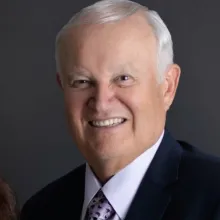
Mr. Seiglie was born in Havana, Cuba, and came to the United States when he was a child. He found out about the Church when he was 17 from a Church member in high school. He went to Ambassador College in Big Sandy, Texas, and in Pasadena, California, graduating with degrees in theology and Spanish. He serves as the pastor of the Garden Grove, CA UCG congregation and serves in the Spanish speaking areas of South America. He also writes for the Beyond Today magazine and currently serves on the UCG Council of Elders. He and his wife, Caty, have four grown daughters, and grandchildren.
