
Gary Antion
This transcript was generated by AI and may contain errors. It is provided to assist those who may not be able to listen to the message.
Emmanuel Nobel was a Swedish engineer and chemist and inventor. And he lived in Sweden with his family, a large family. He had four sons and, I think, four daughters as well. He, in the 1800s, early 1800s, ran into some financial difficulty and had to go bankrupt in Sweden. So he moved his family to St. Petersburg, Russia. Always interested in trying to invent something, he was working at inventing, working with explosive material, trying to figure out how you could harness this explosive material. And guess what he did? He invented the torpedo, how you could use explosives in water. And so that was needed for keeping the naval station safe and secure and for defenses.
So he began to make quite a bit of money. While his kids were in Russia, they were being tutored at home. And his one son, Alfred, found that he was really interested in poetry. Poetry. And he did some great and he great in sciences as well. But he really liked poetry. And so the dad didn't want to see him become a poet. So he sent him to America and sent him off for about four years. In America, he went to college to be engineer, chemist, and so on. Finally, he ended up studying in Paris. Alfred did. In Paris, he met a man, an Italian, who had invented nitroglycerin. Nitroglycerin, guess the family loved explosives. He was working with his fellow, but they had a hard time controlling it because nitroglycerin can be very easily upset and could explode. And some people did lose their lives working with it. So he was trying to figure out what he could do, how he could harness this energy, this power. Finally decided with this fellow, they never could work out together with it. So later on, he ended up doing his own. He found that he could use diatomaceous earth. Interesting. What they'd have in Texas, what Dale Shurter was saying, he's good for your garden or whatever. They used diatomaceous earth and mixed it with this nitroglycerin, and it could be stabilized that way. They make it into sticks, and they could use it like a stick of dynamite. And he named it dynamite, from the Greek word, dynamo-dynivus, which has to do with dynamite or power. So having done this, he made lots of money because then they could use it for mines to blow up rocks and to take care of other areas that needed to be raised and build new buildings. So he was making good money, and then the military realized, wow, harnessed explosives, we can use these to help us win wars.
So as time went on, he had his brother, one of his younger brothers, was trying to work with this, get this together, and blew himself up. And others blew themselves up while they were still trying to develop this, and then, of course, using this material for war. One of his other brothers died, and the newspapers thought it was Alfred who died. And so the newspaper wrote an obituary on Alfred, and they called him the Merchant of Death. So you could imagine here, you are sitting and reading about your obituary, and what people think of you.
And they called him the Merchant of Death, Alfred Nobel.
When he read that, he realized that when he died, that's all people would think about him as, the Merchant of Death. And he wanted to change his image.
I'll tell you the rest of the story at the end.
You see, people can change. I appreciated the sermon. It goes well with my sermon. We didn't collaborate.
People can change. They don't have to remain stubborn. They don't have to remain fixed in their own way.
And I would dare say, like I have issues that I know I don't need to change. I need to work on that. And I work on it for a while, and I don't pay attention. They're issues that I know I need to change.
And somehow I don't follow through. We as individuals need to change. And in fact, you do change.
It used to be said every seven years, your body replaces itself. That's not right. It's constantly replacing. Cells are being replaced in various parts of your body. Some, in as short as four days, die off, like skin. Some of the skin cells, they die off in up to four days. And they have to be replaced. Others of them take longer and have to be replaced.
But virtually every cell in your body can renew itself except the brain.
Now, you have a lot of brain cells, so don't worry.
My wife teased me. After 35, you begin the downward slide. She said, Well, I'm gaining on you. She's one year younger than I am. She said, Honey, it doesn't mean you're gaining on me. It just means I'm losing a few more than you. But I had a lot more to start with.
Anyway, after 35, you begin this downward slide of the brain. It does not regenerate. You lose the brain cell, they're gone.
But your other cells do. So whether you like it or not, you're being renewed all the time. And that's the way God's planning you. Imagine a God in heaven who planned for your body to renew itself.
Amazing! So whether you even planned it or not, just physically, you are being changed. Let's look at Ezekiel 18, verses 21-32. Let's take a look and see what God says about change, and how change can come about in anyone's life, and they can go from good to bad or bad to good. People can change.
Ezekiel 18.
Notice verse 21. But if the wicked will turn from all his sins which he has committed, and keep all my statutes, do that which is lawful and right, he shall surely live and not die. If somebody is evil and wicked and doing wrong, if he wants to turn from that, he can change. Verse 22, and all his transgressions that he's committed, they shall not be mentioned to him in his righteousness that he has done, he shall live.
He's changed from bad to good. God says, have I any pleasure at all that the wicked should die? I don't like people to have to die because of their sins. Says the Lord God, and not that he should be turned from his ways and live. I want people to live. I don't want people to go down the path of destruction. I want them to change. Verse 24, but when the righteous turns away from his righteousness, there's a person doing good, turns away from and commits iniquity, and does according to all the abominations that the wicked man does, shall he live?
His answer? All his righteousness that he has done shall not be mentioned, in his trespasses that he has trespassed, and in his sin that he has sinned, in them shall he die. You can go from bad to good, and you can go from good to bad. It really comes down to choice and follow through. Choice and follow through. Notice verse 25, yet you say the way of the Lord is not equal.
God's not fair! Yes, he is. Yes, he is. God is not a respecter of persons, but he is certainly a respecter of attitudes. He's a respecter of the direction that we take in life. He's not a respecter of how big or tall or short or thin or you are, but he is a respecter of attitudes, of how your outlook is in life, and what you want to be and what you want to do, and what you are doing about it. So he goes on to say, when a righteous man turns, and he says, here now, the house of Israel is not my way equal, and is our not your way is unequal.
When a righteous man turns away from his righteousness and commits iniquity and dies in them, for his iniquity that he is done, shall he die. Again, when the wicked man turns away from his wickedness that he is committed and does that which is lawful and right, he shall save his soul alive. Verse 28, because he considers and turns away from all his transgressions that he is committed, he shall surely live and shall not die. Verse 29, yet says the house of Israel, the way of the Lord is not...
God's not fair! God's not fair to do that. Yes, he's very fair. Though house of Israel are not my ways equal and are not your ways unequal, you're the one that's not fair. Therefore I will judge you, O house of Israel, everyone according to his ways, says the Lord God, repent, change, and turn yourselves from all your transgressions, so iniquity shall not be your ruin. We can all change. People can change. They can change physically, not just inside out.
They can change physically. They can stop doing certain things. I know my dad smoked cigarettes from the time he was about 16 until he was 56. Forty years he smoked. I've come to find out later, the reason he smoked is my mom liked the man who smoked. Mom, you made my dad smoke this. He took up smoking because he was a weight lifter. He was strong. He was powerful. He was, you know, anxious to have good health. He did, lived until 97, but he came to the place where he read in the paper about a man who died of lung cancer, and he left two little kids behind and his wife.
And at that time, my dad had a second family because my brother Dave and I were out of the house going to college. I still had 11 years younger than I and 13 years younger than I, a little 6 and 5 year old or 7 and 6 year old. And those two had a dad that was smoking away. And my dad said, I'm quitting. He took his pack of cigarettes, put it on his dresser, and every morning he got up, he looked at it, and he smirked at it and scoffed at it.
And he went to work. And he never went back to smoking. It didn't mean he didn't have trials. But it meant enough to him that he wanted to live for his family.
How much should it mean to us that we want to live eternally, for all the families of the earth? Because they do wait for you. They're waiting for the placing of the children of God, who want a part in that kingdom so badly to straighten out the mess that there is in this world. And it's getting worse all the time. It's getting worse all the time. Verse 31, he says, Cast away from you all your transgressions, whereby you have transgressed, and make you a new heart and a new spirit. For why will you die, O house of Israel? Take a fresh approach to this. For I have no pleasure in the death of him that dies, says the Lord.
God, wherefore turn yourselves and live. God says we can change. God says he wants us to change. Deuteronomy 30. I'll just give you the scripture. I'm not going to read it. Deuteronomy 30, verses 15 to 19, he says, I've set before you life on one end, death on the other. Life and death, blessing and cursing. But he tells us to choose life. We must make a choice in Joshua 24 and verse 15.
Let me read that one. It's very short. Joshua 24 and verse 15. Joshua judges right after the book of Deuteronomy. Joshua 24, verse 15, he said, if it seemed evil to you to serve the Lord, choose you this day whom you will serve. Life is all about choices. We can choose to remain the way we are, stuck in our sins, stuck in our evil ways, stuck in doing wrong, stuck in our character flaws and shortcomings.
Or we can say, I'm going to do something about it. And with the help of God, I can choose you this day whom you will serve, whether the gods which your father served that were on the other side of the flood, or the gods of the Amorites in whose land you dwell. But as for me and my house, we will serve the Lord. It's a choice. It's a choice to grow. It's a choice to change. Will we keep on putting up with whatever the issue is, whatever character flaw that happens to be prominent in our lives?
Or will we change? Let's take a look at some examples of change and ask ourselves if we are willing to grow and change. Esau. Let's go back an example. Esau. Esau, you know, was a twin. Genesis 27, Esau was a twin with his brother Jacob. And of course, Jacob came out after Esau. So Jacob was the second-born, really, of the twins. He was the younger of the two, just by a hair, you know. But he did come out second, and he grabbed his brother's foot, and like tripping him up.
And of course, the life of Jacob and Esau was one of conflict as they were growing up. Sibling rivals in their growing up days. I don't know if you experienced that. My brother was that much older than I could. He could clean my clock if he wanted to. So therefore, we didn't have as much rivalry. But we got into it, and he would call me names, and I would try to respond.
And I was too little to beat him up, so I would go to a drawer where there was a knife. Don't mess with Antion, okay? And if I could get to the kitchen drawer, go to your book, most of the time doing dishes together, and then... He was a little sloppier in doing dishes, watching them, than I was. So whoever washed the other one dried. So he'd wash, he'd stick them in there. He'd put any particles on this plate, so I'd take it up, and I'd throw it back in his ditch pan.
That didn't make him happy. So when I was washing dishes, and I was a little more... I'm not saying I was perfect at it, but I was a little more precise. He would just throw it back in, just to get my goat, to get at me. So then he'd call me names and different things. And finally, the only way I couldn't beat him up, he was too big for me. He was bigger for his age than I was. There was a drawer right next to where we did the dishes, and in it were the knives, the cutting knives, the paring knives.
And if I could get to that drawer, he made me mad enough. I tried to reach for that drawer, and he could sit against it. He put himself right against it again. I couldn't move him away. So as long as he could get to the drawer, but if he was on that side, and I'd get to the drawer, you should have seen him run up the stairs.
He would take three steps at a time. He was so fast. He'd run up the stairs and get out of my sight. I would have never stabbed him. But it was my way of protection. Okay, so sometimes siblings do have some disagreements. I know my older daughter, she would say that, Mom, Susie came in and used my clothes and didn't even ask. But if Jan would ask, it would go, and of course Jan's taller than Susie, so a lot of her clothes would...
Susie's smaller clothes without bitch, yeah? So she couldn't do that. But if she borrowed something from Susie without asking her, oh, that was an offense. So there was this little rivalry there. Well, these two had rivalry. And of course, remember, Isaac thought he was dying. And he said to his son, Esau, go and get me venison, and make it the way you do.
Lather it with all the herbs and tomato sauce, whatever else he put on it, and bring it to me before I die. So he knew his one son was a big white hunter, and the other son knew how to dust tables. Okay? He don't brag too much about Jacob. Jacob's a really good housekeeper.
He could really wash dishes. You know, he's really good. You brag about the kid, because he brings out a ten-point buck, and he brings you all this meat, and he's so good at that. So he wanted him to go hunting for him. He said, and then when you come back, I'm going to give you the blessing. So the mother found out about it, and she substituted Jacob for Esau. She said, I'll make him a goat. Go get a goat. I'll make it taste like it. I'll also flavor it. They don't think he's eating venison. He can't.
You know, you have too much sauce on it. So he did that, and he went in, and he said, how am I going to be able to tell me? Because I don't smell like him, because I'm not from the field, and I don't have hairy arms like he had hairy. The other one was more plain. So he said, okay, we'll put this goat, her fur, on your arms. So he goes in, and he says, I'm here, Dad. Here's your food. He said, what does it sound like? It doesn't sound like Esau. And he said, come near my son. He wants to... Smells like Esau, because he put on one of Esau's garments.
I guess it smelled like the field. So, hmm, smell that. Let me grab your arm. Oh, yeah, that's Esau. All right, lots of hair. So I don't know how much hair you would have a goat's hair. But anyway, he had lots of hair. So he touches him. Then he ends up blessing him. And when he got the blessing that later on, after the hunting ordeal, when Esau came in, he found that Jacob had gotten the blessing that now Esau was all upset.
He told his servant, when Dad dies, I'm going to kill Jacob. Now that servant went and told Rebecca the mother, told her of that plan. So she immediately sent Jacob over to Uncle Laban in Syria. And by the way, you know what we call yogurt in Arabic, L'aban, L-A-B-A-N, L'aban, Arabic. His name is Uncle Laban. And you know the story is over there. He served for so many years for his first wife, and he got the wrong one.
He served more on the credit plan to pay off the second one. He ended up getting the wife that he wanted, Rachel, instead of Leah. Then came time he was being mistreated too over there. Now he's finding out what mistreatment is like. So he's being taken advantage of. So he asks to leave. He says, I want to go. Give me my portion. I'll take my family, my kids, and all my animals, and I'll leave.
Except when he came back, he would have to go through the land of Esau. So let me read that scripture to you over in Genesis 32, verses 1-11. Genesis 32, verses 1-11. Remember, Esau wanted to kill him, right? Genesis 32, verses 1-11. Jacob went on his way, and angels of God met him. And when Jacob saw them, he said, this is God's host. And he called the name of that place, Menaheme. And Jacob sent messengers before him to Esau, his brother, into the land of Seir.
And he commanded them, saying his servants, Thus shall you speak to my Lord, no, she's calling him his Lord, Esau. Your servant, your servant, not your brother, your servant, Jacob, says, Thus, I have sojourned with Laban, and stayed there up until now. I have oxen and asses and flocks and men's servants and women's servants. I have sent to tell my Lord that I may find grace in his sight.
The messengers returned to Jacob, saying, We came to your brother Esau, and also he comes to meet you, and with four hundred men, a welcoming committee. Then Jacob was greatly afraid and distressed that he divided the people with him, and the flocks and the herds and the camels and the bands, and said, If Esau comes to the one company and he smites it, then the other company, which is left, shall escape. So if we have them divided up, maybe he starts to slaughter.
By the time he gets done slaughtering, though I can move, the other one can get out of the way, could run away. And Jacob said, Oh my God, my father Abraham, and the God of my father Isaac. And the Lord would said to me, Return to your country and to your kindred, and I will deal with you well with you. I am not worthy of the least of these mercies. In verse 11, he says, Deliver me, I pray you, from the hand of my brother, from the hand of Esau. For I fear him, lest he will come and smite me.
And the mother with the children. He'll smite me and he'll kill my mother, and that will be the end of it all. So he tried to send things to let him know that he was friendly and worthy. Look at chapter 33, verse 1. Now, remind you, here's a guy who's threatened to kill him. Here's a guy who's coming down with 400 men.
Verse 1 of chapter 33. Jacob lifted up his eyes, and he looked, and behold, Esau came, and with him 400 men. He divided the children to Leah and to Rachel. Rachel had the two, and to the two handmaids. And he put the handmaids and her children foremost. They get killed first, maybe he'll come to his senses. Then he put Leah and her children.
He didn't love her as much as he loved Rachel. Next, you'll get tired slaughtering people. And then Rachel and Joseph Hindermoth. So Benjamin, not yet. And he passed over before them and bowed himself to the ground seven times until he came near to his brothers. He was bowing all along the way, showing respect. Esau ran to meet him, not with his dagger in his hands, but with his arms opened, and embraced him and fell on his neck and kissed him. And they wept.
So what do we find here? We find Esau said, verse 9, Esau said, I have enough, my brother. Keep that what you have. You've tried to give me all these things? I don't need it. You take it. I've got plenty of stuff. And Jacob said, No, I want you to have it if I find grace in your sight. And so on, verse 11, Take, I pray you these, take these, I pray you my blessing that is brought to you, because God has dealt graciously with me, and because I have enough, and he urged him, and he took it.
So you find that people can change, even carnally. Here was a guy who was ought to do evil, but he changed his heart and his mind and his spirit, and he accepted his brother. What about Saul? Humans can change, and they can improve. What about Saul, the first king of Israel, first Samuel, chapter 9? Look at another case of a person who could change. This one is not such a good case, right? This is a change from good to bad to good, right? Sorry, good to bad, not good, good to bad to good, just good to bad. First Samuel, chapter 9, verse 15. Just pick out certain verses, not the whole story.
First Samuel, chapter 9, but I believe let the Bible tell the story instead of be. I'll try to embellish as I can, truthfully embellish, but read the scripture. First Samuel 9, verse 15. Now the Lord had told Samuel in his ear the day before Saul came, saying, Tomorrow about this time I will send you to a man out of the land of Benjamin. You shall anoint him to be captain over my people Israel, that he may serve my people out of the land, out of the hand of the...he may save my people out of the hand of the Philistines. For I have looked upon my people, and because their cry has come to me.
And verse 17. And when Samuel saw Saul, the Lord said to him, Behold the man whom I spoke to of you, of this. He said, This same shall reign over my people. When he saw him, God said, This is the one. He's going to be king over my people. Verse 21. And Saul answered and said, Listen to the attitude that Saul had. Good attitude. He said, Am I not a Benjamite of the smallest of the tribes of Israel, and my family, the least of all the families of the tribe of Benjamin?
Wherefore then do you speak so to me? Why do you tell me I'm going to be king? I'm a nobody. My tribes are nobody. Yet he was head and shoulders of everybody else. So he was an impressive human being. But you see, in his own heart and mind, he didn't see himself that way. He saw himself as humble, didn't he? Who am I? Who am I that you're going to do this for me?
Chapter 10, verse 1. Then Samuel took the vial of oil and poured it upon his head and kissed him, and said, Is it not because the Lord has anointed you to be captain over his inheritance? Or actually, not just captain, but king. Chapter 11 and verse 6. Chapter 11 and verse 6. And the Spirit of God came upon Saul when he heard those things, and his anger was kindled. When he heard about the troubles that were happening to Israel, or about to happen to Israel, and the foes were gathering, and Saul's victory that God gave to him, said the Spirit of God was upon him. Didn't say in him, but upon him. So he was being guided and led and directed by God's Spirit, and he was humble enough that he could handle that.
But what happens afterwards? 1 Samuel 15. 1 Samuel 15 and verse 3.
Saul was given a responsibility. He was going to battle the Amalekites. Verse 3, 1 Samuel 15. Now go and smite the Amalek, rather, and utterly destroy all that they have. Spare them not. Now you say, I had a cruel thing for God to do, but God can raise anybody from the dead and will. And when those Amalekites come up in the second resurrection, they're going to say, we're not going to come up against God anymore, or his people. He's gotten their attention. God can raise anybody up, and he will. So he's like, oh, it's a mean God. It's a just God who knows what he's doing. God is working on a plan here below, and he knows what he is doing. And I'm not one to believe that every single thing I do, and I put on this blue suit today because God wanted me to wear a blue suit. I don't know. I want to try to get gray. No. That blue suit popped out into my hands. No. I don't believe God does every little thing for you, but I believe God overall directs your life in his way. Not every single step I take. Sometimes the steps I take are not good steps, and I don't want to blame God for that. So here he happened. He said, go do it, but slay both man and woman, infinite suckling, ox and sheep and camel and ass. That was his order. Direct. Verse 8. So after he did Gedon and he fought them, verse 8, 1 Samuel 15. And he took Agag, the king of the Amalekites, alive. What did God tell him to do? Destroy them all. And utterly destroyed all the people with the edge of the sword. But Saul and the people spared Agag and the best of the sheep. Remember, God told him, wipe them all out. And the ox and the fatlings and the lambs and all that was good and would not utterly destroy them. But everything that was vile and refuse, that they destroyed utterly. Anything they thought, okay, here's this, let's destroy that.
But these good ones, let's keep them. So that's how he treated what God said. Verse 10. Then came the word of the Lord to Samuel, saying, it repents me. I'm reversing myself. That I have made set up Saul to be king, for he has turned back from following me, has not performed my commandments. And it grieved Samuel, and he cried to the Lord all night. Samuel loves Saul, right? He was humble and kind and nice, but he changed. He decided to do it his way. I'm going to do it my way. And it didn't work.
So in chapter 15 verse 13 to 17, Samuel came to Saul and said to him, Blessed be it. And Saul said to him, Blessed be the Lord. Oh, praise God, you're here. I have performed the commandment of the Lord. I did what God told me to do. How misguided people can be when they want to do their own thing. Samuel said, What do you mean? This bleeding of the sheep. Why am I hearing sheep? Why am I hearing them bang, bang around, you know, bleeding? And to my ears and the lowing of the oxen. Why do I hear this? Why am I hearing that? Why am I hearing that? Why am I hearing that? If you did, the Lord will. Saul said, Well, they, all the people want to do it. They have brought them from the Amalekites, for the people spared the best of the sheep and the oxen to sacrifice to the Lord. We did it so we could give God a sacrifice. God said, You want a sacrifice to me? Do what I tell you. So they didn't listen to him. We've done it to sacrifice to the Lord. And that's what we did. We spared them. Then Samuel said to Saul, Stay, and I will tell you what the Lord has said to me this night. And he said to him, Sayon, Samuel said, verse 17, When you were little in your own sight, When you were humble, when you didn't arrogate yourself to anything, were you not made the head of the tribes of Israel, and the Lord anointed you king over Israel, when you were little in your own sight? And Samuel said to Saul, I will not return with you, for you have rejected the word of the Lord, and the Lord has rejected you from being king over Israel. God has rejected you because you did not go the right way, because you changed for the bad. When you were doing good, God wanted to bless you, bring you, but now you change for the wrong way. So human beings can change. They can either go from bad to good or good to bad. We want to always be going the first direction, right?
Let's look at David, man after God's own heart. You're familiar with David's sin with Bathsheba. Second Samuel, chapter 11, verses 1-5. David looked, and David lusted, and David sinned with Bathsheba. Chapter 11, verses 1-5. He came to pass, and after the year was expired, at the time when the kings go forth to battle, David sent out Job and his servants with him and all of Israel, and they destroyed the children of Ammon and besieged Raba, but David remained at Jerusalem. So David didn't leave them out there, he just sent them out. He came to pass in the evening side, tied rather, that David arose off his bed. He just maybe asleep, maybe restless, got up, standing on top of his roof or balcony and looked down over the city. And as he walked out onto the roof of the king's house and from the roof he saw a woman washing herself. She's thinking, everybody's in bed already, so I'm going to wash up here. Wherever she was washing, I'm going to clean myself and wash myself up here. So she's out there washing herself, and the woman was very beautiful to look upon. Now, had he looked and turned away, no sin. But when he looked longer, sin is already occurring, right? He's lusting. And David sent and inquired after the woman. Not only did he look and lust, he took it further. He wanted to find out who this was. Who is that woman anyway? One said, is that is not this Beth? Sheba, the daughter of Eliam, the wife of Uriah the Hittite, one of your generals, one of your captains, one of your awesome men. And David sent messengers and took her. He invited her for tea. He invited her for just a little drink. And she came into him and lay with her. I'm sure he didn't just walk in the door and have sex. Come on up. This is a King's Order, King. Maybe he said, your husband's fighting for me over there. And I just want to treat you as one of the, you know, ladies who's giving out, sacrificing by your husband, going to her. Whatever he said, we don't know. But he said he inquired after the woman. He sent for her. David sent messengers. She said, for she was purified. He could lay with her. For she was purified from her uncleanness, and she returned into her house.
So here she was, vulnerable, in the hands of a king. And the woman conceived, and she sent and told David, I am with child. You've impregnated me. I've got a little baby on the way. Now, what's David going to do? Is he going to admit his fault? No, he's going to cover up. And you know the story. He tries to cover up, bringing Uriah in chapter 11, verses 14 to 16, chapter 11, after he had tried to deceive Uriah, and to going home.
Oh, you know what I'm sure Uriah, bring him home on furlough. You probably want to go spend time with your wife. Why don't you just go take that, and here find Uriah didn't go, because he loved his men at war, and he banned the brothers. He slipped outside in the courtyard. What? And go home. Okay, bring him in again. Well, Uriah, sit down. Let's have a few drinks together. Just try to get him drunk.
Here, have some more. Have some more. And he figured, now he'll go home, see his wife. Didn't do it. So now he had to decide to kill him. But he didn't want to do it with a dagger himself. So he connived away. So, verse 14, it came to pass in the morning that David wrote a letter to Joab and sent it by the hand of Uriah.
Can you imagine a man carrying his own death sentence? And in verse 15, he wrote the letter saying, Set you Uriah in the forefront of the hottest battle, and then retire from him, that he may be smitten and die.
Put him right up there in the front with his group of people, with his soldiers, and then when they're in the heat of battle, retreat. He's up there by himself. And he was killed. And he was killed. Verse 21, he said, Whose vote have been a bimillac and all the others? Did not a woman cast a piece of millstone upon him from the wall, and that he died, and so on? Why did you go up and so on? He said, Your servant Uriah the Hittite is dead also.
Your servant is done. What you wanted to happen has happened. Now, God didn't let David get away with that. David has gone from a man that God set a man after my own heart, a man that I've chosen, this 16-year-old boy, or however old he was, wasn't old enough to go to the war, and anointed him to be king, to take Saul's place. This great one who united both kingdoms, and he does this. God didn't give up on him. God wanted to see what he would do.
Sent Nathan to him, and Nathan tells him a story. About the man who had lots of sheep and lots of goats, but he wanted the one sheep or goat that this other family had, and that was their little sheep. It was their pet. It was their means of wool or milk or whatever. Here we have this little sheep this person had, but this one who had lots of them, he goes and he takes it away from him.
And so verse 5, David's anger was greatly kindled against the man. And he said to Nathan, As the Lord lives, that man who has done this so shall surely die. He shall restore the lamb, forefull, because he did this thing because he had no pity. And then Nathan said, verse 7, 2 Samuel 12, 7, said to David, You are the man. You did that. You took Uriah's little lamb.
You took her away. When you had lots of concubines, you had lots of wives, and you had to take this man's wife and kill him. And he said, Thus says the Lord, the God of Israel, I anointed you king over Israel, and I delivered you out of the hand of Saul. But you're the man. And this is what happens. Verse 13, David said to Nathan, and he was turning from good to bad, back to good, David said, I have sinned against the Lord. And Nathan said to David, The Lord has also put away your sin.
You shall not die. However, the child that you conceived out of wedlock, and illegally and illegitimately, he's going to die. And David fasted and prayed, Besought God not to do it. God let that baby die. Because God wanted to teach David a lesson. If we reread Psalms 51, which I'm not going to read now here, you can find, he says, I've lost you, and you only have I sinned and done this evil in your sight. Please don't take your Holy Spirit from me. Please restore to me the joy of your salvation. David begs him, and God did. God did.
David changed. He was willing to face himself and change a man after God's own heart, because people can change. Two more examples I'll cite in the New Testament. Peter. Remember what Peter said to Jesus Christ? When Christ said, I'm going to have to be taken, and people are going to be offended. And Peter said, I'll never be offended because of you. I'll never be offended. And in verse 50 and 51, Matthew 26, Jesus was arrested. And verses 56 to 58, all forsook him, including Peter, who led the way.
They ran away when Jesus Christ was arrested. Verses 69 to 75, we can read these, Matthew 26. Jesus Christ had predicted before the cock crows that he would deny his Lord. Of course, Peter said, no way!
Matthew 26, verse 69. 26-69. Now Peter sat without in the palace, so Peter did follow behind after running away. He followed behind, probably wearing his hood up so they couldn't see his face so much.
But in the glare, the glow of the fire, they could see his face. And verse 29, Peter sat without in the palace, and a damsel came to him, saying, You were with that Jesus of Galilee. I thought I saw you there. I went to one of his meetings. I thought I saw you there. But he denied them. He denied before them all, saying, I don't know what you say. I don't understand what you're saying. And verse 71, And when he was gone out into the porch, another maid saw him, and said to him, them that were there, this fellow was also with Jesus of Doubt.
This is one of Jesus' followers. And what did he say? And again, he denied with an oath, saying, I do not know the man. And verse 73, And after a while, he came in, and they came in and stood by, and said to Peter, Surely you are one of them, for your speech betrays you. You're from Galilee. We can tell, by the way, you talk, you relax, and your language may be your use of vocabulary. And then he began to curse and to swear, saying, I know not the man. And immediately the cock grew. So Peter went from, I am not going to betray my Lord, never be offended to denying his Lord.
Now the other disciples did too. They ran away, but they didn't come back for the spectacle. And he was the one who spoke out. Now, obviously Peter did turn back. Peter was willing to be punished. Peter was willing to be persecuted. Peter was willing to be beaten to carry on God's Word, to follow his Lord and Savior.
And when Jesus Christ told him how he was going to die, he said, They'll carry you where you don't want to be carried. They'll take you where you don't want to be taken. When you're crucified, they take you where you don't want to be taken.
And tradition says Peter loved his Lord so much that he refused to be crucified the normal way. And tradition has it he was crucified upside down. He loved God. He did come back to God. But he went from, I'm not going to do it, to changing back, denying him, to coming back. People can change. You can turn away from what you're doing wrong, and you can turn right. You can start out right. You can start to go wrong, and you can come back again, as long as you haven't gone too far the other way. I've known people, even in counseling, who've gone so far the other way, that can't be helped.
It's so sad to see them, because they don't call for help. When they could be helped, they call for help when virtually it's impossible to help them. One final one is the Apostle Paul. Remember the Apostle Paul? He stood there holding the coats, and the body of the blood splattered on these precious coats, and watching them stone Stephen the death.
Later on, he said that. Notice in chapter 8, verse 1 of Acts. Later on, he said that.
Chapter 8, verse 1, and Saul was consenting to his death, to Stephen's death, was there agreeing with killing one of God's servants.
And there was great persecution against the church, which was at Jerusalem. They were all scattered abroad throughout the regions of Judea, Samaria, except the apostles.
So Paul was big time, or Saul, was big time into persecution, into hurting the people of God. Chapter 9, verse 1, people can change. Now most of us don't expect the Apostle Paul smackdown. I did a Bible study or a presentation for the teenagers at the Winter Family Weekend, later last year or the year before, called the Apostle Paul smackdown. Are you waiting for God to smack you down before you change your ways? God doesn't do it for everybody.
But God does want to lead us to repentance. Apostle Paul even read that, wrote that, Romans 2, verse 4, knowing that the goodness of God leads you to repentance. But God will never repent for you. So here we find chapter 9, verse 1, And Saul, yet breathing out threatenings and slaughter against the disciples of the Lord, went to the high priest, and desired of him letters, high priest in Jerusalem, to give him letters of recommendation to Damascus to go into the synagogues and take out any Christians there.
If any be found of this way, that way of Jesus Christ that he taught, whether they were men or women, he might bring them bound to Jerusalem. It didn't matter whether men or women, he's going to bring them back. As he journeyed, he came near Damascus, and suddenly there shined a Greek around about him, a light from heaven. And he fell to the earth and heard a voice saying, Saul, Saul, why are you persecuting me?
See, when you pick on the people of God, you pick on Christ.
After all, if you hit my feet and not my head, can you say, well, I didn't hit you, I didn't hit your head.
Christ's the head of the church. When you hit the feet, the knees, the legs, the arms, the elbows, you're picking on Christ.
Christ said, why are you doing this to me? Why do you persecute me? Verse 4. And he said, who are you, Lord? And the Lord said, I am Jesus, whom you persecute. It is hard for you to kick against the pricks. The pricks were those little sharp spikes behind the heels of the oxen when they pulled a buggy or a cart. And if they tried to kick back at the person driving, they kicked their hoofs against the legs, against this prick, this spike.
And they learned real quickly not to do it. So he says, it's hard for you to kick against the pricks.
And in verse 6, he trembling and astonished said, Lord, what will you have me do?
What will you have me do? And the Lord said to him, rise and go to the city. He told him what to do. He became converted. Same chapter, verse 17, Ananias went his way and entered into the house. Ananias was afraid of him, too. Putting his hands on Paul said, Brother Saul, the Lord, even Jesus, had appeared to you in the way as you came, has sent me that you might receive your sight, then be filled with the Holy Spirit. And then the blindness left him, and after that time, he was baptized. Verse 18. Verse 19, when he had received food, he was strengthened. Then Saul spent certain days with the disciples, which were at Damascus. And in verse 20, in straight way, he preached Christ in the synagogues, that he is the Son of God. So here's a man who is an opponent, a persecutor of the people of God, of those who follow Jesus Christ, who is now preaching for Jesus Christ. Dramatic change. We can all change. We can change for the good, or we can change for the bad. Demas, who was apparently a follower of Paul, he said he's forsaken me, 2 Timothy 4, verse 10. Alexander, verse 14, he said he's also gone away from me. And they think that Alexander may be one of the ones who followed Christ for a while, and became disenchanted. 2 Peter 2, verse 20. 2 Peter 2, verse 20. Peter could write about this, and tell us what we need to do, how we need not do.
2 Peter 2, verse 20. For if after they have escaped the pollutions of the world through the knowledge of the Lord and Savior, Jesus Christ, they are again entangled therein, and overcome, they've now changed. Not just temporarily, they've changed. He said, if that happens to them, the latter end is worse with them than the beginning. For it had been better for them not to have known the way of righteousness than after they have known it, to turn from the Holy Commandment delivered to them. So people can know the truth, follow the truth, and turn away. And he said, if they do, there's no hope for them. If they make the turn complete, and if they give it up, they lose it. Over in Hebrews 10, verse 35, God says, I don't have any pleasure for people to do that. I don't want people to draw back. Hebrews 10, verse 35, He says, Cast not away your confidence, which has great recompense of reward, has great promise of reward. Verse 36, For you have need of patience, that after you have done the will of God, you might receive the promise. You've got to keep on keeping on. While God didn't do it yet, will you at this time restore the kingdom, Lord? Will you now give it to us? God's answer? Not yet. Not yet. He said, I heard the cries of the Israelites. You think I didn't hear their sufferings? I heard them. I plead with Him, and I say, please hear Jamie Des Moines' cries. She wants to live. I think she's still alive. I didn't hear any other updates over in Holland. Please hear her cries. I know you hear them. You have much more compassion than I do. And all you have to do is say the word. People can change. God says, you turn away from Him, and you turn away from Him for good. No more chance. And He goes on to say, for a little while, He that shall will come and will not remain. God's coming back, but just be patient through the will of God. You might receive the patience. Verse 38, Now the just shall live by faith, but if any man draw back, they turn away. They change for the worse. My soul shall have no pleasure in Him. But we are not of them who draw back to perdition. We Christians won't do that. But of them that believe to the saving of the soul. We believe in God, and we trust in Him. Have a sermon I'm working on. Is it God in you, or God or you? I find some people think God's going to do everything for all. Do is accept Christ. Just accept Christ, and He will swoop you into the kingdom. Is there anything you have to do? The same man who wrote that said, He's got to fight Himself. He's got to keep Himself in check. How's that? Saying, God will do it all for me. God gives you the strength, but you have to supply the will and the energy physically that you have, and He'll supply what we don't have to change. Remember in Luke 14, verses 25 to 33, we've had that read to us in baptism.
If anybody comes to me and does not love me far more than husband, wife, father, mother, children, whatever, friends, cannot be my disciple. If they're not willing to follow me, that involves change sometimes. It involves change to follow Him, and walked on that path. He said, and whosoever is not willing to forsake all that He has, He cannot be my disciple. That's verse 33. Acts 3, 19. We read this Scripture from what happened in the ministry of the count of the Acts of the Apostles, the first several chapters of the Acts of Peter, generally. But verse 19, Acts 3, verse 19, here's what Peter says, Repent therefore and be converted. You know what the word converted means? It gives you a short skinny of it, because the Greek word translated is epistrepho. And it has to do with return or turn, rendered, convert, or causing the person to turn. Here's what he says in the Vines dictionary of Biblical words. The word implies a turning from and a turning to. Be converted. It means I've turned from my ways the wrong way, and I've turned to the right way. See, you only do part of it if you just rue what you did. Have you just despised, oh, I'm so sorry I did that, I'm so sorry, were you going to do anything about it? Are you just going to tell me you're sorry? Are you going to change? Or are you just telling me you're sorry? Change is what God says. Repent and be converted. Change. We also find in Romans 12, verse 2, the Apostle Paul said this, Romans 12 and verse 2. It's interesting, this word that he uses, transform. The word transform means the same word as translated, transfigure. And it's only used four times in the whole New Testament, the word for transform. It's kind of like metamorphosis. It's like a metamorphosis. It's a change.
When Jesus Christ transfigured what happened to him, it looked like he was physical, all of a sudden it looks like he's become spirit. We are to change, too. Change, not change form necessarily, but change from the form of evil to the form of good. That's Romans 12, verse 2. He says, Be not conformed to this world, but be you transformed, turned, changed. Changing form from being form of evil, it's being a form of good. He goes on to say, Be you transformed by the renewing of your mind, that you may prove what is, that good and acceptable and perfect will of God. How are you transformed? Because you see it in your mind, and that it affects your heart, where you can change. That's Paul's statement. We can change. Revelation 2. What does Jesus Christ say? Verse 26. To him that overcomes, will I give power over the nations? Notice, he that overcomes and keeps my works to the end, not just God says he's sorry. To him I will give power over the nations. In Revelation 3.21, he says this. To him that overcomes will I grant to sit with me in my throne, even as I also overcame. Didn't have to overcome sin. But overcame the world, did not yield to any of the sins of the world. Overcame and am sat down with my Father in his throne. The reward is great as we change from bad to good. As we keep on rooting out those character flaws in our lives, be they stubbornness or whatever else they might be. We root them out. Revelation 21 and verse 7, my last scripture, and then I'm going to give you the rest of the story. Revelation 21 and verse 7. Here's after the new heavens and the new earth. Notice what God says. He that overcomes, he that changes, he that turns around and goes the right way if he's going the wrong way, he that resists the pulls of the flesh, he that cleans up his life where he may be deficient, he that overcomes shall inherit all things, and I will be his God, and he shall be my child or my son. How awesome is that! Brethren, we need to change. Brethren, we must change. We can't stand still. We've got to keep growing, improving, becoming better as Christians. And with the help of God, we can, because it is God who works at us, Philippians 2 13, to both will and to do of his good pleasure. It's God who gives us a strength, as Paul said, I can do all things through Christ, who strengthens me. He didn't say I can do all things because Christ does it for me.
I can do all things through Christ, who strengthens me, so that I may change and grow and overcome. I want to give you the rest of the story. Here's the rest of the story.
Alfred Nobel. Nobel was reportedly stunned by what he read, the obituary that said, He is a merchant of death, is dead. The obituary went on to describe Nobel as a man who became rich by finding ways to kill more people faster than ever before.
He determined to do something to improve his legacy. One year before he died, in 1896, Nobel signed his last will and testament, which set aside the majority of his vast estate to establish five Nobel prizes, including one awarded for peace.
Even Alfred Nobel, the rich inventor of dynamite, can change. If he can, so can we.
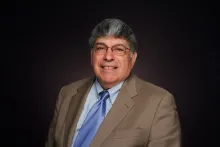
Gary Antion is a long-time minister, having served as a pastor in both the United States and Canada. He is also a certified counselor. Before his retirement in 2015, he was an instructor at Ambassador Bible College, where he had most recently also served as Coordinator.
