
Steve Shafer
This transcript was generated by AI and may contain errors. It is provided to assist those who may not be able to listen to the message.
I want to give a little bit of background first here about this day, and then I'm going to cover it from a little different perspective, tying it into kind of what's happening in our world today. There is so much that has happened just in the past week and a half, two weeks. But it was on the last day of Unleavened Bread that God delivered Israel out of Egypt by, of course, parting the Red Sea. The Israelites safely made it to the other side, but all the Egyptians drowned in the sea as it closed in on them as they were crossing.
And it says that all their dead bodies were washed up on the other side of the sea, among many of them. And it said there was not one of them that survived, not a single one. Entire armies of Egypt were wiped out, the ones entered into the sea. However, all the Israelites made it safely to the other side. But as they then began their journey on that other side of the Red Sea, after that last day of Unleavened Bread, they began their journey to Mount Sinai to meet God and to receive the Ten Commandments, which they received, as we traditionally understand, on the Day of Atonement.
They faced a number of perils. And you can read that in just a few chapters. You read Exodus chapters 15 through 19. You see that Exodus, on their journey, after they crossed safely to the Red Sea, and they had this song of Moses, a great victory song, there, I think, it's in Exodus 15. But after that, it's a journey to Mount Sinai. They faced a number of obstacles, a number of perils and difficulties. Again, I said, recorded in Exodus chapters 15 through 19.
I'll just rehearse them for you. They faced the bitter waters of Mara. There they were. They needed water, and they got to this water, and the waters were bitter. And those bitter waters had to be healed. Then they faced the possibility of dying with hunger. Where were they going to get food? How could they be sustained in the desert?
There was no food there. So God had to begin raining manna down from heaven. Then they faced the test of the Sabbath day. And they faced lack of water. They said, we're all going to die of thirst, they said. So God had to provide water out of a rock to show them that He could provide for them, no matter what. No matter what obstacles they faced, no matter how impossible the situation seemed, God was their provider.
He could provide for them. Then they faced the peril. Even after all of that, it's amazing. They faced the peril of doubting God. When they said, is the Lord among us or not? Exodus 17, verse 7. What do you mean? Is He among us or not? He delivered Him through the Red Sea. He killed a bit of water, Zammah.
He proved Himself on the Sabbath. He brought water out of a rock. And they still said, is God among us or not? They're afraid they're all going to die in the wilderness. Then they faced the peril of being defeated by Amalek and Rephidim. Where they had to hold up Moses' hands in order to do the battle. When Moses got tired and started leaving them down his hands, they started losing the battle.
Then when they held up his hands, they won the battle. They finally were able to hold his hands up until they defeated Amalek. But that was the peril that they faced.
Then Moses faced the peril of trying to judge all matters himself. Everybody was bringing all their problems and matters and grievances to Moses until he's coming weary. Finally, his father-in-law Jethro then advised him to appoint other judges. So during that journey from the Red Seat to Mount Sinai from the last day of Amalek to Pentecost, the Israelites faced the peril of also of continuing to complain.
You read those few chapters. They were continually complaining. Even though they'd received a great deliverance. They were slaves in Egypt. God had made a great deliverance if they continually complained. They didn't have really faith in God. Even though they had received a great victory and a great deliverance.
So the journey from the last day of Unleavened Bread to Pentecost for ancient Israel was a perilous journey. It was a perilous time for the people of God back then. Well, we are now living in very perilous times.
Let's turn to 2 Timothy 3, which were prophesied for the last days.
And I think we've looked at what's happened in the last couple of weeks. We can see the world is in peril.
The United States is in peril for many factors, many directions. 2 Peter 3, where Paul was inspired to write this many 2,000 years ago, but especially applies to our time today.
And I think especially for our time today.
2 Timothy 3, verse 1, But know this, in the last days perilous times will come.
Why? Because men will be lovers of themselves, lovers of money, boasters, proud, blasphemers, disobedient to parents, unthankful, unholy, unloving, unforgiving, slanders, without self-control, brutal, despises of good, traitors, headstrong, haughty, lovers of pleasure rather than lovers of God, and yet have any form of godliness but denying God's power. And from such people, it says, turn away.
Now, I'm looking at this from an international perspective, especially note the following reasons why in the last days, perilous times will come, because some men will be lovers of themselves. Some men, and you think about, I'm not taking it just to men. We're going to be looking at this from the point of view of some leaders of men. They'll be unholy, without self-control, brutal, traitors.
Timothy then warns from such people, turn away.
Now, today we have several huge problems here that makes the world a new, that we now live in, I should say, super perilous.
Some men with the traits I singled out above are leaders of some of the nations of the world.
Some of the nations of the world are brutal. They don't have any self-control.
They're traitors to their own people.
We have heads of state who are only lovers of themselves, who are unholy, without self-control, who are brutal, and who are traitors to their own words, and traitors to the people they govern.
Worse than that, here's a scary thing.
It says here from these, that some of the men turn away. But today is the problem today, is with some of these leaders that have these traits, these are men to whom we cannot turn away. We can't just turn away and leave them to their own devices. Why not?
Because they have access to and possess weapons of mass destruction, and you can't just turn away from those kind of people.
Because these people could potentially destroy millions of people. Just to rehearse a little bit of what happened here, just in the last couple of weeks or less, on Tuesday, April 4th, Bashar al-Assad, the leader of Syria, lost a chemical weapons attack on his own people, killing innocent women and children.
Videos show of older adults and women and children grasping for breath, and struggling to breathe, relying motionless in the mud.
Then a short time after the chemical attack, the Syrian Air Force bombed one of the clinics that were treating the victims. Can you imagine a leader being that brutal? They're trying to save these children, and he finds out where the clinic is, and he bombs the clinic.
When President Donald Trump saw those children, he was horrified, as any of us would have been.
I think in his mind, I think he must have said, enough is enough.
Two days later, on Thursday, April 6th, he authorized a cruise missile strike on the Syrian airbase from which the attacks were launched. The U.S. launched, I think some say, 59 Tomahawk missiles, guided missiles, which hit their targets with extreme accuracy, destroying much of the airfield and the Syrian airplanes.
And Trump wants the attack, because we know while having dinner with a Chinese leader, he's having dessert, you know, in Washington with a Chinese leader, or maybe down in Florida, I'm not sure where it was, but anyway, he was having dessert with a Chinese leader when he told him of the attack. Trump later said, no child of God should ever suffer the horrors of the chemical weapons attack Syria launched on its own people. He wasn't going to get involved, but he had to change your heart when he saw what happened. I can't blame him.
Nikki Haley, the newly appointed U.S. ambassador to the United Nations, presented a, now think of this, she, after all this happened, she presented a resolution for the United Security Council to condemn the Syrian attacks.
The Security Council of the United Nations has 15 members. Five of those 15 nations are permanent members of the Security Council. Those nations are the United States, Great Britain, France, Russia, and China. Those five nations all have veto power, enabling them to prevent the adoption of any substantive resolution. This resolution that was presented to condemn Syria for the attacks, China abstained, which is a positive thing because they usually side with Russia, but they abstained.
They remain neutral. But Russia vetoed the resolution so much for the role of the U.N. as a peacekeeping organization.
U.N. Ambassador Nikki Haley lambasted Russia for vetoing the resolution.
Then, in addition to all of that, we have Kim Jong-un, the dictator of North Korea, who is a megalomaniac. He's a madman dictator who, on Tuesday, April 11th, on the first day of Unleavened Bread, threatened to attack the United States if any action is ever taken by the U.S. against North Korea.
Here's a really perilous thing. Currently, as far as we know, at least nine nations possess nuclear weapons. They are the United States, Great Britain, Russia, France, China, India, Pakistan, Israel, and North Korea.
King Jong-un has nuclear weapons. He has missiles. He's tried to develop long-range missiles. Of course, they fired one this past Sunday, and it exploded on the pad, but they're working on it.
And not only that, what he's doing, what is North Korea doing with their nuclear weapons?
They're selling to Iran. There's a Middle East connection with North Korea. North Korea sells their nuclear weapons to Iran. So Iran has them, and all they have to do is develop the ICBMs to deliver them. Does that make the world perilous? I'd say so. And King Jong-un will have no compunctions against using them if he ever has the opportunity to strike the United States or anyplace he would like to strike, or Israel. Even if it meant mutually assured destruction. They call mad, mutually assured destruction.
On Thursday, April 13th, during the days of unleavened bread, the United States dropped the largest non-nuclear bomb ever used on Afghanistan near the border of Pakistan in a remote area.
21,000 pounds. They say now we actually have one that's 30,000 pounds we haven't used yet.
But the 21,000-pound bomb called MOAB, which stands for Massive Ordnance Air Blast, and which has been nicknamed the mother of all bombs. The bomb explodes in the air just before hitting the surface, creating air pressure that can destroy underground tunnels and bunkers, and it creates a one-mile blast zone. ISIS fighters were in these tunnels and bunkers, and it is now believed that around 100 or more ISIS fighters were killed in the bombing, with no civilian casualties.
It was a beginning signal in President Trump's promise to seek to destroy ISIS. And one thing we know about President Trump, he means business.
He's going to try to carry out his promises.
Trump said he had given authority to his generals to make the decision to drop that bomb, again emphasizing that indeed we are living in very perilous times.
Perilous times have come, and I think they're more perilous now than every time in the history of mankind. Which indicates what? I think it indicates we are living in the last days.
How long that will last, no one knows. But Christ himself told us, for the elect's sake those days will be shortened. Matthew 24, verse 22.
What would happen if those days were not shortened?
Those days were not shortened, no flesh would be saved. Same verse. What period of time are we now in, in regards to the unfolding of God's annual feasts and holy days?
We are now in our countdown to Pentecost.
Pentecost is the one holy day you have to count down to. Mr. Schutte gave a sermon to explain all that this past Sabbath. We have to count down to Pentecost.
And as we understand it and observe it, we begin that countdown on the day after the weekly Sabbath that occurred during the day zone of the Red, which would have been yesterday, and begin the countdown.
Why is the day after that Sabbath so important? And I'm just going to review this. Mr. Schutte covered it very eloquently last Sabbath. But let's turn to Leviticus 23, just read a couple verses, showing why that Sabbath, that weekly Sabbath, the day after that weekly Sabbath is so important.
Leviticus 23 verses 15 and 16 first, you should count for yourselves from the day after the Sabbath. You understand that as being the Sabbath that occurs during the days of unleavened bread. From that day that you brought the sheep of the wave offering, which means that was always offered on the day after weekly Sabbath, so Christ became that wave sheep, the first of the firstfruits.
7th Sabbath should be completed. Count 50 days. And Pentecost means count 50. Count 50 days to the day after the 7th Sabbath, then you shall offer new grain offering to the Lord. And then verse 21, and you should proclaim on that same day that is a holy convocation. You should do no customary work on it. It should be a statute forever and all your dwellings throughout your generation. That is the day we today call the day of Pentecost, or count 50. So what period are we now in? We are now in the beginning period of our countdown to Pentecost. Our countdown to prepare for what? Spiritually speaking. Our countdown to prepare to make ourselves ready to be the bride of Christ. As it says in Revelation 19.7, Let us be glad and rejoice and give him glory, for the marriage of the Lamb has come and his wife has made herself ready.
That's all the introduction. But as God's elect living in the last days, preparing to make ourselves ready to become the bride of Christ, this is the question I'm going to pose today. Should we live in fear, looking around the world and everything that's happening? Or should we live in faith, having absolute confidence in the sovereignty of God? That God is sovereign over all things. He knows everything that's happening in the world and he has absolute sovereign power over all things, especially in our lives. That's what we look at today as we are entering into our countdown to Pentecost. The title for my sermon here this afternoon is, In Perilous Times, Where Must We Abide? In Perilous Times, Where Must We Abide?
The book of Psalms is divided into five distinct books. In each book, when you look at it carefully and analyze it and understand it, each book is divided into five distinct books, and each book has its own prophetic time setting and its own prophetic theme. So, when looking at where we must abide in perilous times, I want to primarily look at one particular psalm today. It is near the beginning of book four of Psalms. Book four begins with Psalm 90. Before looking at that particular psalm, let's first see if we can discover the prophetic theme and time setting for book four, which I said begins with Psalm 90 and ends with Psalm 106. So, let's look at book four and see if we can discover the prophetic theme and time setting. Turn to Psalm 90. Start in Psalm 90, the first psalm in book four. As you'll see at the top of the heading of most of your Bible, say book four, Psalm 90 through 106. Psalm 90 verse 1, a prayer of Moses, the man of God. Lord, you have been our dwelling place in all generations. You've been around since the time of Adam and Eve, all generations. You've been there. You've been God. Before the mountains were brought forth, or ever you had formed the earth in the world, from everlasting to everlasting, you are God. I was just telling us here that God is sovereign over all things. He always has been and always will be. Even from everlasting to everlasting, you are God. Verse three, you turn man to destruction and say, return, O children of men. How has God turned man to destruction? Very simple, by simply allowing him to go his own way.
Once we discover that going our own way leads to destruction, then what does God want us to do?
He wants us to return to God and to God's ways. Return, O children of men. Return to me. See how you are destroying yourself. Follow me. Follow my laws. Follow my ways.
God has been seeking for mankind to do that ever since the Garden of Eden, when mankind chose the tree of the knowledge of good and evil by deciding for himself what was good and what was evil. Notice the next verse, verse four. For a thousand years in your sight, or like yesterday when it has passed, and like a watch in the night. See, this kind of ties in in many ways to the prophetic of the one thousand year reign of Christ, which we're told about in Revelation 20, verse six, that he's going to reign for a thousand years with his saints after he returns.
And during the reign of Christ, mankind is going to have one thousand years to return to God. And this is what God is going to proclaim during that period of time. He's going to say, Return, O children of men, return to me. Look at your history for six thousand years. Look at the wars. Look at all the destruction, loss of human innocent lives.
Return to me. Return to God. Follow God. Follow God's ways. Follow God's laws. So, Book Four of Psalms introduced us to the millennial reign of Christ on the earth.
Let's know what the Apostle Peter wrote in First Peter 3, where he obviously had this verse here in Psalm 90, verse 4, and mine. Let's turn to Second Peter, chapter 3.
Second Peter 3, verse 1. Be loved, and I now write to you the Second Ephesians, and both of which I stir up your pure minds, your pure minds by way of reminder.
Verse 2 of Second Peter 3, that ye be mindful of the words which were spoken before by the Holy Prophets, and of the commandment of us and the apostles of our Lord and Savior. Knowing this first, the scoffers will come in the last days, walking according to their own lusts. So Peter here is talking about the last days. He's talking about the time leading up to Christ's return. What will these scoffers be saying? Verse 4, saying, Where is the promise of His coming? We've been hearing that forever. Don't believe in that. It's foolish.
Where is the promise of the coming? For since the fathers fell asleep, all things were continued as they were from the beginning of creation.
God doesn't care about what's going on. He doesn't see what's going on. He's not around.
Many don't think He exists. For this, verse 5, they willfully forget that by the word of God, the heavens were of old, and the earth standing out of water and in the water, by which the world that then existed perished, being flooded with water.
Obviously, Peter believed that Noah's flood was a worldwide flood, not a local flood, a worldwide flood by which the world that then existed perished, except for Noah and his family, despite what scoffers think. Verse 7, But the heaven and the earth, which are now preserved by that same word, are reserved for fire until the day of judgment and perdition of ungodly men.
Then, in writing about the last days leading up to Christ's return and to the establishment of the kingdom of God, Peter makes reference to Psalm 90, verse 4. Second Peter 3, verse 8, But beloved, do not forget this one thing, that with the Lord one day is a thousand years, and a thousand years has one day. Now, we know for sure that Peter has Psalm 90, verse 4, in mind, as Peter here talks about Noah's flood. And in Psalm 90, verse 5, Moses said, You carry them away like a flood.
Second Peter 3, verse 9. What does this all mean? It means that the Lord is not slack concerning His promises. Some count slackness. But He has long-suffering toward us. That's why He hasn't intervened. He's long-suffering. He wants to give us every opportunity to return to Him, for mankind to return to Him. He has long-suffering toward us, not willing that any should perish, but that all should come to repentance and have that opportunity.
But the point I'm making regarding book four of Psalms is that the prophetic time setting is the time leading up to the return of Christ and the establishment of the Kingdom of God on earth, as you can tie it in here to second Peter. Let's just look quickly at a few additional verses in book four of Psalms that confirm this prophetic time and the prophetic theme, I should say, in time setting. Let's go back to Psalm 93 in book four. Just look at a few verses here that confirm the prophetic theme in time setting. Psalm 93 verse 1, a song for the Sabbath day, It is good to give thanks to the Lord and to sing praises to your name, O Most High, to declare your loving kindness in the morning and your faithfulness every night.
As you'll see, this is the time leading up to the reign of Christ on the earth as the Lord of Lord and King of Kings, to establish the Kingdom of God on the earth for a thousand years, when the world will then be established to where it will no longer be moved to the ways of Satan.
In Christ's throne will also be established. This will bring joy to the whole world. Psalm 95, verse 1 to 3, O come, let us sing to the Lord, let us shout joyfully to the rock of our salvation, let us come before his presence with thanksgiving, let us shout joyfully to him with psalms, for the Lord is the great God. That's what they're going to see when Christ returns, when that time comes. They're going to see he is the great God and the great King above all gods.
Psalm 96 verse 1, O sing to the Lord a new song, sing to the Lord all the earth, sing to the Lord, bless his name, proclaim the good news of his salvation from day to day. That's what they're going to be doing to begin in the millennium. Declare his glory among the nations, his wonders among all peoples, saying what among the nations? Psalm 96 verse 10, say among the nations, the Lord reigns. Christ is going to reign. He's going to be the King of the whole earth. The Lord reigns, the world is firmly established. It shall not be moved again. We move back to the ways of Satan again. He should judge the peoples righteously. Let the heavens rejoice, let the earth be glad, let the sea roar in all its fullness. Let the field be joyful all that is in it, and all that's in it, all the trees or the woods will rejoice before the Lord. For he is coming, he is coming, he's coming to judge the earth, and he shall judge the world with righteousness and the peoples with his truth. Psalm 97 verse 1, the Lord reigns, let the earth rejoice. So this is looking at the time when God Christ is going to reign. Let the multitudes of the isles be glad, clouds and darkness around him. Righteousness and justice are the foundation of his throne. A fire goes before him and burns up his enemies round about. His lightening is like the world. The earth sees and trembles.
Why will they tremble? Psalm 98 verse 9. For he is coming to judge the earth.
With righteousness he will judge the world and the peoples with equity. Again, Psalm 99 verse 1. This is a repeating theme. The Lord reigns.
Let the peoples tremble.
Who are the peoples here when this happens? When the Lord reigns, when Christ comes to reign.
Who are the peoples who should tremble? Psalm 101 verse 7. He who works to see shall not dwell within my house. He who tells lies shall not continue in my presence. Early I will destroy all the wicked of the land that I may cut off all the evildoers from the city of the Eternal.
Psalm 105 verse 7. He is the Lord our God. His judgments are in the earth.
Just before Christ returns to reign on the earth, will people who are scattered and in captivity during the great tribulation, will they cry out to God to save them? And will God then gather them in from among the Gentiles? Psalm 106 verse 47.
This is what they're going to cry out. They're going to save us, O God. Save us, O Lord our God. These people that are in captivity have been captured, scattered.
They're desperate to have somebody to intervene and help them and to save them. Save us, O Lord our God, and gather us from among the Gentiles to give thanks to your holy name, to triumph in your praise, to your praise. Which then basically ends book four of Psalms.
So what then is the prophetic setting of book four of Psalms? The prophetic time setting is the time immediately proceeding and leading up to the return of Christ. And what is the prophetic theme of book four? The prophetic theme is establishing the kingdom of God on the earth with Christ reigning as Lord of lords and king as king. With Christ reigning, that's a basic theme. The Lord reigns. With that in mind now, let's look at Psalm 91 and where we must abide in perilous times.
Let's turn back a few pages to Psalm 91. What are we told in the very first verse of Psalm 91?
Psalm 91 verse 1, He who dwells in the secret place of the Most High shall abide under the shadow of the Almighty.
Now before commenting on this verse, first I want to know what Adam Clark's commentary says of Psalm 91. Very interesting. He says, it is one of the finest Psalms in the whole collection.
And he quotes another person who wrote about this Psalm, a man by the name of Simon de Musse, who is a 17th century French scholar and professor. And he wrote this of Psalm 91, this 17th century professor and scholar. He said, is one of the most excellent works of this kind which has ever appeared. It is impossible to imagine anything more solid, more beautiful, more profound, or more ornamented. We have no poem, either in Greek or Latin, comparable to this Hebrew ode.
The very first verse sums up the essence of this Psalm in a most excellent way, which we should always keep in the forefront of our mind, especially when it comes to where we must abide in perilous times. Psalm 91 verse 1 again, he who dwells in the secret place of the most high shall abide under the shadow of the Almighty. Now, to read this Psalm, two questions immediately come to mind. Number one, where is the secret place of the Almighty?
Or the secret place of the most high, I should say. Where is the secret place of the most high? Because that's where we need to be, in perilous times. Number two, how do we abide under the shadow of the Almighty? Let's just look at an example in the Old Testament. In the Old Testament, where was the secret place of the Almighty, or the secret place of the most high? Where did God abide in the temple, where no one else could go other than the high priest on the day of atonement? The Holy of Holies, or the most holy place, which is behind the veil. Let's go to Hebrews, Hebrews 9.
Hebrews 9 beginning in verses 1 through 8. Paul, the writers of Hebrews, says this, Then indeed, even the first covenant had ordinance of divine services and earthly sanctuary, for tabernacle was repaired, the first part in which was the lampstand, the table, the showbread, which is called the sanctuary, and behind the second veil, the part of the tabernacle, which is called the holiest of all, or the most holy place, or the holy of holies, which had the golden censer and the ark of the covenant overlaid on all sides with gold, in which were the golden pot that had the manna, errands rod that budded, and the tablets of the covenant.
And above it were the carobim of glory, overshadowing the mercy seat. Of these things we cannot now speak in detail. Now, when these things had been thus prepared, the priests always went into the first part of the tabernacle, performing the services. But into the second part, the high priest went alone once a year, not without blood, which he offered for himself and for the people's sins, committed in ignorance. The Holy Spirit, indicating this, that the way into the holiest of all was not yet manifest, while the first tabernacle was still standing. In the Old Testament, the secret place of the Most High was behind the veil of the temple, in the holiest of all. What we often refer to as the Holy of Holies, the Most Holy Place, and it was called that because that's where God's presence was.
And the Holy of Holies contained what? It contained the tablets of the covenant, verse 4.
The two tablets God gave to Moses contained God's law, contained the Ten Commandments.
Now, stop and think for a minute. Where are God's laws? Where are God's Ten Commandments contained today? Where is the Ark of the Covenant today? Hebrews 10, verses 16 and 17.
Hebrews 10, verse 16. This is the covenant that I'll make with them after those days. Says the Lord, I will put my laws into their hearts and into their minds I will write them.
And then he adds, their sins and their lawless deeds I'll remember no more. Today, we are the Ark of the Covenant. We have God's laws being written in our hearts and in our minds, which allows us to enter where? Hebrews 10, verses 19 and 20. Therefore, brethren, having boldest and enter the holiest by the blood of Jesus, by a new and living way which He consecrated for us through the veil that is His flesh. So through the sacrifice of Jesus Christ, and by having that sacrifice applied to our lives, we can now enter the secret place of the Most High.
If we have God's Holy Spirit abiding in us to write God's laws in our hearts and on our minds, we are then abiding in the secret place of the Most High. God's pertaining in us, which means what? Which means then we're also abiding under the shadow of the Almighty, that we're under the shadow of God's protection.
We can then say what? Let's turn back to Psalm 91.
Psalm 91, verse 2 is what we can say. I will say to the Eternal, He is my refuge. He is my fortress. He is my defense, my protector.
He is my God, and Him I will trust.
God will then surely do what? Verse 3, Surely He will deliver you from the snare of the fowler and from the perilous pestilence. I want to just expand on it just for a second. The Hebrew word translated pestilence here is dbar, which is derived from the root Hebrew word dabbar, D-A-B-A-R. Both of those words are simply spelled d-b-r in Hebrew. Dabar signifies a word spoken, and dbar signifies a spell of the same three, but letter signifies pestilence. So it could be translated either way.
It has a pestilence, disease, a plague, or harmful storm, or anything like that God can deliver us from. Or it could be a slanderous word spoken against us. God can deliver us from pestilence, and He can deliver us from slander. Somebody slanders, you've got to deliver you from that, you don't have to worry about trying to take advantage. God could take care of it.
What about being delivered from the snare of the fowler? God can and will deliver us from all the devices of Satan. He's the one that lays traps for us. He's the one that tries to catch us in His traps. God delivers from the device of Satan, He wants to trap us in His snares. In other words, if Christ is abiding in us, and if we trust in God, God will deliver us from Satan, from any and all pestilence, and from slanderous words used against us. What else will God do?
Verse 4, He shall cover you with His feathers. Under His wings you shall take refuge. His truth shall be your shield and buckler. Even as ancient Israel was under God's wings and under God's surveillance and protection as He led them out of Egypt, as it tells us in Exodus 19 verse 4. You have seen what I did to the Egyptians and how I bore you on Eagle's wings and brought you to Myself. So God can do to us, He can bear us on Eagle's wings, so He can bring to Himself, meet Himself. What will shield us from anything that might happen in the perilous times we are now living in? It says His truth shall be your shield and buckler. God's truth contained in His Word contains promises for all times and for all situations and all circumstances, and we can rely on God's promises which can turn and shield us from fear and worry. Verse 5 of Psalm 91, He shall not be afraid of the terror by night, nor of the arrow that flies by day.
Why should we not be afraid of the arrow that flies by night when we're asleep?
If you don't know what's going on in the world, what could happen before you wake up?
Because He who keeps you will not slumber. Behold, He who keeps Israel shall neither slumber nor sleep. Psalm 121 verses 3 and 4. God never sleeps. He doesn't need to sleep. He is always aware of everything that's happening in the world at any given moment, even when we're asleep. Nor shall you be afraid of the arrow that flies by day.
We don't need to be afraid of guided missiles that some rogue nation may fire toward us, which are now threatening the world and the United States, especially in the year ahead of us, which are even now being threatened against us in the perilous times in which we're now living.
Also, verse 6, nor are the peasants that walks in darkness, nor of the destruction that lays waste at noonday. It says, a thousand may follow your side, and ten thousand at your right hand, but it shall not come near you. Only with your eyes shall you look and see the reward of the wicked.
Why shall the destruction that lays waste at noonday not come near you? Verse 9, here's the reason, because you have made the Lord, you have made the Eternal, who is my refuge, even the most high, your dwelling place, because we dwell with God, and God dwells with us and in us. He abides in us, and we abide in Him. Because of that, it says in verse 10, no evil shall befall you, nor shall any plague come near your dwelling. For he shall give his angels charge over you to keep you in all your ways, and therefore they bear you up, lest you dash your foot against a stone. Verse 11 and 12, how the verse of satan used in his effort to tempt Christ, as recorded in Matthew 4, verses 5 and 6, to which Christ replied, it is written again, you shall not tempt the Lord your God, quoting Deuteronomy 6 verse 16. Interestingly, Christ encountered satan's misuse of scripture with the correct use of scripture. Satan was quoting Psalm 91 verse 11 and 12 out of context.
See, Psalm 91 is not talking about tempting God by jumping up a high building.
It is talking about abiding under God's protection in perilous times by totally trusting God, by having absolute faith in all of God's promises and God's sovereignty. What else does Psalm 91 tell us? Psalm 91 verse 13, you shall tread upon the lion and the cobra, the young lion and the serpent, you shall trample underfoot. The asp as it is in the old King James or the cobra, as we know, they are very poisonous snakes or serpents. The original research says their poison can kill within three to eight hours, and it said the victim dies by going to sleep without any pain, which is why they said Cleopatra chose to be poisoned by an ass to die without pain, go to sleep. But you think about it spiritually. That is how Satan wants to inflict the people of God by injecting them with spiritual poison and by then putting them to sleep. Both the serpent and the lion are symbolic of Satan, as we know, and here God tells us that if we abide in God, if we abide under the shadow and protection of the Almighty, we will trample Satan underfoot through Christ, who will give us the victory over Satan and over all of his devices. Why will God give us that victory? Psalm 91 verse 14, because he has set his love upon me. Now, this can apply to Christ, and undoubtedly it does apply to Christ, but it can also apply to us as well. Because he has set his love upon me, therefore I will deliver him. I'll set him on high because he has known my name. He should call upon me and I will answer him. I will be with him in trouble. I will deliver him and honor him. With long life, I will satisfy him and show him my salvation. Again, as most commentaries say, this not only applies to Christ, it also applies to us as Christ's followers as well. God has set his love upon us. He will therefore deliver us because he has known our name. He knows our hearts. He knows our faith, our trust. He knows all the many numerous trials and difficulties we've gone through, and yet how we've held on to his truth. We've held on to his way, in spite of losses, as better trials and difficulties. He knows our name. He knows our character. He knows everything we go through, our struggles. So God will be with us in times of trouble, and will deliver us, as it says here, and honor us. Honor us with the gift of salvation, with the gift of eternal life in his kingdom, if we continue to dwell in the secret place of the Most High, and if we are then to continue to abide in the shadow of the Almighty.
In conclusion, then, it appears we are now living in the last days when perilous times will come, and there is no doubt that we are now living in very perilous times, probably more perilous than any time in the history of mankind.
Regardless of what happens, we don't need to live in fear. Instead, we need to continue living by faith, and we must continue abiding under the shadow of the Almighty. So I'll just say it again by looking at a couple of scriptures here. Psalm 91, verses 1 and 2. He will dwell in the secret place of the Most High, shall abide under the shadow of the Almighty, under God's protection.
I will say of the Lord, He is my refuge. He is my fortress. He is my God, and Him I will trust. Verse 7. A thousand may follow your sight, and ten thousand at your right hand, but it shall not come near you. Only with your eyes shall you look and see the reward of the wicked. Why? Because you have made the Lord, who is my refuge, even the Most High, you have made the eternal God your dwelling place. So in perilous times, where must we abide? We must abide under the shadow of the Almighty.
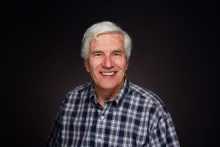
Steve Shafer was born and raised in Seattle. He graduated from Queen Anne High School in 1959 and later graduated from Ambassador College, Big Sandy, Texas in 1967, receiving a degree in Theology. He has been an ordained Elder of the Church of God for 34 years and has pastored congregations in Michigan and Washington State. He and his wife Evelyn have been married for over 48 years and have three children and ten grandchildren.
