

Robin S Webber
This sermon was given at the Oceanside, California 2017 Feast site.
This transcript was generated by AI and may contain errors. It is provided to assist those who may not be able to listen to the message.
Well, you know, at this point we've had some levity. We've had some seriousness with the announcements that I've had to mention as your coordinator during this time. I always tell speakers at times that when they come up to feel the joy, to experience that joy, and to be able to share it. And I'm planning to do that with all of you this afternoon as just simply one Christian to another, and speaking to the fellow members of the Body of Christ, to recognize the world and the conditions that we are going to go out in, and they are still there. And it is on that subject that I would speak to you this afternoon. About a month ago, Peggy Noonan of the Wall Street Journal wrote an article. It was entitled, The American Spirit is Alive in Texas. I think many of us have heard of Peggy Noonan. She was one of Ronald Reagan's speech writers. It appeared in the Wall Street Journal on September 1st. It was after what had happened down south with the hurricanes, and how everybody kind of pitched in. And she was inspired, and she wrote about this, about the Texans, and how they handled the hurricane. And do I dare say that all the other hurricanes since then have been handled, and it's almost more than the hurricane. What happens afterwards is people help people. But she inserted this in the article as it talked about hurricanes, and about dealing with the situations at hand. She talked about General Mattis, who is the Secretary of Defense. And she says here that a week or so ago, probably in Jordan, Defense Secretary James Mattis had an impromptu meeting with what looked like a few dozen U.S. troops.
Someone taped it, and this is what Mr. Mattis said simply this, Hold the Line. For those of you that I haven't met, my name's Mattis. He began, Thanks for being out here, okay? I know at times you wonder if any of us know. But believe me, I know you're far from home, every one of you. I know you could all be going to college, you young people, or you could be back on the block. We are just so very grateful. The only way this great big experiment that you and I call America is going to survive is if we've got some tough hombres like you. We don't, seeing we have a family audience, we don't blank scare. That's the bottom line. You're a great example for our country right now. It's got some big problems. You know it, and I know it. It's got problems that we don't have in the military. And you just hold the line, my fine young soldiers, sailors, airmen, and Marines.
You just hold the line until our country gets back to understanding and respecting each other and showing it. Being friendly again, one to another. That's what Americans owe to one another. We're so doggone lucky to be Americans. He ended with this. I flunked retirement. Okay? Only reason I came back was to serve alongside young people like you, who are so selfless and, frankly, so rambunctious. With this introduction and with this said, I'd like to build upon the foundation of this message.
And I want to encourage each and every one of us as we move from this facility this afternoon, not just simply as Americans or Canadians or Kenyans, but as citizens of the Kingdom of God, where our citizenship is indeed in heaven. I, as just one Christian, Robin, talking to all of you of all ages, I'm going to implore you on behalf of God the Father and Jesus Christ to hold the line.
That's where we're going to start. But that's not necessarily where we're going to conclude by the end of this message. Join me, if you would, in John 17. In John 17, we're going to find something where God has placed the body of Christ. This is our current deployment. It's not by accident. It is literally by design. And what I want to share by all of this, brethren, is that our tour continues. We often hear about the gentlemen and the ladies that go over to Iraq or Afghanistan, and we hear they're on a second tour or a third tour or a fourth tour, as this has been the longest war that America has been involved in.
But, brethren, a Christian never retires. We are always on tour, and we are always to be vigilant. Join me, if you would, as we open our Bibles and look at John 17. Now, I am no longer in the world, but these are in the world, and I come to you, Holy Father. These are the last words of Jesus on the night that He was betrayed as He spoke to the Father. Keep through your name those whom you have given Me, that they may be one as we are. While I was with them in the world, I kept them in your name.
Those whom you gave Me, I have kept, and none of them is lost except the Son of Perdition, that the Scriptures might be fulfilled. But now I come to you, and these things I speak in the world, that they may have My joy fulfilled notice in themselves. I have given them your word, and the world has hated them, because they are not of the world, just as I am not of the world.
And I do not pray that you should take them notice out of the world, but that you should keep them from the evil one. With that said, they are not of the world, just as I am not of the world. Sanctify them by your truth, your word is truth, and you sent Me into the world, I have also sent them into the world. So, brethren, going back into the world after the wonderful Feast of Tabernacles, and this eighth-day festival is not a mistake. It is not an accident. Jesus came from above and lived on this earth for three and a half years, and this is our battleground.
This is our school of completion, down here below. And so the title of my message is simply this. Pilgrims, Pilgrims, Hold That Line. And God gives us these festivals as a broad GPS of His great saving works in our lives and in the future lives of those that are of this earth. And these festivals beg us to follow the instruction that is found in the words of wisdom in the Psalm, Psalm 46 and verse 10, to stand still, stand still, and know that I am God.
And He goes on to say, and I will be exalted above all the nations. That will be one day. That is not necessarily now, but for you and for I. We have that opportunity to know God the Father as the Almighty. We have the opportunity to know Jesus Christ as our personal Lord and Master.
And thus we stand still. We stand in all of the great saving works of God of what you this day pictures. When we think of the eighth day, that a part of this eighth day moves us into the consecrated fullness of purity and holiness and being up close, being personal, being right there with God Almighty, with Jesus Christ. And we'll talk about that a little bit later as we go along.
It's going to be very exciting. We're going to touch upon eternity a little bit in this message, and I look forward to that. And no longer just simply a divine hint, not just simply one verse, like in Ecclesiastes 3, where it says that God has placed eternity in our heart. But we are going to have to be careful because there's a little time and space in this.
We're going to be surrounded in that sense by eternity. We are going to exist in that experience with God Almighty and with Jesus Christ as much as we can understand.
But before we step into eternity, you and I in a few minutes are going to have to step back into... Are you with me? Back to where we came from. Back into the world. Back there. And that's the deal that we made with Jesus Christ at baptism and what we understand from the Scriptures. That before we bear a crown, that we must bear a cross. That's kind of just the mathematics of the Scriptures. And it just doesn't. It's not something that you can skip. But it is in bearing that cross. It is in bearing that weight that some of us are going to go back to and or that we will face. That is where we become, oh, my, my, my. So very, very complete in Christ. Join me if you would in Psalm 46 and verse 1. In Psalm 46, and we actually have, I believe, this message in our hymn book, but let's just read through it for a moment. In Psalm 46, we pick up the thought in verse 1. God is our refuge and our strength and a very present help and trouble. Therefore we will not fear, even though the earth be removed, and though the mountains be carried in the midst of the sea, and though its waters roar and are troubled, though the mountains shake with its swelling. Dear friends, this is not simply talking about the Sierra Nevada or the Rockies or an overflow of one sea into another. This is speaking of some of the troubles that you and I are going to face this year.
That the Sephoric family had to face over the last couple of days. That the Spirit family has been having to face over the last couple of weeks. That Mr. Feik and his presentation has had to, along with his wife, experience this year. We cannot necessarily plan the moment or the time in which God, with that spiritual chisel of His, goes to work upon us.
To mold us, to shape us, to soften us, to become complete in Jesus Christ. Let's go on and see what it says. There is a river, though. There is a river whose stream shall make glad the city of God, the holy place of the tabernacle of the Most High. God is in the midst of her, in the midst of her, and she shall not be moved. God shall help her just as the break of dawn. The nations raged, the kingdoms removed, and He uttered His voice, and the earth melted. The Lord of Host is with us. The God of Jacob is our refuge. And in this psalm, in this inspiration, that you and I need to plant in our heart.
As General Mattis, a U.S. General, a Secretary of Defense, remembers where the G.I.s are around the earth. God knows exactly, exactly where we are. He knows the sparrow that falls from the tree. He did not call you accidentally.
You know, sometimes in families we smile at one of our children, and we kind of lean over and say, Well, they kind of came. They were, well, an accident. Truly no child is an accident, are they? But we can kind of smile. But your father, my father, our Heavenly Father, does not have accidents. He's called us. We heard about his profound love, his generosity beyond any human understanding, that God so loved the world as Mr. Helgi brought out the other day. Nobody is in this room today by accident. But there are going to be incidents that we are going to face as we leave here. In our families, in our marriages, on the job, in the schools, in the neighborhoods, in the congregations. And though the mountains shake, and though the oceans roar, we must know that there is a city that makes glad, and that is the destination of a pilgrim. Join me if you would in Hebrews 11. In Hebrews 11, one of the, you know, what we oftentimes call the faith chapter, in Hebrews 11, let's take a look here.
In Hebrews 11, let's pick up this thought in verse 13 if we can do this together. Speaking of those that have gone before us, it says that those that have gone before us over the millennia, these all died in faith not having received the promises, but having seen them afar off, were assured of them, embraced them, and confessed that they were strangers. And notice, please notice, pilgrims on the earth. What is a pilgrim? A pilgrim is a man or a woman that is a devotee, that is on a journey, that is moving towards a shrine, moving towards a destination, moving to an appointed place.
We're not yet there, pilgrims, because when a pilgrim puts down their roots into this world, into the culture of this age, we are no longer a pilgrim. Houston, we've landed. And just as a Brahm, and Isaac, and Jacob, and Daniel, and the apostles, and those whom we have known in our lifetime and loved and are now dead, they did not put their roots into this world, into the age, to the society, to the culture of this cosmos. But we're looking ahead to that city that makes glad, of which the river and the stream of life comes out. And we need to understand that. And that's very important. They were, in that sense, brethren, just simply passing through. Passing through. They did not put down roots. Did God know where they were? Were they special to God? Were they as special to God as these marines were special to General Mattis? Join me. Let's just go a page over here to Hebrews 11 and 38. Hebrews 11 and verse 38. This is what God thinks of them. This is what God thinks of you as you go out into this world, as you strive to emulate the footsteps of Jesus Christ, our Lord and Master. It says in verse 38, of whom the world was not worthy. They wandered in deserts, and they wandered in mountains, and in dens and caves of the earth. And all of these, having obtained notice, a good testimony. Through faith, at that time did not receive the promise, but they were still passing through.
They were not hearing the call of Houston. Houston, we have landed. They were not just simply looking for their human best, but they were looking for God's perfection. God, having provided something better for us, that they should not be made perfect apart from us.
Here's what I want to share with you on this, the eighth day. If you get anything other than, blessed are the flexible, for they shall not be bent out of shape. Here's the second line I want to have you take, wherever you go. Eternity, the kingdom of God, is not simply a destination. It's a way of traveling. Pilgrims here on the ocean side, are you ready to learn more about that? What did I just mean about that?
The kingdom of God is not just simply a destination. It's a way of traveling. It's a way of understanding how we pass through now, when our personal mountains shake, when our personal seas roar, when we feel as if we're being drowned by the world, the family, the individuals, the battlefield that's between our ears and our mind. How will we keep on standing? That's what we want to talk about. It's very interesting. It's something that you grow in. It's not just something that happens all at once. And that's why we keep on coming back to these festivals. It's about becoming spiritually real. Join me if you would, please. Let's go to Romans 4. In Romans 4, and let's pick up the thought here in Romans 4.
Notice verse 20. Here's the Father of the faithful. Being faithful is not always just kind of a line like this. Sometimes faithfulness is a little bit like this, kind of like that heartbeat. Kind of going up, kind of going up, and kind of going down. But God doesn't always remember when we're down. He'll look at the up spots. But notice what it says in Romans 4 and verse 20.
Speaking of Abraham, He did not waver at the promise of God through unbelief, but was strengthened in faith, giving glory to God. And being fully convinced that what He had promised, He was also able to perform. That doesn't mean that Abraham didn't do some serious soul-searching along the way.
One of the descriptions of pilgrims in Hebrews 11 is that they had a certain confidence, or they had a certain assurance. And that assurance was that, you know, faith is interesting. Faith is not about always knowing where you're going to, but it's knowing the one that you're following.
It's not knowing necessarily the somewhere. Are you with me? Do you understand? But it's knowing the someone that is elected to speak to you and to say, wherever I go, you follow me. We're going to be challenged about that this year. Let's just get ready, folks. We're going to have to come to expect the unexpected. I'd like to share a story with you to make this personal.
There was a man that had been shipwrecked, and he'd been tossed on shore.
And once he kind of got his groundings, he prayed to God. He said, God, I'm shipwrecked. I'm on shore. Would you please rescue me? I need your deliverance.
He would pray that prayer every day, and he'd go out by the seashore, and he would scan the horizon, scan the horizon, looking for God's answer. And every day he would come back to the seashore because the answer had not yet come. Finally, he kind of stopped a little bit praying, and he got some driftwood on the shore and built a hut, and gave him some shelter. He took some of the few possessions that he had and put it into the hut. Well, then what happened is that he needed to go out and get some food, so he kind of went over the hill to forage to kind of scavenge what is happening there, because the doves were not dropping from the heavens. And so he went on to the other side, and then he kind of came back, and he came over the hill, and there was his hut.
It was burning up, and the smoke was beginning to billow in the air.
He was devastated. He sobbed. God, where are you? Where are you? And finally, he sobbed himself, and you know, crying sometimes can just make you so innervated. He fell asleep right on the beach. Just fell asleep where he was sobbing.
Are you with me? It's not the end of the story. What happened was that the next morning, he was awakened. There was a sound, and he looked up, and there was a rowboat coming into shore, coming right towards him. He walked out into the water, and he said, How did you know that I was here? The sailor on board said, We saw your smoke signal.
We saw your smoke signal. You see, God is above us. God knows where we are. And he can take our little, he can even take our frustration, and serve it towards his glorious purpose.
It's very easy to get discouraged, and it will become easy to become discouraged as we move away from the people of God and this congregation that we've been a part of.
Things will go bad, but as we've heard during these days, that we should not lose heart. Because God is at work in our lives, even in the midst of the pain and the suffering. And remember the next time that our little hut goes burning. Whatever it is, with our family, with our mate, with our children, with our employer, with our school, with our neighbor, with the person sitting in front of you in this church right now.
That smoke signal is designed to summon the grace of God to become complete in Christ.
You know, I'd written this down about two days ago.
Been very interesting. You know how I always talk about, blessed are the flexible, for they should not be in us. Who do you think I'm preaching to? Why?
I'd kind of finally written up my notes about two nights ago, because I kind of like to live with the feast and hear what's being heard.
And Susan and I had a wonderful time yesterday. We're out with some of the brethren, and we're trying to fit everybody in while we're here. And then finally I went home, and I went to the car to get my briefcase with all of my notes, because I hadn't really had a chance to look at my notes.
And I went to the car, because that's where my bag was supposed to be. Because I needed a couple of hours to kind of breeze over these notes and look at them. All of you always think all of us speak temperaneously, but we really do cheat, look at our notes sometimes.
And all of a sudden the notes were not there.
And I staggered a little bit for a few minutes, like our friend Abraham.
And this morning I woke up, because faith is not something that is still but grows. And I said, there's a lesson in this.
It's the lesson of our huts, or the little huts of our construction will burn.
But it's only the next step of God's grace, of how He answers those little smokes that are going up.
I told Susan there's a big lesson in this. You know, I can talk all day long, I can write something, and I can say I can tell you a story, and I can extemporize it. But that's just preaching.
And what we've learned during this Feast of Tabernacles, not just that we're simply supposed to be preaching, we need to practice this. We need to practice this.
This, I remember the story of Paganini, maybe some of you remember him in music appreciation. Paganini was an Italian gentleman, world-famous violinist, and one time he was on stage. And what happened was that he was up on the concert, and he was playing one of his concertos, and all of a sudden one of the strings snapped. And the whole audience went, What's the great master going to do? Let's do that. Let's have some fun for a moment. Go. We're going to go like this, and fake surprise. Oh! Ready? One, two, three.
That was fun. That was to wake you up.
Paganini said this simply, I will show them that the music is not in the instrument, but it's inside of me. And that's what we've got to go as we go out and back into the assignment that God has given us into this world. That's our tour out there. That it just can't simply be of the head, it's got to be of the heart. God doesn't want your brain. God's not taking your brain into eternity. He wants your heart. And he wants you to have complete faith in Him.
Who wants to hear another story? Just before I'm coming up, it's been quite 24 hours. Just as I'm about to come up, I get my cheaters on, and guess what? I have one of my lenses missing.
Susan's used to this. Anyway, and so I said, oh, that's great. I'm there. It's about one minute before services, and I'm fidgeting. You ever done that? You get the wire, and you're trying to stick it. Am I the only one that does? I'm really cheap. I've got to save those glasses.
I said, you know, God is so good at me. Thank you, Lord. You're trying to teach me something here. Okay? What's the smoke signal on this one? Smoke signal? Well, somebody came over and said, here's another pair of glasses. But here's the thing that we want to learn.
That we've got to be patient in God's desires. Join me if you would in 1 Corinthians 12. In 1 Corinthians 12, one of the great stories. And it kind of fits a little bit with the guy that's on the seashore. I say 1 Corinthians, 2 Corinthians 12.
And I had studied 2 Corinthians 12 in school, went to Imperial school, studied again in Basterd College. But it really took a long time for me to get my heart wrapped around what God was saying here through the Apostle Paul. And it's the very famous story of the three times that he appealed to God. And let's pick up the story here in verse 7. And lest I should be exalted above measure by the abundance of the revelations of thorn in the flesh was given to me in a messenger of Satan to Buffett mean, lest I be exalted above measure concerning the thing I pleaded with the Lord three times, just like the guy on the seashore, that it might depart from me.
And he, speaking of God, said to me, My grace is sufficient for you, for my strength is made perfect in weakness. Therefore, most gladly, I will rather boast in my infirmities than the power that the power of Christ may rest upon me.
And therefore, I take pleasure in infirmity, in reproaches, in needs, in persecutions, and in distress for Christ's sake, for when I am weak, then I am strong. That's when God surprises us. But sometimes that surprise will not necessarily come. It came in my life as a young boy when I was 16 years old. I was a ball player. You probably understand that when you see me, it only puts my right knee that I haven't gotten it fixed yet. A typical kid played a lot of ball. Thousands of hours of basketball. A typical 16-year-old guy. I was struck by spinal meningitis. As you remember in those days, the church didn't really send a lot of people to the hospitals. Not going to go too far down that line, but we know what it was like in the 1960s.
And in that, I was anointed in faith. I went to bed that night, not knowing whether or not I was going to live or die. They did not know if I was going to make it through the night. I didn't know if I was going to make it through the night. But my mother, Thomasina, dedicated her child to God at birth, and continued to dedicate him and put him into God's hands through this. The next morning, I was living on Orange Grove Boulevard in Pasadena. We lived up three stories in an apartment, so the trees were all around us. Have you ever heard a mockingbird and just how distracting they are in the morning when you're trying to sleep? You just want to shoot him. I'm sorry. Sorry. Don't want to get into gun control issues here. Okay? You want to shoot him? That was the sweetest sound I've ever heard in my life, other than my wife tell me that she loves me. Hmm. My eyes had not even opened. But I knew I was alive, and I knew that I had been healed. And God's grace was shed upon me that day, that whenever I anoint somebody, I can tell them, I believe in the healing power of God. I'm an original. Now, when I say that, I realize that there were other mothers and other fathers in that year that dedicated their child to God. Just as much as we dedicated Mr. Sephoric yesterday to God. And God, even if we do not understand it at the moment, has His purposes. Our huts will burn down. But the smoke goes up, and somewhere, someday, in God's way, His grace will bless and keep us. There were other children that died that year. Full disclosure, we've got to look at the broad picture. Just as much as in Acts 12, James was the first apostle that was martyred. And just a few verses down in Acts 12, Peter gets the angelic jailbreak. Now, what's that all about? Was James a worse guy than Peter? Don't show it with no hands.
Was James a... No, no. God's grace moves forward for His purposes and in His term, time. And He knows exactly, exactly where we are.
We've been talking about grace. Many of us, many years ago, first heard that grace was God's unmerited pardon. Others of us, as the church is growing and they understand grace, understand that grace is the sustaining favor of God upon us. As His countenance might shine upon us. But sometimes, sometimes one plus one does not equal two for God, because He works on a different way with you and with me, as He did with Paul. And Paul came to the point where he understood that...
He came to a point where he had appealed to God three different times. And he came to the point of understanding that your grace, you're telling me to turn to you. You forgiving me of persecuting your people. You restoring my sight underneath the anointing of Ananias in Damascus. And you saving me again and again and again from the shipwrecks and from the lions and from the stonings.
Your grace, your involvement, your relationship. You loving me that you gave your son for me. It is enough. Your grace is sufficient. You owe me nothing. You owe me nothing. And I owe you everything. And when we come to that point, brethren, when we come to that point, God looks down and He says, He gets it.
He says, She gets it. And that's a wonderful thing. Is it easy? No. Not at all. Remember what I said earlier? Eternity is a way of traveling. It's not just a destination. Mr. Slomas spoke about the eighth day a little bit today. You know, eternity has got to be something really, really neat. And it's not high theology to understand how neat it is. Stay with me a second. It's neat. How do I know that it's neat? It's got to be neat because Jesus Christ, and He didn't have to, but He died.
That you and I might not only get a glimpse of eternity, but exist in eternity with God the Father and Jesus Christ forever. I remember when I was younger, and I used to think as a child, even as a minister, sometimes I used to try to use anti-mathematical logic to explain what eternity is. And even amongst here in Escondido, I would use the line of eternity being a string. And the string is going this way, and the string is going that way. And the twain, the twine, the twain, shall never meet. It just keeps on going and never stopping.
But I was trying to explain something in a linear, anti-mathematical word picture. That's not what eternity is. Do you know what eternity is? If there was one verse that you could prove what eternity is, come with me to John 17 and verse 3. In John 17 and verse 3. In John 17 and verse 3. So often we try to explain eternity as far as being a destination. In John 17 and verse 3 it tells us this, and this is eternal life.
And we just look at the Bible that will tell us what eternity is. Eternal life that you might know, that you may know the only true God and Jesus Christ whom you have sent. Eternity is more than just simply the absence of time and space. It's the fulfillment of a relationship that God, the Word, God the Father, Jesus Christ now, have desired and put their skin into the game that you and I might have this relationship forever. That we hear the great anthem, we hear the rhythm of the Scripture, that they might be our God and that we might be their people and that they, God the Father and Jesus Christ, might dwell amongst us.
Sometimes we can describe eternity by some of the things that are not there. I'm just going to kind of paraphrase for a moment Revelation 21 and 22. When you think of some of the things that aren't going to be there that God wants us to experience. You know, in Revelation 21 it says that there's not going to be any more seas. What are you saying? That the Dead Sea is going to dry up? Or the Salton Sea out here is going to dry up? Or the Mediterranean? No, no, it's talking about something else.
This is apocalyptic literature. It's using imagery to describe that there are going to be no more barriers between God and man, and there's going to be no more barriers between man and man.
In ancient times, the sea and the oceans were looked upon as dread. Even the Phoenicians, until later, or the Greeks, they hugged the coastline. The seas were scary items in which they did not dare sail into, lest they be swallowed or go off the side of the earth. And God says there are going to be no more barriers. No more barriers. No more gulfs between God and man. No more gulfs between man and man.
Can we talk? How many gulfs do we have in our nation today? Between men and women. Between white. Between blacks. Between browns. Between Asians. Between Republicans. Between Democrats. Between America. Between Europe. Between America and North Korea. There will be no more seas. There will be no more crying. The only tears that will be experienced are tears of joy. The Scriptures tell us that there will be no more pain. Not only physical, which is hard enough to deal with, but no more emotional pain, which tears at us at times.
With those that, as pastors, we deal with, or in our own lives. The pain of loneliness will be extinct. Because Jesus, on that cross, on that altar of Golgotha, experienced loneliness when all of humanity turned their back on Him. And as Mr. Kubik says, He is not only sympathetic, He is empathetic, and He moves through that loneliness for us and with us today. There will be no more death. There will be no more sorrow. And what's really interesting is that there is going to be no more... No, it's going to be no more sun, no more curse, no more night.
Because God is going to be dwelling there. Jesus, the Lamb of God, mentioned 28 times, is the Lamb of God in the book of Revelation. He that said, I am the light, is going to be there. There will be no need for sun. He'll be there. There will be no need for a temple, because we will be in their presence and they will be in the midst of us. How neat! How wonderful is that! I'm sharing this with you, just simply, Robin, as one Christian to another, because I know this year that we're going to become distracted.
We're going to get our eyes off the ball. Those mountains are going to shake. Those seas are going to roar. And I want you to remember to hold the line. Are you with me? I want you, on behalf of God the Father and Jesus Christ, to hold the line. But besides only holding the line, I want you to advance. That is so very important. The two great questions that are going to come up this life, as we go through this journey, as we go through this pilgrimage, are the questions that always come to a pilgrim.
And that is simply this, as a Christian. Jesus asked the disciples early on, and he will ask again and again when these situations come up. You might want to jot this down. If you jot this down, this can change your life. I'm not up here to waste your time. I am a servant of God Almighty and Jesus Christ, and I believe this is inspired if, just for one person, that you will remember this.
The first thing that Jesus ever asked a disciple is simply this, Who do you say that I am? You thought that was just for Peter. No, that's for each and every one of us. And at some of our little huts this year, we'll go up and smoke for the moment. That question has got to come into our hearts, and you've got to have the answer. Who do you say that I am? And remember, even Abraham staggered a little bit. His knees got a little wobbly, but his heart stayed firm.
And we need to say that you are the Christ. You say, whoosh, that's good. Got through that question. What's the second question? Simply this. Do Jesus speaking to Peter? Do you love me? Do you love me? Do you only love me because I can produce a miracle? Because I'm going to come back and solve all of the world's issues? Or do you just...
Do you get it? I want to be loved. I want to be just loved to be loved. Not because I'm a cosmic bellboy for God the Father, but because you appreciate the sacrifice that you gave for me. That's what he wants to know. No, all of us at one time or another have been down to a train depot and we're waiting for somebody. It's one thing to wait for the train to arrive.
It's quite something else to be waiting for the person to get off the train. As we look forward to the millennium, as we look forward to eternity, are we just simply looking for the train to arrive? Or are we looking for someone to get off that train? To come through the clouds? To have that relationship united and bonded?
Brethren, this is where we are at today. This is where you and I are on. We are on the tour. Jesus Christ said, Father, you keep them in this world. No, you and I this past week have talked about times of refreshing. We're talking about times of refreshing. The world's going to be a whole lot different. It's going to be jubilee on steroids. It's going to be wonderful. But for us, the kingdom of God is now. And you and I are in the work of salvation. You and I are ambassadors of salvation. I'm just going to read this here. You might want to jot it down.
2 Corinthians 5, 11-21. Just listen. Now, all these things are from God, who reconciled us to Himself through Christ. He reconciled us and gave us the ministry of reconciliation, namely that God was in Christ, reconciling the world to Himself, not counting their trespasses against them. And He has committed us to the word of reconciliation. And therefore, we are ambassadors of Christ. You and I that are in this room have been elected to be members, parts of the body of Christ.
And if Jesus Christ is the head of that body, then you and I become His feet to do His walking. We are His arms to do His reaching. We are His eyes and His ears to be as sensitive as He was when the woman came from behind and touched Him. And He turned around and said, Who is that? And met her need. As sensitive as when the paralytic was raised down from the roof.
Imagine that's the favorite story in the Bible. Where the paralytic is raised down from the roof. And the dust is coming down on Jesus' face. He had to have the biggest smile because He knew it was happening. And He stopped. He stopped His sermon. He dealt with the man. He forgave his sins. Healed him. Honored him. Loved him. You and I, as we depart for Kenya or Arizona and Mexico, California, are we going to be practitioners of the return? Are we going to be practitioners of reconciliation? Are we going to be practitioners as God would?
Let me just ask you some questions and confession is good for the soul. Ask yourself if this fits you. Do we, not in the thousand year period or in eternity, but now, do we bring life and times of refreshing where relationships have died? Are we like that living water that Jesus spoke of that comes forth out of Him and now resides in us by His Spirit? Do we provide times of refreshing?
Or have we dried up over the years and just become a stagnant pool? Do we seek cures for people whose lives are in pain? Do we bring joy and life that are filled with sorrow? Do you and I bring light where only there has been darkness? Do we bring blessings when there has been cursings? And do we make room at the end for people in our lives? Or do we put up that proverbial sign, No Irish Wanted? Do we make room? I've got an amazing story that I want to tell you.
Who wants to hear a good story as we begin winding up? Good. That means I've got another hour. Oh, I was just worried about that. I had the honor this week to go to a celebration of life ceremony. It was to honor one of our San Diego members, Anita Davidson. Lovely lady. Married a Marine. You know she had to be converted. My mom married a Marine, so we always got one another. It was so memorable and so moving to hear from those that she had interacted with. Anita had a wonderful way of interacting with the neighborhood.
They had very dear, very close friends on the block. The kids actually almost lived with them like family. They are like family and from different races as well. It was so moving when one of the adopted daughters got up and talked about her. She always had time, always had room, always made her feel like a part of her family. She said, you know, we're not really religious types. We got that straight. We're not really religious types. But you know what she was? She was like one of your missionaries.
One of your missionaries. That really struck me. How often have we said that our example speaks much louder than our loudest sermons? How often are Christians put up on this pedestal that we must practice what we preach? And that's good and that's well. But where Anita Davidson was, this daughter of the South, this gal married to a Marine, mother of one of our members that's here today.
She took her little, just like that little boy, with the bread and the fish in that neighborhood. She didn't have to get up on a mountain, but she was in the moment. And she did something very important. Over the years, as I've now been a minister for over 43 years, I've come to learn. My religion is very, very simple. Can I share just... It's called a... It's like a dance. It's a two-step. It makes it real simple. You might want to jot it down. Practice it. It's working for me right now. Not in perfection. Number one, I was born to glorify God. Simply put, that means I've got to put myself away.
I was born to glorify God. And number two, I was born... And with the story that I told you, I was given life to be a blessing to other people. Not because of who or what I am, just by nature. You've already got that as you've watched me this week. But as I emulate the footsteps of Jesus Christ.
You know, I kind of remember the old line about Jane coming home to Carzan, coming home from work one day. And Carzan and Jane asked him, well, how's it going out there? And he says, it's a jungle.
That's a jungle out there. But that's our tour of duty.
That's the assignment, dear brethren.
Jesus never lived a soft and easy life. In fact, it says, There was not a stone for the Son of Man to put His head upon. Because you and I, just like our Master, we must bear a cross before we crown.
Anita Davidson, lovely lady, Christian sister.
Her life was a jungle at times.
But she was also an ambassador of Jesus Christ.
I remember a story back in 1939. It was a movie. It was called Stanley and Livingston. It starred Spencer Tracy. I know I'm dating myself. Spencer Tracy was Stanley. And Sir Cedric Cardwick was Livingston. It was the story that the entire world wanted to know where this very famous Scottish explorer and missionary was.
It was the biggest story on Earth. And so Stanley, this American, took the challenge of his publisher to go into Africa at that time, where the white man had not yet been, to find this man. Everybody wanted to know where he was. Everybody was concerned about him. And finally, he walked into the camp after months and months.
And he said, Dr. Livingston, I presume.
And he said, yes.
And Stanley Spencer Tracy said, I'm here. I'm here. I'm here to take you home.
Livingston said, I am home. I am home.
And for the moment, brethren, this is where we are. This is the jungle. This is the world. This is a culture that has been apart from God since Eden. But this is where God wants us to be. General Mattis knew where the people were. I'm here today to tell you that the captain of our salvation knows where each and every one of you are, by heart and by name.
And he loves you. He died on the cross for you. He walked the walk and he talked the talk. And now he is at the right hand of God, ascended in all glory. But he took something with him when he was ascended. He wasn't quite the same as when he came down.
He took a hunk of humanity with him. Because that's why God the Father sent him to this earth, that man might be touched by God, and that God in turn might be touched by our humanity. Join me if you would in Hebrews 2. In Hebrews 2.
Speaking of the Christ. Speaking of the one that we look to come off the train of eternity, because we love him. And we love his Father, of whom we have in mutuality. In Hebrews 2, let's pick up the thought if we could in verse 10. For it was fitting for him, for whom are all things, by whom are all things, speaking of Christ, to bring many sons to glory, and to make the captain of salvation perfect through sufferings. For both he who sanctifies and those who are being sanctified are all one. We're in this together. The Christ and the Christians that are named after him. For which reason he is not ashamed, not ashamed to call them brethren. Just as much as Matt has said to the Marines, I'm a fellow jarhead, and simplify.
Saying, I will declare your name to my brethren. How can you declare a name if you don't know they exist and you don't know where they are? In the midst of the assembly, I will sing praise to you. And again, verse 13, I will put my trust in him. And again, here am I and the children whom God has given me. You are the children of God that he has given to Jesus Christ, the ultimate pilgrim who finished the course, who said that it is finished, who came from on high and came down below, and now is on high waiting for us to become complete through the Spirit of God, his Father, and himself. And here I am in the children whom you have given me. One last verse. Join me if you would in John 6, 36.
In John 6 and verse 36. Let's notice where it says simply this. But I say to you that you have seen me, and you do not believe. All that the Father gives me will come to me, and the one who comes to me I will by no means cast out. That's talking to you, dear friends. For I have come down from heaven not to do my own will, but the will of him who has sent me. This is the will of the Father who sent me. That of all He has given me, all that He has given me, I should lose nothing but should raise it up the last day. And this is the will of Him who sent me, that everyone who sees the Son and believes in Him may have everlasting life, and I will raise Him up the last day. God knows exactly where you're at. He knows exactly who you are. This coming year, are you with me? This coming year, let's come to expect the unexpected. Sometimes our hope will seem lost, that there is no way out, just like the man on the beach, just like those people that are in Ezekiel 37 that says, our bones are dry and our hope are lost. When man is at his extreme, it is only the beginning of God's work, His saving grace, His intervening grace, and His knowing grace. In 2001, there was a jet that was flying over Pennsylvania on a day that will be etched forever in our mind. We knew that the World Trade Center had already been bombed. We know that the Pentagon had already been bombed, and that was so loud and so traumatic, that there was something else happening over the skies of Pennsylvania. And there were people in one sense that knew that they were doomed. They knew that they were dead ducks. They knew that their plane had been hijacked. But there was something that moved beyond them to recognize that it was not about them, but it was about others. And they did not just simply hold the line, but they advanced. They moved, they positioned themselves, they had a huddle, just like we're doing here at the Feast of Tabernacles in the eighth day. They huddled. They said, we're going to do something. We're not going to be paralyzed. There's a bigger purpose that's working out here. We're not just simply going to sit back here and hold the line. We're going to do something. Todd Beamer, young man, good-looking guy, had the family. Many of us remember his face. Finally, they had the plan. Finally, they knew that they had to go down that aisle. They knew that in moments because they gave their life that others might live. And that great theme that has come down through the Church of God for 75 years is it's not just simply about personal salvation. And indeed, we do want to be personally saved. Yes, but it's not just about us. And Todd Beamer said simply this. You know the line. It's very simple. Let's roll. Pilgrims, Christians, members of the Body of Christ. Let's not only hold the line. It's out there. The tour is waiting for us. I've got a thought. I've got an encouragement. Let's roll.
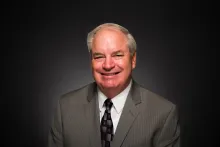
Robin Webber was born in Chicago, Illinois, in 1951, but has lived most of his life in California. He has been a part of the Church of God community since 1963. He attended Ambassador College in Pasadena from 1969-1973. He majored in theology and history.
Mr. Webber's interest remains in the study of history, socio-economics and literature. Over the years, he has offered his services to museums as a docent to share his enthusiasm and passions regarding these areas of expertise.
When time permits, he loves to go mountain biking on nearby ranch land and meet his wife as she hikes toward him.
