

Jorge de Campos
The Day of Trumpets marks a pivotal point in God’s plan—the return of Jesus Christ, resurrection of the saints, and establishment of God’s Kingdom over the earth. It is both a warning and a message of hope, calling us to awake, repent, watch, and live now according to the Kingdom’s rules and getting prepared now for Christ’s return.
This transcript was generated by AI and may contain errors. It is provided to assist those who may not be able to listen to the message.
Good morning, everyone! Good to see you and happy Feast of Trumpets! Today is God's pivotal Holy Day. Each of God's holy days plays an important part in reminding us of God's plan of salvation. We all have completed this year the Passover, and we all were reminded of Christ's sacrifice. We're also reminded that we have to accept that sacrifice as God's gracious gift to you and I, completely unmerited as a redemption gift for you and I. And then, immediately following, we have to return the gift in a sign of gratitude to God by being willing and committing to repent and change and live like God would like us to be. And so, we have to live a new life, and that is the symbolism of the Days of Unleavened Bread, living without sin, completely as described by seven days. And then we moved on to Pentecost. As we realize and we know and God knows that you and I cannot do it by ourselves, and you and I need God's Holy Spirit, God's helper, to help us live a new life. And so, with God's Holy Spirit, we enter now what we call the age of our living life, of overcoming, of changing, of becoming better people with the help of God's Holy Spirit. Some of us, some of us, few, amongst those in the world, very few, but some of us are going through that road today. We have to today overcome. Others, God will call in the future. But today is our time of judgment, of overcoming, of using God's Holy Spirit so that at the end of our physical life, we have either made it or not. And we usually use the term, well, when one of our beloved friends dies, we say, well, he made it or she made it. Now he or she is waiting for the resurrection. I'll put it also the same thing, but using slightly different words. He or she has been harvested from the earth. Doesn't mean he's resurrected and changed, but he's been harvested. He went through his time of overcoming, and he or she has made it at the end of his life with the help of God's Holy Spirit. And that's all the symbolism of Pentecost.
But now we move to a pivotal point in God's plan, a real pivotal point in God's plan. Because the first few, as we call them, beginning of the year Holy Days or spring Holy Days for those that live in the northern hemisphere, obviously those that live in the southern hemisphere like our Brazilian brethren are listening to us. It's not spring for them now, but Holy Days at the beginning of the year.
Those represent Christ's work for us individually and his help for us individually. But now, as we come to the end of the year Holy Days, we are now moving to a period, a new phase in God's plan, in which God is intervening in world affairs. And with the Day of Trumpets is the starting point of many other events that will follow, immediately following, and some of them lasting for a millennium or a bit more, which is God's intervention in world affairs. The starting point of the restoration of all things, which will ultimately lead to worldwide peace, peace around the whole world. And the planet Earth, during the millennium, will really become a paradise, a paradise. And all mankind will have the chance then, as you and I have now, to be changed and to be in the kingdom of God. And ultimately, at the end of this, others that have died and never had opportunity will have that opportunity. And ultimately, a new heaven and a new earth will be established.
And so the Day of Trumpets, the blowing of this heavenly shofar by some angels, seven shofars, seven blows, seven sounds of the trumpet, initiates a sequence of events that are a turning point, a key perfect point in the plan of God, a new phase in God's plan, a phase, once again, that Christ is now going to take over the reigns of this society. And so trumpets focus on soon-to-coming future events, events that will completely change society and the world as we understand it. But trumpets also teach us that we need to live now a different way.
And so today, in the process of me explaining to you how we should live now to be accounted worthy to stand with Jesus Christ at his return, we will touch a few prophetic events as well that will change the world. And so to start on this road map, let's call it that, let's start with God's instructions right at the beginning in Leviticus 23. And in verse 1 and 2 we read, and the Lord spoke to Moses, saying, Speak to the children of Israel, and say to them, The feasts of the Lord. And that is the first key important statement. It's the feasts of the Lord. They are not the feasts of Israel. They are not the feasts of the Jews. They are the God's festivals. Yes, they apply to the Jews. Yes, they apply to Israel. But also apply to Americans and Brazilians and everybody else.
It's God's holy days and festivals. And so we continue reading. The feasts of the Lord, which you will proclaim to be holy convocations.
And it says, These are my feasts. And so these are God's feasts. And as we move a little further in verse 23 and verse 25, as we get to the seventh month, on the first day of the seventh month in God's calendar, which is today, it says, Speak to the children of Israel, saying, In the seventh month, on the first day of the month, there was a day of trumpets, which is today, you shall have a Sabbath rest. Now note three things in this verse.
In these two verses, 24 and 25, you shall have a Sabbath rest, a memorial of blowing of trumpets, and a holy convocation. You see, there are three things highlighted here. A Sabbath rest, a holy convocation, and a memorial of the sound of trumpets. You shall do no customary work, and you shall offer an offering made by fire to the Lord. And indeed, it is a day in which we don't do our normal customary work, our normal job, and it's a day that we offer an offering by God, to God by fire. Yes, we do. And in the New Testament, it's our lives. It's our, as you read in Romans 12 verse 1, it's our living sacrifice that we offer to God, our change of life. And this is the point that I'll be talking a little bit more, which is how we should live now to be accounted worthy to be there with Christ. Now, this is confirmed. This is confirmed also in Numbers 29. And so if you turn to Numbers 29 verse 1. Numbers 29 verse 1.
In the seventh month, on the first day of the month, you shall have a holy convocation. You shall do no customary work for it is a day of blowing the trumpets. And so these three points are reconfirmed. And so before we look at some of the prophetic events that this day represents, we need to take note that in first place, this is a day of rest from our normal customary job. It is a commanded day by God for us to rest from our normal customary job. Just like on the weekly Sabbath, just like on weekly Sabbath, we are to stop our normal activities and we dedicate time to God. For instance, in Exodus 20 verse 8, talking about the weekly Sabbath, but it shows the point about how to treat holy time. Exodus 20 verse 8.
Exodus 20 verse 8.
It is remember the Sabbath day to keep it holy.
Holy time must be treated as holy time. You and I don't make the time holy, but we are to treat it in a holy, respectful way. And so it's not just a vacation day, quote unquote, of not working, but it's time that belongs to God.
It's time that belongs to God. And therefore, we are to treat it differently than just stop working. And that is from sunset to sunset. If we go back to Leviticus 23 verse 32, Leviticus 23 verse 32, talking about another specific day of holy time, it explains that it is from sunset to the sunset, Leviticus 23 verse 32.
It says, it shall be a Sabbath of solemn rest, talking about a day of atonement, and you shall afflict your souls on the ninth day of the month at evening, from evening to evening, from sunset to sunset. You shall celebrate your Sabbath. And so God counts time from sunset to sunset. And it's always been that way. You look at the creation week right in Genesis chapter one.
For instance, in verse five, Genesis chapter one verse five, it says, and God called the light day and darkness called night, and so the evening and morning were the first day. Evening and morning. In other words, the evening after sunset and all the way the day portion, they were the day. So that's how God calls holy time. And so the first point that we ready are is that it is a day of rest and keeping it holy.
The second point is that it's a day of holy convocation. Holy convocation. In other words, it's a day that God wants you and I to gather together as much as you are able to. Understand some people for valid reasons. Could be health, could be distance, might not be able to gather together. But they could make an effort to maybe be online on a webcast or something like that if they are able to, because it is a day of convocation.
And convocation means assembly, means to get together. If we can, physically, if we cannot, at least with whatever means we can, we have at our disposal. And this is not only an instruction in the Old Testament, it's also a similar principle in the New Testament as we read in Hebrews 10 verse 24.
In Hebrews 10 verse 24. Hebrews 10 verse 24, where he reads, and let us consider one another in order to stir up love in good works, not for cycling the assembling of ourselves together. The intent is that we assemble ourselves together if we can, if health permits, if we have the capability, if distance permits. We make an effort to do that so that we consider one another to stir up love and good works.
The purpose is to help us all talk to one another, have Christian fellowship, and with that, with that gathering, and if it's not possible, physical, maybe virtual, and as I encourage a lot of brethren in Brazil, because they live miles and miles and miles away, one from the next one, to communicate with one another, to call one another, to assemble via telephone, and or via social media, or whatever it is, but private groups that are Christian, kind, loving, and caring.
And I know they do it. They create a little group just for members in the church, and they talk to one another. They encourage one another, and that's a way of assembling together. And so we are those of us that are blessed that can meet like us today. We have an opportunity to sing, and we sang a few hymns. We prayed. We have prayers. We have special music. We listen to God's Word, and we have Christian fellowship. We break bread together, so we'll have a meal for those that are able to eat yah, and we'll be able to have that fellowship by breaking bread together.
And the third point that we read in Leviticus is that it has a very special characteristic this day, which is the memorial by sounding of trumpets. Why? Why do we sound trumpets? Well, turn with me to Numbers chapter 10. Numbers chapter 10. Numbers chapter 10. Starting in verse 1, and the Lord spoke to Moses, saying, Make two silver trumpets for yourself, and you shall make them of hammered work, and you shall use them for calling the congregation, and for directing the movement of the camps. And so we have, yeah, the meaning of trumpets, for one to call the congregation, to gather the people one of the meanings is to gather the people.
And another meaning is also in verse 9, And when you go to war in your land against the enemy who oppresses you, then you shall sound an alarm with the trumpets. And so another meaning, another function of a trumpet, is an alarm of war. And lastly, another function of trumpets is in verse 10, also in the day of your gladness in your appointed feasts.
And so we have, yeah, at times of rejoicing in the appointed feasts. And so there are various meanings that can be attributed to trumpets, opportunity and a calling together, a warning of war, and times of rejoicing. All these together fit into the prophetic meaning of this day of trumpets. In Ezekiel chapter 33, Ezekiel chapter 33, starting in verse 3, Ezekiel chapter 33 verse 3.
And when he sees the sword coming upon the land, if he blows the trumpet and warns the people, and verse 4, then whoever hears the sound of the trumpet and does not take warning, if the sword comes and takes him away, his blood shall be upon his own head. And so, yeah, we have a warning, a warning to pay attention, as we heard in the sermonette. And I want to thank a very good, profitable sermonette, very encouraging to look at Psalms and putting it together that way. It was very beautiful, well done. And so, it's a warning. We need to pay attention. Danger is looming. Get ready.
Brethren, if you and I put our head in the sand like the proverbial ostrich, then you're just not listening to the trumpet. If you and I look at the events in the world, and how so many things of critical worldwide impact have happened around this time frame, like 9-11, like the market crash, like the Yom Kippur War, like on the last great day, a couple of years ago, the attack down in the southern area of Israel. A lot of critical things happen around this time frame. And brethren, if you think, oh well, yeah, this thing is just going to go away, brethren is not going away. It's getting worse. And brethren, please, please, time is short. Please, time is short. Very short. And then we read in Joel, chapter 2, Daniel, Isaiah, Joel, chapter 2, Joel, chapter 2, verse 1. We read the same warning, blow the trumpet in Zion and sound an alarm in my holy mountain.
Now, if we look at it from a spiritual point of view, God's church, in a sense, is God's holy mountain. I mean, it's just, I'm just using that as an analogy, not technically, if you're going to look at it technically, you're going to say that's incorrect. But I'm just using it as an analogy. We are God's people. And an alarm is going out to us, brethren. Let all the inhabitants of the land tremble. You know, a lot of people in this world today are suffering from anxiety. That is a way of trembling, and it's going to get worse.
For the day of the Lord is coming. The day of the Lord is coming.
You know, in Revelation 6, verse 16, I'm not going to turn there, but it talks about the day of the Lord is the day of the wrath of the Lamb. It's the day of the wrath of the Lamb.
And also, in verse 31 of Joel 2, in verse 31 of Joel 2, seeing that we are now in Joel 2, it says, the sun shall be turned into darkness and the moon into blood before the coming of the great and awesome day of the Lord.
And so, there's going to be heavenly signs. And I've gone through this a number of times. I'm not going to go through it today at that technical level, but I've explained to you that towards, say, two and a half years into the Great Tribulation, there'll be heavenly signs. And then in that last year, it's the day of the Lord, the wrath of the Lamb. And yeah, in Joel 2, it says, the day of the Lord is coming, and brethren, it is coming. We read that in Joel 2, verse 1.
And so, brethren, the day of trumpets is a warning. We, you and I, but not just you and I, the whole of humanity can't continue as we are. We cannot, this world cannot continue as it is.
God will allow human government to reach the point that will be plainly evident that man and man's government is not able to govern himself separate from God.
God will allow this to go to a point where we all realize that man, and you can say, well, I'm going to vote for this, or I'm going to vote for that. You're going to have to realize that none of these will solve the world's problems. Only Christ as the leader will solve the world's problems. Thank God there is coming. Thank God there is coming. And so this day today, the day of trumpets, is symbolized by seven angelic trumpets being blown as described in the book of Revelation. In Revelation chapter 8 verse 2, Revelation chapter 8 verse 2, it says, and I saw the seven angels who stand before God, and today we are given seven trumpets. Brethren, these are not physical human shofars or trumpets or silver trumpets or whatever it is. It's none of that. These are some special angelic trumpets sounded by angels.
Now, yeah, I speculate a bit, and forgive me, because when I speculate, my authority is zero, so it might not be so. But imagine if the whole world around the whole planet Earth, suddenly you hear from the sky these one trumpet and then certain events and then another trumpet, and everybody around the planet Earth hears it. I'm speculating, but if it is angels blowing it, it's possible, again I'm saying, I'm speculating, that the whole world would hear it. Imagine the fear, the worry, the concern of what's going on.
And so these will call attention to mankind, and you and I, when you hear them, we will know what it is. The world will not know, but we will know what it is. And so these seven trumpets announce catastrophic events on planet Earth over a period of one year.
And so the first four catastrophic events are described in chapter 8 of Revelation, and those are amazing events, but then there are additional three to come, which the Bible calls them as three woes, woe, woe, woe, and those are described in the first two woes in chapter 9. And so what do we have in Revelation 8 and 9? A description of what? Destruction. War. Suffering at the extraordinary level on planet Earth over a period of a year. So the day of trumpets points to a time period, which is not just a celebration, but it is a time period of profound, very deep, deep, serious situations and things happening on planet Earth. And then we have the last seventh trumpet, and that is described in chapter 11 verse 15. And then it says, and the seventh angel sounded, Revelation 11, 15, and there were loud voices in heaven saying, the kingdoms of this world have become the kingdoms of our Lord and of his Christ, and it shall reign forever and ever. So we have the sign, the signal, the blowing of all the events that surround Christ's return. There's many events, many events that are described, but basically the human dominion over the Earth ends. Man's kind's government over planet Earth ends. Finished. Kaput, as they would say, maybe. Gone. And the kingdom of God is established over the nations. Now, obviously, the nations will want to fight this invading force, but what we see is that Christ at that time does not come just as a sheep. He comes as a fighting king of kings and Lord of lords, as we read in Revelation 19, 15 through 16. And so we have a small interim period between Revelation 11 and Revelation 19, which covers a number of sudden, extremely powerful events that the Bible talks about the wrath of God, filling up the wrath of God with these seven lost plagues. And then in Revelation 19 verse 15, after the nations have gathered to fight Christ, and remember, the nations are there basically already fighting. So this will be quick, and those things will be so drastic that has to be done over a quick period of time. Otherwise, mankind will not survive on planet earth. And so it's a very quick sudden. And then in Revelation 19 verse 15 and 16, we see that Christ comes down and with a sharp sword, and he will strike those nations, those armies, that will want to fight him. And he will rule them with a rod of iron. He will himself treads the winepress of the fierness of the wrath of Almighty God. And he has on his robe and on his thigh a name written, King of Kings and Lord of Lords. The world will finally get what it always needed. And what is that? A truly righteous government. Hallelujah! Finally, a truly righteous government. And Jesus Christ spoke of this in Matthew 24 verse 30 and 31. Matthew 24 verse 30 and 31.
And then the sign of the Son of Man will appear in heaven, and then all the tribes of the earth will mourn, and they'll see the Son of Man coming on the clouds of heaven with power and great glory. And you'll send these angels with the great sound of a trumpet, and you'll gather together his elect from the four winds from one end of heaven to the other.
And this is a beautiful event, a beautiful time, because as this trumpet is blown, the first thing that happens is the saints will resurrect.
First Thessalonians 4 verse 16. First Thessalonians 4 verse 16.
First Thessalonians 4 verse 16. For the Lord himself will descend from heaven with a shout, with the voice of an archangel, with the trumpet of God, and that is the seventh trumpet, and the dead in Christ will rise first.
What a wonderful time that the dead in Christ will be resurrected and changed to spirit beings. This is the most encouraging truth revealed by the day of trumpets.
You know, very things are symbolized by this day, as I mentioned. It's trumpets, not just one trumpet, but the last one is so encouraging because it's our hope. It's the most encouraging truth of this day of trumpets, brethren. This is backed up in 1 Corinthians 15, 51 and 52. Let's go there, 1 Corinthians 15, 51 and 52. Behold, I tell you a mystery. We shall not all sleep, but we shall all be changed in a moment, in the twinkling of our eye, at the last trumpet. That's the seventh trumpet, the seventh angelic trumpet. For the trumpet will sound, and the dead will be raised incorruptible, incorruptible. That means no more pain, no more disease, no more suffering, no more degrading health, but just good health. The quality of life will be so amazing that you and I cannot even be deemed to comprehend. That makes all our sufferings in the present era, but just a little piece of dust. And I know they're not a little piece of dust. We suffer in a lot of pain. Some of you are suffering a lot of pain. Some of you are not able to be, because you're going through a lot of pain. But never forget that the glory that will be revealed in us is far greater than cannot even begin to be compared. And it says, and we shall be changed from we that are alive, from physical to spiritual. For this corruptible must put on incorruption, and this mortal must put on immortality. And so, brethren, we can see this in complete harmony with the book of Revelation, in complete harmony with the meaning and the symbolism of this day.
The last and seventh trumpet, therefore, announces the government of Jesus Christ on planet Earth. And you and I, having a responsibility to help Christ, rule on planet Earth. In other words, the establishment of the kingdom of God ruling over human beings, the remaining human beings, the survival human beings, they still flesh and blood, but we will be changed because we will not be flesh and blood. And so, we will be changed and so, we'll be spiritual. In verse 53, as we read, this corruptible must put on incorruption, and this mortal must put on immortality. Consider what that means.
All faithful servants of God in the past centuries, for thousands of years, will resurrect all at the same time. Abraham, Job, Moses, Joshua, David, the prophets, the apostles, and those beloved of ours that have died before us in the faith. All those will be raised to spiritual life and immortal. What a beautiful time and encouragement time, brethren. The beloved ones that you are missing, they'll be there.
Richard, you'll see your wife there. She'll be there. She'll be there. And we all, our responsibility, is for us to be there. It's for us to be there. Those have made it. Those have been harvested from the earth. They will be resurrected.
But the question is, are you and I there? Yes, there is a great hope, and that's why Paul in 1 Thessalonians chapter 4 verse 16, 1 Thessalonians chapter 4 verse 16, says, For the Lord himself will descend from heaven with the sound of the trumpet, and the voice of their candle, and the dead will rise, and we will be alive, and be caught up together with them in the clouds, to meet the Lord in the air. And thus from their own words will always be of Christ. But look at verse 18. Look at verse 18. Therefore comfort one another with these words. Comfort one another with these words. Brethren, I hope you are comforted with these words, because that is the most uplifting, encouraging statement.
But, but, and that asks again that question, will you and I be there?
Are we ready? Are we ready?
You see, we can understand all the technical stuff, and we can say, well, this will happen, yeah, this will happen there, and all right, fine, maybe some are right, some are wrong. The point is, will we be there? It's not about where in the clouds there is, when it's in cloud seven or cloud nine or cloud 15, you know, whatever.
The point is, will you and I be there?
In Matthew 24, Matthew 24, verse 42, Matthew 24, verse 42. We read, watch therefore, for you do not know what hour your Lord is coming.
Are we ready? Are we watching? And look at verse 44, therefore you also be ready, for the Son of Man is coming at an hour you do not expect. Oh, we get caught up with the things of our life, and I got to do this, I got to do that, I got to do the other, and this issue and that issue, and next thing, so now, because under the pressure and there's so much things going wrong, we end up saying one thing that we shouldn't say, or say another thing that we shouldn't say. Are we ready? And so trumpets, in a way, is also a calling to repentance. Think about it.
Look at Joel, back to Joel, where we read it a little bit early on. Joel, Daniel, Isaiah, Joel, chapter 2, verse 1, we read that a little earlier. It says, blow the trumpeting sign, but now read verse 12 and 13, and it says, now therefore says the Lord, turn to me with all your heart, with fasting and weeping and with mourning, and rain your heart and not your garments. Return to the Lord your God, for He is gracious and merciful, slow to anger and of great kindness.
Brethren and trumpets, reminds you and I that we got to repent, reminds you and I that I got to change, and you got to change.
We got to change our heart, as we heard in Alpha Tauri. Is that willing heart? We heard in the special music with Alpha Tauri, a willing heart. Is that what we have? The true preparation for Christ's return is spiritual, and that's why it's followed shortly with the Day of Atonement. Cry aloud fast and do the heavy burdens. Stop the pointing of the finger. Help the hungry. Those that are struggling with different issues, and don't trample on God's holy day, the Sabbath. Is my attitude changing? Am I changing? I've got to ask myself, but I plead with you. Ask yourself the same thing. Are you changing? Are we changing? Am I growing spiritually? Am I willing to forgive? Am I allowing God to govern my life now?
Am I allowing God to govern my life now?
In Philippians 3 verse 20, we read, we are citizens or ambassadors for Christ. Are we citizens of the kingdom of God now?
How we live? How we behave? How we act? How we talk? How we forgive? How we stop pointing the finger?
Brethren, are we waiting for the kingdom of God? Yes, we are. But are we learning now to live according to the values of the kingdom of God? Because, because, you know what I'm going to say? If I'm not learning the values of the kingdom of God now, dot dot dot, it's possible I will not be there. And that applies to each one of us. So, are we learning to live the values of the kingdom of God now, today?
We know Matthew 6, 33, seek you the kingdom and his righteousness.
Brethren, it's not just go out in the street and preach the kingdom, preach the gospel. We've got to search, we've got to act, we've got to apply the principles in our lives now. How? How you and I think? How you and I think? What comes out of our mouths?
You know, sometimes comes out, I shouldn't have said that!
We've got to kind of process before it comes out. We've got to kind of go through a little additional double check in our mind before it comes out of this mouth, because once it's out, it's out.
How's my relationship? How's my relationship at home? You know, God blessed me with a wonderful wife.
And you know, she had the courage to tell me when I was wrong, and I thank you.
I really have never told you this, but I love you, and I owe a lot to you. But brethren, how's our relationship with our husband and our wives?
Are we working at it? Oh, she's not perfect! Oh, he's not perfect! None of us is perfect!
Brethren, how are our relationships in the family? How are our priorities?
Are we putting God's kingdom first?
Are our decisions wise and godly?
Look at Romans chapter 13. Romans chapter 13. Romans chapter 13.
Verse 11.
And do this, knowing the time that now it is high time to awake out of sleep.
Brethren, do we know this? It's now high time to awake out of sleep. For now our salvation is nearer than when we first were called.
Salvation is nearer than when we first came to the church and learned the truth and believed.
Are we waking up from our slumber?
A trumpet wakes us up, like in the sermon that you heard, you know, when you got this tornado warning around the eye in Dallas and this. I mean, it really wakes you up.
The time is young. And then in verse 12 of Romans 13 says, the night is far spent, the day is at hand, therefore let us cast off the works of darkness and let us put on the armor of light. And you know, we're going to go to the feast. We're going to hear scriptures like Isaiah 2 and Isaiah 11 about the wonderful war tomorrow, where there will be no ultimate war.
Brethren, do not forget the vision. The vision. Trumpets is the signal of the end of an era and the beginning, the pivot point, the pivot holiday of a new era.
The human government will give way to the government of Christ. War will give way to peace. Deception will give way to truth. And the resurrected saints will be of Christ. So, yes, literally, physically, we keep the day of trumpets. We rest. We have a holy convocation. We have fellowship of God's people. But spiritually is far more important and equally important and even more. We've got to prepare spiritually. We've got to be awake. We've got to watch. We've got to repent. We've got to prepare. Christ is coming. We need to have hope. The kingdoms of this world will have become the kingdoms of our Lord as we read in Revelation 11.15 and of His Christ. And it will reign forever and ever.
It's a new era that will begin soon. This holy day is a pivot point in God's holy days.
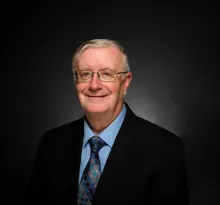
Jorge and his wife Kathy serve the Dallas (TX) and Lawton (OK) congregations. Jorge was born in Portuguese East Africa, now Mozambique, and also lived and served the Church in South Africa. He is also responsible for God’s Work in the Portuguese language, and has been visiting Portugal, Brazil and Angola at least once a year. Kathy was born in Pennsylvania and also served for a number of years in South Africa. They are the proud parents of five children, with 12 grandchildren and live in Allen, north of Dallas (TX).
