

Robin S Webber
This transcript was generated by AI and may contain errors. It is provided to assist those who may not be able to listen to the message.
Encourages that we can, indeed, believe. In talking about belief, I'd like to talk about that a little bit with you this afternoon. Because all of us at one time or another have been in a place where we've been in our private place, where we're perhaps pouring our hearts out to God and praying and sharing our lives with Him. I don't know if you're a little bit like me. Have you sometimes wondered if those prayers have actually gotten above the ceiling?
It seems like sometimes they bounce back. And sometimes I can almost feel like a bat. You know what bats do? They send out sonar. And then it bounces off a wall and kind of comes back at them. Sometimes I just feel like a big fat bat. Down by my bed, down by my couch in my office, and just feels like, oh, I'm getting bounced back. Too much feedback coming back my way. And I get frustrated. I want to punch a hole through that ceiling and send those prayers up. God, are you hearing me? Especially sometimes in these very challenging moments in all of our lives. Sometimes I can go, is anybody up there? Do you hear me? Are you there? Well, perhaps all of us have shared that at one time or another. We also read the Bible to know that we are not alone. That is why it is so encouraging to open up the Word of God and to recognize that we're not alone. And that just as individuals of old received answers, we worship that same God and we can have those same answers. Because just like the people back in the Bible in their time, they were real people. They had real challenges. They had real problems. And they prayed to a real God. But there is a way to approach God. There is a way to pray to God. And I'd like to just share a story with you today out of the Old Testament. Join me if you would. Let's open up our Bibles on this Sabbath day. And join me in the book of Daniel 9. So often we turn to the book of Daniel for thoughts of Revelation or prophetic guidelines. But what is so wonderful about Daniel was his spiritual attitude and his approach. His humility and his reverence towards the sovereign God.
Let's face it. Daniel had to be a pretty bright guy. He'd been brought over with the others, Michelle, Hanani, and Azariah. He'd been brought during one of the early captivity. He's brought into the court of Nebuchadnezzar. As was the case with the Chaldeans, when they took over a country, they bring the best and the brightest with them.
Bring them back. Try to indoctrinate and brainwash them and make them Babylonians in that sense. So we understand that Daniel's pedigree and probably his IQ had to be pretty good. But the IQ that is so important in discussing Daniel is not his intelligence quotient, but his identity quotient. That's what I'd like to share with you this afternoon in going through Daniel chapter 9. Daniel needed answers, just like some of us need answers today.
Some of us are looking around at this world and there are challenges and problems. There are big things happening out there right now. It's a fairly turbulent society. All you have to do is go to your computer, push a button, and on come the different news agencies. I saw today that there was this situation where the noose is tightening on what's going to happen with Iran and that potential nuclear powder keg.
We recognize that there are other situations affecting the entirety of the world, the moral decline of the Western societies. We recognize the changes in the economic climate as more and more nations are coming to the fore, like China and India. It's a different world than 15 or 20 years ago and it can become disconcerting, much less what we know as far as to think of prophecy, what's going to occur in the future. That can be very challenging and we can want answers. We want to know. Besides that, there are other situations in our own life.
There are our challenges in our marriages, in the rearing of our children, in the relationships we have with our adult children, with the challenges that are there on the job. The challenges between mates, the challenges between brethren, the challenges, the challenges, the challenges. They're all around us. That's not going to change. It's how we approach our sovereign God, our Father in heaven that can indeed change. I'd like to go to the book of Daniel because Daniel had a frustration and he needed to punch a hole through that ceiling above him because he wanted some answers. He wasn't quite sure whether he was getting there.
In Daniel 9, we find that it was in verse 1, the first year of Darius, the son of Azarius, of the lineage of the Medes, who was made king over the realm of the Chaldeans. So we're in a transition period. It is no longer the Chaldean empire as much as now we are dealing with the Persian empire over the Chaldeans. In the first year of his reign, I, Daniel, understood by the books the number of the years specified by the words of the Lord through Jeremiah the prophet, and that he would accomplish 70 years in the desolations of Jerusalem.
Let's just hold our hand right there. Are you with me? Let's hold our hand right there for a moment. Join me over in Jeremiah 25. Let's just see it with our eyes. It's interesting that Daniel had the information that Jeremiah had written. He had that prophecy in front of him. In Jeremiah 25 and in verse 11, it says, And this whole land shall be a desolation and an astonishment, and these nations shall serve the kings of Babylon 70 years.
And then it will come to pass, when 70 years are completed, that I will punish the king of Babylon and that nation, the land of the Chaldeans, for their iniquity, says the Lord. And I will make it a perpetual desolation. And so I, in verse 13, will bring on that land all of my words, which I have pronounced against it.
So, Daniel was reading through the book, just like you and I do, and he wanted to know what's happening here. He was beginning to count 10, 9, 8, 7. He realized that his people had been captive for a long time, and now it seems that they were in a transition period to where this prophecy was about to occur.
But there was this weight, because he knew what God had promised. Just as you and I at times know what God has promised. But we sometimes say, God, will you be there? Are you really going to deliver? And you know, the closer you get, the more you worry about these things. Have you ever noticed that? Don't worry about it when it's a far off, but the closer you get, the more you worry. And the time was now, and the time was right. Notice in verse 3, Then I, Daniel, set my face towards the Lord God, to make a request by prayer and supplications with fasting, sackcloth, and with ashes. Now, in biblical language, this means serious stuff.
He says, I set my face. When that language is used either in the Old Testament or in the New Testament, you can find that term used in Luke 9.51 through 53. Interestingly, about Jesus. That there came a time that when he was through with the Galilean ministry, that it says there is a transition point that he set his face towards Jerusalem. That means purposeful determination. He was on the job.
Notice then, if you're going to have answers, you have got to have purposeful determination. And the face was set towards God to make supplications with fasting, sackcloth, and ashes.
And I prayed to the Lord my God. He talked with him. He had a conversation. He really needed answers. He had been there since he was a young guy. Young Jewish guy. He had been there a long time and now he is an old man. And he was just a little concerned and trying to put it together. What did Jeremiah mean? And God, are you really going to do what you said? And I'm trying to figure it out because, God, you said back there in the time of Amos, for surely I will do nothing but I first reveal it to my servants, the prophets.
So Jeremiah really needed answers. He needed to punch a hole through that ceiling above him and have a light shine down, a revelation to give him hope and encouragement. Notice, very simple, a couple of thoughts here in verse 3 and 4. He says he set his face. He focused on God and he said he talked to God. He prayed to the Lord. Very important. How often do we, when we need answers?
Answers that we're thirsty for. Answers that once we sip or sip of them are going to change our life. But how often are we talking to the right source? Sometimes, what is it with human nature? We talk to everybody about what is going on or what is needed. But the one with a capital O that can make the difference. We can talk to the people on the first row. We can talk to the people in the coffee. We can go online and chat if that's your style and get everybody else's opinion other than the one who created us, who loves us, and who gave his Son for us.
So I pray to the Lord God. And notice, he didn't only pray, but he made confession. And notice where he starts his prayers, which is amazing. Because he was in a quandary. He wanted to get out of there. He wanted to go back home. He wanted to know if God was true to his promises. But notice how he starts. Tremendous presence of heart. I didn't say presence of mind. Sometimes we credit people with presence of mind. It's not having a presence of mind. It's having a presence of heart. For where the heart is, the mind will go.
Notice how he starts it. O Lord God! O Lord, great and awesome God, who keeps his covenants and mercy with those who love him, and with those who keep his commandments. Notice how Daniel extols and magnifies and glorifies God. Just as much as Jesus did in that model prayer when he said, Our Father, which art in heaven, if we're ever going to punch big holes through that ceiling above us, and go from a monologue to a dialogue with our Father, we have to put him in place.
We have to extol him. We have to glorify him. We have to recognize his presence.
You notice that Daniel was not saying, You know, God, is this just not enough? Enough is enough.
Get over it. We're a different people today. We need to go home.
It's been long enough.
Didn't go there.
He recognized whose presence he was coming towards.
And he glorifies God. And he makes this confession. It's not only a glorification of God, but notice very carefully, verse 4, Confession.
Even in praising God, and even in prayers of thanksgiving of what God has done, Confession of who God is, and where we are at and who we are is very important.
Notice verse 5.
We have sinned and committed iniquity.
We have done wickedly and rebelled, even by departing from your precepts and your judgments.
Neither have we heeded your servants and prophets, who spoke in your name to our kings and our princes, to our fathers and all the people of the land. Now, I'm going to hold you right there. Look at... I want you to, from... Are you with me? Let's look at verse 5. Let's look at verse 6.
And I want to ask you what word pops off the screen to you.
I'm going to hold up for about 15 seconds.
That means 7.5 seconds per verse.
I'll get to you, Kevin.
No. Speed reader.
Because this was very important to me when I was studying this.
It had a profound impact on me.
And said, you know, Robin, you've got to get back over on the right side of the line on this discussion with God.
Kevin. Yeah.
How does that strike you, Kevin?
Right. Very inclusive.
Not exclusive.
It's not like, here am I, Daniel, man of God.
Interpreter of visions.
President of Persia.
The one that people will be reading with about the next 3,000 years.
He doesn't say, me, Mr. Righteous, Mr. Truth-knower, Mr. God Good Guy.
Powerful inclusiveness. Chris. Okay. Right.
Right. And that's a secondary thought. I probably am leaning towards where Kevin was at, because it really struck me, friends and brethren, that sometimes we can, where we're at, we can remove ourselves from the society around us, and not recognize that all of us at one time or another have been apart from God. We can kind of go, the world, the church.
Now, again, we are firstfruits. We have been called out of this world.
But how do you feel, or wouldn't you want to talk to somebody, or have somebody as an advocate for you that includes you?
That doesn't look down on you?
That kind of gets in the pool with you and says, we're in this together?
If you want to, and if you have a pencil, and most of you don't have a pencil, but it would be very interesting to go through five and six, and just, you can do this when you go home, circle the number of times that Daniel uses we.
Just in these two verses, he uses that phrase three times.
Three times.
You know, when we talk about our challenges as a congregation, not your challenges, but our challenges as a congregation, or our challenges as an organization, and or our challenges as a nation, or the challenges that face all of us as human beings, those are people that care.
I have a question for you as we look at this, and we consider our prayers to our Father above. What is your pronoun personality like?
You know what a pronoun personality is?
Me, me, me, me, you know?
The anthem of human nature? Me, me, me, me.
All about me?
Is it just about I? Or do we learn to use an inclusiveness in our conversation? You know, it kind of reminds me, the first time I was ever taught about pronoun personalities when I was giving a sermon and I talked about my girls.
That was not a good thing to say, especially with Susan in the audience.
So I came down after that sermon, she said, Congratulations! I said, What? Did you like the sermon? She said, No, you had those girls all by yourself. You said, My girls?
Where was I?
That was the beginning.
Man, you've been there, right? That was the beginning of my education.
About pronoun personality, and how careful. And the forethought that I use in discussing who I am and what I'm about, and those that are around me. Now, that's humorous, but it did actually cause me great thought.
And I do look at pronouns. When I read people's letters, I do look at how people use pronouns. It tells a lot to me about people. It tells people a lot about you.
How we pray to break those holes in that ceiling above us.
I believe the more that we think collectively about our brethren and humanity and others, and recognize that we've been a part of that other than by the grace of God.
I believe that hole begins to widen.
And we go from a monologue to a dialogue with God. Notice verse 7, O Lord, righteousness belongs to you. So we're now moving from the aspect of confession.
And it's interesting, the presence of heart that Daniel has, that we're going to see that he is able to delineate those things that belong to God, and those things that belong to man of and by ourselves. A little bit like what Chris was just bringing out. O Lord, righteousness belongs to you.
But to us, shame of face.
There are things that belong to God because he's God. That's what makes him God, righteousness.
And there's things that belong to us, humanity, to the men of Judah, to the inhabitants of Jerusalem, and all Jerusalem in Israel. Those near and those far of all in the countries to which you have driven them, because of the unfaithfulness which they have committed against you. O Lord, you're righteous. You are the same yesterday, today, and forever.
Just as it says in the book of Hebrews 13 and verse 7, You are that same God in which there is no shadow of turning.
Like it says in the book of James, you're always going to be there right at high noon.
Even when it's dark, you're going to be right there. You do not change. You are righteous, but we are not.
And so you see this proper separation of who we are and what God is, and how we need to throw ourselves upon his mercy.
But then notice, interestingly, Daniel doesn't leave it just that God is righteousness.
And that because then what has fallen upon his countrymen is just and righteous. But now he reminds God of something. There's something else that belongs to God. To the Lord our God belongs mercy and forgiveness, though we have rebelled against him.
When we consider our father above, do we consider these attributes? These are attributes. This is not nature. Nature is what God is.
Attributes is who God is. What stems from him of righteousness, of mercy, of forgiveness, that no matter what this nation of Judah had done, and they've had the example before them. You think about this for a moment. Here's Judah that was the southern neighbor of Israel. And Israel had been taken into captivity by Assyria between 721 and 718 BC. And they had been drug off by Assyria.
So Judah down below in Jerusalem, they had been given fair square warning of cause and effect.
And yet they watched all of that. And you know how it is with human nature?
Happens to everybody else but us.
They must have had it coming, but certainly not us.
God was very patient with Judah.
To the Lord our God belongs mercy and forgiveness, though we've rebelled against him. We have not obeyed the voice of the Lord our God to walk in his laws, which he set before us by his servants the prophets.
Yes, all Israel has transgressed your law and has departed so as not to obey your voice. Therefore, the curse and the oath are written in the law of Moses. The servant of God has been poured out on us because we have sinned against him.
And he has confirmed his words, which he spoke against us and against our judges, who judged us by bringing upon us a great disaster for under the whole heaven, such has never been done as was, has been done to Jerusalem.
As it is written in the law of Moses, all this disaster has come upon us.
Jeremiah, excuse me, Daniel knew very well what it said in the books of the law. He realized that his ancestors had been there on the Mount of Evil in Gerizim and had echoed back over that valley the blessings and the cursings. You know, God is the master teacher, isn't he? He's the best instructor in the world. And even when he's dealing with spiritual principles, he makes us do things to kind of get the point. So he divided up all of Israel, didn't he?
He put half of them on one side of the canyon, and he put the other half on the other side of the canyon. Do you know what it's like to hear hundreds of thousands of people do the blessings?
Then hundreds of thousands of other people doing the cursings, going back and forth just to kind of put that in their mind forever of their commitment to God. They said that will do it.
Well, that's what happened. And there was cause and there was effect.
And Daniel recognized that for every cause, there's an effect.
And what came upon his people was deserved. But notice verse 13, As it is written in the law of Moses, all this disaster has come upon us, yet we have not made our prayer before the Lord our God, that we might turn from our iniquities and understand your truth. That is spoken in the present tense at that moment when Daniel was speaking.
He felt that even then that Judah in captivity, in Babylon, in a kingdom as a type of the beast, had not come to grips with what they had done. Oh, they had a form of godliness.
They had a form of godliness, but they had not come to grips even after God had taken away their northern cousins.
And even after God had done to Jerusalem, as it says here, to what had never been done to a city before that when Nebuchadnezzar and his cohorts came in, the Chaldeans, they leveled Jerusalem.
They sacked the holy Mount.
They did, in that sense, a type of the abomination of desolations. They took the holy things of God and they marched much, not all, but much of the populace back to Babylon. You'd think that would have done it.
What is it, though, about human nature that is so carnally resistant that it's going to still take its stand no matter what?
No, when I read this verse the other day, I could not help but think of what occurred to America on 9-11, almost now, what, seven, eight years ago, seven years ago, that at that time when we were struck and the very heart of our financial empire was attacked.
And, you know, for a little while, just that little slimmer, little sliver of time, slimmer is another word I won't use, sliver of time, everybody thought, oh, they went to church, but they got out literature. I mean, there were many people that were calling us at that time. Some of our children that had grown up in this way of life saying, Dad, Mom, is this it? What's going on? Maybe I'd better get back to church.
Maybe I'd better get godly again. And there were people that we perhaps have not seen in church for a long time and for a little while they came back. Others, they took that call.
They saw that warning. They've straightened out their lives. I'm not saying that, but, you know, by and large for a while America thought, whoa, but they went back. We continue to be on that moral slide downward. We are still on the same path we were before. We have not turned as a nation.
You know, there's something that Paul says about human nature. It says that the carnal mind is imitate against God. And enmity doesn't always mean those shaking your fist at God like that, but sometimes you think that's that's enmity. Emity can just be your heart shaking like this. And you know, when you do this, it's just as bad as this. Some people just by personality tend to be a little bit more what we call demonstrable. And they just kind of have at it. But this, where your heart is just shaking its little hard head back and forth. Not me, not going to go there, not going to do that, not interested, going to be my own person. That's just as bad. That's equative. It's shaking your fist. Daniel was concerned about his nation as we need to be concerned in our prayers about our nation. And put the we, you and me, we into that, as if we are chained with them, as if we are one with them. For they are our fathers, our brothers, our sisters, our cousins, and our neighbors. God hasn't changed his mind. The Lord has kept the disaster in mind and brought it upon us. For the Lord our God is righteous in all the works which he does, though we have not obeyed. Even with all of this stated, Father above, you are righteous. But now, notice the optimism that Daniel brings forward in his talk with God.
And now, O Lord, our God, who brought your people out of the land of Egypt with a mighty hand and made yourself a name as it is this day, we have sinned. We have done wickedly.
O Lord, according to all of your righteousness, I pray let your anger and your fury be turned away from, notice, your city, Jerusalem, your holy mountain because of our sins, and for the iniquities of our fathers, Jerusalem and your people are reproach to all of those around us. Now, let's break here for a moment. What is happening here? What is Daniel doing in his prayer? His talk with God that is breaking a hole in that ceiling to where this is an effective prayer. What are we noticing in verse 15 or 16? I'll ask you. He's gone from exhalation of God. He's gone from his confession to God. But there's something that's happening now in the conversation. I'll give you about 15 more seconds.
Yes, Mr. Smith.
Yes, because again, it's the pronoun. This is very important. We're not just going through the sermon, and that's going to be it. I'm trying to teach you how to study the Bible as a friend.
Notice the pronouns. Notice the claim items. Your people, your city, no matter what they have done, God, they're a part of your family. And you've made promises. No matter what they've done, this is the group that you brought out of Egypt. This is the group that you brought out of Egypt.
This is, notice your city, Yerushalim, city of peace, the city where you did so many powerful deeds over the millennia. Your holy mountain, your claim is on it. Remember. Now, I have to ask you a question. Do you think God really has to be reminded? What do you think, Joe? Because there's this fancy Greek word, he's omniscient. He's got omniscience. That means he's all-knowing. He doesn't forget. What prayer does, what prayer does, it does not necessarily shape God's mind, even though he loves hearing from us, but it shapes our mind. It not only allows us to echo back to God the promises that he has given us, but it allows us to remember what he has done in the past, in our past, in our lives, with our families, with our health, with our finances, with our awakening to the truth, with our need of miracles in our lives. It awakens our mind. It molds our mind. Prayer molds our heart. Molds our minds. Develops this avenue of approach to God. Now therefore, our God, hear the prayer of your servant in supplications, and for the Lord's sake, your sake, not my sake, Daniel, not Judah's sake, for your sake, cause your face to shine on your sanctuary, which is desolate. Bottom line, God, smile again. Smile again on Jerusalem. You've said you're going to. I think it's going to come to pass, Daniel speaking, but I just got to know. That's why I'm praying to you. Just a little bit like the man that was caught in that conversation with Jesus. Remember that? The man that needed the child healed. And he said, Father, excuse me, not Father, Lord, I believe. Help thou my unbelief. Daniel knew the prophecy. He knew that word had been offered to Jeremiah. Two-thirds of his heart believed, but he just needed a little push in the right direction. Oh, God, incline your ear. Open your eyes. See our desolations and the city, which is called by your name. For we do not present our supplications before you because of our righteous deeds, but because of your great mercies. This is the ultimate part of the prayer.
What occurs here, friends, stay with me, is Daniel has now shoved himself completely out of the picture. He has shoved Judah out of the picture. He has come to a great awakening of the converted heart. Simply this. It's not about us. It's all about God. It's all about Christ. It's not about us.
Now, it is about us because of their purpose, their plan, their promises, and their provisions, but we have to push ourselves out of the way to allow all of that purpose, plan, promises, and provisions to be ushered into us. Daniel completely divorces any personal wish out of this. He says, it's by your name. It's about your city. It's about your great mercies. And then notice he gets a little dicey here. He gets a little one, two, three. Because the relationship is now established as he's moved himself out of the way and put God on center stage, which is only his to begin with. Oh, Lord, here. Oh, Lord, forgive. Oh, Lord, listen and act. You've said through the prophet Jeremiah, you would do this. Now do it. For your city and your people are called by, remember, your name. Now, notice verse 20. Well, here's the bottom line now. By this kind of attitude that he had by this approach, you think that he was just a big fat bat like you and me sometimes down below with the sonar signals coming back or was a hole punched in that ceiling above him? And was he making contact with the sovereign God above? Notice what happens. Maybe you've never read this stretch of scripture before. It is just great. Put on your seatbelts. This is wonderful.
And yes, while I was speaking in prayer, the man Gabriel, whom I had seen in the vision at the beginning, being caused to fly swiftly, reached me about the time of the evening offering.
And he informed me and talked with me and said, Oh, Daniel, I have now come forth to give you skill to understand. And by the way, now that we're here, I want to tell you something. At the beginning of your supplication of the command, the command went out and I have come to tell you, for you are greatly beloved. Therefore, consider the matter and understand the vision.
Friends, what's happening here? Remember the former President Bush note, read my lips.
Read my lips. Okay. Anyway, read my lips. God doesn't read lips. He reads hearts.
And at the very beginning, when Daniel was extolling God, even in the plight of being a captive, very few of us in this country, you know, most of us have been in America most of our lives. Some of you have not. We've had a pretty good life in America. We have not been a conquered people. We have not been taken captive. Our homes have not been ransacked. And yet, even with all of that, Daniel extolled God, proclaimed God as sovereign, looked at him, pushed his story out of the way, and noticed how God blessed him. He sent Gabriel and noticed just at the beginning of his prayer. Sometimes, what I'm trying to tell you this, God doesn't just do things once, and he's no respecter persons. Understand that even at times when it seems very quiet in your life, that the answer is on the way. And sometimes it can be dynamically. Notice Gabriel. Gabriel says right here, I was caused to fly swiftly. It was so important that God told me to put it into first gear, Daniel. How about that? And there's three things I'm here to do. Number one, notice.
And the first thing is Daniel says he informed me. The angel supplied information, gave Daniel the lowdown, gave him the facts. Number two, I have now come forth to give you skill to understand. So often as human beings, we're given facts. We're given information. But what we need, especially as people of God in this day and age to live before God, we also need understanding.
So when we are praying, number one, don't simply ask for information.
Pray that God will give you understanding. To put this together. To put this together, as Jesus Christ would. And then notice the last point that he does. God gives information. He gives understanding. But the most important, the best, is last. And that is simply this.
Verse 23, I have come to tell you, for you are greatly, greatly beloved.
When we are praying before God, revering him, extolling him, glorifying him, admitting our faults, confessing our trespasses, linking ourselves responsibly with those that are around us, recognize that God has had mercy on us, this begins to make him look down, not only smile on Jerusalem, but smile on us and want to answer our prayers and come right through that hole that we've punched into that ceiling because he wants us to know that we are greatly beloved. Information, understanding, relationship. What do you settle for in your prayers and what do you want to receive from God? Do you only want to receive information? Or do you want to receive understanding?
Or do you also want to be encouraged and warmed by a relationship that will exist, that cannot be separated by anything that is on this earth? Nothing can separate us from the love of God. What did God perform then? He allowed then Daniel to have this, what we call the 70 weeks prophecy. The 70 weeks are determined, and my purpose is not to go through the 70 weeks prophecy, but I will tell you this, the 70 weeks prophecy would never have occurred if the altar of Daniel's heart was not properly prepared to receive the instruction of God.
God instructed him that encouraged him, encouraged him that the promise was going to be true, the prophecy was going to be fulfilled, that the people would go back, that after 70 years a remnant of Judah would go back, they would go back and build Jerusalem under Cyrus.
The temple would once again be built. In fact, it says here that in verse 25, know therefore and understand that from the going forth of the command to restore and build Jerusalem until Messiah the prince there shall be seven weeks and 62 weeks the streets shall be built again and the wall so that Jerusalem would be rebuilt but there would also be troublesome times that within those walls that they would not receive Messiah, that it would not be over, that the time of the Gentiles would continue beyond that until the second coming of Jesus Christ.
But what I wanted to share with you today is simply this. Daniel needed answers. You and I need answers. There is a way to make sure that by God's grace our prayers are going beyond that ceiling. We don't have to be frustrated. We need to praise God. We need to remind him of his promises. We need to fully recognize who he is and who we are. You know, it's interesting. I just thought of it. I'd given this message last week in Redlands and then I thought, you know, it's kind of interesting that Daniel was looking forward and longing for the promises of Jerusalem, an earthly city, to be restored. Oh my, he'd been in Babylon too long. Now, how would you like to face the beast every day? You know, we talk about this beast that's going to rise one day in the future. Well, Daniel had to face the beast almost every day of his adult life. In fact, two of them, Nebuchadnezzar and later on Cyrus. They were, again, remember those images that were in that image in Daniel 2. He had to be a spiritual survivor in the court of the beast, all of his adulthood. Not just three and a half years in the future. You just think about that. All of his life. Well, time to get up and wake up and go face the beast. That must not have been much fun. You just think about it. What allowed him to be a spiritual survivor in the world of the beast? You just read about it in Daniel 9. And he longed for that day when the promises of God would be fulfilled. God would be true to his word and Jerusalem would be established again. Well, we also live in that world and we're a little tired. We know that God has promised that he's going to bring a heavenly Jerusalem. Not just a Jerusalem that's going to be trodden down by the feet of the Gentiles again, but he's going to bring a heavenly Jerusalem. And just as much as God promised through Jeremiah that it would only be 70 years and that there would be a return.
You know what? In the book of Revelation, it also tells us that there is going to be the establishment of Jerusalem forever. Not one to ever be trodden again by the foot of the Gentile, but to be inhabited by the spiritual people of God. That's the promise. And sometimes I know we can be like Daniel, I believe, help thou my unbelief. That's why God gives us the word to read and one another to encourage one another until that day be so. So I thought what we do is just conclude with special music. We're not going to talk about the Jerusalem of the past, but we're going to look forward to that Jerusalem that God says in His word in Revelation 20 and 21 that is going to be established. I don't quite know when, because it's beyond 70 years. Only God knows, but that's what we look forward to. As we hear this song called the New Jerusalem, think of how much Daniel longed in prayer and pleaded, confessed, and thanked God for who he was no matter what he was going through. And then you think about you looking forward to that New Jerusalem ahead and ask, what are my prayers like? What is my confession like? How do I glorify God?
What belongs to Him? What belongs to me? And knowing that He will give me the information and the understanding and the comfort of relationship that I need at the given time until that day when we see that New Jerusalem. Let's listen to the song.
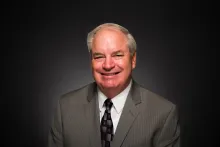
Robin Webber was born in Chicago, Illinois, in 1951, but has lived most of his life in California. He has been a part of the Church of God community since 1963. He attended Ambassador College in Pasadena from 1969-1973. He majored in theology and history.
Mr. Webber's interest remains in the study of history, socio-economics and literature. Over the years, he has offered his services to museums as a docent to share his enthusiasm and passions regarding these areas of expertise.
When time permits, he loves to go mountain biking on nearby ranch land and meet his wife as she hikes toward him.
