

Robin S Webber
This transcript was generated by AI and may contain errors. It is provided to assist those who may not be able to listen to the message.
I don't know where we were, Susie and I, and or who the individual was that brought it up, but somebody mentioned at the time we just have not heard a message about prayer for a long time. Now, that was that person's impression. Maybe we had a message last week on prayer here, or maybe in another one of our congregations, I am not sure. But I began to take it to heart, and Susan and I talked about it, and I thought it would be very good to focus on prayer. A couple of weeks ago when I was here, we talked about questions that will come at us that we have to answer. We don't always have the answers. And so what I would like to do, friends, is I'm going to begin a series of sermons regarding the subject of prayer. I don't know where it's going to go. I don't quite know all the content. It will come to me as I come back to you every couple of weeks. But I think it is a subject that is worthwhile. It's very interesting that, as Omar mentioned in the opening message, there are many things, weapons of mass destruction, in a sense, using that metaphor that are coming at us today. But also to realize that there are tools that God has given his servants down through the millennia to draw closer to him, to draw understanding, and most importantly, to know that we are not alone. So as I begin this series of to wherever we go, and as I mentioned this to you as fellow Christians, I need this message as much as anybody. And when I offer this message, I will be sharing what I hope God is inspiring me to give to you. And when I read Scripture, please understand I'm not saying that I am there exactly myself. We're on a journey. We are learning to exercise God's Spirit, drawing closer to God. So this is something that's going to be for all of us. I'm not going to be speaking down to you. I'm going to be speaking with you. And the most important thing is to be able to look at the Scriptures themselves and let them speak to us.
In Luke 11, verses 1-2, and I'll just use this as an introduction. We don't necessarily... Well, yeah, we will go to Luke 11. Let's go to Luke 11. And we are probably more familiar with the account in the book of Matthew. This is the account where Jesus, as a rabbi, with his disciples coming to him, as was custom in that day, defined a model of a prayer. And in Luke 11, it's very interesting that it says, verse 1, Now it came to pass as he was praying in a certain place. So we realize that Jesus Christ himself, the Son of God and the Son of Man, prayed to set us a model. When he ceased, that one of his disciples said to him, Lord, teach us to pray, as John also taught his disciples, which was a very common practice for a Jewish rabbi to do. And so he said to them, When you pray... So we see right here this very small verse, When you pray, therefore the expectation was Jesus Christ speaking to his disciples. He had every expectation that we would pray.
That we would pray. And it says, Our Father in heaven, hallowed be your name, your kingdom come, your will be done on earth as it is in heaven. And give us this day our daily bread, and forgive us our sins, for we also forgive everyone who is indebted to us. And do not lead us into temptation, but to deliver us from the evil one. That's where the account in Luke ends with this prayer. We recognize that there is more than in the account of Matthew. Now, all of us have heard sermons on defining the Lord's Prayer, as it is commonly called. And we may yet define that and break that down as a congregation. But here's what I share with you, please. And if you get anything out of it, let's lay this foundation. Words can be cheap. The movements of our lips and what we say must be directly measured by what is in our heart. So often as human beings, we make the mistake of matching motion with motives. And what is more important than our lips moving is how our heart is moving when we address what is here in the Lord's Prayer. The title of this message today is simply prayers that move God. Not just simply move our lips or even move others that might hear our prayer audibly, but prayers that move God. Join me, if you would, in Isaiah 66 to, again, continue to lay the foundation. In Isaiah 66, this is the platform from which we launch prayer. In Isaiah 66, and let's pick up the thought if we could in verse 1. Thus says the Eternal, Heaven is my throne, and the earth is my footstool. Where is the house that you will build me? And where is the place of my rest? For all those things my hand is made, and all of those things exist, says the Eternal. But on this one will I look, on him who is poor, and of a contrite spirit, and who trembles at my word. What we are talking about is an individual that understands who God is and who they are apart from God. What we are basically talking about is a platform of humility.
In expressing this, in expressing this is to recognize that the human condition, apart from God, is prideful. And it's very interesting because no matter how large or how immense pride is, God just simply can't use it. God cannot use pride. It's anathema to him. He can't use pride. But humility, no matter how small a dose it is, he can take that same humility to serve his purpose, to glorify him, and also help us to become conformed to the image of Jesus Christ. So what I want to do in all of this, then, is today, in this beginning of a series on prayer, is to lay as if we're the groundwork. Whether we are on our knees, or whether our hearts are on our knees, wherever we are, and in that posture and in that stature, is to approach God with humility. You say, I understand that. Good for you. I'm still learning that lesson. And I really don't think I'm alone. And to use that example of humility and becoming a part of the situation in our prayers, I want to use the example of somebody that we all know about, an individual which is a pillar in the Bible, a giant in the Old Testament, a man who was known to be a wise man in a worldly court. He was a gentleman that was brought into Babylon because of his intelligentsia. He was a man that interpreted dreams. He was a man that stood in the midst of lions. He was a man that was given prophecy. But the thing that is incredible about this man was not the interpretation of the dreams, was not even the lions, was not even all of the prophecy that was given to him. It was himself before God and the humility that he expressed. The man's name is Daniel.
And when we think of Daniel, we think of a giant. We think of almost a classic figure like it's almost like how do we touch him? But we touch him through Scripture and we learn to understand how to pray by his example. Now, why is that important for all of us? We understand that there are many, many prophecies in the book of Daniel. Some we can kind of grab a hold of and some are yet to be understood. And when they come, we will say, aha, okay, now we understand. But there's one thing that is not mistaken. And that is his humility in prayer before God Almighty. And thus, we're going to allow the Bible to speak for itself and Daniel to speak for itself and then understand this is what we want to emulate. This is when we use a verse, Isaiah 66.1, God has made everything, but here's the man that I will look to. Here's the individual I can do business with. That's why we have Daniel chapter 9. Join me if you would there. We're going to go through it together. Daniel 9. And this is where our series on prayer will begin. And again, the title is prayers that move God. In verse one of chapter nine, I'm just going to go through it word by word. Word by word. And then we'll be done. And then we'll have homework because I'm going to give you some homework after this. You'll like it. I've already done the homework here, but I'm going to do it again. This is my homework. You want to look up here? It's like a coloring book, but there's a reason why it's a coloring book. These are my notes, so you know it won't be a long sermon. This is it. Okay, so here we go. In the first year of Darius, the son of Azariah, of the lineage of the maids. So we're dealing with the Persian Median Empire, who was made king over the realm of the Chaldeans. In the first year of his reign, I, Daniel, understood by the books the number of the years specified by the word of the Lord through Jeremiah, the prophet, that he would accomplish 70 years in the desolation of Jerusalem.
So this sets the platform of the inquiry of Jeremiah's prayer to God, which is recorded.
In Jeremiah 25, verse 11 and 12, it speaks of the 70 years of desolation. So now Daniel, recognizing that time is going by and he can count on his fingers or with his toes get up to near 70, says, you know, it's almost there. It's almost here. God made a promise, and he took God at his word, and he got into this conversation with God. And that's what we're going to explore. Then I set my face towards the Lord God to make requests by prayer and supplications with fasting sackcloth and ashes.
I began reading this this morning, and I thought, wow, I have not always gone this full extent. And I'm not saying that you have to get sackcloth and you don't have to put ashes on your head like some people do in the spring. But it does show an incredible attitude and commitment in our approach to God. Prayer is where you share yourself with God and ask him to share himself with you.
Supplication is where you continue to perhaps focus on one item of and by itself and keep on going back to God, just like that widow that Jesus spoke about, that widow that that judge was, oh no, she's coming through there, oh no, here she comes again, and showing your persistence about it. He says, then I set my face towards the Lord God. This was nothing new, in a sense, to Daniel. Join me if you would in Daniel 6. Join me if you would in Daniel 6 for a moment.
Let's notice something about Daniel. And we find it in this very famous story about another example where he is praying, where the men were trying to catch him in prayer. And we notice in Daniel 6 in verse 10, now when Daniel knew that the writing was signed that he was not going to be able to pray to God, that he was at home and he was in his upper room with his windows open towards Jerusalem. And he knelt down on his knees three times that day and prayed and gave thanks before his God, as was his custom in early days.
He never changed. Now, it's very interesting when you think about Daniel for a moment. Stay with me. Here is Daniel, who was a young man, taken around 600 BC. He was actually in the start to be in the second wave of taking the Jewish people out of the land, not the final fall of Jerusalem. And yet, Jerusalem had been where God's holy presence had been, where the Shekinah presence had been. And this man was ripped out of Jerusalem as a young man and taken to the court of Babylon.
And we know the story about Daniel and about Mishael, Hananiah, and Azariah, and how their names were changed. How clothing was changed. Even how their diet was in a sense altered or tried to be altered. Everything around them was not their culture and it was not the culture of God. And therefore, when Daniel prayed, he prayed not to the east but to the west. He focused on Jerusalem and the culture of God that had been established there. And he kept that focus, totally dedicated.
Now you say, what does that have to do with me? Well, actually, Umar just brought that out. As Christians in this world, we are not to be conformist. We are non-conformist to the culture of this world. And we have to have that direct contact with the culture of God that you and I have been called into. And there must be that direct line, absolutely. And there must be that determination and to know where it goes to.
Join me if you would for a second. Very interesting. If you come with me to John 11. In John 11, because again Jesus himself, that greater Daniel as it were, gives us an example of where he turned to. In John 11, in verse 41, this is moving into the midst of the story of Lazarus. And he is about to resurrect Lazarus. And in verse 41, then they took away the stone from the place where the dead man was lying. And Jesus, now notice, Jesus lifted up his eyes.
He didn't keep them down here. He didn't bat them left to right. He lifted up his eyes and said, Father, I thank you that you have heard me, and I know that you always hear me.
500 years before this, Daniel focused his eyes to where he had last thought where God was in that sense in the Shekinah presence. Now, Jesus, that greater Daniel, is focusing up. Now, today, we don't turn to Jerusalem. God asked us to focus our attention to heavenly Jerusalem, where God the Father and where Jesus Christ are. We must know where to focus and where to turn. And I have that determination that nothing will break that will of God for us. One of my favorite verses, and you studied it as you were studying the Gospels, is found over in Luke 9 and verse 51, where in Jesus performing the will of God on earth said, and then he set his face towards Jerusalem. He set his face towards Jerusalem. God had given him something to do. He was going to do it. He was determined. Now, let's move forward. And I prayed to the Lord my God, and I made confession and said, O Lord, great and awesome God, who keep his covenant and mercy with those who love him and those who keep his commandments. Here we find that, again, Daniel's prayer had two major features in it. Number one, it did not begin with complaint.
Oh God, what's going on down here?
What part of this story have I fallen into?
Quoting the question to Mr. Frodo, what story have we fallen into?
He praised God, praised God, and then he took personal responsibility. Probably the most important thing that is beginning to drive home to me in my Christian walk is to take responsibility for my actions and to recognize where I come up short.
It's not, O Lord, deliver me from the bulls of Ashaun. O Lord, can you believe what's happening in the San Diego congregation? O Lord, can you believe this? O Lord, can you believe that? O Lord, can you believe that? O Lord, look at me! And I made confession.
This is the beginning of understanding the strand of humility that ran deep and very deep in Daniel. He quotes the Third Commandment of God's blessings and recursings upon the second or the third generation of those who keep His commandments. Now, what I want to share with you, if you get nothing out of this message, nothing, nothing, what I want to share with you, which is fascinating in this chapter, is what we call the pronoun personality that will be used. You know those little words like we and us and you? If you do not understand the pronoun personality of a Christian, it's simply trying to move towards a destination rather than recognize it's a way of traveling. This is stunning. Now, you don't want to ruin your Bible. I'm going to share something with you. This is the homework. I'm going to give it out in advance. Take your Bible. He's giving you apps to look at. Take your Bible. Just duplicate chapter 9. Are you with me? Chapter 9. And then circle all of the pronouns. It's going to be real simple.
Circle all the pronouns that say we. Maybe with one color.
Circle another one with another color of all the U's, speaking of God.
And number three, circle with another color all of the pronoun of us.
I will tell you that. Consider that this will be a blessing to you. A blessing. Simple action. You either want to develop in your prayer life, stay the same, or to change. Or I might as well go up to Redlands right now.
Seriously. That's all you have to do. You do that. And your prayer life will begin to change.
You'll begin to recognize which humility is. Allow me to read it.
Here is Daniel, the man that so many of us emulate and look up to this bastion, this champion of God in godless Babylon. Of all people, you would have thought that he had the least to repent of. But notice what he does. We. That's very inclusive, isn't it? We have sinned and committed iniquity. First circle. We. Have done wickedly and rebelled. Even by departing from your precepts and all of your judgments.
Neither have we. Heated your servants and prophets who spoke in your name.
To our kings and our princes. To our fathers and all the people of the land.
Here, Daniel, a Jew of the Covenant people, recognizes that God had been knocking on the door of his people for hundreds of years. Had sent them prophets. Had sent them men of God. To admonish them. To encourage them. To return. To repent. To be different.
Here's something I want to share with you that will involve our prayer life and humility.
He didn't say your kings. He didn't say your leaders. He said our leaders. Very interesting what Dr. Anguiano brought out about politics. It's a very sad situation that at times when perhaps we don't agree with a certain president, we say your president. We say your president, depending on which party is then. Like all of a sudden we've gone to the moon and we're no longer Americans.
We want to disown. Here's the situation. May I share it with you? We have to be inclusive.
And we have to get a handle on ourselves and to recognize that all of us have been the problem of human nature. To the degree we create, stay with me please, to the degree we create remoteness from others in our prayers is to the degree that we will not be close to God and our prayers on His throne. It's an equation. It makes sense. When we move ourselves out of the equation, when we subtract ourselves from all that is around us, God cannot multiply His blessings upon you. We must continue to take humility tests and to see where we are at. Oh Lord, verse 7, oh Lord, righteousness belongs to you, but to us shame a face as it is this day. To the men of Judah, to the inhabitants of Jerusalem, and all Israel, those near and those afar in all the countries, in other words, the diaspora, to which you have driven them. Yes, you had every reason for what we did as a people, where you have driven them because of the unfaithfulness which they have committed against you. Oh Lord, verse 8, to us belong shame a face to our kings, our princes, and our fathers, because, notice, we have sinned against you.
There is something about human nature that is so pervasive that at times we don't think our sins are like everybody else's sins, or we selectively sin and say, well, our sin is not as bad as that sin.
It's kind of hard because if you remember right, God says, if you've broken the least of these, you've broken them all. But we have this can, this superiority.
I don't know why, because we forget where God picked us up on the journey.
And apart from Him we're nothing.
To the Lord our God belongs mercy, forgiveness. Though we have rebelled against Him, notice something, please.
Daniel never exits off the train. He's on the ride with his nation and with his people in this confession seeking God's mercy, not only for himself, but explaining things as they are, rather than being in a Pollyanna world.
We have not obeyed His voice of the Lord our God to walk in His laws, which He set before us by His servants to prophets. Notice verse 11. Yes, all Israel has transgressed your law, and He saw Himself in that. Sometimes we have issues that happen in our congregation, and we can be just as much like that Pharisee and say, Oh God, I am so glad that I am not like that.
What shall I call that?
And we know what Jesus said about that. That individual had forgotten where God began working with him.
Yes, all of Israel has transgressed its law and departed, so as not to obey your voice. Notice therefore the curse and the oath written into the law of Moses, the servant of God, have been poured out on us because we have sinned against Him. It is here that Daniel goes back in his mind thinking of the blessings and the cursings that are mentioned in Deuteronomy 28, 29, and 30, which crescendo to that point in Deuteronomy 30, verse 19, in which God says, Therefore I set before you blessings and cursings life and death. Therefore, choose life. Verse 12, He has confirmed His words, which He spoke against us and against our judges, who judged us by bringing upon us a great disaster, for under the whole heaven such has never been done, as has been done to Jerusalem. As it is written in the law of Moses, all this disaster has come upon us, and yet we have not made our prayer before the Lord your God, our God, and that we might turn from our iniquities and understand your truth. Now, let's take a look at that verse for a moment. Let's allow it to be a mirror.
It says, And yet we have not made our prayer before the Lord our God.
It's not enough just simply to pray to God and move our lips and quote a scripture.
It's gaining the full body of spirit and sense of being on our knees, literally, and or being on the knees of our heart and having a humility that God can use about our human condition, apart from Him. And the prayer is always, as God says, that we might return, which I'm going to talk about in a moment, that we might return. Therefore, the Lord has kept this disaster in mind, says verse 14, and brought it upon us. For the Lord our God is righteous in all the works, which He does, though we have not obeyed His voice. Even God's judgments. Think about this for a moment. And when He talks about the fall of Jerusalem, that was a horrible thing. When Jerusalem fell in what was it, 586 BC, under the hand of Nebuchadnezzar, the Chaldeans generals, it was awful. It was a bloodbath. And that Solomonic Temple that had been the glory of Israel was decimated. And the holy items were taken out of the temple, taken to Babylon.
And the people of Judah were, over actually even 30 years before that, taken wave by wave by wave out of their land. It would have been just like in the United States of America. Go back 30 years. What would that be? 1980? Help me. Five? Am I right? How am I doing? 86? Part? Okay, there's always one in the crowd. Beep! Okay. And a third of the people are taken away.
Eight or ten years later, another third of the people are taken away. Oh, this is just horrible. Horrible. And then finally, the last wave is the worst because in Jerusalem itself is destroyed.
And yet, in all of that, and something that may be—stay with me, please—in our life right now, that seems terse or hard or incredible, and we don't know why, and we feel like we're being judged by God. At times, God's judgments—it's not that it's against us. It is to move us back towards Him. It's back to God's judgments, whether it be even blessings and or cursings. Think this thought through. Are you with me? Either the blessings and or the cursings are both designed not to push you away from God, not to push me away from God, but to have us return to God. Sometimes in our human Pollyanna mode, we think, oh, we're being blessed. We're blessed. We're blessed. We're blessed. So we must be doing something right. And boy, I just let the good blessings roll. And therefore, I'm one of God's pets. But even the cursings—because God never gives up on us. His desire is that we always return. But before we return, we have to repent. Even in those judgments which seem so harsh, it's always designed to bring us back into unanimity with God. Verse 15, And now, O Lord our God, who brought your people out of the land of Egypt with a mighty hand, and you made yourself a name as it is this day, we have sinned. We have done wickedly. So often we pray about others, and we don't come along for the ride. What did our Savior, what did that heavenly rabbi that came to earth tell us? Before you worry about others, before you take that big hunk of lumber regarding somebody else, take the beam out of your own eye first. It's not natural, is it? It's not natural.
There's something about human nature that started right in the garden—you know it and I know it—that we want to blame other people. If other people were not in our family, if other people were not on the job with us, if other people were not in school with us, if other people were not in this congregation with us, just everything would be all right. It's not how God works.
And when we say that, then we begin blaming God, just like Adam, when Adam could not take responsibility for himself. Are you with me? God, when we went through this about a month ago in his sermon, God, it's the woman. And by the way, who created the woman? So therefore, God, it's your issue. It's your problem. Instead of taking responsibility for yourself.
When we begin to look at ourselves rather than looking at others and ask God to look into our lives and look into God into our hearts, our prayer life will increase. Our prayer life and the answers from God will begin to be magnified and come our way in a way that we would least expect. Verse 16, O Lord God, according to all your righteousness, I pray, let your anger and your fury be turned away from your city Jerusalem, your holy mountain, because for our sins and for the iniquities of our fathers, not your fathers, our fathers, Jerusalem and your people are a reproach to all of those around us. Now, verse 17, we begin to crescendo. Now, therefore, our God, not only our sins, not only our trespasses, not only our kings and etc., but now our God, hear the prayer of your servant. There is a relationship and there is an identity here.
And his supplications, what I'm trying to knock on your door about, and for the Lord's sake, cause your face to shine on your sanctuary, which is desolate. Speaking of the ruins of the temple that was in Jerusalem. There is so much that is interweft in this. Join me if you would just for a moment in number six. Daniel is in these little bits and pieces quoting from the Old Testament. Whether it be, as I said before, the Third Commandment, that God's mercy be upon the generations. But notice this in number six. In number six in verse 22, that God's face might shine. Verse 24. Speaking of the blessing that Aaron was to bless over the people. The Lord bless you and keep you. The Lord, notice, make his face shine upon you.
And be gracious to you. And the Lord lift up his countenance upon you and give you peace.
A shining face. You know it when you see it, don't you? When somebody is looking at you with all love and with a smile on their face, that's a shining face.
Now verse 18. Oh, my God, incline your ear and hear.
Open your eyes and see our desolations and the city which is called by your name. For we do not present our supplications before you because of our righteous deeds.
But because of your great mercies. Oh, Lord, hear.
Remember the title of this message, prayers that move God.
Oh, Lord, hear. Oh, Lord, forgive. Oh, Lord, listen and act.
And do not delay for your own sake, my God. It's not about us. It's all about your glory and your majesty, God.
For your city and your people are called by your name.
It is here, stay with me, that Daniel understands that it is nothing about human works.
It's nothing about what the Jewish people and or the Israelites as well had done. It was about what God had done for them. Just take a look at this for a second. He is humbled. He realizes that there is nothing of and by himself that he can do, but he's claiming that promise of prophecy that God had made through Jeremiah.
For we do not present our supplications, for we do not...
It's your righteous deeds. And because of your great mercy, nothing that we have done. And there's something in our human nature that is within us, within Robin Webber, that sometimes just thinks it's something that I can just still do by myself. And I will be just fine. And I will be my own Savior. I will be the captain of my life. I will be able to make things happen because I can put two and two together just as good as God. But have you ever noticed that sometimes you put your two and two together and it just doesn't come up for like God? You come up short or you come up long and you don't hit it the same way God does.
Humility. Humility is recognizing your state apart from God.
And that all that is within you, you know, so often... Have you ever talked to people before and becomes a long conversation? It becomes a long monologue. It's not a dialogue. Well, I did this and I did that and I did this. And you may never have heard, but I did this and I did that and I've been here and I've done this almost ticking as much as that thing was ticking while you were up here, Omar. Just kind of rattles off. And you know, I have this many letters behind my name and I went to this school and I went to this school and I went to this school and I've been here and I've done that.
And remember what the Apostle Paul said in the epistles? He says, I kind of summed up my life and when it was all said and done, it's zero until God began dealing with me. And with that, and it's not a new line, I forget where I borrowed it years ago off of a book. Have you ever noticed where people basically are boasting of their zeroness when you think about it? Here's Daniel.
A wise man of Babylon. An interpreter of dreams.
Probably a wanted franchise both in Jerusalem when he was young and later when he was old. A man that stood before and advised the greatest man in that part of the world.
And it says it's nothing that we can do. We are going to need you, God, to intervene. Now, verse 20.
Now, while I was speaking, praying, and confessing.
Sounds like he was hard on himself. No, he had a realization of who he was apart from God.
And the sin of my people, Israel, and presenting my supplication before the Lord my God, for the holy mountain of God. Yes, while I was speaking in prayer the man and or the angel Gabriel, whom I have seen in the vision at the beginning, being caused to fly swiftly, reached me about the time of the evening offering. And he informed me and talked with me and said, Oh Daniel, I have now come forth to give you skill to understand.
Now, let's understand because we're going to conclude here in a moment. Let's understand what had happened. I was reading through this this morning. I thought it's very interesting. Think about this for a moment. That Daniel offered confession for himself first.
And it was only after he was in a sense able to offer confession and draw a relationship with God for himself rather than worrying about everybody else, that he offered intercessory prayer to God for his people. Very similar almost in a sense. And again, Daniel was not a priest. I'm not saying that. But very similar to what we see in Leviticus 16, where the high priest first offers sacrifice and confession for himself before he deals with the people. In other words, let's draw an example. Are you with me? I'm watching your eyes to make sure you're with me. It's simply this. Until we can talk about others. And before we can share our concerns about others, we have to do our own homework with God and make sure our relationship with God is intact. We might just say first things first. And when a man and or a woman in these days, in this equal opportunity environment that we're in, when your fight begins with yourself, you have begun a fight that's worth having.
Now let's conclude.
Gabriel came to him, informed him, talked with him in verse 22. Oh, Daniel, I've now come forth to give you skill to understand because here's Daniel. He says, you know, the clock is ticking. And I remember this happened about 70 years ago. 70 years is about up.
God Almighty, where are we going from here? I need some help. Notice what it says in verse 23. At the beginning of your supplication. Have you ever wondered if your prayers are even getting above the ceiling? I've had those. Kind of like a bat, you know, it just bounces back on me, you know. And you wonder if you're making any impact. At the beginning of your supplications, the command went out. God is listening. And I have come to tell you, for you are greatly beloved.
And therefore, consider the matter and understand the vision. Then the 70 weeks prophecy is then laid out. Join me if you would in Psalm 17. In Psalm 17. And let's pick up the thought if we could in verse 6. Psalm 17 in verse 6.
I have called upon you, for you will hear me, O God.
Incline your ear to me and hear my speech. Show your marvelous loving-kindness by your right hand, O you who save those who trust in you, who know that what God has promised he will deliver.
From those who rise up against them. Notice verse 8. Keep me as the apple of your eye, and hide me under the shadow of your wings.
That's in the Psalms. Let us begin to further crescendo by two more verses. John 14, verse 13. We'll use the entirety of the Bible. John 14, verse 13. Some of Christ's last words to his followers about the lifeline between us and our heavenly Father through him. John 14, 13. And whatever you ask in my name, that I will do, that the Father may be glorified in the Son.
And if you ask anything in my name, I will do it.
It's not just asking. It's how you ask. It's not only the movement of our lips or even hitting the terra firma with our knees. It's what's happening in our heart, built upon a foundation of humility.
Having cast aside all of our human works, confessed, been inclusive, and thanking God for drawing us out nonetheless. And that, in this day and age, we're not only facing Jerusalem three times a day, but that at any time we can look up to the heavenly Jerusalem. And through this name, ask God for his mercy and for his help.
Where does this lead all of you and me as we wait for the next message? Join me in conclusion in James 5, verse 14. In James 5 and verse 14. Again, we often go to this in regards to physical healing from a divine God. But all of us are in the continuance of needing God's special touch on the spiritual journey that he has set before us.
And let's conclude, and we'll allow this to be a bridge to the next message that I'll bring you by the end of the month. In James 5 and verse 14, is anyone among you sick?
I'm not just talking about physically, but where we have spiritual challenges, spiritual wounds, spiritual scars that need healing.
Let him call for the elders of the church and let him pray over him, anointing him with oil in the name of the Lord, and the prayer of faith will save the sick, and the Lord will raise him up.
And notice, and if he has committed sins, he will be forgiven. Now notice verse 16 in alignment with Daniel 9. Confess your trespasses to one another. Pray for one another that you may be healed. And I will leave you with this then. The effective, fervent prayer of a righteous man avails much. Friends, we have gone from theory and gone to a body of work of a man who was in action praying to his God. Again, I'd like to encourage all of you, please look up here for a moment. Do you want to have your life changed? Do you want your prayers to be richer and deeper and more meaningful? Do you want to notice a prayer that will turn God's attention to you, where he will incline his ear? Just go through the test of pronoun personality.
Just start circling and recognize that once you've circled, that's not enough. Start praying, and God will be ready to hear.
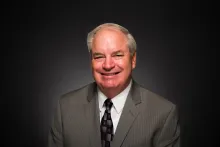
Robin Webber was born in Chicago, Illinois, in 1951, but has lived most of his life in California. He has been a part of the Church of God community since 1963. He attended Ambassador College in Pasadena from 1969-1973. He majored in theology and history.
Mr. Webber's interest remains in the study of history, socio-economics and literature. Over the years, he has offered his services to museums as a docent to share his enthusiasm and passions regarding these areas of expertise.
When time permits, he loves to go mountain biking on nearby ranch land and meet his wife as she hikes toward him.
