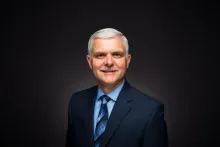

Randy Urwiller
This sermon was given at the Snowshoe, West Virginia 2018 Feast site.
This transcript was generated by AI and may contain errors. It is provided to assist those who may not be able to listen to the message.
Well, greetings to you from East Texas. We have three congregations we serve down there, and it's just very wonderful to be up here. We see mountains and the beautiful trees and the weather. And, of course, the most beautiful thing is being here with all of you and the sunshine that comes from all of you and our fellowshiping together. It's really been wonderful. I'll give you the title of my split sermon first, and I'll remind you this is a split sermon, so after about 10 minutes you're getting nervous because I'm still talking. Just so you may not have realized, this is a split sermon, because if you get nervous, then I'll get nervous. The title of the split sermon is, Prepare Now to Rule in the Kingdom. And you're going to find there's a theme here we've been hearing a little bit often through this feast. I think God's hand is in there. In fact, I do believe it is. So my message today is addressed to all those training to be kings and priests in the kingdom of God. That's all of us. As Revelation 1, 6, and 5, 10 tell us, we are to be kings and priests to God and to reign on the earth under Christ. And if we could just keep thinking on that, because that is such an amazing blessing God has given us. I can't quite totally wrap my mind around it, but I believe it, and so should all of you. But what is the best way to prepare to rule under Christ in His kingdom? How do we prepare ourselves? What to-do's can we do to be better prepared to rule over people, over their health and ruler and their families, in their towns, villages, cities? Should we take college courses? Would that help? Maybe earn a degree in urban planning. That might be useful. I don't know. Maybe something more specialized. Civil engineering, economic development, parks and recreation. I'm sure there's going to be a lot of parks in the kingdom. How about wastewater management? Of course, you know what that is. But do we need to take courses in that? How about city administration? Well, what we must be doing now is far more basic and far more important, and frankly, far more challenging than any of these impressive degrees we could be earning right now. To prepare ourselves to rule in the kingdom of God, we must be ruling over ourselves. We must be ruling over ourselves. If you'd please turn back with me to Proverbs 25 verse 28.
In Proverbs 25 verse 28, there is a brief scripture here, but it points us in the right direction in preparing for rulership. Proverbs 28 verse 25. Proverbs 25 verse 28.
It's brief, but it gets to the point in encouraging us to prepare for rulership. It reads, In other words, if we don't control our own selves, we become victims of our carnal and sinful desires. We become like a vengeful city that's overrun by lawless people within and exposed to attack by wickedness from without.
Lack of control equals self-destruction. That happens in cities, and that can happen in us as individuals. And scriptures from throughout the Bible urge us to take control and govern our hearts and minds, but not by ourselves, but with the assistance of God. For example, let's turn now to Psalm 119. Psalm 119 verse 133. Here the psalmist is asking for help.
Direct my steps by your word, and let no iniquity have dominion over me. Here the psalmist desires God's guidance so that iniquity or sin will not dominate or control him. Now, if we turn to the New Testament, Colossians 3.15. In Colossians 3.15, we can read the words of Paul here. Colossians 3.15. Paul encourages us to yield to the rule of Christ over us. He writes, So again, we're encouraged to let God help us to rule our hearts, to put away worrisome self and trust God. Now, let's also look at Romans 6 verses 12-13. Here Paul admonishes us not to allow sin to reign in us.
All these different synonyms for ruling ourselves, or not to allow to rule in ourselves. Romans 6 verses 12-13. He writes, It's a reminder to us, after baptism, we're to live as a new creation in Christ. We're not to be going back to our old ways. We're supposed to leave that behind. But what does Paul mean here?
Do not present your members as instruments of unrighteousness to sin. Though his wording may sound a little bit odd to us, we can relate it to Scripture's many warnings about controlling ourselves, and that includes controlling our bodies to avoid sin. They can read like a list. We look at these Scriptures in the Bible, and I'm not going to have his turn there, but you might jot these down. When we're told to control ourselves, think of the different things we're told in Scripture. For example, Proverbs 6-18, it warns us that feet are swift in running to evil. Have you been guarding your feet lately? Okay, maybe a little wet, but hopefully they're not running to evil.
Proverbs 21-25 reminds us about hands that refuse to labor. 2 Timothy 4-3 cautions us that itching ears will keep up for themselves teachers. They'll go elsewhere for instruction. 1 John 2-16 warns us of the lust of the eyes.
James 3, 6-8 admonishes us to guard the unruly tongue. It gets out of hand. It's a fire in a world of iniquity, and it's full of deadly poison. Probably worse than a rattlesnake. And then there's Proverbs 4-23.
Proverbs 4-23 urges us to keep the heart with all diligence, for out of it, out of it, spring the issues of life. What's most important? And so what we see with Paul's reminder here is that rebellion, just as rebellion can break out in a city anywhere, rebellion or sin in our bodies can break out from within the city of our body anywhere, too. We have to be on guard. We have to rule over ourselves.
And Paul continues to exhort us over in Romans 8, verses 6-11. You can turn there, please. Paul continues to exhort us to guard against the rebellious ways of our carnal nature. Our carnal nature is always resisting God's good influence, God's word in us as a spirit. In Romans 8, verses 6-7, Paul writes this. He says, Verse 7, because the carnal mind is enmity against God. It's an enemy against God. It is not subject to the law of God, nor indeed can be.
So then those who are in the flesh cannot please God. But you are not in the flesh, but in the spirit, if indeed the spirit of God dwells in you. Now, if anyone does not have the spirit of Christ, he is not his. And if Christ is in you, the body is dead because of sin, but the spirit is life because of righteousness. But if the spirit of him who raised Jesus from the dead dwells in you, he who raised Christ from the dead will also give life to your mortal bodies through his spirit, which dwells in you. And then in verse 14, If we allow God's spirit to help us lead, to rule over ourselves, we remain in God's good hands.
We remain. We are sons of God. And so we must constantly struggle against our carnal nature, for our desire should be for Christ to live more fully in us, as a Father and Christ to live in us through the Holy Spirit. But even if we're baptized, we know this. Even if we're baptized and God's spirit is in us, as Paul says, we must still struggle against our old sinful self. And it will not cease its resistance against God in us, but we must rule over it. In Ephesians 4, verses 22-24, I hear more of that liquid sunshine coming down, but we're not going to let that distract us.
Ephesians 4, verses 22-24. In Ephesians 4, verses 22-24, Paul gives us in brief a sort of action plan. He gives us in brief sort of an action plan that we must be doing every day without ceasing. Ephesians 4, verses 22, he writes, We must not allow our carnal, sinful nature to regain and get total control over us. And it won't.
It won't if we yield to Jesus Christ, to the new man in us, so he will help us do that. When we allow Christ to help us, then we are also allowing him to prepare us to help us for our roles in the future in the kingdom of God. However, we know this, to rule now and in the future, we must be active participants.
Preparing to rule in the kingdom is not some passive thing. It's not a matter of being a couch potato. You may have seen some of those in your lifetimes. We have to be active in participating. What can we be doing, then? I've laid the groundwork. What can we be doing? Well, I'd like to share with us three keys we can apply now in our lives that will help us rule over ourselves, help us rule over our carnal nature, what I sometimes call our self-centered selves, to help us prepare for rulership in the kingdom of God.
The first key, then. The first key is believe and trust God. Believe and trust God. We know God hears the prayers of those who sincerely and humbly seek Him, and especially of those in whom His Holy Spirit dwells, of whom He's working, He's called and working with. God will help us, but we must seek His help, and we must believe that He will in truth help us. And you may jot down the Scripture. I'm sure it's one we know well, but Hebrews 11, verse 6, reminds us that without faith, it is impossible to please Him.
For He who comes to God must believe that He is and that He is a rewarder of those who diligently seek Him. We have to believe and diligently seek God. And over in Matthew 7, verse 7 through 8, let's look there, please. Matthew 7, verses 7 through 8, Jesus Christ urged His disciples then, and He urges us now to seek and trust God, seek and trust in God's help. And so, we must never forget Christ's encouraging words to do just that over here in Matthew 7, verses 7 through 8.
Jesus said, asking it will be given to you, seek and you will find, knock, and it will be opened to you. For everyone who asks receives, and he who seeks finds, and to him who knocks, it will be opened. Notice all those action verbs? We have to do something. And then, if we do that, we have here what you might call a triple-decker, guaranteed promise from Christ that we will be heard. We will get a response from God. And then, verses 9 through 11, Jesus compares the love of human fathers with the love of our Heavenly Father to further reassure us that God will answer when we sincerely seek Him, or believe and trust.
He writes there in verse 9, or speaks, recorded here in verse 9, Or what man is there among you, who if his son asks for bread, will give him a stone? That'd be pretty rude, wouldn't it? Or if he asks for a fish, will give him a serpent, a snake? If you, then, being evil, being carnal, know how to give good gifts to your children, how much more will your Father, who is in heaven, give good things to those who ask Him? Now, that should be incredibly encouraging to all of us, especially when we feel low and discouraged to remember these things.
When we humbly approach God, our Father, in prayer, and ask for His help, we can be sure that He will hear us for humble, repentant, and doing the best we can with His help to live right. He will help us, and especially when we ask Him to help us rule over our carnal nature. The second key is, draw near to God. Draw near to God.
Those words come from James 4, verse 8. And you can turn back through. It's James 4, verse 8. It's another scripture, a lot of these scriptures I'm referring to should be very familiar, and if they're not, they're ones that we should become reacquainted with. James 4, verse 8. James exhorts this here. He says, draw near to God. That's my second key. Draw near to God, and He will draw near to you. Cleanse your hands, you sinners, and purify your hearts, you double-minded. Well, this scripture reads as a promise again.
It's another promise. If we choose, and by the way, if is one of the smallest but most important words in the English language, isn't it? It's a lot of weight in that word, if. If we choose to draw close to God, we have a promise that He will draw close to us. I like that promise a lot. We do this by repenting of our sinful actions, the cleansing of hands referred here, and by repenting of our sinful thoughts and attitudes, purifying our hearts.
But to evaluate ourselves and understand where repentance is needed within our bodies, within our lives, we must build a close relationship with God. How do we know what to do if we don't know what God says to do? To do that, of course, if you're new to the church attending with us, maybe these four actions are not as familiar, but I think most of us know these things.
We need to pray, study, meditate, and fast. These actions must be a part of our lives. It must be as natural part of our lives as getting up in the morning and having breakfast, or if you're not doing that and you're not a breakfast person, this should become part of having supper at night then. Or maybe you call it dinner, where you're from. At any rate, we must pray. We must pray. It's a practice we cannot be neglectful of.
The prayers of David and Jesus Christ are good examples to follow if you're not sure how to go about doing it. Imagine we can talk to God any time we want. That's better than tweeting or texting, I think. We give Him our thanks, we tell Him our joys, our woes, we ask for His help for ourselves, and certainly we should ask for His help for others. Whenever we feel the urge to pray, don't delay. Pray. Pray. We must study. We must study and read Scripture every day. You can jot down this Scripture. Remember, Jesus said in John 6, 63, another great memory Scripture, John 6, 63, It is the Spirit which gives life.
The flesh profits nothing. The words that I speak to you are Spirit and they are life. Real life. And also you can jot down in your notes another well-known Scripture, John 17, 17.
Jesus prayed to His Father. He said, Put it together. Why must we study? It's because God's Scripture is Spirit. It is life. It is truth. It's something we must be dining on every day. Meditate means to think deeply upon. You know, I'm reading articles that people don't read deeply anymore. They don't think deeply. They have an attention span of just a few seconds in some cases. We can't do that with God's Word. We need to meditate on it. I think of meditating on God's Word as sort of like chewing. You chew on a verse. You chew on a thought a good long time and get all of its meaning out. And the Word of God is never trivial in meaning. It's abundant in wise wisdom and ways to live. And when it comes to fasting, we don't like to fast a whole lot. Our carnal nature doesn't like to suffer, and I think that's an even better reason why we should fast. Because our self doesn't like it. Whatever my self doesn't like, I'm learning, and I should go do the opposite. So we probably should fast more often than we do. Because that makes us more aware of why we need God in our lives. It helps us see things we might not like to look at. Being humbled by a physical weakness helps us to focus better on God.
So drawing near to God in these ways allows Him to have a stronger influence in our lives. And we need that if we're going to be ruling over ourselves better and better to become more like Jesus Christ. But again, God will not force us to draw near to Him.
We must choose to draw near to God willingly.
The third key is—and I know you're going to wonder how to spell some of these words, so bear with me. They're not Greek, they're English. The third key is—heed the niggles, nudges, and nose of God.
I thought after a dance last night you might need help in drawing attention, so I threw out something kind of interesting here.
Heed the niggles, nudges, and nose of God. And I'm not talking about the nose of God, meaning N-O-S. And I'm not talking about the nose, N-O-S-E, of God. It's the nose of God, K-N-O-W-S. I'd be curious to see how you spelled that without my spelling. We must train our conscience—here's the point—we must train our conscience to heed, meaning to hear and to obey the niggles, nudges, and nose of God. Well, what's a niggle?
You spell it like giggle only with an N. N-I-G-G-L-E. A niggle is that momentary thought or feeling. It's sort of like a whisper that maybe crosses your conscience, just on the edge of your conscience sometimes. And it tells us what to act, how to act or how to do, that we must be doing something. These niggles, again, they only kind of tickle at the edge of our conscience, the edge of our awareness at times. And so we seldom give them our full attention. For example, perhaps you're walking along and you're seeing somebody struggling to open a door. Maybe their arms are full of packages.
And we just rush on by. We're busy. We just walk on by. And then only later we think, oh, I should have gone back and helped them open that door. That was a niggle, I think. And maybe we ignored it. We had an opportunity to do a good thing, and we missed it. And we missed it. Look at Galatians 6.10. See, that may seem like a little thing to us, but it's a little thing that we allowed our self-centeredness to ignore. And we probably shouldn't ignore little things like that. Life is composed of little things, little good things we should do. Galatians 6.10 tells us, Therefore, as we have opportunity, let us do good to all, and especially to those who are of the household of faith. So learning to rule over the self means becoming better at recognizing and taking the opportunities to do good. That means we should listen to those niggles from God. Let's look in Luke 17, verses 12-16. For here we find an example of someone who seems to have listened to a niggle. I can't prove it. I can't read his mind. But I think it might be an example of someone who listened to a niggle. Luke 17, verses 12-16.
And it's an incident that happened when Jesus was in Samaria. Luke 17, verse 12.
Verse 14.
And one of them, one of them when he saw that he was healed returned and with a loud voice glorified God and fell down on his face at his feet, giving him thanks. And he was a Samaritan. He was a Samaritan.
Now the actions of the Samaritan seem to reveal that he did listen to his conscience. Something made him turn around. Notice he didn't follow thoughtlessly along with the crowd of the other nine. He stopped and he turned around. He turned back to glorify God and thanked Jesus. I can't prove it. I think he may have listened to a niggle. When we have that niggle of a thought or feeling, we need to train ourselves to act upon it and take the opportunity to do good. So, for example, when we see new people at services, we do. We see visitors and first-timers, perhaps. We should listen to that niggle that we feel and reach out and welcome them, instead of shying away from them.
Or when we receive a prayer request by email, we ought to heed that niggle and pray for that person right away instead of telling ourselves, I'll pray about that later and then human nature sometimes we forget.
By training our conscience to heed the niggles of God and take action right away to do good, we will better rule over that self-centered self.
Now, a nudge. A nudge is like a push or a prod on our conscience, a little more firm. We often call nudges guilt, maybe regrets for something we did do or did not do. We should have done it. We all feel guilt at different times, and it's not a pleasant feeling, is it? Sometimes it feels like a poke in the stomach or a heavy weight on our minds, on our shoulders. Maybe we feel the nudge when we tell a half-truth. I don't know what that means exactly, but when we tell a half-truth to somebody, maybe our parents, or when we walk out of Starbucks knowing that we are only charged for one of our lattes instead of two, and we just keep on going. When we fail to do good and ignore that nudge of guilt, again, we fail to rule over the self. In Matthew 21, verse 28, verse 28, we find a parable that illustrates how a nudge should work upon our conscience. Matthew 21, verse 28 through 31. Jesus talked this. He said, verse 28, But what do you think? A man had two sons, and he came to the first and said, Son, go work today in my vineyard. And he answered and said, I will not. But afterward, he regretted it and went. See, he heeded his nudge. Verse 30, Then he came to his second son and said, Likewise, and he answered, I go, sure, that he did not go. Which of the two did the will of his father? And they said to Jesus, the first, And Jesus said to them, Assuredly I say to you that tax collectors and harlots enter the kingdom of God before you. Speaking to people that knew better, that didn't practice what they knew to do. And this is a powerful warning for us. Those who know to do the right thing and then do it will enter the kingdom. But those who say the right thing but then fail to do it will not enter. Romans 2 13 echoes this lesson of this parable of Christ. And it's something we must remember. Romans 2 13, there Paul writes, For not the hearers of the law are just in the sight of God, but the doers of the law will be justified. And of course, you might also jot down there. We won't turn there. You might jot down James 1 verse 22 through 25 as related scripture to study later. So instead of always watching others serve, here's an example. How might we apply this in our lives? Instead of always watching others serve, I suggest we listen to that nudge that's prodding us to get up and help serve too. Just do it. Do the right thing. Or maybe it's time to heed that nudge, humble the self, and finally apologize to whomever it is you need to apologize to.
Our self-centered self hates nudges, telling it to do something it doesn't want to do. Just cave in and do what we know to do. Do the right, good, and selfless thing. And then the no's. Finally, the no's. K-N-O-W-S. The no's of God are the convictions that motivate us to acts of faith, to take actions of faith. No's are the fixed beliefs of God that we know that we know. You ever heard of that phrase? We know that we know. But sadly, our actions don't always match what we know. For example, one may know to keep the Sabbath, even claim to be convicted of that belief to keep the Sabbath, but then fail to act on it by going to a Saturday afternoon football game. You believe what you should do, but you don't follow through. And you means me as well. So when we fail to live by the no's of God, we are surrendering ourselves to the rule of our self-centered self again. What are some of the no's of God? Well, of course, they're found throughout the Bible.
But many of them are found in 1 John. Let's look back in 1 John. Back in 1 John, 1 John 2, in fact, let's look at a few of them. We find a lot of no's of God listed here. In 1 John 2, verses 3-5, for example, it reads, Now by this we know that we know Him, if we keep His commandments. He who says, I know Him and does not keep His commandments is a liar, and the truth is not in Him. But whoever keeps His word, truly the love of God is perfected in Him. By this we know that we are in Him. See all those no's? If we truly know God, we will be striving continually against the self, to humble the self, to repent, to keep all of God's commandments. Let's also look at 1 John 3, verse 2. 1 John 3, verse 2, With God's help we strive to rule ourselves, conform to His ways now. So we will be found of receiving that beautiful, glorious body at Christ's return. Verse 5, Another no, and you know that He was manifested to take away our sins, and in Him there is no sin. Only through the sacrifice of Jesus Christ do we have the hope of ever overcoming our selfish nature and of receiving salvation. That's a no. We know, verse 14, that we have passed from death to life because we love the brethren. He who does not love his brother abides in death. Whoever hates his brother is a murderer, and you know that no murderer has eternal life abiding in him. By this we know love because He laid down His life for us, and we also ought to lay down our lives for the brethren. And so as we yield to God's Spirit in us, we will also love others even as Christ loved and loves us. There are many other no's in the book of 1 John. I'm going to let you read those. It's a very interesting study, the no's of God. Let's look at it in action. Acts 4, verses 18-20. I don't have time to read the entire account in Acts 4, and we're also going to look at Acts 5. But we see evidence that, as we know, those in the early church did amazing acts of living faith. It's because they believed and acted upon the no's of God. We may recall and should recall that the apostles, after they received God's Holy Spirit, reached the gospel of Jesus Christ. They did many miracles. They healed people, did incredible things. And their message and popularity, though, caused trouble for them, didn't it? It made the Sanhedrin, the Pharisees, and other rulers come to hate them and despise them. Let's look at Acts 4, verses 18-20. In Acts 4, verses 18-20, we see here the apostles' conviction about the no's of God that inspired their actions. verses 18-20. And so they, this is the Sanhedrin, they're being called before the Sanhedrin, so they called them and commanded them not to speak at all or teach, nor teach in the name of Jesus. But Peter and John answered and said to them, Whether it is right in the sight of God to listen to you more than to God, you judge. For we cannot but speak the things which we have seen and heard.
The apostles were undeterred.
They kept preaching. They kept doing what God was leading them to do. Let's look at Acts 5, 27-29 now. Nothing stopped the apostles. Not imprisonment, as we can read more about later on our own, we can look at this account and study it. Nothing stopped them, not imprisonment, not threats of death, not even the second and harsher turn at the hands of the Sanhedrin. Acts 5, verses 27-29. It reads, And when they brought them, they set them before the council, And the high priests asked them, Did we not strictly command you not to teach in this name? And look, you have filled Jerusalem with your doctrine, and intend to bring this man's blood on us. I thought that's what they had wanted. Well, you can go back and read that account. They said, Let that man's blood be on us, that man be in Christ. Verse 29. But Peter and the other apostles answered and said, We ought to obey God rather than men.
These apostles and many others and people still today of faith suffer and remain convicted of the nose of God with unwavering and living faith.
And so must we. So must we learn to yield our conscience fully to the nose of God and with God's help harden our convictions into acts, actions of living faith. So if the self is tempted to break the Sabbath in order to keep a job or to play a sport or to be more popular and comfortable, don't do it. Cling to the nose of God.
When doubts and fears shake us and the self would seek help elsewhere, remain loyal and hold to the nose of God. If ever a self wants to lash back with vengeance, take matters into its own hands, don't let it. Know God's love and pray for that person instead.
And if the self or anyone tells us, you're just a nobody, you're crazy, you're a religious nut, don't believe it. Remember and know with profound reverence to God. Well, let's turn there. Let's look at 1 Peter 2.9. 1 Peter 2, verse 9.
Sometimes our self wants to discourage us, tells us, we're a little bit crazy, what are we doing, who are we? We need to remember with profound reverence what God inspired Peter to write here. In 1 Peter 2, verse 9. Know this. You are a chosen generation, a royal priesthood, a holy nation, God's own special people, that you may proclaim the praises of Him who called you out of darkness and into His marvelous light. Isn't that great? That's a no of God we've got to cling to.
And so we have been called to be kings and priests in the kingdom of God. And now is the time to be preparing ourselves to serve by learning to rule over our carnal nature, our selfish selves. Yourselves. We can only do that with the help of Jesus Christ and the help of God's Holy Spirit in us. But if we will believe and trust God, draw near to God, and heed the niggles, nudges, and nose of God, we will be able to rule ourselves more effectively. We will find our relationship with God stronger, and our actions, our thoughts, and attitudes will reflect Christ living in us. In total, we will be more like Christ, and we will be better prepared to serve in God's kingdom. And so, brethren, this week is an excellent time, don't you think, to begin applying these three keys? We have some days left here, and the rest of our lives ahead of us. And so I encourage all of us to begin now, and I know some of you have been practicing these keys for a long time. Keep at it. But let's be practicing these keys now, especially in the time remaining at the feast, and as we do so, may we all have an even more excellent and more wonderful feast of Tabernacles.
