
Roy Holladay
This transcript was generated by AI and may contain errors. It is provided to assist those who may not be able to listen to the message.
Here's a breeze through that pretty One of the things that distinguishes God's holy days to the holidays The last day of traditional Christianity is that they not only portray major events in God's plan, which we know they do, but they also follow a chronological progression. Beginning with the Passover, the focus is on the death of Jesus Christ. To the last great day, and that last great day anticipates the resurrection of everyone who's ever lived, never had a chance for salvation, and being granted that chance.
Now, in addition to the chronological order, each holy day prepares us for those that follow. It helps us to get ready for the next one. And today, we're going to take a look at how the Feast of Trumpets paves the way for the Feast of Tabernacles, how it gets us ready to observe the Feast of Tabernacles.
We're going to take a look at it historically, prophetically, and personally. Now, we touched somewhat on the personal aspect this morning, but we will also take a swat at it again here this afternoon. We need to realize that all of the holy days prepare us. Let's just take an example of the Passover. Even though it's not a holy day, it was one of God's festivals.
And with Christ's sacrifice that we have for the Passover, it prepares us for the days of Unleavened Bread. Because without His sacrifice, we can't have our sins forgiven. It would be impossible for us to do so to overcome and grow without God's Spirit dwelling within us to help bring us out of Egypt or out of this world. And then all of that ties in with Pentecost, because we're the first roots.
We're the first ones to trust in God and to be called now and have our sins forgiven. And as a result, we then feast the trumpets. You have the resurrection taking place on the seventh trumpet. And those who are first fruits are going to be in that kingdom. So each one leads naturally into the next. And so we want to take a look at that today. Let's go back to the book of Joel.
We read a verse out of Joel chapter 2 this morning. But let's begin there again. Joel chapter 2. Beginning in verse 1 of this chapter, this is an amazing prophecy when you begin to look at the book of Joel. I don't know how many of you study the minor prophets from now and then, but there's a lot of prophetic information contained in them. It says, "'Broke the trumpet in Zion.'" And we know that Mount Zion was in Jerusalem, but it's also a type of the church. "'Sound an alarm in my holy mountain. Let the inhabitants of the land tremble for the day the Lord is coming, for it is at hand.'" So for us in the church, there's an alarm that has been sounded.
The trumpet has been blown. We've been warned. But for the inhabitants of the land, for the average citizen in the country, the average individual walking the streets. They're not aware of what's going to happen. But notice, it begins to describe the day of the Lord. It is a day of darkness and gloominess, a day of clouds and thick darkness, like the morning clouds spread over the mountains.
A people come, great and strong, the like of whom we have never been nor will there ever be any such after them, even for many successive generations. So it's talking about warfare, gloom and darkness, and great military powers rising up. Fire devours before them, behind them a flame burns. The land is like the Garden of Eden before them. Behind them, a desolate wilderness. Surely nothing shall escape them. When you begin to plot this or put this into the context of modern warfare, and you've got armies fighting with one another, and especially when a country is invaded, to say either Israel here or some...
We have felt sometimes it's talking about Israel in captivity and what happens as they're called, and sort of a vice in Europe between two colliding armies. That when you drop a hydrogen bomb or an atomic bomb, or you go through with bombing like we did in the Second World War, cluster bombing, you find whole cities are destroyed, whole landscapes are destroyed. Cities.
And then it goes on to describe, says their appearance is like the appearance of horses, and like swift steeds. So they run. You go back to the book of Revelation, and you'll find one of the invading armies there is described as horsemen. With the noise like chariots over mountaintops, they leap. Like the noise of a flaming fire, they devour the stubble, like a strong people set in battle array.
Before them, the people writhe in pain. All faces are drained of color. They run like mighty men. They climb the walls like men of war. Everyone marches in formation, and they do not break ranks. So it shows a victorious army coming through. They do not push one another. Everyone marches in his own column. Though they lunge between the weapons, they are not cut down. They run to and fro in the city. They run on the walls. They climb into the houses.
They enter into the windows, like a thief. The earth quakes before them. You know, when you've got a hundred tanks coming rumbling along, dozens of airplanes flying overhead, cruise missiles, armies marching, you know, it's a quaking. As it says, the earth quakes before them. The heavens tremble. The sun and moon grow dark. The stars diminish their brightness because of the warfare and the smoke and the damage and the burning of fires. The Lord gives voice before his army. For his camp is very great, for strong is the one who executes his words. For the day of the Lord is great and very terrible. Who can endure it? Now, we know in the sequence of events prophetically, first of all, Israel and Judah go into captivity.
Secondarily, there then comes a struggle for world domination that takes place. And you find that God will use one set of nations to punish others. And then finally, it comes down to this climatic battle at the very end, the Battle of Armageddon, when Christ comes back to punish the nations.
Basically, what we find here is a summary of events that go into great detail in the book of Revelation. And the context, actually, is that of the Feast of Trumpets. Because the Feast of Trumpets, not only does it picture the resurrection, but it pictures the time of all seven trumpets being sounded. And the time when warfare, fighting, all of this is taking place at the end time. And what we need to realize is that if God did not intervene, if Jesus Christ did not come back and cut it short, that man would end up destroying himself.
Stop and think about it. People being so power hungry, so desirous of controlling the world and ruling all nations, that they're willing to destroy one another with the hope that one of them comes out on top. And Christ will have to intervene to stop that. And he'll do that for several reasons. One, the church, but secondarily, physical Israel.
God has a purpose for the church and also for Israel in the millennia. Go on here in verse 12. It says, So God is asking his people to turn to him with your heart, with fasting, with weeping, with mourning. So, ring your hearts and not your garments. Return to the Lord your God, for he is gracious and merciful, slow to anger, and of great kindness, and he relents from doing harm.
And then verse 15, And so here we find, symbolically, language that would describe the Feast of Trumpets, blowing the trumpet, and consecrating the fast, the day of Atonement. And so the events that take place are going to culminate finally, as we read in the book of Hosea this morning, of Israel finally coming to their senses and saying, It was God who took us into captivity. He's the one who tore us. And, you know, he will deliver us. Now, in verse 18 of this chapter, Joel 2, So this is talking about a time when God begins to bring them back to the land of Palestine.
God begins to give them bumper crops again, grain, new wine, oil, and begins to bless them as a people. So he says, Verse 22 So it's picturing a time that is a millennial time. The fig tree and the vine yield their strength. Be glad then, you children of Zion, and rejoice in the Lord.
So we are told to rejoice. It says, So this chapter begins to end up on. It starts out with destruction, captivity, the day of the Lord, punishment of nations. Finally, it brings you to people repenting. And then, you have the millennium. So it sort of pictures the whole scope of what takes place at the end time. The events of the Feast of Trumpets, even as horrendous as they are, the punishment on all nations, but especially the Israelite nations.
That these transpire because, first of all, in order to get everybody's attention and to finally bring the nations to repentance, you have to realize that the nations are not going to turn around, and just because Christ comes back and He says, I'm here in Jerusalem, and He begins to get on radio and saying, God's on the earth, come on up here and keep the feast.
Who's going to believe Him? But when He begins to shake the mountains, the islands disappear, the mountains are flattened, volcanoes erupt, and He intervenes to destroy the armies. There is a time at the end when God may God, Meshach and Tubal, Rosh, and all of these people come up. Their armies are destroyed. So it is talking about a prophecy of conditions that culminate in the millennium. So the prophet Joel calls for the blowing of trumpets, calls for fasting, in preparation for the day of the Lord, and the millennial restoration of the nations of Israel, is what he's focusing on.
These are obvious Feast of Trumpet themes and the Day of Atonement themes. So how does the Feast of Trumpets relate to and prepare for the Feast of Tabernacles? Well, let's go over to Numbers 29. Numbers, the 29th chapter, we'll begin to read in verse 1 here. Numbers 29, verse 1, says, In the seventh month, on the first day of the month, you shall have a holy convocation.
That's today. That's why we're here. It is a holy convocation. You shall do no customary work. You're not to do your normal occupation, normal job. For you, it is a day of blowing the trumpets. So today is a day of blowing trumpets. I think I've mentioned this to you before. I learned my lesson a long time ago about blowing trumpets on the day Feast of Trumpets. Because I did that one year. I had a couple of guys with trumpets. And when I would say, and the first trumpet sounded, they would blow the trumpet.
And every baby in the audience woke up. A lot of crying babies. A lot of irate mothers. After about the second trumpet, I said, well, I think we will dispense with the trumpets. Because I had a lot of moms who weren't really too happy with me at that point. So you don't have to learn that lesson twice.
You just don't do it. I used to bring a big shofar up and blow it also. So we don't do that either. Because we do have a few young children around. But it might wake some up. But you find the seventh month. Now, when you read this, you read Leviticus 23, 23 that we read this morning. Where it talks about the Feast of Trumpets. Very simple instructions. Blow trumpets. It doesn't tell you much more about what to do. As I stated this morning, we have as a church our understanding of what these days mean.
Based upon how trumpets are used in the Bible. We also know that they apply to us personally. And there's this personal application. But also mention there's a Jewish understanding. And I'd like to show you what the Jews thought about this day. Their understanding of the Feast of Trumpets and the Day of Atonement.
Because the two of them do tie together. Quoting from the Jewish Study Bible, page 265 of the Jewish Study Bible. Quote, The beginning of the seventh month opens the season of holy days, culminating two weeks later in the in-gathering pilgrimage. That's the Feast of Tabernacles.
Since in the cultural maru of the Near East, the heralding of the New Year was particularly associated with celebration of kingship. Rosh Hashanah, today, became among other things, a day to mark God's sovereignty as king. So number one, they looked upon this day as marking the fact that God is sovereign. That he is king. And finally, since it opens a period leading up to the annual Day of Atonement, Rosh Hashanah marks the beginning of Judaism's ten-day pentanet period.
Now, many of you may realize this, but from this day to the day of it, the Day of Atonement is a day or a time, a period of introspection by the Jews. Now, you and I do this over the Passover in the Days of Unleavened Bread. They do it during this period of time where they review the past. They look at the past year. They look at their sins. They look at where they need to grow, change, straighten out. And, you know, this is what they do.
And it's culminated with a fast where they draw nigh to God. Now, with that in mind, let's consider how these meanings apply to us today. Let's say with the perspective that the Jews had on these days.
How they apply to us and how they apply to the day. They see a connection between trumpets and atonement, as well as between trumpets and tabernacles. They look at this whole period of time as you're tying together. To Old Testament Israel and Jewish understanding, Rosh Hashanah marks the beginning of a new year. To them, this is the new year. The blowing of the seventh trumpet symbolizes the beginning of not only a new year, but a whole new civilization under the rule of Jesus Christ.
Jesus Christ is going to come back, not just usher in a new year. You find on the day of atonement began the Jubilee, and it marks a time of what? What occurred during the Jubilee year? It was a time when all debts were forgiven, people went back to their lands, and if you had sold your farm and your property during the Jubilee, it was returned to the family. You could not sell the family property forever. What's going to happen when Jesus Christ comes back?
Well, Luke 4.18 talks about announcing the Jubilee, and nations will come back and inherit their inheritance. Israel will, first of all, be brought back to Jerusalem. They will begin to multiply, they will be blessed, they will learn God's way, and as they begin to grow and to multiply, the nations will come back to the United States. A whole new civilization will start, and they will be taught God's way. We read this this morning, but Revelation 11.15 you might remember. Revelation 11.15, the seventh angel sounded, and there were loud voices in heaven, saying, The kingdoms of this world have become the kingdoms of our Lord and of His Christ, and He will reign forever and ever.
He will become King of kings, Lord of lords, and He will rule forever.
So, they consider the Feast of Trumpets as a day that marks God's sovereignty as King.
And when that seventh trumpet sounds, not only will He just in name and heaven be King, but He will come to this earth, and He will be King of kings and Lord of lords. He will rule all nations. And that will, in a sense, symbolize the trumpet being sound, the shout being given, the voice of the archangel. And Christ comes back, and all power, all authority, sets up His government in Jerusalem, and He begins to rule. And that rule will not go out over the whole earth immediately. It will take time. But we'll start with Israel. When the nations around Israel, like Egypt, they'll be told, Come up, keep the Feast. And guess what? They won't want to come up and keep the Feast. That's not our religion. We don't believe in the Bible. We've got our own holy book. So they won't come up. They have a famine for a year or two, no water, no food. And then, well, maybe we should go up. And then they're blessed. And they begin to learn about God. And then the Gentile nations that are in the four quarters of the earth, they'll look at Jerusalem, they'll look at Palestine, they will see their blesses. They've got plenty of crops, plenty of water. They don't have earthquakes. They're not having tornadoes. They don't have natural disasters. They've got all this food down there. And they don't even have an army. They don't have a navy. They don't have a Marine Corps. They don't have an Air Force. We just go down and take it. And of course, they send their armies down. God rains fire down, destroys them, and He says, okay, hey, I'm here. And then we go out to those nations. And little by little, God's government encircles the whole earth. And the Feast of Trumpets, one of the symbols, is that it will introduce Christ as King of Kings, as the sovereign ruler. Now, what should this also suggest to us? Well, we are going to be lesser kings. We're not going to be King of Kings, but we will be kings. We will be rulers. And even though Christ is going to be King over all the earth, how's He going to be King of Kings unless there are other kings? And we will be those kings, those priests. And we will help to establish God's government on the earth. The blowing of the Southern trumpet announces the beginning of the Kingdom of God, that the Kingdom of God is going to rule on this earth. The family of God is going to rule over mankind. In John 18, notice John 18, verse 36. John 1836, Jesus answered, My kingdom is not of this world. If My kingdom were of this world, My servants would fight, so that I should not be delivered to the Jews. But now My kingdom is not from here. See, His kingdom had not yet been set up. Pilate therefore said to him, Are you a king? Then, and Jesus answered, You said rightly that I am a king. For this cause I was born, for this cause I came, or I have come into the world.
So Christ came into the world, and one of the reasons He came was to become king. And so His kingdom is not of this world. This is Satan's world. This is called this present evil age. There's coming a time of a future age. The world tomorrow, the millennium, that thousand-year period, and Jesus Christ will rule at that time. Now, let's go over to Revelation chapter 1, and we'll find out why He is called King of Kings.
Revelation chapter 1, beginning in verse 5, Jesus Christ, the faithful witness, the firstborn from the dead, and the ruler over the kings of the earth. So He's going to rule over all kings and all kingdoms. Through Him who loved us, washed us from our sins in His own blood. And verse 6, and has made us, you and me, hopefully we'll be there, has made us kings and priests to His God and the Father, to Him be glory and dominion forever and ever. Amen. So we will be kings and priests. Behold, verse 7, He is coming with clouds, and every eye will see Him. It's not a rapture. He's not coming secretly. He's going to come, and every eye will see Him, even those who pierced Him. That will be later. And all the tribes of the earth will mourn because of Him. Jesus Christ will be king over all human rulers, and He will be king over the family of God. The Feast of Trumpets commemorates the beginning of the reign of God and God's people, lesser kings, those of us. We may rule over one city, five cities, ten cities, a hundred cities. We know the apostles will rule over all the tribes of Israel. David will be king over all Israel. And so we will then be sub-kings, so to speak, ruling over others. Revelation chapter 20 and verse 4 describes this taking place also.
Revelation chapter 20 and verse 4 says, Then I saw thrones and the people sitting on them had been given the authority to judge. So people are going to sit on thrones and they're going to judge. Now who are these? Well, I saw the souls of those who had been beheaded for their testimony about Jesus, and for the proclaiming the word of God. And they had not worshiped the beast or his statue or accepted his mark on their fore order in their hands. And they all came to life. This is a New Living Translation. They all came to life again, and they reigned with Christ for a thousand years. So verse 5 says, This is the first resurrection. The rest of the dead did not come back to life until the thousand years had ended. So I think the New Living Translation makes that just a little clearer. So he's going to set up thrones, and we will be given authority to judge the nations, to judge others. You know what that means right now? That means that you and I need to learn how to judge properly. We need to understand God's law. You go back and you read the book of the law. Hopefully all of us know where the book of the law is. But you go back and read it, and you will find that the kings were asked to do what? To write it out and read it every day.
Remember when you used to write the Old Correspondence Course out? You had the 58 lesson correspondence course. You'd write those lessons out. I remember writing Matthew 24 14 dozens of times. You know, I would come to it. No, no, here it is again. I've already written that four or five times in this lesson. But some verses were just there all the time. You wrote them out, and you wrote them out, and you wrote them out. Guess what? You remember them.
The kings were told to read and study that.
Rather than we should know the book of Exodus, the first five books of the Bible, but especially Exodus, Leviticus, Numbers, Deuteronomy, the book of Deuteronomy, the law of God, and how to apply those principles. We need to think about them. We need to discuss them among ourselves. And how do you apply these principles? And you begin to develop judgment. As I explained the other day, I don't know if I've given this sermon in both places or not, but that you can't really understand some of the principles of the New Testament fully until you go back and understand where they originated in the Old Testament. And you see what they were based upon. Now, notice verse 6 here. Revelation 20, verse 6. Blessed and holy are those who share in the first resurrection. So you and I will be blessed at that time. For them the second death holds no power, but they will be priests of God and of Christ, and will reign with him for a thousand years.
So we will reign rule at that time. Now, that's the Feast of Tabernacles theme, to rule and to reign at that time. But the resurrection takes place on what day?
Well, on the Feast of Trumpets, from what we would understand. Or at least the Feast of Trumpets would symbolize it. So before this can take place, before we can reign, we have to be brought back to life. And we're not just going to be brought back to life in the flesh. We're going to be brought back to life as spirit beings. Let's read that again in 1 Corinthians 15, verse 50.
1 Corinthians 15, 50. Again, I believe this is a new living translation. What I am saying, dear brothers and sisters, is that our physical bodies cannot inherit the kingdom of God.
This physical body cannot. These dying bodies cannot inherit what will last forever. But let me reveal to you a wonderful secret. You will not all die, but we will all be transformed. It will happen in a moment, in the blink of an eye, when the last trumpet is blown. You see, when that last trumpet blows, that's when the resurrection takes place.
For when the trumpet sounds, those who have died will be raised to live forever. Forever! Now, stop and think about that.
My mother died a few years ago, and she died in the face.
You know, she, my mother, my sister, and I all began to listen back in 1958 to the World Tomorrow broadcast. And until she died at age 86, she was absolutely faithful. Even though she saw some of her sons go different directions, and they tried to get her to follow them, she said, leave me alone.
And she remained strong and faithful with the truth. Well, she's going to come up from the ground with a different body.
Your loved ones who have died in the faith, and you and I, if we're still alive, will be transformed and made immortal, and we will live forever.
And as verse 53 says, for our dying bodies must be transformed into bodies that will never die. Our mortal bodies must be transformed into immortal bodies. Immortality is something that only God possesses, and he's going to share it with us.
And it's a quality of life that he shares with us that we don't fully understand. We'll, you know, we're there, we'll understand it, and we'll know about it. So we're going to be made immortal and reign with Christ.
The resurrection of God's people takes place at the time signaled by the blowing of the seventh trumpet, and I think that's what this clearly shows. Let's back up to Matthew 24. Matthew 24, verse 29. Where we find somewhat of the same thing mentioned, Matthew 24, 29.
Immediately after the tribulation of those days, so first of all, the tribulation, then comes heavenly signs, then the day of the Lord.
So immediately after the tribulation of those days, the sun will be darkened, the moon will not give its light, the stars will fall from heaven, the powers of heaven will be shaken. Then the sign of the Son of Man will appear in heaven, and all the tribes of the earth will mourn when they shall see the Son of Man coming on the clouds of heaven with power and great glory.
Why would they be mourning? You'd think they'd be joyful, but they will mourn. And he will send his angels with a great sound of a trumpet, this last trumpet.
And they will gather together his elect from the four winds, from one end of heaven to the other.
So we will be gathered at that time, and it will occur at the time of the sound of that trumpet. In 1 Thessalonians 4, again, verse 16, the Lord himself will descend from heaven with a shout, 1 Thessalonians 4, 16, with the voice of an archangel, with the trump of God, and the dead in Christ will rise first.
Then we who are alive and remain shall be called up together with them in the clouds to meet the Lord in the air. And thus we shall always be with the Lord.
So we find, then, very much so that the meaning of the Feast of Trumpets, which encompasses reigning and ruling, the resurrection taking place, prepares the way for the Feast of Tabernacles. Because when Christ comes back, he's not going to look around and say, Who am I going to get to rule? Now, he's already trained a group of people.
You are being trained right now. You're being educated. And it's not a theoretical thing with you. You are living this way of life. How am I being trained? Well, you're living it. You have to pray. You have to study. You have to fast. You have to obey God. You've got to keep the Sabbath. You've got to observe the Holy Days. You've got to save your tithes. You've got to do what God says to do. And so when you start taking care of your city and teaching people how to live God's way, you've been trained in it. And the best result is that it's part of your character. This way of life has been stamped in our heart. It's part of us. It's not just our intellect that we agree with it. Yeah, you know, the Bible talks about the Sabbath, but you know that the Sabbath is something you should do because you keep it. And you know the blessings and the joy that comes from observing it. Let's look at another meaning of Rosh Hashanah in Jewish belief.
That I read to you earlier, and that is, and I will quote here from a website, Jewish Facts Organization Holidays. The 10 days starting with Rosh Hashanah and ending with Yom Kippur or Kippur are commonly known as the days of all. All the days of repentance. This is a time of serious introspection, a time to consider the sins of the previous year and repent before Yom Kippur. So they are to look at their sins. And then also notice the Jewish Study Bible again, quoting the note from Numbers 10, verses 9 and 10. In wartime, the sound of the trumpet alerts God that Israel is in trouble. At festivals, the sound of the trumpet is a reminder that Israel stands before God. So on this Feast of Trumpets, when we come here in obedience to God's command, a holy convocation, God looks down and he sees, yes, these people are willing to obey me. They're willing to do what is right. Now this isn't wartime right now, but it's a reminder that we are standing before God. Now think of it this way also, that during this 10-day period of time, the people were to repent. Now there are a couple of things that we could actually look at. One of the possible origins of the second meaning here, the Old Testament Israel appearing before God, is found in Exodus 19. You might remember when the Ten Commandments were given what Israel commanded to do? They were to appear before God. And in Exodus 19, verses 17 through 19, verse 19 of Exodus 19 says this, when the blast of the trumpet sounded wrong and became louder and louder, Moses spoke, God answered him by a voice. And so the people trembled.
So when they heard that trumpet, they heard God speak and begin to say, you should not have any other God before the true God, and they became terrified. What about us? Well, let's go back to Hebrews 12, verse 18.
Hebrews 12, verse 18, does this apply to us in any way? In our preparation and getting ready, not only for the Fall Festival, but for the resurrection, for eternal life, God's kingdom. Hebrews 12, beginning in verse 18, He hath not come to a physical mountain, to a place of flaming fire, darkness, gloom, and whirlwind, as the Israelites did at Mount Sinai. Again, this is a New Living translation, verse 19. For they heard an awesome trumpet blast, and a voice so terrible that they begged God to stop speaking. See, God would have given them everything. You know, all of the judgments, statues, but they didn't want that. They staggered back under God's command. Even if an animal touches the mountain, it must be stolen to death. Verse 21, Moses himself was so frightened at the sight that he said, I am terrified and trembling. No, you have come. What do we come to? We don't come to Mount Sinai. You have come to Mount Zion, to the city of the living God, the heavenly Jerusalem, to countless thousands of angels in a joyful gathering. So, do the angels gather together on these annual festivals with God and rejoice likewise? Because we are, number one, living this way of life. And number two, we are demonstrating for them what the plan of God is. Remember the angels' desire to look in to what God is doing and how God is doing this. How God created the earth, took some dirt, fashioned a man, breathed into his lungs, he started breathing, placed the spirit in man and gave him a mind, and all at once he can talk, he can communicate, he has a vocabulary, and then God is offering salvation to these individuals. And when we die, we turn back to dust again. How is he doing this? They've got to be amazed. But here we are, we are living examples to them. Verse 23. This is talking about us coming before the throne of God in heaven and it's describing what is in heaven right now. If you want a picture of what's in heaven, well, the New Jerusalem is there. It's being constructed, made. Countless thousands of angels. Well, it talks about millions and tens of millions of angels there. You've come to the assembly of God's firstborn children whose names are written in heaven. They're not there, but their names are written in heaven. You've come to God himself who is the judge over all things. You've come to the spirits of the righteous ones in heaven who have now been made perfect. When you die, the spirit returns to God who gave it. How is God creating his character within us?
When a person dies without God's spirit, the spirit of man returns to God. When God recreates them, brings them back as a human being, he places the spirit of man back in them. In their memory, their thoughts, their character, all of that is contained in that spirit and is placed back in them. But you and I have the spirit of God that is united with the spirit in man, and we have spiritual character, a spiritual mind, a spiritual attitude, a spiritual perspective. That returns to God. And in the resurrection, instead of God giving us a physical body, God gives us a spirit body. And the spirit is placed in there. And all at once now, we have a spirit mind, spirit attitude. We no longer have the flesh pulling at us, the lust of the flesh, the lust of the eyes, the pride of life, the vanity, self-centeredness, human desires. We are now spirit beings in the family of God. So that's what this is talking about here. Spirits of just men made perfect. In verse 24, you've come to Jesus, the one who mediates the new covenant between God and people to the sprinkled blood which speaks of forgiveness instead of crying out for vengeance like the blood of Abel. Verse 25 now, be careful, we're warned, that you do not refuse to listen to the one who is speaking. See, the Israelites didn't listen. They heard, but they didn't do. And, you know, they shortly began to disobey. But we're told, don't make that same mistake. You be careful, for if the people of Israel did not escape when they refused to listen to Moses, the earthly messenger, we will certainly not escape if we reject the one who speaks to us from heaven. Now, you don't hear voices, but we have his word here. God has given us his word. We have his spirit that comes from him. There is a link between us and God, you know, that spirit. And so, we don't want to reject the one who is speaking to us now. When God spoke from Mount Sinai, his force shook the earth, but now he makes another promise. Once again, I will shake not only the earth, but heaven also.
That means that all the creation will be shaken and removed, so that only unshakable things will remain. In verse 28, since we are receiving a kingdom that is unshakable, only, you know, spirit things are unshakable. The physical are shakable. Let us be thankful and please God by worshiping him with holy fear and all. As we heard in the sermonette, we are to worship God in holy fear and all. For our God is a devouring fire. And so, you have this described. The other reason for blowing the trumpet, wartime, it alerts God that Israel is in trouble. And theoretically, God doesn't need to be alerted. He's very much aware of what's happening to Israel, because he will allow it to come on Israel. But as we read back in the book of Joel, it will be a day where Israel will go into captivity. And why do we have to sound an alarm today to the nations? You're an alarm. I have an alarm clock. I set it generally on the Sabbath for six o'clock. And the Sabbath, a lot of times, I don't like it, but this thing goes off.
Generally, I wake up before it goes off. It'll go off and you wake up. I gotta get up. I gotta get up. So you get up and you start stirring and you get ready for the Sabbath. You have an alarm, especially like a fire alarm or an air raid alarm, as a signal to alert people of impending danger.
You know, we have alarms around the city. If there's a tornado coming, this thing blares, and you're supposed to seek shelter. So, you know, we think of an alarm to wake us up, and an alarm is a signal to warn us of something and of impending danger. Now, the Bible indicates, again, at the end time that most people are going to be caught completely by surprise when world events begin to happen. But you and I are not to be taken by surprise. Let's go back to Matthew 24 again. Matthew 24, verse 36, says, But that day and hour no one knows, not even the angels of heaven, but my Father knows. We don't know when Christ is coming back. But as the days of nowhere, so also will be the coming of the Son of Man be. For as in the days before the flood they were eating and drinking, marrying and giving in marriage until the day that Noah entered the ark, they did not know until the flood came and took them all away. So also will be the coming of the Son of Man. People will not know. They will think, Peace, Peace. Doesn't the Bible say that will be the message that will be out there? Peace, Peace. But verse 42 says, Watch therefore, for you do not know what hour your Lord is coming. So we are told to watch. So, brethren, how this applies to us, the nation is not watching. We are watchmen. We're supposed to go to the nation. But we ourselves must be watching. We must be looking. We must be anticipating. The word watch means to stay awake, figuratively, to be vigilant, to be alert, to anticipate.
Now, we know in Matthew 25 there are going to be five foolish virgins and five whys. What separates the whys from the foolish? Well, the Bible says that the whys do not take, excuse me, the foolish do not take enough oil with them. But I want you to notice what it says in verse 4, Matthew 25. The five were wise enough to take along extra olive oil in your living translation. They took extra olive oil. What does olive oil symbolize? It symbolizes God's spirit. So here are some who are just getting by, and they don't have enough. Trial, tests, major event comes along. They can't face it. Here are others who are obviously doing what they need to do to have more of God's spirit, of his oil, of his mind, his attitude. But verse 5 says, when the bridegroom was delayed, they all became drowsy and fell asleep.
So I think this shows that at the end time, there's going to be a general apathy among God's people. All. Something will come along to stir up. Some and others will not be ready.
Now, I want you to notice verse 10. It says, while they asked the others for their oil, and they said, no, you've got to go buy your own oil. And while they were going to buy oil, the bridegroom came, and those who were ready. What does this say about the bride of Christ?
Revelation 19, that the bride is ready. The bride has prepared herself. Verse 13, so you too must keep watch, for you do not know the day or the hour of my return.
So again, there seems to be a universal apathy taking place at the end time. There are going to be some who will wake up, who will get it, who will begin to pray, who will begin to study, who will begin to be involved, and they will be ready.
The important meaning of the Feast of Trumpets is that we need to be awake.
We need to be alert. We need to be spiritually alert. Notice what Christ said in Luke 21 and verse 34. Take heed to yourselves, lest your hearts be weighed down with carousing, drunkenness, and cares of this life, and that day come on you unexpectedly.
For it will come as a snare on all those who dwell on the face of the earth. Watch therefore and pray always, verse 36.
Watch and pray always that you may be accounted worthy to escape.
You and I have to stay awake. We've got to be alert.
If you were a watchman, and you're supposed to be watching this building, and you go to sleep, or you're in the army and you're a sentry, and you're supposed to be watching for the enemy, and while you're there, you just go to sleep.
You're not alert. The enemy can sneak up on you.
And in our case, events can take place.
That will surprise us if we're not alert to them. So, you know, this leads us to the personal meaning of the Feast of Trumpets in preparation for the Feast of Tabernacles. We need to be very careful that the cares of this life don't distract us from focusing on God's plan. We live in a world of distractions. It's very easy for all of us to be distracted.
And on top of that, I've noticed over the years that before the Feast of Trumpets, we were the Holy Days' seasons. We used to say just the spring Holy Days, but it occurs now in the fall. Likewise. It seems like some of God's people really have a lot of problems, a lot of major tests and trials that come along.
And I think this is one of Satan's devices, is that he wants to sidetrack us. He doesn't want us to go to the Feast. He wants us to get all bogged down. And it's very easy to do that. So, the Feast of Trumpets for us, brethren, pictures the wonderful plan of God, what he's doing, pictures the fact that God's going to have to punish the nations, but he will intervene to save mankind. And there will be hope that, you know, he is, you know, the resurrection takes place.
You and I will be made immortal. But it's also a wake-up call for all of us to be alert, be awake, not to go to sleep spiritually. To get ready, as we get ready for the Feast of Tabernacles, which pictures the time when we will rule and reign on this earth, we need to be thinking about that.
So, brethren, we need to be spiritually prepared. Another major benefit is that we need to be spiritually prepared and ready for the Feast of Tabernacles. It's easy, you know, to physically get prepared. We load our cars up. We buy, you know, food and wine, and, you know, we get our clothes cleaned. We change the oil, things of this nature. We get ready to go to the Feast. But sometimes we get so involved in that we forget to get ready, spiritually, ourselves for the Feast. You will hear 17 messages during the Feast.
Stop and think about it. About 10 sermons, about seven sermonettes. They'll be also on many of the sites, seminars, that are being given. You calculate how many of that figures out, too.
Multiply, you're in the church a decade. 10 times 17, 170. And you realize if you come to church, every Sabbath, that's 50 sermons. 10 years, that's 500 sermons. Four decades, 1,000 sermons.
How much instruction, teaching have we heard over the years that we are being trained to be teachers? And we may not think that, you know, I'm capable of doing that, but believe me, it's in there. We may not always be able to remember it or call it to memory now, but when God gives us a glorified body and a glorified mind, and we're able to recall things, brethren, we will be there to teach. So realize what a wonderful day today is, and that it truly does help us to prepare for the coming or upcoming Holy Day season.
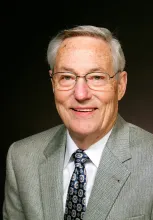
At the time of his retirement in 2016, Roy Holladay was serving the Operation Manager for Ministerial and Member Services of the United Church of God. Mr. and Mrs. Holladay have served in Pittsburgh, Akron, Toledo, Wheeling, Charleston, Uniontown, San Antonio, Austin, Corpus Christi, Uvalde, the Rio Grand Valley, Richmond, Norfolk, Arlington, Hinsdale, Chicago North, St. Petersburg, New Port Richey, Fort Myers, Miami, West Palm Beach, Big Sandy, Texarkana, Chattanooga and Rome congregations.
Roy Holladay was instrumental in the founding of the United Church of God, serving on the transitional board and later on the Council of Elders for nine years (acting as chairman for four-plus years). Mr. Holladay was the United Church of God president for three years (May 2002-July 2005). Over the years he was an instructor at Ambassador Bible College and was a festival coordinator for nine years.
