

Don Ward
This transcript was generated by AI and may contain errors. It is provided to assist those who may not be able to listen to the message.
If you haven't guessed by now, this day is called the Feast of Trumpets. Leviticus 23, if you would turn there. Leviticus 23, there are how many feast days listed? There are nine feast days listed. The first feast day is the weekly Sabbath, and then there are eight feasts, Passover, and seven holy days. So in all, there are nine days that are mentioned there, and all of them are feasts. Leviticus 23, in verse 1.
The Lord spoke unto Moses, saying, Speaking to the children of Israel, and saying to them, Concerning the feast of the Eternal, in which you shall proclaim to be holy convocations, even these are my feasts. These feasts are not the feasts of the Jews, though they came to be identified with the Jews. Even some of the gospel writers will use the term, the feast of the Jews was nigh, or something to that effect. The reason it came to be identified with the Jews and Judah was because after David died and Solomon reigned, upon the death of Solomon, the kingdom was divided, ten tribes to the north, under Jeroboam, and then the two tribes to the north, to the south, and the southern kingdom was called Judah, and for short, Jew.
Judah went into captivity, circa 587 BC, and during their 70 years in Babylon, they took on many of the customs of the people of Babylon and somewhat began to mix Babylonian thought, philosophy, and religion with Judaism, and when they returned, it was difficult to find the the truth with regard to the kingdom of Judah. So they became known as the feast of the Jews, but God says, these are my feasts, and they are to be kept every throughout all of your generations.
First in verse 3 is, The Sabbath six days shall work be done, but the seventh day is the Sabbath of rest, the holy convocation. You shall do no work therein, it is the Sabbath of the Lord in all of your dwellings. These are the feasts of the eternal, even holy convocations, which you shall proclaim in their seasons. Then he goes into the annual feast days. The day that we are here to observe in Leviticus 23 and verse 23, And the Lord spoke unto Moses, saying, speaking to the children of Israel, saying, in the seventh month, in the first day of the month, shall you have a Sabbath, a memorial of blowing trumpets, and holy convocation.
You shall do no servile work therein, but you shall offer an offering made by fire unto the eternal. Now let's go to Numbers chapter 10. I want to emphasize there the blowing of trumpets. In Numbers chapter 10, Mr.
Stewart read both of these passages. I don't think he read verse 10 here, we're turning to now. In Numbers chapter 10 and verse 10, somewhat of a summary of the times in which the trumpets were blown, but I want to emphasize in particular one aspect here in Numbers 10 and verse 10, Also in the day of your gladness, in your solemn days, and in the beginnings of your months, so on the new moon.
Last night was the new moon, the fifteenth of Tishri, the fifteenth day of the seventh month in the sacred calendar. Blow the trumpets and the solemn days. Start at the beginning of verse 10. And in the day of your gladness, in your solemn days, in the beginnings of your months, you shall blow with the trumpets over your burnt offerings and over the sacrifices of your peace offerings that they may be to you for a memorial before your God.
I am the eternal your God, a memorial to remember who God is, what God is, and what he has done for them. The trumpet will also introduce, and at that time is called the great trumpet, will also introduce the year of Jubilee. Each of the Jewish months was officially introduced by the blowing of trumpets. The festival season began in the first month and ended in the seventh month.
So from the month of Abid, the first month, or sometimes called Nisan, until the month of Tishri, the seventh month, the beginning of each of these months on the new moon, the trumpets were sounded. The festival seasons coincides with the agricultural seasons of Israel, the planting and the harvesting. The last trump in the seventh month series was always sounded on the new moon. This made it the final trumpet's day. So we read in Leviticus 23-24 a memorial of blowing of trumpets.
The trumpet reminded them that God was with them, and the seventh trumpet completed the festival season. Now, of course, in addition to trumpets, we have atonement, which we will be mentioning, talking about briefly, the Feast of Tabernacles, and what we call the last great day, or the eighth day.
The sounding of the trumpet at the beginning of each month served to remind them to get ready for the final judgment on the day of atonement. Even before Israel entered the Old Covenant, God thundered the Ten Commandments from Mount Sinai, and it was introduced by the sound of a trumpet. And the sound of a trumpet symbolizes the voice of God. Now, I see in talking here that no one really is writing very much, taking many notes, but even the first part to understand why the festival seasons began to be identified with the Jews, it had to do with the vision of the kingdom. And Judah was the only group of people keeping the feast days. Now, the Jews knew a great deal about the meaning of the feast all through the ages, through the centuries. It's ironic that having this knowledge that when Jesus Christ came on the scene, the true Messiah, they rejected Him. In Exodus 19, verse 16, notice how the giving of the law was introduced. In Exodus 19, verse 16, it came to pass on the third day in the morning that there were thunders and lightnings and a thick cloud upon the mount and the voice of a trumpet, the voice of the trumpet exceeding loud so that all the people that was in the camp trembled.
So the trumpet was used even before the feast of trumpets was introduced to Israel in Leviticus 23. In Exodus 20, verse 18, and all the people saw the thunderings and the lightnings and the noise of the trumpet and the mountain smoking. And when the people saw it, they removed instead of far off. And they said unto Moses, Speak you with us, and we will hear. But let not God speak with us, lest we die. And so people today may say, Well, I just wish God would speak to us, but if God really spoke to us, would we fear and tremble? And I submit to you that today God is speaking to you if you will hear his voice. As it is repeated in Hebrews 3 several times, today if you would hear his voice, harden not your heart. The second coming of Jesus Christ is preceded by the day of the Lord. Look at Revelation chapter 1, verse 10, where we see this symbolism of the trumpet and the voice in Revelation chapter 1 and verse 10. I was in the Spirit on the Lord's day. Now, a lot of denominations use this 110 to try to prove that Sunday is the Lord's day. Now, in 1 Thessalonians 5 and verse 2, this is translated correctly, the day of the Lord. The Greek is Hekuriyake komura, the day of the Lord. I was in the Spirit on the day of the Lord, the day of the Lord, and heard behind me a great voice as of a trumpet. So the trumpet symbolizes the voice of God, just as at Mount Sinai. The trumpet sounds, the voice of the trumpet, and God thunders the Ten Commandments. The voice of God, the trumpet sounds throughout the day of the Lord. The day of the Lord is a time in which God directly intervenes in the course of human events. According to John Paulian, in his book titled The Role of the Hebrew Cultist, Sanctuary in the Temple, in the book of Revelation, it should be noted that the seventh trumpet is depicted quite differently from the preceding six. By the blowing of the first six trumpets unleash warning judgments on the earth, the first six trumpet plagues, the blowing of the seventh trumpet announces the Messiah's return and enthronement and soon-coming judgments. So we turn forward to Revelation 11 and verse 15, and we note this. Revelation 11 and verse 15. And the seventh angel sounded, or the seventh trump, and the seventh angel sounded, and there were great voices in heaven, saying, "...the kingdoms of this world are become the kingdoms of our Lord and his Christ, and he shall reign forever and ever." Continuing, Paulian writes, as the Jewish people have been taught for millennia, for millennia, they have it right. This day pictures the return of the Messiah and the kingdoms of this world becoming the kingdoms of our Lord and of his Christ. And in knowing that, and still looking forward to it, they don't even believe the Messiah has come yet. But in their belief system, they believe that trumpet symbolizes exactly what we say it does in the basic sense. In his book, titled Judaism, Rabbi Arthur Hertzberg, concerning the Feast of Trumpets, writes, Rosh Hashanah falls on the first of the lunar month Tishri, which usually occurs in September.
The ten days from Rosh Hashanah literally the head of the year, Rosh Hashanah literally means head of the year, first of the year, introduces the the civil calendar. Like generally in America, and even the church follows this, the the fiscal year or the civil year for a lot of corporations in the church follows this, is our fiscal year begins July the first, goes through June the 30th. And for the Jews, the civil year went from the first of Tishri through the 12th month, but the sacred year started with ABIB and then the seven festivals ending with the eighth day in the month of Tishri. The ten days from Rosh Hashanah literally the head of the year through Yom Kippur, the day of atonement, was known as the ten days of repentance. These are the most solemn days of the year for this is the period in which, in the image of the tradition, all the world is judged before God's heavenly throne.
Actually, the Jews began to prepare for atonement 30 days before it arrived. These are known as the days of awe, but especially those 10 days between trumpets and atonement, they really focused on judging themselves, repenting, and getting right with God.
The lyrics of the old song cries out, "...enjoy yourself, it's later than you think." The feast of trumpets cries out, "...prepare yourself, for it's later than you think." Alfred Edersheim in his writings about temple services notes, "...that as of old, the sound of the trumpet summoned the congregation before the eternal at the door of the tabernacle. So, his elect shall be summoned by the sound of the trumpet in that day of Christ's coming, and not only the living, but those who had slept the dead in Christ." And as we have read from Revelation 11.15, when the seventh angel sounds the kingdoms of this world become the kingdoms of God and his Christ, and he shall reign forever and ever. Another thing that took place, which ties in with this day, is that the kings of Israel began to rule on the day of trumpets as far as marking their official reign.
It may say in the second month, so-and-so began to reign, but when they were coronated, they were coronated with the sound of trumpets. Let's look at 1 Kings 1.34. 1 Kings 1.34.
1 Kings 1.34. 1 And Zadok the priest, and Nathan the prophet, anoint him their king over Israel, and blow you the trumpet, and say, God save King Saul. Of course, from this came the saying of God save the king. 2 Kings 9.13. 2 Kings 9.13.
So the coronation of kings was accompanied with the blowing of trumpets.
When Jesus Christ comes, again, he is going to be coronated as King of Kings and Lord of Lords, and he shall reign forever and ever, as in the song, the Hallelujah Chorus and the Messiah.
In 2 Kings 9.13. Then they hastened and took every man his garment and put it under him on the top of the stairs, and blew with trumpet, saying, Jehu is king. So when a new king came into office, there was the blowing of trumpets. Also forward in 2 Kings 11.
And the guard stood every man with his weapons in his hand, round about the king, from the right corner of the temple to the left corner of the temple, along by the altar and the temple. And he brought forth the king's son and put the crown upon him and gave him the testimony. And they made him king and anointed him. And they clapped their hands and said, God save the king. So upon the coronation, trumpets were blown in this phrase, God save the king. So the religious authorities in Judah acknowledged the royal import of the day of trumpets. One of the things that we need to understand about the Holy Days is that there are parallels with each feast. That is, there was first of all literal events that introduced the Holy Days. And then there's a spiritual parallel and there is a doctrinal parallel. For example, Passover, there was a literal event in Exodus 12 in which they were instructed to put the blood on the doorpost. The Israelites were. And then God passed through the land and everywhere the blood was not sprinkled on the doorpost, the firstborn of man and beast died. Then Jesus Christ came on the scene. So here is the literal spiritual fulfillment of that. There was a literal physical event. And then there was this literal event in the spiritual sense. If we go now to 1 Corinthians 5 and verse 7, we'll see here that Jesus Christ is now our Passover. 1 Corinthians 5 and verse 7. We'll find from the writings of Paul that Paul kept the feast days and instructed us to keep the feast days. In 1 Corinthians 5 and verse 7, Purge out therefore the old leaven that you may be a new lump as you are unleavened.
So the old leaven was their sin. They had amongst them a incestuous fornicator.
Leaven represents sin. So purge out the old leaven that you may be a new lump as you are unleavened. You have physically unleavened your houses. It's pretty easy to do that. But become unleavened spiritually for even Christ our Passover is sacrificed for us. To take the Passover, you have to repent and exercise faith in the sacrifice of Christ. So you get into the doctrinal parallel. So you had a physical event that happened when they sprinkled the blood on the doorposts and God passed over the homes where the blood was sprinkled on the doorposts. Then Christ came on the scene and He became our literal Passover in the spiritual sense. Now go to Hebrews 7. The basic doctrines of Christ are listed here. The teachings of Christ in Hebrews 6 and verse 1.
In chapter 5, Paul takes the Hebrews to task, saying that in the time that you ought to be teachers, you have need that one teach you again what be the first principles. Paul was preparing the Hebrews, the people in and around Jerusalem, for the destruction of the temple. That the time was coming shortly when the Roman armies would come. They would sack, not the Roman armies, but the, yes, the Roman armies in this case. The Roman armies would come and the Roman armies came 69-70 AD and sacked the city and burned it and destroyed the restoration temple. And the temple has not been rebuilt since that time.
So Paul writes in Hebrews 6-1, Therefore leaving the principles of the doctrine, the teaching of Christ, let us go on to perfection. Now, perfection cuts across all six of these, but it begins here with number one. The first one is not laying again the foundation of repentance. Repentance, you have to repent in order to keep the Passover correctly.
Repentance from dead works and of faith toward God. So there are six things listed in addition to going on to perfection.
I would put perfection number seven with a diagonal across, and at the end, perfection, because perfection cuts across all six of these things. Perfection is the ultimate goal to go on to maturity, to grow up to the fullness, the measure, the stature of Christ. It says in Matthew 5, 48, Become you therefore perfect, even as our Father in heaven is perfect.
So repentance from dead works, one, of faith toward God, two, of the doctrine of baptisms, three, and of laying on of hands, four, and of resurrection of the dead, five, and of eternal judgment, six, and going on to perfection, seven, cutting across all six of these.
So there's a parallel with the Holy Days with these doctrines.
The first day of Unleavened Bread, Israel left Egypt.
In order for us to leave spiritual Egypt, we must repent, exercise faith in Christ, so that we'll be able to overcome sin and death, be forgiven of our sins, and have the sins that have been marked against us blotted out through the blood, the life, the sacrifice of Jesus Christ. The parallel there is repentance, leaving spiritual Egypt. Same as Passover, repentance and faith toward God. The sacrifice of Christ. The second day of Unleavened Bread.
You see, there was a literal event going back in history. Israel left Egypt on the 15th day, the first day of the Feast of Unleavened Bread. Israel left Egypt.
And so we repent, exercise faith, and we leave spiritual Egypt. And then the next step, as an outward sign of what we have done and in this, when we are baptized, we enter into a covenant of sacrifice with God and Christ that we're going to lay down our lives and keep the old man buried.
Now, on the second day of the Feast of Unleavened Bread, according to Jewish tradition, Israel crossed the Red Sea, which was their baptism.
You look at 2 Corinthians 10, and Paul says this very clearly. I think it's 1 Corinthians.
1 Corinthians 10.
1 Corinthians 10, verse 1. 1 More were brethren, I would not that you should be ignorant how that all of our fathers were under the cloud and all passed through the sea, were all baptized into Moses in the cloud and in the sea, all baptized unto Moses.
And were all baptized unto Moses in the cloud and in the sea, and did all eat the same spiritual meat, and did all drink the same spiritual drink, for they drank of that spiritual rock that followed them, and that rock was Christ.
So there was a literal event of them being baptized. And then, after we repent and exercise faith in the sacrifice of Christ, we are baptized, paralleling that doctrine in Hebrews 6. Then we come to Pentecost, or the Feast of Weeks.
According to Jewish tradition, the Jews received the law, the literal event, on the day of Pentecost.
Some 1,400 years later, and you notice the gap between the spiritual fulfillment and the literal event.
See, between Passover and the crucifixion of Christ, and Him becoming our Passover was roughly 1,400 years.
And the same thing with the day of Pentecost, a little over 1,400 years.
Then, on the day of Pentecost, 31 A.D., a literal spiritual event in the sense that God sent the Holy Spirit.
Which parallels the laying on of hands.
Then we come to what we're observing today, the Feast of Trumpets. See, the Feast of Trumpets is a pivotal point. There are three on one side of trumpets, Feast of Unleavened Bread, the first Holy Day, the second Holy Day. If you count Passover and Pentecost, you've got four. And then you've got Atonement, the first Holy Day of Tabernacles, and the eighth day, or the last great day, as we call it.
Trumpets is a great pivotal point.
As far as the literal fulfillment in the physical sense of trumpets, Israel went to war several times, especially when they're coming into the Promised Land, and in spite of themselves, God gave them the victory, and they eventually settled in the Promised Land, what is called Palestine today, or the nation of Israel, though at that time that geographical area is much, much larger than it is today when Israel settled in the land.
Trumpets also signifies victory. And after we are baptized and we receive the Holy Spirit, we are to live the resurrected life.
Go now to Romans chapter 10, I mean Romans chapter 6, Romans chapter 6 and verse 1.
In Romans chapter 6 verse 1, what shall we say then shall we continue and sin the grace may abound?
God forbid, how shall we that are dead to sin live any longer therein? Know ye not that as many as us were baptized in Christ were baptized into his death.
Therefore we are buried with him by baptism into death, like as Christ was raised up from the dead by the glory of the Father. Even so, we also should walk in newness of life, for if we have been planted together in the likeness of his death, we shall be also in the likeness of his resurrection. So we are to live the resurrected life now, the life of overcoming the old man. Of course, the resurrection into the kingdom of God lies ahead for those who have died in the faith and for those who are alive and are caught up when Christ comes again.
Judgment is now on the house of God, so we are being judged now and we're to go on to perfection. After trumpets comes the day of atonement and the binding of Satan, and we are to bind Satan now. Jesus Christ said, Be of good cheer, I've overcome the world. Greater is he who is in you than he who is in the world. So we have the power at the present time to overcome Satan, to bind him, to cast him out of our lives. Then the Feast of Tabernacles that pictures the great fall harvest, the time of salvation for all peoples, and living under the government of God. Today we have the opportunity to live under the government of God. This is our opportunity in the flesh to live under the government of God. We don't have behind us a voice saying, This is the way walk you in it. Though if our conscience has been trained in the right way, and the law of God is written in our hearts, we do have that voice within us that is saying, This is the way walk you in it.
And then the eighth day, the last day, is a time when everyone will have the opportunity to go on to perfection. See, this is not the only day of salvation. Everyone who's ever lived will have their opportunity. Spiritually speaking, we are to sound the trumpet. We are to sound the trumpet and sound an alarm for the coming day of the Lord and the literal fulfillment of the Feast of Trumpets in the final sentence. Let's go now to Joel 2. Joel 2. The theme of Joel and also Zephaniah is the day of the Lord.
And Joel 2, verse 1, Blow you the trumpet in Zion. We'll read in a moment Hebrews 12.22, which says that you have come to the church of the living God, the church of the firstborn. Zion is a literal place in the environs of Jerusalem, but Zion symbolizes the church.
That is the greatest meaning, the most relevant for us.
Blow you the trumpet in Zion. Sound an alarm in my holy mountain.
Let all the inhabitants of the land tremble for the day of the Lord comes, for it is nigh at hand.
So the Jews would blow the trumpets on the new moon. And then on the day of trumpets, a memorial of the blowing of trumpets, the last trump, signifying the end of the festival seasons, which included trumpets, atonement, tabernacles, and the eighth day. A day of darkness and gloominess, a day of clouds and of thick darkness. As the morning spread upon the mountains of great people and strong, there's never been ever the like. Neither shall there be any more after it, even to the years of many generations. Now we go to Hebrews 12. Hebrews 12. And verse 20, remember what we read from Exodus 19, that the voice of the trumpet and the sound of the trumpet, and also from Exodus 20, verse 18, the voice of the trumpet and God thundering the commandments and the people, moved back, said, let Moses speak to us, we are afraid.
And also, I remind you every time we turn here, hopefully, that what does the book of Hebrews do? It compares and contrasts the elements of the Old Covenant with the elements of the New Covenant.
In Hebrews 12, verse 20, for they could not endure that which was commanded, they being those back at Mount Sinai, when God thundered the Ten Commandments. And if so much as a beast touched the mountain, it shall be stoned, or thrust through with the dark. And the reason was that where God's presence is, he made his presence on that mountain at that time, and where his presence is, it is holy. And if an unholy thing touched it, then they're killed. And so, terrible was the scythe. Moses said, I exceedingly fear and quake. But you are come to Mount Zion. See, here is the spiritual significance. You're coming to Mount Zion into the city of the living God, the heavenly Jerusalem, to innumerable company of angels, to the General Assembly, and church of the firstborn, which are written in heaven and to God, the judge of all, and to the spirits of just men, made perfect. So, you see very clearly that Zion is equated with the church. Blow you the trumpet in Zion. Sound the alarm in my holy mountain. John writes in Revelation 1.10, and we already read, And I was in the Spirit in the day of the Lord, and heard, as it were, the voice of a trumpet, the mighty voice of Jesus Christ, and God the Father. And to Jesus, the Mediator of the New Covenant, and to the blood of sprinkling that speaks better things than that of Abel. See, the blood is now sprinkled on our hearts. And see that you fuse not him that speaks. For if they escape, not who refuse him that spoke on earth. Speaking of Moses, much more shall not we escape if we turn away from him that speaks from heaven, whose voice then shook the earth. But now he is promised, saying, Yet once more I shall shake not the earth only, but also the heavens. And this word, yet once more signifies the removing of those things that are shaken as of things that are made, that those things which cannot be shaken may remain. Wherefore, we are receiving a kingdom which cannot be moved. Let us have grace, divine favor, wherewith we may serve God acceptably with reverence and godly fear, for our God is a consuming fire. So we are warned here to listen to the voice of the trumpet, the Word of God. In Zephaniah 1, Zephaniah is just before Haggai that helps.
Zephaniah right after Habakkuk. Haggai is between Zephaniah and Zechariah. In Zephaniah chapter 1 verse 13, Zephaniah has the theme, The Day of the Lord.
Zephaniah 1.13. Therefore their goods shall become a booty, their houses a desolation, they shall also build houses, but not inhabit them.
They shall plant vineyards, but not drink the wine thereof. Why?
See, people really don't listen. Like Peter writes in 2 Peter chapter 3, they'll say, Oh, well, all things continue as from the beginning since the fathers fell asleep. This is just another cycle that we're going through.
All of this about apocalyptic times and all that. It's just the religious people talking. They don't know what they're talking about.
14. The great day of the Lord is nearer. It is near and haste greatly. Even the voice of the day of the Lord. The trumpet sounding, the word of God, the voice of the day of the Lord, the mighty man shall cry there bitterly. That day is a day of wrath, a day of trouble and distress, a day of waste-ness and desolation, a day of darkness and gloominess, a day of clouds and thick darkness, a day of the trumpet and alarm against the fence cities and against the high towers. Now we'll bring distress upon men that they shall walk like blind men, because they have sinned against the eternal, and their blood shall be poured out as dust and their flesh as the dung. 15. Neither their gold nor their silver shall be able to deliver them in the day of the Lord's wrath.
Talks about in one place how they will throw their gold and silver into the streets.
They will go into the mountains and rocks and try to hide themselves from the face of him that sits on the throne. The day of the Lord. There will be no place to hide, except God, to hide you. And it is possible to be hidden during the day of the Lord.
16. Neither their gold nor their silver shall be able to deliver them in the day of the Lord's wrath.
But the whole land shall be devoured by the fire of his jealousy, and he shall make even a speedy riddance of them that dwell in the land. Gather yourselves together, yes, together, together, O nation, not desired.
I would submit to you, of course, Israel as a nation is becoming more and more a nation not desired. And eventually, as it talks about in Revelation 11, the city shall be divided, given over the nations for three and a half years.
In addition to that, the nation not desired. Remember Peter calls the Church of God a holy nation in 1 Peter 2.9. Also, Matthew says in Matthew 24 that, you shall be hated of all nations for my namesake, a nation not desired.
When the devil realizes that he has but a short time and he goes to persecute the woman that brought forth a man child, and he goes after those who keep the commandments of God, all nations will hate those who keep the word of God.
The Church would be considered a nation not desired at that time. Before the decree, bring forth, before the day pass as the chapter, before the fierce anger of the Lord, come upon you. Before the day of the Lord's anger, come upon you. Seek you the Lord, all you meek of the earth, which have wrought his judgment. Seek righteousness, seek meekness. It may be, you shall be hid in the day of the Lord's anger.
This is the only verse in the Bible that just directly says, here's what you need to do. Now, in Revelation 12, it talks about, they overcame him by the blood of the Lamb, by the word of their testimony, they loved not their lives, unto the death.
The devil goes after them. Maybe we ought to turn there. Revelation 12.
People talk about a place of safety. There will be people protected during this time. Many will die in martyrdom for his name's sake, but there will be some protected.
In Revelation 12, I just quoted 11, we'll read it.
They overcame him by the blood of the Lamb, by the word of their testimony, and they loved not their lives, unto the death. Therefore, rejoice, you heavens, and you that dwell in them.
Woe to the inhabitors of the earth and of the sea. For the devil has come down unto you, having great wrath, because he knows he has but a short time.
If you look at the world today and the condition of the world, no matter where you want to start, from the unrest, the anxiety, the uncertainty, and all the things that plague this nation, and especially if you go around the world and you go to the Philippines and the suffering there, at the present time in China, they are rioting against Japan and demonstrating against Japan, and wanting to kick them out, because China is claiming some islands that Japan claims.
And so there's a big road now between China and Japan. Over islands, people have gone to war for a lot less. Then if you come back to what we call the Near East, beginning with Pakistan, Afghanistan, Iran, Iraq, and into the Middle East proper, and you see all the turmoil there.
And now in Afghanistan, the very people that we have trained to take over security in Iran are killing our troops there. They showed last night a young man, I think he's about 20 years old, who had written his father. In essence, he had suspected that one of the people that he had trained, one of the Afghans he had trained, would turn on him and kill him, and so he did. And he was reporting in the news the past few days that four, they called it NATO troops, and these mainly Americans, were killed by, from in-house, that is, Afghans that they had trained.
Because this Afghan soldier had said, we don't need you here, we don't want you here. So they come in to free them, quote-unquote, from the rule of the Taliban and the harshness thereof.
And then when all is said and done, they're right where they were.
Billions have been spent, thousands of lives have been lost, and it's all in vain.
And we go and we look at the rioting and the unrest extending all the way through the Middle East, North Africa. We see a world that is, these are the beginnings of sorrows, war, rumors of war, but the end is not yet.
And Satan the devil is right there. He knows that he has but a short time, verse 13, and when the dragon saw that he was cast under the earth, he persecuted the woman that brought forth the man-child, and the woman was given to her, was given two wings of a great eagle, that she might fly into the wilderness, into her place, where she is nourished for times and times and half a time from the face of the serpent. So there is that place for some who will be protected during that time.
The world will not recognize the voice of the trumpet as it begins to sound, and the day of the Lord will come on them unawares. Notice 1 Thessalonians, 1 Thessalonians, chapter 5.
1 Thessalonians 5 and verse 1, 1 But of the times and seasons, brethren, you have no need that are right unto you.
For yourselves know perfectly that, and here is this same three Greek words that's translated in Revelation 1.10, the Lord's day is translated correctly here, the day of the Lord, 2 Hekuriyakeh ha-mera, for yourselves know perfectly that the day of the Lord comes as a thief in the night. For when they shall say peace and safety, then sudden destruction comes upon them as surveil upon a woman with child, and they shall not escape. So the world is going to be deceived. Ezekiel 13 talks about those who cry peace, peace, when there is no peace. But you, brethren, are not in darkness that that day should overtake you as a thief.
So it is up to us to heed the warning, to hear the voice that cries out, and to be watching, and so doing. So to the world, it comes to the thief in the night. They didn't hear the trumpet, and if they did hear it, they didn't heed it. And even, even half of the virgins are not ready. Go to Matthew 25. Some people think that the Olivet prophecy is just the Matthew 24, but it actually includes all of 24 and all of 25.
24 sets the backdrop. 25 tells you what to do. 25 says three things. There are three parables here. The parable of the virgins, the parable of the talents, and the parable of feeding, visiting the stranger and the poor and all of that.
Fill your lamp with oil. Make the most out of whatever God has given you with regard to talents and to serve God and Christ by serving others. That's the three essentials that it gives with regard to being ready. In Matthew 25.1, Then shall the kingdom of heaven be likened unto ten virgins which took their lamps and went forth to meet the bridegroom. Five of them were wise, and five were foolish.
They that were foolish took their lamps and took no oil with them.
But the wise took oil in their vessels with their lamps while the bridegroom tarried. They all slumbered and slept. We've heard all of this before. We've been hearing this since 1929. Or you name the date. 1950, 1975, 1982.
And regardless, our day of the Lord is now. Whether Jesus Christ comes in our lifetime or not, we have entered into the covenant of sacrifice. We're to be living the holy days now, because all of those doctrines are to be fulfilled in us now. Repentance, faith, baptism, laying out of hands, resurrection, judgment, going on to perfection. All of those things.
Then those that were foolish, in verse 8 says to the wise, give us some oil. The wise said, no, you've got to go do this for yourself.
So they went out to buy. Of course, you can't buy the Holy Spirit. It's you. It is in the arena of life and your relationship with God and Christ and with your neighbor.
And then afterward, they came the other virgins, the foolish ones, saying, Lord, Lord, open to us. But he answered and said, barely I say unto you, I don't know you. Watch therefore, for you know neither the day nor the hour wherein the Son of Man comes.
So have your lamps filled with oil. Make the most of your talents.
And you serve God by serving one another. Those are the three parables that are given there that talks about how you can be prepared.
So today, the voice of the trumpet of God, the voice of God through the Word of God, is being sounded, and we had better hear and take heed. As we have noted, Israel did not take heed at Sinai. Paul says in the book of Hebrews, today, if you would hear his voice, harden not your heart.
A lot of people, perhaps, believe that the trumpet, they're waiting for the actual sound of the last trumpet. If you wait to the actual sound of the last trumpet, that'll be too late, because Christ is speaking to us now. The attitude of the Laodiceans is, oh, we know it all. You know, we're doing the same thing we did 30 years ago. We're doing exactly what we were taught 30 years ago. We are more righteous than anybody else in the Church of God. We know it all.
Is that a Laodicean, or is it not? We're commanded to grow in the grace and knowledge of our Lord and Savior, Jesus Christ. That is a commandment. There is never a time. See, spiritual growth conforms to the laws of biology. If we would turn to Revelation 3. Spiritual growth conforms to the laws of biology. The laws of biology are use and disuse. If I use my muscles and overload them, they will grow stronger and bigger. If you use what God has given you in the spiritual realm, you will grow stronger in the spiritual sense. Remember the commandment in 1 Thessalonians 5, quench not the Spirit. If you don't use it, you lose it. In Revelation 3, verse 14, to the angel of the church of the Laodiceans, write these things, says the Amen, the faithful and true witness, the beginning of the creation of God. I know your works, that you are neither cold nor hot. I would that you were cold or hot. So, because you are lukewarm and neither cold nor hot, I will spew you out of my mouth because you say, I am rich. And really, this should be applied in the spiritual sense. You could apply it in the physical sense. Literally, the ancient city of Laodicea, before the great earthquake, was a very rich and prosperous city. There were a lot of wealthy Jews who lived in the area, had a lot of gold, they had a school of medicine there. They had a famous breed of sheep from which they got black wool. And so, it was a very prosperous city, but it had one great weakness. There was no fresh water supply, so they had to run conduits a long ways into the city. And by the time the water got to the city, it was lukewarm. So, he plays off the reality of the city in the spiritual sense. Because you say, I am rich and increase with goods and have need of nothing. You know, I know it all. I'm doing exactly what I was taught 30 years ago. I don't need anything. Now, some of you, you know, you're getting way off. You strayed way out there. If it's in the Word of God, it's true.
I'm more interested in the Word of God and what it says than I am in what any man says. Aren't you? Because you say, I am rich and increase with goods and have need of nothing. You know not that you are wretched and miserable and poor and blind and naked. See, none of the things that they had. They're gold. They're silver. They're ISAF from their medical school or they're fine wool. None of that. I counsel you to buy me gold tried in the fire. Gold represents the highest form of character. That you may be rich in white raiment. White raiment represents righteousness. That you may be clothed in the shame of your nakedness. Do not appear to anoint your eyes with ISAF. That you may see spiritually. As many as I love, I rebuke and chase and be zealous, therefore, and repent. You're not there yet. Paul writes in 1 Corinthians 8. Let's go there in 1 Corinthians 8.
In 1 Corinthians 8 verse 1, now touching things offered unto idols, we know that we all have knowledge. Knowledge puffs up, but charity edifies. What is charity? Charity is love. It is agape love. And God is love. So we're to be coming as God is. And if any man thinks that he knows anything, he knows nothing yet, as he ought to know. And one of the things that we've emphasized in the church, I think far too much, is knowledge versus what we're becoming and thinking that we know more than other people. We do know more than other people in where it really counts the existence of God. Who is God? What is God? What is his purpose? Who is man? What is man? What is his purpose? The plan of salvation as revealed by the Holy Days in the Word of God.
That's where it really is. In 1 Corinthians 13, where the rubber meets the road, as they say, though I speak with the tongues of men and of angels, and have not charity, if I'm not becoming as God is, I'm becoming a sounding brass or a tinkling cymbal. And though I have the gift of prophecy, oh yeah, we are preaching prophecy, we really have a corner on the market. We know it all.
You can put whatever you want to with regard to prophecy in your Google search engine. You will come up with anywhere from 500,000 to a million hits of people talking about Revive, Roman Empire, the Catholic Church, the Pope, the whatever you want to name.
But none of them know the plan of salvation. They all espouse the trinity. They all say, man has an immortal soul. They all say, only believe.
Brother, the trunk of the tree is where it is.
And though I have the gift of prophecy, understand all mysteries and all knowledge, and I have all faith that I could remove mountains and have not charity, and I am nothing. And though I bestow all my goods to feed the poor, and though I give my body to be burned, and I am not becoming as God is, it profits me nothing.
There is so much more to know, to grasp, to understand and do. That, indeed, as Paul said, we see through a glass, darkly, dimly, and we can ask ourselves, are we becoming dull?
Are we becoming dull? I am saying that the trumpet of God is sounding now loud and clear. Let him who hasn't here to hear, let him hear, and not only hear, but to do. If you be hearers of the Word and not doers only, you are deceiving yourself.
In the day of the Lord, the trumpet will begin to blast and continue for a thousand years, and all the world shall hear. The Bible is a written and living word of God. If we know the truth and the sure word of prophecy, what can we do but sound the alarm? Notice Amos, Amos chapter 3. Amos chapter 3. This is, in a sense, the command. Hosea Joel, Amos. In Amos chapter 3 verse 6. Amos 3 verse 6.
Shall a trumpet be blown in the city and the people not be afraid? Shall there be evil in a city and the Lord has not done it? Surely the Lord will do nothing, but he reveals his secret unto his servants the prophets. The lion has roared, who will not fear? The Lord has spoken, who can but prophesy? Publish in the palaces of Ashdod, in the palaces of the land of Egypt, and say, Assemble yourselves upon the mountains of Samaria, and behold the great tumult and the misthereof, and the oppressed and the misthereof. For they know not to do right, says the Eternal, who store up violence and robbery in their palaces. So God is saying, Cry aloud, Spare not, Lift up your voice like a trumpet, and show Jacob his transgressions in Israel their sins, because the time is coming in which they will not endure sound doctrine. Even the casual observer should be concerned about the state of the world, and the casual observer is. You can talk to almost any person on the street, and they are concerned. They know that things are not right in this world.
This is the time that we are to stand in the gap and to lift up our voice.
See, the time is coming, especially during this time, when all the wicked are going to be revealed and they're going to be dealt with. And God is saying to us to lift up our voice. Let's go back now forward, it is, to Joel. Well, it's back, Hosea Joel. Back of page 2 to chapter 2 of Joel. And Joel chapter 2 verse 15. See chapter 2 verse 1 begins with, Blow the trumpet in Zion. Verse 15, Reiterates, Blow the trumpet in Zion, Sanctify a fast, call a solemn assembly, Gather the people, sanctify the congregation, assemble the elders, Gather the children and those that suck the breast.
Let the bridegroom go forth out of his chamber. And we read from Matthew 25, When the bridegroom comes out of his chamber and he knocks on the door of the bride, 5 are wise, 5 are foolish. Let the bridegroom go forth out of his chamber and the bride out of her closet. Let the priests, the ministers, the Lord weep between the porch and the altar. Let them say, Spare your people, O Lord, and give not your heritage to reproach, that the nations should rule over them. Wherefore should they say among the people, Where is their God?
God is going to take care of those who die in the faith or those who are alive when Christ comes again. Then the Lord will be jealous for his land and pity his people. Yes, the Lord will answer and say unto his people, Behold, I will send you corn and wine and oil, and you shall be satisfied therewith, and I will no more make you a reproach among the nations. Now we go to Revelation chapter 10. Revelation chapter 10. The last part is very important that you understand.
Revelation 10 and verse 7. But in the days of the voice of the seventh angel, when he shall begin to sound, the mystery of God should be finished. See, the greatest mystery of all is how one can live in the flesh as a human being and receive God's Spirit, and then upon resurrection be changed into a glorious radiant spirit being in the kingdom of God. See, Jesus Christ gave up his glory and came and took on the form of a man, humbled himself to the ignominious fate of death on the cross to pay for our sins. God has greatly exalted him so that he is King of Kings and Lord of Lords. But in the day of the voice of the seventh angel, when he shall begin to sound, the mystery of God should be finished as he is declared to his servants the prophets. The prophets.
That mystery of God is the resurrection from the dead, the whole package that goes with living in the flesh and being raised to newness of life. Look at Romans 11 and verse 1. Romans 11. I've got that wrong. It's Romans 8 and verse 11. Romans 8 and verse 11. But if the spirit of him that raised up Jesus from the dead dwell in you, he that raised up Christ from the dead shall also quicken, make alive your mortal bodies by his spirit that dwells in you. And what are we going to be in resurrection? Look at verse 17. And if children then heirs, heirs of God, join heirs with Christ. Focus on heirs of God. We shall inherit what he is. We shall be spirit beings on that plane of existence. Join heirs with Christ who has lived in the flesh, who has become the firstborn from the dead. If so be that we suffer with him that we may be glorified together. Now in 1st Thessalonians chapter 4. 1st Thessalonians chapter 4 verse 13. We will wrap up and tie together here with these last few passages. The blowing of trumpets, the day of trumpets, and the ultimate fulfillment of what it pictures. In 1st Thessalonians 4.13. But I would not have you be ignorant, brethren, concerning them which are asleep that are dead, that you sorrow not even as others which have no hope. For we believe that Jesus died and rose again, even so them also which sleep in Jesus will God bring with him. For this we say unto you by the word of the Lord, that we which are alive and remain in the coming of the Lord shall not precede those who are asleep or dead. For the Lord himself shall descend from heaven with a shout with the voice of the archangel and with the trump of God. Remember Revelation 10.7. When the seventh angel begins to sound, the mystery of God shall be finished. And the trumpet of God and the dead in Christ shall rise first.
Then we which are alive and remain shall be caught up together with them in the clouds, meet the Lord in the air, and so shall we ever be with the Lord, wherefore comfort one another with these words. So when with a voice the archangel with the trump of God, which trump 1 Corinthians 15 and 1 Corinthians 15 and verse 50. 1 Corinthians 15 and verse 50.
1 Corinthians 15, 15, now this I say brethren, that flesh and blood cannot inherit the kingdom of God. Neither does corruption inherit incorruption. Behold, I show you a mystery. See, once again, I show you a mystery. When the seventh angel begins to sound, Revelation 10.7, then the mystery shall be finished. I show you a mystery. We shall not all sleep, but we shall all be changed. In a moment in the twinkling of an eye at the last trump, when was the last trump in the holy day season?
Feast of trumpets, the new moon, introducing the fall festival season. In a moment in the twinkling of an eye at the last trump, for the trumpet shall sound and the dead shall be raised incorruptible and shall be changed. This corruptible shall put on in corruption. This mortal shall put on immortality. You do not have an immortal soul. If you had an immortal soul, what a travesty! Imagine that God would create an immortal soul, put it in a fleshly body, subject to sin and death, and turn around and say, save your soul. The soul is already saved. It's immortal. Well, you've got to prevent it from going to hell and burning forever. That is so illogical.
And then, as one religion teaches, the Republican candidate for president is of this religion that God has created all these souls, and you need to have a big family, so you'll have a place to put all these souls. And if a family member missed out, then you can be baptized from the dead and on and on. So when this corruptible shall put on in corruption, this mortal shall put on immortality. Then shall be brought to pass the saying that is written, death is swallowed up in victory. O death, where is your sting? O grave, where is your victory? Like we heard in the special music. The sting of death is sin. The strength of sin is the law. But thanks be to God, which gives us the victory through our Lord Jesus Christ. Therefore, my beloved brethren, be you steadfast, unmovable, always abounding in the work of the Lord, for as much as you know that your labor is not in vain in the Lord. So, brethren, here we are, the Feast of Trumpets, September 17, 2012. Many in the church thought that they would not be here today.
Many thought 1975, based on a booklet in 1975 in prophecy. Many thought 1982, based on, well, that in Nebuchadnezzar's seven years of madness. And others have set many other dates. Many so-called two witnesses have come and gone. Here we are. Whether Jesus Christ comes in our lifetime or not, today is our day of the Lord, as it were. We are to live all of the holy days now. Jesus Christ is our Passover. We are to leave spiritual Egypt, sin, and death behind.
We are to be baptized and live a resurrected life. We have received God's Spirit.
We can live the resurrected life through the Spirit. We can overcome Satan and bind him now.
We can have the glorious victory, as the great victory will be when we're changed to spirit beings. Because we have that power to overcome this world. And we can live under God's government now and obey him and put the old man to death and keep him under the water. So brethren, let us rejoice on this Feast of Trumpets 2012.
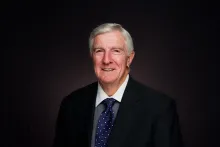
Before his retirement in 2021, Dr. Donald Ward pastored churches in Texas and Louisiana, and taught at Ambassador Bible College in Cincinnati, Ohio. He has also served as chairman of the Council of Elders of the United Church of God. He holds a BS degree; a BA in theology; a MS degree; a doctor’s degree in education from East Texas State University; and has completed 18 hours of graduate theology from SMU.
