
Mario Seiglie
This transcript was generated by AI and may contain errors. It is provided to assist those who may not be able to listen to the message.
So nice to be with all of you again. We are a different church than most of the religions in the world, because we understand a truth. God has opened our eyes to a future that is so much better than any other of the churches of this world, or the religions of this world, because most of those religions talk about just going up to heaven. Some say you'll just be on a type of a cloud playing harps. That gets pretty boring after a while. I don't know about you, but if that's all there is, that's not very exciting. Other groups mention about having a beatific vision, which is where you get to stare at the face of God forever. That sounds a little bit boring after a while. No excitement, but we know God has something prepared so much better. We have so much to look forward to. An exciting future life full of challenges, of wonderful blessings that we're going to be able to share with so many. What are we going to do during that time? What kind of roles are we going to play? We went to the feast here recently. We had quite a talk about that, but I want to focus on something very special. Because we know what Jesus Christ does, we eventually are going to do as well under him. One of the descriptions that shows what Jesus Christ has done and will do in the future is that he loves to—pastor—he loves to take care of people. He loves to show love, as well as, of course, God the Father. But here's a description of what Jesus Christ is going to do when he returns. In Isaiah 40, one of the most endearing descriptions of Christ— Isaiah 40, starting in verse 10.
It says, He will feed his flock like a shepherd. He will gather the lambs with his arm, and carry them in his bosom, and gently lead those who are with young. It's a description of Jesus Christ as the great pastor. We also have in the New Testament taken from this quote, and it is even further described in Revelation 7 in verse 13. Notice how similar this description is of what Jesus Christ is going to do.
Revelation 7, verse 13. It says, Therefore, they are before the throne of God, and serve him day and night in his temple. And he who sits on the throne will dwell among them. Talking about that future time when God is going to be dwelling with them in the New Jerusalem. They shall neither hunger anymore nor thirst anymore. The sun shall not strike them nor any heat. They're not going to feel sunstroke or any type of discomfort. And it says, And God will wipe away every tear from their eyes. Do you know how God can wipe away the tears from everybody's eyes?
It's explaining to them what happened, why people went through what they did. Isn't that what a father and mother do with a child? When the child gets distraught, doesn't know, parents say, This is why. This is what happened. And they're comforted. In other words, God is going to comfort everybody. With all of the things that they suffered in this life. And notice, though, the term here, that lamb, talking about Christ, it's another name for him, will shepherd them. This term, poi meno, from poi meno, which means pastor, and so poi meno is the verb of, he will pastor them.
And we are going to have the opportunity to pastor people in the future.
Does everybody want to be a future pastor? Would you like to have that role? How many would say yes? Everybody want to pastor? I think so. Or else we're in the wrong business here in the church. Because that's a role of serving, of loving, of taking care of others.
We are being trained right now to be pastors in the future.
And first, we have to learn to pastor ourselves. That's the number one thing. How can you pastor others if you can't pastor yourself? And that means how you take care of yourself, what you do with your time.
We all have 24 hours in a day. And how do we dedicate it? How do we focus on that?
We have to learn to take good care of ourselves, take care of our minds, what we're thinking, our attitudes, emotions.
And be at peace with ourselves. If we can have that inner peace with ourselves, then we can give peace to others.
Those that are parents have a role to pastor their children. It's a role of a shepherd taking care of their young.
And, of course, that's a test that God is putting us through to see how we're able to pastor others.
And, of course, in the Church, we learn to pastor and serve others.
We learn to take care of one another, meeting their needs.
So, everybody that has been called in the Church, I consider there are going to be future pastors, future shepherds.
And I treat them that way. They have that potential. They are here to be trained to pastor others.
Notice in Revelation 2, verse 27, this has to go a little bit with the sermonette we heard by Ray Roberts. Because here's another place where it talks about persevering to the end.
Revelation 2, verse 27, verse 26 is where the context starts. It says, Well, what he's talking about is giving those that will rule the world. He shall rule them with a rod of iron. They shall be dashed to pieces, like the potter's vessels, as I also have received from my Father.
Well, what he's talking about is giving those that will rule in the future the shepherd's rod.
That's not used to hurt the flock. That's to protect the flock.
And it is interesting that the word here where it says, He shall rule them. The term rule comes from that same word poimeo, which was used in Revelation 7. It's talking about shepherding them, shepherding them, and with a rod of iron, which is used to protect them. Notice a couple of more contemporary translations of this.
In the Passion Translation, which I think is more accurate, Revelation 2, 26 and 27, it says, To everyone who is victorious and continues to do my works to the very end, I will give you authority over the nations to shepherd them with a royal scepter, and the rebellious will be shattered as clay pots.
You see, a pastor has two roles. One is to love, take care of, and if necessary, give their life for their flock. But how does he give his life? It's because the flock is attacked. So you're not a good shepherd if all you do is feed and take care. You defend the flock when these predators come and attack the helpless sheep. So the pastor's role is really symbolized by two different types of rods.
One is the pastor's crook, which is the wooden type of a rod, which is used to guide the flock and to get them out of trouble. It usually has a loop around the top, a curve, so that when they get stuck in the briars, or if they're in a dangerous place, the pastor can wrap it around their necks and pull them out of trouble.
That's why in Psalm 23, David says that, Your staff and rod comfort me. See, one of them is to protect and the other one is to fight off the predators.
There's another translation, which brings it out. Worsby, the commentator, says, Rebellious men will be like clay pots, easily broken to pieces. So that's the part about the strength of the rod. It's to use against those that attack the flock. In the Bible Knowledge Commentary, it says, The word in Revelation 2.27 translated rule from Poimeno means, quote, to shepherd, indicating that they will not simply be administering justice, but will also, like using his rod, be dealing with his sheep and protecting them as well. So something that might sound harsh, the translation just doesn't do justice to those two parts.
Notice in Revelation chapter 20. Revelation 20 verse 4. Here you see the type of rule that these shepherd kings and priests are going to have. In verse 4, it says, And I saw thrones, and they sat on them, and judgment was committed to them. So yes, they're going to be rulers, but they're going to be shepherd rulers. They're going to have the same attitude that Jesus Christ has of a shepherd.
And then it goes on. I'm just going to read the bottom part of verse 4. It says, And they lived and reigned with Christ for a thousand years. Verse 6, And blessed and holy is he who has part in the first resurrection. Over such a second death has no power, but they shall be priests of God and of Christ, and they shall reign with him a thousand years. So yes, they're going to be shepherd kings and priests. And that's what we are learning to do in our own lives, to learn to pastor. So we can help to pastor others. That is one of the purposes a person is in church, not for just themselves, but to train and prepare. I'm in the pastoring practice. The art of pastoring. So important. Notice in Luke chapter 19, again, gives us more insight into that future role that we are going to play. In Luke chapter 19, in verse 16 through 19, it says here, then came the first who was given, as you know, one pound of money, saying, Master, your mina, your pound, has earned ten minas. And what is it that God gives us when we come into the church? He doesn't give us money, but he gives us something very valuable, which is His Holy Spirit. And so God expects us to multiply His Holy Spirit throughout our Christian lives. And He said to him, Well done, good servant, because you were faithful in a very little, yes, in this life, we don't have too many responsibilities, but we were faithful in what was entrusted to us. Our family, our friends, the church, how we are handling these responsibilities. He says, Have authority over ten cities. So there are going to be all kinds of cities in that world tomorrow, in the millennium. The price is going to reign over all the nations. And cities are just areas, central areas, where people are going to gather. The word is polis in Greek. That's where we get the term metropolis, from polis, metro, more of a large city as such. But it is talking about pastoring over these people as separate kings and priests. Kings, of course, have the authority to administrate. You're going to be able to delegate power. Maybe it'll be some of your children that will grow up under you. And others in the church that will be there, all involved in the process of taking care of God's people at that time. Not only will you be a king, but you're going to be a priest. And what does a priest do? He teaches about religious truth.
So you're going to learn to teach the truth to the people, to separate the clean from the unclean, what the commandments are, how to apply them in your lives. That's the role of an educator. These are promises that God has given us. But notice what happened in verse 20. It says, Then another came, saying, Master, here is your amina, which I have kept put away in a handkerchief. This person just basically stagnated spiritually. He didn't grow any during all the time that he had been in the church.
And then God says, Out of your own mouth, verse 22, I will judge you, you wicked servant.
God called him that because he was irresponsible. He didn't grow. And of course, eventually, he said, verse 24, to those who stood, take the mena from him and give it to him who has 10 menas. So that person is not going to rule in God's kingdom. There was no greater growth, and he gave it to the one who had 10 menas. Some people would complain about that. That's inequality. Everybody should get paid the same. That's not the way the Bible teaches. Why?
He says, verse 26, where I say to you that to everyone who has, talking about growth, spiritual growth, will be given. And from him who does not have spiritual growth, is talking about even what he has will be taken away from him. Of course, a person that has developed more is able to take more responsibilities. That's the whole principle about this. And of course, now it behooves me to go to a very dark chapter in the Bible. This is a frightening chapter for anyone who wants to pastor, because it has a lot of warnings from God. How to pastor correctly and how not to pastor correctly. And of course, we can apply this in our own lives. So let's look at that terrible chapter of Ezekiel 34. This really is a frightening chapter, especially for pastors, because it does emit a judgment of how to do things right and what is involved in doing it wrong. Ezekiel 34. By this time, Israel had been taken captive. There were still people in Jerusalem at the time, because it was several invasions of the Babylon before they cleaned out the whole thing. But notice here about the irresponsible shepherds in Ezekiel 34. It says, And the word of the Lord came to me, saying, Son of man, prophesy against the shepherds of Israel. Prophesy and say to them, Thus says the Lord God to the shepherds, woe to the shepherds of Israel, who feed themselves. Now, this is talking there about those that were in charge, the kings and the priests, those who had rule over Israel. They had done a horrible job, and now God is going to exact a certain judgment on them. He says, woe to the shepherds of Israel, who feed themselves. Should not the shepherds feed the flocks? That's the first mistake. They were thinking about themselves lining their own pockets. He goes on to say, You eat the fat and clothe yourselves with the wool. You slaughter the fatlings. But you do not feed the flock. Isn't that what happens many times? We're rulers. They promise so much, and then eventually they line their own pockets and use all of their power to become richer and more powerful and neglect those they rule over.
He says in verse 4, the weak you have not strengthened. You don't see very many of the rich and powerful visiting the weak, do you? You have not strengthened, nor have you healed those who were sick.
Didn't worry about those, nor bound up the broken. Those who had suffered an accident, broken bones, nor brought back what was driven away. But with force and cruelty you have ruled them.
So this is typical. These are not real shepherd kings and priests. These men have not raised the level. They have not met the requirements. It says in verse 5, So because of this the sheep were scattered. They were scattered because there was no shepherd. Now a lot of them would say, oh yes, there are shepherds. But they were not fulfilling the role of shepherds. And they became food for all the beasts of the field. When they were scattered, there was no shepherd to protect, to use the rod of iron against the predators. God said, my sheep wandered through all the mountains and on every high hill. Yes, my flock was scattered over the whole face of the earth, and no one was seeking or searching for them. Which is what a pastor does. He's always there, concerned, seeing what sheep, with a stray, can come back. Therefore, you shepherds hear the word of the Lord. So this is what God says. Okay, I gave you the opportunity. Now comes the punishment. As I live, says the Lord God, surely because my flock became a prey, and my flock became food for every beast of the field. Because there was no shepherd, nor did my shepherds search for my flock. But the shepherds fed themselves and did not feed my flock. They put their own interests first. Therefore, oh shepherds, hear the word of the Lord. Thus says the Lord God, behold, I am against the shepherds, and I will require my flock at their hand. So they're going to be completely removed from authority and direly punished. Severely punished. And that's when the Babylonians came, and God says later on that they're not going to be spared. He says in verse 10, I will require my flock at their hand. I will cause them to seize feeding the sheep, and the shepherds shall feed themselves no more. For I will deliver my flock from their mouths, that they may no longer be food for them. God cares for his sheep, for his people. And then it goes on, and then he describes how a good shepherd works. Verse 11, for thus says the Lord God, indeed I myself will search for my sheep and seek them out. As a shepherd seeks out his flock, on the day he is among his scattered sheep. So will I seek out my sheep, and deliver them from all the places where they were scattered on a cloudy and dark day. I will bring them out from the peoples, and gather them from the countries, and I will bring them to their own land. I will feed them on the mountains of Israel, in the valleys, and in all the inhabited places of the country. I will feed them in good pasture, and their fold shall be on the high mountains of Israel. There they shall lie down in a good fold, and feed in rich pasture on the mountains of Israel. I will feed my flock, and I will make them lie down, says the Lord. I will seek what was lost, and bring back what was driven away, bind up the broken, and strengthen what was sick.
But I will destroy the fat and the strong, and feed them in judgment. Yes, God's going to slay them, the useless and selfish shepherds. And as for you, O my flock, thus says the Lord, behold, I shall judge between sheep and sheep, between rams and goats.
And then it says here in verse 23, I will establish one shepherd over them, and he shall feed them. My servant David, he shall feed them, and be their shepherd. And I the Lord will be their God, and my servant David, a prince among them, I the Lord have spoken. He has sworn this to be true. And of course, he's talking about when Christ comes back, he's going to gather Israel, as it was mentioned in the sermonette. He's going to bring them back into the land, and be able to join Israel and Judah together. As it says later on in Ezekiel about the two rods. One is Judah, and the other one is Israel and or Ephraim, and they will be joined together. He has not forgotten his people, but we can just say from the course of history, we have had bad shepherds as a rule. Yes, David is an exception to the rule. He knew how to pasture God's people, and as a reward, he's going to be rewarded to be over all twelve tribes of Israel in God's kingdom. So he gave a good example. Notice in 1 Timothy chapter 3, what is the model for all of us? If you're in this church, you're trained to be a ruler. You're not being trained on learning to play a harp, or to have good vision so you can watch God forever in a passive way. No? Notice what it says in 1 Timothy chapter 3 verse 1. Paul is talking here because everybody in the church is being trained to be a future pastor. It says in verse 1, this is a faithful saying. If a man desires the position of a bishop, the same word has to do with a pastor, he desires a good work. It means that is a good role to be able to be a future pastor. And, of course, a woman is being trained to be a pastor in God's kingdom. She's going to pastor people. She's going to rule because at that time we're all going to be spirit beings. There's not going to be any more of these differences. And then he gives the qualifications to be a pastor. It says the bishop then must be blameless, should have a good reputation.
The husband of one wife. At that time, husbands under the Old Testament, they could have several wives. But here in the New Testament covenant, it says you are to have one wife.
You're supposed to be temperate, which means a person that has discipline, sober-minded, so you can be serious when it's necessary. You can have light moments when it's appropriate. Of good behavior, hospitable, means glad to have people over the house and house them when necessary. He's able to teach. The person is trained, educated, knows the Bible well, not given to wine, which is a person is not exceeding drinking wine. Notice that wine is something that a pastor can drink, but he's not to exceed the amount.
He's not to let the effects to where you get drunk over it. That's disqualifying a person if he's given too much wine. It's unfortunate that a person can have a lot of good virtues, but if he's just addicted to drinking, he's not ready to pastor others. He has not been able to pastor himself. He goes on to say, not violent, which is not a person that is easily provoked, makes scenes, humiliates people in front of others, type of a violent nature, where anger is uncontrolled.
He says, not greedy for money, not doing it for money. If he doesn't get paid, he's still going to serve God's people. We had that happen back in 1995 when many of us just said, we're going to continue to preach God's laws and commandments, and we're still going to preach that the Sabbath is holy. And I got fired over that. They let me go because I refused to yield on the Sabbath and food laws and holy days. I said, I cannot do this. Here I stand.
You'll have to fire me because I'm not going to quit because I didn't think I did anything wrong. They're the ones that did something wrong. They violated their covenant with God. I hadn't. And so then we got fired for several months. We didn't get any type of salary. It was cut off until United started, and then they asked me to be part of them.
I gladly did it, but I was still taking care of the church over there in Chile. And so you're not in it for the money. It goes on to say, but gentle, not quarrelsome. Again, not a person that is easily provoked and gets angry. Not covetous. Not there again. Looking at how to make more money on the side. One who rules his own house well. So he's learned to pastor his own house. Having his children in submission with all reverence. Just like little lambs. And they grow up and they have a good nature. You've learned to rear them in a way that they are respectful.
Now, when they get to be adults, they might get carried into the world. They might be taken. A parent cannot control an adult child. But hopefully they left a good example while that child was under their roof. And it goes on to say, for if a man does not know how to rule his own house, how will he take care of the church of God?
If he does a mess with his own family, usually he's going to make a mess out of the church as well. Not a novice. Not a person that just recently came into church. Lest being puffed up with pride, he falls into the same condemnation as the devil. He just gets vain. He gets a swelled head. That can cause a lot.
Moreover, he must have a good testimony among those who are outside. Lest he fall into the reproach and the snare of the devil. So he needs to have a good reputation as well. So this is a role model for all of us.
And in Matthew 20, it shows what it means to have a pastor's heart. Matthew 20, verse 24. Jesus Christ was speaking with his disciples. And of course, they were all jockeying for position at that time. He told them about. They were going to sit on thrones in Israel. And all of a sudden, it wasn't enough to be sitting on thrones of Israel. They wanted the biggest thrones. They wanted to be next to Jesus Christ on the right hand and on the left hand. They were jockeying for position. And when Christ saw that, he said in verse 24, And when the ten heard it, they were greatly displeased with the two brothers.
But Jesus called them to himself and said, you know that the rulers of the Gentiles lorded over them. And those who are great exercise authority over them, which means basically that the rulers are first interested in themselves. Only secondly are they interested in others. They lorded over. They make sure they've got the control of things.
He says, yet it shall not be so among you. That's not the way the church should be ruled. And that's not the way God's kingdom is going to be ruled. But whoever desires to become great among you, and really everybody should desire to be great.
As far as being used by God, that's what it meant. Do we want to be used less by God or more by God? Everybody should try to please God more. He says, let him be your servant. It's a person that is humble and is submissive to God, first of all. And also to have that servant's heart. And whoever desires to be first among you, let him be your slave. Show the attitude of service. Just as the Son of Man did not come to be served, but to serve and to give his life a ransom for many.
Christ gave us that example. And that is shown in one chapter in particular in the Bible, which is John chapter 10, where he describes his pastoral role. This is the way he took care of his disciples and takes care of us now. In John chapter 10, he goes on to say, verse 7, Then Jesus said to them, Most assuredly I say to you, I am the door of the sheep. All whoever came before me are thieves and robbers. In other words, nobody is the Messiah except him. He is the true Messiah. He's not one of those pretenders. But the sheep did not hear them. They weren't teaching the truth of God. I am the door. If anyone enters by me, he will be saved and will go in and out and find pasture. He will be part of my flock. The thief does not come except to steal and to kill and to destroy. In other words, again, thinking about himself instead of the flock, I have come that they may have life and that they may have it more abundantly, which was also quoted in the sermonette. I am the good shepherd. The good shepherd gives his life for the sheep. And Christ showed that with his example. He died for all of us. But a hireling, he who is not the shepherd, one who does not own the sheep, sees the wolf coming and leaves the sheep and flees. And the wolf catches the sheep and scatters them. See, these are the, again, wrong type of shepherds. These, when times get tough, they look out for their own interests. They hightail it out of there and leave the sheep to be slaughtered. He goes on to say, verse 14, I am the good shepherd and I know my sheep and am known by my own. As the father knows me, even so I know the father and I lay down my life for the sheep. So he gave us that wonderful example. And in the church, we are constantly working. Church services are a type of a training class, training future pastors in God's kingdom. Whether you're a man or a woman, you are training to be a pastor. In Ephesians 4, verse 11, talking about Jesus Christ, he himself gave some to be apostles, some prophets, some evangelists, and some pastors and teachers. Jesus appoints these in the church, but it's not for their own interests.
Verse 12, it tells us, for the equipping of the saints, for the work of ministry, which is the term service, for the edifying of the body of Christ. So the whole purpose of teaching is equipping, helping, lifting up, encouraging, and preparing for those future pastors of the world tomorrow.
It says, verse 13, "...till we all come to the unity of the faith, not just some leaders, but everybody comes to the unity of faith, and of the knowledge of the Son of God, to a perfect man." Talking about here, spiritually mature person, to the measure of the stature of the fullness of Christ. So we're all in a training session. This is what our life is about. That's why it's important to come back to services, because we can't be just this comfortable group that, oh, I'll just stay at home and just watch services, and it's so convenient. No, we have to sacrifice. We have to put God's interests first. He says there's a holy convocation. Now, there are emergencies, like we've had, where things are not safe because of the COVID. Fine. But once that is over, we all have to come back to our normal services, to fellowship with brethren, be together in a holy convocation. Notice how important this lesson of pastoring was to one of the apostles of Christ. In John 21, what was on Jesus' mind when he was resurrected? He visited the apostles, and one of the last times they would see him. In John 21, in verse 15, it says, So when they had eaten breakfast, Jesus said to Simon Peter, Simon, son of Jonah, Do you love me more than these? See, they were all together. They'd been fishing together that evening. But he says, are you going to put my interests first? Do you love me and my interests more than the others? And Peter said to him, Yes, Lord, you know that I love you. And he said to him, Feed my lambs. Again, the term here, pastor my lambs. Take care of them. Throughout the centuries, until Christ came back, that would be his command. Feed my flock. Verse 16, he said to him again a second time, Simon, son of Jonah, do you love me? Of course, I'm not going to go into the different times, the different words he used here. The point is, he said to him, Yes, Lord, you know that I love you. He still didn't get it. He didn't get what Jesus said about putting a priority of God's interests first. He said to him the third time, Simon, son of Jonah, do you love me? This time he uses agape. Agape love. Peter was grieved because he had said this the third time. And of course, Peter had denied Christ three times. Just a couple of weeks before. And see, he said to him, Lord, you know all things. You know that I love you. Jesus said to him, Feed my sheep. Three times. That's what Christ is interested in. That's what we're all learning to do, to feed God's sheep. We all have a responsibility. And to finalize in 1 Peter, chapter 5, did Peter learn about Christ making emphasis on feeding his flock? Notice in 1 Peter, chapter 5, verse 1, the elders, Peter says, who are among you, I exhort. I, who am a fellow elder and a witness of the sufferings of Christ and also a partaker of the glory that will be revealed.
Shepherd the flock of God which is among you, serving as overseers, not by compulsion, but willingly having a pastor's heart, not for dishonest gain, but eagerly, not as being lords over those entrusted to you, but being examples of the flock. Just like it says there about how to be a good pastor. And when the chief shepherd appears, you will receive the crown of glory that does not fade away. So, brethren, are we all preparing to become a pastor before God? That's part of why we are here. And so now let's put it into practice to prepare to become future pastors in God's kingdom.
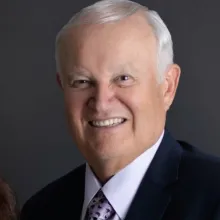
Mr. Seiglie was born in Havana, Cuba, and came to the United States when he was a child. He found out about the Church when he was 17 from a Church member in high school. He went to Ambassador College in Big Sandy, Texas, and in Pasadena, California, graduating with degrees in theology and Spanish. He serves as the pastor of the Garden Grove, CA UCG congregation and serves in the Spanish speaking areas of South America. He also writes for the Beyond Today magazine and currently serves on the UCG Council of Elders. He and his wife, Caty, have four grown daughters, and grandchildren.

