
Roy Holladay
This transcript was generated by AI and may contain errors. It is provided to assist those who may not be able to listen to the message.
What if this was your last feast season to observe the Feast of Tabernacles, around 12,000-14,000. I know we had 14,000 once in Mount Pocono, and we've had 10-12,000 in St. Petersburg. And so there have been some larger feast sites that we've observed and used over the years. But they provide a wonderful opportunity to be able to get together, make friends, renew acquaintances, see people you haven't seen in a year. Tremendous opportunity for our young people to be able to get together and see other young people and have activities. Many here have been able to travel around the world to observe the Feast. Just to see how many of you here have observed the Feast outside of the United States? Could I see your hands? Look at all the people who have been able to travel. How many of you have done that more than once? So you see, many have taken advantage of that and had that opportunity. Not only that, but within the United States, we've had all kinds of feast sites. How many of you here have transferred to another feast site in the United States, other than your assigned feast site at one time or another? Could we see your hands? Well, again, a goodly number.
I did something a while back, I think a year or so ago, that after a while you began to get a little confused. You keep the Feast almost 50 years, and you begin to wonder, where did I keep the Feast this year? I went back and reconstructed all of that. Not only did I reconstruct where Norm and I went to the Feast, in fact, she went to the Feast, I think it was seven years before I did, beginning in 1953. Maybe that's five years before I did, six, something like that. I was never good at math. But I went back and reconstructed every sermon I gave at every one of those feasts to be able to see what I'd given. Now, that was a little more difficult, because I had to go back through some of my old notebooks, feast holders, pull out sermons, try to see when I gave a particular sermon, and I was able to do it. Now I've got it up to date, and I already have 2010 done. So you can keep up with it in that way. I know that none of us want this to be our last feast, but none of us know between this year and next year whether this is the last feast we'll be able to attend. We just don't know what life holds for us between now and then. However, there's coming a time in the future when this could become a distinct possibility for all of us that we will not have the blessings to travel, the blessing to be able to get together in a larger group as we have been doing. I want you to notice what has occurred in history, especially in the past. Let's go back to the book of Revelation. Revelation 12. Revelation 12 gives the history of the Church. Beginning here in verse 1, I'll just read a little of this so that we have the context and put it in its setting. Revelation 12, verse 1, it says, Now a great sign appeared in heaven, a woman clothed with the sun, the moon under her feet, and on her head a garland of twelve stars, a picture of ancient Israel. Then being with child she cried out in labor, and paying to give birth. And another sign appeared in heaven, Behold, a great, fiery red dragon, having seven heads, ten horns, and seven diadems on his head. His tail drew a third of the stars of heaven, through them to the earth, and the dragon stood before the woman, the woman being a type of the Old Testament church, stood before the woman who was ready to give birth, to devour her child as soon as it was born. Of course, that was Jesus Christ. You remember Herod, sent and had all the children in the Bethlehem area to an under-male children killed.
It says, She bore a male child who was to rule all nations, with a rod of iron, her child was called up to God, and he was thrown. So Christ, being resurrected and called up to the throne of God. Then the woman, the church, fled into the wilderness, where she had a place prepared by God, that they should feed her there one thousand two hundred and sixty days. So that one thousand two hundred and sixty days, a day many of us realize stands for a year in prophecy. There was a period of twelve hundred and sixty days during what we would call the Middle Ages, the Dark Ages, that the church had to flee for protection. And basically, we're looking at a period of time from around 554 A.D. down to about 1812, in that period of time. The church was persecuted, and you find that the church will be persecuted again at the end time. History tells us that during this period of time, the church was scattered, the church was small, there were times when the church would grow larger, would be persecuted. It was also during this period of time, what we would call the Middle Ages, for the development and consolidation of the power of the Catholic Church, that it developed. There was a development during this period of time, a church-state combination. The Pope crowning many of the heads of state in Europe, and occasionally a king setting up a pope in Nevada. Those who kept the Seventh-Day Sabbath and the Holy Days were persecuted. Let's go over to verse 7, because we find that yet in the future, facing us, the church is going to be faced with a very similar thing of this, and then gets into prophecy, yet to happen. It says, War broke out in heaven, and Michael and his angels fought with the dragon, and the dragon and his angels fought. But they did not prevail, nor was a place found for them in heaven any longer, and the great dragon was cast out. That serpent of old, called the devil and Satan, Satan, who deceived the whole world, he was cast to the earth, and his angels were cast out with him. So Satan is going to rise up once more in rebellion against God. God is going to take him, throw him back down to this earth at that time, and when he comes down, he will persecute the church. Verse 12, Therefore rejoice, O heavens, and you who dwell in them, but woe to the inhabitants of the earth and the sea. For the devil has come down to you having great wrath, because he knows he has but a short time. He knows a lot of these prophecies. He knows what the Bible says, and so consequently, we find he will come down with great wrath. Now, when the dragon saw that he had been cast to the earth, he persecuted the woman who gave birth to the male child. So at the end time, Satan, the devil, will once again persecute the church, and he will persecute it in a serious way. This could take many forms. It could be political persecution. It could be religious persecution.
But verse 14 shows that that persecution gets so severe that God will have to protect his church. And verses 14, 15, 16, 17 shows how God will take his church to a place of safety. Now, at the end time also, we find that the church, just like the rest of the nation, is probably going to be impacted greatly by the economic woes. For the last two or three years, we know that the economy of the world has almost come to a collapse. We are living in an age where we're running anywhere between $1.3 trillion and $2 trillion worth of debt by the national government. If you did that, if you earned $50,000 and spent $75,000 every year, $50,000 spent $75,000, guess what would happen to you? You would eventually go bankrupt. And that's exactly what will happen to our government if we don't get on top of it. What if the economy of this nation continues to spiral down? What if gas goes up again to $4 and $5 a gallon of gas?
None of us know exactly what the future is going to hold economically in that way. I believe a lot of that depends on what God still wants us to do as a church. If God wants us to continue to reach this world, to proclaim the gospel, the economy will stabilize at least for a period of time. If not, we will see it continuing down.
None of us should never take the Feast of Tabernacles and these holy days for granted. Brethren, they're one of the greatest gifts, one of the greatest blessings, and one of the greatest blessings that God Almighty extends to us. And how we prepare for these days, how we observe them, tells God a lot about us, who we are, what our attitude is, and how we approach Him, and what He requires of us. Because, you see, we must continue to be faithful in saving our second tie, and using it for the intended purpose that God said to use it, in spite of the financial difficulties we go through.
We must be faithful by putting God first, by taking time off to observe these days. It would be easy to say, times are tough, I can't go, I'm going to work. I've noticed over the years that as we go along, it just seems like we keep sliding into what I would call a compromising position. That many make excuses for not attending the feast, or not being quite capable of doing so. Instead of taking the other approach, which is, I'm going to do everything I can possibly do to keep the feast. And sometimes we'll use any excuse not to go to the feast.
If you have a problem with going to the feast, or have a doubt, or wonder if you should or should not, you should just make that decision on your own. You need to counsel about it. You need to think about it. You need to consider all of the aspects of it. While we're still being blessed with health, with monies, with the freedom, to keep these days, we should take advantage of the opportunities that God has given to us, because those opportunities may not be there forever. You and I are in the process of preparing for the future.
If you want a title for this sermon, it is Preparing for the Future. You and I need to be getting ready for the future job, the future calling that God has extended to us. Our future jobs, our future responsibilities hinge on it, because God is in the process of preparing the bride. And the Bible says that the bride is going to make herself ready, and so we are in preparation. Now is a time of training for all of us.
We are being trained. Now is the opportunity to learn how to serve, how to give, how to submit, how to help one another. In what way are you and I preparing for the future? How are we preparing? How are we getting ready? Well, let's go back to the book of Daniel. The book of Daniel, chapter 7, will begin here in Daniel in verse 18. Daniel chapter 7 will begin in verse 18.
Notice, there's coming a time in the future that this describes when Jesus Christ will return to this earth. And we read that the saints of the Most High shall receive the kingdom and possess the kingdom forever, even forever and ever. Jesus Christ is going to come back to this earth.
He's going to put down all governments. He's going to set up His kingdom, and He's going to turn responsibility in that kingdom over to the saints to rule. Verse 22.
It says, until the ancient of days came and judgment was made in favor of the saints of the Most High, and the time for the saints to possess the kingdom. And so the saints will possess and rule. And then in verse 27, and the kingdom and the dominion and the greatness of the kingdom, under the whole heaven shall be given to the people of the saints of the Most High.
His kingdom is an everlasting kingdom, and all dominion shall serve and obey Him.
So you find it is the saints, those who are truly converted to Christians, who are being prepared to rule in the world tomorrow, to assist Jesus Christ in ruling on this earth. What is going to be one of the main requirements of a ruler? If you and I are going to be given positions of responsibilities, jobs, duties, ruling over nations, cities, what attitude, what requirement must we possess? Well, turn back to Matthew chapter 20 in the New Testament, Matthew 20 and verse 25. And we find Jesus Christ here articulating and explaining in detail to His disciples, because they had difficulty understanding this. He had to explain it to them at least on three different occasions.
Notice what God is looking for and how He is developing us, what He's inculcating into our character. Jesus called them to Himself and said, well, you know that the rulers of the Gentiles lord it over them and those who are great exercise authority over them. So He's describing the way the rulers are today. I'm in charge. You do what I say. If you don't, you've had it. And so, you know, they lord it over people. Yet it shall not be so among you, but whoever desires to be great among you, let Him be your servant. And whoever desires to be first among you, let Him be your slave. Just as the Son of Man did not come to be served, but to serve and to give His life a ransom for many. So we find the basis of rulership. And this is the basis that God the Father exercises and Jesus Christ exercises, and the UNI must also exercise. And that is to have a servant's attitude. Attitude of a servant. How do we prove to God that we will be a true servant ruler in the world tomorrow? Well, by what we do today, by our example today, that we haven't been called to be served, we have been called to serve others, to help others. What Jesus Christ talked about here goes much further than the occasional serving somebody. I think a lot of times we think, well, it's, you know, this is talking about you serve someone occasionally. No, it means that you and I become a servant. That you and I become a slave. Not just that we do deeds, but we are one. We become a servant. That is what we are. That is our approach. That is our thinking. That is how we look at things. Just like a slave or a servant who is there to wait on his master to help. So we must become. This is our attitude. Obviously, when we go to the Feast of Tabernacles, we have the wonderful opportunity to volunteer each year. We always hear we need volunteers to serve. Well, we should be the first in line. We should step up, serve, volunteer, help, look for the opportunity to serve. This is the basis of rulership in the world tomorrow. Once we become the king and the priest in the world tomorrow, we're not going to sit on thrones and say, okay, you come up here, fall down, worship me. No, we're going to be out serving people. We're going to show them how to live. We're going to teach them we will be their servants. In Revelation 5, we get a glimpse of the throne room in heaven. We find the four living creatures, the 24 elders falling down before God.
In chapter 5 here, beginning in verse 9, you find they have each one of them golden bowls. Those bowls are filled with incense. These incense are the prayers of the saints. They are sending these up to God. Hear the pleas, hear the cries that come from the saints. It says, they sang in you psalms, saying, verse 9, You are worthy to take the scroll, to open its seals. For you were slain, and you redeemed us to God by your blood, out of every tribe, every tongue, every people, a nation. You've made us kings and priests to our God. Or as the margin says, you've made us a kingdom of priests, and we shall reign on the earth. So we will become priests, not only kings, not only rulers, but priests.
Brother, do we understand what the job of a priest is? What? There are two main functions that a priest performs. And you and I need to think about this because one of the reasons why we go to the feast, one of the reasons why God has called us now, is to give us the advanced training, the preparation, so that we can rule. When you look at the king, queen of England, you look at the children of those who are kings and queens. Yeah, Queen Elizabeth, her children, especially Charles, have been tailored, trained, educated, prepared. They've gone to the right schools. They've received the right training. They've received the proper protocol. They've learned how to do certain things so that whenever they are supposed to take over, they know how to do it. Well, let's notice back in 2 Chronicles chapter 15. In 2 Chronicles 15, we'll begin to read in verse 1, we find what one of the main jobs of a priest truly is. Verse 1 says, Now the Spirit of God came upon Azariah, the son of O, and he went out to meet Asa and said to him, Hear me, Asa, and all Judah, Benjamin, the Lord is with you while you are with him. If you seek him, he will be found by you, but if you forsake him, he will forsake you. That principle applies across all generations. Notice verse 3, For a long time Israel had been without the true God, without a teaching priest, and without the law. For when in their troubles they turned to the Lord God of Israel and sought him, he was found by them. I want you to focus on the two words, teaching priest. One of the main jobs of the priest, and you and I will be kings and priests in the future. We're being prepared for those jobs today. One of the things is that we will be teachers. That will be one of our main functions. Now, I've had people tell me over the ages, I can't teach. I'm not a teacher. You know, you ministers get up there, you teach, but I don't know how to teach. Oh, yes, you can. If God has called you to be a priest, if God has called you to be a king, guess what? He will help us to be rulers. He will help us to be priests.
Notice, this is from Erdmann's Bible dictionary, the most apparent positive quality of a teacher would be the effective transmission without distortion of what the teacher has learned from his or her predecessors. You and I are able, without distortion, to convey to others the truth of God. Now, the Bible says, thy word is truth. John 1717. This is the truth of God. You and I are able to pass that on to others as we've been taught. In 1 Corinthians 4.17, we find this principle mentioned here. 1 Corinthians 4.17, Paul says, For this reason I have sent Timothy to you, who is my beloved and faithful Son and the Lord, who will remind you of my ways in Christ, as I teach everywhere and every church. So Paul had the confidence that Timothy would go to Corinth and that he would teach those in Corinth the right way, as Paul had been teaching it. And then in 2 Timothy 2 and verse 2, Paul writing to Timothy, The things that you have heard from me among many witnesses, commit these to faithful men, who will be able to teach others also. So brethren, we teach as we've been taught.
And basically, we teach what the Word of God says. And so all of us have that responsibility. You and I are learning God's way of life so that we can be teachers. So one of the main functions we're going to have in the world tomorrow is to be a teacher, a teaching priesthood.
When you have a city to rule over, one of your main jobs is going to be teaching others, teaching them about every aspect of life. Now we can say, well, I'm not a teacher, but yes, you are.
If you know how to pray, if you know how to study, if you've learned the principles of marriage, if you learn all of the basic principles of the feast days, we can say, well, I couldn't organize a feast of tabernacles, or I couldn't organize a holy day. Sure, you can. You know what you need. You need a hall. You need speakers. You need housing or whatever it might be. And the world tomorrow is going to be a little different because I believe the feast will be held in every area. And people won't necessarily, not that it'd be restricted, but you don't have to go half a continent away to keep the feast. You know, in your city, if you have 5,000 in that city, there'll be 5,000 keeping the feast right there in that city, and you'll have to organize that for them. Let's go back to the book of Ezekiel. Ezekiel 44, beginning in verse 23.
For those who are familiar with it, the book of Ezekiel chapter 40 through 48 describes the Millennial Temple. It describes what Jerusalem is going to be like in the millennium. It describes the division of the land among the 12 tribes. It instructs here about the Prince, David, during the millennium. And so you find the Millennial Temple, David's rule, its prince over the people, the job of the Levites and the priests, and the instructions through them.
In chapter 44, verse 23, talking here, this again is about the Levites, it says, they shall teach my people what? What will be taught in the millennium, the world tomorrow, the difference between the holy and the unholy, and cause them to discern between the unclean and the clean. So we will instruct them in the right way. Verse 24, in controversy, they shall stand as judges. So one of the jobs of a priest is to teach, a second job is to judge.
Two major responsibilities of priests teach and judge, and they shall judge according to what? My judgments, God says, and thus shall they keep my laws, my statutes, and all of my appointed meetings, and they shall hallow my Sabbaths, God says. So you find the Sabbath days being mentioned here. Now who's going to instruct the physical Levites at this time what they should teach? Well, God will, and you and I will, because we will be, in a sense, spiritually, the priesthood who will be teaching. Are we going to allow anything false or wrong to be taught in the world tomorrow? Are we going to say, oh, that's okay, you can introduce something that's totally false from what God says? Now the Bible already tells us that the Word of God, the way of God, will cover the world, what? Like the waters cover the sea. And so God is not going to allow false teaching and doctrine. The law of God, the Sabbath, is going to be taught. When you read through this section of the Scripture, you find the Holy Days are mentioned several times, and it's talking about the time in the future when Christ is on the earth. Chapter 45, just to draw your attention to two or three of these. Chapter 45, beginning in verse 17, Then it shall be the prince's part to give burnt offerings, grain offerings, drink offerings, at the feast, the new moons, the Sabbath, and at all of the appointed seasons of the house of Israel. So not just for the Jews, but for the house of Israel. Chapter 21, verse 21, talks about the Passover and the days of unleavened bread.
And verse 23 talks about the seven days of the feasts, the days of unleavened bread.
But notice verse 25. Verse 25, in the seventh month, that's a month of Tishri, according to God's calendar. On the fifteenth day of the month, at the feast, this is the Feast of Tabernacles, he shall do likewise for seven days. And so you'll find these holy days mentioned over and over again. Chapter 46, verse 9. But when the people of the land come before the Lord, on the appointed feast days. So again, you notice the feast days are mentioned.
Then in verse 11, at the festivals and the appointed feast days. So rather than you find that God mentions these feast days. Now ask yourself a question. Will God allow false teachers who do not believe in these days to teach at that time? Is God going to allow any old person to come in and begin to teach? Will God have rulers over cities and nations who do not agree with His law and His commandments? Will you find that the doctrines and teachings today, of what we might call popular Christianity, explains, or they in their teaching explain, that the Sabbath and the holy days have been done away? They believe that they're Old Testament, that they're not to be kept today, or no longer to be observed. Are those individuals going to be allowed to teach in the world tomorrow? The answer is no, not unless they become converted, have a change of heart now, and are taught. But God is not going to allow them to teach those things. Now, are you able to teach others about God's holy days, His laws, and His way of life?
I say you have, or you are. When you go to college and take a college course, how many hours do you sit in class? Anybody ever sit down and figure it out? You know, you'll take a three-hour course, four-hour course, that's three or four hours, maybe a week. Maybe you take a semester, so you can multiply three times four weeks, that's 12, maybe times four or five months. You know, you might be in class 50, 60 hours, and you've passed that particular course.
How many hours have you sat in class, spiritually speaking?
Think of all of the sermons that you have heard. In one year, I count, you listen to, if you attend all services, you listen to approximately 61 sermons. That's 10 at the feast. I counted 51 in the local church area.
So that's 61. For every decade that you've been in the church, you hear 610 sermons. Now, how many of you have attended the Church of God for four decades?
You've got to see your hands and wave those hands around. Look at all the hands being waved. That means in four decades, you have heard 2,400-plus sermons. That's 2,400 hours of teaching and training in what? In this, in the scriptures, in God's plan, in doctrine, in Christian living, how to do things. You've heard the word of God expounded over and over. Every Feast of Tabernacles, you hear the Feast explained. Every Feast of Trumpets, you hear the meaning of the day explained. And so, we've heard it. Now, we may not have perfect recall, but it's in there. These things have been engraved into our hearts and our minds.
How many hours of personal Bible study since God called you and you've been in the church, have you put in? If you have studied an hour, two, three every week, some of you have done much more than that. I know Norma and Bill's dad gets up every morning, and he reads through the Bible. He'll read three or four chapters of the book of the Bible. He's gone through the Bible, who knows, a few dozen times, reading it and rereading it and studying it. In fact, here recently, I brought him a copy of every booklet that United has published, 30-something of them, about three or four weeks he'd read all of them. He'd gone through them, and I'm sure he'll go back and reread them again. So we've all had our own personal Bible study. We've literally spent hundreds of hours searching the Scriptures, studying the Bible. How many magazines, plain truth, good news, tomorrow's world, have you studied? How many articles? How many booklets have you heard? How many broadcasts have you heard? Many of you will remember, years ago, greetings, friends around the world. You know, this is Herbert Armstrong bringing you the good news of the world tomorrow. And half hour every day, an hour every day, you know, for years you listen. You get the Beyond Today program now. We have literally been saturated with the Word of God, His way of life, and His principles. Some of it sinks in. Some of it makes an imprint within us. And so, consequently, you and I have had an opportunity that very few members of the Church of God have ever had. For much of the history of the Church, the average member never possessed a Bible. To have a book of the Bible, a chapter of the Bible, a complete Bible was almost unheard of down through the Middle Ages. Ministers of God would memorize whole books of the Bible.
There were Waldensee ministers who memorized whole Bible, or would memorize, you know, books and books of the Bible. And so, when they would go preach, they would preach from their memory the Word of God and teach it to the people. And what would the people do during the week?
They didn't have computers like you and I do. I've got a Bible program, the Logos program. I probably have 3,000 books on that program. Many of you have Bible programs. You have hundreds and hundreds of books. We've got libraries. I've got shells filled with Bible books and Bible translations. Many of you do likewise. We have an advantage that so many true servants of God have never had. They would have to go think about what they heard during the week, meditate on it, reflect on it, talk with one another, try to remember those principles, teach it to their children, and then go back next week and try to hear some more. So, brethren, God, there is a principle in the Bible to whom much is given. What does it say? Much is required. You and I have been given much, and God will require much of us. Let's go back to Leviticus chapter 23. Leviticus chapter 23.
Concerning God's feast days, it says, The Lord spoke to Moses, saying, Speak to the children of Israel and say to them, The feasts of the Lord, which you shall proclaim to be holy convocations, even these are my feasts. Then he talks about the weekly Sabbath, and then he enumerates all seven of the annual holy days of God.
The word feast here in Hebrew is mo'ad, and it means an appointment or a meeting with God.
Every time we go to the feast, this coming Thursday when we meet at the colonnades, we are meeting with God. We have an appointment with God. Just like you have a calendar, and on your calendar it says, you've got a doctor appointment on Wednesday, you've got a hair appointment on Friday, whatever it might be. On this coming Thursday, you have an appointment with God. The other place we should be, and with God. He's called us to be there and to observe his festivals. Now, God does not need the holy days. I mean, he knows all of that. Who needs them? You and I are the ones who need to be reminded of the plan of God, the purpose of God. The holy days were given by God as a constant reminder to man of God's plan, his purpose, his plan of salvation. We human beings are the ones who forget. We're the ones who sometimes overlook.
The importance of these days can begin to fade away if we're not careful.
How many people have left our fellowship over the years and stopped observing the holy days? You bump into them at a wedding, at a funeral, you know, this type of thing, and you mention the holy days coming up. Oh, yeah. But they no longer have any significance for them. They may remember the Feast of Tabernacles. Oh, yeah, I used to have a lot of fun with the Feast. But the significance of keeping the Feast of Tabernacles, why we should, they lose it. Their understanding has been taken away from that. And so, brethren, you and I go to the Feast every year, and we should never, never take for granted those feasts and realize that it's one of the platforms that God is using. It's one of the teaching tools that God uses. It's one of the tools that He has in His tool belt to teach us, to ingrain within us, to see men in our minds His way of life so that we never forget it. Go over here to chapter 14 of the book of Deuteronomy. Deuteronomy 14, beginning in verse 22.
We find that in order to observe these days, we have to save a festival tithe.
You shall truly tithe all the increase of your grain that the field produces year by year. Let's notice verse 23. And you shall eat before the Lord your God in the place where He chooses, the place His name to make His name abide, the tithe of your grain of your new wine, your oil, and the first born of your herds and your flocks. Why? Well, there's something God wants us to learn. Why does God want us to go to the feast? That you may learn.
So we're supposed to learn something to fear the Lord your God. Always.
Not part-time, but always. We're to save 10% of our net income for observing the holy days.
And notice the major reason is so that we can learn to fear God.
If you fear God, that means you have respect for God, you honor God, you'll obey Him. Notice what it says here. It says, one, save. You and I are to save our tithe in that sense. We are to attend the feast, and we should make every effort to take all from our job, school, whatever it might be to keep it. And you'll find that this is something that God expects of us. How does it show God that we fear Him?
When you fear somebody, you obey.
You do what they say. And so if we fear God, we will be faithful in saving our second tithe. If we fear God, we will attend the feast. If we fear God, we're not going to worry about our job. We're going to do what God tells us to do. Now, I want you to notice how this will translate into action and activity in the world tomorrow.
Let's jump to the future. Zachariah, book of Zachariah, chapter 14.
Zachariah, chapter 14.
We're looking into the future, and we find described here in verses 1 and 2, some future events that are going to take place. Right now, the Israelis, Arabs are sitting down trying to discuss peace. We know that that's not going to work out, even if there was a temporary accord. It's still not going to work out because the Bible says it will not. We find here in verse 1, chapter 14, Behold, the day of the Lord is coming, and your spoil will be divided in your midst. And I will gather all nations to battle against Jerusalem. The city shall be taken, the houses rivalled, the women ravished. Half the city shall go into captivity, and the remnant of the people shall not be cut off from the city. And then the Lord will go forth and fight against those nations that see fights in the day of battle. So Christ is going to come back, and He's going to come back to fight against all those nations that come up against Jerusalem. And the Bible indicates that all nations will come up against Jerusalem. And then in verse 4, In that day His feet will stand on the Mount of Olives. And you find the Mount of Olives shall split in two. And so Christ comes back, and He will stand on the Mount of Olives. And in verse 9, And the Lord shall be king over all the earth.
And in that day, excuse me, it shall be, the Lord is one, and His name one. So you find that Christ will return to the earth. He will rule over the earth, and you and I will assist Him. Now, I want you to notice, beginning in verse 16, when Jesus Christ comes to the earth, He puts down all nations. He puts down all power. He puts down all rulers, all governments, all governments. Notice what He will institute. This is going to be totally opposite to what so-called Christianity teaches, what most religions think.
Verse 16, It shall come to pass that everyone who is left of all the nations which came against Jerusalem. So the people who are left shall go from year to year to worship the Lord of Hosts and to keep the feast to tabernacles. Now, I want you to notice what it says here.
Everyone. So not part of the people, some of the people, if they decide they want to, perhaps they might, if they want to. No, it says everyone. They're going to come up to Jerusalem, not to Mecca. They're not going to go over and worship Buddha.
You're not going to go to some shrine or some quote-unquote holy place that's not a holy place.
And it says all nations. So this isn't just talking about the Jews. It's talking about all nations. It's talking about the Germans, the Africans, the Chinese, the Japanese, the Russians, the Isabaijans, you know, the Afghans, Iranians, you know, and so on. And they will all come up. And they'll come up and do what? They will worship the God of Israel. Not some other God, but the God of Israel. And they will keep the Feast of Tabernacles.
There's a lot said in verse 16 when you break it down and look at it. Now, verse 17, there'll be a few recalcitrants.
And it shall come to pass, or it shall be that whichever the families of the earth do not come up to Jerusalem to worship the King, the Lord of Hosts, on them there shall be no rain.
And if a family of Egypt will not come up and enter in, they shall have no rain, and they shall receive the plague with which the Lord strikes the nations who do not come up to keep the Feast of Tabernacles. So if they don't come up to worship God and keep the Feast of Tabernacles, guess what? No rain. And then if they don't come up to second year, God will plague them by kind of plague. Well, you may bring plagues on all their crops. You know, the rivers might dry out. You know, there could be all kinds of things that God might do. And then verse 9, this shall be the punishment of Egypt and the punishment of all the nations, not part of them, but all of the nations that do not come up to keep the Feast of Tabernacles.
So God will punish all nations alike who do not come up. Notice Egypt is singled out.
Egypt is an Islamic country today. They will have a change of religion.
They are going to come up, and they're going to keep the Feast of Tabernacles. They're going to worship the God of Israel. Not some other God, not some other prophet, but the God of Israel. And God will get their attention. And finally, all nations will come up.
The Holy Days will be a constant reminder in the millennium of what God requires. All nations will be asked to come up. All nations will be required to do that. The Feast will keep everybody in proper perspective. As the human race multiplies in the world tomorrow, obviously not every human being can come up to Jerusalem. How many millions can you get into Jerusalem? How many billions would fit there? Well, obviously they can't all come up. But representatives from all nations will come up. And maybe once in a lifetime a person will be able to come up and keep the Feast in Jerusalem.
They will get the big picture. They will realize that they must put first things first. Put God first. Seek first the kingdom of God in His righteousness. The Holy Days, as we realize, teaches the importance of Jesus Christ and His central part in the plan of salvation. And they will learn that from one Holy Day to another. And, brethren, these are the same lessons that you and I learn every year. We go up to the Feast, God requires. But you and I keep the proper perspective of what God is doing. We always have that hope, that vision in front of us. The world tomorrow is coming. And we know that that hope is not just something we hope for. When the Bible talks about hope, that doesn't just mean what we hope for. It means the Bible is said, and our hope is when it's going to take place. We know it's going to happen. So, I hope it happens. Well, it's going to happen. And so, our hope is relying upon God. And we have hope in that.
When I look at what the Bible says, I have hope in a resurrection. There will be a resurrection. There will be the return of Christ. I mean, those things are clearly explained in the Bible.
We keep the big picture. We learn to put first things first, put God first. And we're constantly reminded of Jesus Christ and His part, the plan of God. Let's go over here to Deuteronomy chapter 8.
There's one thing that God must know about every one of us sitting here. Deuteronomy 8, beginning in verse 1. This is what God told ancient Israel. And this is what God tells us today as spiritual Israel, the Israel of God. Every commandment which I command you today, verse 1, Deuteronomy 8, you must be careful to observe that you may live and multiply, go in and possess the land which the Lord swore to your fathers. And you shall remember that the Lord your God led you all the way these 40 years in the wilderness. Why? To humble you, to test you, and to know what was in your heart, whether you would keep His commandments or not. So He humbled you and allowed you to hunger and fed you with manna, which you did not know, nor did your fathers know, that He might make you know that man does not live by bread alone, but by every word that proceeds from the mouth of the Lord. What is it that God is looking for? God must know our hearts. God has to know before He puts us, places us, in those responsibilities that our heart is right, that He comes first, His way comes first, and the Holy Days is one way that God knows that. There are ways that God will test us. As it says, He led Israel 40 years. 40 is a sign of testing and trying. He humbled them. They went through a lot of things that humbled them. He had to come to know them, to know their heart. What God is in the process of doing, brethren, is knowing our heart, knowing our attitude, knowing our minds. So the Holy Days are one way that God knows that. He sees if we are willing to put Him first. He sees if we have the proper perspective.
So, brethren, it's extremely important that we obey God in these areas.
So while we still have the opportunity, which we do today, we need to take advantage of the opportunity to assemble together, again, if our health and all permits. We need to do it, and we're able to do it collectively as a church. Because the time may come here in the future that we're no longer able to do it, that we no longer have that opportunity. You and I are being prepared today for our future opportunities, future service. That's what this is all about, the spiritual preparation. So therefore, don't let your crown and opportunity slip through your hands.
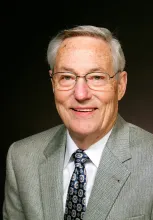
At the time of his retirement in 2016, Roy Holladay was serving the Operation Manager for Ministerial and Member Services of the United Church of God. Mr. and Mrs. Holladay have served in Pittsburgh, Akron, Toledo, Wheeling, Charleston, Uniontown, San Antonio, Austin, Corpus Christi, Uvalde, the Rio Grand Valley, Richmond, Norfolk, Arlington, Hinsdale, Chicago North, St. Petersburg, New Port Richey, Fort Myers, Miami, West Palm Beach, Big Sandy, Texarkana, Chattanooga and Rome congregations.
Roy Holladay was instrumental in the founding of the United Church of God, serving on the transitional board and later on the Council of Elders for nine years (acting as chairman for four-plus years). Mr. Holladay was the United Church of God president for three years (May 2002-July 2005). Over the years he was an instructor at Ambassador Bible College and was a festival coordinator for nine years.
