
Paul Moody
This transcript was generated by AI and may contain errors. It is provided to assist those who may not be able to listen to the message.
The Bible talks a lot about conversion. What does the Bible mean when it says that we are to be converted? We're told to repent and be converted. In the past, I can remember on a number of occasions, Mr. Armstrong wondering if half the church were converted. And of course, we've lived to see that perhaps what he said is true and maybe even less when you look at the numbers who have remained faithful. How do you know that you are converted? How do you know that you have God's Spirit? How can you tell? Today, we want to take a look at Jesus Christ's example, His attitude, His approach, because they display what a converted person should be like. If we know that, if we know what Christ's example is like, we can apply those same principles to ourselves, because He's the perfect example. The new man, the Christian life, must be built on the right foundation. Otherwise, it will not endure.
And as the Bible says, no other foundation can anyone lay than Jesus Christ, so we have to build on Him. Do you know that you have God's Spirit? And if not yet, how do you obtain it? Now, why is all of this important? Why would we want to talk about this topic? Well, what you find is that God wants to share His level of existence with us. In composition, God wants us to be on His level. In character, God wants us to have His character. He wants to share eternity with us. He wants to share His nature, His approach, His way of life with us. And so, the high calling of God leads in that direction. And as the Holy Days, especially the spring Holy Days approach, the Passover and the Days of Unleavened Bread, we're constantly reminded every year of how that plan unfolds, of how God has made it possible for us to have eternal life and to be able to exist eventually on His very level. As we will see today, repentance is a major key to all of these questions. Repentance is a process through which God is creating Himself in us.
Let's go to 1 Corinthians 11. 1 Corinthians 11 and verse 27. 1 Corinthians 11 and verse 27. We have the Passover mentioned here. Notice the instructions that the Apostle Paul gives to the church in Corinth.
The word unworthy means unfit manner.
It has to do with the manner of partaking of the Passover.
Now, let's back up to verse 17 because beginning here in verse 17, you find how they were doing it in an unfit manner, in a way that was not appropriate.
In verse 17, Paul writes now, In giving these instructions, I do not praise you, since you come together not for the better, but for the worse. Now, when the church assembles together, we don't want God looking down and saying, You're worse off forgetting together than being better off. We hope on the Sabbath, the Holy Days Passover, specifically referring here to the Passover, that they were worse off than better. For first of all, when you come together as a church, I hear there are divisions among you. In part, I believe it. For there must also be factions among you that those who are approved may be recognized among you.
Therefore, when you come together in one place, it is not to eat the Lord's supper. For in eating, everyone takes his own supper ahead of others. One is hungry and another is drunk. Now, if you can imagine getting together and getting drunk before the Passover, and some having a tremendous amount of food to eat, and others having very little, then you can see some of the problems that they were having. He says, What do you not have houses to eat and drink in? Or do you despise the church of God and shame those who have nothing?
What shall I say to you? Shall I praise you in this? I do not praise you. So he said, Look, you have homes. You can eat at home. And here they were coming together. Some had a lot. Some had nothing. For I received from the Lord that which also I delivered to you, that the Lord Jesus on the same night in which he was betrayed took bread. And when he had given thanks, he broke it and said, Take, eat. This is my body which is broken for you. Do this in remembrance of me. So the bread that we eat symbolizes his broken body. In the same manner, also he took the cup after supper, saying, The cup is the new covenant in my blood.
This do as often as you drink. In remembrance of me. For as often as you eat this bread and drink this cup, you proclaim the Lord's death till he comes. So when we partake of those symbols of the Passover, we are proclaiming Christ's death, his sacrifice, what he did for us.
Now, as Vines' expository dictionary of the Old New Testament says about this section, concerning unfit manner, they were treating it, talking about the Passover, as a common meal, the bread and the cup as common things, not apprehending the solemnity of what they were doing. They had forgotten what God was trying to teach them. So notice going on in verse 28, the Apostle Paul then had to instruct them, show them, explain to them how to do it in the right way. Verse 28, he says, Let a man examine himself, and so let him eat the bread and drink of the cup.
So we're told, especially leading up to the Passover, that we are to examine ourselves. And notice, it does not say, examine yourself, feel so guilty, so worthless, that you can't take the Passover. That's the way some people have read it. He says, examine yourself and then take the symbols.
The word examine here is a Greek word that means to test, to examine, to prove, to scrutinize, to see whether something is genuine or not. So, brethren, God wants to know, are you and I the genuine article? If I had a... Well, I won't use a ring because I don't wear diamonds, but if I had a real expensive watch, which this one is not, and I were to tell you that this is a genuine whatever, you know, worth $5,000, and it's not, it was just a knockoff or something that's, you know, an imitation, well, that's what God is looking at.
He looks down at us and He wants to see, are we genuine Christians? Are we genuine in our attitude, our approach to Him? He wants to know that our belief is genuine, that we are the real thing. So the question we want to ask ourselves, are we the real thing? Are we truly a Christian? Do we live as Christians should?
Well, this is what the Word is talking about. We examine ourselves. We scrutinize ourselves. Now in verse 29, For he who eats and drinks in an unworthy manner, unfit manner, in a way that is not prescribed by the Scriptures, eats and drinks judgment to himself, not discerning the Lord's body. So we are to discern that body. We are to discern what Christ did for us. And when we come and we eat of that bread, we drink of that wine, we are to be reminded of what Christ did.
The suffering, the beating, the scourging that He went through, and then finally the crucifixion, the shedding of His blood for the forgiveness of our sins.
Now because many did not do it properly and did not discern the Lord's body, He says for this reason many are weak and sick among you, and many sleep, or many of them die because they hadn't been healed. Then in verse 31, He said, If we would judge ourselves, we would not be judged.
The word for discerning here and the word for judge are the same in the Greek language. In verse 29 and 31.
The word judge here is decrynel, or means to through judge, means to separate, make a distinction. So you and I are to judge ourselves.
When you study the Bible, from this good to study it and study prophecy, study history, we can get excited about all kinds of things, but when it comes to the Scriptures, they were written for what reason?
They were written as a guide to give us direction, to show us how to live. Consequently, as we study it, we read over a Scripture and it says, This is an attitude you should have, or this is an approach, or don't do this. You and I need to always stop and ask ourselves, Am I doing what God says? Am I following the instructions here? We need to be judging ourselves.
So He says, Judge yourselves.
Now, we're very good at judging others, right?
We can all judge others. We can all see faults with other people, but we have difficulty judging ourselves. So if we judge ourselves, we would not be judged. So if we can judge ourselves, then God doesn't have to come back and judge us. He doesn't have to come back and take a look at us, because we're already doing it. But when we are judged, in other words, when God has to judge us, we are chastened by the Lord that we may not be condemned with the world. If we do not discern ourselves, judge ourselves, look at ourselves, God will have to bring trials and tests upon us to determine how we should go and to get our attention.
Now let's notice in 2 Corinthians 13. Let's go over to 2 Corinthians 13, beginning in verse 1. You find the church in Corinth had a problem. Paul was the apostle. He was there dealing with his church. And yet they judged him constantly. You can't read through 1 Corinthians 2 without seeing their criticism of Paul. He was constantly defending himself against their accusations. And he brings that out here. Verse 1, This will be the third time I am coming to you. By the mouth of two or three witnesses, every word will be established. Now he told them he was coming and he didn't come. So they said, well, he's a liar. He says he's coming, he doesn't come, doesn't keep his word, can't trust Paul. Yet circumstances prevented him from coming. I've told you before and foretells as if I were present the second time, and now being absent I write to those who have sinned before and to all the rest, that if I come again, I will not spare. Since you seek a proof of Christ speaking in me, who is not weak toward you but mighty in you, for though he was crucified in weakness, yet he lives by the power of God. Christ was resurrected, glorified, and is all-powerful now. So he says he lives by the power of God, for we also are weak in him, but we live with him by the power of God toward you. Examine yourselves, Paul says.
Implicit in this, he's saying, stop examining me and start examining yourselves. As to notice, there are three things mentioned here. You examine yourselves, you test yourselves, you know yourselves. So he emphasizes these three. So why should you examine yourself? Notice. Examine yourself as to whether you are in the faith. Are we in the faith? Are we truly converted? The word examined here is parazzo, meaning to test, to try, to prove. Are we truly following the faith?
And then he goes on to say here, test yourselves. I think the King James Version says prove yourselves. And that means to put to the test for the purpose of approving and finding the thing, test meets the specifications laid down, to put one's approval on it. So are we approved before God? So he says test yourselves, approve yourselves. Again, going back, are we the genuine article? And then we are to know, know yourselves. Now what are we to know? That Jesus Christ is in you. So when you read this verse, this is a very weighty verse. The word know means to be thoroughly acquainted with, to know accurately. So we need to know that Jesus Christ is in us, that He is living in us. That means that we have the Holy Spirit, that we know that we have that Holy Spirit dwelling in us. For He goes on to say, unless, indeed, you are disqualified. The word disqualified means not standing the test or approved. So if we are disqualified, we don't stand the test. We fail the test, and we don't meet up to the standards that God has for us. So, brethren, you and I, as these Scriptures very clearly bring out, need to look at ourselves, examine ourselves, and as the Passover season is coming, this is the time of the year especially. We know that we look at ourselves all year long, but especially as we approach the Passover, the Days of Unleavened Bread, the emphasis is put on Christ's sacrifice and are getting ready to partake of that sacrifice. Now, in Romans 12, beginning in verse 1, Romans 12, verse 1, we find a very interesting Scripture here that talks about conversion and that any change that takes place in our life must begin on the inside, within, and work out. Change must be within. Romans 12, verse 1, I beseech you therefore, brethren, by the mercies of God, that you present your bodies a living sacrifice. Now, what is a sacrifice? Well, an animal was sacrificed when it was killed, but you and I are to be a living sacrifice. How are we killed? And when are we killed? Well, Romans 6, chapter, shows a baptism. The old man dies, does he not? He's buried. He rises up out of the water. And we then live a new life. The Bible describes it as the old man, the new man, the old creature, the new creature. There is a new life. And so we have given up our ways. We've given up our approach. And if we're truly converted, we're going God's way.
So we have to die, which we do at baptism, but we're alive also now. We have Christ living in us. So we're to present our bodies as a living sacrifice, holy, acceptable to God, which is your reasonable service. Now, notice how Wes translates this. I therefore beg you, please, brethren, through the mercies of God, by a once-for-all presentation, to place your bodies at the disposal of God, a sacrifice, a living one, a holy one, a well-pleasing one, your rational, sacred service.
So you and I are to be holy, well-pleasing before God. We are to be at God's disposal. We're no longer just here for our own sakes. We're here because God has called us for a purpose and a reason. And God works through His Church. He works through us today. Now, in verse 2, we read, Do not be conformed to this world, but be transformed by the renewing of your mind, that you may prove what is the good and acceptable and perfect will of God.
So you and I are to be conformed, not to be conformed to this world. The word not there is very important. The word conformed, according to West's word study, is this. It is an act of an individual assuming an outward expression that does not come from within him, nor is it representative of his inner heart life. So you and I start out as a Christian, and our actions, how we live, our example, what we say, what we think, all of this should arise by the motivation of God's Spirit within us, a change that has taken place inside.
And the word here to conform means if a person conforms, it's not something that comes from within. He's just conforming. He's going along with. And it's not a part of his character. And so you find that he says we're not to conform to this world. He goes on to say, stop assuming an outward expression which is patterned after this world, an expression which does not come from within, nor is it representative of what your inner being as a child of God is.
One can translate this, stop masquerading in the garments of this world. Its mannerism, speech, expression, style, and habits. And so what Paul is saying here is that you and I are no longer to conform to this world, to its standards, its way of life. We are not to pattern our life after this world. What do we pattern? Whom do we pattern our life after? Jesus Christ, do we not?
Didn't the Apostle Paul say, follow me as I follow Christ? You and I are to follow Jesus Christ, His example. Our actions must flow from within, and they have to flow out of a right heart, a right spirit, a right mind. Notice in verse 2, Do not be conformed to this world, again, but be transformed by the renewing of your mind.
The word transformed here is the word metamorphi, from which we get a metamorphosis, which speaks of the act of a person changing his outward expression from that which he has to a different one, an expression which comes from within the individual. So you and I are to be transformed by the renewing of your mind. So, brethren, our minds are to be renewed. Our change is from inside out.
Now, if we're changing in the heart and the mind, guess what? It will be reflected in our outward expression, our habits, what we do, our way of life. Conversion starts on the inside of a person, not on the outside. It starts in the heart and the mind. It is more than a few physical changes. Change of mind, attitude, direction, approach, and interest is what conversion is all about. As it says here, renewing of your mind, Thayer says the word renewal, means a renovation, a complete change for the better.
Have you ever renovated a room in your house? My wife and I once bought an old house, and we renovated that house from one end to the other. We placed all the ceilings, recarpeted everything in the house, put bay windows in, you knocked walls out, anything you think of, we did. After we did that, we said we'd never do it again. That was something that we learned our lesson on. But what this is talking about, renewal, means a complete change, a renovation. You and I are to have a renovation of the mind, of the heart, of the way we think.
In one sense, our mind, the way it was, is like an old kitchen or an old bathroom in a house. It's totally out of date. You come in, you gut it, throw everything out, you put all the new in, and now you've got a brand new kitchen or a brand new bathroom. It's been totally renovated.
When it comes to conversion, God renovates us, our minds, our hearts, our approach, and we are different. There is a drastic change that takes place within a truly converted person.
Now contrast this with 2 Corinthians 11 and verse 13. 2 Corinthians 11 and verse 13.
Notice the word transforming here, but notice how it's used in the wrong way.
For such are false apostles, deceitful workers, transforming themselves into the apostles of Christ. No wonder for Satan himself transforms himself into an angel of light. Now, are false apostles true apostles? The answer is no. Are they righteous? No. Is Satan an angel of light? Again, the answer is no. But he pumps himself off as an angel of light. People see him, and they think, well, he's an angel of light. Or his ways are right when the customs and teachings and beliefs that he espouses are totally opposite to what the Bible says. They're deceived. Therefore, it's no great thing if his ministers also transform themselves into ministers of righteousness, whose end will be according to their works. So here's an example of someone whose outwardly changes gives the impression to people, but the change is not expressed within. False ministers are not true ministers. False teachers are not righteous. Satan is not an angel of light. They can give the appearance. The outward appearance appears that way, but it's not going on in the heart, in the mind. And rather than the same thing can happen to us. You and I can give the outward appearance. We can talk the talk, but we've got to walk the walk. We've got to live the right way of life. We know that the word repent means to change, to be sorry, to have remorse over the way that we've lived in the past, for what we've done wrong, to be able to change. Even the world recognizes that conversion means to change. People change all the time. They can change their appearance. They can have surgery. They can change their nose. They can change their cheekbones. They can change all kinds of things about their body. People change their dress, styles. People change, and they go on a diet, and they lose weight, or they gain weight, whatever it might be. They change. But you have to change for the right reason, for the right purpose. So, people sometimes measure conversion simply by change, when the change is not the change in the way God says to change. We can change many times, but it's not according to God's standard, God's way of life. It's not a change from within out. It's just an outward show. Other people measure conversion by good works. They learn the truth, and they get involved. They can build orphanages. They can help the poor. They can pass out food and collect cigarette butts along the highways, pick up trash, whatever it might be. And I'm not saying those things aren't good to do. But that's not the measure of conversion. True conversion starts within. Much of what man has invented as Christian conduct is primarily visible, external, something that people can see. And therefore, they pat themselves on the back, and they say, What a good boy I am! And they go on thinking that they're doing right. When the heart, the attitude, doesn't change. That's where it has to start. Conversion is not an outward show to impress or to gain stature.
Vine's dictionary of the New Testament translates the word conversion as to turn about and turn toward. Now notice, two definitions. Turn about, you're going this way, you turn, and you go toward a different direction. Let's notice in Matthew chapter 23, we have a perfect example of what we're talking about here. Jesus Christ talking to the Pharisees. Verse 25, Matthew 23, What do you scribes, Pharisees, hypocrites, for you cleanse the outside of the cup and the dish. Yeah, everything looks good outside, but inside they're full of extortions and self-indulgences. Give in to your lusts, give in to the self-indulgences. Blind Pharisees first cleanse the inside of the cup and the dish, that the outside of them may be clean also. This is what I've been talking about. Start inside. It works out. What do you scribes and Pharisees, hypocrites, for you are like whitewashing tombs, which indeed appear outwardly beautiful, and inside are full of dead men's bones and all unclean. Even so, you are outwardly righteous to men. They see your good works. They go around tooting their horns when they did good works. They would fast, you know, all of these things. But inside, you are full of hypocracies and lawlessness. So we see the conversion implies more than outward looks and service. We are to be completely conquered by God, to have a conquered attitude, a submissive attitude, an obedient attitude, a yes-sir attitude. It involves a turning from and an turning to. What do we turn from and what do we turn to? Well, we turn from—I should have written down Jacob's list—but we turn from sin, Satan, society, the world's religions, our own ideas, our own thoughts, our ways of doing things, the politics of this world, the standards of this world, the customs of this world. You and I have to turn from those. So there has to be an inward change to be truly converted. And if we find in ourselves that we are hostile, we resent correction, we resent authority, then you need to wonder, you know, am I really converted or violet down? Where am I? See, when you look at yourself, one of the things to measure conversion by, you ask yourself, am I willing to be corrected? Do I accept authority? Are we argumentic? You see, Lucifer cannot say yes to God and no to himself. He said yes to himself and no to God. Well, you and I can't be that way. Then it says we turn away from, we have to turn to. What we turn to is God's way, his law, his customs, his days, his practices. We have to have 180 degree change and go in the opposite direction. So I mentioned to begin with, Jesus Christ is a living example of what conversion is all about. I could have given this sermon today and just gone through one of the Gospels, quoting dozens of Scriptures about Christ. Actually, before the Passover, it's always good to go back and read one of the Gospels. Read Christ's life, read up to the Passover and the events that took place during that last Passover. Let's go over here to Luke 22, verse 42. Let's notice Christ's example. We know that he was converted, and let's see what he did. We could begin, actually, pick it up in verse 41.
He was withdrawn from them about a stone's throw, and he knelt down and prayed, saying, Father, if it is your will, take this cup away from me. Nevertheless, not my will, but yours, be done.
Jesus Christ's life revolved around doing God's will, not his own. So you and I, brethren, must make it our life-long search, desire to look in here to find out, what does God say I should be doing in this case?
So you have the Scriptures here clearly, and they lay out how God wants us to live. Now, you find here that he said that God's will be done, not his will. That was the keynote of Christ's life. In John 4, going over here just a few chapters, John 4, verse 34, Christ made this statement here. Jesus said, My food is to do the will of him who sent me. So again, he emphasized the will of the Father, not his own will, and to finish his work. His heart was in doing the work that God had given him to do.
And brethren, one of the reasons why God has called us today is not only to prepare us for rulership in the kingdom of God, but also that we would be able to finish his work that he's given us to do. We happen to live at the end of the age, and God has given us a work, a job, responsibilities to do. And so we are to finish that work. In chapter 5, verse 19, Jesus answered and said to them, most assuredly, I say to you, The Son can do nothing of himself. For what he sees the Father do, for whatever he does, the Son also does in like manner. So Jesus Christ sought God's will continually. Whatever the Father did, that's what Christ did.
And we should be able to say whatever Christ does or did, we should do. Because Christ, you remember, told Thomas, if you've seen me, you have seen the Father. And so we have Christ's example, which is the example of the Father who was living in him. Verse 30, same chapter, I can do of myself, I can of myself do nothing.
As I hear, I judge, and my judgment is righteous because I do not seek my own will, but the will of the Father who sent me. So again, the key note, he sought God's will. Chapter 6, verse 38, For I have come down from heaven, not to do my own will, but the will of him who sent me. So, brethren, again, we find that he came to do God's will. Doing the will of God from the heart above our own personal desires or interests is the real test of conversion. We do what God says above even what we might want. There are two kinds of wills. I'm not talking about one you fill out when you die. I'm talking about the human will. There are two kinds of wills, God's will, versus human self-will. Self-will takes a peculiar form. Self-will is manifested through selfishness, greed, contempt for law, government, authority, and rebellion. That's self-will. You can look around in society and judge for yourself what most people are following. Jeremiah 17.9, you might remember, says, The heart is deceitful above all things, and desperately wicked, who can know it. The word deceitful in Hebrew means simply that. Insidious, sly, deceitful.
So man, at his best, is false, sneaky, hypocritical. The heart of man is deceitful above all things, and desperately wicked. Notice the new American Standard Translation of this verse. The heart is more deceitful than all else, and is desperately sick. Who can understand it?
Well, God has called us to understand, to know ourselves. Sometimes people say, well, they're going off to find themselves, and we make fun of it. But, brethren, we are to know ourselves. We are to know our hearts. We are to know who we are and our attitudes. In Luke 14, verse 26, all of us, when God called us to His church, had to read Luke 14, verse 26, and truly make this type of commitment to God.
Beginning here in verse 26, If anyone comes to Me, anyone comes and wants to be a Christian, and does not hate his father and mother, that means love them less than you love God, to love less in comparison to God, his father and mother, his wife and children, his brothers and sisters, yes, his own life also, he cannot be My disciple. I want you to notice the cannot's through these verses. You cannot be a disciple of Christ unless you put Him first.
He comes first above all. He lists here everything that we dearly love and we hold dear. Then whoever does not bear his cross and come after Me cannot be My disciple. Your cross might be any burden, trial, test, that God allows you to go through, that you've got to show God that you put Him first. For which of you intending to build a tower does not sit down first and count the cost, whether he has sufficient to finish it, lest after he laid the foundation he is not able to finish all who see it begin to mock Him, saying, well, this man began to build, he was not able to finish, or what king going to make war against another king does not sit down first and consider whether he is able with ten thousand to meet him who comes against him with twenty. Or else, while the other is still a great way off, he sends a delegation and asks conditions of peace. Rather than you and I have to make a commitment to God, have to count the cost, we've got to put Him first. We have to be willing to become converted to surrender our lives to Him. As verse 33 says, So likewise, whoever of you who does not forsake all that he has, cannot be my disciple. Three cannot's through there. So He's very plain. We cannot be a disciple unless we are willing to forsake everything.
So, brethren, are we willing to forsake everything? Now, God doesn't make us give up everything in the sense of you still have a house to live in, you also have to still have jobs, we've got food on our table, that type of thing. But if it comes down to it, we've got to be willing to do that, to be able to obey God. In 2 Corinthians 7, beginning in verse 9, 2 Corinthians 7, and verse 9, let's take a look at what is real repentance.
What is real repentance? In verse 9, and I'm in 1 Corinthians, it doesn't read the same. It says, Now I rejoice, not that you were made sorry, but that your sorrow led to repentance. So there is a certain amount of sorrow connected with repenting, but it is of itself not repentance, it leads to repentance. For you were made sorry in a godly manner, that you might suffer loss from us in nothing.
There is a godly sorrow, and there is the sorrow of this world, and they differ from one another. In verse 10, For godly sorrow produces repentance that leads a person to salvation. And then he goes on to say, For godly sorrow produces repentance leading to salvation, not to be recreated, but the sorrow of the world produces death. People in the world are sorry. They have a car wreck, they're sorry it happened. They got drunk and thrown in jail. They wake up the next morning, they're sorry, they got caught. Sorrow of the world is basically where you're sorry for yourself, you're sorry you got caught.
It is not a true change. Real repentance is a change of mind. A true conversion is a change of mind. And we realize that we have truly been wrong, and it leads to salvation. You see, repentance puts you on the right path, the right direction. As Jacob said, you're no longer lost. You're being directed. In God's GPS, His Holy Spirit says, turn here, go there, you go in this direction, and God directs you in the right way.
True conversion and repentance is a total surrender to God. We stop fighting God. We stop wanting our own will. We admit that we don't know the right way, and only God does. We recognize God's rule in our lives. We're willing to submit to His authority. We are completely conquered. And so we submit to Him. There are certain signs of true conversion. Let me just give you three. You could probably enumerate dozens of these. Number one, keeping God's law consistently versus our own wants.
We have wants and desires, but we consistently keep God's law. Romans 6, verse 16, enumerates this principle. Romans 6, 16, we read, Do you not know that to whom you present yourselves slaves to obey, you are the one slaves whom you obey, whether of sin leading to death or of obedience leading to righteousness? But God be thanked that though you were slaves of sin, yet you obeyed from the heart that form of doctrine or teaching to which you were delivered.
And having been set free from sin, you became slaves of righteousness. So we've been released from sin's captivity. In the past, before God called us, it's like we were handcuffed, ball and chain. We weren't able to do anything. We thought we were free at that time, but we were slaves to sin. When Christ comes along, we repent, we're baptized, we have our sins forgiven. The first time in our life, we're totally free from those sins. We no longer have to feel guilty about those particular sins. We've been released from that captivity. And we establish a track record of overcoming.
We ought to be able to look back from year to year to year and see some progress, see some changes. I think too often we look at ourselves and we get discouraged. Examining yourself shouldn't discourage you. It should, number one, show you where you've grown. It should be encouraging. And then it shows you where you need to change. And if we need to change, why should we get discouraged over that?
Because God is showing us what we need to be in His kingdom. So if we want to be in His kingdom, we want to do what He wants us to do in order to do that. A second sign has to do with our understanding, our carnal nature. Do we understand the difference in human nature versus carnal nature? Animals have natures. There's the nature of a cow, there's the nature of a horse, nature of birds, nature...
They all have bird natures or cow nature, whatever. We have human nature. Jesus Christ was born as a human being. But He never sinned. Did He have human nature? Well, He was human. He had God nature dwelling in Him also. That's the difference from birth. But He got hungry. That's part of human nature. He hurt. We human beings, just because we're human, have certain things.
We have desires. But Jesus Christ never put those desires before God. He never gave into them. Carnal nature is where we have desires, and we give in to the wrong desires. We could desire food, but we give in to the lust of the flesh, the lust of the eyes, the pride of life, the vanity. Christ never did that. He never put any of those things before God. And so He obeyed God. So do we understand what our nature truly is like? And therefore, we fight it. Another sign of true conversion is that we are teachable and submissive.
Teachable and submissive. Isaiah 66 and verse 2. God says, For all those things my hand is made, and for all those things exist, says the Lord. But on this one, this person, this individual, I will look on him who is poor and of a contrite spirit and who trembles at my word. So we tremble at the Word of God. We're teachable. And we have a contrite spirit. We're submissive and obedient. Rather, repentance and conversion must be maintained constantly. It's not like the world where they think you give your heart to the Lord.
I remember the Protestant congregation I grew up in, the idea was to get everybody to come down to the altar. They would always ask the question, Do you remember when you were saved? And you would say, Yes. Was that a revival on such and such a date? I came up and I gave my heart to the Lord. That's the way they would put it. And so they were saved. That's it.
That's all you had to do. Well, that's not all you have to do in true conversion. You and I repent constantly because we do sin. Now, we're no longer to practice sin, live in sin as a way of life, but we still fall short and we have to repent. And conversion is something that we have to continue.
We have to continue to change, continue to do battle. We are all tempted to revert to old habits, to the old way of life, the old pattern, to our own will. And if you don't think that's true, you're not seeing yourself or what you truly are. We all have those temptations to go back into those ways. We have to resist them. Romans 7, verse 23, clearly explains the battle that we have on our hands.
The Apostle Paul here in chapter 7 goes through in great detail that when he wanted to do what was right, there was a struggle going on within him. In verse 18, he says, I know that in me, Romans 7, 18, that is, in my flesh nothing good dwells, for to will is present with me, but how to perform what is good I do not. For the good that I will to do, I do not, but the evil that I will not to do, that I practice. Now verse 23, but I see another law in my members, warring against the law of my mind, bringing me into captivity to the law of sin, which is in my members.
O wretched man that I am, who will deliver me from this body of sin? Then he says, I thank God through Jesus Christ our Lord. So then with the mind, with our mind, we serve the law of God, over the flesh, the law of sin. Now the flesh may pull us in a different direction in this world. So the battle is in our minds, in our hearts, to obey God.
So there is this struggle going on. It's like Proverbs 23, 17 says, A couple of scriptures here we probably have never really thought of from this perspective. Proverbs 23, verse 17, Do not let your heart envy sinners, but be zealous for the fear of the Lord all the day. You and I are to fear God all day long. Not just part of the time, all the time. We are to serve God. And then Psalm 106, verse 3, Psalm 106, verse 3, Blessed are those who keep justice and he who does righteousness at all times.
So you and I are to do righteousness all the time and obedience to God. Brethren, can we still be touched by God's Spirit? Have we ever come to the point to where we become hardened and that we don't listen to God's Spirit correcting us, directing us? Are we sensitive to the working of God's Spirit in our minds and our hearts? See, the more we resist that Spirit, the more we say no to it. You know, temptation comes up and we say, well, I know I shouldn't be doing this.
And then we give in, we begin to harden ourselves and we begin to compromise. Are we still growing? Are we still in the progress or process, I should say, of being converted? Brethren, God has called us, and as we approach the Passover season, we need to be examining ourselves. You see, upon repentance and baptism, our past sins are forgiven. We're brought into a right standing with God. That's called justification. We are made righteous with God. We're now His child.
We become a part of His family. One of the signs that God is still working with us is that we're willing to grow. We have the ability to see ourselves, to see our faults, to understand our weaknesses, and to cry out and realize that we need help because we can't overcome these on our own. We're not getting worse. As time goes on, I've had people say, you know, I'm worse today than I was 30 years ago.
No, you're not worse. You just have better insight. You can see yourself a little better. God has revealed more to you. See, before you were like somebody going through a tunnel a mile long, you could see a little speck of light at the end. Now you're halfway through that tunnel, and the speck of light that was like this has gotten like this. You've got more light shining on yourself.
As you get closer, as time goes on, that light gets bigger and bigger, and you see more and more. And God reveals more to us of where we need to change. We need to examine ourselves before the Passover.
Conversion is a change of heart and attitude from a former way of life of rebellion and carnality and self-will to that of wholehearted obedience and surrender to God. So, brethren, whose will are we following? God's will or our own will?
.
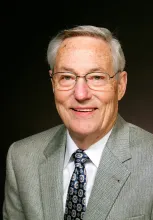
At the time of his retirement in 2016, Roy Holladay was serving the Operation Manager for Ministerial and Member Services of the United Church of God. Mr. and Mrs. Holladay have served in Pittsburgh, Akron, Toledo, Wheeling, Charleston, Uniontown, San Antonio, Austin, Corpus Christi, Uvalde, the Rio Grand Valley, Richmond, Norfolk, Arlington, Hinsdale, Chicago North, St. Petersburg, New Port Richey, Fort Myers, Miami, West Palm Beach, Big Sandy, Texarkana, Chattanooga and Rome congregations.
Roy Holladay was instrumental in the founding of the United Church of God, serving on the transitional board and later on the Council of Elders for nine years (acting as chairman for four-plus years). Mr. Holladay was the United Church of God president for three years (May 2002-July 2005). Over the years he was an instructor at Ambassador Bible College and was a festival coordinator for nine years.
