
Mark Welch
This transcript was generated by AI and may contain errors. It is provided to assist those who may not be able to listen to the message.
I hope all of you had noticed and would be proud that Matthew is setting thisaha tomorrow. Well, I hope all of you had a chance to take care of whatever you needed to do and to get some refreshments. Our first presentation today that we went through showed that we need the Kingdom of God to be established on this earth as a solution to the world's problems. Man simply cannot solve his own problems. Many Bible prophecies paint a beautiful and inspiring picture of the world to come that will replace the deeply troubled world that we live in.
But who will be a part of that Kingdom? The question is, will you be a part of it? How can we know? How do we prepare to enter into the Kingdom of God? What will it take on our part to become a part of that Kingdom? I think today we're going to confront some realities that we might not like to face up to.
Realities of what the Bible says that we must do. Sometimes people have their own ideas about religion and what the Bible claims that you need to do, but God is very specific. How do you and I enter into the Kingdom of God? Well, we've already touched on that. If you remember back in Isaiah, excuse me, in 1 Corinthians 15 and verse 50, when Paul said, I say, brethren, that flesh and blood cannot inherit the Kingdom of God.
And as long as we are corruptible or perishable, and we do perish, we are corruptible, put you in the grave and you become very corruptible, unless we are changed, resurrected, given immortality, given eternal life, we cannot inherit the Kingdom of God. So there has to be a change. There has to be a transformation. Our corruptible bodies must take on incorruption. The Kingdom of God is not a birthright. You don't inherit it because of a nationality. It doesn't matter what kind of nation you were born in. You find that the Kingdom of God is something that is a process that God initiates.
God calls us. He opens our minds. He gives us an opportunity to understand about the Kingdom of God. And all of this begins with the process of repentance. Repentance is the key.
Notice in Acts 2 and verse 37. Acts 2.37. On the day of Pentecost, the New Testament church began in Acts 2. Peter stood up and preached a very inspired sermon. And it says, now when they heard this, when the people heard what Peter had to say, they were cut to the heart. And they said to Peter and the rest of the apostles, That's the question we want to answer today. What shall we do? What do we need to do to begin the process?
If you'll remember again in Mark 1, 14 through 15, Jesus came to Galilee, preaching the gospel of the Kingdom of God and saying, the time is fulfilled, the Kingdom of God is at hand. What did he say to do? Repent and believe in the gospel. So you and I need to repent, and then we need to believe the gospel. So repentance is a key part of the message about the Kingdom of God.
We find on another occasion in Matthew 4, verse 17, that Jesus began to preach and to say, repent for the Kingdom of Heaven is at hand. Matthew uses the terminology Kingdom of Heaven. The other three gospel writers say Kingdom of God. Also in Matthew chapter 3, we find John the Baptist. Notice, in those days John the Baptist, Matthew 3, verse 1, came preaching in the wilderness of Judea, saying, repent for the Kingdom of Heaven is at hand.
So again, John prepared the way for Christ by preaching repentance and baptism. You skip down a few verses. You'll notice this. I don't think we have these on a slide, but notice John was preaching repentance, and we read, then Jerusalem and all Judea and all the regions round about Jordan went out to him and were baptized by him and the Jordan, confessing their sins. But when they saw many of the Pharisees and Sadducees coming to his baptism, he said to them, blood of vipers, or brood of vipers, who warned you to flee from the wrath to come?
Therefore, bear fruit worthy of repentance. Do not say to yourself, well, we have Abraham as our Father, or as we're special because we're Israelites, but I say to you that God is able to raise up children to Abraham from these stones. And even now the axe is laid to the root of the tree. Therefore, every tree that does not bear good fruit is cut down and thrown into the fire.
Now those are really very powerful words when you analyze them. It is a call to repentance. Repentance is demonstrated by what the Bible calls fruits.
That you can tell if a person has repented by their fruits. Clear evidence by how they live, what their attitude is like. Fruit is something that has shape, size, color. If I were to give you an orange and ask you to describe it, to describe the fruit, you say, well, it's orange and it's round and it's got appealing and the fruit's inside.
We know when we talk about fruit that you can describe it. And the same thing is true here. Those who do not bear good fruit, guess what? Bible says, are cut down, thrown into the fire, into the lake of fire. So this is telling us that we must prove by the way we live, by our actions, that we have repented of our sins and that we've turned to God. What about all of us? Have we truly repented before God?
How do you know? What is the evidence of repentance? How do we know that we've repented?
If I could use a computer analogy, are you ready to spiritually, emotionally, and mentally to reboot?
You got a computer, you know what rebooting is. You reboot when you start that thing. And not only rebooting, but having an entirely new operating system.
A hardware package, not a hardware package, but a hardware package, if you will, that will change every aspect of how you live your life going forward. This is what God is looking for. So how do we begin? How do you begin this process? How do you look at repentance? How do you know what the fruits of repentance are? Well, to begin with, you've got to take a realistic look at yourself. Have we ever really sat down, looked at ourselves, and said, this is the way I am?
In 2 Corinthians 13, verse 5, notice what Paul wrote in 2 Corinthians 13, verse 5.
He says, examine yourself to see whether you are in the faith. Test yourself. Do you not realize that Christ Jesus is in you? Unless, of course, you fail the test. So we are to examine, we are to test ourselves.
You talk to the average person on the street and ask him if he's good, bad, or ugly.
Most people will tell you that they think they're pretty good. They know they have some faults, but they'll tell you they're good at heart. And maybe they think that they're mostly good with God. Don't they go to church occasionally? Give a little money to the church? You volunteer occasionally to do good works? And so, surely God would accept them. The problem is, that's a completely unrealistic viewpoint. And it can be a fatal viewpoint. To repent, we have to come to see ourselves as God sees us.
Now, we have our own view of ourselves, but what does God think about us?
Well, in Jeremiah 17.9, Jeremiah 17.9 shows that human beings have a remarkable capacity for self-deception. Notice what God inspired Jeremiah to write.
Quote, The heart is deceitful above all things and desperately wicked. Who can know it?
So, the Bible says that our hearts are deceitful above all things. They're desperately wicked.
Now, that's not the way most people think about themselves. They don't think that they have a heart disease. That they're about to die spiritually. We have a heart. In the Bible, when it talks about the heart, it talks about the center of our innermost feelings and emotions.
You can agree intellectually with something, but until it's written in your heart, it's a part of you. It's you engraved within you. Then you can be deceived and misled.
As we saw earlier, the influence of sin and if Satan can mislead us as human beings. The worst part is, the Bible says, the heart is deceitful above all things.
So, our heart deceives us.
So, how does God view us? Does God think when he looks down at humanity, at the human race, does God think we're all pretty good? We're okay with him?
Well, let's go over to Romans chapter 3. Beginning in verse 10, Romans 3. We'll sort of summarize some of this, verses 10 through 18. As it is written, there is none righteous, no, not one.
There is none who understands.
Then it goes on to say, there is none who seek after God.
So, none are righteous. None seek after God. They have all turned aside. They have together become unprofitable.
There is none that does good, no, not one.
Now, most people think they're pretty good, but God says there's none that does good.
The way of peace they have not known.
And there is no fear of God before their eyes.
So, how does God see us?
Well, there's none righteous, no, not one. There's none who understands. There's none who seek after God. There's none good, no, not one. Bible is very clear about what the Scriptures say. As Paul wrote in Romans 3, 23, all have sinned and fallen short of the glory of God. There's a standard that God has.
We've all sinned. We've fallen short of that. And because of that, in chapter 6 of the book of Romans, in verse 23, we read this, that the wages of sin is death.
Now, a wage is something you earn. You go out and you work for the man.
As the song goes, he pays you a wage. Five dollars an hour, ten dollars an hour, twenty, whatever it might be. You earn a wage for what you do. So, what are the wages of sin? What do you earn when you sin?
Death is what the Bible tells us.
But, let's notice, God offers a way out of that.
If you sin, you have the death penalty hanging over your head. But it goes on in verse 23 of Romans chapter 6 to say, the gift of God is eternal life in Christ Jesus, our Lord. So, there is a gift. It's not something you can earn. You cannot earn salvation. You cannot earn eternal life. It is a free gift that's called grace from God that God gives to us. God knows what we are. He knows us far better than we know ourselves.
He offers forgiveness and cleansing of our past sins through the sacrifice of Jesus Christ. Why does he do this?
Why is God willing to forgive our sins? Why did he send his Son to this earth?
Oh, we read in John 3.16, God so loved the world that he gave his only begotten Son, that whosoever should believe in him should not perish but have everlasting life. God wants us to be a part of his family in his kingdom, reigning with Jesus Christ. But to be a part of that kingdom of God, we must do something.
We must repent. We cannot remain the way we are.
But what is repentance? What is the evidence of repentance?
We may think we have repented. We don't need to do anything further. But what does the Bible say? What does God say? Let's take a look at some of the key scriptures dealing with repentance. Notice what Peter told a crowd in Jerusalem.
Acts 3, verse 19.
Acts 3, verse 19. Repent, therefore, and be converted, that your sins may be blotted out. So we are told to repent, and we are also told to be converted.
Now, we're going to take a look at a number of points today dealing with repentance and conversion to help to explain, to clarify, to elucidate the meaning of repentance.
Notice to begin with, repentance means to change. Repent means to change.
Repent in the Greek means simply change. It means to change one's mind.
It also means to change one's way of thinking. Our mind must be different. We can't think the old way, the carnal way, the physical way. We have to change the way we think. We've got to begin to think on spiritual things. The word converted, Peter said repent be converted. The word converted in the Greek means to turn.
You have a convertible. Top can be up. Top is down. You can convert it. You change it. It means to turn. It means to change directions, to change your path. To be converted, we were going one direction. We have to turn 180 degrees around and go the other direction. It means to change course, to make a course correction, to change the way that we're going. Now, what this implies is that we turn from something. We were doing something over here we shouldn't be doing, and we turn to something else, which is God's way. It means that our old way of life, our old way of thinking, our old way of doing things, the way of sin, the way of selfishness. Human beings are basically motivated by selfishness, vanity, egos, self-serving. We have to turn to a new way of life, which is God's way.
That's what it means to be converted, to change, change course or direction. This is one of the keys to understanding repentance. Repentance means to turn our lives around from serving Satan the devil and ourselves to surrender to serving God.
There is a total difference in the two. That brings us to the next point, which simply means repentance means repenting, not just of individual sins. We can all think, oh yeah, I did that wrong, but also of being a sinner. We repent of being a sinner of who we are. We have to repent of vanity, of ego, of selfishness, of the lust of the flesh, the lust of the eyes, the pride of life, all of these things. This is what we are.
Now, if I were to ask you the question, what is sin? If you're going to repent of sin, what is sin? Could you immediately tell me what is sin? Well, 1 John 3, 4 says, whoever commits sin transgresses the law, for sin is the transgression of the law.
You living translates as first, everyone who sins is breaking God's law, for all sin is contrary to God's law. So sin is living contrary to the law of God.
God has given us the Ten Commandments. It is a spiritual law. It's a law of love. 1st 4, show you how to love God. The last 6, how to love your neighbor. So it's by keeping those commandments, not only in the law, not in the letter, but in the spirit that a person must begin to do. Sin is breaking God's law and doing things that are contrary to the law of God. As Jesus Christ on the Mount of Olives, remember the Sermon on the Mount, Matthew 5, 6, and 7, explained. Sin goes beyond the physical act. He said, if a man looks on a woman to lust after her, he's committed adultery with her already in his heart. That if we have anger and hatred towards somebody else in our heart, consider them worthless.
That's the same as murder. Now, human beings, again, normally don't think of it that way. And we have a very narrow viewpoint of what sin is. And yet God has a much broader definition.
Repentance is not only a matter of turning away from what we have done, but of what we are.
If I can put it this way, the problem is not only the product that comes forth, but the factory it comes from. We're the factory. The product is the sin or the way of life or how we're living our lives. We need to be able to change. Romans 8.7 summarizes it very well when it simply says, the carnal mind or the fleshly mind, the mind that focuses on the self, is enmity or hostile to God. So our minds are hostile. They're enmity with God. It hates God. It opposes God. It rejects God. It goes against, you know, when you think of it that way, it goes against the grain of human philosophy. It goes against our own opinion about humanity being basically good, tangled with a little evil. You find psychologists discuss human nature. That's a big debate. Are you born neutral? Are you born evil? You're born good. And they've debated that for decades. And only the Bible reveals very clearly what human beings are like. God created us neutral. When He created Adam and Eve, God looked at everything and said it was good.
But yet man, a little baby, can be influenced for right or wrong, can He not? There is Satan the devil out there broadcasting. There is society around us, all the influences of society, the whole. And children begin to grow up and they take on the mindset of this world, the mindset and approach and the attitude that we see. The Apostle Paul understood very well. He wrote many years after he had been called and baptized, had received the Holy Spirit. He wrote in the book of Romans in chapter 7 beginning in verse 21, the new CV translation of the Bible. Notice what he says here. I have discovered this principle of life, that when I want to do what is right, I inevitably do what is wrong. You try to do what is good, you end up doing what is wrong. Verse 20, true, I love God's law with all my heart. But there's another power within me, he said, that is at war with my mind. Where is our battle taking place? It's in the mind, in the heart. So there's another power within me that is warring with my mind. This power makes me a slave to sin that is still within me. Oh, what a miserable person I am! Who will free me from this life that is dominated by sin and death? The last part here in the new living translation, thank God the answer is Jesus Christ, our Lord. So you see how it is, my mind, I really want to obey God's law, but because of my sinful nature, I'm a slave to sin. Now Paul wrote this book some 20 years or more after he was converted, and he described very vividly the struggle we all have that God calls us, gives us his spirit after repentance. And we strive to do what is right, but we find that there is a struggle that we go through and that we have to continue to fight against. This is, you might say, the reality of the situation. The struggle against sin is not a one-time thing. You don't just get baptized, repent of your sins, and think, that's it, I've done it, I've repented, I don't have to worry about it anymore. Now we have to repent daily of our sins where we fall short. It's a lifelong process of growth, lifelong process of overcoming, of changing, and becoming like God. As the New Living Translation says in 1 John 1, 8, if we claim we have no sin, we only are fooling ourselves and not living in the truth. So anybody who claims he's perfect doesn't sin, as it says here, is not living in the truth. So do we realize that we're still sinners? Do we truly repent and want to be baptized, to forsake our own way? We've got to be overcoming and removing sin out of our life. As I said, it's a lifelong process. Notice the next point about repentance. The repentance is not just remorse or sorrow. A lot of people think, well, all repentance is, if you cry a few tears, you've repented. That's not it. We, of course, have to be sorry for sin. That's something we do need to be. We've got to be deeply sorrow or sorrowful and remorseful, but that's not enough. In 2 Corinthians 7, in verse 16, we read this, For the kind of sorrow God wants us to experience leads us away from sin, and results in salvation. So there is a sorrow that will lead us to salvation. There's no regret for that kind of sorrow, but worldly sorrow, which lacks repentance, there was lacks of change, results in spiritual death.
So, in other words, if your repentance is a temporary remorse or sorrow that isn't accompanied by a complete turn in your life, a complete change in turning around and following God, it's useless and will ultimately end up in death. So, we've got to realize that we must change.
And that brings us to the next point about repentance.
That repentance involves a change of mind, accompanied by a change of life.
Change of mind and change of life. As we read in Acts 3, 19, if you'll remember, repent and be converted, that your sins may be blotted out. Again, the Greek word repent means to change. Change your mind, change your way of thinking. To be converted means to change direction.
We've got to change from the old way, the old style, the old approach to a new way. So, we've got to change to follow God. Let's notice going on here that in Mark 12, verse 33, Man must love God with all his heart.
As I said, the heart is the center of your being, of your emotions and feelings. With all of his mind, so with your intellect, with all of his strength, with all of the power physically that you have, and he must love his neighbor as he loves himself.
So, we love ourselves, so God says we need to love our neighbors, we do ourselves. And Jesus noticed how wise his answer was, so he told him, You're not far from the kingdom of God. See, this is the attitude that God is looking for, for someone to be in his kingdom, to love him above all and to love your neighbor as yourself.
In Isaiah 55 and verse 7 is a very interesting scripture. Isaiah 55, verse 7, Let the wicked leave their way of life and change their way of thinking. Let them turn to the Lord, our God he is merciful and quick to forgive.
So, we've got to change, we've got to turn, we've got to repent, we've got to be converted. Repentance is more than changing a few things.
Repentance is a complete change of life.
Repentance involves a change of direction, meaning, and purpose of life.
When a person is baptized, and I'm not talking about sprinkling, I'm not talking about pouring, word baptized means to be immersed.
Bodily, you're put under the water. What does baptism symbolize? Well, according to Paul in Romans 6, it represents the old man, the old self dying, going down into a watery grave. You're burying the old man.
The old person is supposed to stay in the watery grave, dead and buried. When you come back up, there is to be a new person, rises up out of the watery grave, a new person, a new individual, a new creation.
Then, through the laying on of hands, God gives you His Holy Spirit. It is that Spirit that creates a bond between God and us.
God places His Spirit within our minds. And now, we have God living in us.
The old things, the old person, is supposed to pass away. All things become new.
Notice Romans 6.4, a New Living Translation.
It says, "...for we died and were buried with Christ by baptism." So, if you're dead and you're buried, the dead don't just come up out of their graves. You put somebody six feet under, you start throwing dirt, you don't expect an arm to come up or a foot to stick out. Now, you're burying that person. Same is true of us.
We died, we were buried with Christ by baptism. And just as Christ was raised from the dead by the power of God, so we have to come up and live a new life.
Maybe you've heard the old saying that God is my co-pilot.
There's a corollary to that. If God is your co-pilot, you need to change seats.
If you have truly repented and turned to God, you're no longer the pilot. He is.
And you and I are more or less along for the ride. He's there to teach us, to guide us. It takes effort on our part, obviously, to yield to God and allow Him to rule in our lives. As Romans 12, 2, tells us, Romans 12, 2, Don't be conformed to this world. See, we all are conformed to this world. How do I know that?
Book of Proverbs says, there's a way that seems right to a man, but the ends thereof are the ways of death. Every man does what he thinks is right.
That's why there are so many different ways that man goes. One man might think one thing is right and somebody else thinks something else is right. How do you know? Only God knows what is right, and He tells us in His Word. So don't be conformed to this world, but be transformed by the renewing of your mind. That you may prove what is that good and acceptable and perfect will of God. So we are to be transformed. There is a transformation that takes place.
Notice how God inspired the Apostle Paul in 2 Corinthians 5, 17 to describe a person who has repented. What will he look like? He says, therefore, if anyone is in Christ, so you're a Christian, he is a new creation.
Old things have passed away, and behold, all things become new. All things are to be new. And that brings us to our next point, which is simply this. Repentance involves complete, total, unconditional surrender to God.
Unconditional surrender to God. Jesus Christ put it in a little different way. Notice what Christ said to those who want to follow Him. If you and I want to be a follower of Jesus Christ, Luke 14, 26, this is the new century version. If anyone comes to me but loves his father, mother, wife, children, brothers, sisters, or even life more than me, he cannot be my follower. You must love God above all. God must come first. And if God says, do something, whereas if you read in the Bible that God says to do something, you've got to be willing to do that. As I mentioned, sin is a transgression of God's law. One of the commandments says, remember the Sabbath day and keep it holy. How many people understand about the Sabbath day and what day that is?
You find the vast majority of so-called Christians today observe Sunday. They don't observe the seventh day of the week, the Sabbath. And so we discover here that if we're going to obey God, we must put Him first above all. We must obey Him.
Skipping down a few verses in verse 33, notice Christ reiterated the same thing again when He said the NIV translation in the same way, any of you who does not give up everything he has cannot be my disciples. So you and I have got to be willing to give up everything. We've got to put God first. And you find that Jesus Christ later on in another chapter explained very clearly what He was talking about in Luke 18 and verse 18. It says, now a certain rich man asked Him, saying, good teacher, what shall I do to inherit eternal life?
Now most people today, the theologians today, would tell you, oh, you don't have to do anything. All you've got to do is believe, and they don't define what belief is. Belief is trust, reliance. Faith is trusting God, doing what He says.
I didn't copy these, but I threw in a few extra verses. Let me go on and read verse 19 through 23. Jesus said to him, why do you call me good? There's no one good but God. You know the commandments, He said. Do not commit adultery. Do not murder. Do not steal. Do not bear false witness. Honor your father and your mother. So when asked, what do I have to do to inherit eternal life, Christ said, keep the commandments. And He said, well, all these things have I kept from my youth. I've done these all my life. So when Jesus heard these things, He said to him, you still lack one thing. This one thing is generally what all of us lack. Sell all that you have, distribute to the poor, and you will have treasure in heaven and come and follow Me. And when He heard this, He became very sorrowful, for He was very rich. Now does that mean that when you become a Christian, you've got to give up everything? Well, Christ knew what was the most important thing in His life. It was His money. His money was more important to Him than God. All of us have things that come before God. What other people think of us? Position, power, it could be money, it could be any number of things. But I have to take the challenge from God and change, begin to follow His instructions, His way of life, and not our own way. Only you and I can answer the question, are we willing to do what God says? As the prophet Isaiah wrote in Isaiah chapter 55, verse 6, So God says, seek Him while He may be found. Isaiah 55, 6. Call upon Him while He is near. Let the wicked forsake His ways, and the unrighteous man His thoughts. Let Him turn to the Lord, and He will have mercy on Him, and to our God, and He will abundantly pardon. So God says, seek Him while He may be found.
God sends the message out. As Romans 10 says, how can they hear unless one be sent? How can a person hear the truth unless somebody is sent to preach it?
And so you hear. That's the time that God may be found when He is near. And then we're told to forsake our own way. What this is saying, in essence, is repent, and be converted. We need to seek God. Let's notice, again, what should you and I do? Acts 2, 36. We read this earlier. Acts 2, 36. New Living Translation. So let everyone in Israel know for certain that God has made this Jesus whom you crucified to be both Lord and Master. And Peter's word pierced their hearts when they heard what He had to say.
And they said to Him and to the other apostles, brothers, what should we do?
And that's the question that we have to answer. What should we do? Well, notice verse 38, the NIV translation. Peter replied, repent and be baptized, every one of you, in the name of Jesus Christ for the forgiveness of your sins. So we're told to repent, to change, be baptized, and we can have our sins forgiven. The NCV translation, Peter said to them, change your hearts and lives and be baptized.
So again, you find we are to change our hearts and our lives.
So what should you do? Well, Colossians chapter 1 and verse 13. Colossians 1, 13. God has freed us from the power of darkness, and He has brought us into the kingdom of His dear Son. You and I, when we receive the Spirit of God, we are a part of that kingdom, not yet born into that kingdom, which takes place at the resurrection, but we become begotten sons and daughters of God. The Son paid for our sins, and in Him we have forgiveness. 1 Thessalonians chapter 2, 12 tells us to walk worthy of God who calls you into His own kingdom and glory. So you and I are to walk, that means to live worthy of God. To be worthy of God means that we obey Him. So what should you do? Well, you need to repent.
Repent of what? Well, 1 John 3, 4 says sin is the transgression of the law.
And as I mentioned to you earlier, that we are to remember the Sabbath day and keep it holy.
I can't see it, but there should be a number of booklets up here on the screen.
If you haven't read the Ten Commandments Booklet, I would encourage you to get that and to study it. There's nothing more helpful as far as repentance than to take each one of those commandments, go through it, study it. The booklet explains how we break them and also explains how we should be keeping them. And then God's Sabbath day rests. Is that something we should be doing? Transforming your life goes through the topic of repentance and baptism and shows us the approach that we need to have.
So basically, that covers the topic we have today. But the next time we are going to continue on with this series and our next Kingdom of God seminars, we're going to be covering the topic, what does it mean to believe the Gospel? Remember when we read in Mark, repent and believe the Gospel? What does that mean to believe the Gospel?
Alan, you might skip over the blank one. We come to a cartoon here.
Sort of summarizes where we are. Highway exit, destruction ahead, wide and broad.
And little exit off to the side says, repent.
Matthew 7 13 tells us, enter through the narrow gate. For wide is the gate and broad is the road that leads to destruction and many enter through it. But narrow is the gate that leads to life.
And that life, if you want to begin on that path, begins with repentance.
So I'd like to thank all of you for coming today and I'll turn it back over to Mr. Ted Doss to wrap up the occasion.
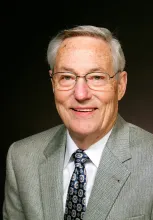
At the time of his retirement in 2016, Roy Holladay was serving the Operation Manager for Ministerial and Member Services of the United Church of God. Mr. and Mrs. Holladay have served in Pittsburgh, Akron, Toledo, Wheeling, Charleston, Uniontown, San Antonio, Austin, Corpus Christi, Uvalde, the Rio Grand Valley, Richmond, Norfolk, Arlington, Hinsdale, Chicago North, St. Petersburg, New Port Richey, Fort Myers, Miami, West Palm Beach, Big Sandy, Texarkana, Chattanooga and Rome congregations.
Roy Holladay was instrumental in the founding of the United Church of God, serving on the transitional board and later on the Council of Elders for nine years (acting as chairman for four-plus years). Mr. Holladay was the United Church of God president for three years (May 2002-July 2005). Over the years he was an instructor at Ambassador Bible College and was a festival coordinator for nine years.
