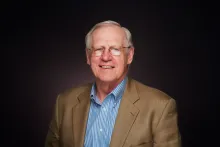


Vincent A Szymkowiak
This transcript was generated by AI and may contain errors. It is provided to assist those who may not be able to listen to the message.
So, just a little over a month, we will be celebrating the Happy Feast of Pentecost. I believe it's June the 12th. And as a church, we're here today because of the events recorded in the New Testament. Now, if you would like a good Bible study, sometimes people wonder, well, what kind of a Bible study could I do or have? If you haven't read the book, the church Jesus built, that would be a good booklet for you to read, especially at this time, because Pentecost is all about the birth of the church. And this would be a very, very good book, not just to read through, but to check out the Scriptures as well. And I know that would help you get ready for Pentecost. Now, Jesus promised to build his church. We see this in Matthew 16th chapter. And let's go to verse 18. He promised to build his church, Matthew 16, 18. And we'll just go right to verse 18. And I also say to you that you are Peter, and on this rock, and the Greek is petra or large rock, I will build my church, and the gates of Haiti shall not prevail against it. Jesus is the rock. 1 Corinthians 10.4 tells us, he is the rock. He is solid foundation. He didn't build his church on sand, and he warned people of building a church, or trying to build a church on sand. He built the church on rock. He built the church on himself. He is our rock. So God's church is not built on man's shoulders. It's built on Jesus Christ. And that's a very good point to always keep in mind. And he says, I will build my church. The word church is ekklesia, in the Greek, ekklesia. And it was a very common term for assembly. I don't know if they had, they probably didn't have mousse lodges in those days. But if they would have, they would have had an ekklesia. They would have had an assembly of the loyal order of the mousse. You know, it's assembly, that's what it was. But it's more than just an assembly. It has to do with the called out ones. Called out. I've looked very, very carefully at the word ekklesia. Ekk means out. You know, ekk means out. Probably ex that probably has something to do with that. I don't know for sure. But ex, ekk means out. And calleo means to call, to call out. So the church of God is a group or assembly of people who were called out. And the gates of Hades, or the gates of death, shall not prevail against it. The gates of death, the gates of the grave, shall never prevail, never be victorious against the church Christ builds.
We can have a lot of faith and a lot of confidence into what Christ is doing with His church. And I will give you the keys of the kingdom of heaven, and whatever you bind on earth shall be bound in heaven. And whatever you loose on earth will be loosed in heaven. And those who have looked into the Greek have discovered something that actually what He is saying here, and the Greek does capture that, whatever you bind on earth will have already been bound in heaven. Or whatever the minister's bind on earth has already been decided in heaven. And whatever we loose on earth will have already been loosed in heaven. Now, that's providing the minister stay close to God and humble himself with fasting and prayer and obedience. And as we heard in the sermon, that's submission to God's way of life, submission to God's will. It's not a matter of being cocky about it, because if we're cocky about it, Christ can always say, okay, I'll get somebody else to do your job. So as long as the ministers are humble, praying, fasting, obedient, surrendering to the will of God, then God will bless the decisions that, well, He will already have made the decisions, and just a matter of us praying and fasting to understand His will. For example, there are several decisions that we will be voting on at the general conference of elders, and there will be, we rotate the council itself every year. Three men come up for either, either they choose to step off the council or they choose to be, you know, they ask to be put back in, and that's determined by a vote.
And once again, my ideas don't count. I want God's ideas to count, you see. And that whatever He decides is to what ministers He wants to use as council members, and whatever decisions that need to be made, God has already made those decisions, and we just need to find out through prayer and fasting, obedience to His will, surrendering to His will, we find out what God's will is. Now, let's go to Acts chapter 2 and verse 1. Acts chapter 2 and verse 1.
Now, when the day of Pentecost had fully come, and day of Pentecost, that means, you know, the 50th, the 50th, and remember in Leviticus 23, God tells us to count 50 days from the morrow after the weekly Sabbath during the days of the 11th bread. That's kind of a long mouthful, but that's what it says. So it's the 50th day, which takes us to a Sunday. And so that's what count, that's what Pentecost means, 50th. And had fully come, and that word fully come is also a very interesting word in the Greek. It means fill to the brim, you know, fill to the very, very, very top. Not just fulfill, but fully fulfilled. Because Christ was, and God the Father, He was going to send the Holy Spirit on this day. So it was going to be a day of Pentecost like never was before. It was going to be fully fulfilled. And they were all with one accord in one place, and suddenly there came a sound from heaven as of a rushing, mighty wind, and it filled the whole house where they were sitting. And then there appeared to them divided tongues as of fire, and one sat on each of them. And they were all filled with the Holy Spirit, and began to speak with other tongues, as the Spirit gave them utterance. They were dwelling in Jerusalem, Jews, devout men from every nation under heaven. So in other words, the Jews had come to Jerusalem to observe the Feast of Pentecost, and they had come from, I think the last time I counted it, 16 different nations in the Roman Empire. And they had grown up, maybe in Italy, or maybe in Libya, and their native tongue was, maybe, Roman.
Or maybe it was of the Libyan language. That was their native tongue. They might have known Aramaic, or Greek, or maybe some Hebrew, but their native tongue was in the tongue of their Nativity, where they were born. And so when this sound, verse 6, occurred, the multitude came together, and they were confused because everyone heard them speak in their own language. And they said, wait a minute, aren't these people who are speaking, aren't they Galileans?
And then, how is it that we hear, verse 8, each in our own language? So it wasn't gibberish, it wasn't unintelligible, it wasn't mysterious language. We're hearing in our own language in which we were born. And then it gives the list of the nations, the provinces, and so on. And they were able to speak. It says, Cretans and Arabs, verse 11. We heard them speaking in our own tongues. Verse 11, the wonderful works of God. So they were filled with God's Holy Spirit. In verse 41, then those who gladly received His word were baptized, and at that day about 3,000 souls were added to them.
3,000 people came into God's church at that time. Verse 47, praising God and having favor with all the people, and the Lord added to the church daily those who were being saved. So this was the beginning of the fulfillment of the promise that Christ made. Christ said, I'm going to build my church, and it got off to a tremendous start. Now I want to get to the... That was just my introduction. Now I want to get to the specific purpose statement of my sermon.
Let's turn to Malachi chapter 3. Obviously I'm talking about the church. Obviously I'm talking about the purpose of the church. Obviously I'm talking of next to God and Christ, just about one of my favorite topics, which is the church. I've been a church man all my life, and I just love God's people. I love the church. I love being a part of His true church. So over here will be the specific purpose statement, Malachi chapter 3 and verse 16, then those who feared the Lord. And that's a really good definition of a Christian.
A Christian is someone who fears God in a proper way. God says in Proverbs 14, in the fear of God is a fountain of life. A fountain of life. And the fear of God is strong confidence. So it's not a craven, cowardly fear. It's a deep reverence and love for God.
Spoke to one another. And that's the specific purpose statement of my sermon. Let's delve into the words, spoke to one another. King James has it, spake often, we'll forget the word spake, it's okay, speak often to one another. Often speaking to one another in a deep form of fellowship. Not just a little chitchat on the Sabbath, but a real deep form of fellowship. And the Lord listened and heard them and so a book of remembrance was written before him. And for those who fear the Lord and for those who meditate on His name.
Now this book of remembrance might be the book of life. It's not that God really needs a little book, you know. But He does talk about the book of life and He talks about our names being written in the book of life. And so God is listening to what we're saying and He hears us and He writes a book of remembrance. For those who fear the Lord and for those who meditate on His name. And the word meditate means to esteem.
Those who esteem His name or hold His name in the highest of reverence and the highest of regard. That's what that means, to esteem His name. And they shall be minds, says the Lord of hosts, and that day I will make them my jewels, verse 17. And I will spare them as a man spares his own son who serves him. Brethren, there are dark days coming in this country. And this country is not prepared for the dark days that are coming.
Not at all prepared. But they are coming, so says the word of God, and God's plan is to spare His children. To spare His children from what is coming. So, but what I really want to get in focus on is the phrase, they spoke to one another. They had godly fellowship with one another. How are we doing on that?
How are we doing with godly fellowship or speaking often to one another? The word fellowship simply means close mutual relations, close association. Again, much more than just a brief chit-chat at church. It must go, fellowship must go, deeper than that. So, what are some of the ways that we can speak often to each other? I was going to bring up one of the church address books that I left.
Actually, I had a couple of them. I had one in my briefcase and I gave it to somebody this morning, so I don't have my other little prop. But you know, that church address book with the arch on the cover, okay, if you don't have it, maybe I'll make some more.
I hope you do have it, but if you don't have it, maybe I'll make some more. We'll get some more made. And so, the place... Oh, well, thank you, Ed. Here it is. So, Troy St. Louis, church addresses. So, the way to start speaking to each other is to get this little booklet, you see, and to go through here, look for the names, and then go hunt these people down, okay? And say, here, I'm okay. I'm doing a good job.
I'd like to introduce myself. My name is so-and-so. And what is your name? And how long have you been coming to church? Well, my name is Barry Gannon, and I've been coming to church for 50 years. So, now it's supposed to be so... I guess that didn't go over too well. Okay, so we get to know God's people, first of all. That would be step number one. And maybe again, we should get some more of these booklets made. And this makes a great book for prayer, for prayer as well. You know, you can...
maybe someone is ill or sick, jot down a little note. And if you want to, and then, you know, pray for that person. So, and there's about 80 entries or so in here, about 40 for Troy and 44 St. Louis. And try to get to know people again in both of the churches. You can pray more fervently for someone that you know, you know the name, you know the face, and you can connect the dots there. This is a good booklet.
This is a good place to start. 1 Corinthians chapter 10, and God's called out ones. God's ecclesia has called out ones. The ones that were to speak to one another, we cannot do this in isolation. You know, we cannot be a church, you know, of members of just one, you know, one person, a one person church. Christ did say, wherever two or three are gathered together in my name, there I am in the midst of them.
So it's supposed to be a group. So he says here in verse 16 of 1 Corinthians 10, The cup of blessing, speaking of the Passover, is it not the communion of the blood of Christ? And that word communion means fellowship, it means sharing. The bread which we break, is it not the communion of the body of Christ? And again, that word communion means fellowship or sharing. For we, being many, are one bread and one body, for we all partake of that one bread. So, you know, the ideal thing is to come together as a church to observe the Passover.
Or sometimes we do have small groups, you know, that have to get together because of distance or whatever. But it is a sharing, not only accepting the sacrifice of Christ on our behalf, but the idea of sharing is that we're all in the same boat together. We're all repentant, humble sinners, okay? And so we're all in the same boat together and we share that attitude with each other. So the sharing, the fellowship, in that sense, is very important at Passover. Now, by fellowship, we don't do a lot of talking. We're not totally silent either, but we don't do a lot of talking.
But it's a deep sense of, you know, we're all in this together. We're all, we all are in great need of the sacrifice of Jesus Christ. So the church, again, is a group of set-apart ones, people that have been set apart. It's not really a club. It's not a club, but well, nice people. They're sort of clean-cut. They live by the laws of the land. They're nice people. No, it's a group of transformed people who have surrendered our wills to God. And maybe that's why you put all the churches together and you wouldn't have a whole lot of people. I mean, all the churches, you know, put them all together, you wouldn't have a whole lot of people, because surrendering our wills to God is not easy.
We have something about our human nature that doesn't, you know, like to do that. Over here on this book, the church Jesus built, and I'm reading from the 2003 edition, it was rewritten in 10 or 11 or something like that, so be sure you get the newer edition. So he's talking about, repent therefore and be converted, that your sins may be blotted out. That's Acts 3 in verse 19. What do these commands, repent and be converted, be transformed, mean to anyone who wishes to be a part of the church of God?
To repent means to perceive afterwards. It conveys the concept that one must recognize and admit his sins. Of course, we do so to God, and we acknowledge the need to change mind, hearts, and behavior. That's what repent means, the need to change mind, heart, and behavior. Converted means to turn about or turn towards, and instead of going towards the way of the world, we turn around and go the way towards God.
It's a turnaround. It indicates that in addition to recognizing and acknowledging our sin before God, because we do confess our sins to God, one is taking the necessary action to turn away from sin by turning towards God. It requires doing what is right, not just acknowledging what is wrong. There are a lot of people that may acknowledge a few things about being wrong, but have they turned and surrendered to the great God?
And again, maybe that's why the church of God is not a really large church. But this is a very good chapter on a spiritually transformed people. It's not just a club of nice people. We're not a club of nice people. So let's continue on here. I think what covers or what helps us to understand that is Matthew 28, Matthew 28, Matthew 28. And Christ said in verse 19, all authority has been given to me in heaven and on earth.
We are to go therefore make disciples of all the nations, baptizing them in the name of the Father and of the Son and of the Holy Spirit, teaching them to observe all things that I have commanded you. Now, the NIV, a lot of people don't like the NIV. And there's some technical reasons that I think are correct, which are correct as to why we should be cautious with it.
But I think they got it right here when they said teaching them to observe everything that I have commanded you, all things or everything. Now, humanly speaking, we like to pick and choose what to do and skip over the rest. This is not what we have been called to do. As we heard in that very fine sermonette, we have been called to surrender our wills to God's will.
I want to turn to 2 Corinthians 8, verse 5. And this is probably going to become just about my favorite scripture as I talk about the Holy Day offering, as we take up the Holy Day offering, it's going to become just about my favorite scripture. And this they did, 2 Corinthians 8, verse 5, And this they did, not as we had hoped, but first gave themselves to the Lord, and then to us by the will of God.
So writing the check or giving the cash is one thing, okay? Today it's kind of fun to do that. But the real challenge is giving ourselves to God. That comes first. First, giving ourselves to God so that we can offer to Him a sacrifice of righteousness, giving ourselves to God. Let's look at one of the names of the church. God's Church, and maybe I should give you a list on this. I've been kind of collecting for many years just various names in the Bible of what the church is. And there's a lot of them, just a lot of names. I only have time today for just a few. So one of the names of the church is Body, the Body of Christ. Chapter 12 of 1 Corinthians, verse 12.
For in fact, the body is not one member, but many. If the foot should say, because I am not a hand, I am not of the body, is it therefore not of the body? And if the ear should say, because I am not an eye, I am not of the body, is it therefore not of the body? If the whole body were an eye, where would be the hearing? And if the whole were hearing, where would be the smelling? And how God has set the members, each one of them, in the body, just as He pleased. Not as I pleased, not as I want, except to God as He pleases. He puts people in various parts of the body as it pleases Him. You can take a church of 50, 60, whatever it is, the number of people here. It takes a good dozen or more to have a really successful Sabbath service. We might need ushers, we certainly need door greeters. We need people that will make it nice by fixing the coffee for us. We need people helping out, perhaps setting up mother's room. By the time you figure it all out, there are a lot of people that serve as God pleases, just to get the church. This lectern, for example, doesn't walk in by itself and sits down. It's carried. It's kind of heavy, too. They use rollers to get this thing around. God sets us in the body as He pleased. They were all one member. Where would the body be? But now, indeed, there are many members, yet one body. I cannot say to the hand, I have no need of you, nor again the head to the feet, I have no need of you. But rather, those members of the body, which seem to be weaker, are necessary. And those members of the body, which we think to be less honorable, on these we bestow greater honor. And our unpresentable parts have greater modesty. But our presentable parts have no need, but God composes the body, having given greater honor to that part which lacks it. And that there should be, verse 25, no schism in the body, but that the members should have the same care, one for another. The same care, one for another. Now, when I read the prayer list, it's not easy for me to read the prayer requests. It hurts when you find that there's a 13-year-old girl with horrible pain in her lower back, pinched nerves, pinched spine. Or some man who has heart disease, he dies, other people horribly suffering.
But I'm not called, announcement time is not joke time, it's time for either the local announcements or time to request prayers from God's saints, from God's people. So it's not easy for me to read the announcements, and I'm sure it's not easy for you to hear the announcements. But we do it anyway because God says that God says here that the members should have the same care, one for another. I just read that. Then verse 26, And if one member suffers, all the members suffer with it, and if one member is honored, all the members rejoice with it. So the announcement time is really, for the prayers, brother, is so important. It is so very, very important that we learn to remember, as he plainly says here, we're going to suffer with each other, we're going to be honored with each other, but we're all one body, you see. Now you are the body of Christ, verse 27, and members individually. Now, who is the head of the body? Well, we know who the head of the body is. Let's go to Colossians chapter 1 and verse 18. Colossians chapter 1 and verse 18. And he, speaking of Jesus Christ, is the head of the body, the church, who is the beginning, the firstborn from the dead, that in all things he may have the preeminence. So there is an antidote to worrying, and that antidote is, relax, Christ is the head of his church. Christ is the head of his church. If we can just get that down, I mean, that's what the Scripture says. He's in charge, he knows what's best. He just said, all authority has been given. You know, on heaven and earth, that's been given unto me. And he's in charge, he is the head of the church. So we can relax. Christ is the head of the church. He sees a problem coming before we even know that there's a problem. Someone was giving a sermon that, or mentioned this not too long ago, that our heavenly Father knows what we have need of before we even think to ask Him. He already knows. And He's given it to be His Son, to be the head of the body of the church. So, that's one word. The Church of God is the body of Christ, with Christ being the head. Let's move on to another name. And that name is Saints. The Church of God are called Saints. That's quite a name. Now, we don't go around calling us Saints so-and-so and Saints so-and-so. But Paul does this in 1 Corinthians...or actually, let's go to Romans 1 in verse 7. Romans 1 and verse 7. To all who are in Rome, beloved of God, call to be Saints. Grace to you and peace from God our Father and the Lord Jesus Christ. 1 Corinthians 1 and verse 2. 1 Corinthians 1 and verse 2.
To the Church of God, which is at Corinth, to those who are sanctified in Christ Jesus, call to be Saints with all who in every place call upon the name of Jesus Christ our Lord, both theirs and ours. Now, the word Saint is Hagios in the Greek, hagios. And the word Saint deals with, which means sacred, it means physically pure, morally blameless or religious, consecrated, holy, saint. This is a very powerful name. That's a hagios. Sacred, pure, morally blameless or religious, ceremonially consecrated, holy or saint. Now, that's the noun. The noun is hagios saint. There's a verb that is a companion word to this and that is hagioso, which means to sanctify. And I'll just turn to John in the 17th chapter. Jesus is praying and here in verse 17, he says, sanctify them by your truth. Your word is truth. Now, to sanctify again, that's the verb. It means to make holy. It means to purify or consecrate.
So let's read this verse again with these other definitions to sanctify or hagioso. Sanctify them by your truth. Or you could say, make them holy by your truth. Or you could say, purify them by your truth. Consecrate them by your truth.
Hallow them by your truth. Or, again, sanctify them by your truth. Now, this brethren sets us apart from the rest. God has chosen to sanctify us by his truth. He's called us to set us apart by his truth. And the word... and what is truth? Well, Pilate didn't know, by the way, but we know. Your word, the Bible, is truth. So brethren, we are set apart by the word of God. If God tells us to do something in his word, like he might say, love me with all my heart, mind, soul, we do it. If he tells us to keep the Ten Commandments, we do it. If it's in his word... I was talking to someone this morning who said that this man was going around work and he was preaching Jesus and all that. And then finally, the church member turned to him and said, Oh, okay, okay. But, you know, what about the Sabbath? You know, the Sabbath... And he made it interesting. I might do one of my blogs on this. He said, you know, the Sabbath is part of the top ten. We're all familiar with the phrase top ten. We think about it, the top ten are the Ten Commandments. And the Sabbath is one of the top ten. Well, the guy has never gone back to even talk to him anymore. But if God says, keep his word, we keep his word. Sanctify them by your word, by your truth. Your word is truth. Another name for the church is the family of God. Ephesians 2. And I really like this name because... I mean, who doesn't want to be a part of the family? Who doesn't want to butter up Mother tomorrow? That's a good idea to butter up Mother tomorrow. Hey, if it wasn't for Mother, we wouldn't be here. So Ephesians 2, verse 19, Now therefore you are no longer strangers and foreigners, but fellow citizens, Ephesians 2, verse 19, with the saints and the members of the household of God. Household or family of God. Over here in chapter 3, verse 15, From whom the whole family in heaven and earth is named. We are the sons and daughters of God our Father. That's chapter 3, verse 15, and then chapter 4, verse 6, We are one God and Father of all who is above all and through all and in you all. We have...we're a family. We have one Father and that Father is God. So...and it is very... How can I say? I'm very thankful of the way you people, God's people, take care of maybe the elderly or maybe people with a special need. I compliment you for that because God's Church, you guys really do take care of, like I said, the elderly or people maybe not even related to you, but they have special needs and you consider them a part of family and it's a very difficult bond to break. It's a bond that we don't want to break. So I compliment you for that. Another name of God's Church are the firstfruits. James chapter 1. James chapter 1 and verse 18 and again firstfruits has got all... you know, all...it's got everything to do with Pentecost, the harvest of the firstfruits. Of his own will he brought us forth by the word of truth that we might be a kind of firstfruits of his creatures. So they started with the barley harvest, the grain, the early grain, then the wheat harvest and then the rest of the crops came in the fall of the year. But God is calling us into his truth and into his church that we might be a kind of firstfruits of his creatures. And we only get a glimpse, brethren, of what this really means. Because there are going to be eventually billions and billions of people, billions and billions of people called into the family of God and God is allowing us to be among the first of that calling. I want to go now to Romans chapter 11 and I want to just talk about this just a little bit more.
Romans chapter 11 verse 29.
Romans chapter 11 and verse 29. Because I want to expand just one point about us being firstfruits. And I want just one point. For the gifts and the calling of God are irrevocable, meaning God doesn't change his mind. He says, you know, I've begun a good work in you. I'm going to finish that good work in you. He says, I promise I will never leave you. He says, I will never forsake you. That's Hebrews 13 and verse 5. For as you were once disobedient to God, verse 30, yet now have obtained mercy through their disobedience.
In other words, he reached out for the Jews first. They by and large rejected him. So he went to others to show their to show his mercy. But now let's look at verse 31. Even so, these also have now been disobedient that through the mercy shown you and me, you know, the present saints of God through the mercy shown you and me, they also may obtain mercy. The mercy shown you, the mercy shown me, they also may obtain mercy. Now, what this means is that at the Great White Throne period, at the Great White Throne period, when billions upon billions of people will stand up and they will be bedazzled, the Bible says they will have kind of hopeless thoughts.
It says that there in Ezekiel 37, their thoughts will be just, just, oh, man, we're cut off where we've had it. And you're going to say, wait a minute, as a child of God, I'm going to introduce you to the same mercy that God gave to me. If God can show me mercy as a first fruit and bring me into the family early and bring me into a divine child of the living God, you too, relative or friend or mother or father that was just left in blindness at this particular time, because of God's wisdom and mercy, you too now will be given mercy.
We will show the world God's mercy. That's what this verse means. The mercy shown you, they may also obtain mercy. We will show the world God's mercy. That's going to be a fantastic calling, a fantastic opportunity. And they're going to be able to come along because they see that God worked through us. And they're going to be able to see that. So just think about it. We're going to show them mercy. We're going to show them the same mercy. We're going to point them to the mercy that God gave to us.
And we're going to make believers out of them. We're going to make believers out of them. And then what we're going to end up doing is glorifying God to those people. Because we're showing these people the character of God, his love and his mercy. And they're going to think, wow, I don't think I'll be a Hindu anymore. I think I'm going to become a child of God. Through the mercy shown you, they may also obtain mercy.
Now, another point about God's true church is that we are to be a haven for fellowship. Acts 2 and verse 42, a haven for fellowship. They continued steadfastly in the apostles' doctrine and fellowship, in the breaking of bread and in prayers. So fellowship goes deeper than chit-chat at church. It goes deeper than what was the latest score and the latest ballgame. It goes into meditating upon God and meditating and holding his name in high esteem and talking to each other about Sabbath things and godly things.
Steadfastly in the apostles' doctrine and fellowship and the breaking of bread and prayers. 1 John chapter 1 and verse 7. 1 John 1 and verse 7. For if we walk in the light, as he is in the light, we have fellowship. Not just chit-chat, but fellowship with one another. And the blood of Jesus Christ his Son cleanses us from all sin. So it starts with our acceptance through repentance, faith, the Passover sacrifice of Christ, and then we have that sharing with each other that goes deep, that runs deep. It is so deep, it transcends our background, it transcends our status, it just transcends any of that.
Or our lack of status, we have fellowship with one another. Hebrews chapter 3, let's take a look at this. God's Church is to be a haven for encouragement. Not just a haven for fellowship, but a haven for encouragement. But exhort one another daily, or encourage one another daily, while it is called today, lest any of you be hardened through the deceitfulness of sin.
Now, I think that the emails people send back and forth to each other, and not that I'm on Facebook, but somehow I kind of know what's going on in Facebook, even though I begged Facebook to take me off of Facebook, and I begged them a thousand times, maybe not a thousand times, but I still get some Facebook stuff, and some of it is really good. Somebody asked to be put on the Troy Facebook page, and I somehow was able to do that.
Another church member in Troy said, she put it on the Troy Facebook thing again, she said, hey, here's a good sermon, listen to it. She had a link to it, I listened to it, a very good sermon. So it was an encouragement, based on Facebook, to study the Bible, or to listen to the sermon. So there's many ways that we can exhort or encourage each other, and sometimes just pointing brethren to a sermon. A sermon link is just a wonderful, wonderful tool. So I'm hoping that we are, and as the days get darker, we need to be doing this more and more. Hebrews 10 and verse 24, something else we could be encouraging each other with.
Hebrews 10 and verse 24, let us consider one another in order to stir up love and good works. I think some are more gifted at this than others are, and they just seem to know that right word at the right time, to really spiritually uplift somebody, or maybe give them a little guidance, maybe even a little loving correction, and they seem to be able to do so and help the other person. Not forsaking the assembling of ourselves together, as is the manner of some, but exhorting one another, and so much more as you see the day approaching. So we really, maybe we're doing pretty good with Sabbath attendance. I think that might be the case, but we really should try to be here every single Sabbath.
Sometimes we just, you know, I can't say I have perfect Sabbath attendance. I can't say that. I'll be visiting my son in Alaska, and they're taking me off, way off into the Alaskan bush. Well, maybe not the bush. He's done that to me, too, before, and I ran around the Alaskan bush with one of these bear spray cans.
It was bear country. He got the biggest kick out of me. But anyway, he's got this camping trip planned for the grandkids and the family, and it's the nearest church. It's 300 miles away, so I don't think I'm going to make the church that Sabbath. And then I have a wedding coming up. Our family is, although most of my family, except for my brother, is not in the church, but we're just very, very close. I mean, we fight a lot, too. Polish people do. But we kiss and make up afterwards. And so my nephew is getting married in August, so that'll be a situation I'll have to miss church there, and I hate to do that. So I can't say I have a perfect record of perfect Sabbath attendance, but I really try to be here, whether I have a speaking assignment or not. I like to sit down and listen to Mr. Giddens or Mr. Osborne. And so, unless it's something really, really unusual, you're going to see me here. So what can we do for the church? Prayer is certainly at the top of the list. Please not only keep the sick in your prayers, but please pray for everyone. Ephesians 6, verse 18. Praying always with all prayer and supplication in the spirit, being watchful to this end with all perseverance and supplication for all the saints.
So you've got the names here. I just had her here somewhere. Where'd it go? Here it is. You've got the names of about 80 saints, okay, to be praying for. And for me, that utterance may be given to me, that I may open my mouth boldly to make known the mystery of the gospel, for which I am an ambassador and change, that in it I may speak boldly as I ought to speak. So do be praying for the ministers who are giving the telecast, the Beyond Today program. I'm sure it's not an easy job, but be praying for Mr. Petty, Mr. Steve Myers, Mr. Darris McNeely. And just for the ministry, we in the ministry really need the prayers of God's people. We really need your prayers.
Please be praying for the upcoming conference in Cincinnati. I know some will be fasting about it, and I do appreciate that. Also, please be praying about PAC, PAC, PAC, Public Appearance Campaign.
That's coming March 20, 2017.
So we'll see how God will bless that. There are two areas that I want to be covering. I want to cover about PAC, but before I get to the Scripture on PAC, or at least my idea is about PAC, I'm going to turn to Matthew 9 and verse 37.
Then He said to His disciples, The harvest truly is plentiful, but the laborers are few. And therefore, pray the Lord of the harvest to send out laborers into His harvest. So please do be praying that God will be raising up more ministers, more ministered families. The plan tentatively is to hire four couples. And November is the tentative date for that. And they will be serving and being trained in the various church areas. I do feel, though, that we need more than four. Now, I'm not the decision maker, but certainly by next year we'll need another four or another six or whatever. So do pray to the Lord of the harvest to send out laborers into His harvest. Now to get back to PAC, and let's go to Luke the 14th chapter.
And I truly believe there are a lot of people in the St. Louis bi-state area that need the truth, that need God's way of life. A lot is covered in the book of Luke. But let's look at verse 16.
One of the authors said, I have bought five oxen, five yoke of oxen, and I go to test them. I ask you to have me excused. So it kind of sounds like the kingdom of God seminars when you send out maybe 1500 letters.
And very few come. Very few come. I am going to test them. I ask you to have me excused. And still another said, I've married a wife, and therefore I cannot come. Why didn't he just bring his wife? And so that servant came and reported these things to his master, and his master of the house said, to the servant, go out quickly to the streets and the lanes of the city, and bring in here the poor, the maimed, the lame, and the blind.
And this is the second time Jesus talks about, in this one chapter, the poor, the maimed, the lame, and the blind. He mentions that again in verse 13. When you give a feast, invite verse 13, the poor, the maimed, the lame, and the blind. And you will be blessed, for they cannot repay you, but you will be repaid at the resurrection of the just. And so, for lack of time, I want to just stop there in verse 21, because my question is, brother, are there a lot of physically challenged people in the bi-state area that would like to come, but maybe they don't have transportation?
A couple of Kingdom of God, maybe it was the first or the second one we had here, a lady emailed me and said, Well, I'd like to come, but I'm in a wheelchair and my husband doesn't want me to come, and all of that. And so, she had some challenges that were not surmountable for her. The maimed, the poor, the maimed, the lame, and the blind, what if we were to rent a van with wheelchair access, rent a van or two, and offer that up front to people.
Mr. Kubik will be sending out a letter in January, February, March. Every month, you will be inviting the readers of the Beyond Today magazine. And I'm going to be asking him if he could put a sentence in there, you know, in his little letter. Oh, by the way, if any of you need a ride, if any of you need a handicap van, let us know, and we will provide for that. I'm also, we have a local evangelism budget, and so I'm redirecting those funds from Google Ads.
Okay, I don't want to go into a Google, but I want to redirect those funds, about 100 a month, and save those up for the rental of a van. Okay, that's kind of the plan. I'm just telling you what the plans are, but they certainly need your prayers. Okay, these are just my thinking, but we don't want my thinking. We want God's thinking.
These are just my plans. I believe there's a lot of poor, maimed, lame, and blind that want to respond and need to respond to God's truth. Did you ever consider fasting for the church, since this is what the purpose of the church is, and fellowship, a deep form of fellowship with God, is through fasting, through the humility, being humbled. We fast not to get our will, you know, across to God, but to get God's will across to us. And that's to humble ourselves, and to fast.
And it is not good enough, I don't believe, to just say, well, I fast on the Day of Atonement. Now, again, I'm not talking about those who have severe health problems, okay? I want to mention that. But if we're halfway healthy, let's turn to Matthew 9. Then the disciples came, the disciples of John, verse 14, came to him, saying, why do the Pharisees, and we fast a lot, but your disciples do not fast.
And Jesus said to them, verse 15, can the friends of the bridegroom, and Jesus is the bridegroom, okay? So can the friends or the twelve apostles of Jesus Christ mourn as long as Jesus Christ is with them? You know, we fast to get close to God.
If you're having dinner with God in the flesh every day, you know, He's right there. You can ask Him any question you want to. So you don't have to mourn or fast as long as the bridegroom is with them. But the days will come when the bridegroom will be taken away from them, and then they will fast. I don't think He's talking about just the Day of Atonement.
That's already a given. That's already a command. That's laid down in the Holy Days. Leviticus 23. We need to fast more than once a year is the point here. And would you ever consider fasting, you know, for the church? For the safety of the church? For the security of the church? Especially for the protection from the evil one? For protection on the highway? Do we ever consider fasting for God's church? And for the decisions that must be made, that God's already made them, but we want to be humble enough and surrendered enough to His will so we can understand what His will is.
I want to close with Psalm 91, and I read this, perhaps on the last Holy Day. But this is certainly a really interesting psalm. For one thing, it's anonymous. We don't really know who wrote it. It might have been David, but we don't know. Most of those little things have a little psalm of Asaph, a psalm of Moses, a psalm of David.
But we don't know. So this makes it kind of special. But we can have the psalm here be our prayer.
Because the days are coming, they're very, you know, and by the way, when Pat comes around, March the 20th, we'll have a new president. I have no idea who that new president is. I may have an idea, you know, maybe one or two people. That's all I got so far. Okay? But it's interesting. So it could be some really interesting times. But more than interesting, the world is heading for some terrible, terrible dark times. He who dwells in the secret place of the Most High shall abide unto the shadow of the Almighty. I will save the Lord. He is my refuge and my fortress. And my God and Him I will trust. Brother, this can be our psalm. This can be our prayer. Surely He will deliver you from the snare of the fowler. And a fowler was one who would trap birds, you know, make a little trap, set a little trap for them, and then trap those birds. Well, the ultimate trapper is the devil who wants to trap us, who wants to catch us in his snare, you know, when we're not looking. He's the ultimate fowler. And from the perilous pestilence, He, God, shall cover you with His feathers, and under His wings you shall take refuge. His truth, there's that word, truth, Thy word is truth, shall be your shield and buckler.
And you shall not be afraid of the terror, brethren, that is surely coming by night, or the arrow that flies by day. Ephesians 6 tells us to take the shield of faith so that we will be able to quench the fiery darts or arrows of the wicked one. He not only fires arrows at God's people, but He lights them with a match first and sets them on fire and aims for our heart. That's why God says, take on the shield of faith so that we won't need to be afraid of the arrow that flies by day, nor the pestilence that walks in the darkness, nor the destruction that lays waste at noonday. A thousand may fall at your side and ten thousand at your right hand. But it shall not come near you, only with your eyes you shall look and see the reward of the wicked. Because you have made the Lord, who is my refuge, even the most high your habitation, no evil shall befall you, nor shall any plague come near your dwelling. For He shall give His angels charge over you to keep you in all your ways, and they shall bear you up on their hands, lest you dash your foot against a stone.
And you shall tread upon the lion and the cobra, the young lion and the serpent, you shall trample under foot. 1 Peter 5 tells us, Satan is the roaring lion. Other scriptures tell us Satan is the serpent. So God will protect us and will tread upon Him. Because He has set His love upon me, therefore God says, I will deliver Him. I will set Him on high, because He has known my name. He shall call upon me. I will answer Him. I will be with Him in trouble. I will deliver Him and honor Him. And with long life I will satisfy Him and show Him my salvation. Long life, eternal life. Salvation in the kingdom of God. Let's let this psalm be our prayer, brethren. What a privilege it is to work with God's people.
